Memantin-teva
Ukraine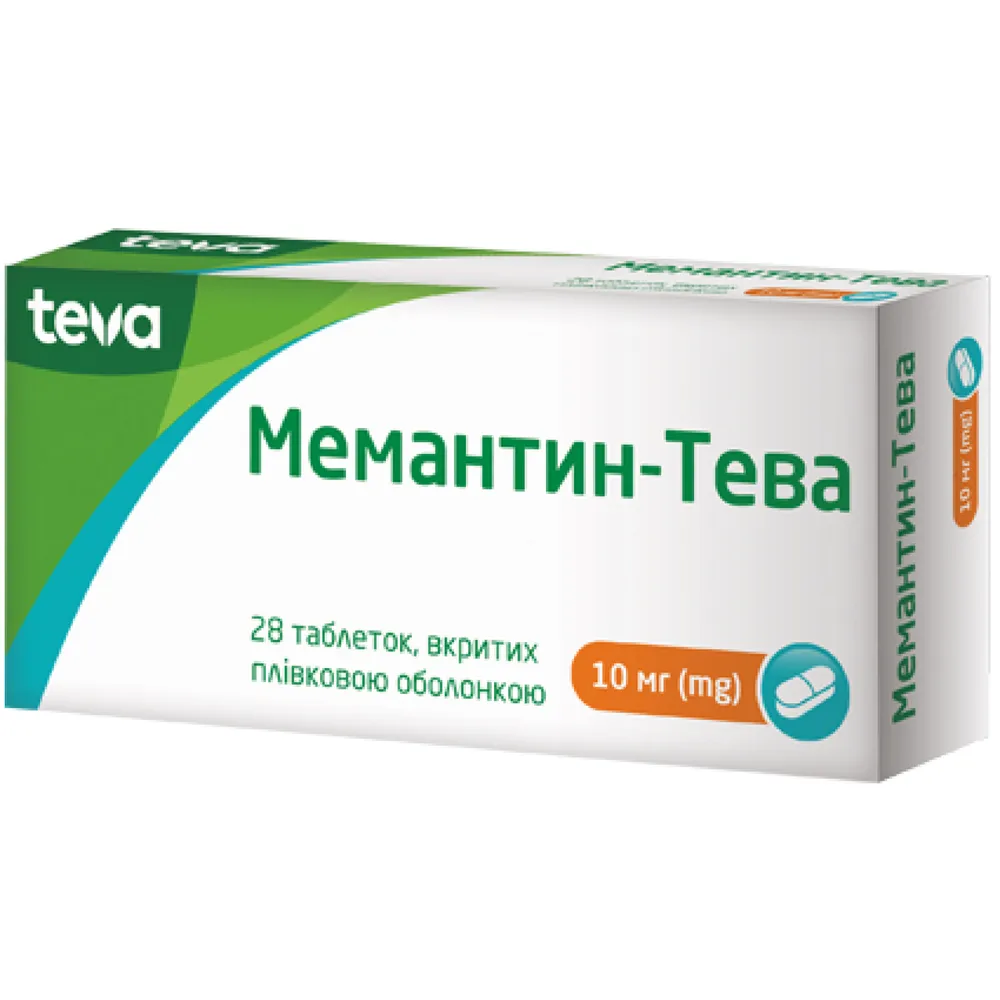
Table of Contents
INSTRUCTIONS for medical use of the medicinal product Memantine-Teva (Memantine-Teva)
Composition:
Active substance: memantine hydrochloride;
One film-coated tablet contains 10 mg or 20 mg of memantine hydrochloride;
Excipients:
Core: microcrystalline cellulose, crospovidone (Type A), talc, magnesium stearate;
Film coating:
10 mg tablets: hypromellose 6cP, titanium dioxide (E 171), lactose monohydrate, macrogol 3350, triacetin;
20 mg tablets: hypromellose 6cP, titanium dioxide (E 171), lactose monohydrate, macrogol 3350, triacetin, iron oxide red (E 172), iron oxide yellow (E 172).
Pharmaceutical form. Film-coated tablets.
Main physicochemical properties:
10 mg tablets: white, capsule-shaped, biconvex film-coated tablets with imprints “M” and “10” on one side separated by a break line, size 9.8 × 4.9 mm. The tablet can be divided into two equal doses.
20 mg tablets: dark pink, oval, biconvex film-coated tablets with imprint “M 20” on one side, size 12.6 × 7 mm.
Pharmacotherapeutic group. Psychoanaleptics. Other agents used in dementia. Memantine. ATC code N06D X01.
Pharmacological Properties
Pharmacodynamics
Disturbances in glutamatergic neurotransmission, particularly involving NMDA (N-methyl-D-aspartate) receptors, play a significant role in the symptoms and progression of neurodegenerative dementia.
Memantine is a voltage-dependent, moderate-affinity, non-competitive NMDA receptor antagonist. Memantine modulates the effects of pathologically elevated glutamate levels, which may lead to neuronal dysfunction.
Clinical Studies
The main monotherapy study in patients with moderate to severe Alzheimer’s disease (Mini-Mental State Examination [MMSE] score 3–14) included a total of 252 outpatients.
A positive treatment effect of memantine was observed after 6 months of therapy compared to placebo (observed cases analysis of the clinician’s interview based on changes in CIBIC-plus scores [p = 0.025], ADCS-ADLsev scale [p = 0.003], and SIB scores [p = 0.002]).
The main monotherapy study of memantine in the treatment of mild to moderate Alzheimer’s disease (baseline MMSE score range 10–22) included 403 patients. Patients treated with memantine showed statistically significantly better outcomes compared to those receiving placebo, based on the primary endpoints: ADAS-cog scale (p = 0.003), CIBIC-plus (p = 0.004) at week 24 (using LOCF analysis). In another monotherapy study in patients with mild to moderate Alzheimer’s disease, a total of 470 patients were randomized (baseline MMSE score range 11–23). In the prospectively defined primary analysis, statistical significance was not achieved for the primary efficacy endpoint at week 24.
A meta-analysis of patients with moderate to severe Alzheimer’s disease (baseline MMSE score < 20) from six phase III, placebo-controlled, 6-month studies (including both monotherapy trials and trials in patients receiving a stable dose of acetylcholinesterase inhibitors) demonstrated a statistically significant beneficial effect of memantine treatment on cognitive, global, and functional domains.
When deterioration across all three domains was assessed, results showed a statistically significant effect of memantine in preventing such deterioration; patients in the placebo group experienced deterioration in all three domains twice as frequently as those treated with memantine (21% vs. 11%, p < 0.0001).
Pharmacokinetics
Absorption. Absolute bioavailability of memantine is 100%. Time to reach maximum plasma concentration (Tmax) is 3–8 hours. There is no evidence of food effect on memantine absorption.
Distribution. Daily administration of memantine at a dose of 20 mg results in steady-state plasma concentrations ranging from 70 to 150 ng/mL (0.5–1 µmol), with considerable individual variability. When daily doses of 5 to 30 mg were administered, the ratio of drug concentration in cerebrospinal fluid to plasma was 0.52.
The volume of distribution is approximately 10 L/kg. Approximately 45% of memantine is bound to plasma proteins.
Metabolism. In humans, about 80% of memantine circulates as the parent compound. The main metabolites in humans are N-3,5-dimethyl-gludantane, an isomeric mixture of 4- and 6-hydroxymemantine, and 1-nitroso-3,5-dimethyladamantane. None of the metabolites possess NMDA-antagonistic activity. In vitro studies showed no involvement of cytochrome P450 in memantine metabolism. In a study using oral administration of 14C-memantine, on average 84% of the dose was eliminated within 20 days, with more than 99% excreted via the kidneys.
Elimination. Memantine is eliminated in a mono-exponential manner, with a half-life (t1/2) ranging from 60 to 100 hours. In healthy volunteers with normal renal function, total clearance (Cltot) is up to 170 mL/min/1.73 m²; renal tubular secretion contributes to total renal clearance. The renal phase of memantine pharmacokinetics also involves tubular reabsorption, likely mediated by cationic transporter proteins. Renal elimination of memantine may be reduced by 7–9 fold under alkaline urine conditions. Urine alkalinization may occur due to drastic dietary changes, such as switching from a meat-rich diet to a vegetarian diet, or with intensive use of antacid gastric medications.
Linearity. Pharmacokinetic studies in volunteers indicate that memantine exhibits linear pharmacokinetics within the dose range of 10–40 mg.
Pharmacodynamic/Pharmacokinetic Relationship. At a daily dose of 20 mg, memantine levels in cerebrospinal fluid correspond to the ki value (inhibition constant) of memantine, which is 0.5 µmol in the frontal cortex region of the human brain.
Clinical characteristics.
Indications.
Moderate to severe Alzheimer's disease.
Contraindications.
Hypersensitivity to the active substance or to any of the excipients of the medicinal product.
Interaction with other medicinal products and other forms of interactions.
The mechanism of action suggests that the effects of L-dopa, dopaminergic agonists, and anticholinergic agents may be enhanced when used concomitantly with NMDA antagonists such as memantine. A reduced effect of barbiturates and neuroleptic agents is possible. Concomitant administration of memantine with muscle relaxants, dantrolene, or baclofen may modify their effects, and dose adjustment may be required.
Concomitant use of memantine and amantadine should be avoided due to the risk of pharmacotoxic psychosis. Both compounds are chemically related NMDA antagonists. This may also apply to ketamine and dextromethorphan. One case report has been published regarding a potential risk of combining memantine with phenytoin.
Other medicinal products such as cimetidine, ranitidine, procainamide, quinidine, quinine, and nicotine, which use the same renal cationic transport system as amantadine, may also interact with memantine, potentially increasing plasma levels.
When memantine is co-administered with hydrochlorothiazide (HCTZ) or any combination containing HCTZ, a decreased serum level of HCTZ may occur.
According to post-marketing surveillance data, isolated cases of increased international normalized ratio (INR) have been reported in patients taking warfarin concomitantly with memantine. Although a causal relationship has not been established, careful monitoring of prothrombin time or INR is recommended in patients receiving oral anticoagulants concurrently with memantine.
In single-dose pharmacokinetic studies in young healthy volunteers, no clinically significant drug interactions were observed between memantine and glipizide/metformin or donepezil.
In a clinical study in young healthy volunteers, no significant effect of memantine on the pharmacokinetics of galantamine was observed.
In vitro, memantine does not inhibit the enzymes CYP 1A2, 2A6, 2C9, 2D6, 2E1, 3A, flavin-containing monooxygenase, epoxide hydrolase, or sulfation.
Special precautions for use
Caution should be exercised when prescribing the medicinal product to patients with epilepsy, a history of seizures, or patients with risk factors for developing epilepsy.
Concomitant use with other NMDA antagonists such as amantadine, ketamine, or dextromethorphan should be avoided. These compounds act on the same receptor group as memantine; therefore, adverse reactions (mainly those affecting the central nervous system) may occur more frequently or be more pronounced. Certain factors that cause an increase in urine pH may necessitate careful monitoring of the patient. Such factors include radical dietary changes, particularly switching from a meat-rich diet to a vegetarian diet, or intensive use of antacid gastric agents. Urine pH levels may also increase in tubular renal acidosis (TRA) or in severe urinary tract infections caused by Proteus species bacteria.
Most clinical trials excluded patients who had recently experienced myocardial infarction, decompensated congestive heart failure (NYHA class III–IV), or uncontrolled arterial hypertension. Therefore, data regarding these conditions are limited, and careful monitoring of patients with such disorders is required.
The medicinal product Memantin-Teva contains lactose and therefore should not be administered to patients with rare hereditary forms of galactose intolerance, lactase deficiency, or glucose-galactose malabsorption syndrome.
Use during pregnancy or breastfeeding.
Pregnancy. Data on the effects of memantine during pregnancy are limited or lacking. Animal studies indicate that exposure to concentrations equal to or slightly higher than those used in humans may lead to delayed intrauterine growth. The potential risk for humans is unknown. Memantine should not be used during pregnancy except in cases where there is a clear and compelling medical necessity.
Breastfeeding. It is not known whether memantine is excreted in human breast milk, but considering the lipophilic nature of the substance, excretion is possible. Women receiving memantine should avoid breastfeeding.
Fertility. No negative effects of memantine on fertility in men or women have been observed.
Ability to affect reaction speed when driving or operating machinery.
Moderate to severe Alzheimer’s disease typically impairs the ability to drive a car or operate machinery. Moreover, memantine may have a slight or moderate influence on the ability to drive or operate machinery. Therefore, outpatients should be warned to exercise particular caution.
Method of Administration and Dosage.
Treatment should be initiated and supervised by a physician experienced in the diagnosis and treatment of Alzheimer's disease dementia. Therapy should only be initiated in the presence of a caregiver who will regularly monitor the patient's intake of the medication. Diagnosis should be established according to current guidelines. Tolerability and dosage of memantine should be regularly reviewed, preferably after three months of treatment initiation. Thus, the clinical benefit of memantine and the patient's tolerance to treatment should be regularly assessed according to current clinical guidelines. Maintenance therapy may be continued as long as a positive therapeutic effect is observed and the patient tolerates memantine treatment well. Discontinuation of memantine therapy should be considered in the absence of therapeutic effect or if the patient does not tolerate the treatment.
Tablets should be taken once daily at the same time each day, regardless of food intake.
Adults
Dose Titration. The maximum daily dose is 20 mg. To reduce the risk of adverse reactions, the maintenance dose should be reached by upward titration of 5 mg per week over the first three weeks, as outlined below:
Week 1 (days 1–7): take ½ tablet (5 mg) once daily for 7 days;
Week 2 (days 8–14): take 1 tablet (10 mg) once daily for 7 days;
Week 3 (days 15–21): take 1½ tablets (15 mg) once daily for 7 days.
From week 4 onwards: take 20 mg once daily – either 2 tablets of 10 mg or 1 tablet of 20 mg.
The recommended maintenance dose is 20 mg once daily.
Elderly Patients. Based on clinical studies, the recommended dose for patients aged 65 years and older is 20 mg once daily (2 tablets of 10 mg or 1 tablet of 20 mg once daily), as described above.
Patients with Renal Impairment. For patients with mild renal impairment (creatinine clearance 50–80 mL/min), dose adjustment is not required. For patients with moderate renal impairment (creatinine clearance 30–49 mL/min), the daily dose should be 10 mg. If this dose is well tolerated for at least 7 days of treatment, it may be increased to 20 mg once daily according to the standard dose titration regimen. For patients with severe renal impairment (creatinine clearance 5–29 mL/min), a daily dose of 10 mg is recommended.
Patients with Hepatic Impairment. Dose adjustment is not required for patients with mild to moderate hepatic impairment (Child–Pugh classes A and B). There are no data on the use of memantine in patients with severe hepatic impairment; therefore, memantine is not recommended in this patient population.
Children.
The medicinal product should not be used in children under 18 years of age due to insufficient data on safety and efficacy.
Overdose.
Data on overdose from clinical trials and post-marketing surveillance are limited.
Symptoms. Overdose with relatively high doses (200 mg and 105 mg daily for 3 days) has been associated with symptoms such as fatigue, weakness, and/or diarrhea, or has been asymptomatic. With doses up to 140 mg or with unknown doses, adverse effects on the central nervous system (CNS) (confusion, lethargy, somnolence, vertigo, agitation, aggression, hallucinations, gait disturbances) and/or gastrointestinal effects (vomiting, diarrhea) have been observed.
In the most severe known case of overdose, following oral intake of a total dose of 2000 mg of memantine, the patient experienced CNS disturbances (coma lasting 10 days, followed by diplopia and agitation). After symptomatic treatment and plasmapheresis, the patient fully recovered without any permanent sequelae.
In another case of significant overdose (400 mg of memantine orally), the patient also survived and recovered. CNS disturbances observed included restlessness, psychosis, visual hallucinations, seizure readiness, somnolence, stupor, and loss of consciousness.
Treatment. In case of overdose, symptomatic treatment should be administered. There is no specific antidote. If necessary, standard clinical procedures should be performed to remove the active substance from the body, including gastric lavage, administration of activated charcoal (to interrupt possible enterohepatic recirculation), urinary acidification, and forced diuresis.
In cases of symptoms and signs of excessive CNS stimulation, symptomatic treatment should be applied with caution.
Adverse Reactions
During clinical studies with memantine, the overall incidence of adverse reactions was similar to that observed with placebo, and adverse events were generally mild to moderate in severity. The most commonly reported adverse reactions occurring more frequently in the memantine group compared to placebo included dizziness, headache, constipation, somnolence, and hypertension.
The adverse reactions listed below were observed during clinical studies and in the post-marketing period and are categorized by frequency as follows: very common (≥ 1/10);
common (≥ 1/100 to < 1/10); uncommon (≥ 1/1000 to < 1/100); rare (≥ 1/10000 to < 1/1000); very rare (< 1/10000); frequency not known (cannot be estimated from available data).
Infections and infestations: uncommon – fungal infections.
Immune system disorders: common – drug hypersensitivity.
Psychiatric disorders: common – somnolence; uncommon – confusion, hallucinations1; frequency not known – psychotic reactions2.
Nervous system disorders: common – dizziness, impaired balance; uncommon – gait disturbance; very rare – seizures.
Cardiac disorders: uncommon – heart failure.
Vascular disorders: common – hypertension; uncommon – venous thrombosis/thromboembolism.
Respiratory, thoracic and mediastinal disorders: common – dyspnoea.
Gastrointestinal disorders: common – constipation; uncommon – vomiting; frequency not known – pancreatitis2.
Hepatobiliary disorders: common – increased liver function tests; frequency not known – hepatitis.
General disorders and administration site conditions: common – headache; uncommon – fatigue.
1 Hallucinations were observed mainly in patients with severe Alzheimer's disease.
2 Individual case reports in the post-marketing period.
Alzheimer's disease is associated with depression, suicidal ideation, and suicide. Such cases have been reported during the post-marketing period in patients treated with memantine.
Shelf life. 2 years.
Storage conditions.
Store at a temperature not exceeding 25 °C. Keep out of reach and sight of children.
Packaging.
14 tablets in a blister; 2 blisters in a cardboard box.
Prescription status. Prescription only.
Manufacturer. Actavis LTD.
Manufacturer's address and place of business.
BLB015, BLB 016 Bulbile Industrial Estate, Zittun ZTN 3000, Malta.