Magnesium sulfate
Ukraine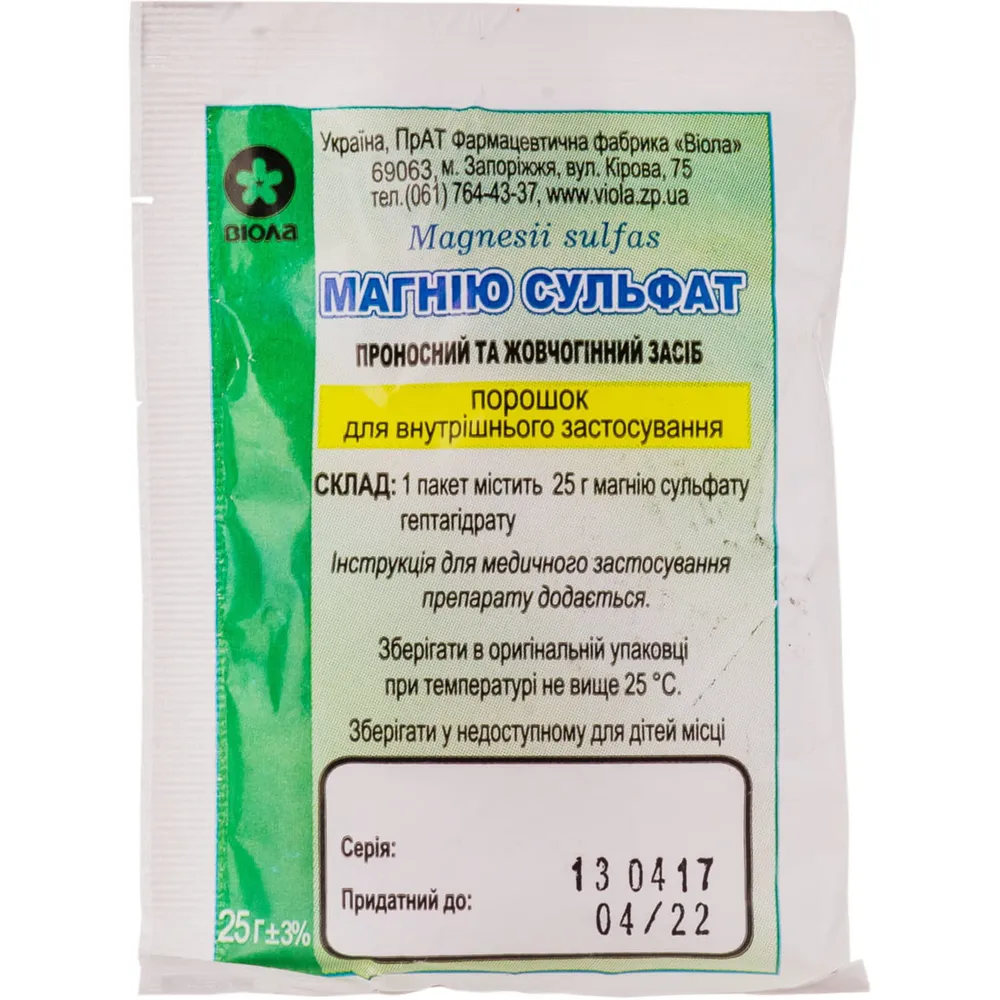
Table of Contents
INSTRUCTIONS FOR MEDICAL USE OF THE MEDICINAL PRODUCT MAGNESIUM SULFATE (MAGNESIUM SULFATE)
Composition:
Active substance: magnesium sulfate;
1 container or sachet contains magnesium sulfate 25 g.
Pharmaceutical form. Powder for solution for oral use.
Main physicochemical properties: white crystalline powder or colorless shiny crystals.
Pharmacotherapeutic group. Osmotic laxatives. ATC code A06AD04.
Pharmacological properties.
When taken orally, the drug produces a laxative effect. The preparation also has choleretic and diuretic actions.
The laxative effect is due to changes in osmotic pressure, inhibition of water absorption from the intestine, dilution and increase in the volume of intestinal contents, and stimulation of enteroceptors, which facilitates defecation.
Clinical characteristics.
Indications.
Constipation. As an antidote in barium salt poisoning.
Contraindications.
Increased individual sensitivity, acute inflammatory gastrointestinal diseases, intestinal obstruction, cholelithiasis, biliary tract obstruction, acute severe conditions, arterial hypotension, conditions associated with calcium deficiency and respiratory center depression, severe renal insufficiency.
Special precautions.
The drug is not recommended for systematic use.
Interaction with other medicinal products and other types of inter actions.
Reduces the effect of oral anticoagulants, cardiac glycosides, phenothiazines. Decreases absorption of ciprofloxacin, tetracyclines, and reduces the action of streptomycin and tobramycin.
Instructions for use.
Use during pregnancy or breastfeeding.
The drug is contraindicated during pregnancy. During breastfeeding, it may be used under medical supervision only if the benefit to the mother outweighs the potential risk to the infant.
Ability to influence reaction rate while driving or operating machinery.
No effect.
Dosage and Administration
As a laxative, magnesium sulfate should be taken orally (at night or on an empty stomach, 30 minutes before meals) once daily: adults – 10–30 g in ½ glass of water; children aged 12 years and older – 10 g in ½ glass of water; children aged 6–12 years – 5–10 g (i.e., from half to the full volume of the solution prepared from 10 g in ½ glass of water).
For chronic constipation, use in enemas: dissolve 10 g in 500 ml of water and administer in the amount prescribed by a physician.
In barium salt poisoning, administer orally to adults 20–25 g of powder dissolved in 200 ml of water.
Children
Use in children aged 6 years and older only as prescribed by a physician.
Overdose
In case of overdose, diarrhea and vomiting may occur.
Treatment: intravenous administration of calcium chloride or calcium gluconate solution – 5–10 ml of 10% solution; conduct oxygen therapy, carbogen inhalation, artificial respiration, peritoneal dialysis or hemodialysis. Symptomatic therapy.
Side effects.
Termination of pregnancy, exacerbation of inflammatory processes in the gastrointestinal tract, nausea, vomiting, allergic reactions. With prolonged use, possible disturbance of water-salt metabolism, nutritional deficiency, and atony of the large intestine.
Shelf life.
5 years.
Storage conditions.
Store in the original packaging at a temperature not exceeding 25 °C. Keep out of reach of children.
Incompatibility.
Pharmaceutical incompatibility (precipitate formation) with calcium preparations, ethanol (at high concentrations), carbonates, bicarbonates and phosphates of alkali metals, salts of arsenic acid, barium, strontium, clindamycin phosphate, sodium hydrocortisone succinate, polymyxin B sulfate, procaine hydrochloride, salicylates, and tartrates.
Packaging.
25 g of powder in a plastic container or sachet.
Availability.
Over-the-counter.
Manufacturer.
LLC "Istok-Plus".
Manufacturer's location and address of business activity.
4 Makarenka Street, Zaporizhzhia, 69032, Ukraine.