Levocetil
Ukraine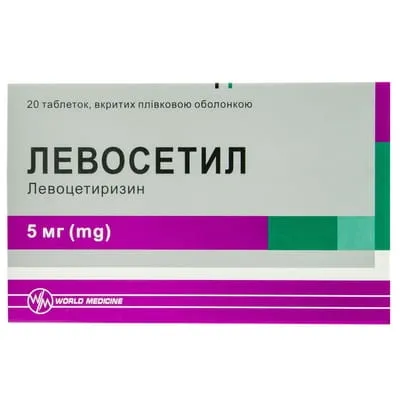
Table of Contents
INSTRUCTIONS FOR MEDICAL USE OF THE MEDICINAL PRODUCT LEVOSETIL (LEVOSETIL)
Composition:
Active substance: levocetirizine;
One film-coated tablet contains levocetirizine dihydrochloride 5 mg;
Excipients: lactose monohydrate; microcrystalline cellulose; colloidal anhydrous silicon dioxide; magnesium stearate;
Film coating: Opadry® White Y-1-7000 (hypromellose; titanium dioxide (E 171); macrogol).
Pharmaceutical form. Film-coated tablets.
Main physicochemical characteristics: oval, biconvex, film-coated tablets of white or almost white color.
Pharmacotherapeutic group.
Antihistamines for systemic use. Piperazine derivatives.
ATC code R06AE09.
Pharmacological properties.
Pharmacodynamics.
Levocetirizine is the active, stable R-enantiomer of cetirizine and belongs to the group of competitive histamine antagonists. Its pharmacological action is due to blockade of H1-histamine receptors. The affinity of levocetirizine for H1-histamine receptors is twice higher than that of cetirizine. It affects the histamine-dependent phase of the allergic reaction, reduces eosinophil migration, vascular permeability, and limits the release of inflammatory mediators. It prevents the development and suppresses the progression of allergic reactions, exerting anti-exudative, anti-pruritic, and anti-inflammatory effects, with minimal anticholinergic and anti-serotonin activity.
Pharmacokinetics.
Pharmacokinetic parameters of levocetirizine show linear dependence and are independent of dose and time, with low variability among different patients. The pharmacokinetic profile after administration of a single enantiomer is the same as that observed with cetirizine. No chiral inversion occurs during absorption or elimination.
Absorption
After oral administration, levocetirizine is rapidly and extensively absorbed. The extent of absorption is independent of dose and is not altered by food intake, although the maximum concentration (Cmax) of levocetirizine is reduced and reached later. Bioavailability is 100%. The effect of levocetirizine begins within 12 minutes after a single dose in 50% of patients and within 0.5–1 hour in 95% of patients. In adult patients, Cmax in plasma is reached within 50 minutes after a single oral therapeutic dose. Steady-state concentration in blood is achieved after 2 days of daily administration. Cmax is 270 ng/mL after a single dose and 308 ng/mL after repeated administration of 5 mg once daily.
Distribution
There is no available information on the distribution of levocetirizine in human tissues or on its penetration through the blood-brain barrier. In animal studies, the highest concentrations were observed in the liver and kidneys, while the lowest were found in central nervous system tissues. Distribution of levocetirizine is limited, with a volume of distribution of 0.4 L/kg. Plasma protein binding in humans is 90%.
Metabolism
In humans, the extent of metabolism is less than 14% of the administered dose of levocetirizine; therefore, differences due to genetic polymorphism or concomitant use of enzyme inhibitors are expected to be negligible. The metabolic process includes aromatic oxidation, N- and O-dealkylation, and conjugation with taurine. Dealkylation primarily involves cytochrome CYP3A4, whereas aromatic oxidation involves multiple and/or undefined CYP isoforms. Levocetirizine does not affect the activity of cytochrome isoforms 1A2, 2C9, 2C19, 2D6, 2E1, and 3A4 at concentrations significantly exceeding the maximum levels achieved after a 5 mg oral dose. Due to the low degree of metabolism and lack of inhibitory effect on metabolism, drug interactions between levocetirizine and other substances (and vice versa) are unlikely.
Elimination
Levocetirizine is eliminated via two pathways: glomerular filtration and active tubular secretion. The elimination half-life (T1/2) in plasma in adults is 7.9 + 1.9 hours. T1/2 is shorter in younger children. The mean apparent total clearance in adults is 0.63 mL/min/kg. Levocetirizine and its metabolites are primarily excreted via urine (on average, 85.4% of the administered dose). Only 12.9% of the administered dose is excreted in feces.
Special populations
Patients with renal impairment
The apparent clearance of levocetirizine correlates with creatinine clearance. Therefore, in patients with moderate to severe renal impairment, the dosing intervals of levocetirizine should be adjusted according to creatinine clearance. In patients with anuria and end-stage renal disease, total clearance is reduced by approximately 80% compared to individuals without such impairments. The amount of levocetirizine removed during a standard 4-hour hemodialysis session is < 10%.
Clinical characteristics.
Indications.
Symptomatic treatment of allergic rhinitis (including perennial allergic rhinitis) and urticaria.
Contraindications.
Hypersensitivity to levocetirizine, cetirizine, hydroxyzine, to any other piperazine derivatives, or to any of the excipients of the medicinal product.
End-stage renal disease (glomerular filtration rate (GFR) < 15 mL/min) requiring dialysis.
Interaction with other medicinal products and other forms of interaction.
Interaction studies with levocetirizine (including with CYP3A4 inducers) have not been conducted. Interaction studies with cetirizine (the racemate compound) have shown that concomitant administration with antipyrine, azithromycin, cimetidine, diazepam, erythromycin, glipizide, ketoconazole, or pseudoephedrine does not produce clinically significant adverse effects.
In a multiple-dose study, concomitant administration with theophylline (400 mg daily) resulted in a slight decrease (by 16%) in cetirizine clearance (theophylline distribution was not altered).
In a multiple-dose study with ritonavir (600 mg twice daily) and cetirizine (10 mg daily), cetirizine exposure increased by approximately 40%, while ritonavir distribution was slightly altered (−11%).
Food intake does not affect the extent of levocetirizine absorption, but co-administration with food reduces the rate of its absorption.
Concomitant administration of cetirizine or levocetirizine with alcohol or other central nervous system depressants in sensitive patients may result in additional impairment of attention and ability to perform tasks.
Special precautions for use
During the use of the medicinal product, caution should be exercised when consuming alcohol (see section "Interaction with other medicinal products and other types of interactions").
When administering the medicinal product to patients with factors predisposing to urinary retention (e.g., spinal cord injury, benign prostatic hyperplasia), it should be borne in mind that levocetirizine increases the risk of urinary retention.
The medicinal product should be used with caution in patients with epilepsy or at risk of seizures, as its use may lead to exacerbation of seizures.
Antihistamines suppress the response to skin allergy tests; therefore, administration of the medicinal product should be discontinued 3 days prior to testing (elimination period).
Pruritus may occur after discontinuation of levocetirizine, even if this symptom was not present before the start of treatment. Pruritus may resolve spontaneously. In some cases, it may be intense and may require re-treatment. Pruritus should resolve after re-initiation of treatment.
Levocetirizine in tablet form should not be administered to children under 6 years of age, as this dosage form does not allow for appropriate dose adjustment. This patient group should be prescribed levocetirizine in a dosage form suitable for pediatric use.
The medicinal product contains lactose and therefore should not be administered to patients with rare hereditary forms of galactose intolerance, lactase deficiency, or glucose-galactose malabsorption syndrome.
Use during pregnancy or breastfeeding.
Pregnancy.
Data on the use of levocetirizine in pregnant women are lacking or limited (fewer than 300 pregnancy outcomes). However, extensive data on cetirizine, the racemate of levocetirizine (over 1000 pregnancy outcomes), indicate no teratogenic or toxic effects on the fetus/newborn. Animal studies have not shown any direct or indirect harmful effects on pregnancy, embryonal/fetal development, delivery, or postnatal development. If necessary, the use of the medicinal product during pregnancy may be considered.
Period of breastfeeding.
It has been established that cetirizine, the racemate of levocetirizine, is excreted in human milk. Therefore, levocetirizine is likely to be excreted in breast milk. Adverse reactions related to levocetirizine may occur in breastfed infants. The medicinal product should be used with caution during breastfeeding.
Fertility.
There are no clinical data (including animal studies) on the effect of levocetirizine on fertility.
Ability to influence reaction speed when driving or operating machinery.
Comparative clinical studies have not shown any evidence that levocetirizine at the recommended dose impairs mental alertness, reaction capability, or ability to drive a vehicle or operate machinery.
However, some patients may experience somnolence, fatigue, or asthenia during treatment with levocetirizine. Therefore, patients intending to drive a vehicle or operate machinery should take into account their individual response to the medicinal product.
Method of administration and dosage.
The medicinal product is intended for oral administration. The tablet should be swallowed whole with a small amount of water, regardless of food intake. It is recommended to take the daily dose as a single administration.
Adults and children aged 12 years and older
The recommended daily dose is 5 mg (1 tablet) once daily.
Elderly patients
Elderly patients with normal renal function do not require dose adjustment.
Dose adjustment is recommended for elderly patients with moderate to severe renal impairment (see section "Patients with renal impairment").
Patients with renal impairment
Dosage calculation for patients with renal impairment should be based on the degree of renal function impairment (GFR value) according to the table below.
Dose adjustment of levocetirizine for patients with renal impairment
| Renal function |
eGFR (mL/min) |
Dose and frequency |
| Normal renal function |
≥ 90 |
5 mg once daily |
| Mild impairment |
60 – < 90 |
5 mg once daily |
| Moderate impairment |
30 – < 60 |
5 mg once every 2 days |
| Severe impairment |
15 – < 30 not requiring dialysis |
5 mg once every 3 days |
| End-stage renal disease |
< 15 requiring dialysis |
Contraindicated |
In children with impaired renal function, the dose of levocetirizine should be individually adjusted based on the patient's renal clearance and body weight.
There are no specific data available on the use of levocetirizine in children with impaired renal function.
Patients with hepatic impairment
Dose adjustment is not required in patients with hepatic impairment. However, in patients with both hepatic and renal impairment, dosage regimen should be adjusted according to the table provided above.
Paediatric population
Children aged 6 to 12 years
The recommended daily dose is 5 mg (1 tablet) once daily.
Children aged 2 to 6 years
Levocetirizine tablets should not be administered to children under 6 years of age, as this dosage form does not allow for appropriate dose adjustment. This patient group should be treated with levocetirizine in a pharmaceutical form suitable for paediatric use.
Duration of treatment
Patients with intermittent allergic rhinitis (disease symptoms lasting less than 4 days per week or less than 4 weeks per year) should be treated according to the course of the disease and medical history: treatment may be discontinued if symptoms resolve and resumed again upon recurrence of symptoms.
In cases of persistent allergic rhinitis (disease symptoms lasting more than 4 days per week or more than 4 weeks per year) during allergen exposure periods, continuous therapy may be considered. There is clinical experience with levocetirizine use for at least a 6-month treatment period. For chronic conditions (chronic allergic rhinitis, chronic urticaria), treatment duration may extend up to 1 year (data are available from clinical studies using the racemate).
Children
The tablet formulation should not be administered to children under 6 years of age, as this dosage form does not allow for appropriate dose adjustment. This patient group should be treated with levocetirizine in a pharmaceutical form suitable for paediatric use.
Overdose
Symptoms
Symptoms of overdose in adults may include somnolence. In children, initial symptoms may include excitation and increased irritability, followed by somnolence.
Treatment
There is no specific antidote for levocetirizine. In case of overdose symptoms, symptomatic and supportive therapy is recommended. Gastric lavage may be considered shortly after drug intake. Haemodialysis is not effective for removing levocetirizine from the body.
Adverse Reactions
Clinical Trials
Adults and adolescents aged 12 years and older
In therapeutic trials involving men and women aged 12 to 71 years,
15.1% of patients in the 5 mg levocetirizine group experienced at least one adverse reaction, compared to 11.3% in the placebo group. 91.6% of these adverse reactions were mild to moderate in intensity.
In therapeutic trials, the discontinuation rate due to adverse events was 1.0% (9/935) with levocetirizine and 1.8% (14/771) with placebo.
Clinical therapeutic trials of levocetirizine included 935 patients who received the medicinal product at the recommended dose of 5 mg once daily. In this population, the following adverse reactions occurred with a frequency of 1% or greater (common: ≥1/100 to <1/10) during treatment with either 5 mg levocetirizine or placebo:
Adverse reactions |
Placebo (n =771) |
Levocetirizine 5 mg (n = 935) |
| Headache |
25 (3.2 %) |
24 (2.6 %) |
| Somnolence |
11 (1.4 %) |
49 (5.2 %) |
| Dry mouth |
12 (1.6 %) |
24 (2.6 %) |
| Increased fatigue |
9 (1.2 %) |
23 (2.5 %) |
Uncommonly (≥ 1/1000, < 1/100), asthenia and abdominal pain were also reported.
The frequency of sedative adverse reactions such as somnolence, fatigue, and asthenia was generally higher (8.1%) with levocetirizine 5 mg than with placebo (3.1%).
Paediatric population
In two placebo-controlled studies involving paediatric patients aged 6 to 11 months and aged 1 to 6 years, 159 subjects received levocetirizine at a dose of 1.25 mg once daily for 2 weeks and 1.25 mg twice daily, respectively. The incidence of adverse reactions with levocetirizine or placebo was 1%.
| Organ systems and adverse reactions |
Placebo (n=83) |
Levocetirizine (n=159) |
| Gastrointestinal disorders |
||
| Diarrhea |
0 |
3 (1.9%) |
| Vomiting |
1 (1.2%) |
1 (0.6%) |
| Constipation |
0 |
2 (1.3%) |
| Nervous system disorders |
||
| Somnolence |
2 (2.4%) |
3 (1.9%) |
| Psychiatric disorders |
||
| Sleep disorders |
0 |
2 (1.3%) |
In children aged 6 to 12 years, double-blind, placebo-controlled studies were conducted, in which 243 children received 5 mg of levocetirizine daily for various durations ranging from less than 1 week to 13 weeks. The following adverse reactions were reported with an incidence of ≥1% during treatment with levocetirizine or placebo.
Adverse reactions |
Placebo (n=240) |
Levocetirizine 5mg (n=243) |
| headache |
5 (2.1 %) |
2 (0.8 %) |
| sleepiness |
1 (0.4 %) |
7 (2.9 %) |
Post-marketing experience
During the post-marketing period, the following adverse reactions have also been reported. Adverse reactions are listed by organ system classes according to MedDRA and by frequency: very common (≥ 1/10); common (≥ 1/100, < 1/10); uncommon (≥ 1/1,000, < 1/100); rare (≥ 1/10,000, < 1/1,000); very rare (< 1/10,000); frequency not known (cannot be estimated from available data).
Immune system disorders:
Frequency not known – hypersensitivity, including anaphylaxis.
Metabolism and nutrition disorders:
Frequency not known – increased appetite.
Psychiatric disorders:
Frequency not known – aggression, agitation, hallucinations, depression, insomnia, suicidal thoughts, nightmares.
Nervous system disorders:
Frequency not known – seizures, paraesthesia, dizziness, loss of consciousness, tremor, dysgeusia.
Ear and labyrinth disorders:
Frequency not known – vertigo.
Eye disorders:
Frequency not known – visual disturbance, blurred vision, nystagmus.
Cardiac disorders:
Frequency not known – palpitations, tachycardia.
Respiratory, thoracic and mediastinal disorders:
Frequency not known – dyspnoea.
Gastrointestinal disorders:
Frequency not known – diarrhoea, vomiting, nausea.
Hepatobiliary disorders:
Frequency not known – hepatitis.
Renal and urinary disorders:
Frequency not known – dysuria, urinary retention.
Skin and subcutaneous tissue disorders:
Frequency not known – angioneurotic oedema, fixed drug eruption, pruritus, rash, urticaria.
Musculoskeletal and connective tissue disorders:
Frequency not known – myalgia, arthralgia.
General disorders and administration site conditions:
Frequency not known – oedema.
Investigations:
Frequency not known – weight increase, abnormal liver function tests.
Description of selected adverse reactions
Pruritus has been reported after discontinuation of levocetirizine.
Reporting of suspected adverse reactions
Reporting suspected adverse reactions after medicine authorization is important. It allows continued monitoring of the benefit-risk balance of the medicine. Medical and pharmaceutical professionals, as well as patients or their legal representatives, should report any suspected adverse reactions and lack of efficacy through the Automated Pharmacovigilance Information System at the following link: https://aisf.dec.gov.ua.
Shelf life.
3 years.
Storage conditions.
Store at a temperature not exceeding 25 °C in a place inaccessible to children.
Packaging.
10 tablets in a blister, 2 blisters in a cardboard box;
10 tablets in a blister, 3 blisters in a cardboard box;
10 tablets in a blister, 4 blisters in a cardboard box.
Pharmaceutical category.
Over-the-counter.
Manufacturer.
UORLID MEDITSIN ILACH SAN. VE TIDJ. A.SH./
WORLD MEDICINE ILAC SAN. VE TIC. A.S.
Manufacturer's address and location of business activity.
15 Temmuz Mahallesi Cami Yolu Caddesi No:50 Gunesli Bagcilar/Istanbul, Turkey.
Marketing Authorization Holder.
LLC «WORLD MEDICINE», Ukraine/
WORLD MEDICINE, LLC, Ukraine.