Lenalidomide-vista
Ukraine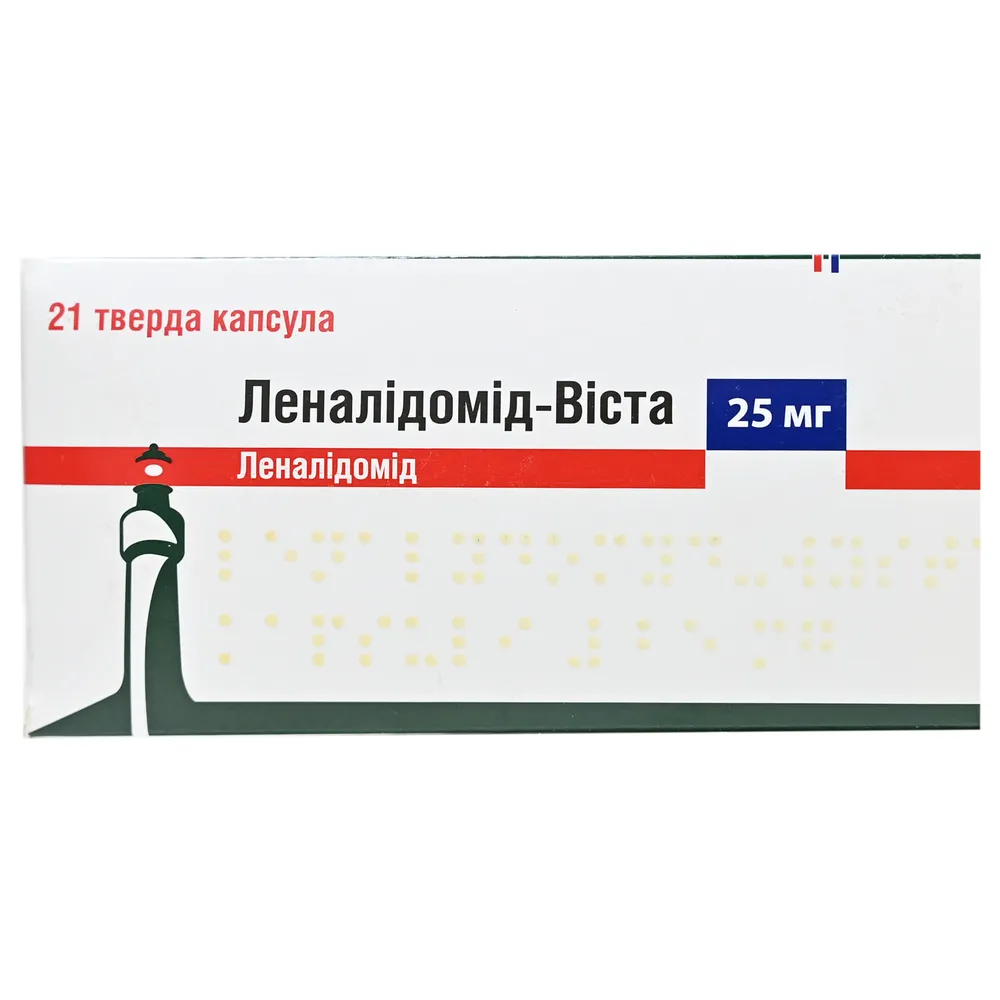
Table of Contents
INSTRUCTION FOR MEDICAL USE OF THE MEDICINAL PRODUCT Lenalidomide-Vista (Lenalidomide-Vista)
Composition:
Active substance: lenalidomide;
1 hard capsule contains 2.5 mg, 5 mg, 7.5 mg, 10 mg, 15 mg, 20 mg, or 25 mg of lenalidomide;
Excipients: microcrystalline cellulose (type 301), anhydrous lactose, sodium croscarmellose, magnesium stearate;
Hard gelatin capsule: gelatin, titanium dioxide (E 171), iron oxide yellow (E 172) (capsules 2.5 mg, 7.5 mg, 10 mg, 20 mg), indigotine (E 132) (capsules 2.5 mg, 10 mg, 15 mg, 20 mg).
*Ink composition: shellac (E 904), iron oxide black (E 172), propylene glycol (E 1520), ammonium hydroxide (E 527), potassium hydroxide (E 525).
Pharmaceutical form. Hard capsules.
Main physicochemical properties:
Hard gelatin capsule with a white opaque body and a green opaque cap, radially printed on the body with "L9NL" and "2.5". Capsule size: 4.
Hard gelatin capsule with a white opaque body and a white opaque cap, radially printed on the body with "L9NL" and "5". Capsule size: 2.
Hard gelatin capsule with a white opaque body and a yellow opaque cap, radially printed on the body with "L9NL" and "7.5". Capsule size: 2.
Hard gelatin capsule with a yellow opaque body and a green opaque cap, radially printed on the body with "L9NL" and "10". Capsule size: 0.
Hard gelatin capsule with a white opaque body and a blue opaque cap, radially printed on the body with "L9NL" and "15". Capsule size: 0.
Hard gelatin capsule with a blue opaque body and a green opaque cap, radially printed on the body with "L9NL" and "20". Capsule size: 0.
Hard gelatin capsule with a white opaque body and a white opaque cap, radially printed on the body with "L9NL" and "25". Capsule size: 0.
Pharmacotherapeutic group.
Antineoplastic agents and immunomodulators. Immunosuppressants. ATC code: L04A X04.
Pharmacological Properties.
Pharmacodynamics.
Mechanism of action
The mechanism of action of lenalidomide is based on its antineoplastic, antiangiogenic, proerythropoietic, and immunomodulatory properties. Lenalidomide inhibits the proliferation of certain hematopoietic tumor cells, including plasma cells in multiple myeloma (MM), tumor cells of follicular lymphoma, and cells with chromosome 5 cytogenetic abnormalities. Lenalidomide enhances T-cell- and natural killer (NK) cell-mediated cellular immunity and increases the number of NK T-cells.
The mechanism of action of lenalidomide also includes additional activities such as antiangiogenic and proerythropoietic effects. Lenalidomide inhibits angiogenesis by blocking endothelial cell migration and adhesion, as well as microvessel formation. It enhances fetal hemoglobin production by CD34+ hematopoietic stem cells and suppresses the secretion of proinflammatory cytokines (e.g., tumor necrosis factor-α (TNF-α) and interleukin IL-6) by monocytes. In myelodysplastic syndrome (MDS) with del(5q), lenalidomide has been shown to selectively inhibit abnormal clonal proliferation by increasing apoptosis of del(5q) cells. Lenalidomide binds directly to cereblon protein, a component of the Cullin ring E3 ubiquitin ligase enzyme complex, which includes DNA damage-binding protein 1 (DDB1), Cullin 4 (CUL4), and regulator of cullins 1 (Roc1).
The combination of lenalidomide and rituximab increases antibody-dependent cellular cytotoxicity (ADCC) and direct tumor cell apoptosis in follicular lymphoma cells.
Pharmacokinetics.
Lenalidomide has an asymmetric carbon atom and therefore can exist in two optically active forms, S(-) and R(+). Lenalidomide is a racemic mixture of these isomers. Lenalidomide is generally well soluble in organic solvents and reaches maximum solubility in 0.1 M HCl buffer solution.
Absorption
Lenalidomide is rapidly absorbed after oral administration under fasting conditions in healthy volunteers, with peak plasma concentration (Cmax) achieved within 0.5–2 hours after dosing. In both patients and healthy volunteers, Cmax and area under the concentration-time curve (AUC) increase proportionally with dose escalation. Repeated administration does not result in significant accumulation of lenalidomide. In plasma, the relative exposure of S- and R-enantiomers of lenalidomide is approximately 56% and 44%, respectively.
Concomitant intake with a high-fat, high-calorie meal in healthy volunteers reduces the extent of drug absorption, resulting in approximately a 20% decrease in AUC and a 50% reduction in Cmax in plasma. However, in the main pre-registration clinical trials in MM and MDS, where efficacy and safety of lenalidomide were evaluated, the drug was administered regardless of food intake. Therefore, lenalidomide can be taken independently of food.
Population pharmacokinetic analysis indicates that the rate of absorption after oral administration of lenalidomide is similar in patients with MM, MDS, and mantle cell lymphoma (MCL).
Distribution
In vitro, plasma protein binding of (14C)-lenalidomide in patients with MM and healthy volunteers is low, averaging 23% and 29%, respectively. Lenalidomide is present in semen (< 0.01% of dose) after administration of 25 mg/day and is undetectable 3 days after discontinuation of the drug in healthy volunteers.
Biotransformation and elimination
Human in vitro study data indicate that cytochrome P450 isoenzymes are not involved in the metabolism of lenalidomide; therefore, metabolic drug interactions are unlikely when lenalidomide is coadministered with drugs that inhibit cytochrome P450 isoenzymes. In vitro data show no inhibitory effect of lenalidomide on CYP1A2, CYP2C9, CYP2C19, CYP2D6, CYP2E1, CYP3A, or UGT1A1 isoenzymes. Thus, lenalidomide is unlikely to cause any clinically significant drug-drug interactions when coadministered with substrates of these enzymes.
According to in vitro data, lenalidomide is not a substrate of the human breast cancer resistance protein (BCRP), multidrug resistance-associated protein (MRP) MRP1, MRP2, or MRP3, organic anion transporter (OAT) OAT1 and OAT3, organic anion transporting polypeptide 1B1 (OATP1B1), organic cation transporter (OCT) OCT1 and OCT2, multidrug and toxin extrusion protein (MATE) MATE1, or organic cation transporters (OCTN) OCTN1 and OCTN2. In vitro study results show that lenalidomide does not inhibit the human bile salt export pump (BSEP), BCRP, MRP2, OAT1, OAT3, OATP1B1, OATP1B3, or OCT2.
The majority of lenalidomide is excreted in urine. Renal excretion accounts for 90% of total clearance in patients with normal renal function. 4% of lenalidomide is excreted in feces.
Lenalidomide is minimally metabolized in the body; 82% of the dose is excreted unchanged in urine. Hydroxy-lenalidomide and N-acetyl-lenalidomide account for 4.59% and 1.83% of total excretion, respectively. Renal clearance of lenalidomide exceeds the glomerular filtration rate, indicating active secretion.
At doses of 5 to 25 mg/day, the elimination half-life in plasma is approximately 3 hours in healthy volunteers and ranges from 3 to 5 hours in patients with MM, MDS, or MCL.
Special patient populations
Elderly patients
No specific clinical studies have been conducted to evaluate pharmacokinetics in elderly individuals. Population pharmacokinetic analysis included patients aged 39 to 85 years and indicates that age does not affect lenalidomide clearance (plasma exposure). However, due to the increased likelihood of impaired renal function in elderly patients, dose adjustments should be made with caution, and renal function should be closely monitored during therapy.
Patients with renal impairment
The pharmacokinetics of lenalidomide were studied in patients with renal impairment because this condition is not considered a premalignant state. In this study, two methods were used to classify renal function: measurement of creatinine clearance (CrCl) in urine over 24 hours and estimation of CrCl using the Cockcroft-Gault formula. Results show that as renal function declines (< 50 mL/min), total clearance of lenalidomide decreases proportionally, leading to increased AUC. AUC was increased approximately 2.5-, 4-, and 5-fold in patients with moderate, severe, and end-stage renal impairment, respectively, compared to the group combining patients with normal and mildly impaired renal function. The elimination half-life of lenalidomide increased from approximately 3.5 hours in patients with CrCl > 50 mL/min to more than 9 hours in patients with reduced renal function (CrCl < 50 mL/min). However, renal impairment does not alter the oral absorption of lenalidomide. Cmax was similar in healthy volunteers and patients with renal impairment. Approximately 30% of the drug is removed during a single 4-hour hemodialysis session. Recommended dose adjustments for patients with renal impairment are described in the section "Dosage and administration."
Patients with hepatic impairment
Population pharmacokinetic analysis included patients with mild hepatic impairment (N=16, total bilirubin >1 to ≤1.5 x ULN [upper limit of normal] or AST > ULN). Results indicate that mild hepatic impairment does not affect lenalidomide clearance (plasma exposure). There are no available data on the use of the drug in patients with moderate to severe hepatic impairment.
Other intrinsic factors
Population pharmacokinetic analysis demonstrated that body weight (33–135 kg), sex, race, and type of hematologic malignancy (MM, MDS, or MCL) have no clinically significant effect on lenalidomide clearance in adult patients.
Clinical characteristics.
Indications.
Multiple myeloma (MM)
The medicinal product Lenalidomide-Vista as monotherapy is indicated for maintenance treatment of adult patients with newly diagnosed MM who have undergone autologous stem cell transplantation (ASCT).
Lenalidomide-Vista in combination with dexamethasone or bortezomib and dexamethasone, or melphalan and prednisone is indicated for the treatment of adult patients with previously untreated MM who are ineligible for transplantation.
Lenalidomide-Vista in combination with dexamethasone is indicated for the treatment of adult patients with MM who have received at least one prior therapy.
Myelodysplastic syndromes (MDS)
As monotherapy, the medicinal product Lenalidomide-Vista is indicated for the treatment of adult patients with transfusion-dependent anemia due to low- or intermediate-1 risk MDS associated with isolated del(5q) cytogenetic abnormality when other treatment options are insufficient or unacceptable.
Mantle cell lymphoma (MCL)
The medicinal product Lenalidomide-Vista as monotherapy is indicated for the treatment of adult patients with relapsed or refractory MCL.
Follicular lymphoma (FL)
The medicinal product Lenalidomide-Vista in combination with rituximab (anti-CD20 antibody) is indicated for the treatment of adult patients with previously treated FL (stage 1–3a).
Contraindications.
Hypersensitivity to the active substance or to any of the excipients of the medicinal product.
Pregnancy.
Women of reproductive potential, except those who comply with all requirements of the "Pregnancy Prevention Programme" (see sections «Special precautions" and «Use during pregnancy or breastfeeding»).
Special safety precautions.
Capsules must not be opened or crushed. If lenalidomide powder comes into contact with the skin, the skin must be washed immediately and thoroughly with soap and water. If lenalidomide comes into contact with mucous membranes, they should be thoroughly rinsed with water.
Healthcare professionals and caregivers should wear disposable gloves when handling blisters or capsules. Gloves should be carefully removed to avoid skin contact, placed into a closable plastic polyethylene bag, and disposed of according to local requirements. Hands should then be thoroughly washed with soap and water.
Pregnant women or women who suspect they may be pregnant must not handle blisters or capsules.
Unused medication or waste should be returned to a healthcare facility for safe disposal in accordance with local requirements.
Interaction with other medicinal products and other forms of interaction.
Erythropoietic agents, as well as other medicinal products that may increase the risk of thrombosis, such as hormone replacement therapy, should be used with caution in patients with MM receiving lenalidomide in combination with dexamethasone.
Oral contraceptives
No drug interaction studies with oral contraceptives have been conducted. Lenalidomide is not an enzyme inducer. In vitro studies in human hepatocytes have shown that lenalidomide, at various tested concentrations, does not induce the cytochrome P450 enzymes CYP1A2, CYP2B6, CYP2C9, CYP2C19, and CYP3A4/5. Therefore, induction leading to reduced efficacy of co-administered drugs, including hormonal contraceptives, is not expected with lenalidomide alone. Dexamethasone is a weak to moderate inducer of CYP3A4 and may also affect other enzymes and transporters. A reduction in the efficacy of oral contraceptives during treatment cannot be excluded. To effectively prevent pregnancy, medications specified in the Pregnancy Prevention Programme must be used (see sections «Special precautions" and «Use during pregnancy or breastfeeding»).
Warfarin
Multiple doses of lenalidomide 10 mg do not affect the pharmacokinetics of a single dose of R- and S-warfarin. A single 25 mg dose of warfarin does not affect the pharmacokinetics of lenalidomide. However, interaction during clinical use (concomitant therapy with dexamethasone) is unknown. Dexamethasone is a weak or moderate enzyme inducer, and its effect on warfarin is not known. Close monitoring of warfarin levels is recommended during treatment.
Digoxin
Concomitant administration of lenalidomide 10 mg/day with digoxin increases plasma digoxin levels (0.5 mg single dose) by 14% with a 90% confidence interval (CI) [0.52% – 28.2%]. It is unknown whether the effect would differ under therapeutic conditions (higher doses of lenalidomide in combination with dexamethasone). Therefore, monitoring of digoxin levels is recommended during lenalidomide treatment.
Statins
There is an increased risk of rhabdomyolysis when statins are used concomitantly with lenalidomide, which may be merely additive. Therefore, close clinical and laboratory monitoring is recommended during the first weeks of treatment.
Dexamethasone
Concomitant administration of one or multiple doses of dexamethasone (40 mg/day) has no clinically significant effect on the pharmacokinetics of multiple doses of lenalidomide (25 mg/day).
Interaction with P-glycoprotein (P-gp) inhibitors
Lenalidomide is a substrate of P-gp in vitro, but not an inhibitor. Concomitant administration of multiple doses of the strong P-gp inhibitor quinidine (600 mg twice daily) or the moderate P-gp inhibitor/substrate temsirolimus (25 mg) did not show a clinically significant effect on the pharmacokinetics of lenalidomide (25 mg). Concomitant administration of lenalidomide does not alter the pharmacokinetics of temsirolimus.
Special precautions for use.
If lenalidomide is prescribed in combination with other medicinal products, the respective instructions for medical use must be consulted prior to initiating treatment.
Pregnancy warning
Lenalidomide is a structural analogue of thalidomide, which has pronounced teratogenic effects and may cause severe, life-threatening congenital malformations. Experimental studies in monkeys have shown results similar to those previously described for thalidomide. If lenalidomide is taken during pregnancy, a teratogenic effect of lenalidomide in humans is expected.
All female patients must comply with the requirements of the Pregnancy Prevention Programme, except in cases where there is reliable evidence that the patient is unable to bear children.
Criteria for women who are not capable of childbearing
Women patients or female partners of male patients are considered capable of childbearing unless one of the following criteria is met:
- age ≥ 50 years and duration of natural amenorrhea ≥ 1 year (amenorrhea due to anticancer therapy or during breastfeeding does not exclude childbearing potential);
- premature ovarian insufficiency, confirmed by a specialist gynaecologist;
- history of bilateral salpingo-oophorectomy or hysterectomy;
- XY genotype, Turner syndrome, uterine agenesis.
Patient counselling
The use of lenalidomide in women with preserved reproductive potential is contraindicated unless all of the following conditions are met:
Female patient
- understands the potential teratogenic effect of Lenalidomide-Vista on the fetus;
- understands the necessity of continuous use of effective contraception for 4 weeks before starting treatment, during treatment, and for 4 weeks after discontinuation of lenalidomide;
- must adhere to all recommendations regarding effective contraception even if she has amenorrhea;
- must be able to comply with effective contraceptive measures;
- must know and understand the possible consequences of pregnancy and the need to seek immediate medical advice if pregnancy is suspected;
- understands the necessity of initiating lenalidomide treatment immediately after obtaining a negative pregnancy test result;
- understands the necessity of performing a pregnancy test every 4 weeks, except in cases of confirmed tubal sterilization;
- confirms that she understands the risk of potential adverse outcomes and the need for preventive measures during lenalidomide treatment.
Pharmacokinetic data in male volunteers indicate that lenalidomide is present in semen at very low levels during treatment and is no longer detectable in healthy men within 3 days after discontinuation of treatment. As a precaution and considering special patient groups with prolonged elimination periods (e.g., patients with renal impairment), all male patients receiving lenalidomide must meet the following requirements:
Male patient
- must understand the expected teratogenic risk associated with sexual contact with a pregnant woman or a woman of reproductive age;
- must understand the necessity of using a condom during sexual contact with a pregnant woman or a woman of reproductive age not using effective contraception (even if the man has undergone vasectomy) during treatment and for 1 week after interruption or discontinuation of treatment;
- must understand that if his partner becomes pregnant while he is taking lenalidomide or shortly after he stops taking it, he must immediately inform his physician; it is also recommended to refer the female partner to a physician specializing in or experienced with teratology for risk assessment and recommendations.
The physician prescribing Lenalidomide-Vista to women with preserved reproductive potential must:
- ensure that the patient complies with the requirements of the Pregnancy Prevention Programme, including confirmation that she properly understands the issue;
- obtain the patient’s consent to mandatory compliance with all conditions of the above-mentioned Pregnancy Prevention Programme.
Contraception rules
Women with preserved reproductive potential must use at least one effective method of contraception for 4 weeks before starting treatment, throughout the entire treatment course, and for 4 weeks after discontinuation of lenalidomide, even during temporary treatment interruptions. The only exception applies to patients who completely abstain from sexual intercourse throughout the entire specified period, documented monthly. If a woman has not selected an effective contraceptive method, she should be referred to a qualified healthcare provider for counselling on effective contraception to initiate it.
Acceptable contraceptive methods include:
- implant;
- intrauterine levonorgestrel-releasing system (IUS);
- medroxyprogesterone acetate medicinal products;
- tubal sterilization;
- sexual intercourse with a partner who has undergone vasectomy; partner’s vasectomy confirmed by two negative semen analyses;
- progestin-containing oral contraceptives that suppress ovulation (e.g., desogestrel).
Combined oral contraceptives are not recommended for patients with MM receiving lenalidomide as part of combination therapy, and to a lesser extent for patients with MM, MDS, or MCL receiving lenalidomide as monotherapy, due to an increased risk of venous thromboembolism (VTE). If a patient is using combined oral contraceptives, she should switch to one of the effective methods listed above. The risk of VTE persists for 4–6 weeks after discontinuation of combined oral contraceptives. The effectiveness of hormonal contraceptives may be reduced when used concomitantly with dexamethasone (see section “Interaction with other medicinal products and other forms of interaction”).
Implants and intrauterine levonorgestrel-releasing systems are associated with an increased risk of infection during insertion and irregular vaginal bleeding. Patients, especially those with neutropenia, should carefully consider the possibility of prophylactic antibiotic use.
The use of copper-releasing IUDs is generally not recommended due to the potential risk of infection during insertion and increased blood loss during menstruation, which may exacerbate the severity of neutropenia or thrombocytopenia in patients.
Pregnancy testing
According to local practice, pregnancy testing in women of childbearing age must be performed under medical supervision as specified below. The minimum sensitivity of the test must be 25 mIU/mL. This requirement applies to women of childbearing age who practice complete and permanent abstinence. Ideally, pregnancy testing, prescription issuance, and drug dispensing should occur on the same day. Dispensing of lenalidomide to women of childbearing age must occur within 7 days of prescription.
Before starting treatment
Pregnancy testing should be performed under medical supervision during the consultation when lenalidomide is prescribed or within 3 days before the physician visit if the patient has used effective contraception for at least the last 4 weeks. Test results must confirm the absence of pregnancy when the patient starts lenalidomide treatment.
Monitoring and after treatment
Pregnancy testing should be repeated under medical supervision every 4 weeks, including 4 weeks after treatment completion, except in cases of confirmed tubal sterilization. These pregnancy tests should be performed on the day of prescription or within 3 days before the physician visit.
Additional safety measures
Patients must not transfer the medicinal product Lenalidomide-Vista to others. Unused medication should be returned to the healthcare facility after treatment completion. Patients must not donate blood or sperm during the entire treatment period (including treatment interruptions) with Lenalidomide-Vista and for 1 week after its discontinuation.
Healthcare professionals and caregivers must use disposable gloves when handling blisters or capsules.
Pregnant women or women who suspect they may be pregnant must not handle blisters or capsules.
Educational materials, prescribing and dispensing restrictions
To assist patients in preventing the impact of lenalidomide on the fetus, the marketing authorization holder must provide healthcare professionals with educational materials to justify the teratogenicity warnings for lenalidomide, recommend contraception before starting therapy, and explain the necessity of pregnancy testing. The physician must inform male and female patients about the risk of teratogenic effects of lenalidomide and the necessity of strict measures to prevent pregnancy according to the Pregnancy Prevention Programme. The physician must provide the patient with an educational brochure and a patient card and/or equivalent document according to the implemented national patient card system. A national controlled distribution system has been established in cooperation with each national competent authority. The controlled distribution system includes the use of a patient card and/or equivalent document to control prescribing and/or dispensing, as well as collection of detailed prescribing data for careful monitoring of misuse within the national territory. Ideally, pregnancy testing, treatment prescription, and drug dispensing should occur on the same day. Dispensing of lenalidomide to women with preserved reproductive potential must occur no later than 7 days after treatment prescription and obtaining a negative pregnancy test result performed under physician supervision.
Prescriptions for women of childbearing age may be issued for a maximum treatment duration of 4 weeks according to approved dosing regimens, and prescriptions for all other patients for a maximum treatment duration of 12 weeks.
Other special warnings and precautions for use
Cardiovascular disorders
Myocardial infarction
Myocardial infarction has been reported in patients receiving lenalidomide, particularly in those with known risk factors, and during the first 12 months when used in combination with dexamethasone. In patients with known risk factors, particularly a history of thrombosis, careful monitoring is required, as well as measures to possibly reduce the impact of modifiable risk factors (e.g., smoking, arterial hypertension, hyperlipidaemia).
Venous and arterial thromboembolism
In patients with MM, the combination of lenalidomide with dexamethasone is associated with an increased risk of venous thromboembolism (VTE) (mainly deep vein thrombosis and pulmonary embolism), which was less frequently observed with the combination of lenalidomide with melphalan and prednisone.
In patients with MM, MDS, and MCL, lenalidomide monotherapy is associated with a lower risk of VTE (mainly deep vein thrombosis and pulmonary embolism) compared to patients with MM receiving lenalidomide as part of combination therapy.
In patients with MM receiving combination therapy with lenalidomide and dexamethasone, an increased risk of arterial thromboembolism (ATE) (mainly myocardial infarction and stroke) has been observed, which was less frequently observed with the combination of lenalidomide with melphalan and prednisone. The risk of ATE is lower in patients with MM receiving lenalidomide monotherapy compared to those receiving lenalidomide as part of combination therapy.
Therefore, patients with known risk factors for thromboembolism, particularly a history of thrombosis, must be carefully monitored. Preventive measures should be taken to minimize all modifiable risk factors (e.g., smoking, arterial hypertension, hyperlipidaemia). Concomitant use of erythropoiesis-stimulating agents or a history of thromboembolic events may also increase the risk of thrombosis. Therefore, erythropoiesis-stimulating agents or other agents that may increase the risk of thrombosis (e.g., hormone replacement therapy) should be used with caution in patients with MM receiving lenalidomide with dexamethasone. Erythropoiesis-stimulating agents should be discontinued when haemoglobin concentration exceeds 12 g/dL.
Physicians and patients must carefully evaluate signs and symptoms of thromboembolism. Patients should be warned to seek immediate medical attention if symptoms such as dyspnoea, chest pain, or swelling of the upper or lower extremities occur. Antithrombotic agents are recommended for VTE prophylaxis, particularly in patients with additional risk factors for thrombosis. The decision to use antithrombotic agents prophylactically must be made only after careful assessment of the individual patient’s main risk factors.
If a patient develops any thromboembolic complication, the drug must be immediately discontinued and standard anticoagulant therapy initiated. After the patient’s condition stabilizes on anticoagulant therapy and all thromboembolic complications are resolved, lenalidomide treatment may be restarted at the initial dose depending on the benefit-risk assessment. The patient should continue anticoagulant therapy throughout the lenalidomide treatment course.
Pulmonary hypertension
Cases of pulmonary hypertension, some with fatal outcomes, have been reported in patients receiving lenalidomide. Patients should be evaluated for signs and symptoms of cardiopulmonary disorders before and during lenalidomide therapy.
Neutropenia and thrombocytopenia
The main dose-limiting toxicities of lenalidomide are neutropenia and thrombocytopenia. During the first 8 weeks of lenalidomide treatment, a complete blood count, including white blood cell differential, platelet count, haemoglobin, and haematocrit, should be performed weekly at the beginning of treatment. Subsequently, blood tests should be performed monthly to detect possible cytopenias.
In patients with MCL, this monitoring should be performed every 2 weeks during cycles 3 and 4, and then at the beginning of each cycle. In FL, a complete blood count should be performed weekly during the first 3 weeks of cycle 1 (28 days), every 2 weeks during cycles 2–4, and then at the beginning of each subsequent cycle.
If neutropenia develops, dose reduction and/or treatment interruption may be necessary (see section “Dosage and administration”). The use of growth factor agents may be appropriate in case of neutropenia. Patients should be informed about the need to promptly report any fever to their physician. Lenalidomide should be used with caution in combination with other myelosuppressive agents. Patients and physicians are recommended to monitor for signs and symptoms of bleeding, including petechiae and epistaxis, especially when concomitant use of medicinal products that may cause bleeding is considered.
- Newly diagnosed multiple myeloma (NDMM): patients who underwent ASCT and are receiving lenalidomide maintenance therapy
Adverse events from the CALGB 100104 study included events reported after high-dose melphalan and ASCT (NDMM/ASCT) and events during the maintenance treatment period. The second analysis identified events occurring after the start of maintenance treatment. In the IFM 2005-02 study, adverse reactions were recorded only during the maintenance treatment period.
Overall, grade 4 neutropenia was observed more frequently in the lenalidomide maintenance therapy groups compared to the placebo groups in two studies evaluating lenalidomide maintenance therapy in NDMM patients who underwent ASCT (32.1% vs. 26.7% [16.1% vs. 1.8% after the start of maintenance therapy] in the CALGB 100104 study and 16.4% vs. 0.7% in the IFM 2005-02 study, respectively).
Adverse events leading to discontinuation of lenalidomide occurred in 2.2% of patients in the CALGB 100104 study and in 2.4% of patients in the IFM 2005-02 study, respectively. Febrile neutropenia grade 4 was reported with similar frequency in the groups receiving maintenance dose lenalidomide compared to the placebo groups in both studies (0.4% vs. 0.5% [0.4% vs. 0.5% after the start of maintenance therapy] in the CALGB 100104 study and 0.3% vs. 0% in the IFM 2005-02 study, respectively). Patients should immediately report any fever, and treatment interruption or dose reduction may be necessary.
Grade 3 or 4 thrombocytopenia was observed more frequently in the groups receiving maintenance dose lenalidomide compared to the placebo groups in studies evaluating lenalidomide maintenance therapy in NDMM patients who underwent ASCT (37.5% vs. 30.3% [17.9% vs. 4.1% after the start of maintenance therapy] in the CALGB 100104 study and 13.0% vs. 2.9% in the IFM 2005-02 study, respectively).
Careful monitoring by the physician and patient for signs and symptoms of increased bleeding tendency, including petechiae and epistaxis, is recommended, especially in patients receiving concomitant medicinal products that may cause bleeding.
- Newly diagnosed multiple myeloma: patients ineligible for transplantation and treated with lenalidomide in combination with bortezomib and dexamethasone
Grade 4 neutropenia was observed less frequently in the group of patients treated with (RVd) lenalidomide in combination with bortezomib and dexamethasone compared to the Rd comparison group (2.7% vs. 5.9%) in the SWOG S0777 study. Febrile neutropenia grade 4 was reported with similar frequency in the RVd and Rd groups (0.0% vs. 0.4%). Patients should be warned about the need to immediately report fever. Treatment interruption and/or dose reduction may be possible. Grade 3 or 4 thrombocytopenia was observed more frequently in the RVd group compared to the Rd comparison group (17.2% vs. 9.4%).
- Newly diagnosed multiple myeloma: patients ineligible for transplantation and treated with lenalidomide in combination with low-dose dexamethasone
Grade 4 neutropenia was observed less frequently in the lenalidomide groups in combination with low-dose dexamethasone compared to the comparison group (8.5% in Rd [long-term treatment] and Rd18 [treatment for 18 4-week cycles] vs. 15% in the melphalan/prednisone/thalidomide group). Episodes of febrile neutropenia grade 4 were consistent with the comparison group (0.6% in Rd and Rd18 in patients receiving lenalidomide/dexamethasone vs. 0.7% in the melphalan/prednisone/thalidomide group) (see section “Adverse reactions”).
Grade III or IV thrombocytopenia was observed less frequently in the Rd and Rd18 groups compared to the comparison group (8.1% vs. 11.1%).
- Newly diagnosed multiple myeloma: patients ineligible for transplantation and treated with lenalidomide in combination with melphalan and prednisone
The combination of lenalidomide with melphalan and prednisone in clinical studies of patients with newly diagnosed MM is associated with a higher frequency of grade 4 neutropenia (34.1% in the melphalan, prednisone, and lenalidomide group, followed by patients receiving lenalidomide [MPR+R] and melphalan, prednisone, and lenalidomide, followed by patients receiving placebo [MPR+p], compared to 7.8% in MPp+p patients). Episodes of febrile neutropenia grade 4 were infrequent (1.7% in MPR+R/MPR+p patients vs. 0.0% in MPp+p patients) (see section “Adverse reactions”). The combination of lenalidomide with melphalan and prednisone in patients with MM is associated with a higher frequency of grade 3 and 4 thrombocytopenia (40.4% in MPR+R/MPR+p patients vs. 13.7% in MPp+p patients) (see section “Adverse reactions”).
- Multiple myeloma: patients who have received at least one line of therapy
The combination of lenalidomide with dexamethasone in patients with MM who have previously received at least one course of therapy is associated with a higher frequency of grade IV neutropenia (5.1% in the lenalidomide/dexamethasone group vs. 0.6% in the placebo/dexamethasone group); episodes of febrile neutropenia grade IV were rare (0.6% in the lenalidomide/dexamethasone group vs. 0.0% in the placebo/dexamethasone group) (see section “Adverse reactions”). The combination of lenalidomide with dexamethasone in MM is associated with a higher frequency of grade III-IV thrombocytopenia (9.9% and 1.4% respectively in the lenalidomide/dexamethasone group vs. 2.3% and 0.0% in the placebo/dexamethasone group) (see section “Adverse reactions”).
- Myelodysplastic syndromes
Lenalidomide treatment of MDS is associated with a higher frequency of grade III–IV neutropenia and thrombocytopenia compared to placebo-treated patients (see section “Adverse reactions”).
- Mantle cell lymphoma
Lenalidomide treatment of MCL is associated with a higher frequency of grade III–IV neutropenia compared to placebo-treated patients (see section “Adverse reactions”).
- Follicular lymphoma
The combination of lenalidomide with rituximab in patients with FL is associated with a higher frequency of grade III–IV neutropenia compared to patients receiving placebo/rituximab. Febrile neutropenia and grade III–IV thrombocytopenia occurred more frequently in the lenalidomide/rituximab group (see section “Adverse reactions”).
Thyroid function disorders
Cases of hypothyroidism and hyperthyroidism have been reported. Optimal control of concomitant conditions affecting thyroid function is recommended before starting treatment. Assessment of thyroid function before starting treatment and regular monitoring during treatment are also recommended.
Peripheral neuropathy
Lenalidomide is a structural analogue of thalidomide, which is known to cause severe peripheral neuropathy. No increase in the frequency of peripheral neuropathy was observed with prolonged lenalidomide treatment or in combination with dexamethasone or melphalan and prednisone in newly diagnosed MM. A higher frequency of peripheral neuropathy was observed with intravenous bortezomib and dexamethasone for the treatment of newly diagnosed MM. The frequency was lower with subcutaneous bortezomib administration.
Transient worsening of tumour manifestations and tumour lysis syndrome (TLS)
Since lenalidomide has antitumour activity, complications such as TLS may occur. Fatal cases of TLS and transient worsening of tumour manifestations have been reported during lenalidomide treatment (see section “Adverse reactions”). The highest risk of TLS and transient worsening of tumour manifestations occurs in patients with high tumour burden before starting treatment. Lenalidomide should be administered with caution in these patients. Close monitoring is required, especially during the first cycle or dose escalation, and appropriate preventive measures should be followed.
- Mantle cell lymphoma
Careful monitoring and assessment of transient worsening of tumour manifestations are recommended. Patients with a high International Prognostic Index score at diagnosis or with generalized disease (at least one lesion ≥ 7 cm in the largest diameter) at baseline may be at risk for transient worsening of tumour manifestations. Such reactions may resemble disease progression. Patients in the MCL-002 and MCL-001 studies who developed grade 1–2 transient worsening of tumour manifestations received corticosteroids, non-steroidal anti-inflammatory drugs (NSAIDs), and/or narcotic analgesics for symptom management. Therapeutic measures for such reactions should be decided after individual careful clinical assessment of the patient (see sections “Dosage and administration” and “Adverse reactions”).
- Follicular lymphoma
Careful monitoring and assessment of transient worsening of tumour manifestations are recommended. Such reactions may resemble disease progression. Patients with grade 1–2 transient worsening of tumour manifestations received corticosteroids, NSAIDs, and/or narcotic analgesics for symptom management. Decisions on therapeutic measures for such reactions should be made after individual careful clinical assessment of the patient (see sections “Dosage and administration” and “Adverse reactions”).
Careful monitoring and assessment of TLS are recommended. Patients should be well hydrated and receive prophylactic TLS therapy in addition to weekly biochemical blood tests during the first treatment cycle or longer, depending on clinical indications (see sections “Dosage and administration” and “Adverse reactions”).
Tumour burden
- Mantle cell lymphoma
The use of lenalidomide is not recommended for patients with high tumour burden if alternative treatment options are available.
Early mortality
In the MCL-002 study, an overall significant increase in early mortality (within 20 weeks) was observed. Patients with high tumour burden at the start of treatment have an increased risk of early mortality, with 16/81 (20%) early deaths in the lenalidomide group and 2/28 (7%) early deaths in the control group. At 52 weeks, the corresponding figures were 32/81 (40%) and 6/28 (21%).
Adverse events
In the MCL-002 study, during treatment cycle 1, 11/81 (14%) patients with high tumour burden discontinued treatment in the lenalidomide group versus 1/28 (4%) in the control group. The main reason for treatment discontinuation in patients with high tumour burden during treatment cycle 1 in the lenalidomide group was adverse events, 7/11 (64%).
Therefore, patients with high tumour burden should be closely monitored for adverse events, particularly signs of transient worsening of tumour manifestations.
High tumour burden was defined as at least one tumour ≥ 5 cm in diameter or 3 tumours ≥ 3 cm.
Allergic reactions and severe skin reactions
Cases of allergic reactions, including angioedema, anaphylactic reaction, and severe skin reactions, including Stevens-Johnson syndrome and toxic epidermal necrolysis, and drug reaction with eosinophilia and systemic symptoms (DRESS) have been reported in patients receiving lenalidomide. The prescribing physician should inform patients about the signs and symptoms of these reactions and advise them to seek immediate medical attention if these symptoms occur. Lenalidomide must be discontinued in case of angioedema, anaphylactic reaction, exfoliative or bullous skin eruptions, or suspicion of Stevens-Johnson syndrome, toxic epidermal necrolysis, or DRESS. Temporary discontinuation or withdrawal of lenalidomide may also be considered for other types of skin reactions depending on their severity. Patients with a history of allergic reactions to thalidomide should be carefully monitored, as cross-reactivity between lenalidomide and thalidomide has been reported in the literature. Patients with a history of severe rash associated with thalidomide treatment should not take lenalidomide.
Secondary primary malignancies at other sites
A higher incidence of secondary primary malignancies at other sites (SPM) was observed in patients with myeloma previously treated with lenalidomide and dexamethasone (3.98 per 100 patient-years) compared to the control group (1.38 per 100 patient-years). Non-invasive SPMs include basal cell or squamous cell skin cancer. Most invasive SPMs were solid malignancies.
In clinical studies of newly diagnosed MM in patients not eligible for transplantation, a 4.9-fold increase in haematological forms of SPM (AML, MDS) was observed in patients receiving lenalidomide in combination with melphalan and prednisolone until progression (1.75 per 100 patient-years), compared to melphalan in combination with prednisone (0.36 per 100 patient-years). In patients receiving lenalidomide (9 cycles) in combination with melphalan and prednisolone (1.57 per 100 patient-years), a 2.12-fold increase in solid SPMs was observed compared to melphalan in combination with prednisone (0.74 per 100 patient-years).
In patients receiving lenalidomide in combination with dexamethasone until progression or for 18 months, haematological SPM incidence (0.16 per 100 patient-years) was not increased compared to patients receiving thalidomide in combination with melphalan and prednisone (0.79 per 100 patient-years).
A 1.3-fold increase in solid tumour SPM incidence was observed in patients receiving lenalidomide in combination with dexamethasone until progression or for 18 months (1.58 per 100 patient-years) compared to patients receiving thalidomide in combination with melphalan and prednisone (1.19 per 100 patient-years).
In patients with newly diagnosed MM receiving lenalidomide in combination with bortezomib and dexamethasone, the incidence of haematological SPM was 0.00–0.16 per 100 patient-years, and the incidence of solid tumour SPM was 0.21–1.04 per 100 patient-years.
The increased risk of secondary malignancies associated with lenalidomide is also relevant in the context of NDMM after stem cell transplantation. Although this risk is not yet fully characterized, it should be considered when planning lenalidomide use under these conditions.
The incidence of haematological malignancies, most commonly AML, MDS, and B-cell malignancies (including Hodgkin lymphoma), was 1.31 per 100 patient-years in lenalidomide groups and 0.58 per 100 patient-years in placebo groups (1.02 per 100 patient-years for patients receiving lenalidomide after ASCT and 0.60 per 100 patient-years for patients not receiving lenalidomide after ASCT). The incidence of solid tumour SPM was 1.36 per 100 patient-years in lenalidomide groups and 1.05 per 100 patient-years in placebo groups (1.26 per 100 patient-years for patients receiving lenalidomide after ASCT and 0.60 per 100 patient-years for patients not receiving lenalidomide after ASCT).
The risk of haematological SPM should be considered before starting the medicinal product, either in combination with melphalan or immediately after high-dose melphalan and ASCT. Physicians should carefully evaluate patients before and during treatment using standard cancer screening to detect the development of SPM and initiate timely treatment.
Progression to acute myeloid leukaemia in low- and intermediate-1-risk MDS
- Karyotype
Progression to AML in transfusion-dependent individuals with del(5q) abnormality is associated with baseline variables, particularly complex cytogenetics. In a combined analysis of two clinical studies of lenalidomide in low- or intermediate-1-risk MDS, individuals with complex cytogenetics had the highest estimated 2-year cumulative risk of progression to AML (38.6%). The estimated 2-year progression rate to AML in patients with isolated del(5q) abnormality was 13.8%, compared to 17.3% for patients with del(5q) and one additional cytogenetic abnormality.
As a result, the benefit-risk ratio of lenalidomide when MDS is associated with del(5q) and complex cytogenetics is unknown.
- TP53 status
TP53 mutation is present in 20–25% of patients with lower-risk MDS del(5q) and is associated with a higher risk of progression to AML. In a post hoc analysis of a clinical study of lenalidomide in low- or intermediate-1-risk MDS (MDS-004), the estimated 2-year progression rate to AML was 27.5% in patients with positive IHC-p53 (1% cutoff threshold for nuclear staining using immunohistochemical evaluation of p53 protein as a surrogate for TP53 mutation status) and 3.6% in patients with negative IHC-p53 (p=0.0038).
Development of other malignancies in MCL
AML, B-cell malignancies, and non-melanoma skin cancer (NMSC) are identified risks in MCL.
Secondary primary malignancy (SPM) in follicular lymphoma
In a study involving patients with relapsed/refractory indolent non-Hodgkin lymphoma (iNHL), including FL, no increased risk of SPM was observed in the lenalidomide/rituximab combination group compared to the placebo/rituximab group. Haematological SPM AML occurred at 0.29 per 100 patient-years in the lenalidomide/rituximab group compared to 0.29 per 100 patient-years in patients receiving placebo/rituximab. The incidence rate of haematological and solid tumour SPM (excluding NMSC) was 0.87 per 100 patient-years in the lenalidomide/rituximab group compared to 1.17 per 100 patient-years in patients receiving placebo/rituximab with a median follow-up period of up to 30.59 months (range: 0.6–50.9 months).
NMSC is an identified risk and includes squamous cell carcinoma or basal cell carcinoma.
Physicians should monitor patients for the development of SPM. When considering the possibility of prescribing lenalidomide, both the potential benefit of lenalidomide and the risk of SPM development should be taken into account.
Hepatic disorders
Hepatic failure, including fatal cases, has been reported in patients receiving lenalidomide in combination therapy: acute hepatic failure, toxic hepatitis, cytolytic hepatitis, cholestatic hepatitis, cytolytic and mixed cytolytic/cholestatic hepatitis have been documented. The mechanism of severe drug-induced hepatotoxicity remains unknown, although in some cases prior viral liver disease, elevated liver enzyme levels, and possibly antibiotic treatment may be risk factors.
Abnormal liver function tests have been frequently reported, usually asymptomatic and returning to normal upon discontinuation of the medicinal product. After parameters return to baseline levels, resumption of treatment at a lower dose may be considered.
Lenalidomide is eliminated by the kidneys. It is important to adjust the dose in patients with renal impairment to avoid plasma concentrations that may increase the risk of more severe haematological adverse reactions or hepatotoxicity. Monitoring of liver function is recommended, especially if there is a history of or concurrent viral liver infection, or when lenalidomide is combined with medicinal products that may cause liver dysfunction.
Infections with or without neutropenia
Patients with MM are prone to infections, including pneumonia. A higher frequency of infections was observed with the combination of lenalidomide and dexamethasone compared to MPT (melphalan, prednisone, and thalidomide) in patients with NDMM ineligible for transplantation, and with lenalidomide maintenance therapy compared to placebo in patients with NDMM who underwent ASCT.
Grade III infectious complications were observed in less than one-third of patients in the context of neutropenia. Patients with known risk factors for infectious complications should be carefully monitored. All patients should be advised to seek immediate medical attention at the first signs of infection (e.g., cough, fever), allowing early treatment to reduce the severity of manifestations.
Virus reactivation
Virus reactivation, including serious cases of herpes zoster reactivation or hepatitis B virus (HBV), has been reported in patients receiving lenalidomide. Some cases of viral reactivation had fatal outcomes.
Some cases of herpes zoster reactivation resulted in disseminated herpes zoster, meningitic herpes zoster, or herpes zoster with ophthalmological complications, requiring temporary withholding or permanent discontinuation of lenalidomide treatment and initiation of adequate antiviral therapy.
HBV reactivation has been rarely reported in patients receiving lenalidomide who were previously infected with hepatitis B virus (HBV). Some of these cases progressed to acute hepatic failure, resulting in discontinuation of lenalidomide and initiation of adequate antiviral therapy. The HBV status should be determined before starting lenalidomide treatment. Consultation with a physician experienced in the treatment of hepatitis B is recommended for patients with a positive HBV infection result. Caution should be exercised when using lenalidomide in patients previously infected with HBV, particularly anti-HBc positive but HBsAg negative patients. These patients should be carefully monitored for signs and symptoms of active HBV infection during treatment.
Progressive multifocal leukoencephalopathy (PML)
Cases of PML, including fatal cases, have been reported with the use of lenalidomide. PML has been reported several months or years after starting lenalidomide treatment. Such cases were usually observed in patients who were concurrently receiving dexamethasone or had previously undergone other immunosuppressive chemotherapy. Physicians should monitor patients regularly and consider PML in the differential diagnosis in patients with new neurological symptoms or worsening of symptoms, cognitive or behavioural signs or symptoms. Patients should also be advised to inform their partners or caregivers about their treatment, as they may notice symptoms the patient is unaware of. PML assessment should be based on neurological examination, brain magnetic resonance imaging, and analysis of cerebrospinal fluid DNA for John Cunningham virus (JCV) by polymerase chain reaction (PCR) or brain biopsy with JCV analysis. A negative JCV PCR test does not exclude PML. Additional follow-up monitoring and assessment may be required if an alternative diagnosis cannot be established.
If PML is suspected, further administration of the drug should be suspended until PML is excluded. If PML is confirmed, lenalidomide should be permanently discontinued.
Patients with newly diagnosed MM
Increased intolerance was observed with lenalidomide combinations (grade III–IV adverse reactions, serious adverse reactions, treatment discontinuation) in patients aged 75 years or older, stage III according to the International Staging System (ISS), ECOG (Eastern Cooperative Oncology Group) performance status ≤ 2, or CrCl < 60 mL/min. Patients should be carefully evaluated for their ability to tolerate lenalidomide combinations considering age, stage III according to ISS, ECOG performance status ≤ 2, or CrCl < 60 mL/min.
Cataract
Cataract occurred more frequently in patients receiving lenalidomide in combination with dexamethasone, particularly with long-term use. Regular monitoring of visual acuity is recommended.
Lactose intolerance
Lenalidomide-Vista capsules contain lactose. Patients with rare hereditary problems of galactose intolerance, Lapp lactase deficiency, or glucose-galactose malabsorption should not take this medicinal product.
If intolerance to certain sugars is established, consult a physician before taking this medicinal product.
Use during pregnancy or breastfeeding.
Due to the teratogenic potential of lenalidomide, it is prescribed under the conditions of the Pregnancy Prevention Programme (see section “Special precautions for use”), except in cases where there is reliable evidence that the woman cannot become pregnant.
Women of reproductive age/contraception in men and women
Women of reproductive age must use an effective method of contraception. If a woman receiving lenalidomide becomes pregnant, treatment must be stopped, and the patient should be referred to a physician specializing in or experienced with teratology for risk assessment and recommendations. If a pregnant woman is a partner of a man receiving lenalidomide, it is recommended to refer this woman to a physician specializing in or experienced with teratology for risk assessment and recommendations.
Lenalidomide is present in semen at very low concentrations during treatment and is not detectable 3 days after discontinuation in healthy volunteers. As a precaution, considering the possible reduced elimination rate of lenalidomide in special patient groups (e.g., patients with renal impairment), all male patients receiving lenalidomide must use condoms throughout the entire treatment course, during treatment interruptions, and for 1 week after discontinuation of treatment if the sexual partner is a pregnant woman or a woman of reproductive age not using highly effective contraception.
Pregnancy
Lenalidomide is a structural analogue of thalidomide. Thalidomide is a known human teratogen that may cause severe, life-threatening congenital defects. Experimental studies of lenalidomide in monkeys have shown results similar to those described for thalidomide. Given that lenalidomide exhibits teratogenic effects, its use is contraindicated during pregnancy.
Use during breastfeeding
It is currently unknown whether lenalidomide is excreted in breast milk; therefore, breastfeeding should be discontinued during treatment with the medicinal product.
Fertility
In a fertility study in rats receiving lenalidomide at doses up to 500 mg/kg (approximately 200–500 times the therapeutic doses for humans of 25 mg and 10 mg, respectively, based on body surface area), no negative effects on fertility or parental organ toxicity were observed.
Ability to influence reaction speed when driving vehicles or operating machinery.
Lenalidomide has a minor or moderate influence on the ability to drive vehicles or operate machinery. Fatigue, dizziness, somnolence, vertigo, and blurred vision have been reported with the use of lenalidomide. Therefore, caution is recommended when driving vehicles or operating machinery.
Dosage and Administration
Lenalidomide therapy should be administered under the supervision of a physician experienced in cancer therapy.
For all indications described below:
- Dose modifications should be based on clinical and laboratory findings (see section "Special Warnings and Precautions for Use").
- In the event of neutropenia, thrombocytopenia, or other toxicities of grade 3 or 4 severity considered to be related to lenalidomide, dose modification during treatment or re-initiation of treatment is recommended.
- In case of neutropenia, the physician should consider the use of growth factors.
- If less than 12 hours have passed since the missed dose, the patient may take the missed dose. If more than 12 hours have passed since the missed dose, the patient should not take the missed dose; the next dose should be taken the following day at the usual time.
Dosage
Newly diagnosed multiple myeloma
Lenalidomide in combination with dexamethasone until disease progression in patients ineligible for transplantation
Lenalidomide treatment must not be initiated if the absolute neutrophil count (ANC) is < 1×10⁹/L and/or platelet count is < 50×10⁹/L.
Recommended dose
The recommended starting dose of lenalidomide is 25 mg orally once daily on days 1 to 21 of repeated 28-day cycles.
The recommended dose of dexamethasone is 40 mg orally once daily on days 1, 8, 15, and 22 of repeated 28-day cycles. Patients may continue therapy with lenalidomide and dexamethasone until disease progression or until unacceptable toxicity occurs.
Dose reduction steps
| Lenalidomide, mg |
Dexamethasone, mg |
|
| Initial dose |
25 |
40 |
| Dose level 1 |
20 |
20 |
| Dose level 2 |
15 |
12 |
| Dose level 3 |
10 |
8 |
| Dose level 4 |
5 |
4 |
| Dose level 5 |
2.5 |
not applicable |
Dose reduction for both medicinal products can be performed separately.
Thrombocytopenia
| Platelet count |
Recommended actions |
| falls to < 25×109/l |
discontinue lenalidomide treatment until the end of the cyclea |
| returns to ≥ 50×109/l |
reduce dose by 1 level when treatment is resumed in the next cycle |
If dose-limiting toxicity (DLT) occurs on > day 15 of the cycle, lenalidomide administration should be discontinued for at least until the end of the current 28-day cycle.
Neutropenia
| Neutrophil level |
Recommended actionsa |
| initially drops to < 0.5×10⁹/L |
interrupt lenalidomide treatment |
| returns to ≥1×10⁹/L, when neutropenia is the only observed toxicity |
resume lenalidomide at the initial dose once daily |
| returns to ≥ 0.5×10⁹/L, when dose-dependent hematologic toxicity other than neutropenia is observed |
resume lenalidomide at dose level 1 once daily |
| for each subsequent decrease below 0.5×10⁹/L |
interrupt lenalidomide treatment |
| returns to ≥ 0.5×10⁹/L |
resume lenalidomide at the next lower dose level once daily |
At the physician’s discretion, if neutropenia is the only toxicity at any dose level, add granulocyte colony-stimulating factor (G-CSF) and maintain the lenalidomide dose level.
In case of hematologic toxicity, the lenalidomide dose may be re-escalated to the next higher level (up to the initial dose) after improvement of bone marrow function (absence of hematologic toxicity for at least 2 consecutive cycles: ANC ≥ 1.5×10⁹/l and platelet count ≥ 100×109/l at the start of a new cycle).
Lenalidomide in combination with bortezomib and dexamethasone followed by lenalidomide with dexamethasone until disease progression in transplant-ineligible patients
Initial treatment. Lenalidomide in combination with bortezomib and dexamethasone. Treatment with lenalidomide in combination with bortezomib and dexamethasone must not be initiated if ANC < 1.0×10⁹/l and/or platelet count < 50×109/l. The recommended starting dose of lenalidomide when used in combination with bortezomib and dexamethasone is 25 mg orally once daily on days 1 to 14 of each 21-day cycle. Bortezomib should be administered subcutaneously (1.3 mg/m2 body surface area) twice weekly on days 1, 4, 8, and 11 of each 21-day cycle. For additional information on dosing, schedule, and dose adjustments of concomitant medications taken with lenalidomide, see section “Pharmacological properties” and the package leaflets of these medicinal products.
Up to eight 21-day treatment cycles (24 weeks of initial treatment) are recommended. Maintenance treatment. Lenalidomide in combination with dexamethasone until disease progression.
The recommended starting dose of lenalidomide is 25 mg orally once daily on days 1 to 21 of repeated 28-day cycles, in combination with dexamethasone. Treatment should continue until disease progression or the development of unacceptable toxicity.
Dose reduction steps
| Lenalidomide |
|
| Initial dose |
25 |
| Dose level 1 |
20 |
| Dose level 2 |
15 |
| Dose level 3 |
10 |
| Dose level 4 |
5 |
| Dose level 5 |
2.5 |
Dose reductions for other medicinal products can be performed separately.
Thrombocytopenia
| Platelet count |
Recommended actions |
| initially decreases to < 30×109/l |
interrupt lenalidomide treatment |
| returns to ≥ 50×109/l |
resume lenalidomide at dose level 1 once daily |
| for each subsequent decrease below 30×109/l |
interrupt lenalidomide treatment. |
| returns to ≥ 50×109/l |
resume lenalidomide at the next lower dose level once daily |
Neutropenia
| Neutrophil count |
Recommended actionsa |
| initially decreases to < 0.5×10⁹/l |
interrupt lenalidomide treatment |
| recovers to ≥ 1×10⁹/l when neutropenia is the only observed toxicity |
resume lenalidomide at the initial dose once daily |
| recovers to ≥ 0.5×10⁹/l when dose-dependent hematologic toxicity other than neutropenia is observed |
resume lenalidomide at dose level 1 once daily |
| for each subsequent decrease to < 0.5×10⁹/l |
interrupt lenalidomide treatment |
| recovers to ≥ 0.5×10⁹/l |
resume lenalidomide at the next lower dose level once daily |
At the physician's discretion, if neutropenia is the only toxicity at any dose level, add G-CSF and maintain the lenalidomide dose level.
Lenalidomide in combination with melphalan and prednisone followed by lenalidomide maintenance therapy in transplant-ineligible patients
Treatment with lenalidomide must not be initiated if ANC < 1.5×10⁹/L and/or platelet count < 75×109/L.
Recommended dose
The recommended initial dose of lenalidomide is 10 mg orally once daily on days 1 to 21 of repeated 28-day cycles for up to 9 cycles; melphalan 0.18 mg/kg orally on days 1 to 4 of repeated 28-day cycles; prednisone 2 mg/kg orally on days 1 to 4 of repeated 28-day cycles. Patients who complete 9 cycles or who cannot complete combination therapy due to intolerance will receive lenalidomide monotherapy as follows: 10 mg orally once daily on days 1 to 21 of repeated 28-day cycles until disease progression.
Dose reduction guidelines
| Lenalidomide, mg |
Melphalan, mg/kg |
Prednisone, mg/kg |
|
| Initial dose |
10a |
0.18 |
2 |
| Dose level 1 |
7.5 |
0.14 |
1 |
| Dose level 2 |
5 |
0.10 |
0.5 |
| Dose level 3 |
2.5 |
not applicable |
0.25 |
If neutropenia is the only type of toxicity at any dose level, add G-CSF and maintain the lenalidomide dose level.
Thrombocytopenia
| Platelet count |
Recommended actions |
| initially decreases to < 25×109/l |
interrupt lenalidomide treatment |
| returns to ≥ 25×109/l |
resume lenalidomide and melphalan at level 1 dose |
| for each subsequent decrease below 30×109/l |
interrupt lenalidomide treatment |
| returns to ≥ 30×109/l |
resume lenalidomide at the next lower dose level (level 2 or 3 dose) once daily |
Neutropenia
| Neutrophil count |
Recommended actionsa |
| initially decreases to < 0.5×10⁹/L |
interrupt lenalidomide treatment |
| returns to ≥ 0.5×10⁹/L, when neutropenia is the only observed toxicity |
resume lenalidomide at the initial dose once daily |
| returns to ≥ 0.5×10⁹/L, when dose-dependent hematologic toxicity other than neutropenia is observed |
resume lenalidomide at dose level 1 once daily |
| for each subsequent decrease < 0.5×10⁹/L |
interrupt lenalidomide treatment |
| returns to ≥ 0.5×10⁹/L |
resume lenalidomide at the next lower dose level once daily |
a At the physician's discretion, if neutropenia is the only type of toxicity at any dose level, G-CSF should be added and the lenalidomide dose level maintained.
Lenalidomide maintenance therapy in patients who have undergone ASCT
Lenalidomide maintenance therapy should be initiated after adequate hematologic recovery following ASCT in patients without evidence of disease progression. Lenalidomide treatment must not be initiated if ANC < 1×10⁹/L and/or platelet count < 75×109/L.
Recommended dose
The recommended starting dose of lenalidomide is 10 mg orally once daily continuously (days 1 to 28) of repeated 28-day cycles, administered until disease progression or unacceptable toxicity. After 3 cycles of lenalidomide maintenance therapy, the dose may be increased to 15 mg orally once daily if tolerated.
Dose reduction steps
| Initial dose (10 mg) |
Upon dose increase (15 mg)a |
|
| Dose level 1 |
5 mg |
10 mg |
| Dose level 2 |
5 mg (days 1–21 every 28 days) |
5 mg |
| Dose level 3 |
not applicable |
5 mg (days 1–21 every 28 days) |
| do not administer a dose lower than 5 mg (days 1–21 every 28 days) |
||
After 3 cycles of maintenance therapy with lenalidomide, the dose may be increased to 15 mg orally once daily if the dose is well tolerated.
Thrombocytopenia
| Platelet count |
Recommended actions |
| falls to < 30 × 109/l |
interrupt lenalidomide treatment |
| returns to ≥ 30 × 109/l |
resume lenalidomide at dose level 1 once daily |
| for each subsequent decrease below 30 × 109/l |
interrupt lenalidomide treatment |
| returns to ≥ 30 × 109/l |
resume lenalidomide at the next lower dose level once daily |
Neutropenia
| Neutrophil count |
Recommended actionsa |
| falls to < 0.5 × 10⁹/L |
interrupt lenalidomide treatment |
| returns to ≥ 0.5 × 10⁹/L |
resume lenalidomide at level 1 dose once daily |
| for each subsequent decrease below 0.5 × 10⁹/L |
interrupt lenalidomide treatment |
| returns to ≥ 0.5 × 10⁹/L |
resume lenalidomide at the next lower dose level once daily |
a. At the physician's discretion, if neutropenia is the only toxicity at any dose level, add G-CSF and maintain the lenalidomide dose level.
Multiple myeloma with at least one prior therapy
Treatment with lenalidomide must not be initiated if ANC < 1×10⁹/L and/or platelet count < 75×109/L, or, depending on bone marrow infiltration by plasma cells, platelet count < 30×109/L.
Recommended dose
The recommended starting dose of lenalidomide is 25 mg orally once daily on days 1 to 21 of repeated 28-day cycles. The recommended dose of dexamethasone is 40 mg orally once daily on days 1 to 4, 9 to 12, 17 to 20 of each 28-day cycle during the first 4 treatment cycles, and thereafter 40 mg orally once daily on days 1 to 4 of every 28 days.
The prescribing physician must carefully evaluate the appropriate dose of dexamethasone to use, taking into account the patient's condition and disease severity.
Dose reduction steps
| Initial dose |
25 mg |
| Dose level 1 |
15 mg |
| Dose level 2 |
10 mg |
| Dose level 3 |
5 mg |
Thrombocytopenia
| Platelet count |
Recommended actions |
| initially decreases to < 30×109/l |
interrupt lenalidomide treatment |
| returns to ≥ 30×109/l |
resume lenalidomide at level 1 dose |
| for each subsequent decrease below 30×109/l |
interrupt lenalidomide treatment |
| returns to ≥ 30×109/l |
resume lenalidomide at the next lower dose level (dose level 2 or 3) once daily; |
Neutropenia
| Neutrophil count |
Recommended actionsa |
| initially drops to < 0.5×10⁹/L |
interrupt lenalidomide treatment |
| returns to ≥ 0.5×10⁹/L, when neutropenia is the only observed toxicity |
resume lenalidomide at the initial dose of 1 time daily |
| returns to ≥ 0.5×10⁹/L, when dose-dependent hematologic toxicity other than neutropenia is observed |
resume lenalidomide at dose level 1, once daily |
| for each subsequent drop < 0.5×10⁹/L |
interrupt lenalidomide treatment |
| returns to ≥ 0.5×10⁹/L |
resume lenalidomide at the next lower dose level (level 1, 2, or 3) once daily; do not use less than 5 mg once daily |
a. At the physician's discretion, if neutropenia is the only toxicity at any dose level, add G-CSF and maintain the lenalidomide dose level.
Myelodysplastic syndromes
Treatment with lenalidomide must not be initiated if ANC < 0.5×10⁹/L and/or platelets < 25×10⁹/L.
Recommended dose
The recommended starting dose of lenalidomide is 10 mg orally once daily on days 1 to 21 of repeated 28-day cycles.
Dose reduction steps
| Initial dose |
10 mg once daily from day 1 to day 21 of every 28-day cycle |
| Dose level 1 |
5 mg once daily from day 1 to day 28 of every 28-day cycle |
| Dose level 2 |
2.5 mg once daily from day 1 to day 28 of every 28-day cycle |
| Dose level 3 |
2.5 mg every other day from day 1 to day 28 of every 28-day cycle |
Thrombocytopenia
| Platelet count |
Recommended action |
| decreased for the first time to 25×109/l |
discontinue lenalidomide treatment |
| recovered to ≥ 25×109/l - < 50×109/l at least twice over ≥ 7 days or platelet count recovered to ≥ 50×109/l at any time |
resume lenalidomide at the next lower dose level (dose level 1, 2 or 3) |
Neutropenia
| Neutrophil count |
Recommended course of action |
| decreased below 0.5×10⁹/L |
discontinue lenalidomide treatment |
| recovered to ≥ 0.5×10⁹/L |
resume lenalidomide at the next lower dose level (dose level 1, 2 or 3) |
Discontinuation of lenalidomide
Patients who have not demonstrated at least minor erythroid responses within 4 months after initiation of therapy, defined as at least a 50% reduction in transfusion requirements or, if no transfusions were given, an increase in hemoglobin of 1 g/dL, should discontinue treatment with lenalidomide.
Mantle cell lymphoma
Recommended dose
The recommended starting dose of lenalidomide is 25 mg orally once daily on days 1 to 21 of repeated 28-day cycles.
Dose reduction steps
| Initial dose |
25 mg once daily on days 1 to 21 of every 28-day cycle |
| Dose level 1 |
20 mg once daily on days 1 to 21 of every 28-day cycle |
| Dose level 2 |
15 mg once daily on days 1 to 21 of every 28-day cycle |
| Dose level 3 |
10 mg once daily on days 1 to 21 of every 28-day cycle |
| Dose level 4 |
5 mg once daily on days 1 to 21 of every 28-day cycle |
| Dose level 5 |
2.5 mg once daily on days 1 to 21 of every 28-day cycle1
|
1 In countries where 2.5 mg capsules are available.
Thrombocytopenia
| Platelet count |
Recommended actions |
| decreases to < 50×109/l |
discontinue lenalidomide treatment and perform complete blood counts (CBC) at least every 7 days |
| recovers to ≥ 60×109/l |
resume lenalidomide at the next lower dose level (dose level 1) |
| with each subsequent decrease below 50×109/l |
discontinue lenalidomide treatment and perform CBC at least every 7 days |
| recovers to ≥ 60×109/l |
resume lenalidomide at the next lower dose level (dose level 2, 3, 4 or 5); do not use doses lower than dose level 5 |
Neutropenia
| Neutrophil count |
Recommended actions |
| decreases to < 1×10⁹/l within 7 days or decreases to < 1×10⁹/l with fever (body temperature ≥ 38.5°C) or decreases to < 0.5×10⁹/l |
discontinue lenalidomide treatment, perform CBC at least every 7 days |
| recovers to ≥ 1×10⁹/l |
resume lenalidomide at the next lower dose level (dose level 1) |
| in case of each subsequent decrease below 1×10⁹/l within 7 days or decrease to < 1×10⁹/l with fever (body temperature ≥ 38.5°C) or decrease to < 0.5×10⁹/l |
discontinue lenalidomide treatment |
| recovers to ≥ 1×10⁹/l |
resume lenalidomide at the next lower dose level (dose level 2, 3, 4, 5); do not use doses lower than dose level 5 |
Follicular lymphoma
Treatment with lenalidomide must not be initiated if ANC < 1×10⁹/L and/or platelets < 50×109/L, except when these values are secondary to bone marrow infiltration by lymphoma.
Recommended dose
The recommended starting dose of lenalidomide is 20 mg orally once daily on days 1 to 21 of repeated 28-day cycles for up to 12 treatment cycles. The recommended starting dose of rituximab is 375 mg/m2 intravenously weekly on days 1, 8, 15, and 22 of cycle 1, and on day 1 of each 28-day cycle during cycles 2–5.
Dose reduction steps
| Initial dose |
20 mg once daily on days 1 to 21 of every 28 days |
| Dose level 1 |
15 mg once daily on days 1 to 21 of every 28 days |
| Dose level 2 |
10 mg once daily on days 1 to 21 of every 28 days |
| Dose level 3 |
5 mg once daily on days 1 to 21 of every 28 days |
Information on dose adjustment due to rituximab toxicity is provided in the respective medical instructions for the medicinal product.
Trombocytopenia
| Platelet count |
Recommended actions |
| decreases to < 50×109/l |
discontinue lenalidomide treatment and perform CBC at least every 7 days |
| recovers to ≥ 50×109/l |
resume lenalidomide at the next lower dose level (dose level 1) |
| with each subsequent decrease below 50×109/l |
discontinue lenalidomide treatment and perform CBC at least every 7 days |
| recovers to ≥ 50×109/l |
resume lenalidomide at the next lower dose level (dose level 2 or 3); do not use doses lower than dose level 3 |
Neutropenia
| Neutrophil count |
Recommended actionsa |
| decreases to < 1.0×10⁹/L for 7 days or decreases to < 1.0×10⁹/L with fever (body temperature ≥ 38.5˚C), or decreases to < 0.5×10⁹/L |
discontinue lenalidomide treatment, perform CBC at least every 7 days |
| recovers to ≥ 1.0×10⁹/L |
resume lenalidomide at the next lower dose level (dose level 1) |
| with each subsequent decrease below 1.0×10⁹/L for at least 7 days or decrease to < 1.0×10⁹/L with fever (body temperature ≥ 38.5˚C), or decrease to < 0.5×10⁹/L |
discontinue lenalidomide treatment, perform CBC at least every 7 days |
| recovers to ≥ 1.0×10⁹/L |
resume lenalidomide at the next lower dose level (dose level 2 or 3); do not use doses below dose level 3 |
a At the physician’s discretion, if neutropenia is the only toxicity at any dose level, add G-CSF.
Mantle cell lymphoma or follicular lymphoma
Tumor lysis syndrome
All patients should receive prophylactic therapy for TLS (allopurinol, rasburicase, or equivalent per institutional guidelines) and maintain adequate hydration (orally) during the first week of the first cycle or for a longer period if clinically indicated. For monitoring TLS, patients should undergo weekly biochemical blood tests during the first treatment cycle and as clinically indicated.
Lenalidomide administration may be continued (maintain dose) in patients with laboratory TLS or clinical TLS grade 1, or the dose may be reduced by one level at the physician’s discretion. Until electrolyte imbalances are corrected, adequate intravenous hydration and appropriate medical management should be provided according to local treatment standards. Rasburicase therapy may be required to manage hyperuricemia. Hospitalization is at the physician’s discretion.
Patients with clinical TLS grade 2–4 should discontinue lenalidomide and undergo weekly or clinically indicated biochemical blood tests. Intensive intravenous hydration and appropriate medical management should be provided according to local treatment standards until electrolyte abnormalities resolve. Rasburicase therapy and hospitalization are at the physician’s discretion. When TLS grade reaches 0, lenalidomide treatment should be resumed at the next lower dose level (see section "Dosage and administration").
Transient tumor flare reaction
Treatment with lenalidomide may be continued in patients with transient tumor flare reactions of grade 1–2 without treatment interruption or with dose adjustment at the physician’s discretion. The physician may prescribe therapy with NSAIDs, short-term corticosteroids, and/or opioid analgesics. In patients with transient tumor flare reactions of grade 3–4, lenalidomide treatment should be discontinued and therapy initiated with NSAIDs, corticosteroids, and/or opioid analgesics. After the transient tumor flare reaction decreases to grade ≤1, lenalidomide treatment should be resumed at the same dose level for the remainder of the cycle. Symptomatic treatment may be administered as per recommendations for grade 1–2 transient tumor flare reactions (see section "Special precautions").
All indications
For other types of toxicity of grade 3 or 4 severity considered related to lenalidomide, treatment should be discontinued and restarted at the next lower dose level once toxicity has decreased to ≤ grade 2 (at the physician’s discretion).
Lenalidomide should be discontinued or interrupted in case of grade 2 or 3 skin rash. Lenalidomide must be discontinued in cases of angioedema, anaphylactic reaction, grade 4 rash, exfoliative or bullous rash, or if Stevens-Johnson syndrome, toxic epidermal necrolysis, or drug reaction with eosinophilia and systemic symptoms (DRESS) is suspected, and must not be restarted after discontinuation due to these reactions.
Special patient groups
Children
The drug should not be used in children under 18 years of age due to safety concerns (see section "Pharmacological properties. Pharmacodynamics").
Geriatric patients
Available pharmacokinetic data are described in the section "Pharmacological properties. Pharmacokinetics". Lenalidomide has been used in clinical trials in patients with MM up to 91 years of age, in patients with MDS up to 95 years of age, and in patients with MCL up to 88 years of age (see section "Pharmacological properties. Pharmacokinetics").
Since elderly patients have a higher likelihood of impaired renal function, dose selection should be cautious, and monitoring of renal function is recommended.
Newly diagnosed multiple myeloma: patients ineligible for transplantation
Patients aged 75 years and older with newly diagnosed MM should be carefully evaluated before initiating treatment (see section "Special precautions").
For patients aged 75 years and older receiving lenalidomide in combination with dexamethasone, the initial dose of dexamethasone is 20 mg once daily on days 1, 8, 15, and 22 of each 28-day treatment cycle.
Dose adjustment is not required for patients aged 75 years and older receiving lenalidomide in combination with melphalan and prednisone.
In patients aged 75 years and older with newly diagnosed MM receiving lenalidomide, the frequency of serious adverse reactions and adverse reactions leading to discontinuation of the drug was higher.
Combination therapy with lenalidomide was less well tolerated in patients with newly diagnosed MM aged 75 years and older compared to younger patients. These patients discontinued treatment more frequently due to intolerance (grade 3 or 4 adverse events and serious adverse events) compared to patients under 75 years of age.
Multiple myeloma: patients with at least one prior therapy
The proportion of patients with MM aged 65 years and older did not differ significantly between the lenalidomide/dexamethasone and placebo/dexamethasone groups. No overall differences in safety and efficacy were observed between these and younger patients, although increased susceptibility in older patients cannot be ruled out.
Myelodysplastic syndromes
For patients with MDS treated with lenalidomide, no overall differences in safety and efficacy were observed between patients aged 65 years and older and younger patients.
Mantle cell lymphoma
For patients with MCL treated with lenalidomide, no overall differences in safety and efficacy were observed between patients aged 65 years and older and younger patients.
Follicular lymphoma
In patients with follicular lymphoma aged 65 years and older receiving lenalidomide in combination with rituximab, the overall frequency of adverse reactions was similar to that in patients under 65 years of age. No overall differences in efficacy of this medicinal product were observed between these two age groups.
Patients with renal impairment
Lenalidomide is primarily eliminated by the kidneys; patients with greater degrees of renal impairment may tolerate treatment poorly (see section "Special precautions"). Dose selection should be cautious, and monitoring of renal function is recommended.
No dose adjustment is required for patients with mild renal impairment in MM, MDS, MCL, and FL. Below are recommended dose adjustments at initiation and during therapy for patients with moderate and severe renal impairment or end-stage renal disease.
There is no Phase III study experience in end-stage renal disease (CrCl < 30 mL/min, requiring dialysis).
Multiple myeloma
| Renal function (CrCl) |
Dose adjustment (days 1 to 21 of repeated 28-day cycles) |
| Moderate renal impairment (30 ≤ CrCl < 50 mL/min) |
10 mg once daily1 |
| Severe renal impairment (CrCl < 30 mL/min, dialysis not required) |
7.5 mg once daily2 15 mg every other day |
| End-stage renal disease (CrCl < 30 mL/min, dialysis required) |
5 mg once daily; on dialysis days, the dose should be administered after dialysis |
1The dose of the drug may be increased to 15 mg once daily after 2 cycles of therapy in the absence of a response to treatment and if the patient tolerates the therapy.
2In countries where 7.5 mg capsules are available.
Myelodysplastic syndrome
| Renal function (CrCl) |
Dose adjustment |
||
| Moderate renal impairment (30 ≤ CrCl < 50 mL/min) |
Initial dose |
5 mg once daily (from Day 1 to Day 21 of a 28-day cycle) |
|
| Dose level 1* |
2.5 mg once daily (from Day 1 to Day 28 of a 28-day cycle) |
||
| Dose level 2* |
2.5 mg once every two days (from Day 1 to Day 28 of a 28-day cycle) |
||
| Severe renal impairment (CrCl < 30 mL/min, not on dialysis) |
Initial dose |
2.5 mg once daily (from Day 1 to Day 21 of a 28-day cycle) |
|
| Dose level 1* |
2.5 mg every other day (from Day 1 to Day 28 of a 28-day cycle) |
||
| Dose level 2* |
2.5 mg twice weekly (from Day 1 to Day 28 of a 28-day cycle) |
||
| End-stage renal disease (ESRD) (CrCl < 30 mL/min, on dialysis); the drug should be administered after dialysis on dialysis days |
Initial dose |
2.5 mg once daily (from Day 1 to Day 21 of a 28-day cycle) |
|
| Dose level 1* |
2.5 mg every other day (from Day 1 to Day 28 of a 28-day cycle) |
||
| Dose level 2* |
2.5 mg twice weekly (from Day 1 to Day 28 of a 28-day cycle) |
||
* Recommended measures for dose reduction during treatment and upon resumption of therapy to manage grade III-IV neutropenia or thrombocytopenia or other grade III-IV toxicities associated with lenalidomide.
Mantle cell lymphoma
| Renal function (CrCl) |
Dose adjustment (days 1 to 21 of repeated 28-day cycles) |
| Moderate renal impairment (30 ≤ CrCl < 50 mL/min) |
10 mg once daily1 |
| Severe renal impairment (CrCl < 30 mL/min, dialysis not required) |
7.5 mg once daily2, 15 mg every other day |
| End-stage renal disease (CrCl < 30 mL/min, dialysis required) |
5 mg once daily; on dialysis days, dose should be administered after dialysis |
1The dose may be increased to 15 mg once daily after 2 cycles of therapy if there is no response to treatment and if the patient tolerates the therapy.
2In countries where 7.5 mg capsules are available.
Follicular lymphoma
| Renal function (CrCl) |
Dose adjustment (days 1 to 21 of repeated 28-day cycles) |
| Moderate renal impairment (30 ≤ CrCl < 60 mL/min) |
10 mg once daily1,2 |
| Severe renal impairment (CrCl < 30 mL/min, dialysis not required) |
5 mg once daily |
| End-stage renal disease (CrCl < 30 mL/min, dialysis required) |
5 mg once daily; on dialysis days, administer dose after dialysis |
1The dose may be increased to 15 mg once daily after 2 cycles of therapy if the patient tolerates the treatment.
2 For patients starting at a dose of 10 mg, dose reduction for the treatment of grade III-IV neutropenia or thrombocytopenia or other grade III-IV toxic effects. If a toxic effect related to lenalidomide occurs, doses below 5 mg every other day or 2.5 mg once daily should not be administered.
Following initiation of lenalidomide treatment, further dose modifications in patients with renal impairment should be based on individual tolerability of treatment, as described above.
Patients with hepatic impairment
Lenalidomide has not been studied in patients with hepatic impairment; therefore, there are no recommendations for dose adjustment in this patient population.
Administration
The medicine should be taken orally at approximately the same time on treatment days. Capsules must not be opened, broken, or chewed. Capsules should be swallowed whole, preferably with water, independent of food intake.
It is recommended to press only from one end of the capsule to remove it from the blister, thereby reducing the risk of capsule deformation or breakage.
Children.
For safety reasons, lenalidomide should not be used in children under 18 years of age.
Overdose.
There are no specific data on lenalidomide overdose; however, in dose-finding studies, some patients received up to 150 mg, and in single-dose studies, some patients received doses up to 400 mg. The dose-limiting toxicity in these studies was essentially hematological. In case of overdose, supportive therapy is recommended.
Adverse Reactions
Summary of Safety Profile
Newly Diagnosed Multiple Myeloma: Patients who underwent ASCT and are receiving lenalidomide maintenance therapy
A conservative approach was applied to determine adverse reactions in CALGB 100104. The adverse reactions described in Table 1 include disorders observed after high-dose melphalan (HDM)/ASCT as well as those occurring during the maintenance treatment period. A subsequent analysis identifying events occurring after initiation of maintenance therapy suggests that the frequencies described in Table 1 may be higher than those actually observed during the maintenance treatment period. In IFM 2005-02, adverse reactions were reported only from the maintenance treatment period.
Serious adverse reactions occurred more frequently (≥ 5%) with lenalidomide maintenance therapy than with placebo and included:
- Pneumonia (10.6%; preferred term) from IFM 2005-02.
- Lung infection (9.4% [9.4% after initiation of maintenance therapy]) from CALGB 100104.
In the IFM 2005-02 study, adverse reactions more frequently observed with lenalidomide maintenance therapy than with placebo were: neutropenia (60.8%), bronchitis (47.4%), diarrhea (38.9%), nasopharyngitis (34.8%), muscle spasms (33.4%), leukopenia (31.7%), asthenia (29.7%), cough (27.3%), thrombocytopenia (23.5%), gastroenteritis (22.5%), and pyrexia (20.5%).
In the CALGB 100104 study, adverse reactions more frequently observed with lenalidomide maintenance therapy than with placebo were: neutropenia (79.0% [71.9% after initiation of maintenance therapy]), thrombocytopenia (72.3% [61.6%]), diarrhea (54.5% [46.4%]), rash (31.7% [25%]), upper respiratory tract infections (26.8% [26.8%]), fatigue (22.8% [17.9%]), leukopenia (22.8% [18.8%]), and anemia (21% [13.8%]).
Newly Diagnosed Multiple Myeloma: Transplant-ineligible patients treated with lenalidomide in combination with bortezomib and dexamethasone
In the SWOG S0777 study, serious adverse reactions occurred more frequently (≥ 5%) with lenalidomide in combination with bortezomib and dexamethasone (administered intravenously) compared to lenalidomide with dexamethasone, and included:
- Hypotension (6.5%), lung infection (5.7%), dehydration (5.0%).
Adverse reactions more frequently observed with lenalidomide in combination with bortezomib and dexamethasone than with lenalidomide and dexamethasone were: fatigue (73.7%), peripheral neuropathy (71.8%), thrombocytopenia (57.6%), constipation (56.1%), hypocalcemia (50.0%).
Newly Diagnosed Multiple Myeloma: Transplant-ineligible patients treated with lenalidomide in combination with low-dose dexamethasone
Severe adverse reactions occurred more frequently (≥ 5%) with lenalidomide in combination with low-dose dexamethasone (Rd and Rd18) than with melphalan, prednisone, and thalidomide (MPT), and included:
- Pneumonia (9.8%);
- Renal failure, including acute (6.3%).
Adverse reactions more frequently observed with lenalidomide in combination with low-dose dexamethasone (Rd and Rd18) than with MPT were: diarrhea (45.5%), fatigue (32.8%), back pain (32.0%), asthenia (28.2%), insomnia (27.6%), rash (24.3%), decreased appetite (23.1%), cough (22.7%), pyrexia (21.4%), and muscle spasms (20.5%).
Newly Diagnosed Multiple Myeloma: Transplant-ineligible patients treated with lenalidomide in combination with melphalan and prednisone
Severe adverse reactions occurred more frequently (≥ 5%) with lenalidomide in combination with melphalan and prednisone followed by maintenance therapy (MPR+R) with lenalidomide alone or with melphalan and prednisolone followed by placebo (MPR+p), compared to melphalan, prednisone, and placebo followed by placebo (MPp+p), and included:
- Febrile neutropenia (6.0%);
- Anemia (5.3%).
Adverse reactions more frequently observed with MPR+R or MPR+p than with MPp+p were: neutropenia (83.3%), anemia (70.7%), thrombocytopenia (70.0%), leukopenia (38.8%), constipation (34.0%), diarrhea (33.3%), rash (28.9%), pyrexia (27.0%), peripheral edema (25.0%), cough (24.0%), decreased appetite (23.7%), and asthenia (22.0%).
Multiple Myeloma with at least one prior line of therapy
In two placebo-controlled Phase III studies, 353 MM patients received lenalidomide/dexamethasone combination and 351 received placebo/dexamethasone combination. The most severe adverse reactions occurred more frequently with lenalidomide/dexamethasone than with placebo/dexamethasone:
- Venous thromboembolism (deep vein thrombosis, pulmonary embolism);
- Grade IV neutropenia.
Adverse reactions occurred more frequently with lenalidomide/dexamethasone than with placebo/dexamethasone in the pooled MM clinical trials (MM-009 and MM-010): fatigue (43.9%), neutropenia (42.2%), constipation (40.5%), diarrhea (38.5%), muscle spasms (33.4%), anemia (31.4%), thrombocytopenia (21.5%), and rash (21.2%).
Myelodysplastic Syndromes
The overall safety profile of lenalidomide in MDS patients is based on data from 286 patients in one Phase II and one Phase III study. In the Phase II study, all 148 patients received lenalidomide. In the Phase III study, 69 patients received lenalidomide 5 mg, 69 patients received lenalidomide 10 mg, and 67 patients received placebo during the double-blind study phase.
Most adverse reactions were generally observed during the first 16 weeks of lenalidomide therapy. Serious adverse reactions include:
- Venous thromboembolism (deep vein thrombosis, pulmonary embolism);
- Grade III–IV neutropenia, febrile neutropenia, and Grade III–IV thrombocytopenia.
In patients receiving lenalidomide in the Phase III study, adverse reactions occurred more frequently compared to the control group and were generally: neutropenia (76.8%), thrombocytopenia (46.4%), diarrhea (34.8%), constipation (19.6%), nausea (19.6%), pruritus (25.4%), rash (18.1%), fatigue (18.1%), and muscle spasms (16.7%).
Mantle Cell Lymphoma
The overall safety profile of lenalidomide in MCL patients is based on data from 254 patients enrolled in the randomized, controlled Phase II study MCL-002. Table 3 includes adverse reactions from the supportive study MCL-001.
In study MCL-002, the most common serious adverse reactions that occurred more frequently (difference of at least 2 percentage points) in the lenalidomide group compared to the control group were:
- Neutropenia (3.6%);
- Pulmonary embolism (3.6%);
- Diarrhea (3.6%).
In study MCL-002, the most common adverse reactions that occurred more frequently in the lenalidomide group compared to the control group were: neutropenia (50.9%), anemia (28.7%), diarrhea (22.8%), fatigue (21.0%), constipation (17.4%), pyrexia (16.8%), and rash (including allergic dermatitis) (16.2%).
In study MCL-002, there was an overall notable increase in early mortality (within 20 weeks). Patients with high tumor burden at baseline had an increased risk of early death: 16/81 (20%) early deaths in the lenalidomide group and 2/28 (7%) in the control group. At 52 weeks, the corresponding rates were 32/81 (39.5%) and 6/28 (21%).
During the first treatment cycle, therapy was discontinued in 11/81 (14%) patients with high tumor burden in the lenalidomide group compared to 1/28 (4%) in the control group. In the lenalidomide group, the primary reason for discontinuation during the first cycle in patients with high tumor burden was adverse reactions, in 7/11 (64%). High tumor burden was defined as at least one tumor lesion ≥ 5 cm in diameter or three lesions each ≥ 3 cm.
Follicular Lymphoma
The overall safety profile of lenalidomide in combination with rituximab in previously treated follicular lymphoma patients is based on data from 294 patients enrolled in the Phase III randomized, controlled study NHL-007. Additionally, adverse reactions from the supportive study NHL-008 were included in Table 5.
In study NHL-007, the most common serious adverse reactions (difference of at least 1 percentage point) in the lenalidomide/rituximab group compared to the placebo/rituximab group were:
- Febrile neutropenia (2.7%);
- Pulmonary embolism (2.7%);
- Pneumonia (2.7%).
In study NHL-007, the most common adverse reactions in the lenalidomide/rituximab group compared to the placebo/rituximab group (difference in frequency between groups of at least 2%) were: neutropenia (58.2%), diarrhea (30.8%), leukopenia (28.8%), constipation (21.9%), cough (21.9%), and fatigue (21.9%).
List of Adverse Reactions Presented in Table Format
Adverse reactions observed in patients treated with lenalidomide are listed below in Table 1, categorized by frequency and system organ class. The frequency of adverse reactions listed below is defined according to the following classification: very common (≥ 1/10); common (≥ 1/100 to < 1/10); uncommon (≥ 1/1000 to < 1/100); rare (≥ 1/10000 to < 1/1000); very rare (< 1/10000); frequency not known (cannot be estimated from available data).
Adverse reactions are included in the appropriate categories in Table 1 below, based on the most frequent adverse reaction observed in any of the clinical trials.
Adverse Reactions from Monotherapy in Multiple Myeloma
Table 1 is derived from data collected in multiple studies in patients with NDMM who underwent ASCT and received lenalidomide maintenance therapy. The data were not adjusted for the longer treatment duration in the lenalidomide therapy groups, which continued until disease progression, compared to the placebo group in the supportive clinical trials of lenalidomide use in MM patients.
Table 1
Adverse Reactions Observed in MM Patients Treated with Lenalidomide as Monotherapy
| Organ system class |
All adverse reactions |
Grade 3–4 adverse reactions |
| Infections and infestations |
Very common Pneumonia◊,a, upper respiratory tract infections, neutropenic infection, bronchitis◊, influenza◊, gastroenteritis◊, sinusitis, nasopharyngitis, rhinitis Common Infections◊, urinary tract infections◊,* lower respiratory tract infections, pulmonary infection◊ |
Very common Pneumonia◊,a, neutropenic infection Common Sepsis◊,b, bacteremia, pulmonary infection◊, bacterial lower respiratory tract infection, bronchitis◊, influenza◊, gastroenteritis◊, herpes zoster◊, infection◊ |
| Benign, malignant and unspecified neoplasms (including cysts and polyps) |
Common MDS◊,* |
|
| Blood and lymphatic system disorders |
Very common Neutropenia^,◊, febrile neutropenia^,◊, thrombocytopenia^,◊, anemia, leukopenia◊, lymphopenia |
Very common Neutropenia^,◊, febrile neutropenia^,◊, thrombocytopenia^,◊, anemia, leukopenia◊, lymphopenia Common Pancytopenia◊ |
| Metabolism and nutrition disorders |
Very common Hypokalemia |
Common Hypokalemia, dehydration |
| Nervous system disorders |
Very common Paresthesia Common Peripheral neuropathyc |
Common Headache |
| Vascular disorders |
Common Pulmonary embolism◊,* |
Common Deep vein thrombosis^,◊,d |
| Respiratory system disorders |
Very common Cough Common Dyspnea◊, rhinorrhea |
Common Dyspnea◊ |
| Gastrointestinal disorders |
Very common Diarrhea, constipation, abdominal pain, nausea Common Vomiting, upper abdominal pain |
Common Diarrhea, vomiting, nausea |
| Hepatobiliary disorders |
Very common Abnormal liver function tests |
Common Abnormal liver function tests |
| Skin and subcutaneous tissue disorders |
Very common Rash, dry skin |
Common Rash, pruritus |
| Musculoskeletal and connective tissue disorders |
Very common Muscle spasms Common Myalgia, musculoskeletal pain |
|
| General disorders and administration site conditions |
Very common Fatigue, asthenia, pyrexia |
Common Fatigue, asthenia |
◊ Adverse reactions reported as serious in clinical trials in patients with MM who received TAC.
* Refers only to serious adverse drug reactions.
^ See description of selected adverse reactions.
a "Pneumonia" – a combined adverse event term encompassing the following preferred terms: bronchopneumonia, lobar pneumonia, Pneumocystis pneumonia, pneumonia, pneumonia due to Klebsiella pneumoniae, Legionnaires' pneumonia, mycoplasmal pneumonia, pneumococcal pneumonia, streptococcal pneumonia, viral pneumonia, lung disorder, pneumonitis.
b "Sepsis" – a combined adverse event term encompassing the following preferred terms: bacterial sepsis, pneumococcal seps游戏副本, septic shock, staphylococcal sepsis.
c "Peripheral neuropathy" – a combined adverse event term encompassing the following preferred terms: peripheral neuropathy, peripheral sensory neuropathy, polyneuropathy.
d "Deep vein thrombosis" – a combined adverse event term encompassing the following preferred terms: deep vein thrombosis, thrombosis, venous thrombosis.
Adverse reactions with combination therapy in multiple myeloma
Table 2 summarizes data obtained from multiple myeloma treatment studies using combination therapy. The data were not adjusted for the longer treatment duration in the lenalidomide treatment groups, in which therapy continued until disease progression, compared to the control arms in the supportive clinical trials of lenalidomide use in patients with MM.
Table 2
Adverse reactions observed in patients with MM receiving lenalidomide in combination with bortezomib and dexamethasone, dexamethasone, or melphalan with prednisone
| System organ class / preferred term |
All adverse reactions/frequency |
Grade III–IV adverse reactions/frequency |
| Infections and infestations |
Very common Pneumonia◊,◊◊, upper respiratory tract infections◊, bacterial, viral and fungal infections (including opportunistic infections) ◊, nasopharyngitis, pharyngitis, bronchitis◊, rhinitis Common Sepsis◊,◊◊, pulmonary infection◊◊, urinary tract infections◊◊, sinusitis◊ |
Common Pneumonia◊,◊◊, bacterial, viral and fungal infections (including opportunistic infections) ◊, cellulitis◊, sepsis◊,◊◊, pulmonary infection◊◊, bronchitis ◊, respiratory tract infections◊, urinary tract infections◊◊, infectious enterocolitis |
| Benign, malignant and unspecified neoplasms (incl. cysts and polyps) |
Uncommon Basal cell carcinoma^◊, squamous cell carcinoma of the skin^*◊ |
Common Acute myeloid leukemia◊, MDS◊, squamous cell carcinoma of the skin^◊** Uncommon Acute T-cell leukemia◊, basal cell carcinoma^◊, SLP |
| Blood and lymphatic system disorders |
Very common Neutropenia^◊,◊◊, thrombocytopenia^◊,◊◊, anemia◊, hemorrhagic disorders^, leukopenia, lymphopenia Common Febrile neutropenia^◊, pancytopenia◊ Uncommon Hemolysis, autoimmune hemolytic anemia, hemolytic anemia |
Very common Neutropenia^◊,◊◊, thrombocytopenia^◊,◊◊, anemia◊, leukopenia, lymphopenia Common Febrile neutropenia^◊, pancytopenia◊, hemolytic anemia Uncommon Hypercoagulation, coagulopathy |
| Immune system disorders |
Uncommon Hypersensitivity reactions^ |
|
| Endocrine disorders |
Common Hypothyroidism |
|
| Metabolism and nutrition disorders |
Very common Hypokalemia◊,◊◊, hyperglycemia, hypoglycemia, hypocalcemia◊, hyponatremia◊, dehydration◊◊, decreased appetite◊◊, weight loss Common Hypomagnesemia, hyperuricemia, hypercalcemia+ |
Common Hypokalemia◊,◊◊, hyperglycemia, hypocalcemia◊, diabetes mellitus◊, hypophosphatemia, hyponatremia◊, hyperuricemia, gout, dehydration◊◊, decreased appetite◊◊, weight loss |
| Psychiatric disorders |
Very common Depression, insomnia Uncommon Loss of libido |
Common Depression, insomnia |
| Nervous system disorders |
Very common Peripheral neuropathy ◊◊, paresthesia, dizziness◊◊, tremor, dysgeusia, headache Common Ataxia, balance disorder, syncope◊◊, neuralgia, dysesthesia |
Very common Peripheral neuropathy ◊◊ Common Cerebrovascular accident◊, dizziness◊, syncope◊◊, neuralgia Uncommon Intracranial hemorrhage^, transient ischemic attack, cerebral ischemia |
| Eye disorders |
Very common Cataract, blurred vision Common Decreased visual acuity |
Common Cataract Uncommon Blindness |
| Ear and labyrinth disorders |
Common Deafness (including hearing impairment), tinnitus |
|
| Cardiac disorders |
Common Atrial fibrillation◊,◊◊, bradycardia Uncommon Arrhythmia, QT interval prolongation, atrial flutter, ventricular extrasystoles |
Common Myocardial infarction (including acute)^ ◊, atrial fibrillation◊,◊◊, congestive heart failure◊, tachycardia, heart failure◊,◊◊, myocardial ischemia◊ |
| Vascular disorders |
Very common Venous thromboembolism^, predominantly deep vein thrombosis and pulmonary embolism^◊,◊◊, arterial hypotension◊◊ Common Arterial hypertension, ecchymosis^ |
Very common Venous thromboembolism^, predominantly deep vein thrombosis and pulmonary embolism^◊,◊◊ Common Vasculitis, arterial hypotension◊◊, arterial hypertension Uncommon Ischemia, peripheral ischemia, thrombosis of intracranial venous sinuses |
| Respiratory, thoracic and mediastinal disorders |
Very common Dyspnea◊,◊◊, epistaxis^, cough Common Dysphonia |
Common Respiratory failure◊, dyspnea◊,◊◊, pleuritis◊◊, hypoxia◊◊ |
| Gastrointestinal disorders |
Very common Diarrhea◊,◊◊, constipation◊, abdominal pain◊◊, nausea, vomiting◊◊, dyspepsia, dry mouth, stomatitis Common Gastrointestinal hemorrhage (including rectal bleeding, hemorrhoidal bleeding, bleeding from gastric peptic ulcer, gingival bleeding)^ ◊◊, dysphagia Uncommon Colitis, cecitis |
Common Gastrointestinal hemorrhage ^ ◊◊, small intestinal obstruction◊◊, diarrhea◊◊, constipation◊, abdominal pain◊◊, nausea, vomiting◊◊ |
| Hepatobiliary disorders |
Very common Elevated levels of alanine aminotransferase, aspartate aminotransferase Common Hepatocellular disorders◊◊, abnormal liver function tests◊, hyperbilirubinemia Uncommon Hepatic failure^ |
Common Cholestasis◊, hepatotoxicity, hepatocellular disorders◊◊, elevated alanine aminotransferase levels, abnormal liver function tests◊ Uncommon Hepatic failure^ |
| Skin and subcutaneous tissue disorders |
Very common Rash◊◊, pruritus Common Urticaria, hyperhidrosis, dry skin, hyperpigmentation of the skin, eczema, erythema Uncommon Drug rash with eosinophilia and systemic symptoms (DRESS)◊◊, skin depigmentation, photosensitivity reaction |
Common Rash◊◊ Uncommon Drug rash with eosinophilia and systemic symptoms (DRESS)◊◊ |
| Musculoskeletal and connective tissue disorders |
Very common Muscle weakness◊◊, muscle spasms, bone pain◊, musculoskeletal and connective tissue pain and discomfort (including back pain◊,◊◊), limb pain, myalgia, arthralgia◊ Common Joint swelling |
Common Muscle weakness◊◊, bone pain◊, musculoskeletal and connective tissue pain and discomfort (including back pain◊,◊◊) Uncommon Joint swelling |
| Renal and urinary disorders |
Very common Renal failure (including acute) ◊,◊◊ Common Hematuria^, urinary retention, urinary incontinence Uncommon Acquired Fanconi syndrome |
Uncommon Tubular renal necrosis |
| Reproductive system disorders |
Common Erectile dysfunction |
|
| General disorders and administration site conditions |
Very common Fatigue◊,◊◊, edema (including peripheral edema), hyperthermia◊,◊◊, asthenia, influenza-like syndrome (including hyperthermia, cough, myalgia, bone and muscle pain, headache and chills) Common Chest pain◊,◊◊, lethargy |
Very common Fatigue◊,◊◊ Common Peripheral edema, pyrexia◊,◊◊, asthenia |
| Investigations |
Very common Elevated alkaline phosphatase in blood Common Elevated concentration of C-reactive protein |
|
| Injury, poisoning and procedural complications |
Common Falls, contusions^ |
◊◊ Adverse reactions reported as serious in clinical trials in patients with MM who received lenalidomide in combination with bortezomib and dexamethasone.
^ See description of individual adverse reactions.
◊ Adverse reactions reported as serious in clinical trials in patients with MM who received lenalidomide in combination with dexamethasone or melphalan with prednisone.
- Refers only to serious adverse reactions.
* Squamous cell carcinoma of the skin observed in clinical trials of patients previously treated for myeloma with lenalidomide in combination with dexamethasone, compared to the control group.
** Squamous cell carcinoma of the skin observed in a clinical trial of patients with MM receiving lenalidomide with dexamethasone, compared to the control group.
Adverse reactions with monotherapy in MDS and MCL
Tables 3 and 4 are derived from data collected during the main monotherapy trials in MDS and MCL.
Table 3
Adverse reactions observed in patients with MDS who received lenalidomide#
| System organ class / preferred term |
All adverse reactions/frequency |
Grade III-IV adverse reactions/frequency |
| Infections and infestations |
Very common Bacterial, viral and fungal infections (including opportunistic infections) ◊ |
Very common Pneumonia◊ Common Bacterial, viral and fungal infections (including opportunistic infections)◊, bronchitis |
| Blood and lymphatic system disorders |
Very common Thrombocytopenia^◊, neutropenia^◊, leukopenia, anemia |
Very common Thrombocytopenia^◊, neutropenia^◊, leukopenia Common Febrile neutropenia^◊ |
| Endocrine disorders |
Very common Hypothyroidism |
|
| Metabolism and nutrition disorders |
Very common Decreased appetite Common Iron overload, weight loss |
Common Hyperglycemia◊, decreased appetite |
| Psychiatric disorders |
Common Mood alteration◊~ |
|
| Nervous system disorders |
Very common Dizziness, headache Common Paraesthesia |
|
| Cardiac disorders |
Common Acute myocardial infarction^◊, atrial fibrillation◊, heart failure◊ |
|
| Vascular disorders |
Common Arterial hypertension, haematomas |
Common Vein thromboembolism, predominantly deep vein thrombosis and pulmonary embolism^◊ |
| Respiratory system disorders |
Very common Nasal haemorrhage^ |
|
| Gastrointestinal disorders |
Very common Diarrhoea◊, abdominal pain (including upper), nausea, vomiting, constipation Common Dry mouth, dyspepsia |
Common Diarrhoea◊, nausea, toothache |
| Hepatobiliary disorders |
Common Abnormal liver function tests |
Common Abnormal liver function tests |
| Skin and subcutaneous tissue disorders |
Very common Rash, dry skin, pruritus |
Common Rash, pruritus |
| Musculoskeletal and connective tissue disorders |
Very common Muscle spasms, musculoskeletal pain (including back pain◊, limb pain), arthralgia, myalgia |
Common Back pain◊ |
| Renal and urinary disorders |
Common Renal failure◊ |
|
| General disorders and administration site conditions |
Very common Fatigue, peripheral oedema, influenza-like illness (including hyperthermia, cough, pharyngitis, myalgia, musculoskeletal pain, headache) |
Common Hyperthermia |
| Injury, poisoning and procedural complications |
Common Falls |
^ See description of individual adverse reactions.
◊ Adverse reactions recorded as serious during clinical trials of MDS treatment.
~ Mood alteration was reported as a common serious adverse reaction in the phase 3 MDS study; it was not reported as an adverse reaction of grade 3 or 4.
Algorithm used for inclusion of adverse reactions into the Summary of Product Characteristics:
All adverse reactions identified using the phase 3 study algorithm were included in the EU Summary of Product Characteristics. For these adverse reactions, an additional check was performed regarding the frequency of adverse reactions recorded using the phase 2 study algorithm. If the frequency of adverse reactions in the phase 2 study was higher than in the phase 3 study, the adverse reaction was included in the Summary of Product Characteristics with the frequency observed in the phase 2 study.
Algorithm applied in myelodysplastic syndromes:
-
Phase 3 myelodysplastic syndrome study (double-blind safety population, difference between lenalidomide 5/10 mg and placebo in initial dosing regimen observed in at least 2 patients).
o All treatment-emergent adverse reactions occurring in ≥ 5% of patients receiving lenalidomide and with at least a 2% difference in proportion between lenalidomide and placebo.
o All treatment-emergent adverse reactions of grade 3 or 4 occurring in 1% of patients receiving lenalidomide and with at least a 1% difference in proportion between lenalidomide and placebo.
o All treatment-emergent serious adverse reactions occurring in 1% of patients receiving lenalidomide and with at least a 1% difference in proportion between lenalidomide and placebo.
-
Myelodysplastic syndromes, phase 2 study.
o All treatment-emergent adverse reactions occurring in ≥ 5% of patients receiving lenalidomide.
o All treatment-emergent adverse reactions of grade 3 or 4 occurring in 1% of patients receiving lenalidomide.
o All treatment-emergent serious adverse reactions occurring in 1% of patients receiving lenalidomide.
Table 4
Adverse reactions observed in MDS patients treated with lenalidomide
| System organ class / Preferred term |
All adverse reactions / frequency |
Grade III-IV adverse reactions / frequency |
| Infections and infestations |
Very common Bacterial, viral, and fungal infections (including opportunistic infections) ◊, pneumonia◊ Common Sinusitis |
Common Bacterial, viral, and fungal infections (including opportunistic infections)◊, pneumonia◊ |
| Benign, malignant and unspecified neoplasms (including cysts and polyps) |
Common Transient tumor flare reaction |
Common Transient tumor flare reaction, squamous cell carcinoma of the skin^◊, basal cell carcinoma^◊ |
| Blood and lymphatic system disorders |
Very common Thrombocytopenia^, neutropenia^◊, leukopenia◊, anemia◊ Common Febrile neutropenia^◊ |
Very common Thrombocytopenia^, neutropenia^◊, anemia◊ Common Febrile neutropenia^◊, leukopenia◊ |
| Metabolism and nutrition disorders |
Very common Decreased appetite, weight loss, hypokalemia Common Dehydration◊ |
Common Dehydration◊, hyponatremia, hypocalcemia |
| Psychiatric disorders |
Common Insomnia |
|
| Nervous system disorders |
Common Dysgeusia, headache, peripheral neuropathy |
Common Peripheral sensory neuropathy, lethargy |
| Ear and labyrinth disorders |
Common Dizziness |
|
| Cardiac disorders |
Common Acute myocardial infarction^◊, heart failure |
|
| Vascular disorders |
Common Arterial hypotension◊ |
Common Deep vein thrombosis◊, pulmonary embolism^◊, arterial hypotension◊ |
| Respiratory, thoracic and mediastinal disorders |
Very common Dyspnea◊ |
Very common Dyspnea◊ |
| Gastrointestinal disorders |
Very common Diarrhea◊, nausea◊, vomiting◊, constipation◊ Common Abdominal pain◊ |
Common Diarrhea◊, abdominal pain◊, constipation |
| Skin and subcutaneous tissue disorders |
Very common Rash (including allergic dermatitis), pruritus Common Night sweats, dry skin |
Common Rash |
| Musculoskeletal and connective tissue disorders |
Very common Muscle spasms, back pain Common Arthralgia, limb pain, muscle weakness◊ |
Common Back pain, muscle weakness◊, arthralgia, limb pain |
| Renal and urinary disorders |
Common Renal failure◊ |
|
| General disorders and administration site conditions |
Very common Fatigue, asthenia◊, peripheral edema, influenza-like illness (including hyperthermia◊, cough) Common Chills |
Common Hyperthermia◊, asthenia◊, fatigue |
^ See description of individual adverse reactions.
◊ Adverse reactions recorded as serious during clinical trials of treatment with lenalidomide in MCL.
Algorithm applied for inclusion in the package insert of adverse reactions observed in patients with MCL:
-
Phase 2 study in patients with MCL.
o All adverse reactions occurring during treatment in ≥ 5% of patients receiving lenalidomide and at least a 2% difference in proportion between lenalidomide and placebo.
o All adverse reactions of grade 3 or 4 occurring during treatment in ≥ 1% of patients receiving lenalidomide and at least a 1% difference in proportion between lenalidomide and placebo.
o All serious adverse reactions occurring during treatment in ≥ 1% of patients receiving lenalidomide and at least a 1% difference in proportion between lenalidomide and placebo.
-
Mantle cell lymphoma, phase 2 study.
o All grade 3 or 4 adverse reactions occurring during treatment, recorded in 2 or more patients receiving lenalidomide.
o All serious adverse reactions occurring during treatment, recorded in 2 or more patients receiving lenalidomide.
Adverse reactions with combination therapy in follicular lymphoma
Data in Table 5 were obtained from studies NHL-007 and NHL-008 evaluating lenalidomide in combination with rituximab in patients with FL.
Table 5
Adverse reactions observed in patients with FL receiving lenalidomide in combination with rituximab
| System organ class / Preferred term |
All adverse reactions/frequency |
Grade III-IV adverse reactions/frequency |
| Infections and infestations |
Very common Upper respiratory tract infections Common Pneumonia◊, influenza, bronchitis◊, sinusitis, urinary tract infection |
Common Pneumonia◊, sepsis◊, pulmonary infection, bronchitis, gastroenteritis, sinusitis, urinary tract infection, cellulitis◊ |
| Benign, malignant and unspecified neoplasms (including cysts and polyps) |
Very common Transient tumor flare reaction^ Common Squamous cell carcinoma of the skin^◊+ |
Common Basal cell carcinoma^◊ |
| Blood and lymphatic system disorders |
Very common Neutropenia^◊, anemia◊, thrombocytopenia^, leukopenia**, lymphopenia*** |
Very common Neutropenia^◊ Common Anemia◊, thrombocytopenia^, febrile neutropenia◊, pancytopenia, leukopenia**, lymphopenia*** |
| Metabolism and nutrition disorders |
Very common Decreased appetite, hypokalemia Common Dehydration, hypophosphatemia |
Common Dehydration, hypercalcemia◊, hypokalemia, hypophosphatemia, hyperuricemia |
| Psychiatric disorders |
Common Insomnia, depression |
|
| Nervous system disorders |
Very common Headache, dizziness Common Peripheral sensory neuropathy, dysgeusia |
Common Syncope |
| Cardiac disorders |
Uncommon Arrhythmia◊ |
|
| Vascular disorders |
Common Arterial hypotension |
Common Pulmonary embolism^◊, arterial hypotension |
| Respiratory system disorders |
Very common Dyspnea◊, cough Common Oropharyngeal pain, dysphonia |
Very common Dyspnea◊ |
| Gastrointestinal disorders |
Very common Abdominal pain◊, diarrhea, nausea, vomiting, constipation, dyspepsia Common Upper abdominal pain, dry mouth, stomatitis |
Common Abdominal pain◊, diarrhea, constipation, stomatitis |
| Skin and subcutaneous tissue disorders |
Very common Rash*, pruritus Common Hot flashes, dry skin, erythema |
Common Rash*, pruritus |
| Musculoskeletal and connective tissue disorders |
Very common Muscle spasms, back pain, arthralgia Common Limb pain, muscle weakness, musculoskeletal pain, myalgia, neck pain |
Common Muscle weakness, neck pain |
| Renal and urinary disorders |
Common Acute kidney injury◊ |
|
| General disorders and administration site conditions |
Very common Fatigue, asthenia, pyrexia, peripheral edema Common Chills, malaise |
Common Asthenia, fatigue |
| Investigations |
Very common Increased alanine aminotransferase levels Common Weight decreased, increased blood bilirubin |
^ See description of individual adverse reactions.
Algorithm applied for inclusion in the instruction for medical use of adverse reactions observed in patients with FL:
-
Phase 3 studies.
o Adverse reactions in study NHL-007: All adverse reactions occurring during treatment in ≥ 5% of patients receiving lenalidomide in combination with rituximab and at least a 2% difference in proportion between lenalidomide and placebo.
o Grade 3 or 4 adverse reactions in study NHL-007: All grade 3 or 4 adverse reactions occurring during treatment in < 1% of patients receiving lenalidomide in combination with rituximab and at least a 1% difference in proportion between lenalidomide and placebo.
o Serious adverse reactions in study NHL-007: All serious adverse reactions occurring during treatment in < 1% of patients receiving lenalidomide in combination with rituximab and at least a 1% difference in proportion between lenalidomide and placebo.
-
Single-arm phase 3 trial in patients with FL:
o Adverse reactions in study NHL-008: All adverse reactions occurring during treatment in ≥ 5% of patients.
o Grade 3 or 4 adverse reactions in study NHL-008: All grade 3 or 4 adverse reactions occurring during treatment in ≥ 1% of patients.
o Serious adverse reactions in study NHL-008: All serious adverse reactions occurring during treatment in ≥ 1% of patients.
◊ Adverse reactions reported as serious during clinical trials of FL treatment.
- Applies only to serious drug-related adverse reactions.
* "Rash" – a combined adverse event term encompassing preferred terms such as rash and maculopapular rash.
** "Leukopenia" – a combined adverse event term encompassing preferred terms such as lymphopenia and decreased white blood cell count.
*** "Lymphopenia" – a combined adverse event term encompassing preferred terms such as lymphopenia and decreased lymphocyte count.
Summary table of adverse reactions reported during the post-marketing period
Table 6
Adverse reactions observed in post-marketing studies in patients treated with lenalidomide
| System organ class / Preferred term |
All adverse reactions / Frequency |
Grade III–IV adverse reactions / Frequency |
| Infections and infestations |
Frequency unknown Viral infections, including herpes zoster and reactivation of hepatitis B virus |
Frequency unknown Viral infections, including herpes zoster and reactivation of hepatitis B virus |
| Benign, malignant and unspecified neoplasms (including cysts and polyps) |
Uncommon Tumor lysis syndrome |
|
| Blood and lymphatic system disorders |
Frequency unknown Acquired hemophilia |
|
| Immune system disorders |
Uncommon Anaphylactic reaction^ Frequency unknown Rejection of solid organ transplant |
Uncommon Anaphylactic reaction^ |
| Endocrine disorders |
Common Hyperthyroidism |
|
| Respiratory, thoracic and mediastinal disorders |
Uncommon Pulmonary hypertension |
Uncommon Pulmonary hypertension Frequency unknown Interstitial pneumonitis |
| Gastrointestinal disorders |
Frequency unknown Pancreatitis, gastrointestinal perforation (including diverticulitis, small and large intestine perforation)^ |
|
| Hepatobiliary disorders |
Frequency unknown Acute liver failure^, toxic hepatitis^, cytolytic hepatitis^, cholestatic hepatitis^, mixed cytolytic/cholestatic hepatitis^ |
Frequency unknown Acute liver failure^, toxic hepatitis^ |
| Skin and subcutaneous tissue disorders |
Uncommon Angioedema Rare Stevens-Johnson syndrome^, toxic epidermal necrolysis^ Frequency unknown Leukocytoclastic vasculitis, drug reaction with eosinophilia and systemic symptoms (DRESS)^ |
^ See description of individual adverse reactions.
Description of individual adverse reactions
Teratogenicity
Lenalidomide is a structural analogue of thalidomide. Thalidomide is a known human teratogen which can cause severe, life-threatening birth defects. Experimental studies of lenalidomide in monkeys have shown results similar to those described for thalidomide. If lenalidomide is taken during pregnancy, teratogenic effects are expected.
Neutropenia and thrombocytopenia
- Newly diagnosed multiple myeloma: patients who underwent ASCT and are receiving lenalidomide maintenance therapy
The use of lenalidomide maintenance therapy after ASCT is associated with a higher incidence of grade 4 neutropenia compared to placebo (32.1% vs 26.7% [16.1% vs 1.8% after initiation of maintenance therapy] in CALGB 100104 and 16.4% vs 0.7% in IFM 2005-02, respectively). Adverse reactions of neutropenia leading to discontinuation of lenalidomide were reported in 2.2% of patients in CALGB 100104 and in 2.4% of patients in IFM 2005-02, respectively. Grade 4 febrile neutropenia was reported at similar frequencies in the lenalidomide maintenance groups compared to placebo groups in both studies (0.4% vs 0.5% [0.4% vs 0.5% after initiation of maintenance therapy] in CALGB 100104 and 0.3% vs 0% in IFM 2005-02, respectively). The use of lenalidomide maintenance therapy after ASCT is associated with a higher incidence of grade 3 or 4 thrombocytopenia compared to placebo (37.5% vs 30.3% [17.9% vs 4.1% after initiation of maintenance therapy] in CALGB 100104 and 13.0% vs 2.9% in IFM 2005-02, respectively).
- Newly diagnosed multiple myeloma: patients not eligible for transplantation receiving lenalidomide in combination with bortezomib and dexamethasone
In the SWOG S0777 study, grade 4 neutropenia occurred less frequently in the RVd group compared to the Rd control group (2.7% vs 5.9%). Grade 4 febrile neutropenia was reported at a similar frequency in the RVd group compared to the Rd group (0.0% vs 0.4%). Grade 3 and 4 thrombocytopenia occurred more frequently in the RVd group compared to the Rd control group (17.2% vs 9.4%).
- Newly diagnosed multiple myeloma: patients not eligible for transplantation receiving lenalidomide in combination with low-dose dexamethasone
The use of lenalidomide in combination with low-dose dexamethasone in patients with newly diagnosed MM is associated with a lower incidence of grade 4 neutropenia (8.5% in Rd and Rd18 compared to 15% in MPT). Grade 4 febrile neutropenia was infrequent (0.6% in Rd and Rd18 compared to 0.7% in MPT). The use of lenalidomide in combination with low-dose dexamethasone in patients with newly diagnosed MM is associated with a lower incidence of grade 3 and 4 thrombocytopenia (8.1% in Rd and Rd18) compared to MPT (11%).
- Newly diagnosed multiple myeloma: patients not eligible for transplantation receiving lenalidomide in combination with melphalan and prednisone
The use of lenalidomide in combination with melphalan and prednisone in patients with newly diagnosed MM is associated with a higher incidence of grade 4 neutropenia (34.1% in MPR+R/MPR+p) compared to MPp+p (7.8%). A higher incidence of grade 4 febrile neutropenia was observed (1.7% in MPR+R/MPR+p compared to 0.0% in MPp+p). The use of lenalidomide in combination with melphalan and prednisone in patients with newly diagnosed MM is associated with a higher incidence of grade 3 and 4 thrombocytopenia (40.4% in MPR+R/MPR+p) compared to MPp+p (13.7%).
- Multiple myeloma: patients with at least one prior line of therapy
The use of lenalidomide in combination with dexamethasone in patients with MM is associated with a higher incidence of grade 4 neutropenia (5.1% in patients treated with lenalidomide/dexamethasone compared to 0.6% in patients receiving placebo/dexamethasone). Episodes of grade 4 febrile neutropenia were infrequent (0.6% in patients treated with lenalidomide/dexamethasone compared to 0.0% in patients receiving placebo/dexamethasone).
The use of lenalidomide in combination with dexamethasone in patients with MM is associated with a higher incidence of grade 3 and 4 thrombocytopenia (9.9% and 1.4%, respectively, in patients treated with lenalidomide/dexamethasone compared to 2.3% and 0.0% in patients receiving placebo/dexamethasone).
- Patients with myelodysplastic syndromes
In patients with MDS, lenalidomide use is associated with a higher incidence of grade 3 or 4 neutropenia (74.6% in patients treated with lenalidomide compared to 14.9% in patients receiving placebo in the phase III study). Episodes of grade 3 and 4 febrile neutropenia occurred in 2.2% of patients receiving lenalidomide compared to 0.0% in patients receiving placebo. Lenalidomide use is associated with a higher incidence of grade 3 and 4 thrombocytopenia (37% in patients treated with lenalidomide compared to 1.5% in patients receiving placebo in the phase III study).
- Patients with mantle cell lymphoma
In patients with MCL, lenalidomide use is associated with a higher incidence of grade 3 or 4 neutropenia (43.7% in patients receiving lenalidomide compared to 33.7% in patients receiving placebo in the phase II study). Episodes of grade 3 and 4 febrile neutropenia occurred in 6.0% of patients receiving lenalidomide compared to 2.4% of patients receiving placebo.
- Patients with follicular lymphoma
The use of lenalidomide in combination with rituximab in FL is associated with a higher incidence of grade 3–4 neutropenia (50.7% among patients receiving lenalidomide/rituximab compared to 12.2% among patients receiving placebo/rituximab). All cases of grade 3–4 neutropenia were reversible through temporary interruption of treatment, dose reduction, and/or supportive therapy with growth factors. Additionally, febrile neutropenia was infrequent (2.7% among patients receiving lenalidomide/rituximab compared to 0.7% among patients receiving placebo/rituximab).
The use of lenalidomide in combination with rituximab is also associated with a higher incidence of grade 3–4 thrombocytopenia (1.4% among patients receiving lenalidomide/rituximab compared to 0% among patients receiving placebo/rituximab).
Vein thromboembolism
An increased risk of deep vein thrombosis (DVT) and pulmonary embolism (PE) is associated with the use of lenalidomide in combination with dexamethasone in patients with MM, and to a lesser extent in patients with MDS and MCL receiving melphalan with prednisolone or lenalidomide as monotherapy. Concomitant use of erythropoiesis-stimulating agents or a history of DVT may further increase the risk of thrombotic events in these patients.
Myocardial infarction
Myocardial infarction has been reported in patients receiving lenalidomide, particularly in those with pre-existing risk factors.
Bleeding disorders
Bleeding disorders have been reported in several system organ classes: blood and lymphatic system disorders, nervous system disorders (intracranial hemorrhage); respiratory, thoracic and mediastinal disorders (epistaxis); gastrointestinal disorders (gingival bleeding, hemorrhoidal bleeding, rectal bleeding); renal and urinary disorders (hematuria); injury, poisoning and procedural complications (contusions); vascular disorders (ecchymoses).
Allergic reactions and severe skin reactions
Cases of allergic reactions, including angioedema, anaphylactic reactions, and severe skin reactions, including Stevens-Johnson syndrome, toxic epidermal necrolysis, and drug reaction with eosinophilia and systemic symptoms (DRESS), have been reported during lenalidomide treatment. Cross-reactivity between lenalidomide and thalidomide has been reported in the literature.
Patients with a history of severe rash associated with thalidomide should not receive lenalidomide.
Secondary primary malignancies
In clinical trials, secondary malignancies observed in patients previously treated with lenalidomide and dexamethasone for myeloma, compared to control groups, were primarily basal cell or squamous cell skin cancers.
Acute myeloid leukemia (AML)
- Multiple myeloma
Cases of AML have been reported in clinical trials in patients with newly diagnosed MM who received lenalidomide in combination with melphalan or immediately after high-dose melphalan and ASCT. This increase was not observed in clinical trials of patients with newly diagnosed MM who received lenalidomide in combination with low-dose dexamethasone compared to those receiving thalidomide in combination with melphalan and prednisone.
- Myelodysplastic syndrome
Underlying factors, particularly complex cytogenetics and TP53 mutation, are associated with progression to AML in transfusion-dependent individuals with del(5q) abnormality. The estimated 2-year cumulative risk of progression to AML was 13.8% in patients with isolated del(5q) abnormality, 17.3% in patients with del(5q) and one additional cytogenetic abnormality, and 38.6% in patients with a complex karyotype.
In a retrospective analysis of a lenalidomide clinical trial in MDS, the estimated 2-year rate of progression to AML was 27.5% in patients with positive IHC-p53 and 3.6% in patients with negative IHC-p53 (p=0.0038). Among patients with positive IHC-p53, a lower rate of progression to AML was observed in those who achieved transfusion independence (11.1%) compared to those who did not (34.8%).
Hepatic disorders
Post-marketing adverse reactions (frequency unknown) have been reported: acute liver failure and cholestasis (both potentially fatal), toxic hepatitis, cytolytic hepatitis, and mixed cytolytic/cholestatic hepatitis.
Rhabdomyolysis
Rhabdomyolysis has been observed rarely, including cases when lenalidomide was used concomitantly with statins.
Thyroid gland dysfunction
Cases of hypothyroidism and hyperthyroidism have been reported.
Tumor flare reaction and TLS
In the MCL-002 study, approximately 10% of patients treated with lenalidomide experienced tumor flare reaction (TFR), compared to 0% in the control group. Most events occurred in cycle 1, all were considered treatment-related, and the majority were grade 1 or 2. Patients with a high International Prognostic Index (IPI) at diagnosis or with a large tumor burden (at least one tumor ≥7 cm in longest diameter) at baseline may be at risk for TFR. In the MCL-002 study, TLS was reported in one patient in each of the two treatment groups. In an additional study, MCL-001, approximately 10% of patients experienced TFR; all events were grade 1 or 2 in severity and considered treatment-related. Most events occurred in cycle 1. No cases of TLS were reported in the MCL-001 study.
In the NHL-007 study, tumor flare reaction was recorded in 19/146 (13.0%) patients in the lenalidomide/rituximab combination group compared to 1/148 (0.7%) in the placebo/rituximab group. Most cases of tumor flare reaction (18 out of 19) in the lenalidomide/rituximab combination group occurred during the first two cycles of therapy. One patient with FL in the lenalidomide/rituximab combination group experienced a grade 3 tumor flare reaction; this adverse reaction was not observed in the placebo/rituximab group.
In the NHL-008 study, tumor flare reaction was observed in 7/177 (4.0%) patients with FL (3 cases grade 1, 4 cases grade 2); one case was considered serious. In the NHL-007 study, TLS was recorded in 2 patients with FL (1.4%) in the lenalidomide/rituximab combination group and in none of the patients with FL in the placebo/rituximab group, and no grade 3–4 cases were recorded. In the NHL-008 study, TLS occurred in 1 patient with FL (0.6%). This single event was considered a serious adverse reaction of grade 3. In the NHL-007 study, no patient had to discontinue therapy with the lenalidomide/rituximab combination due to tumor flare reaction or TLS.
Gastrointestinal disorders
Cases of gastrointestinal perforation have been reported during the use of lenalidomide. Gastrointestinal perforations may lead to septic complications and can be associated with fatal outcomes.
Reporting suspected adverse reactions
Reporting of suspected adverse reactions after marketing authorization is important. It allows continuous monitoring of the benefit/risk balance of the medicinal product. Healthcare professionals, pharmacists, patients, and their legal representatives should report all suspected adverse reactions and lack of efficacy via the Automated Pharmacovigilance Information System at: https://aisf.dec.gov.ua.
Shelf life. 3 years.
Storage conditions. Store at temperatures not exceeding 25°C in the original packaging. Keep out of the reach of children.
Packaging. 7 capsules per blister, 3 blisters per cardboard box (for 2.5 mg and 7.5 mg strengths) or 3 capsules per blister, 7 blisters per cardboard box (for 5 mg, 10 mg, 15 mg, 20 mg, and 25 mg strengths).
Prescription category. Prescription only.
Manufacturer.
Sandoz España, S.L.
Manufacturer's address and location of operations.
C/Castello, no1, Sant Boi de Llobregat, Barcelona, 08830, Spain.