Xolar
Ukraine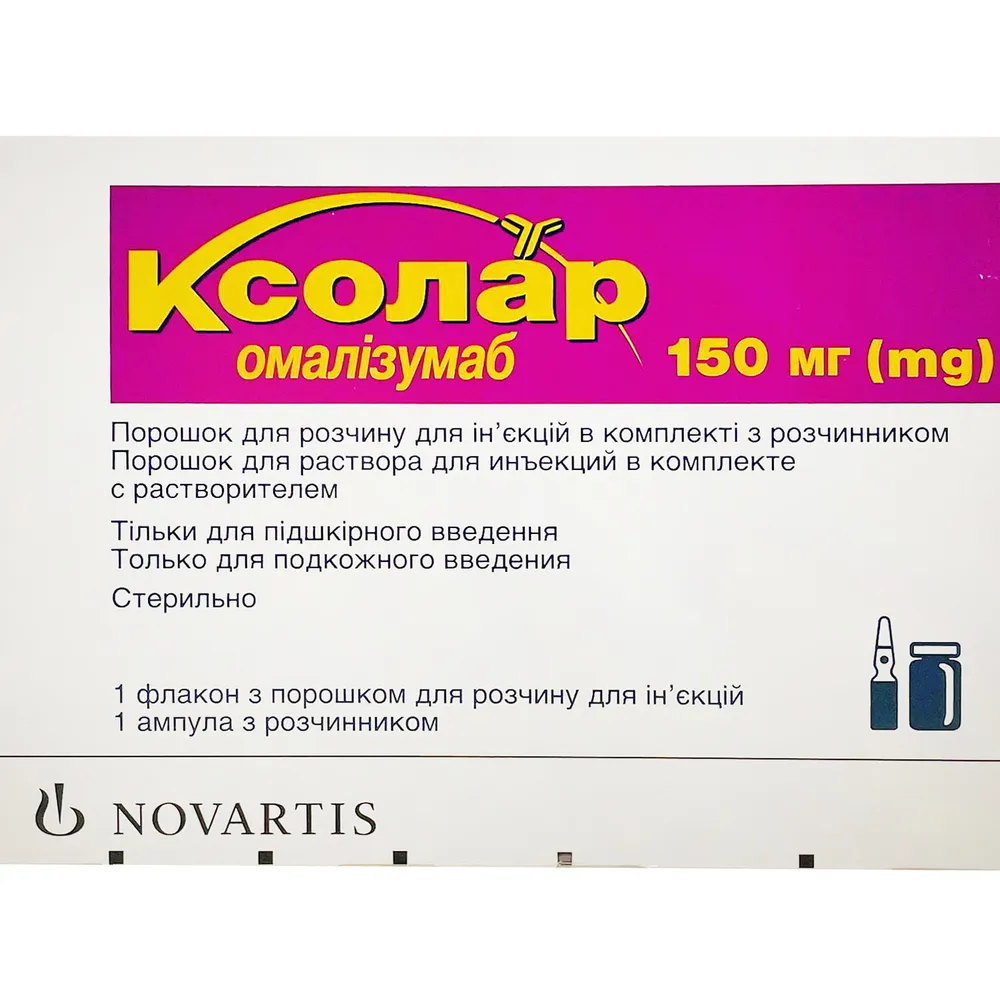
Table of Contents
INSTRUCTIONS FOR MEDICAL USE OF THE MEDICINAL PRODUCT XOLAIR®
Composition:
Active substance: omalizumab;
1 vial contains 75 mg or 150 mg of omalizumab*; reconstituted Xolair contains 125 mg/mL omalizumab (75 mg in 0.6 mL or 150 mg in 1.2 mL);
Excipients: powder – L-histidine hydrochloride monohydrate, L-histidine, sucrose, polysorbate 20; solvent – water for injections.
* Omalizumab is a humanized monoclonal antibody produced using recombinant DNA technology in Chinese hamster ovary (CHO) cells.
Pharmaceutical form. Powder for solution for injection.
Main physicochemical characteristics:
white or almost white agglomerate; after dissolution – colorless or light brown to yellow solution, clear or slightly opalescent.
Solvent: clear, colorless liquid.
Pharmacotherapeutic group. Agents for systemic use in obstructive airway diseases. ATC code R03DX05.
Pharmacological properties.
Pharmacodynamics.
Omalizumab is a humanized monoclonal antibody produced from recombinant DNA that selectively binds to human immunoglobulin E (IgE). The antibody is a kappa-IgG1 containing a human framework region with the complementarity-determining region of a murine parent antibody that binds to IgE. Treatment with Xolair inhibits IgE-mediated inflammation, as evidenced by reductions in blood and tissue eosinophils and decreased levels of inflammatory mediators, including IL-4, IL-5, and IL-13, from innate, adaptive, and non-immune cells.
Mechanism of action
Omalizumab binds to IgE and prevents its binding to FcεRI (the high-affinity IgE receptor) on basophils and mast cells, thereby reducing the amount of free IgE capable of triggering the allergic cascade. Treatment of patients with atopic diseases with omalizumab resulted in significant downregulation of FcεRI receptors on basophils.
Pharmacodynamic effects
Allergic asthma
In vitro, allergen-induced histamine release from basophils obtained from patients treated with Xolair was reduced by approximately 90% compared to pre-treatment values.
During clinical trials in patients with allergic asthma, dose-dependent reduction in serum free IgE levels was observed within one hour after the first dose, and this reduction was maintained between doses. One year after discontinuation of Xolair treatment, IgE levels returned to pre-treatment levels, with no rebound increase in IgE levels observed after elimination of the drug from the body.
Chronic rhinosinusitis with nasal polyps (CRSwNP)
In clinical trials in patients with CRSwNP, treatment with Xolair led to a reduction in serum free IgE levels (by approximately 95%) and an increase in total IgE levels in serum to a similar extent as observed in patients with allergic asthma. The increase in total serum IgE was due to the formation of omalizumab-IgE complexes, which are eliminated more slowly than free IgE.
Chronic spontaneous urticaria (CSU)
Mechanism of action
Omalizumab binds to IgE and reduces serum levels of free IgE. This is followed by downregulation of IgE receptors (FcεRI) on cells. The exact mechanism by which this leads to symptom control in chronic spontaneous urticaria is not fully understood.
Pharmacodynamic effects
In clinical trials in patients with CSU, maximum suppression of free IgE levels was observed within three days after the first subcutaneous dose. After repeated dosing every 4 weeks, serum free IgE levels prior to administration remained stable between weeks 12 and 24 of treatment. After discontinuation of Xolair, free IgE levels increased, reaching pre-treatment levels within 16 weeks.
Clinical experience in allergic asthma
Adults and children aged 12 years and older
The efficacy and safety of Xolair were demonstrated in a 28-week, double-blind, placebo-controlled study (Study 1) involving 419 patients aged 12–79 years with severe allergic asthma, who had reduced lung function (FEV1 40–80% of predicted) and poorly controlled asthma symptoms despite treatment with high-dose inhaled corticosteroids and long-acting beta2-agonists. Patients enrolled in the study had experienced multiple asthma exacerbations requiring systemic corticosteroids or hospitalization, or emergency care due to asthma exacerbation, despite continuous treatment with high-dose inhaled corticosteroids and long-acting beta2-agonists. Xolair or placebo was administered subcutaneously as an add-on to therapy with beclomethasone dipropionate (or equivalent) at a dose >1000 mcg and a long-acting beta2-agonist. Concomitant therapy with oral corticosteroids, theophylline, and leukotriene modifiers was permitted (22%, 27%, and 35% of patients, respectively).
The primary endpoint was the rate of asthma exacerbations requiring treatment with systemic corticosteroids. Omalizumab reduced the rate of asthma exacerbations by 19% (p = 0.153). Additional assessments showing statistical significance (p <0.05) in favor of Xolair included reduction in the rate of severe exacerbations (defined as those in which the patient’s lung function declined to below 60% of best personal and required systemic corticosteroids), asthma-related unplanned visits to a physician (comprising hospitalizations, emergency care, and unscheduled physician visits), and improvements in physician-rated overall treatment effectiveness, asthma-related quality of life (AQL), asthma symptoms, and lung function.
In a subgroup analysis of patients with baseline total IgE levels ≥76 IU/mL, a greater likelihood of clinically meaningful benefit from Xolair was demonstrated. In these patients, during Study 1, Xolair reduced the rate of exacerbations by 40% (p = 0.002). Furthermore, in the Xolair clinical trial program in severe asthma, a higher number of patients with a clinically meaningful response were observed in the group with baseline total IgE ≥76 IU/mL. Table 1.
Table 1
Results of Study 1
| Study population 1 overall |
||
| Study |
Xolair N=209 |
Placebo N=210 |
| Asthma exacerbations |
||
| Rate over 28 weeks, |
0.74 |
0.92 |
| % reduction, p-value for rate ratio |
19.4%, p = 0.153 |
|
| Severe asthma exacerbations |
||
| Rate over 28 weeks, |
0.24 |
0.48 |
| % reduction, p-value for rate ratio |
50.1%, p = 0.002 |
|
| Emergency physician visits |
||
| Rate over 28 weeks, |
0.24 |
0.43 |
| % reduction, p-value for rate ratio |
43.9%, p = 0.038 |
|
| Physician's overall assessment |
||
| % of patients who responded*, |
60.5% |
42.8% |
| p-value ** |
<0.001 |
|
| Improvement in AQL |
||
| % of patients ≥0.5 improvement, |
60.8% |
47.8% |
| p-value |
0.008 |
|
* Significant improvement or complete control.
** p-value for overall distribution score.
In Study 2, the efficacy and safety of Xolair were evaluated in a population of 312 patients with severe allergic asthma whose characteristics matched those in Study 1. Treatment with Xolair in this open-label study resulted in a 61% reduction in the rate of clinically significant asthma exacerbations compared to current asthma therapy alone.
Four additional large placebo-controlled add-on studies of Xolair, lasting from 28 to 52 weeks, evaluated the efficacy and safety of Xolair in 1722 adults and children aged 12 years and older (Studies 3, 4, 5, 6) with severe persistent asthma. Most patients had poorly controlled asthma but received less concomitant asthma therapy than patients in Studies 1 or 2. In Studies 3–5, exacerbations were used as the primary endpoint, whereas in Study 6, the primary objective was to assess reduction in the need for inhaled corticosteroids.
During Studies 3, 4, and 5, patients receiving Xolair experienced reductions in asthma exacerbation rates of 37.5% (p = 0.027), 40.3% (p <0.001), and 57.6% (p <0.001), respectively, compared to placebo.
In Study 6, significantly more patients with severe allergic asthma treated with Xolair were able to reduce their fluticasone dose to ≤ 500 µg/day without worsening asthma control (60.3%) compared to the placebo group (45.8%, p <0.05).
Asthma-related quality of life was measured using the Juniper questionnaire. For all six studies, significant improvement was observed in patients receiving Xolair compared to baseline, relative to patients in the placebo or control group.
Overall physician assessment of treatment efficacy.
Overall assessment of treatment efficacy was performed by physicians in the five studies mentioned above as asthma control. Physicians had the opportunity to consider peak expiratory flow (PEF), daytime and nighttime symptoms, rescue medication use, spirometry data, and asthma exacerbations. In all five studies, a statistically significantly greater proportion of patients receiving Xolair were considered to have achieved significant improvement or complete asthma control compared to patients in the placebo group.
Children aged 6 to 12 years
The primary confirmation of safety and efficacy of Xolair in the age group 6 to 12 years was obtained in one randomized, double-blind, placebo-controlled, multicenter study (Study 7).
Study 7 was a placebo-controlled trial that included a specific subgroup (n = 235) of patients defined by current indications, who were treated with high doses of inhaled corticosteroids (≥ 500 µg/day fluticasone equivalent) and long-acting beta-agonists.
Clinically significant exacerbation was defined as worsening asthma symptoms based on the investigator's clinical assessment, requiring either doubling of the initial inhaled corticosteroid dose for at least 3 days and/or treatment with systemic corticosteroids (oral or intravenous) for at least 3 days due to medical necessity.
In the specific subgroup of patients receiving high doses of inhaled corticosteroids, the omalizumab group had a statistically significantly lower rate of clinically significant asthma exacerbations compared to the placebo group. At Week 24, the difference in rates between treatment groups was 34% (rate ratio 0.662, p = 0.047) reduction compared to placebo in patients receiving omalizumab. In the second double-blind 28-week treatment period, the difference in rates between treatment groups was 63% (rate ratio 0.37, p <0.001) reduction compared to placebo in patients receiving omalizumab.
Over the 52-week double-blind treatment period (including a 24-week fixed-dose steroid phase and a 28-week steroid dose-adjustment phase), the difference in rates between treatment groups was 50% (rate ratio 0.504, p <0.001) relative reduction in exacerbation rates in patients receiving omalizumab.
For the group of patients receiving omalizumab, greater reduction in the frequency of rescue beta-agonist use was observed compared to the placebo group at the end of the 52-week treatment period, although the difference between groups was not statistically significant. In the overall assessment of treatment efficacy at the end of the 52-week double-blind treatment period in the subgroup of severe patients receiving high-dose inhaled corticosteroids plus long-acting beta-agonists, the proportion of patients with an "excellent" treatment efficacy rating was higher, and the proportion of patients with "satisfactory" or "poor" ratings was lower in the omalizumab group compared to the placebo group; the difference between groups was statistically significant (p <0.001). However, there were no differences between the omalizumab and placebo patient groups regarding subjective quality-of-life assessments.
Clinical experience in chronic rhinosinusitis with nasal polyps (CRSwNP)
The safety and efficacy of Xolair were evaluated in two randomized, double-blind, placebo-controlled studies involving patients with CRSwNP (Table 2). Patients received subcutaneous Xolair or placebo every 2 or 4 weeks (see section "Dosage and administration"). All patients received background intranasal therapy with mometasone throughout the study. Prior sinonasal surgery or previous systemic corticosteroid use was not required for study entry. Patients received Xolair or placebo for 24 weeks, followed by a 4-week observation period. Demographic and baseline characteristics, including allergic comorbidities, are described in Table 2.
Primary endpoints were bilateral nasal polyp scores (NPS) and mean daily nasal congestion score (NCS) at Week 24. In both nasal polyp studies (Studies 1 and 2), patients receiving Xolair showed statistically significant greater improvements from baseline at Week 24 in NPS and mean weekly NCS compared to patients receiving placebo. Results from Studies 1 and 2 on nasal polyps are presented in Table 3.
Table 2
Demographic characteristics and baseline characteristics in
nasal polyp studies
| Parameter |
Nasal Polyp Study 1 N = 138 |
Nasal Polyp Study 2 N = 127 |
| Mean age (years) (SD) |
51.0 (13.2) |
50.1 (11.9) |
| % male |
63.8 |
65.4 |
| Patients who received systemic corticosteroids in the prior year (%) |
18.8 |
26.0 |
| Bilateral nasal polyposis score (NPS): mean (SD), scale 0–8 |
6.2 (1.0) |
6.3 (0.9) |
| Nasal congestion/obstruction score (NCS): mean (SD), scale 0–3 |
2.4 (0.6) |
2.3 (0.7) |
| Sense of smell score: mean (SD), scale 0–3 |
2.7 (0.7) |
2.7 (0.7) |
| SNOT-22 total score: mean (SD), scale 0–110 |
60.1 (17.7) |
59.5 (19.3) |
| Blood eosinophil count (cells/µL): mean (SD) |
346.1 (284.1) |
334.6 (187.6) |
| Total IgE, IU/mL: mean (SD) |
160.9 (139.6) |
190.2 (200.5) |
| Asthma (%) |
53.6 |
60.6 |
| Mild (%) |
37.8 |
32.5 |
| Moderate (%) |
58.1 |
58.4 |
| Severe (%) |
4.1 |
9.1 |
| Aspirin-induced asthma (%) |
19.6 |
35.4 |
| Allergic rhinitis (%) |
43.5 |
42.5 |
SD – standard deviation;
SNOT-22 – 22-item Sino-Nasal Outcome Test;
IgE – immunoglobulin E;
IU – international units.
Higher SNOT-22, NPS, and SNOT-22 scores indicate a more severe disease course.
Table 3
Change from baseline at Week 24 in clinical assessments
from Studies 1 and 2 on nasal polyps and combined data
| Parameter |
Nasal Polyps, |
Nasal Polyps, |
Nasal Polyps, |
|||
| Placebo |
Xhance |
Placebo |
Xhance |
Placebo |
Xhance |
|
| N |
66 |
72 |
65 |
62 |
131 |
134 |
| Nasal Polyp Score |
||||||
| Mean baseline value |
6.32 |
6.19 |
6.09 |
6.44 |
6.21 |
6.31 |
| LS-mean value at Week 24 |
0.06 |
-1.08 |
-0.31 |
-0.90 |
-0.13 |
-0.99 |
| Difference (95% CI) |
-1.14 (-1.59, -0.69) |
-0.59 (-1.05, -0.12) |
-0.86 (-1.18, -0.54) |
|||
| p-value |
< 0.0001 |
0.0140 |
< 0.0001 |
|||
| Mean (over 7 days) daily NPS |
||||||
| Mean baseline value |
2.46 |
2.40 |
2.29 |
2.26 |
2.38 |
2.34 |
| LS-mean value at Week 24 |
-0.35 |
-0.89 |
-0.20 |
-0.70 |
-0.28 |
-0.80 |
| Difference (95% CI) |
-0.55 (-0.84, -0.25) |
-0.50 (-0.80, -0.19) |
-0.52 (-0.73, -0.31) |
|||
| p-value |
0.0004 |
0.0017 |
< 0.0001 |
|||
| NPS-E |
||||||
| Mean baseline value |
9.33 |
8.56 |
8.73 |
8.37 |
9.03 |
8.47 |
| LS-mean value at Week 24 |
-1.06 |
-2.97 |
-0.44 |
-2.53 |
-0.77 |
-2.75 |
| Difference (95% CI) |
-1.91 (-2.85, -0.96) |
-2.09 (-3.00, -1.18) |
-1.98 (-2.63, -1.33) |
|||
| p-value |
0.0001 |
< 0.0001 |
< 0.0001 |
|||
| SNOT-22 |
||||||
| Mean baseline value |
60.26 |
59.82 |
59.80 |
59.21 |
60.03 |
59.54 |
| LS-mean value at Week 24 |
-8.58 |
-24.70 |
-6.55 |
-21.59 |
-7.73 |
-23.10 |
| Difference (95% CI) |
-16.12 (-21.86, -10.38) |
-15.04 (-21.26, -8.82) |
-15.36 (-19.57, -11.16) |
|||
| p-value |
< 0.0001 |
< 0.0001 |
< 0.0001 |
|||
| (MCID = 8.9) |
||||||
| TWCF |
||||||
| Mean baseline value |
13.56 |
12.78 |
13.27 |
12.87 |
13.41 |
12.82 |
| LS-mean value at Week 24 |
0.63 |
4.44 |
0.44 |
4.31 |
0.54 |
4.38 |
| Difference (95% CI) |
3.81 (1.38, 6.24) |
3.86 (1.57, 6.15) |
3.84 (2.17, 5.51) |
|||
| p-value |
0.0024 |
0.0011 |
< 0.0001 |
|||
LSM – least squares method; CI – confidence interval; NCS – nasal congestion score; TNS – total nasal symptom score; SNOT-22 – 22-item sino-nasal outcome test; UPSIT – University of Pennsylvania Smell Identification Test; MDD – minimal detectable difference.
| Initial value |
| Initial value |
| Primary analysis of effectiveness |
| Secondary analysis of efficacy |

| Week |
| Week |
| Study 2 / Placebo (N=65) Study 2 / Omalizumab (N=62) |
| Placebo / Placebo (N=66) Placebo / Omalizumab (N=72) |
| Placebo / Placebo (N=65) Placebo / Omalizumab (N=62) |
| Placebo (N=66) Active / Omalizumab (N=72) |
| Secondary analysis of efficacy |
| Primary analysis of efficacy |

| -1.25 |
| -1.25 |
| -1.00 |
| -1.00 |
| -0.75 |
| -0.75 |
| -0.50 |
| -0.50 |
| -0.25 |
| -0.25 |
|
|
|
|
| 24 |
| 20 |
| 16 |
| 12 |
| 8 |
| 4 |
| 4 |
| 8 |
| 12 |
| 16 |
| 20 |
| 24 |
Figure 1. Mean change from baseline in Nasal Congestion Score (NCS) and mean change from baseline in Nasal Polyp Score (NPS) in Studies 1 and 2 on nasal polyps.
In a pre-specified analysis of urgent treatment (systemic corticosteroids for 3 or more consecutive days or nasal polypectomy) during the 24-week treatment period, the proportion of patients requiring urgent treatment was lower in the Xolair group compared to placebo (2.3% vs. 6.2%, respectively). The odds ratio for requiring urgent treatment in patients receiving Xolair compared to placebo was 0.38 (95% CI: 0.10, 1.49). No sinus-nasal surgeries were reported in either study.
Clinical experience in chronic spontaneous urticaria
The efficacy and safety of Xolair were demonstrated in two randomized, placebo-controlled Phase III studies (Studies 1 and 2) in patients with CSU who continued to experience symptoms despite treatment with approved doses of H1-antihistamines. A third study (Study 3) initially evaluated the safety of Xolair in patients with CSU who continued to experience symptoms despite treatment with H1-antihistamines at approximately four times the approved dose, as well as H2-antihistamines and/or leukotriene receptor antagonists. A total of 975 patients aged 12 to 75 years (mean age 42.3 years; 39 patients aged 12–17 years, 54 patients aged ≥65 years; 259 males and 716 females) were enrolled in the three studies. All patients had inadequately controlled symptoms as assessed by the 16-point weekly Urticaria Activity Score (UAS7, range 0–42) and the 8-point weekly Pruritus Severity Score (a component of UAS7; range 0–21) over the 7 days prior to randomization, despite taking antihistamines for at least 2 weeks prior.
During Studies 1 and 2, the mean Pruritus Severity Score at baseline ranged from 13.7 to 14.5, and the mean UAS7 score was 29.5 and 31.7, respectively. In the safety Study 3, the mean Pruritus Severity Score at baseline was 13.8, and the mean UAS7 score was 31.2. Across all three studies, patients had been receiving on average 4–6 medications (including H1-antihistamines) for the treatment of CSU symptoms prior to study entry. Patients received Xolair at doses of 75 mg, 150 mg, or 300 mg, or placebo, administered as subcutaneous injections every 4 weeks for 24 weeks in Studies 1 and 2, respectively, and Xolair 300 mg or placebo administered as subcutaneous injections every 4 weeks for 24 weeks in Study 3. In all studies, the treatment-free period was 16 weeks.
The primary endpoint was the change from baseline to Week 12 in the weekly Pruritus Severity Score. Omalizumab at a dose of 300 mg reduced the weekly Pruritus Severity Score by 8.55–9.77 (p <0.0001), compared to a reduction of 3.63–5.14 in the placebo group (see Table 4). The response rate based on UAS7≤6 (at Week 12) was statistically significantly higher in the Xolair 300 mg groups (52–66%) (p<0.0001) compared to 11–19% in the placebo groups, and complete remission (UAS7=0) was achieved in 34–44% (p<0.0001) of patients receiving the 300 mg dose compared to 5–9% in the placebo groups. Patients treated with the 300 mg dose achieved the highest mean percentage of days without episodes of angioedema from Week 4 to Week 12 (91.0–96.1%; p<0.001) compared to patients in the placebo groups (88.1–89.2%). The mean change from baseline to Week 12 in overall DLQI (Dermatology Life Quality Index) was greater (p<0.001) in the Xolair 300 mg groups than in the placebo groups, indicating improvement by 9.7 to 10.3 points compared to 5.1–6.1 points in the corresponding placebo groups.
| Table 4 Change from baseline to Week 12 on the weekly severity score for itch, Studies 1, 2, and 3 (mITT* population) |
||||
| Parameters |
Placebo |
Omalizumab |
||
| Study 1 |
||||
| N |
80 |
81 |
||
| Mean score (SD) |
−3.63 (5.22) |
−9.40 (5.73) |
||
| Least squares mean difference compared to placebo1 |
- |
−5.80 |
||
| 95% CI for difference |
- |
−7.49, −4.10 |
||
| P-value compared to placebo2 |
- |
<0.0001 |
||
| Study 2 |
||||
| N |
79 |
79 |
||
| Mean score (SD) |
−5.14 (5.58) |
−9.77 (5.95) |
||
| Least squares mean difference compared to placebo1 |
- |
−4.81 |
||
| 95% CI for difference |
- |
−6.49, −3.13 |
||
| P-value compared to placebo2 |
- |
<0.0001 |
||
| Study 3 |
||||
| N |
83 |
252 |
||
| Mean score (SD) |
−4.01 (5.87) |
−8.55 (6.01) |
||
| Least squares mean difference compared to placebo1 |
- |
|
||
| 95% CI for difference |
- |
−5.97, −3.08 |
||
| P-value compared to placebo2 |
- |
<0.0001 |
||
*Modified intent-to-treat population (mITT) by treatment assigned: includes all patients who were randomized and received at least one dose of the investigational medicinal product.
BOCF (baseline observation carried forward) was used to handle missing data.
1 Least squares mean was calculated using an ANCOVA model. Covariates were baseline weekly pruritus severity score (<13 vs ≥13) and baseline body weight (<80 kg vs ≥80 kg).
2 P-value was obtained from ANCOVA t-test.
Figure 2 shows the mean weekly pruritus severity score over time in Study 1. The mean weekly pruritus severity score significantly decreased, reaching maximum effect at Week 12 during the 24-week treatment period. Similar results were obtained in Study 3.
In all three studies, the mean weekly pruritus severity score gradually increased during the 16-week treatment-free period, consistent with symptom recurrence. Mean values at the end of the observation period were similar to those observed in the placebo group, but lower than the corresponding mean values at the beginning of the study.
| Week 12 Primary endpoint |
| Omalizumab 300 mg dose |
| Placebo |
| Week |
| Administered omalizumab or placebo |
 |
Fig. 2. Mean weekly itch severity score over time, Study 1 (mITT population)
BOCF – baseline observation carried forward; mITT – modified intent-to-treat population.
Efficacy at 24 weeks of treatment
Efficacy results observed at week 24 of treatment were compared with those observed at week 12 of treatment.
With the 300 mg dose in Studies 1 and 3, the mean reduction from baseline in the weekly itch severity score was 9.8 and 8.6, the percentage of patients achieving UAS7≤6 was 61.7% and 55.6%, and the percentage of patients achieving complete response (UAS7=0) was 48.1% and 42.5%, respectively (all p<0.0001 vs. placebo).
Clinical experience with repeated administration of omalizumab in patients is limited.
Clinical trial data in adolescents (aged 12 to 17 years) included 39 patients, of whom 11 received the 300 mg dose. Results for the 300 mg dose were obtained from 9 patients at week 12 and 6 patients at week 24, showing a similar therapeutic response to omalizumab as in adult patients. The mean change from baseline in the weekly itch severity score indicated a reduction of 8.25 at week 12 and 8.95 at week 24. Response rates were 33% at week 12 and 67% at week 24 for UAS7=0, and 56% at week 12 and 67% at week 24 for UAS7≤6.
Pharmacokinetics
The action of omalizumab has been studied in adult patients and children aged 12 years and older with allergic asthma, in adult patients with CRSwNP, and in adults and adolescents with CSU. The overall pharmacokinetic parameters of omalizumab in these patient populations are similar.
Absorption
After subcutaneous administration, omalizumab is absorbed with a mean absolute bioavailability of 62%. Following subcutaneous administration of a single dose to adults and children aged 12 years and older with asthma or CSU, omalizumab was slowly absorbed, reaching peak serum concentration on average after 7–8 days. In patients with asthma, after repeated administration of omalizumab, the area under the serum concentration-time curve from day 0 to day 14 at steady state was 6 times higher than after the first dose.
The pharmacokinetics of omalizumab are linear at doses above 0.5 mg/kg. After repeated administration of omalizumab, the area under the serum concentration-time curve from day 0 to day 14 at steady state was up to 6 times higher than after the first dose.
Administration of Xolair as lyophilisate or solution resulted in similar omalizumab serum concentration-time profiles.
Distribution
In vitro, omalizumab forms limited-size complexes with IgE. Precipitating complexes and complexes with a molecular weight exceeding one million daltons were not detected either in vitro or in vivo. Based on population pharmacokinetics, the distribution of omalizumab is similar in patients with allergic asthma and those with CSU. The expected volume of distribution after subcutaneous administration is 78 ± 32 ml/kg.
Elimination
The clearance of omalizumab involves IgG clearance mechanisms as well as elimination via specific binding and formation of complexes with its target ligand, IgE. Hepatic elimination of IgG includes degradation in the reticuloendothelial system and endothelial cells. Unchanged IgG is also excreted in bile. In patients with asthma, the mean serum half-life of omalizumab is 26 days, with a mean clearance of 2.4 ± 1.1 ml/kg/day. Additionally, with body weight twice as high, clearance increases approximately twofold. In patients with CSU, based on pharmacokinetic modeling, the mean serum half-life of omalizumab at steady state is 24 days, and the apparent clearance at steady state in patients with a body weight of 80 kg is 3.0 ml/kg/day.
Characteristics in patient populations
Patients with asthma and CRSwNP
Age, race/ethnicity, gender, body mass index
Population pharmacokinetic analysis of Xolair was performed to assess the impact of demographic characteristics. Analysis of these limited data indicates that dose adjustment based on age (6–76 years for patients with allergic asthma; 18–75 years for patients with CRSwNP), race/ethnicity, gender, or body mass index is not required.
Patients with CSU
The impact of demographic characteristics and other factors on Xolair exposure was evaluated using population pharmacokinetics. Additionally, the effect of independent variables was assessed by analyzing the relationship between omalizumab concentration and clinical response. This analysis indicates that for patients with CSU, regardless of age (12–75 years), race/ethnicity, gender, body weight, body mass index, baseline IgE levels, anti-FcεRI autoantibodies, concomitant use of H2-antihistamines or leukotriene receptor antagonists, dose adjustment is not required.
Renal and hepatic impairment
Data on pharmacokinetics or pharmacodynamics in patients with renal or hepatic impairment are not available.
Clinical characteristics.
Indications.
Allergic asthma
The possibility of treatment with Xolair should be considered only for patients with confirmed IgE (immunoglobulin E)-mediated asthma.
Adults and children aged 12 years and older
Xolair is indicated as add-on therapy for achieving better asthma control in patients with severe persistent allergic asthma who have a positive skin test or in vitro test for sensitivity to a perennial aeroallergen, reduced lung function (FEV1 (forced expiratory volume in 1 second) < 80%), and frequent daytime symptoms or frequent nocturnal awakenings, and who have documented evidence of multiple severe asthma exacerbations despite treatment with high daily doses of inhaled corticosteroids combined with inhaled long-acting beta2-agonists.
Children aged 6 to 12 years
Xolair is indicated as add-on therapy for achieving better asthma control in patients with severe persistent allergic asthma who have a positive skin test or in vitro test for sensitivity to a perennial aeroallergen, frequent daytime symptoms or nocturnal awakenings, and documented history of multiple severe asthma exacerbations despite treatment with high daily doses of inhaled corticosteroids combined with inhaled long-acting beta2-agonists.
Chronic rhinosinusitis with nasal polyps (CRSwNP)
Xolair is indicated as add-on therapy together with intranasal corticosteroids (INS) for the treatment of adults (aged 18 years and older) with severe CRSwNP who are not adequately controlled with INS therapy.
Chronic spontaneous urticaria (CSU), dosage 150 mg
The medicinal product Xolair is indicated as add-on therapy for chronic spontaneous urticaria in adults and adolescents (aged 12 years and older) who are inadequately responsive to H1-antihistamine treatment.
Contraindications.
Hypersensitivity to the active substance or to any of the other components of the medicinal product.
Interaction with other medicinal products and other types of interactions.
Since IgE may be involved in the immune response to certain helminthic infestations, Xolair may indirectly reduce the efficacy of medicinal products used to treat helminthic or other parasitic infections.
Cytochrome P450 enzymes, efflux pumps, and protein-binding mechanisms are not involved in the clearance of omalizumab; therefore, the potential for interaction with other drugs is negligible. No studies on interactions between Xolair and medicinal products or vaccines have been conducted. There are no pharmacologically justified reasons to expect that medicinal products commonly used in the treatment of asthma would interact with omalizumab.
Allergic asthma
During clinical trials, Xolair was generally used concomitantly with inhaled and oral corticosteroids, short- and long-acting inhaled beta-agonists, leukotriene modifiers, theophylline, and oral antihistamines. There was no evidence of altered safety of Xolair due to these widely used asthma medications. Limited data are available regarding the use of Xolair in combination with specific immunotherapy (hyposensitization therapy). In clinical trials where Xolair was used concomitantly with immunotherapy, the safety and efficacy of Xolair in combination with specific immunotherapy did not differ from those observed when Xolair was used as monotherapy.
Chronic spontaneous urticaria
During clinical trials in patients with CSU, Xolair was administered concomitantly with antihistamines (anti-H1, anti-H2) and leukotriene receptor antagonists. There are no data indicating that the safety of omalizumab was altered when used with these medicinal products compared to the known safety profile in allergic asthma. Furthermore, population pharmacokinetic analysis did not indicate a relevant effect of H2-antihistamines and leukotriene receptor antagonists on the pharmacokinetics of omalizumab.
Chronic rhinosinusitis with nasal polyps
In clinical studies, Xolair was administered according to protocol together with mometasone, an intranasal spray. Other commonly used concomitant medicinal products included other intranasal corticosteroids, bronchodilators, antihistamines, leukotriene receptor antagonists, adrenergic agents/sympathomimetics, and local nasal anesthetics. There were no indications that concomitant use of these other commonly used medicinal products altered the safety of Xolair.
Children
Some patients aged 12 to 17 years were included in CSU clinical trials and received Xolair concomitantly with antihistamines (anti-H1, anti-H2) and leukotriene receptor antagonists. Studies in children under 12 years of age have not been conducted.
Special precautions for use.
Traceability
To improve the traceability of biological medicinal products, the name and batch number of the administered product should be clearly recorded.
General
Xolair is not indicated for the treatment of acute asthma attacks, acute bronchospasm, or status asthmaticus.
There have been no studies on the use of Xolair in patients with hyper-IgE syndrome or allergic bronchopulmonary aspergillosis, or for the prevention of anaphylactic reactions, including those provoked by food allergy, atopic dermatitis, or allergic rhinitis. Xolair is not indicated for the treatment of such conditions.
There have been no studies on the use of Xolair in patients with autoimmune diseases, immune complex-mediated conditions, or pre-existing renal or hepatic dysfunction. Xolair should be used with caution in such patients.
Rapid discontinuation of systemic or inhaled corticosteroids after initiation of Xolair therapy in the treatment of allergic asthma or CRSwNP is not recommended. Corticosteroid dose reduction should be performed under close physician supervision and, if necessary, gradually.
Immune system disorders
- Type I hypersensitivity reactions
Type I hypersensitivity reactions, including anaphylaxis and anaphylactic shock, may occur during treatment with omalizumab and can even develop after prolonged therapy. Most of these reactions occur within 2 hours after the first or subsequent injections of Xolair, although adverse reactions may sometimes occur more than 2 hours after injection, and in some cases even later than 24 hours. Most anaphylactic reactions occur during the administration of the first three doses of Xolair. A history of hypersensitivity reactions unrelated to omalizumab is a risk factor for developing anaphylactic reactions during Xolair treatment. Therefore, medications for the treatment of anaphylactic reactions must always be immediately available after Xolair administration. If anaphylaxis or another serious allergic reaction occurs, Xolair must be discontinued immediately and appropriate therapy initiated. Patients should be informed that such reactions are possible and must seek immediate medical attention if an allergic reaction occurs.
Antibodies to omalizumab have been detected in a small number of patients during clinical trials. The clinical significance of anti-Xolair antibodies is not well characterized.
- Serum sickness
Serum sickness and serum sickness-like reactions (delayed type III hypersensitivity reactions) are rarely observed in patients receiving humanized monoclonal antibodies, including omalizumab. The probable pathophysiological mechanism involves the formation and deposition of immune complexes due to the production of antibodies against omalizumab. The typical onset is 1–5 days after the first or subsequent injections, or after prolonged treatment. Symptoms suggestive of serum sickness include arthritis/arthralgia, rash (urticaria or other forms), fever, and lymphadenopathy. Antihistamines and corticosteroids may be indicated for prevention or treatment of these disorders, and patients should report any suspicious symptoms to their physician.
- Churg-Strauss syndrome and hypereosinophilic syndrome
In patients with severe asthma, systemic hypereosinophilic syndrome or allergic granulomatous vasculitis (Churg-Strauss syndrome) may occur in isolated cases; both conditions are usually treated with systemic corticosteroids.
In isolated cases, systemic eosinophilia and vasculitis may appear or develop in patients receiving anti-asthma treatments, including omalizumab. These phenomena are usually associated with the reduction of oral corticosteroid doses.
When treating such patients, clinicians should be aware of the potential development of marked eosinophilia, vasculitic rash, worsening pulmonary symptoms, paranasal sinus abnormalities, cardiac complications, and/or neuropathy.
In all severe cases of the aforementioned immune disorders, discontinuation of omalizumab should be considered.
Parasitic (helminthic) infections
IgE may be involved in the immune response triggered by certain helminthic infections. A placebo-controlled study in patients at high ongoing risk of helminthic infections showed a slight increase in the frequency of infections during omalizumab treatment, although the course, severity, and response to treatment remained unchanged. The incidence of helminthic infections during the overall clinical program, which was not specifically designed to detect such infections, was less than 1 case per 1000 patients. However, patients at high risk of helminthic infection should exercise caution, especially when traveling to regions where helminthic infections are endemic. If a patient does not respond to prescribed antihelminthic treatment, discontinuation of Xolair should be considered.
Use during pregnancy or breastfeeding
Moderate data from pregnant women (from 300 to 1,000 pregnancy outcomes), obtained from the pregnancy registry and spontaneous post-marketing reports, indicate no evidence of malformative or fetal/neonatal toxicity. A prospective study from the pregnancy registry (EXPECT) involving 250 pregnant women with asthma who received Xolair showed that the prevalence of major congenital anomalies was similar (8.1% vs. 8.9%) in the EXPECT group and in patients with comparable diseases (moderate to severe asthma). Interpretation of these data may be influenced by methodological limitations of the study, including small sample size and non-randomized design.
Omalizumab crosses the placental barrier; however, animal studies have not shown any direct or indirect harmful effects on reproductive function. Omalizumab has been associated with age-related decreases in platelet counts in lower primates, with greater relative sensitivity in immature animals. If clinically necessary, Xolair treatment during pregnancy may be considered.
Immunoglobulin G (IgG) is present in human breast milk; therefore, omalizumab is expected to be present in human breast milk. Omalizumab is excreted in breast milk of lower primates.
The EXPECT study, involving 154 infants exposed to Xolair during in utero development and breastfeeding, found no adverse reactions in breastfed infants. Interpretation of these data may be influenced by methodological limitations, including small sample size and non-randomized design.
When administered orally, immunoglobulin G proteins undergo intestinal proteolysis and have low bioavailability. No effect on breastfed neonates/infants is expected. Therefore, if clinically necessary, Xolair treatment during breastfeeding may be considered.
There are no data on the effect of omalizumab on human fertility. In dedicated preclinical fertility studies, including mating studies, no impairment of male or female fertility was observed after repeated administration of omalizumab at doses up to 75 mg/kg. Furthermore, no genotoxic effects were observed in a separate preclinical genotoxicity study.
Ability to affect reaction speed when driving or operating machinery
Xolair has no or negligible influence on the ability to drive a car or operate machinery.
Method of Administration and Dosage
Xolair should be prescribed by a physician experienced in the diagnosis and treatment of severe persistent asthma and chronic rhinosinusitis with nasal polyps (CRSwNP).
The same principles apply when determining the dosage for the treatment of allergic asthma and CRSwNP. The required dose and frequency of Xolair administration for these conditions are determined based on the IgE concentration (IU/mL) measured prior to initiating treatment, as well as the patient's body weight (kg). Prior to starting treatment, the patient's IgE level must be determined using a quantitative assay for total IgE with any commercially available serum test. Depending on these values, the recommended dose of Xolair ranges from 75 to 600 mg. This dose may be divided into 1 to 4 injections.
A lower likelihood of positive response has been observed in patients with allergic asthma who had baseline IgE levels below 76 IU/mL. Prior to initiating therapy, the physician should confirm in vitro reactivity (radioallergosorbent test [RAST]) to a perennial allergen in adult patients and children aged 12 years and older with IgE levels below 76 IU/mL, and in children aged 6 to 12 years with IgE levels below 200 IU/mL.
Dose calculations are provided in Table 5, and dose determination is outlined in Tables 6 and 7.
Xolair should not be prescribed to patients whose IgE levels or body weight exceed the values specified in the dosing table.
The maximum recommended dose is 600 mg of omalizumab every two weeks.
Table 5
Dose conversion into number of vials, number of injections, and total injection volume per administration
| Dose (mg) |
Number of vials |
Number of injections |
Total injection volume (ml) |
|
| 75 mg |
150 mg |
|||
| 75 |
1 |
0 |
1 |
0.6 |
| 150 |
0 |
1 |
1 |
1.2 |
| 225 |
1 |
1 |
2 |
1.8 |
| 300 |
0 |
2 |
2 |
2.4 |
| 375 |
1 |
2 |
3 |
3.0 |
| 450 |
0 |
3 |
3 |
3.6 |
| 525 |
1 |
3 |
4 |
4.2 |
| 600 |
0 |
4 |
4 |
4.8 |
a 0.6 mL – maximum volume to be withdrawn from one vial (Xofigo, 75 mg);
b 1.2 mL – maximum volume to be withdrawn from one vial (Xofigo, 150 mg);
c or use of 0.6 mL from a 150 mg vial.
ADMINISTER EVERY 4 WEEKS.
Table 6
Doses of Xofigo (mg/dose) administered by subcutaneous injection every 4 weeks
| Baseline IgE level (IU/mL) |
Body weight (kg) |
|||||||||
| >20–25* |
>25–30* |
>30–40 |
>40–50 |
>50–60 |
>60–70 |
>70–80 |
>80–90 |
>90–125 |
>125–150 |
|
| ≥30–100 |
75 |
75 |
75 |
150 |
150 |
150 |
150 |
150 |
300 |
300 |
| >100–200 |
150 |
150 |
150 |
300 |
300 |
300 |
300 |
300 |
450 |
600 |
| >200–300 |
150 |
150 |
225 |
300 |
300 |
450 |
450 |
450 |
600 |
|
| >300–400 |
225 |
225 |
300 |
450 |
450 |
450 |
600 |
600 |
||
| >400–500 |
225 |
300 |
450 |
450 |
600 |
600 |
||||
| >500–600 |
300 |
300 |
450 |
600 |
600 |
|||||
| >600–700 |
300 |
450 |
600 |
|||||||
| >700–800 |
||||||||||
| >800–900 |
ADMINISTER EVERY 2 WEEKS, |
|||||||||
| >900–1000 |
see TABLE 5 |
|||||||||
| >1000–1100 |
||||||||||
* In the main studies for CRSwNP, body weight below 30 kg was not studied.
ADMINISTRATION EVERY 2 WEEKS.
Table 7
Doses of the medicinal product Xolair (mg/dose) administered by subcutaneous injection every 2 weeks
| Baseline IgE level (IU/mL) |
Body weight (kg) |
|||||||||
| >20–25* |
>25–30* |
>30–40 |
>40–50 |
>50–60 |
>60–70 |
>70–80 |
>80–90 |
>90–125 |
>125–150 |
|
| ≥ 30–100 |
ADMINISTER EVERY 4 WEEKS, |
|||||||||
| >100–200 |
see TABLE 4 |
|||||||||
| >200–300 |
375 |
|||||||||
| >300–400 |
450 |
525 |
||||||||
| >400–500 |
375 |
375 |
525 |
600 |
||||||
| >500–600 |
375 |
450 |
450 |
600 |
||||||
| >600–700 |
225 |
375 |
450 |
450 |
525 |
|||||
| >700–800 |
225 |
225 |
300 |
375 |
450 |
450 |
525 |
600 |
||
| >800–900 |
225 |
225 |
300 |
375 |
450 |
525 |
600 |
|||
| >900–1000 |
225 |
300 |
375 |
450 |
525 |
600 |
||||
| >1000–1100 |
225 |
300 |
375 |
450 |
600 |
Insufficient data to recommend a dose. |
||||
| >1100–1200 |
300 |
300 |
450 |
525 |
600 |
|||||
| >1200–1300 |
300 |
375 |
450 |
525 |
||||||
| >1300–1500 |
300 |
375 |
525 |
600 |
||||||
* In the main studies for CRSwNP, body weight below 30 kg was not studied.
Administration. For subcutaneous use only. Do not administer intravenously or intramuscularly.
Doses exceeding 150 mg (Table 5) should be divided into two or more injections.
Experience with self-administration of Xolair as a powder for injection solution together with diluent is limited. Therefore, the medicinal product in this form should be administered by a healthcare professional.
Treatment duration, monitoring and dose adjustment
Allergic asthma
Xolair is intended for long-term treatment. Clinical studies have confirmed the efficacy of Xolair treatment administered for at least 12–16 weeks. At week 16 after initiation of Xolair therapy, the patient's response to treatment should be evaluated prior to administering subsequent injections. The decision to continue Xolair therapy should be based on evidence of significant improvement in overall asthma control.
Chronic rhinosinusitis with nasal polyps (CRSwNP)
In clinical studies, changes in nasal polyp score (NPS) and nasal congestion score (NCS) were observed within 4 weeks in CRSwNP. The need for continuing therapy should be periodically re-evaluated based on the severity of the patient's disease and the level of symptom control.
Allergic asthma and chronic rhinosinusitis with nasal polyps (CRSwNP)
Discontinuation of Xolair treatment in most cases leads to a rebound increase in free IgE levels and development of corresponding symptoms. Total IgE levels remain elevated during treatment and stay elevated for up to one year after discontinuation of therapy. Therefore, repeated measurement of IgE levels during Xolair treatment cannot be used to determine the required dose. Dose determination after a treatment interruption lasting less than one year should be based on the IgE level obtained at initial dose determination. Serum total IgE levels may be re-measured for dose selection if Xolair treatment was interrupted for more than one year.
Dose adjustment is required in case of significant changes in body weight.
Chronic spontaneous urticaria, 150 mg dosing
The recommended dose is 300 mg administered as subcutaneous injections every 4 weeks.
The need for continued treatment should be periodically re-evaluated.
Clinical data on long-term treatment beyond 6 months for this indication are limited.
Special populations
Elderly (aged 65 years and older)
Limited data are available on the use of Xolair in patients aged over 65 years. However, there are no grounds to assume that a different dosing approach is required for elderly patients compared to younger adults.
Patients with renal or hepatic impairment
Studies on the effect of renal or hepatic impairment on the pharmacokinetics of Xolair have not been conducted. Since clearance of omalizumab at clinical doses occurs primarily via the reticuloendothelial system (RES), changes due to renal or hepatic impairment are unlikely. Although there are no specific dose adjustment recommendations, Xolair should be used with caution in these patients.
Paediatric population
The safety and efficacy of Xolair for the treatment of allergic asthma in patients under 6 years of age have not been established. No data are available.
The safety and efficacy of Xolair for the treatment of CRSwNP in patients under 18 years of age have not been established.
Special instructions for use
The lyophilized product dissolves within 15–20 minutes, although in individual cases this process may take longer. The fully dissolved preparation will be colorless or light brown to yellow in color, clear or slightly opalescent, and may contain a few small air bubbles or foam on the vial walls. Since the solution has a viscous consistency, it is necessary to carefully withdraw the entire prepared solution in full volume—0.6 mL (for the Xolair 75 mg vial) or 1.2 mL (for the Xolair 150 mg vial)—before expelling air or excess solution from the syringe.
Xolair, powder for solution for injection, is supplied in single-use vials.
From a microbiological standpoint, the product should be used immediately after reconstitution.
Preparation and administration of the solution.
- For the Xolair 75 mg vial, draw 0.9 mL of water for injection from the ampoule into a syringe. For the Xolair 150 mg vial, draw 1.4 mL of water for injection from the ampoule into a syringe. The syringe needle should have a wide bore (gauge 18).
- Place the vial upright on a flat surface, pierce the cap with the needle, and inject the water for injection into the vial containing the lyophilized powder, following standard aseptic procedures, directing the water directly onto the powder.
- While holding the vial upright, rotate it vigorously (without shaking) for approximately 1 minute to evenly wet the powder.
- To facilitate dissolution, gently rotate the vial for 5–10 seconds approximately every 5 minutes after completing step 3, until all remaining solid particles are dissolved.
It should be noted that in some cases, complete dissolution of the powder may take more than 20 minutes. In such cases, repeat step 4 until visible gel-like particles in the solution disappear.
Once fully dissolved, the solution should not contain visible gel-like particles. Fine bubbles or foam around the edge of the vial are usually present. The reconstituted product should appear clear or opalescent. Do not use if gel-like particles are present.
- Invert the vial for at least 15 seconds to allow the solution to flow toward the stopper. Using a 3 mL syringe equipped with a wide-bore gauge 18 needle, insert the needle into the inverted vial. While holding the vial inverted (the tip of the needle should be near the vial cap in the solution), draw the solution into the syringe. Before removing the needle from the vial, pull the plunger back fully to withdraw all solution from the inverted vial.
- Replace the gauge 18 needle with a gauge 25 needle for subcutaneous injection.
- Expel air, large bubbles, and any excess solution to achieve the required dose (0.6 or 1.2 mL). A thin layer of fine bubbles may remain on the surface of the solution in the syringe. Because the solution is slightly viscous, it may take 5–10 seconds to administer the solution subcutaneously.
The vial contains 0.6 mL (75 mg) or 1.2 mL (150 mg) of Xolair.
- Administer the injection subcutaneously in the deltoid area of the upper arm or in the thigh.
Any unused medicinal product or waste material should be disposed of in accordance with local requirements.
Paediatric population.
Xolair is not recommended for use in children under 6 years of age due to insufficient data on safety and efficacy.
Overdose.
The maximum tolerated dose of Xolair has not been determined. Intravenous administration of single doses up to 4,000 mg to patients did not cause signs of dose-limiting toxicity. The highest cumulative dose administered to a patient was 44,000 mg over a 20-week period and did not result in any acute adverse effects.
In case of suspected overdose, the patient should be monitored for any unusual symptoms. Appropriate diagnosis should be established and treatment administered accordingly.
Adverse reactions.
Allergic asthma and chronic rhinosinusitis with nasal polyps (CRSwNP)
During clinical studies in adults and children aged 12 years and older with allergic asthma, the most commonly reported adverse reactions were headache and injection site reactions, including injection site pain, swelling, redness, and itching. In clinical studies in children aged 6 to 12 years, the most common drug-related adverse reactions were headache, fever, and upper abdominal pain. Most reactions were of mild or moderate severity. In clinical studies in patients aged 18 years and older with CRSwNP, the most common drug-related adverse reactions were headache, dizziness, arthralgia, upper abdominal pain, and injection site reactions.
In Table 8, adverse reactions observed during clinical studies in the overall safety study population in allergic asthma and CRSwNP are listed by MedDRA system organ class and frequency. Within each frequency group, adverse reactions are presented in order of decreasing severity. Frequencies are defined as follows: very common (≥1/10), common (≥1/100 to <1/10), uncommon (≥1/1000 to <1/100), rare (≥1/10,000 to <1/1000), and very rare (<1/10,000). The frequency of events reported during the post-marketing period is listed as unknown (cannot be estimated based on available data).
Table 8
| Frequency |
Adverse Reactions |
| Infections and infestations |
|
| Uncommon |
Pharyngitis |
| Rare |
Parasitic infestations |
| Blood and lymphatic system disorders |
|
| Frequency unknown |
Idiopathic thrombocytopenia, including severe cases |
| Immune system disorders |
|
| Rare |
Anaphylactic reaction, other serious allergic conditions, development of antibodies to the drug |
| Frequency unknown |
Serum sickness, which may include fever and lymphadenopathy |
| Nervous system disorders |
|
| Common |
Headache* |
| Uncommon |
Syncope, paraesthesia, somnolence, dizziness*** |
| Vascular disorders |
|
| Uncommon |
Postural hypotension, flushing |
| Respiratory, thoracic and mediastinal disorders |
|
| Uncommon |
Allergic bronchospasm, cough |
| Rare |
Laryngeal edema |
| Frequency unknown |
Allergic granulomatous vasculitis (Churg-Strauss syndrome) |
| Gastrointestinal disorders |
|
| Common |
Upper abdominal pain**,*** |
| Uncommon |
Signs or symptoms of dyspepsia, diarrhea, nausea |
| Skin and subcutaneous tissue disorders |
|
| Uncommon |
Photosensitivity, urticaria, rash, pruritus |
| Rare |
Angioneurotic edema |
| Frequency unknown |
Alopecia |
| Musculoskeletal and connective tissue disorders |
|
| Uncommon Rare Frequency unknown |
Arthralgia**** Systemic lupus erythematosus (SLE) Myalgia, joint swelling |
| General disorders and administration site conditions |
|
| Very common |
Pyrexia** |
| Common |
Injection site reactions such as swelling, erythema, pain, pruritus |
| Uncommon |
Influenza-like illness, swelling of extremities, weight increase, fatigue |
* Very common in children aged 6 to 12 years.
** In children aged 6 to 12 years.
*** Common in studies on nasal polyps.
**** Frequency unknown in studies on allergic asthma.
Chronic spontaneous urticaria
The safety and tolerability of omalizumab were evaluated in 975 patients with CSU who received doses of 75 mg, 150 mg, or 300 mg every 4 weeks, of whom 242 received placebo. Overall, 733 patients received omalizumab for up to 12 weeks and 490 patients for up to 24 weeks. Of these, 412 patients received omalizumab for up to 12 weeks and 333 patients for up to 24 weeks at the dose of 300 mg.
As shown in Table 9, adverse reactions in CSU occurred across different dose levels and in patients with various baseline risk factors, concomitant diseases, age groups, and concomitant medications (e.g., asthma studies included children aged 6 to 12 years).
Table 9 lists adverse reactions (events occurring in ≥1% of patients in any treatment group and occurring ≥2% more frequently in any omalizumab treatment group compared to placebo [after medical evaluation]) observed with the 300 mg dose in three pooled Phase III studies. The listed adverse reactions are divided into two groups: events occurring during the 12-week and 24-week treatment periods.
Adverse reactions are listed by MedDRA system organ class. Within each system organ class, adverse reactions are listed in decreasing order of frequency. Frequency categories are defined as follows: very common (≥1/10); common (≥1/100 to <1/10); uncommon (≥1/1,000 to <1/100); rare (≥1/10,000 to <1/1,000); very rare (<1/10,000); and not known (cannot be estimated from available data).
| Table 9 |
||||
| Adverse reactions from pooled safety databases in CSU (Day 1 – Week 24) with omalizumab at a dose of 300 mg |
||||
| 12-Week Treatment |
Pooled Studies 1, 2, and 3 of omalizumab |
Frequency category |
||
| Placebo N=242 |
300 mg N=412 |
|||
| Infections and infestations |
||||
| Sinusitis |
5 (2.1%) |
20 (4.9%) |
Common |
|
| Neurological disorders |
||||
| Headache |
7 (2.9%) |
25 (6.1%) |
Common |
|
| Musculoskeletal and connective tissue disorders |
||||
| Arthralgia |
1 (0.4%) |
12 (2.9%) |
Common |
|
| General disorders and administration site conditions |
||||
| Injection site reactions* |
2 (0.8%) |
11 (2.7%) |
Common |
|
| 24-Week Treatment |
Pooled Studies 1 and 3 of omalizumab |
Frequency category |
||
| Placebo N=163 |
300 mg N=333 |
|||
| Infections and infestations |
||||
| Upper respiratory tract infection |
5 (3.1%) |
19 (5.7%) |
Common |
|
* Although a greater than 2% difference compared to placebo was not observed, injection site reactions were included because a causal relationship to treatment within the study was established in all cases.
Description of selected adverse reactions related to allergic asthma and CSU
Immune system disorders
For additional information, see section "Special precautions for use".
Anaphylaxis
Anaphylactic reactions were very rare during clinical trials. However, based on a comprehensive search of the post-marketing safety database, a total of 898 cases of anaphylaxis have been reported. Based on an estimated exposure of 566,923 patient-years of treatment, the reporting rate is 0.20%.
Arterial thromboembolism (ATE)
Numerical imbalances in ATE events were observed in controlled clinical trials and ongoing observational studies. ATE included stroke, transient ischemic attack, myocardial infarction, unstable angina, and cardiovascular death (including death from unknown cause). In the final analysis of the observational study, the ATE rate per 1,000 patients was 7.52 (115/15,286 patient-years) in patients receiving Xolair, compared to 5.12 (51/9,963 patient-years) in the control group. In a multivariate analysis adjusted for baseline cardiovascular risk factors, the hazard ratio was 1.32 (95% confidence interval 0.91–1.91). In a separate analysis of pooled clinical trials, which included all randomized, double-blind, placebo-controlled clinical trials of 8 weeks or longer duration, the ATE rate per 1,000 patient-years was 2.69 (5/1,856 patient-years) in the Xolair group and 2.38 (4/1,680 patient-years) in the placebo group (hazard ratio 1.13, 95% confidence interval 0.24–5.71).
Platelets
During clinical trials, several patients had platelet counts below the lower limit of the normal laboratory reference range. In none of these cases did this change lead to bleeding episodes or a decrease in hemoglobin levels. Cases of persistent thrombocytopenia, as observed in non-human primates, were not observed in humans (patients aged 6 years and older). However, during post-marketing surveillance, isolated reports of idiopathic thrombocytopenia, including severe cases, have been received.
Parasitic infections
A placebo-controlled study showed a slight increase in the incidence of parasitic infections in patients with persistent high risk of helminth infestation receiving omalizumab, which was not statistically significant. The course, severity, and response to treatment of such infestations were unchanged.
Shelf life. 4 years.
Chemical and physical stability of the reconstituted medicinal product has been demonstrated for 8 hours at 2–8 °C and for 4 hours at 30 °C.
From a microbiological standpoint, the medicinal product should be used immediately after reconstitution.
If not used immediately, the user is responsible for the duration and conditions of storage, which should generally not exceed 8 hours at 2–8 °C or 2 hours at 25 °C.
Storage conditions.
Store at 2–8 °C, in a place inaccessible to children. Do not freeze.
Incompatibilities.
Xolair may only be reconstituted with water for injections.
Packaging.
Clear, colorless glass vial with a butyl rubber stopper and a blue (150 mg) or grey (75 mg) flip-off cap.
Water for injections in clear, colorless glass ampoules of 2 ml.
Packaging contains one vial of powder and one ampoule of water for injections.
Prescription category. Prescription only.
Manufacturer.
for 75 mg
Novartis Pharma Stein AG, Switzerland / Novartis Pharma Stein AG, Switzerland.
for 150 mg
Novartis Pharma Stein AG, Switzerland / Novartis Pharma Stein AG, Switzerland.
or
Lek Pharmaceuticals d.d., Slovenia / Lek Pharmaceuticals d.d., Slovenia
Manufacturer's address and location of operations.
for 75 mg
Schaffhauserstrasse, 4332 Stein, Switzerland / Schaffhauserstrasse, 4332 Stein, Switzerland.
for 150 mg
Schaffhauserstrasse, 4332 Stein, Switzerland / Schaffhauserstrasse, 4332 Stein, Switzerland.
or
Verovskova Ulica 57, Ljubljana, 1526, Slovenia / Verovskova Ulica 57, Ljubljana, 1526, Slovenia.