Xalcori
Ukraine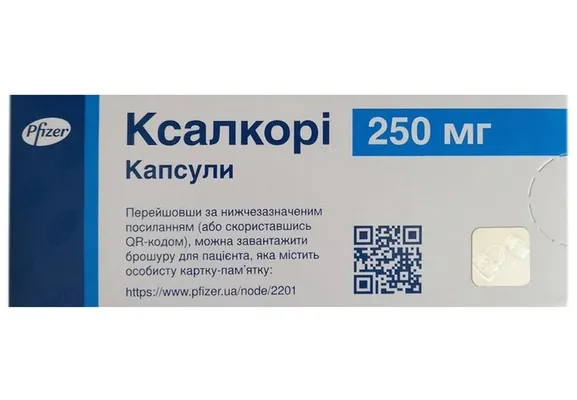
Table of Contents
INSTRUCTION FOR MEDICAL USE OF THE MEDICINAL PRODUCT XALKORI® (XALKORI®)
Composition:
Active substance: crizotinib;
1 capsule contains 200 mg or 250 mg of crizotinib;
Excipients: colloidal anhydrous silicon dioxide, microcrystalline cellulose, anhydrous dibasic calcium phosphate, sodium starch glycolate (type A), magnesium stearate, gelatin, titanium dioxide (E 171), iron oxide red (E 172), shellac, propylene glycol, concentrated ammonia solution, potassium hydroxide, iron oxide black (E 172).
Dosage form. Capsules.
Main physicochemical properties:
Capsules 200 mg:
dull white / dull pink in color, hard gelatin capsules of size 1, containing powder from white to pale yellow. Printed text design (logo): capsule body: CRZ 200, capsule cap: Pfizer; ink color: black;
Capsules 250 mg:
dull pink in color, hard gelatin capsules of size 0, containing powder from white to pale yellow. Printed text design (logo): capsule body: CRZ 250, capsule cap: Pfizer; ink color: black.
Pharmacotherapeutic group.
Antineoplastic agents. Protein kinase inhibitors. ATC code L01E D01.
Pharmacological Properties
Pharmacodynamics
Mechanism of Action
Crizotinib is a selective low-molecular-weight inhibitor of receptor tyrosine kinases (RTK), including anaplastic lymphoma kinase (ALK) and its oncogenic variants (e.g., ALK fusion proteins and certain individual mutations). Crizotinib is also an inhibitor of hepatocyte growth factor receptor (HGFR, c-Met) RTK, ROS1 (c-ros) RTK, and RON (Recepteur d'Origine Nantais) RTK. In a concentration-dependent manner, crizotinib inhibits the activity of ALK, ROS1, and c-Met in biochemical assays and suppresses phosphorylation and modulates kinase-dependent phenotypes in cellular assays. Crizotinib exhibits potent and selective inhibitory activity and induces apoptosis in tumor cell lines expressing ALK fusion proteins (including echinoderm microtubule-associated protein-like 4 (EML4)-ALK and nucleophosmin (NPM)-ALK), ROS1 fusion proteins, or demonstrating amplification of ALK or MET gene loci. Crizotinib has demonstrated antitumor efficacy, including marked cytoreductive antitumor activity, in xenograft mouse models bearing tumors expressing ALK fusion proteins. The antitumor effect of crizotinib is dose-dependent and correlates with pharmacodynamic inhibition of phosphorylation of ALK fusion proteins (including EML4-ALK and NPM-ALK) in tumors in vivo. Crizotinib also demonstrated significant antitumor activity in xenograft mouse studies using tumors generated from NIH-3T3 cell lines engineered to express key ROS1 fusion proteins identified in human tumors. The antitumor effect of crizotinib is dose-dependent and correlates with inhibition of ROS1 phosphorylation in vivo. In vitro studies in two cell lines derived from ALCL (SU-DHL-1 and Karpas-299, both containing NPM-ALK) showed that crizotinib is capable of inducing apoptosis, and in Karpas-299 cells, crizotinib inhibited proliferation and ALK-mediated signal transduction at clinically achievable concentrations. In vivo data from the Karpas-299 model showed complete tumor regression when a dose of 100 mg/kg once daily was administered.
Clinical Studies
Previously Untreated ALK-Positive Metastatic NSCLC (Non-Small Cell Lung Cancer) — Randomized Phase 3 Study 1014
The efficacy and safety of Xalkori in the treatment of patients with ALK-positive metastatic NSCLC who had not previously received systemic therapy for progressive disease were demonstrated in an international, randomized, open-label study 1014.
The analysis of the full analysis set included 343 patients with ALK-positive NSCLC confirmed by fluorescence in situ hybridization (FISH) prior to randomization: 172 patients were randomized to receive crizotinib and 171 patients to receive chemotherapy (pemetrexed + carboplatin or cisplatin, up to 6 cycles of treatment).
Crizotinib significantly improved progression-free survival (PFS), the primary endpoint of the study, compared to chemotherapy as assessed by IRR. The improvement in PFS with crizotinib was consistently observed across subgroups defined by baseline patient characteristics such as age, sex, race, smoking history, time since diagnosis, ECOG performance status, and presence of brain metastases. A numerical improvement in overall survival (OS) was observed in patients receiving crizotinib; however, this improvement was not statistically significant. Efficacy results from the randomized Phase 3 study 1014 are presented in Table 1.
Table 1. Efficacy results from the randomized Phase 3 study 1014 (full analysis set) in patients previously untreated for advanced ALK-positive NSCLC*
| Response parameter |
Crizotinib N=172 |
Chemotherapy N=171 |
| Progression-free survival (by IRR assessment) |
||
| Number of patients with event, n (%) |
100 (58%) |
137 (80%) |
| Median PFS in months (95% CI) |
10.9 (8.3; 13.9) |
7.0a (6.8; 8.2) |
| Hazard ratio (95% CI)b |
0.45 (0.35; 0.60) |
|
| p-valuec |
<0.0001 |
|
| Overall survivald |
||
| Number of deaths, n (%) |
71 (41%) |
81 (47%) |
| Median OS in months (95% CI) |
NR (45.8; NR) |
47.5 (32.2; NR) |
| Hazard ratio (95% CI)b |
0.76 (0.55; 1.05) |
|
| p-valuec |
0.0489 |
|
| Probability of 12-month survival,d % (95% CI) |
83.5 (77.0; 88.3) |
78.4 (71.3; 83.9) |
| Probability of 18-month survival,d % (95% CI) |
71.5 (64.0; 77.7) |
66.6 (58.8; 73.2) |
| Probability of 48-month survival,d % (95% CI) |
56.6 (48.3; 64.1) |
49.1 (40.5; 57.1) |
| Objective response rate (by IRR assessment) |
||
| Objective response rate, % (95% CI) |
74% (67; 81) |
45%e (37; 53) |
| p-valuef |
<0.0001 |
|
| Duration of response |
||
| Months g (95% CI) |
11.3 (8.1; 13.8) |
5.3 (4.1; 5.8) |
Abbreviations: CI – confidence interval; IRR – independent radiological review; N/n – number of patients; NR – not reached; PFS – progression-free survival; ORR – objective response rate; OS – overall survival.
*PFS, objective response rate, and duration of response are based on the data cutoff date of November 30, 2013; OS is based on the last visit date of the last patient on November 30, 2016, and is based on a median follow-up of approximately 46 months.
a Median PFS was 6.9 months (95% CI: 6.6; 8.3) for pemetrexed/cisplatin (hazard ratio = 0.49; p-value <0.0001 for crizotinib versus pemetrexed/cisplatin) and 7.0 months (95% CI: 5.9; 8.3) for pemetrexed/carboplatin (hazard ratio = 0.45; p-value <0.0001 for crizotinib versus pemetrexed/carboplatin).
b Based on stratified Cox proportional hazards analysis.
c Based on stratified log-rank test (one-sided test).
d Updated based on the final OS analysis. The OS analysis was not adjusted for the potential confounding effect of crossover design (144 (84%) patients in the chemotherapy group received subsequent crizotinib treatment).
e Objective response rate was 47% (95% CI: 37; 58) for pemetrexed/cisplatin (p-value <0.0001 versus crizotinib) and 44% (95% CI: 32; 55) for pemetrexed/carboplatin (p-value <0.0001 versus crizotinib).
f Based on stratified Cochran-Mantel-Haenszel test (two-sided test).
g Estimated using the Kaplan-Meier method.
For patients with previously treated brain metastases at baseline, the median time to intracranial disease progression (IC-TTP) was 15.7 months in the crizotinib group (N=39) and 12.5 months in the chemotherapy group (N=40) (HR=0.45 [95% CI: 0.19; 1.07]; one-sided, p-value=0.0315). For patients without brain metastases at baseline, median IC-TTP was not reached in either the crizotinib group (N=132) or the chemotherapy group (N=131) (HR=0.69 [95% CI: 0.33; 1.45]; one-sided, p-value=0.1617).
Patient-reported symptoms and overall quality of life were assessed using the questionnaire developed by the European Organisation for Research and Treatment of Cancer EORTC QLQ-C30 and its lung cancer module QLQ-LC13.
The "time to deterioration" endpoint was defined as the first worsening of chest pain, cough, or dyspnea by ≥10 points compared to baseline, as assessed by the EORTC QLQ-LC13 questionnaire.
Crizotinib demonstrated superior efficacy, significantly prolonging time to deterioration compared to chemotherapy (median 2.1 months versus 0.5 months; hazard ratio = 0.59, 95% CI: 0.45; 0.77; Hochberg-adjusted rank test, two-sided, p-value=0.0005).
Previously treated ALK-positive metastatic NSCLC — randomized Phase 3 study 1007
In the international randomized open-label study 1007, the efficacy and safety of crizotinib in the treatment of patients with ALK-positive metastatic NSCLC previously treated with systemic therapy for advanced disease were demonstrated.
The full analysis set included 347 patients with ALK-positive advanced NSCLC, identified using FISH prior to randomization. 173 patients were randomized to receive crizotinib and 174 patients to receive chemotherapy (pemetrexed or docetaxel). Crizotinib significantly improved progression-free survival (PFS), the primary endpoint of the study, compared to chemotherapy as assessed by IRR. The PFS benefit with crizotinib was consistent across patient subgroups defined by baseline characteristics such as age, sex, race, smoking status, time since diagnosis, ECOG performance status, presence of brain metastases, and prior EGFR TKI therapy.
Efficacy data from the randomized study 1007 are presented in Table 2.
Table 2. Efficacy results from the randomized Phase 3 study 1007 (full analysis set) in patients with previously treated ALK-positive advanced NSCLC*
| Response parameter |
Crizotinib N=173 |
Chemotherapy N=174 |
| Progression-free survival (by IRR) |
||
| Number of patients with event, n (%) |
100 (58%) |
127 (73%) |
| Type of event, n (%) |
||
| Disease progression |
84 (49%) |
119 (68%) |
| Death without objective progression |
16 (9%) |
8 (5%) |
| Median PFS in months (95% CI) |
7.7 (6.0; 8.8) |
|
| Hazard ratio (95% CI)b |
0.49 (0.37, 0.64) |
|
| p-valuec |
<0.0001 |
|
| Overall survivald |
||
| Number of deaths, n (%) |
116 (67%) |
126 (72%) |
| Median OS in months (95% CI) |
21.7 (18.9; 30.5) |
21.9 (16.8; 26.0) |
| Hazard ratio (95% CI)b |
0.85 (0.66; 1.10) |
|
| p-valuec |
0.1145 |
|
| 6-month survival probability,e % (95% CI) |
86.6 (80.5; 90.9) |
|
| 1-year survival probability,e % (95% CI) |
70.4 (62.9; 76.7) |
66.7 (59.1; 73.2) |
| Objective response rate (by IRR) |
||
| Objective response rate % (95% CI) |
65% (58; 72) |
20%f (14; 26) |
| p-valueg |
<0.0001 |
|
| Duration of response |
||
| Mediane, months (95% CI) |
7.4 (6.1; 9.7) |
5.6 (3.4; 8.3) |
Abbreviations: CI – confidence interval; IRR – independent radiological review; N/n – number of patients; PFS – progression-free survival; ORR – objective response rate; OS – overall survival.
* PFS, objective response rate, and duration of response are based on the data cutoff date of March 30, 2012; OS is based on the data cutoff date of September 31, 2015.
a Median PFS was 4.2 months (95% CI: 2.8; 5.7) for pemetrexed (hazard ratio = 0.59; p-value = 0.0004 for crizotinib versus pemetrexed) and 2.6 months (95% CI: 1.6, 4.0) for docetaxel (hazard ratio = 0.30; p-value <0.0001 for crizotinib versus docetaxel).
b Based on stratified Cox proportional hazards analysis.
c Based on stratified log-rank test (one-sided test).
d Updated based on final OS analysis. The final OS analysis was not adjusted for potential confounding effects of crossover design (154 [89%] patients subsequently received crizotinib treatment).
e Estimated using the Kaplan–Meier method.
f Objective response rate was 29% (95% CI: 21, 39) for pemetrexed (p-value <0.0001 versus crizotinib) and 7% (95% CI: 2, 16) for docetaxel (p-value <0.0001 versus crizotinib).
g Based on stratified Cochran–Mantel–Haenszel test (two-sided test).
Fifty-two patients in the crizotinib group and 57 patients receiving chemotherapy, who had previously treated or untreated asymptomatic brain metastases, were enrolled in the randomized Phase 3 study 1007. The intracranial disease control rate (IC-DCR) at 12 weeks was 65% and 46% for patients in the crizotinib and chemotherapy groups, respectively.
Patient-reported symptoms and overall quality of life were assessed using the EORTC QLQ-C30 questionnaire and its lung cancer module QLQ-LC13 at baseline (Day 1 of Cycle 1) and on Day 1 of each subsequent treatment cycle. Overall, 162 patients in the crizotinib group and 151 patients in the chemotherapy group completed the EORTC QLQ-C30 and LC13 questionnaires at baseline and at least during the first follow-up visit after baseline.
Crizotinib demonstrated superior efficacy by significantly prolonging time to worsening of symptoms compared to chemotherapy (median 4.5 months versus 1.4 months) in patients reporting chest pain, dyspnea, or cough (HR 0.50; 95% CI: 0.37; 0.66; Hochberg-adjusted rank test p < 0.0001).
Significantly greater improvement in overall quality of life from baseline was observed in the crizotinib group compared to the chemotherapy group (cycles 2–20; p-value <0.05).
Non-comparative studies in ALK-positive advanced NSCLC
Two international non-comparative studies (Studies 1001 and 1005) evaluated crizotinib monotherapy in the treatment of ALK-positive advanced NSCLC. The primary efficacy endpoint in both studies was objective response rate (ORR) according to RECIST criteria.
A total of 149 patients with ALK-positive NSCLC, including 125 patients previously treated for ALK-positive NSCLC, were included in Study 1001 at the time of data cutoff for PFS and ORR analysis. The median duration of treatment was 42 weeks.
A total of 934 patients with ALK-positive advanced NSCLC received crizotinib treatment in Study 1005 at the time of data cutoff for PFS and ORR analysis. The median duration of treatment in these patients was 23 weeks. Patients were allowed to continue treatment beyond RECIST-defined disease progression at the investigator’s discretion. 77 of 106 (73%) patients continued treatment for at least 3 weeks after objective disease progression.
Efficacy data from Studies 1001 and 1005 are presented in Table 3.
Table 3. Efficacy results in ALK-positive advanced NSCLC from Studies 1001 and 1005
| Efficiency parameter |
Study 1001 |
Study 1005 |
| N=125a |
N=765a |
|
| Objective response rateb (95% CI) |
60 (51, 69) |
48 (44, 51) |
| Time to tumor response [median (range)], weeks |
7.9 (2.1, 39.6) |
6.1 (3, 49) |
| Duration of responsec [median (95% CI)], weeks |
48.1 (35.7, 64.1) |
47.3 (36, 54) |
| Progression-free survivalc [median (95% CI)], months |
9.2 (7.3, 12.7) |
7.8 (6.9, 9.5)d |
| N=154e |
N=905e |
|
| Number of deaths, n (%) |
83 (54%) |
504 (56%) |
| Overall survivalc [median (95% CI)], months |
28.9 (21.1, 40.1) |
21.5 (19.3, 23.6) |
Abbreviations: CI – confidence interval; N/n – number of patients; PFS – progression-free survival.
a As of the data cutoff dates of 01 June 2011 (study 1001) and 15 February 2012 (study 1005).
b Responses in three patients were not evaluable in study 1001, and responses in 42 patients were not evaluable in study 1005.
c Estimated using the Kaplan–Meier method.
d PFS data from study 1005 included 807 patients in the safety analysis population identified by FISH analysis (data as of the cutoff date of 15 February 2012).
e As of the data cutoff date of 30 November 2013.
ROS1-positive advanced NSCLC
In a multicenter, multinational, non-comparative study 1001, crizotinib was investigated as monotherapy for the treatment of ROS1-positive NSCLC. A total of 53 patients with ROS1-positive advanced NSCLC were enrolled in the study at the time of data cutoff, including 46 patients who had previously received treatment for ROS1-positive advanced NSCLC, and a limited number of patients (N=7) who had not previously received systemic therapy. The primary efficacy endpoint was objective response rate according to RECIST criteria. Secondary endpoints included time to tumor response, duration of response, PFS, and OS. Patients received crizotinib 250 mg orally twice daily.
Study 1001 enrolled patients with advanced ROS1-positive NSCLC prior to the initiation of the clinical trial. In the majority of patients, ROS1-positive NSCLC was identified using FISH. The median duration of treatment was 22.4 months (95% CI: 15.0, 35.9). There were 6 complete responses and 32 partial responses, resulting in an objective response rate of 72% (95% CI: 58%, 83%). The median duration of response was 24.7 months (95% CI: 15.2, 45.3). Fifty percent of objective tumor responses were achieved within the first 8 weeks of treatment. The median PFS at the time of data cutoff was 19.3 months (95% CI: 15.2, 39.1). The median overall survival at the time of data cutoff was 51.4 months (95% CI: 29.3, NR).
Efficacy data from study 1001 in patients with ROS1-positive advanced NSCLC are presented in Table 4.
Table 4. Efficacy results in ROS1-positive advanced NSCLC from study 1001
| Efficiency parameter |
Study 1001 N=53a |
|
| Objective response rate [% (95% CI)] |
72 (58, 83) |
|
| Time to tumor response [median (range)], weeks |
8 (4, 104) |
|
| Duration of responseb [median (95% CI)], months |
24.7 (15.2, 45.3) |
|
| Progression-free survivalb [median (95% CI)], months |
19.3 (15.2, 39.1) |
|
| Overall survivalb [median (95% CI)], months |
51.4 (29.3, NE) |
|
| Abbreviations: CI=confidence interval; N=number of patients; NE=not reached. Overall survival is based on a median observation time of approximately 63 months. a As of the data cutoff date of June 30, 2018. b Estimated using the Kaplan-Meier method. |
||
Diseases without histological evidence of adenocarcinoma
21 patients with previously untreated and 12 patients with previously treated advanced ALK-positive NSCLC without histological evidence of adenocarcinoma were included in the randomized Phase 3 studies 1014 and 1007, respectively. The subgroups in these studies were too small to allow for reliable conclusions. It should be noted that no patient with squamous cell carcinoma by histological type was randomized to the crizotinib arm in study 1007, and no such patient was enrolled in study 1014, as these studies used pemetrexed-based therapy as the comparator.
Data were obtained from 45 patients with previously treated NSCLC without histological evidence of adenocarcinoma (including 22 patients with squamous cell carcinoma) in study 1005, whose response to therapy was evaluable. Partial response was observed in 20 of 45 patients with NSCLC without histological evidence of adenocarcinoma, corresponding to an objective response rate of 44%, and in 9 of 22 patients with NSCLC with histological features of squamous cell carcinoma, corresponding to an objective response rate of 41%; both rates were lower than the objective response rate reported in study 1005 (54%) for all patients.
Re-treatment with crizotinib
There are no data on the safety and efficacy of re-treatment with crizotinib in patients who have previously received crizotinib in earlier lines of therapy.
Older patients
Of the 171 patients with ALK-positive NSCLC who received crizotinib in the randomized Phase 3 study 1014, 22 (13%) were aged 65 years or older; of the 109 patients with ALK-positive NSCLC who received crizotinib and crossed over from the chemotherapy arm, 26 (24%) were aged 65 years or older. Of the 172 patients with ALK-positive NSCLC who received crizotinib in the randomized Phase 3 study 1007, 27 (16%) were aged 65 years or older. Of the 154 and 1063 patients with ALK-positive NSCLC in the non-comparative studies 1001 and 1005, 22 (14%) and 173 (16%) were aged 65 years or older, respectively. In patients with ALK-positive NSCLC, the frequency of adverse reactions was generally similar between patients <65 years and those aged ≥65 years, except for oedema and constipation, which were reported more frequently (difference ≥15%) in patients aged ≥65 years receiving crizotinib in study 1014. None of the patients in the crizotinib arm of the randomized Phase 3 studies 1007 and 1014 or the non-comparative study 1005 were older than 85 years. In the non-comparative study 1001, one patient with ALK-positive NSCLC older than 85 years was included out of 154 patients (see also sections “Dosage and administration” and “Pharmacokinetics”). Of the 53 patients with ROS1-positive NSCLC in the non-comparative study 1001, 15 (28%) were aged 65 years or older. There were no patients with ROS1-positive NSCLC older than 85 years in study 1001.
Children
The safety and efficacy of crizotinib have been established in children aged from 3 to <18 years with recurrent or refractory systemic ALK-positive ALCL, or in children aged from 2 to <18 years with unresectable, recurrent or refractory ALK-positive IMT (see sections “Dosage and administration” and “Adverse reactions”). There are no data on the safety or efficacy of crizotinib treatment in children under 3 years of age with ALK-positive ALCL or in children under 2 years of age with ALK-positive IMT. Before prescribing crizotinib to children, their ability to swallow capsules whole should be assessed. Children (aged ≥6 to <18 years) who are able to swallow crizotinib capsules whole may be treated with crizotinib.
Children with ALK-positive ALCL (see sections “Dosage and administration” and “Pharmacokinetics”)
The use of crizotinib as monotherapy in the treatment of children with recurrent or refractory systemic ALK-positive ALCL was studied in study 0912 (n = 22). All enrolled patients had received prior systemic therapy for their disease: 14 patients had received one prior line of systemic therapy, 6 patients had received two prior lines of systemic therapy, and 2 patients had received more than two prior lines of systemic therapy. Among the 22 patients enrolled in study 0912, 2 had previously undergone bone marrow transplantation. There are currently no clinical data available on children who have undergone haematopoietic stem cell transplantation (HSCT) after crizotinib treatment. Patients with primary or metastatic central nervous system (CNS) tumours were not included in the study. The 22 patients enrolled in study 0912 received an initial dose of crizotinib of either 280 mg/m² (16 patients) or 165 mg/m² (6 patients) twice daily. Efficacy endpoints in study 0912 included ORR, PFS, and DOR as assessed by independent review. The median duration of patient follow-up was 5.5 months.
Demographic characteristics of study participants: 23% were female, median age was 11 years, 50% were Caucasian and 9% were Asian. Baseline performance status, assessed by Lansky Play-Performance Scale (patients aged ≤16 years) or Karnofsky Performance Status Scale (patients aged >16 years), was 100 (50% of patients) or 90 (27% of patients). The age distribution of patients was as follows: 4 patients aged 3 to <6 years, 11 patients aged 6 to <12 years, and 7 patients aged 12 to <18 years. Patients under 3 years of age did not participate in this study.
Efficacy data assessed by independent review are presented in Table 5.
Table 5. Results of efficacy assessment in the treatment of ALK-positive ALCL in study 0912
| Parameter of efficacya |
N = 22b |
| ORR (% (95% CI))c Complete response, n (%) Partial response, n (%) |
86 (67; 95) 17 (77) 2 (9) |
| TTPg Median (range), months |
0.9 (0.8; 2.1) |
| DORg, d Median (range), months |
3.6 (0.0; 15.0) |
| Abbreviations: CI — confidence interval; DOR — duration of response; N/n — number of patients; ORR — objective response rate; TTP — time to tumor response. a Assessed by independent review committee using response criteria according to the Lugano classification. b As of the data cutoff date January 19, 2018. c 95% CI calculated using the Wilson score method. d Descriptive statistics were used for calculation. e Ten out of 19 patients (53%) proceeded to hematopoietic stem cell transplantation following achievement of an objective response. DOR values for patients who underwent transplantation were censored at the time of the last tumor assessment prior to transplantation. |
|
Children with ALK-positive IMT (see sections “Posology and method of administration” and “Pharmacokinetics”)
The use of crizotinib as monotherapy in the treatment of children with unresectable, recurrent or refractory ALK-positive IMT was investigated in Study 0912 (n = 14). The majority of patients (12 out of 14) enrolled in the study had undergone surgery (8 patients) or prior systemic therapy (7 patients: 5 patients had received 1 prior line of systemic therapy, 1 patient had received 2 prior lines of systemic therapy, and 1 patient had received more than 2 prior lines of systemic therapy). Patients with primary or metastatic CNS tumors were not included in the study. The 14 patients enrolled in Study 0912 received an initial dose of crizotinib of 280 mg/m² (12 patients), 165 mg/m² (1 patient), or 100 mg/m² (1 patient) twice daily. Efficacy endpoints in Study 0912 included ORR, DOR, and PFS as assessed by independent review. The median duration of follow-up for patients was 17.6 months.
Demographic characteristics of study participants: 64% were female, median age was 6.5 years, 71% were White. Baseline performance status measured by Lansky Play-Performance Scale (patients ≤ 16 years of age) or Karnofsky Performance Status (patients > 16 years of age) was 100 (71% of patients), 90 (14% of patients), or 80 (14% of patients). The age distribution of patients was as follows: 4 patients aged 2 to <6 years, 8 patients aged 6 to <12 years, and 2 patients aged 12 to <18 years. Patients under 2 years of age were not enrolled in this study.
Efficacy results as assessed by independent review are presented in Table 6.
Table 6. Efficacy results in the treatment of ALK-positive IMT in Study 0912
| Effectiveness parametera |
N = 14b |
| ORR (% (95% CI))c Complete response, n (%) Partial response, n (%) |
86 (60; 96) 5 (36) 7 (50) |
| TTDg Median (range), months |
1.0 (0.8; 4.6) |
| DORg, d Median (range), months |
14.8 (2.8; 48.9) |
| Abbreviations: CI — confidence interval; DOR — duration of response; N/n — number of patients; ORR — overall response rate; TTD — time to response. a Assessed by independent expert committee. b As of the data cutoff date of January 19, 2018. c 95% CI calculated using the score method (Wilson). d Calculated using descriptive statistics. e In none of the 12 patients who achieved an objective tumor response was subsequent disease progression observed, and their DOR values were censored at the time of last tumor assessment. |
|
Children with ALK-positive or ROS1-positive NSCLC
The European Medicines Agency has waived the requirement to submit results of studies with Xalkori in all paediatric subpopulations with NSCLC (see information on paediatric use in section "Posology and method of administration").
Pharmacokinetics
Absorption
Following oral administration of a single dose of crizotinib under fasting conditions, the median time to reach maximum plasma concentration ranges from 4 to 6 hours. At a twice-daily dosing regimen, steady state was achieved by day 15 of crizotinib administration and remained stable. The absolute bioavailability of crizotinib following a single oral dose of 250 mg is 43%.
In healthy volunteers, administration of a single 250 mg oral dose of crizotinib with a high-fat meal reduced the area under the plasma concentration-time curve (AUCinf) and peak concentration (Cmax) of crizotinib by approximately 14%. Crizotinib can be administered with or without food (see section "Posology and method of administration").
Distribution
The geometric mean volume of distribution (Vss) of crizotinib following intravenous administration of a 50 mg dose was 1772 L, indicating extensive tissue distribution from plasma.
In vitro, binding of crizotinib to human plasma proteins is 91%, independent of drug concentration. In vitro studies indicate that crizotinib is a substrate of P-glycoprotein (P-gp).
Biotransformation
In vitro studies have shown that crizotinib is metabolized primarily by CYP3A4/5. The main metabolic pathways in humans are oxidation of the piperidine ring leading to the formation of crizotinib lactam and O-dealkylation followed by conjugation of O-dealkylated metabolites in phase 2.
In vitro studies using human liver microsomes have shown that crizotinib is an inhibitor of CYP2B6 and CYP3A (see section "Interaction with other medicinal products and other forms of interaction") with time-dependent activity. In vitro studies suggest a low likelihood that crizotinib-mediated inhibition of the metabolism of substrates of CYP1A2, CYP2C8, CYP2C9, CYP2C19, or CYP2D6 will cause clinical drug interactions.
In vitro studies have shown that crizotinib is a weak inhibitor of UGT1A1 and UGT2B7 (see section "Interaction with other medicinal products and other forms of interaction"). However, in vitro studies demonstrated that clinical drug interactions are unlikely due to inhibition by crizotinib of the metabolism of drugs that are substrates of UGT1A4, UGT1A6, or UGT1A9.
In vitro studies in human hepatocytes showed a low probability that crizotinib-mediated induction of the metabolism of CYP1A2 substrates will lead to clinically relevant drug interactions.
Elimination
After administration of a single dose of crizotinib, the mean terminal elimination half-life was 42 hours.
Following a single 250 mg dose of radiolabelled crizotinib in healthy volunteers, 63% and 22% of the administered dose were excreted in faeces and urine, respectively. Unchanged crizotinib accounted for 53% and 2.3% of the administered dose in faeces and urine, respectively.
Concomitant administration of crizotinib with transporter substrates
Crizotinib is an inhibitor of P-glycoprotein (P-gp) in vitro. Thus, crizotinib has the potential to increase plasma concentrations of P-gp substrates co-administered with crizotinib (see section "Interaction with other medicinal products and other forms of interaction").
In vitro, crizotinib is an inhibitor of the organic cation transporters OCT1 and OCT2. Therefore, crizotinib may potentially increase plasma concentrations of drugs that are substrates of OCT1 and OCT2 (see section "Interaction with other medicinal products and other forms of interaction").
In vitro studies have shown that crizotinib at therapeutic concentrations does not inhibit human hepatic organic anion transporting polypeptides (OATP)1B1 or OATP1B3, or renal organic anion transporters (OAT)1 or OAT3. Therefore, it is unlikely that crizotinib-mediated inhibition of uptake of substrates of these transporters in the liver or kidneys will lead to clinically relevant drug interactions.
Effect on other transporter proteins
Crizotinib at clinically relevant concentrations is not an inhibitor of bile salt transporters in vitro.
Pharmacokinetics in special patient populations
Hepatic impairment
Crizotinib undergoes extensive hepatic metabolism. An open-label, non-randomized clinical study (Study 1012) included patients with mild (AST > upper limit of normal (ULN) and total bilirubin ≤ ULN, or either AST or total bilirubin > ULN but <1.5 × ULN), moderate (either AST or total bilirubin >1.5 × ULN and ≤3 × ULN), or severe (either AST or total bilirubin >3 × ULN) hepatic impairment, as well as patients with normal hepatic function (AST and total bilirubin ≤ ULN), who met the criteria for mild and moderate hepatic impairment according to the National Cancer Institute classification.
Following administration of 250 mg crizotinib twice daily in patients with mild hepatic impairment (N=10), systemic exposure at steady state was similar to that in patients with normal hepatic function (N=8), with geometric mean values of daily area under the plasma concentration-time curve at steady state (AUCdaily) and Cmax being 91.1% and 91.2% of those in patients with normal hepatic function, respectively. No initial dose adjustment is required for patients with mild hepatic impairment.
Following administration of 200 mg crizotinib twice daily in patients with moderate hepatic impairment (N=8), systemic exposure of crizotinib was increased compared to patients with normal hepatic function (N=8) at the same dose level, with geometric mean values of AUCdaily and Cmax being 150% and 144%, respectively. However, systemic exposure of crizotinib in patients with moderate hepatic impairment receiving 200 mg twice daily was comparable to that in patients with normal hepatic function receiving 250 mg twice daily; geometric mean values of AUCdaily and Cmax were 114% and 109%, respectively.
Systemic exposure parameters AUCdaily and Cmax of crizotinib in patients with severe hepatic impairment (N=6) receiving 250 mg crizotinib once daily were approximately 64.7% and 72.6%, respectively, compared to exposure values in patients with normal hepatic function receiving 250 mg crizotinib twice daily.
Dose adjustment of crizotinib is recommended in patients with moderate and severe hepatic impairment (see sections "Posology and method of administration" and "Special warnings and precautions for use").
Renal impairment
Patients with mild (60 ≤ CLcr < 90 mL/min) and moderate (30 ≤ CLcr < 60 mL/min) renal impairment were included in non-comparative studies 1001 and 1005. The impact of renal function, defined by baseline CLcr, on observed minimum steady-state plasma concentrations (Ctrough,ss) was assessed. In study 1001, the adjusted geometric mean plasma Ctrough,ss in patients with mild (N=35) and moderate (N=8) renal impairment was 5.1% and 11% higher, respectively, than in patients with normal renal function. In study 1005, the adjusted geometric mean plasma Ctrough,ss in patients with mild (N=191) and moderate (N=65) renal impairment was 9.1% and 15% higher, respectively, than in patients with normal renal function. Additionally, pharmacokinetic analysis using data from studies 1001, 1005, and 1007 showed that CLcr does not have a clinically significant effect on the pharmacokinetics of crizotinib. Given the small increases in crizotinib exposure (5–15%), no initial dose adjustment is recommended for patients with mild or moderate renal impairment.
Following a single 250 mg dose of crizotinib in patients with severe renal impairment (CLcr < 30 mL/min) not requiring peritoneal dialysis or haemodialysis, AUCinf and Cmax of crizotinib were increased by 79% and 34%, respectively, compared to patients with normal renal function. Dose adjustment of crizotinib is recommended for patients with severe renal impairment not requiring peritoneal dialysis or haemodialysis (see sections "Posology and method of administration" and "Special warnings and precautions for use").
Paediatric oncology population
With a dosing regimen of 280 mg/m² twice daily (approximately twice the recommended adult dose), similar steady-state trough concentrations (Ctrough) of crizotinib prior to the next dose were observed regardless of body weight quartiles. The mean steady-state Ctrough in children at a dose of 280 mg/m² twice daily was 482 ng/mL, whereas the mean steady-state Ctrough in adult oncology patients at a dose of 250 mg twice daily across various clinical trials ranged from 263–316 ng/mL.
Age
Pharmacokinetic analysis using data from studies 1001, 1005, and 1007 showed that age does not have a clinically significant effect on the pharmacokinetics of crizotinib (see sections "Posology and method of administration" and "Pharmacodynamics").
Body weight and gender
Pharmacokinetic analysis using data from studies 1001, 1005, and 1007 showed that body weight and gender do not have a clinically significant effect on the pharmacokinetics of crizotinib.
Ethnicity
Pharmacokinetic analysis using data from studies 1001, 1005, and 1007 showed that predicted steady-state AUCss (95% CI) in Mongoloid patients (N=523) was 23–37% higher than in patients from other ethnic groups (N=691).
In studies involving patients with ALK-positive advanced NSCLC (N=1669), the following adverse reactions were observed with an absolute difference ≥10% in Mongoloid patients (N=753) compared to other ethnic groups (N=916): elevated transaminases, decreased appetite, neutropenia, and leucopenia. No adverse drug reactions were observed with an absolute difference ≥15%.
Elderly
Insufficient data are available for this patient subgroup (see sections "Posology and method of administration" and "Pharmacodynamics"). Pharmacokinetic analysis using data from studies 1001, 1005, and 1007 showed that age does not have a clinically significant effect on the pharmacokinetics of crizotinib.
Cardiac electrophysiology
The potential of crizotinib to prolong the QT interval was evaluated in patients with ALK-positive or ROS1-positive NSCLC receiving crizotinib 250 mg twice daily. ECGs were recorded in triplicate after a single dose and after reaching steady state to assess the effect of crizotinib on QT interval duration. Automated machine analysis of ECGs revealed that 34 out of 1619 patients (2.1%) with at least one post-baseline ECG had a QTcF interval ≥500 ms, and 79 out of 1585 patients (5.0%) with at least one post-baseline ECG had a QTcF prolongation from baseline of ≥60 ms (see section "Special warnings and precautions for use").
A blinded, non-automated ECG sub-study was conducted in 52 patients with ALK-positive NSCLC receiving crizotinib 250 mg twice daily. In 11 (21%) patients, an increase from baseline in QTcF of ≥30 to <60 ms was observed, and in 1 (2%) patient, an increase from baseline in QTcF of ≥60 ms was observed. No patient had a maximum QTcF value ≥480 ms. The analysis of central tendency showed that all upper bounds of the 90% CI for the least squares mean change in QTcF from baseline at all time points on day 1 of cycle 2 were <20 ms. Pharmacokinetic/pharmacodynamic analysis indicated a concentration-dependent QTc prolongation. Additionally, a decrease in heart rate (HR) associated with increasing crizotinib plasma concentration was observed (see section "Special warnings and precautions for use"), with a maximum mean decrease of 17.8 beats per minute at 8 hours on day 1 of cycle 2.
Clinical characteristics
Indications.
Xalkori as monotherapy is indicated for:
- first-line treatment of adults with advanced non-small cell lung cancer (NSCLC) anaplastic lymphoma kinase (ALK)-positive;
- treatment of adults with advanced non-small cell lung cancer (NSCLC) anaplastic lymphoma kinase (ALK)-positive who have previously received treatment;
- treatment of adults with ROS1-positive advanced non-small cell lung cancer (NSCLC);
- treatment of children (aged ≥ 6 to < 18 years) with recurrent or refractory systemic anaplastic large cell lymphoma (ALCL) anaplastic lymphoma kinase (ALK)-positive;
- treatment of children (aged ≥ 6 to < 18 years) with recurrent or refractory unresectable inflammatory myofibroblastic tumor (IMT) anaplastic lymphoma kinase (ALK)-positive.
Contraindications
Hypersensitivity to crizotinib or to any of the excipients of the medicinal product.
Interaction with other medicinal products and other forms of interaction
Pharmacokinetic interactions
Medicinal products that may increase crizotinib plasma concentration
Concomitant use of crizotinib and strong CYP3A4 inhibitors is expected to increase crizotinib plasma concentration. Combined single oral administration of crizotinib 150 mg and ketoconazole 200 mg twice daily, a strong CYP3A inhibitor, leads to increased systemic exposure to crizotinib. In this case, the area under the plasma concentration–time curve from zero to infinity (AUCinf) and maximum plasma concentration (Cmax) increase approximately by 3.2-fold and 1.4-fold, respectively, compared to crizotinib monotherapy.
Concomitant administration of repeated doses of crizotinib (250 mg once daily) with repeated doses of itraconazole (200 mg once daily), a strong CYP3A inhibitor, increased steady-state AUCtau by approximately 1.6-fold and Cmax by 1.3-fold compared to crizotinib monotherapy.
Concomitant use with strong CYP3A inhibitors, including, among others, atazanavir, ritonavir, cobicistat, itraconazole, ketoconazole, posaconazole, voriconazole, clarithromycin, telithromycin, and erythromycin, should be avoided. However, if the benefit to the patient outweighs the risk, concomitant use should be accompanied by careful monitoring of adverse reactions to crizotinib (see section "Special warnings and precautions for use").
Physiologically based pharmacokinetic modeling predicts a 17% increase in steady-state AUC of crizotinib following concomitant administration with moderate CYP3A inhibitors diltiazem or verapamil. Therefore, caution should be exercised when administering crizotinib concomitantly with moderate CYP3A inhibitors.
Grapefruit or grapefruit juice should not be consumed, as they may also increase crizotinib plasma concentration (see sections "Dosage and method of administration" and "Special warnings and precautions for use").
Medicinal products that may decrease crizotinib plasma concentration
Repeated administration of crizotinib (250 mg twice daily) concomitantly with rifampicin (600 mg once daily), a strong CYP3A4 inducer, resulted in an 84% and 79% reduction in steady-state AUCtau and Cmax of crizotinib, respectively, compared to administration of crizotinib as monotherapy. Concomitant use with strong CYP3A inducers, including, among others, carbamazepine, phenobarbital, phenytoin, rifampicin, and St. John's wort preparations, should be avoided (see section "Special warnings and precautions for use").
The effect of moderate inducers, such as efavirenz or rifabutin, is not clearly established; therefore, their combination with crizotinib should also be avoided (see section "Special warnings and precautions for use").
Concomitant use of crizotinib with medicinal products that increase gastric juice pH
Crizotinib water solubility is pH-dependent. Solubility increases at lower pH values. Single administration of 250 mg crizotinib following 5-day administration of 40 mg esomeprazole once daily resulted in approximately a 10% decrease in total AUCinf of crizotinib and no change in crizotinib Cmax in plasma; the increase in drug exposure is clinically insignificant. Therefore, initial dose adjustment of crizotinib is not required when co-administered with medicinal products that increase gastric juice pH (proton pump inhibitors, H2-histamine receptor blockers, or antacids).
Medicinal products whose plasma concentrations may change when combined with crizotinib
After administration of crizotinib 250 mg twice daily for 28 days to patients with malignancies, AUCinf of midazolam (following oral administration) was 3.7 times higher than with midazolam monotherapy. This indicates that crizotinib is a moderate CYP3A inhibitor. Concomitant use of crizotinib with CYP3A substrates that have a narrow therapeutic index, such as alfentanil, cisapride, cyclosporine, ergot alkaloids, fentanyl, pimozide, quinidine, sirolimus, tacrolimus, should be avoided, but not limited to these (see section "Special warnings and precautions for use").
If such combination use is necessary, careful medical monitoring is required.
In vitro studies have shown that crizotinib is a CYP2B6 inhibitor. Therefore, crizotinib may increase plasma concentrations of drugs metabolized by CYP2B6 (such as bupropion, efavirenz).
In vitro studies in human hepatocytes have shown that crizotinib may induce enzymes regulated by the pregnane X receptor (PXR) and constitutive androstane receptor (CAR) (such as CYP3A4, CYP2B6, CYP2C8, CYP2C9, UGT1A1). However, no in vivo induction was observed with crizotinib co-administration with midazolam, a CYP3A substrate. Caution should be exercised when using crizotinib in combination with drugs primarily metabolized by these enzymes. It should be noted that the effectiveness of oral contraceptives may be reduced during treatment with the drug.
In vitro studies have shown that crizotinib is a weak inhibitor of uridine diphosphate glucuronosyltransferase (UGT) 1A1 and UGT2B7. Therefore, crizotinib may increase plasma concentrations of drugs metabolized by UGT1A1 (such as raltegravir, irinotecan) or UGT2B7 (such as morphine, naloxone) when administered concomitantly.
In vitro study results indicate that crizotinib inhibits P-gp in the intestine. Therefore, co-administration of crizotinib with medicinal products that are P-gp substrates (e.g., digoxin, dabigatran, colchicine, pravastatin) may increase their therapeutic effect and adverse reactions. Close medical monitoring is recommended when administering crizotinib with these medicinal products.
In vitro, crizotinib is an inhibitor of OCT1 and OCT2 transport proteins. Therefore, crizotinib may potentially increase plasma concentrations of drugs that are substrates of OCT1 and OCT2 proteins (such as metformin, procainamide).
Pharmacodynamic interactions
In clinical studies, QT interval prolongation was observed with crizotinib. Therefore, caution should be exercised when making decisions about concomitant use of crizotinib with medicinal products known to prolong the QT interval or capable of causing torsades de pointes ventricular tachycardia (Class IA (quinidine, disopyramide) or Class III (e.g., amiodarone, sotalol, dofetilide, ibutilide), methadone, cisapride, moxifloxacin, neuroleptics, etc.). If such combination therapy is used, QT interval monitoring is required (see sections "Dosage and method of administration" and "Special warnings and precautions for use").
During clinical trials, cases of bradycardia development were reported. Due to the potential risk of bradycardia symptoms, crizotinib should be prescribed cautiously concomitantly with other medicinal products that reduce heart rate (e.g., non-dihydropyridine calcium channel blockers such as verapamil and diltiazem, beta-blockers, clonidine, guanfacine, digoxin, mefloquine, cholinesterase inhibitors, pilocarpine) (see sections "Dosage and method of administration" and "Special warnings and precautions for use").
Special precautions for use
Assessment of ALK and ROS1 status
When determining the ALK or ROS1 status of a patient, it is important to use a well-validated and reliable method to avoid false-negative or false-positive results.
Hepatotoxicity
Cases of hepatotoxicity (including fatal cases in adult patients) associated with the use of the medicinal product have been reported in clinical trials (see section "Adverse reactions"). Liver function tests, including levels of ALT, AST and total bilirubin, should be monitored weekly for the first 2 months of treatment, then monthly and as clinically indicated thereafter. In case of grade 2, 3 or 4 elevations, monitoring should be performed more frequently; see section "Dosage and administration" for patients with elevated transaminase levels.
Interstitial lung disease / pneumonitis
Severe, life-threatening or fatal cases of interstitial lung disease (ILD) or pneumonitis may occur in patients during treatment with crizotinib. Patients should be monitored for symptoms suggestive of developing ILD/pneumonitis. If ILD/pneumonitis is suspected, crizotinib treatment should be discontinued. The possibility of drug-related ILD/pneumonitis should be considered in the differential diagnosis of symptoms in patients with conditions resembling ILD: pneumonia, radiation pneumonitis, allergic pneumonitis, interstitial pneumonia, pulmonary fibrosis, acute respiratory distress syndrome (ARDS), alveolitis, pulmonary infiltration, pneumonia, pulmonary edema, chronic obstructive pulmonary disease, pleural effusion, aspiration pneumonia, bronchitis, obliterative bronchiolitis and bronchiectasis. After excluding other possible causes of ILD/pneumonitis, crizotinib should be permanently discontinued in patients with treatment-related ILD/pneumonitis (see sections "Dosage and administration" and "Adverse reactions").
QT interval prolongation
QTc prolongation has been observed in clinical trials in patients receiving crizotinib treatment (see sections "Adverse reactions" and "Pharmacokinetics"), which may lead to an increased risk of ventricular arrhythmias (e.g. torsades de pointes) or sudden death. Before initiating treatment, the benefit and potential risks of crizotinib use should be evaluated in patients with pre-existing bradycardia, a history of QTc prolongation or predisposition to it, those taking antiarrhythmic drugs or other medicinal products known to prolong the QT interval, and in patients with relevant cardiac disease and/or electrolyte imbalance. Crizotinib should be administered with caution to such patients, and periodic monitoring of electrocardiograms (ECG), electrolyte levels and renal function should be performed. Prior to administration of the first dose, ECG and electrolyte levels (e.g. calcium, magnesium, potassium) should be obtained. Periodic monitoring with ECG and electrolyte levels is recommended, especially at the beginning of treatment, in case of vomiting, diarrhea, dehydration or impaired renal function. Electrolyte levels should be corrected as needed. If QTc prolongation exceeds or equals 60 ms compared to baseline, but QTc <500 ms, crizotinib should be withheld and cardiology consultation sought. If QTc prolongation exceeds or equals 500 ms, immediate cardiology consultation is required. For patients who develop QTc interval prolongation, see sections "Dosage and administration", "Adverse reactions" and "Pharmacokinetics".
Bradycardia
Bradycardia of any cause has been reported in clinical trials in 13% of adult patients with ALK-positive or ROS1-positive NSCLC and in 17% of children with ALK-positive ALCL or ALK-positive IMT receiving crizotinib. Symptomatic bradycardia (syncope, dizziness, hypotension) may occur in patients receiving crizotinib treatment. The full effect of crizotinib on heart rate may not manifest until several weeks after initiation of therapy. Due to the increased risk of symptomatic bradycardia, concomitant use of crizotinib with other medicinal products that reduce heart rate (e.g. beta-blockers, non-dihydropyridine calcium channel blockers such as verapamil and diltiazem, clonidine, digoxin) should be avoided whenever possible. Heart rate and blood pressure should be monitored regularly. Dose adjustment is not required in case of asymptomatic bradycardia. For management of patients who develop symptomatic bradycardia, see sections "Dosage and administration" and "Adverse reactions".
Heart failure
During clinical trials and post-marketing use of crizotinib in adult patients, severe, life-threatening or fatal adverse reactions related to heart failure have been reported (see section "Adverse reactions").
Patients, with or without pre-existing cardiac conditions, should be monitored for signs and symptoms of heart failure (dyspnea, edema, rapid weight gain due to fluid retention) during crizotinib treatment. If such symptoms occur, temporary interruption, dose reduction or discontinuation of the drug should be considered depending on the circumstances.
Neutropenia and leukopenia
In clinical trials of crizotinib in adult patients with ALK- or ROS1-positive NSCLC, grade 3 or 4 neutropenia was very commonly reported (12%). In clinical trials of crizotinib in children with ALK-positive ALCL or ALK-positive IMT, grade 3 or 4 neutropenia was very commonly observed (68%). Grade 3 or 4 leukopenia was reported commonly (3%) in patients with ALK-positive or ROS1-positive NSCLC and very commonly (24%) in children with ALK-positive ALCL or ALK-positive IMT (see section "Adverse reactions"). In clinical trials of crizotinib, febrile neutropenia was observed in less than 0.5% of adult patients with ALK-positive or ROS1-positive NSCLC. In children with ALK-positive ALCL or ALK-positive IMT, febrile neutropenia was reported in one patient (2.4%). Complete blood count, including differential white blood cell count, should be performed as clinically indicated; in case of grade 3 or 4 abnormalities or development of fever or infection, repeat testing should be performed more frequently (see section "Dosage and administration").
Gastrointestinal perforation
Cases of gastrointestinal perforation have been reported in clinical trials of crizotinib. Fatal cases of gastrointestinal perforation have been reported during post-marketing use of crizotinib (see section "Adverse reactions").
Crizotinib should be administered with caution to patients at risk of gastrointestinal perforation (e.g. history of diverticulitis, gastrointestinal metastases, concomitant use of medicinal products with known risk of gastrointestinal perforation).
Crizotinib treatment should be discontinued in patients who develop gastrointestinal perforation. Patients should be informed about the early signs of gastrointestinal perforation and the need to seek immediate medical attention if such signs occur.
Renal effects
Elevations in blood creatinine and decreased creatinine clearance have been observed in patients receiving crizotinib treatment during clinical trials. Renal failure and acute renal failure have been reported during clinical trials and post-marketing use of crizotinib. In adult patients, cases with fatal outcomes, cases requiring hemodialysis, and cases of grade 4 hyperkalemia have also been observed. Monitoring of renal function is recommended in patients at the beginning and during crizotinib therapy, with special attention to patients with risk factors or a history of renal impairment (see section "Adverse reactions").
Renal impairment
Dose adjustment of crizotinib is required in patients with severe renal impairment whose condition does not require peritoneal dialysis or hemodialysis (see sections "Dosage and administration" and "Pharmacokinetics").
Visual effects
In clinical trials of crizotinib in adult patients with ALK- or ROS1-positive NSCLC (N=1722), grade 4 visual field defects with vision loss were reported in 4 (0.2%) patients. Optic nerve atrophy and optic neuropathy have been reported as likely causes of vision loss.
In clinical trials of crizotinib involving pediatric patients with ALK-positive ALCL or ALK-positive IMT, visual disturbances occurred in 25 of 41 (61%) pediatric patients (see section "Adverse reactions").
Children with ALCL or IMT should undergo an initial ophthalmologic examination before starting crizotinib treatment. Repeat ophthalmologic examination, including retinal examination, is recommended within 1 month after initiation of crizotinib, every 3 months thereafter, and whenever new visual symptoms occur. Healthcare providers should inform patients and caregivers about symptoms of ocular toxicity and the potential risk of vision loss. In case of grade 2 visual disturbances, symptoms should be monitored and an ophthalmologist consulted, with consideration of dose reduction. Crizotinib use should be temporarily suspended for any grade 3 or 4 ocular event until evaluation, and crizotinib therapy should be permanently discontinued in case of severe vision loss of grade 3 or 4 if no other cause is identified (see section "Dosage and administration", Table 12).
Crizotinib treatment should be discontinued in patients of all age groups who experience newly diagnosed severe vision loss (best corrected visual acuity less than 6/60 in one or both eyes) (see section "Dosage and administration"). An ophthalmologic examination should be performed, including assessment of best corrected visual acuity, retinal photography, visual field testing, optical coherence tomography (OCT), and other tests as clinically indicated to evaluate newly diagnosed vision loss and other vision-related symptoms (see sections "Dosage and administration" and "Adverse reactions"). There is currently insufficient information to characterize the risks associated with re-administration of crizotinib to patients who develop vision-related symptoms or vision loss. If a decision is made to re-initiate crizotinib, the potential benefits and risks to the patient should be carefully considered.
Ophthalmologic examination is recommended if visual disturbances persist or worsen (see section "Adverse reactions").
Photosensitivity
Photosensitivity reactions have been reported in patients taking Xalkori (see section "Adverse reactions"). Patients should be advised to avoid prolonged sun exposure during Xalkori treatment and to take protective measures when outdoors (e.g. wear protective clothing and/or sunscreen).
Interaction with other medicinal products
Concomitant use of crizotinib with strong CYP3A4 inhibitors or strong and moderate CYP3A4 inducers should be avoided (see section "Interaction with other medicinal products and other forms of interaction").
Concomitant use of crizotinib with CYP3A4 substrates with a narrow therapeutic index should be avoided (see section "Interaction with other medicinal products and other forms of interaction"). Concomitant use of crizotinib with other medicinal products that reduce heart rate, medicinal products known to prolong the QT interval and/or antiarrhythmic drugs should be avoided (see above "QT interval prolongation", "Bradycardia" and section "Interaction with other medicinal products and other forms of interaction").
Interaction with food
Grapefruit and grapefruit juice should not be consumed during crizotinib treatment (see sections "Dosage and administration" and "Interaction with other medicinal products and other forms of interaction").
Non-adenocarcinoma histology
There is limited information on patients with ALK-positive and ROS1-positive NSCLC without histological features of adenocarcinoma, including squamous cell carcinoma (see section "Pharmacodynamics").
Low-sodium diet
This medicinal product contains less than 1 mmol sodium (23 mg) per 200 mg or 250 mg capsule, i.e. essentially "sodium-free".
Children
Gastrointestinal toxicity
Crizotinib may cause severe gastrointestinal toxicity in children with ALK-positive ALCL or ALK-positive IMT. In children with ALK-positive ALCL or ALK-positive IMT, vomiting and diarrhea occurred in 95% and 85% of patients, respectively.
Anti-emetic agents are recommended before and during crizotinib treatment to prevent nausea and vomiting. Standard anti-emetic and anti-diarrheal agents are recommended for management of gastrointestinal toxicity. If grade 3 nausea lasting 3 days, or grade 3 or 4 diarrhea or vomiting occurs despite maximal medical therapy in pediatric patients, crizotinib should be discontinued until complete resolution of these events, then resumed at the next lower dose level. Supportive treatment, such as hydration, electrolyte supplementation and parenteral nutrition, is recommended as clinically indicated (see section "Dosage and administration").
Use during pregnancy and breastfeeding
Women of reproductive potential
Women of reproductive potential should be advised to avoid becoming pregnant during treatment with Xalkori.
Contraception in men and women
Patients receiving this medicinal product should use appropriate contraceptive methods during treatment and for at least 90 days after completion of treatment (see section "Interaction with other medicinal products and other forms of interaction").
Pregnancy
Xalkori may cause fetal harm when administered to pregnant women. Reproductive toxicity was observed in animal studies.
There are no data on the use of crizotinib in pregnant women. This medicinal product should only be initiated during pregnancy if the clinical condition of the mother requires treatment with this drug. If crizotinib is used during pregnancy or if pregnancy occurs in a patient (or partner of a patient) during treatment with this medicinal product, the patient should be informed of the potential risk to the fetus.
Breastfeeding
It is unknown whether crizotinib or its metabolites are excreted in human breast milk. Due to the potential for adverse reactions in infants exposed to the drug during breastfeeding, women should be advised to discontinue breastfeeding during Xalkori treatment.
Fertility
Based on preclinical study results, Xalkori is expected to affect fertility in both males and females. Men and women should be advised to consult on fertility preservation prior to starting treatment.
Ability to drive and use machines
Xalkori has minor influence on the ability to drive and use machines. Patients should exercise caution when driving or operating machinery due to the risk of symptomatic bradycardia (syncope, dizziness, hypotension), visual disturbances or fatigue during Xalkori treatment (see sections "Dosage and administration", "Special precautions for use" and "Adverse reactions").
Dosage and Administration
Treatment with Xalkori should be initiated and supervised by a physician experienced in the use of anticancer medicinal products.
Administration
Capsules should be swallowed whole, preferably with water, and may be taken independently of meals. Capsules must not be crushed, dissolved, or opened. Grapefruit or grapefruit juice should be avoided, as they may increase plasma concentrations of crizotinib. Concomitant use of St. John’s wort should also be avoided, since it may reduce crizotinib plasma concentrations (see section "Interaction with other medicinal products and other forms of interaction").
If a dose is missed, it should be taken as soon as the patient or caregiver remembers, unless the next scheduled dose is due within less than 6 hours. In that case, the missed dose should be skipped. Patients should not take two doses at the same time to make up for a missed dose.
Children with ALK-positive ALCL or ALK-positive IMT
Prophylactic antiemetic therapy is recommended before and during crizotinib treatment to prevent nausea and vomiting in children with ALK-positive ALCL or ALK-positive IMT. Standard antiemetic and antidiarrheal agents are recommended for management of gastrointestinal toxicity. Supportive care, such as intravenous or oral hydration, electrolyte supplementation, and parenteral nutrition, should be provided as clinically indicated (see section "Special precautions").
ALK and ROS1 Gene Testing
Patients eligible for treatment with Xalkori must be selected based on detection of ALK or ROS1 gene alterations using an accurate and validated test method (see section "Pharmacodynamics" for information on tests used in clinical studies).
ALK-positive NSCLC, ROS1-positive NSCLC, ALK-positive ALCL, or ALK-positive IMT status should be confirmed prior to initiating crizotinib therapy. Testing should be performed by laboratories with demonstrated proficiency in the relevant methodology (see section "Special precautions").
Dosage
Adult patients with ALK-positive or ROS1-positive advanced NSCLC
The recommended dosage of crizotinib is 250 mg twice daily (500 mg daily) continuously.
Children with ALK-positive ALCL or ALK-positive IMT
The recommended dosage of crizotinib for children with ALCL or IMT is 280 mg/m² orally twice daily until disease progression or occurrence of unacceptable toxicity. The recommended initial dosage of crizotinib in children based on body surface area (BSA) is provided in Table 7. The desired dose may be achieved by combining crizotinib capsules of different strengths, if necessary. Before prescribing crizotinib to children, their ability to swallow capsules whole should be assessed. Children should take crizotinib under adult supervision.
Table 7 provides crizotinib dosing regimens for children capable of swallowing capsules whole.
Table 7. Children: Initial dose of crizotinib
| Body Surface Area (m²) | Crizotinib Dose (mg) | Number and Strength of Capsules | |------------------------|----------------------|----------------------------------| | < 0.6 | 140 mg | One 140 mg capsule | | 0.6 to < 0.8 | 180 mg | One 140 mg and one 60 mg capsule | | 0.8 to < 1.0 | 200 mg | One 140 mg and one 60 mg capsule | | 1.0 to < 1.2 | 240 mg | One 140 mg and one 100 mg capsule| | 1.2 to < 1.4 | 280 mg | Two 140 mg capsules | | 1.4 to < 1.6 | 320 mg | One 140 mg and one 180 mg capsule| | ≥ 1.6 | 360 mg | Two 180 mg capsules |
Note: Adjustments may be required based on tolerability. Dose modifications for adverse reactions are described in the full prescribing information.
| Body surface area (BSA)* |
Dose (twice daily) |
Total daily dose |
| 0.60–0.80 m² |
200 mg (1 capsule 200 mg) |
400 mg |
| 0.81–1.16 m² |
250 mg (1 capsule 250 mg) |
500 mg |
| 1.17–1.51 m² |
400 mg (2 capsules of 200 mg each) |
800 mg |
| 1.52–1.69 m² |
450 mg (1 capsule 200 mg + 1 capsule 250 mg) |
900 mg |
| ≥ 1.70 m² |
500 mg (2 capsules of 250 mg each) |
1000 mg |
| * A recommended dosing regimen for patients with BSA less than 0.60 m² has not been established. |
||
Dose Modifications
Depending on individual safety and tolerability, interruption and/or dose reduction of the drug may be necessary.
Adult patients with ALK-positive or ROS1-positive advanced NSCLC
In 1722 adult patients receiving crizotinib with ALK-positive or ROS1-positive NSCLC in clinical studies, the most common adverse reactions (≥3%) leading to treatment interruption were neutropenia, increased transaminase levels, vomiting, and nausea. The most common adverse reactions (≥3%) leading to dose reduction were increased transaminase levels and neutropenia. If dose reduction is required, patients receiving crizotinib 250 mg twice daily should have their crizotinib dose reduced as described below.
- First dose reduction: Xalkori 200 mg orally twice daily
- Second dose reduction: Xalkori 250 mg orally once daily
- Permanently discontinue treatment if the dose of Xalkori 250 mg once daily is not tolerated
Dose reduction recommendations for hematological and non-hematological toxicities are provided in Tables 8 and 9. Patients receiving doses lower than 250 mg twice daily should also follow the dose reduction instructions provided in Tables 8 and 9 accordingly.
Table 8. Adult patients: Xalkori dosage modifications – Hematological toxicitya,b
| Grade according to CTCAE |
Xalkori dosage |
| Grade 3 |
Withhold treatment until improvement to ≤ Grade 2, then resume previous dosing regimen |
| Grade 4 |
Withhold treatment until improvement to ≤ Grade 2, then resume treatment at the next lower dose leveld |
a Except for lymphopenia (if it is not accompanied by clinical manifestations such as opportunistic infections).
b For patients who develop neutropenia and leukopenia, see also sections "Special warnings and precautions for use" and "Undesirable effects".
c National Cancer Institute (USA) Common Terminology Criteria for Adverse Events (CTCAE).
d In case of recurrence, interrupt treatment until improvement to ≤ Grade 2, then resume treatment at a dose of 250 mg once daily. In case of further Grade 4 recurrences, Xalkori should be permanently discontinued.
e For patients receiving treatment at a dose of 250 mg once daily or whose dose has been reduced to 250 mg once daily, treatment should be suspended during assessment.
Table 9. Adult patients: Xalkori dosage modifications – non-hematological toxicity
| CTCAE Grade |
Xalkori dosage |
| Elevation in alanine aminotransferase (ALT) or aspartate aminotransferase (AST) to Grade 3 or 4, accompanied by total bilirubin level ≤ Grade 1 |
Withhold treatment until improvement to ≤ Grade 1 or baseline level, then resume at 250 mg once daily and increase to 200 mg twice daily if clinically toleratedb,v |
| Elevation in ALT or AST to Grade 2, 3, or 4 with concurrent elevation in total bilirubin to Grade 2, 3, or 4 (in the absence of cholestasis or hemolysis) |
Permanently discontinue treatment |
| Interstitial lung disease (ILD)/pneumonitis of any grade |
Withhold treatment if ILD/pneumonitis is suspected, and permanently discontinue if treatment-related ILD/pneumonitis is diagnosedg |
| QTc interval prolongation to Grade 3 |
Withhold treatment until improvement to ≤ Grade 1; check and correct electrolyte levels as necessary, then resume treatment at the next lower dose levelb,v |
| QTc interval prolongation to Grade 4 |
Permanently discontinue treatment |
| Bradycardia Grade 2, 3g,d |
Withhold treatment until improvement to ≤ Grade 1 or increase in heart rate (HR) to 60 bpm or higher Assess concomitant medications that may cause bradycardia, including antihypertensive agents If a concomitant medication affecting HR has been identified and discontinued or dose-adjusted, resume Xalkori treatment at the prior dosing schedule after improvement to ≤ Grade 1 or HR increase to 60 bpm or higher If no concomitant medication affecting HR was identified, discontinued, or dose-adjusted, resume Xalkori treatment at a lower dose after improvement to ≤ Grade 1 or HR increase to 60 bpm or higherv |
| Bradycardia Grade 4g,d,e |
Permanently discontinue Xalkori unless no other concomitant medication causing the issue is identified If a concomitant medication causing the issue is identified and discontinued or dose-adjusted, restart Xalkori at 250 mg once daily after improvement to ≤ Grade 1 or HR increase to 60 bpm or higher; conduct frequent monitoring |
| Visual disturbance Grade 4 (vision loss) |
Discontinue treatment during evaluation of severe vision loss |
a National Cancer Institute (NCI) Common Terminology Criteria for Adverse Events
b In case of further recurrences of grade ≥3, XALKORI should be permanently discontinued; see sections "Special warnings and precautions for use" and "Adverse reactions".
c For patients receiving the 250 mg once daily dose or those whose dose has been reduced to 250 mg once daily, treatment should be interrupted until assessment.
d See sections "Special warnings and precautions for use" and "Adverse reactions".
e Heart rate less than 60 beats per minute.
f Permanent discontinuation of treatment due to possible recurrence.
Children with ALK-positive ALCL or ALK-positive IMT
If patients receiving the recommended initial dose require dose reduction, the XALKORI dosage should be reduced as shown in Table 10.
Table 10. Children: Recommended XALKORI dose reductions
| Body surface area (BSA) |
First dose reduction |
Second dose reduction |
||
| Dose |
Total daily dose |
Dose |
Total daily dose |
|
| 0.60–0.80 m² |
250 mg once daily |
250 mg |
Permanently discontinue the drug |
|
| 0.81–1.16 m² |
200 mg twice daily |
400 mg |
250 mg once daily* |
250 mg |
| 1.17–1.51 m² |
250 mg twice daily |
500 mg |
200 mg twice daily* |
400 mg |
| ≥ 1.52 m² |
400 mg twice daily |
800 mg |
250 mg twice daily* |
500 mg |
| * Permanently discontinue the drug in patients who cannot tolerate crizotinib after 2 dose reductions. |
||||
Recommended dose modifications for hematological and non-hematological adverse reactions in children with ALK-positive ALCL or ALK-positive IMT are shown in Tables 11 and 12, respectively.
Table 11. Children: Dose modifications of Xalkori for hematological adverse reactions
| Grade according to CTCAEa |
Xalkori dosing regimen |
| Neutrophil count (ANC) |
|
| Grade 4 neutropenia |
First occurrence: temporarily discontinue treatment until recovery to Grade 2 or lower, then resume at the next lower dose level. Second occurrence: permanently discontinue treatment in case of recurrence complicated by febrile neutropenia or infection. In case of uncomplicated Grade 4 neutropenia, either permanently discontinue treatment or temporarily discontinue until recovery to ≤ Grade 2, then resume treatment at the next lower dose levelb. |
| Platelet count |
|
| Grade 3 thrombocytopenia (with concurrent bleeding) |
Temporarily discontinue treatment until recovery to Grade 2 or lower, then resume at the same dose. |
| Grade 4 thrombocytopenia |
Temporarily discontinue treatment until recovery to Grade 2 or lower, then resume at the next lower dose level. Permanently discontinue treatment in case of recurrence. |
| Anemia |
|
| Grade 3 |
Temporarily discontinue treatment until recovery to Grade 2 or lower, then resume at the same dose. |
| Grade 4 |
Temporarily discontinue treatment until recovery to Grade 2 or lower, then resume at the next lower dose level. Permanently discontinue treatment in case of recurrence. |
| a Grade according to the National Cancer Institute (NCI) Common Terminology Criteria for Adverse Events (CTCAE) version 4.0. b Treatment should be permanently discontinued in patients who cannot tolerate Xalkori after two dose reductions, unless otherwise specified in Table 10. |
|
It is recommended to monitor complete blood count parameters, including differential white blood cell count, weekly during the first month of therapy, and thereafter at least monthly, with more frequent monitoring if grade 3 or 4 abnormalities, fever, or infection occur.
Table 12. Pediatric: Dose modifications of Xalkori for non-hematologic adverse reactions
| Grade according to CTCAE criteriaa |
Xalkori dosing regimen |
| Grade 3 or 4 elevation in ALT or AST with total bilirubin elevation ≤ Grade 1 |
Temporarily discontinue treatment until recovery to ≤ Grade 1, then resume at the next lower dose level. |
| Grade 2, 3, or 4 elevation in ALT or AST with concurrent Grade 2, 3, or 4 elevation in total bilirubin (in the absence of cholestasis or hemolysis) |
Permanently discontinue the drug. |
| Drug-related interstitial lung disease or pneumonitis of any grade |
Permanently discontinue the drug. |
| Grade 3 QTc prolongation |
Temporarily discontinue treatment until return to baseline or until QTc < 481 ms, then resume at the next lower dose level. |
| Grade 4 QTc prolongation |
Permanently discontinue the drug. |
| Grade 2 or 3 bradycardiab |
Temporarily discontinue treatment until recovery of resting heart rate according to patient's age (based on the 2.5th percentile of age-specific norms): |
| Grade 4 bradycardiab,c |
Permanently discontinue Xalkori unless no concomitant medications contributing to this adverse reaction are identified. If a concomitant drug is identified and discontinued or its dose adjusted, resume therapy at the second lower dose level per Table 10c after recovery to ≤ Grade 1 or to the heart rate criteria listed for symptomatic or severe, clinically significant bradycardia, with frequent monitoring. |
| Grade 3 nausea |
Grade 3 (despite maximum medical management): temporarily discontinue treatment until resolution, then resume at the next lower dose levelg. |
| Grade 3 or 4 vomiting |
Grade 3 or 4 (despite maximum medical management): temporarily discontinue treatment until resolution, then resume at the next lower dose levelg. |
| Grade 3 or 4 diarrhea |
Grade 3 or 4 (despite maximum medical management): temporarily discontinue treatment until resolution, then resume at the next lower dose levelg. |
| Ocular disorders Grade 1 (mild symptoms), Grade 2 (moderate symptoms affecting ability to perform age-appropriate daily activities) |
Grade 1 or 2: monitor symptoms and refer to ophthalmologist for any symptoms. Consider dose reduction for Grade 2 visual disturbances. |
| Ocular disorders Grade 3 or 4 (visual loss, marked visual decrease) |
Grade 3 or 4: temporarily discontinue treatment until evaluation for severe visual loss. Permanently discontinue treatment if no other cause is identified during evaluation. |
| a Grade according to the National Cancer Institute (NCI) Common Terminology Criteria for Adverse Events (CTCAE) version 4.0. b Resting heart rate below the 2.5th percentile according to age-specific norms. c Permanently discontinue the drug in case of recurrence. g Permanently discontinue therapy in patients who cannot tolerate crizotinib after two dose reductions, unless otherwise specified in Table 10. |
|
Hepatic impairment
Crizotinib is extensively metabolized in the liver. Crizotinib should be used with caution in patients with hepatic impairment (see Tables 3 and 9, and sections “Pharmacokinetics”, “Special precautions”, and “Adverse reactions”).
Dose adjustment in adult patients with ALK-positive or ROS1-positive advanced NSCLC
According to the National Cancer Institute classification, no adjustment of the initial dose is required in patients with mild hepatic impairment (AST > upper limit of normal [ULN] and total bilirubin ≤ ULN, or either AST or total bilirubin > ULN but <1.5 × ULN). The recommended initial dose for patients with moderate hepatic impairment (either AST or total bilirubin >1.5 × ULN and ≤3 × ULN) is 200 mg twice daily. For patients with severe hepatic impairment (either AST or total bilirubin >3 × ULN), the initial dose of crizotinib should be 250 mg once daily (see section “Pharmacokinetics”). Dose adjustment of crizotinib according to Child–Pugh classification in patients with hepatic impairment has not been studied.
Dose adjustment in pediatric patients with ALK-positive ALCL or ALK-positive IMT
Dose adjustment in the pediatric population is based on a clinical study conducted in adult patients (see section “Pharmacokinetics”). Initial dose adjustment of crizotinib is not recommended in patients with mild hepatic impairment (either AST level above ULN and total bilirubin level ≤ ULN, or any AST level and total bilirubin level > ULN but ≤ 1.5 × ULN). The recommended initial dose of crizotinib in patients with moderate hepatic impairment (any AST level and total bilirubin level > 1.5 × ULN and ≤ 3 × ULN) is the first dose reduction based on BSA, as shown in Table 10. The recommended initial dose of crizotinib in patients with severe hepatic impairment (any AST level and total bilirubin level > 3 × ULN) is the second dose reduction based on BSA, as shown in Table 10.
Renal impairment
Dose adjustment in adult patients with ALK-positive or ROS1-positive advanced NSCLC
Patients with mild (creatinine clearance [CLcr] 60–90 mL/min) or moderate (creatinine clearance 30–60 mL/min) renal impairment do not require a reduction in the initial dose of the drug, as no clinically significant changes in steady-state crizotinib concentrations were observed in these patient groups. In patients with severe renal impairment (CLcr <30 mL/min), crizotinib plasma concentrations may increase. The crizotinib dose should be adjusted to 250 mg orally once daily in patients with severe renal impairment who do not require peritoneal dialysis or hemodialysis. After at least 4 weeks of treatment, the dose may be increased based on individual tolerability and safety to 200 mg twice daily (see sections “Special precautions” and “Pharmacokinetics”).
Dose adjustment in pediatric patients with ALK-positive ALCL or ALK-positive IMT
Dose adjustment in the pediatric population is based on data from adult patients (see section “Pharmacokinetics”). Dose adjustment of the initial dose is not required in patients with mild (60 ≤ creatinine clearance [CLcr] < 90 mL/min) or moderate (30 ≤ CLcr < 60 mL/min) renal impairment, as calculated by the Schwartz equation. The recommended initial dose of crizotinib in pediatric patients with severe renal impairment (CLcr < 30 mL/min) who do not require dialysis is the second dose reduction based on BSA, as shown in Table 10. The dose may be increased to the first dose reduction based on BSA, as shown in Table 10, and based on individual safety and tolerability, at least 4 weeks after initiation of treatment.
Elderly patients
No initial dose adjustment is required for elderly patients (see sections “Pharmacodynamics” and “Pharmacokinetics”).
Children
The safety and efficacy of crizotinib in children with ALK-positive or ROS1-positive NSCLC have not been established. Data are lacking.
The safety and efficacy of crizotinib have been established in the pediatric population of patients aged 3 to < 18 years with recurrent or refractory systemic ALK-positive ALCL, or aged 2 to < 18 years with unresectable, recurrent, or refractory ALK-positive IMT. There are no data on the safety and efficacy of crizotinib treatment in children under 3 years of age with ALK-positive ALCL or in children under 2 years of age with ALK-positive IMT. Before prescribing crizotinib to children, their ability to swallow capsules whole should be assessed. Crizotinib treatment may be administered to children (aged ≥ 6 to < 18 years) who are able to swallow crizotinib capsules whole.
Overdose
Management of Xalkori overdose should include general supportive measures. There is no known antidote for Xalkori.
Adverse Reactions
Summary of safety profile in adult patients with ALK-positive or ROS1-positive advanced NSCLC
The data described below reflect the safety of Xalkori (crizotinib) in 1669 patients with advanced ALK-positive NSCLC who participated in two randomized Phase 3 trials (Studies 1007 and 1014) and two non-comparative trials (Studies 1001 and 1005), and in 53 patients with ROS1-positive advanced NSCLC who participated in the non-comparative Study 1001; totaling 1722 patients (see section "Pharmacodynamics"). These patients received continuous treatment with crizotinib at a dose of 250 mg orally twice daily. In Study 1014, the median duration of therapy was 47 weeks for patients in the crizotinib group (N = 171); for patients who crossed over from the chemotherapy arm to crizotinib (N = 109), the median duration of treatment was 23 weeks. In Study 1007, the median duration of study treatment was 48 weeks for patients in the crizotinib group (N = 172). For patients with ALK-positive NSCLC in Studies 1001 (N = 154) and 1005 (N = 1063), the median duration of treatment was 57 and 45 weeks, respectively. For patients with ROS1-positive NSCLC in Study 1001 (N = 53), the median duration of treatment was 101 weeks.
The most serious adverse reactions in the 1722 patients with ALK-positive or ROS1-positive advanced NSCLC were hepatotoxicity, ILD/pneumonitis, neutropenia, and QT interval prolongation (see section "Special precautions"). The most common adverse reactions (≥25%) in patients with ALK-positive or ROS1-positive NSCLC were visual disturbances, nausea, diarrhea, vomiting, edema, constipation, increased transaminases, fatigue, decreased appetite, dizziness, and neuropathy.
The most common adverse reactions (≥3%, incidence regardless of causality) that required interruption of Xalkori were neutropenia (11%), increased transaminases (7%), vomiting (5%), and nausea (4%). The most common adverse reactions (≥3%, incidence regardless of causality) that required dose reduction were increased transaminases (4%) and neutropenia (3%). Adverse reactions regardless of causality leading to permanent discontinuation occurred in 302 (18%) patients, with the most common (≥1%) being interstitial lung disease (1%) and increased transaminases (1%).
Tabulated summary of adverse reactions
Table 13 lists the adverse reactions observed in 1722 patients with ALK-positive or ROS1-positive advanced NSCLC who received crizotinib treatment in two randomized Phase 3 trials (1007 and 1014) and two non-comparative clinical trials (1001 and 1005) (see section "Pharmacodynamics").
The adverse reactions listed in Table 13 are classified by system organ class and frequency of occurrence: very common (≥1/10); common (≥1/100 to <1/10); uncommon (≥1/1,000 to <1/100); rare (≥1/10,000 to <1/1,000); very rare (<1/10,000); and not known (cannot be estimated from available data). Within each group, adverse reactions are presented in order of decreasing severity.
Table 13. Adverse reactions reported in crizotinib clinical trials (N=1722)
| System organ class |
Very common |
Common |
Uncommon |
| Blood and lymphatic system disorders |
Neutropeniaa (22%) Anemiab (15%) Leukopeniac (15%) |
||
| Metabolism and nutrition disorders |
Decreased appetite (30%) |
Hypophosphatemia (6%) |
|
| Nervous system disorders |
Neuropathyd (25%) Dysgeusiae (21%) |
||
| Eye disorders |
Visual disturbancese (63%) |
||
| Cardiac disorders |
Dizzinessf (26%) Bradycardiag (13%) |
Heart failureh (1%) QT prolongation on ECG (4%) Syncope (3%) |
|
| Respiratory, thoracic and mediastinal disorders |
Interstitial lung disease (3%) |
||
| Gastrointestinal disorders |
Vomiting (51%) Diarrhea (54%) Nausea (57%) Constipation (43%) Abdominal painj (21%) |
Dyspepsia (8%) Esophagitisk (2%) |
Gastrointestinal perforationl (<1%) |
| Hepatobiliary disorders |
Increased transaminase levelsm (32%) |
Increased blood alkaline phosphatase (7%) |
Hepatic failure (<1%) |
| Skin and subcutaneous tissue disorders |
Rash (13%) |
Photosensitivity (<1%) |
|
| Renal and urinary disorders |
Renal cystn (3%) Increased blood creatinineo (8%) |
Acute renal failure (<1%) Renal failure (<1%) |
|
| General disorders |
Edemap (47%) Fatigue (30%) |
||
| Investigations |
Decreased blood testosterone levelq (2%) |
Increased blood creatine phosphokinase (<1%)* |
The names of events related to a single medical condition or disease have been grouped and presented as a single adverse drug reaction in Table 13. Below, in parentheses, are listed the events actually recorded in the study up to the data cutoff date, which were classified under the corresponding adverse drug reaction.
* Creatine phosphokinase was not a standard laboratory test in crizotinib clinical trials.
a Neutropenia (febrile neutropenia, neutropenia, decreased neutrophil count).
b Anemia (anemia, decreased hemoglobin, hypochromic anemia).
c Leukopenia (leukopenia, decreased white blood cell count).
d Neuropathy (burning sensation, dysesthesia, skin paraesthesia, gait disturbance, hyperesthesia, hypoesthesia, hypotonia, motor dysfunction, muscle atrophy, muscle weakness, neuralgia, neuritis, peripheral neuropathy, neurotoxicity, paraesthesia, peripheral motor neuropathy, peripheral sensorimotor neuropathy, peripheral sensory neuropathy, peroneal nerve paralysis, polyneuropathy, sensory disturbance, skin burning sensation).
e Vision disorders (diplopia, rainbow-colored halos, photophobia, photopsia, blurred vision, decreased visual acuity, visual brightness, vision disorder, visual perseverance, vitreous floaters).
f Dizziness (balance disorder, dizziness, postural dizziness, presyncope).
g Bradycardia (bradycardia, decreased heart rate, sinus bradycardia).
h Heart failure (heart failure, congestive heart failure, decreased ejection fraction, left ventricular dysfunction, pulmonary edema). During clinical trials (n = 1722), heart failure of any grade was reported in 19 (1.1%) patients receiving crizotinib treatment, grade 3 or 4 heart failure in 8 (0.5%) patients, and fatal cases in 3 (0.2%) patients.
i Interstitial lung disease (acute respiratory distress syndrome, alveolitis, interstitial lung disease, pneumonitis).
j Abdominal pain (abdominal discomfort, abdominal pain, lower abdominal pain, upper abdominal pain, abdominal tenderness).
k Esophagitis (esophagitis, esophageal ulcer).
l Gastrointestinal perforation (gastrointestinal perforation, intestinal perforation, colonic perforation).
m Increased transaminases (increased alanine aminotransferase, increased aspartate aminotransferase, increased gamma-glutamyltransferase, increased liver enzymes, abnormal liver enzyme levels, abnormal liver function tests, increased transaminases).
n Renal cyst (renal abscess, renal cyst, hemorrhage from renal cysts, infection of renal cysts).
o Increased creatinine (increased blood creatinine, decreased creatinine renal clearance).
p Edema (facial edema, generalized edema, localized swelling, localized edema, edema, peripheral edema, periorbital edema).
q Decreased blood testosterone (decreased blood testosterone, hypogonadism, secondary hypogonadism).
Summary of safety profile in pediatric patients
The safety analysis population consisted of 110 children (aged 1 to <18 years) with various tumor types, including 41 patients with recurrent or refractory systemic ALK-positive ALCL or inoperable, recurrent, or refractory ALK-positive IMT. These patients received crizotinib in two non-comparable studies: Study 0912 (n = 36) and Study 1013 (n = 5). In Study 0912, patients received crizotinib at initial doses of 100 mg/m², 130 mg/m², 165 mg/m², 215 mg/m², 280 mg/m², or 365 mg/m² twice daily. In Study 1013, crizotinib was administered at an initial dose of 250 mg twice daily. The overall population included 25 children with ALK-positive ALCL aged 3 to <18 years and 16 children with ALK-positive IMT aged 2 to <18 years. Experience with crizotinib use in pediatric subgroups (age, sex, and race) is limited and does not allow definitive conclusions. Safety profiles were consistent across age, sex, and race subgroups, although there were minor differences in the frequency of adverse reactions within each subgroup. The most common adverse reactions (≥80%) reported across all subgroups (age, sex, and race) were increased transaminase activity, vomiting, neutropenia, nausea, diarrhea, and leukopenia. The most common serious adverse reaction (90%) was neutropenia.
The median duration of treatment in children with all tumor types was 2.8 months. Treatment was permanently discontinued due to an adverse reaction in 11 (10%) patients. Treatment interruption and dose reduction occurred in 47 (43%) and 15 (14%) patients, respectively. The most common adverse reactions (>60%) were increased transaminase activity, vomiting, neutropenia, nausea, diarrhea, and leukopenia. The most common grade 3 and 4 adverse reaction (≥40%) was neutropenia.
The median duration of treatment in children with ALK-positive ALCL was 5.1 months. Treatment was permanently discontinued due to an adverse reaction in 1 (4%) patient. Eleven of 25 (44%) patients with ALK-positive ALCL permanently discontinued crizotinib treatment due to subsequent hematopoietic stem cell transplantation (HSCT). Treatment interruption and dose reduction occurred in 17 (68%) and 4 (16%) patients, respectively. The most common adverse reactions (≥80%) were diarrhea, vomiting, increased transaminase activity, neutropenia, leukopenia, and nausea. The most common severe adverse reactions of grade 3 and 4 (≥40%) were neutropenia, leukopenia, and lymphopenia.
The median duration of treatment in children with ALK-positive IMT was 21.8 months. Treatment was permanently discontinued due to an adverse reaction in 4 (25%) patients. Treatment interruption and dose reduction occurred in 12 (75%) and 4 (25%) patients, respectively. The most common adverse reactions (≥80%) were neutropenia, nausea, and vomiting. The most common grade 3 and 4 adverse reaction (≥40%) was neutropenia.
The safety profile of crizotinib in children with ALK-positive ALCL or ALK-positive IMT was generally consistent with the previously established profile in adults with ALK-positive or ROS1-positive advanced NSCLC, with some variations in frequency. Grade 3 or 4 adverse reactions of neutropenia, leukopenia, and diarrhea were observed at higher frequencies (difference ≥10%) in children with ALK-positive ALCL or ALK-positive IMT compared to adult patients with ALK-positive or ROS1-positive NSCLC. These two populations differ in age, comorbidities, and underlying diseases, which may explain the differences in frequency.
Adverse reactions in pediatric patients with all tumor types, listed in Table 14, are classified by system organ classes and standard frequency categories: very common (≥1/10), common (≥1/100 to <1/10), uncommon (≥1/1000 to <1/100), rare (≥1/10,000 to <1/1000), very rare (<1/10,000), and frequency not known (cannot be estimated from available data). Within each frequency group, adverse reactions are listed in order of decreasing severity.
Table 14. Adverse reactions observed in the pediatric population (N = 110)
| All tumor types (N = 110) |
||
| System organ class |
Very common |
Common |
| Blood and lymphatic system disorders |
Neutropeniaa (71%) Leukopeniab (63%) Anemiav (52%) Thrombocytopeniag (21%) |
|
| Nutritional and metabolism disorders |
Hypophosphatemia (30%) Decreased appetite (39%) |
|
| Nervous system disorders |
Neuropathyd (26%) Dysgeusia (10%) |
|
| Eye disorders |
Visual disturbancee (44%) |
|
| Cardiac disorders |
Bradycardiaє (14%) Dizziness (16%) |
QT interval prolongation on electrocardiogram (4%) |
| Gastrointestinal disorders |
Vomiting (77%) Diarrhea (69%) Nausea (71%) Constipation (31%) Dyspepsia (10%) Abdominal painж (43%) |
Esophagitis (4%) |
| Hepatobiliary disorders |
Elevated transaminase activityz (87%) Elevated blood alkaline phosphatase level (19%) |
|
| Skin and subcutaneous tissue disorders |
Rash (3%) |
|
| Renal and urinary disorders |
Elevated blood creatinine level (45%) |
|
| General disorders and administration site reactions |
Edemai (20%) Increased fatigue (46%) |
|
| Data cutoff date: September 3, 2019 Terms representing the same medical concept or condition were grouped together and recorded as a single adverse drug reaction in Table 14. Terms actually recorded in the study up to the data cutoff date and included in the corresponding adverse drug reaction are listed in parentheses as shown below. a Neutropenia (febrile neutropenia, neutropenia, decreased neutrophil count). b Leukopenia (leukopenia, decreased white blood cell count). v Anemia (anemia, macrocytic anemia, megaloblastic anemia, hemoglobin, decreased hemoglobin level, hyperchromic anemia, hypochromic anemia, hypoplastic anemia, microcytic anemia, normochromic normocytic anemia). g Thrombocytopenia (decreased platelet count, thrombocytopenia). d Neuropathy (burning sensation, gait disturbance, muscle weakness, paresthesia, peripheral motor neuropathy, peripheral sensory neuropathy). e Visual disturbance (photophobia, photopsia, blurred vision, decreased visual acuity, visual disturbance, floaters). є Bradycardia (bradycardia, sinus bradycardia). ж Abdominal pain (abdominal discomfort, abdominal pain, lower or upper abdominal pain, abdominal tenderness). z Elevated transaminase activity (elevated alanine aminotransferase level, elevated aspartate aminotransferase level, elevated gamma-glutamyltransferase level). i Edema (facial edema, localized edema, peripheral edema, periorbital edema). |
||
Although not all adverse reactions observed in the adult population were observed during clinical trials in the pediatric population, the same adverse reactions occurring in adult patients should be considered for pediatric patients. The same precautions for use as indicated for adult patients should also be considered for pediatric patients.
Description of selected adverse reactions
Hepatotoxicity
Patients should be monitored for the development of hepatotoxicity, and treatment should be managed according to the recommendations provided in the sections “Posology and method of administration” and “Special warnings and precautions for use”.
Adult patients with NSCLC
In clinical studies of crizotinib involving 1722 adult patients with NSCLC, hepatotoxicity related to the use of the drug, with fatal outcome, occurred in 0.1%. Less than 1% of patients receiving crizotinib experienced concurrent elevations of ALT and/or AST to levels ≥3 × ULN and bilirubin to levels ≥2 × ULN. Alkaline phosphatase levels were not significantly elevated (≤2 × ULN).
Elevations of ALT or AST to grade 3 or 4 were observed in 187 (11%) and 95 (6%) adult patients, respectively. In seventeen (1%) patients, permanent discontinuation of treatment due to transaminase elevation was required, although these reactions were generally managed by dose modification as outlined in Table 9 (see section “Posology and method of administration”). In the randomized Phase 3 study 1014, elevations of ALT or AST to grade 3 or 4 were observed in 15% and 8% of patients receiving crizotinib, compared to 2% and 1% of patients receiving chemotherapy. In the randomized Phase 3 study 1007, increases in ALT or AST elevations to grade 3 or 4 were observed in 18% and 9% of patients receiving crizotinib, and in 5% and <1% of patients receiving chemotherapy.
Elevations in transaminases typically occurred within the first 2 months of treatment. In crizotinib studies in adult patients with ALK-positive or ROS1-positive NSCLC, the median time to onset of transaminase elevation of grade 1 or 2 was 23 days. The median time to onset of transaminase elevation of grade 3 or 4 was 43 days.
Grade 3 and 4 transaminase elevations were generally reversible upon treatment interruption. In crizotinib studies involving adult patients with ALK-positive or ROS1-positive NSCLC (N=1722), the dose was reduced due to transaminase elevation in 76 (4%) patients. Permanent discontinuation of treatment was required in seventeen (1%) patients.
Children
In clinical studies involving 110 children with various types of tumors receiving crizotinib, elevations in AST and ALT levels were observed in 70% and 75% of patients, respectively; grade 3 and 4 elevations occurred in 7% and 6% of patients, respectively.
Gastrointestinal effects
Supportive therapy should include antiemetic agents. Additional supportive therapy recommendations for pediatric patients are provided in the section “Special warnings and precautions for use”.
Adult patients with NSCLC
Nausea (57%), diarrhea (54%), vomiting (51%), and constipation (43%) of any cause were the most commonly reported gastrointestinal adverse reactions in adult patients with ALK-positive or ROS1-positive NSCLC. The majority of these adverse events were of mild or moderate severity. The median time to onset of nausea and vomiting was 3 days, with the frequency of these events decreasing after 3 weeks of treatment. The median time to onset of diarrhea and constipation was 13 and 17 days, respectively. Supportive management of diarrhea and constipation should include the use of standard antidiarrheal and laxative medications, respectively.
In clinical studies involving adult patients with NSCLC receiving crizotinib therapy, cases of gastrointestinal perforation have been reported. Fatal cases of gastrointestinal perforation have been reported during post-marketing use of crizotinib (see section “Special warnings and precautions for use”).
Children
In clinical studies, vomiting (77%), diarrhea (69%), nausea (71%), abdominal pain (43%), and constipation (31%) were the most frequently reported gastrointestinal reactions in 110 pediatric patients with various types of tumors receiving crizotinib therapy. In patients with ALK-positive ALCL or ALK-positive IMT receiving crizotinib, vomiting (95%), diarrhea (85%), nausea (83%), abdominal pain (54%), and constipation (34%) were the most frequently reported gastrointestinal reactions of any causality (see section “Special warnings and precautions for use”). Crizotinib may cause severe gastrointestinal toxicity in pediatric patients with ALCL or IMT (see section “Special warnings and precautions for use”).
QT interval prolongation
Prolongation of the QT interval may lead to arrhythmias and is a risk factor for sudden death. QT interval prolongation may clinically manifest as bradycardia, dizziness, and syncope. Electrolyte imbalances, dehydration, and bradycardia may further increase the risk of QTc interval prolongation; therefore, periodic ECG and electrolyte monitoring is recommended in patients exhibiting signs of gastrointestinal toxicity (see section “Special warnings and precautions for use”).
Adult patients with NSCLC
In a study of adult patients with ALK-positive or ROS1-positive advanced NSCLC, QTcF (QT interval corrected by Fridericia’s method) ≥500 ms was observed in 34 (2.1%) of 1619 patients with at least one post-baseline ECG, while maximum increase in QTcF ≥60 ms compared to baseline was observed in 79 (5.0%) of 1585 patients with baseline and at least one additional ECG. Grade 3 or 4 QT interval prolongation on electrocardiogram of any cause was recorded in 27 (1.6%) of 1722 patients (see sections “Posology and method of administration”, “Special warnings and precautions for use”, “Interaction with other medicinal products and other forms of interaction”, and “Pharmacodynamics”).
In a non-comparative ECG sub-study in adult patients (see section “Pharmacodynamics”) using a blinded, non-automated ECG reading method, increases in QTcF from ≥30 to <60 ms compared to baseline were observed in 11 (21%) patients, and an increase in QTcF ≥60 ms compared to baseline was recorded in 1 (2%) patient. No patient had a maximum QTcF value ≥480 ms. The central tendency analysis showed that the maximum mean change in QTcF from baseline was 12.3 ms (95% CI: 5.1–19.5 ms, least squares [LS] mean calculated by analysis of variance [ANOVA]), reached 6 hours after dosing on Day 1 of Cycle 2. All upper bounds of the 90% CI for the LS mean change in QTcF compared to baseline at all time points on Day 1 of Cycle 2 were <20 ms.
Children
In clinical studies of crizotinib involving 110 pediatric patients with various types of tumors, QT interval prolongation on electrocardiogram was observed in 4% of patients.
Bradycardia
Careful assessment of the potential for concomitant use of medicinal products associated with bradycardia is recommended. Recommendations for managing patients who develop symptomatic bradycardia are provided in the sections “Posology and method of administration”, “Special warnings and precautions for use”, and “Interaction with other medicinal products and other forms of interaction”.
Adult patients with NSCLC
In crizotinib studies in patients with ALK-positive or ROS1-positive advanced NSCLC, bradycardia of any cause was reported in 219 (13%) of 1722 patients receiving crizotinib. Most adverse events were of moderate severity. Overall, in 259 (16%) of 1666 patients with at least one vital sign assessment after baseline, heart rate was <50 beats per minute.
Children
In clinical studies of crizotinib involving 110 pediatric patients with various types of tumors, bradycardia of any causality was recorded in 14% of patients, including grade 3 bradycardia in 1% of patients.
Interstitial lung disease (ILD)/pneumonitis
Patients should be monitored for pulmonary symptoms indicative of ILD/pneumonitis. Other potential causes of ILD/pneumonitis should be excluded (see sections “Posology and method of administration” and “Special warnings and precautions for use”).
Adult patients with NSCLC
Patients may experience severe, life-threatening, or fatal cases of interstitial lung disease or pneumonitis during treatment with crizotinib. In crizotinib studies involving adult patients with ALK-positive or ROS1-positive NSCLC (N=1722), ILD of any cause and any grade was reported in 50 (3%) patients receiving crizotinib, including 18 (1%) patients with grade 3 or 4 and 8 (<1%) patients with fatal outcome. Based on independent review committee (IRC) assessment in patients with ALK-positive NSCLC (N=1669), ILD/pneumonitis occurred in 20 (1.2%) patients, including 10 (<1%) patients with fatal outcome. These cases typically occurred within 3 months after initiation of treatment.
Children
In clinical studies of crizotinib involving pediatric patients with various types of tumors, ILD/pneumonitis was reported in 1 (1%) patient, which was grade 1 pneumonitis.
Visual effects
Ophthalmological examination is recommended if visual disturbances persist or worsen in severity. Pediatric patients should undergo initial and follow-up ophthalmological examinations (see sections “Posology and method of administration” and “Special warnings and precautions for use”).
Adult patients with NSCLC
In clinical studies of crizotinib involving adult patients with advanced ALK-positive or ROS1-positive NSCLC (N=1722), grade 4 visual field defect with vision loss was reported in 4 (0.2%) patients. Optic nerve atrophy and optic neuropathy were considered likely causes of vision loss (see section “Special warnings and precautions for use”).
Visual disturbances of any grade of any cause, most commonly visual disturbance, photopsia, blurred vision, and vitreous floaters, were observed in 1084 (63%) of 1722 adult patients receiving crizotinib. Of the 1084 patients with visual disturbances, 95% had disturbances of moderate severity. Treatment was temporarily interrupted in 7 (0.4%) patients, and dose reduction was required in 2 (0.1%) patients due to visual disturbances. Crizotinib treatment was not permanently discontinued in any of the 1722 patients due to visual disturbances.
Based on the use of the Visual Symptom Assessment Questionnaire for Anaplastic Lymphoma Kinase inhibitors (VSAQ-ALK) in studies 1007 and 1014, adult patients receiving crizotinib reported increased visual disturbances compared to patients receiving chemotherapy. Visual disturbances typically began within the first week of drug administration. In the majority of patients in the crizotinib group in randomized Phase 3 studies 1007 and 1014 (>50%), visual disturbances occurred 4–7 days per week, lasted up to 1 minute, and had minimal or no impact (0 to 3 out of 10 possible points) on daily activities, as reported in VSAQ-ALK questionnaires.
An ophthalmological sub-study using specific ophthalmological assessments at defined time points was conducted in 54 adult patients with NSCLC receiving crizotinib 250 mg twice daily. Adverse reactions related to the eye of any cause related to treatment were observed in 38 (70.4%) of 54 patients; 30 of these patients underwent ophthalmological examination. Of the 30 patients, ophthalmological abnormalities of any type were recorded in 14 (36.8%) patients, and no ophthalmological abnormalities were observed in 16 (42.1%) patients. The most common abnormalities were detected by slit-lamp biomicroscopy (21.1%), fundus examination (15.8%), and visual acuity testing (13.2%). Pre-existing ophthalmological disorders and concomitant conditions that could cause ophthalmological disturbances were noted in many patients, making it difficult to establish a causal relationship with crizotinib use. No abnormalities in aqueous cell count or anterior chamber aqueous examination were detected. No crizotinib-related visual disturbances associated with changes in best-corrected visual acuity, vitreous, retina, or optic nerve were observed.
Adult patients experiencing a new episode of grade 4 vision loss should discontinue crizotinib treatment and undergo ophthalmological evaluation.
Children
In clinical studies of crizotinib involving 110 pediatric patients with various types of tumors, visual disturbances were recorded in 48 (44%) patients. The most common visual symptoms were blurred vision (20%) and visual disturbance (11%).
In clinical studies of crizotinib involving 41 patients with ALK-positive ALCL or ALK-positive IMT, visual disturbances were recorded in 25 (61%) patients. Among these 25 pediatric patients with visual disturbances, one patient with IMT experienced grade 3 myopic optic nerve disorder, initially presenting as grade 1. The most common visual symptoms were blurred vision (24%), visual disturbance (20%), photopsia (17%), and vitreous floaters (15%). All were of grade 1 or 2 severity.
Effects on the nervous system
Adult patients with NSCLC
Neuropathy (as specified in Table 13) of any cause was observed in 435 (25%) of 1722 adult patients with ALK-positive or ROS1-positive advanced NSCLC receiving crizotinib. Additionally, dysgeusia was very commonly reported in these studies, predominantly of grade 1 severity.
Children
In clinical studies of crizotinib involving 110 pediatric patients with various types of tumors, neuropathy and dysgeusia were recorded in 26% and 9% of patients, respectively.
Renal cysts
Periodic monitoring, including imaging and urinalysis, should be considered in patients who develop renal cysts.
Adult patients with NSCLC
Complex renal cysts of any cause were observed in 52 (3%) of 1722 adult patients with ALK-positive or ROS1-positive advanced NSCLC receiving crizotinib. In some patients, local invasion of cysts beyond the kidney was observed.
Children
Renal cysts were not reported in clinical studies of crizotinib involving 110 pediatric patients with various types of tumors.
Neutropenia and leukopenia
Complete blood count (including differential leukocyte count) should be performed as clinically indicated. Repeat testing should be performed more frequently in case of grade 3 or 4 abnormalities or if fever or infection develops. Information regarding patients with abnormal hematological laboratory parameters is provided in the section “Posology and method of administration”.
Adult patients with NSCLC
In crizotinib studies in adult patients with ALK-positive or ROS1-positive advanced NSCLC (N=1722), grade 3 or 4 neutropenia was reported in 212 (12%) patients receiving crizotinib. The median time to onset of neutropenia of any grade was 89 days. Neutropenia led to dose reduction or permanent discontinuation of treatment in 3% and <1% of patients, respectively. Febrile neutropenia was observed in less than 0.5% of patients in crizotinib clinical studies.
In crizotinib studies involving adult patients with ALK-positive or ROS1-positive advanced NSCLC (N=1722), grade 3 or 4 leukopenia was reported in 48 (3%) patients receiving crizotinib. The median time to onset of leukopenia of any grade was 85 days.
Leukopenia led to dose reduction in <0.5% of patients, and no patient permanently discontinued crizotinib treatment due to leukopenia.
In crizotinib studies involving adult patients with ALK-positive or ROS1-positive advanced NSCLC, grade 3 or 4 decreases in leukocyte and neutrophil levels occurred with an incidence of 4% and 13%, respectively.
Children
In clinical studies of crizotinib involving 110 pediatric patients with various types of tumors, neutropenia was recorded in 71% of patients, including grade 3 and 4 neutropenia in 58 patients (53%). Febrile neutropenia occurred in 4 patients (3.6%). Leukopenia was recorded in 63% of patients, including grade 3 or 4 leukopenia in 18 patients (16%).
Reporting suspected adverse reactions
Reporting of suspected adverse reactions after marketing authorization is important. It allows continuous monitoring of the benefit-risk balance of the medicinal product. Healthcare professionals and pharmacists, as well as patients or their legal representatives, should report all suspected adverse reactions and lack of efficacy through the Automated Pharmacovigilance Information System at: https://aisf.dec.gov.ua.
Shelf life. 4 years.
Storage conditions. Store in the original packaging at 15–30 °C in a place inaccessible to children.
Packaging.
10 capsules in a blister, 1 blister in a cardboard box;
10 capsules in a blister, 6 blisters in a cardboard box.
Prescription status. Prescription only.
Manufacturer.
Pfizer Manufacturing Deutschland GmbH.
Manufacturer's address and place of business.
Mooswaldallee 1, 79108 Freiburg Im Breisgau, Germany.