INFANRYKS KOMBINOVANA VAKTsYNA DLYa PROFILAKTYKY DYFTERIYi, PRAVTsYa, KAShLYuKU ATsELYuLYaRNA OChYShchENA INAKTYVOVANA RIDKA
UkraineTable of Contents
- Instructions for medical use of the medicinal product INFANRIX
- Excipients: sodium chloride, aluminium hydroxide, water for injections. Formaldehyde is present in residual amounts as a consequence of the manufacturing process.
- As with any vaccination, the risk/benefit ratio of vaccinating with INFANRIX or postponing vaccination should be carefully evaluated in infants and children with new-onset or progressive severe neurological disorders.
Instructions for medical use of the medicinal product INFANRIX
Combined vaccine for the prevention of diphtheria, tetanus, and acellular pertussis
Purified inactivated liquid vaccine
Composition: one dose (0.5 mL) contains: active substances:
diphtheria toxoid (D)1 |
|
tetanus toxoid (T)1 |
|
Bordetella pertussis antigens: |
|
pertussis toxoid (PT)1 |
|
filamentous hemagglutinin (FHA)1 |
|
pertactin (PRN)1 |
|
1adsorbed on aluminum hydroxide |
|
Excipients: sodium chloride, aluminium hydroxide, water for injections. Formaldehyde is present in residual amounts as a consequence of the manufacturing process.
Dosage form. Injection suspension.
Main physicochemical properties: cloudy liquid which slowly settles forming a white sediment. Colorless supernatant.
INFANRIX is a combined vaccine for the prevention of diphtheria, tetanus, and pertussis, composed of purified diphtheria and tetanus toxoids, and a mixture of three purified pertussis antigens (pertussis toxin, filamentous hemagglutinin, pertactin), adsorbed onto aluminium hydroxide. INFANRIX complies with the requirements of the World Health Organization for the production of biological substances and vaccines for the prevention of diphtheria and tetanus. Substances of human origin are not used in the production of the vaccine.
Pharmatherapeutic group. Bacterial vaccines. Vaccines against pertussis. Pertussis, purified antigen, combinations with toxoids.
ATC code: J07AJ52.
Immunological and biological properties. Pharmacodynamics.
Immune response after primary vaccination with INFANRIX
One month after the 3-dose primary vaccination course administered during the first 6 months of life, more than 99% of infants vaccinated with INFANRIX had antibody titres exceeding 0.1 IU/mL for both diphtheria and tetanus. The vaccine contains pertussis antigens (PT, FHA, and pertactin) that play an important role in the development of specific immunity against pertussis. Immune response to these antigens was observed in more than 95% of these children (based on clinical trial data).
Immune response after booster vaccination with INFANRIX
After administration of a booster dose of INFANRIX in the second year of life (13–24 months), all previously vaccinated infants had antibody titres exceeding 0.1 IU/mL for both diphtheria and tetanus. Immune response to pertussis antigens was observed in more than 96% of these children.
Protective efficacy of INFANRIX vaccine
The protective efficacy after primary vaccination in patients with typical pertussis (as defined by WHO) was evaluated prior to the administration of the 4th booster dose in a prospective, blinded study in children who had household contact with pertussis-infected children. Based on data collected in this study, the calculated protective efficacy of INFANRIX vaccine reached 88.7%, with a 95% two-sided confidence interval of 76.6%–94.6%.
Pharmacokinetics. Assessment of pharmacokinetic properties is not required for vaccines.
Clinical characteristics. Indications.
Active primary immunization against diphtheria, tetanus, and pertussis in children from 2 months of age.
INFANRIX vaccine is also indicated as a booster dose in children previously immunized with three or four doses of a vaccine for the prevention of diphtheria, tetanus, and pertussis containing either an acellular (aDTaP) or whole-cell (DTwP) pertussis component.
Vaccination of children in Ukraine is carried out in accordance with the requirements of current orders of the Ministry of Health of Ukraine on preventive vaccinations.
Contraindications.
INFANRIX vaccine should not be administered to individuals with known hypersensitivity to any component of the vaccine or to formaldehyde (see section "Composition") or to individuals who have experienced signs of hypersensitivity after previous administration of INFANRIX vaccine or a vaccine for the prevention of diphtheria, tetanus, and pertussis containing whole-cell pertussis components.
INFANRIX vaccine is contraindicated for vaccination of children who have developed encephalopathy of unknown etiology within 7 days after previous vaccination with a vaccine containing a pertussis component. In such cases, the vaccination course should be continued with a vaccine containing diphtheria and tetanus components only.
As with other vaccines, administration of INFANRIX should be postponed in individuals with acute severe illnesses accompanied by fever. However, the presence of a mild infection is not a contraindication.
INFANRIX vaccine must not be used in adults, adolescents, or children aged 7 years and older. In this age group, a vaccine with reduced antigen content should be used.
Special safety precautions.
If INFANRIX vaccine is used to reconstitute HIBERIX or Act-HIB vaccine (see section "Incompatibility") for simultaneous vaccination with a single injection, the entire contents of the INFANRIX syringe should be added to the vial of HIBERIX or Act-HIB vaccine. In this case, the diluent supplied with HIBERIX or Act-HIB vaccine should be discarded, as it is replaced by the INFANRIX vaccine. After adding INFANRIX vaccine to HIBERIX or Act-HIB vaccine, the mixture should be shaken thoroughly until the lyophilized powder of HIBERIX or Act-HIB is completely dissolved in the INFANRIX suspension. The combined aDTaP-Hib vaccine has a slightly more opalescent appearance than INFANRIX vaccine alone. If any other change in appearance is observed, the reconstituted vaccine should not be used.
After reconstitution of HIBERIX or Act-HIB vaccine using INFANRIX vaccine, the resulting vaccine should be administered immediately by deep intramuscular injection into the anterolateral aspect of the thigh. A new needle should be used for administration. Any unused medicinal product or waste material should be disposed of in accordance with current Ukrainian legislation.
In controlled clinical trials, adverse reactions with a frequency >1% (not necessarily causally related to vaccination) were reported for the combined vaccine "INFANRIX + HIBERIX": otitis media, conjunctivitis.
The combination INFANRIX + HIBERIX is not intended for children older than 36 months, as safety and efficacy have not been established in this age group.
Interaction with other medicinal products and other forms of interaction.
INFANRIX may be administered at any time interval relative to other vaccines recommended for childhood immunization. However, the measles vaccine (monovalent or combined) may be administered either simultaneously or with a one-month interval.
Different injectable vaccines should be administered in separate injection sites, except for HIBERIX or Act-HIB, which may be mixed in the same syringe with INFANRIX.
In patients receiving immunosuppressive therapy or in patients with immunodeficiency, an adequate immune response to vaccination may not be achieved.
Special considerations for use.
In accordance with standard clinical practice, vaccination should be preceded by a review of the patient's medical record (particularly regarding previous vaccinations and possible adverse events) and a clinical examination.
If any of the symptoms listed below were previously temporally associated with administration of aDTaP or DTwP vaccine, the decision to administer further doses of a vaccine containing a pertussis component should be carefully considered. There may be circumstances, such as high incidence of pertussis, where the potential benefit outweighs the possible risk, especially since these events are not associated with long-term complications.
The following reactions, previously considered contraindications for DTwP (whole-cell) vaccines, may be considered as conditions requiring caution when administering INFANRIX:
- Temperature ≥ 40.5 °C within 48 hours after vaccination, not attributable to other identifiable causes;
- Collapse or shock-like state (hypotonic-hyporesponsive episode) within 48 hours after vaccination;
- Persistent, inconsolable crying or screaming lasting ≥ 3 hours, observed within 48 hours after vaccination;
- Seizures with or without fever occurring within 3 days after vaccination.
As with any vaccination, the risk/benefit ratio of vaccinating with INFANRIX or postponing vaccination should be carefully evaluated in infants and children with new-onset or progressive severe neurological disorders.
A history of febrile seizures or a family history of seizures is not a contraindication for vaccination.
HIV infection is not a contraindication for vaccination.
As with all injectable vaccines, appropriate supportive measures and medical supervision must always be readily available in case of rare anaphylactic reactions following vaccine administration. Therefore, patients should be observed for at least 30 minutes after vaccination.
As with all vaccines for the prevention of diphtheria, tetanus, and pertussis, each subsequent dose of INFANRIX should be administered deeply intramuscularly during the vaccination course, preferably in a different injection site.
INFANRIX should be administered with caution to individuals with thrombocytopenia or coagulation disorders, as bleeding may occur at the injection site following intramuscular administration in such individuals.
This medicinal product contains less than 1 mmol (23 mg)/dose of sodium, i.e., essentially "sodium-free".
Under no circumstances should INFANRIX vaccine be administered intravenously.
When administering primary immunization to preterm infants (≤ 28 weeks gestation), the potential risk of apnea development and the need for monitoring of respiratory function for 48–72 hours after vaccination should be considered, especially if the infant has a history of respiratory distress syndrome. However, since the benefit of vaccination in this group of infants is high, vaccination should not be refused or delayed.
Syncope (fainting) may occur during or immediately before any injectable vaccination, as a psychogenic response to needle injection. It is important to perform procedures in a setting that minimizes the risk of injury from fainting.
Traceability
To improve traceability of medicinal immunobiological products, healthcare professionals should clearly record the trade name and batch number of the administered medicinal immunobiological product in the appropriate medical documentation.
Use during pregnancy or breastfeeding. Not applicable to adults.
Ability to affect reaction speed when driving or operating machinery. Not applicable to adults.
Method of administration and dosage.
The recommended single dose of vaccine is 0.5 mL.
The primary vaccination course consists of three doses in the first year of life at the ages of 2, 3, and 4 months, followed by a 4th booster dose in the second year of life at the age of 13–14 months.
INFANRIX may also be used for revaccination at the age of 6 years instead of a combined vaccine for the prevention of diphtheria and tetanus.
Method of administration
INFANRIX vaccine is intended for deep intramuscular injection.
INFANRIX should be administered with caution to individuals with thrombocytopenia or coagulation disorders, as bleeding may occur at the injection site following intramuscular administration.
The injection site should be firmly pressed (without rubbing) for at least two minutes.
Under no circumstances should INFANRIX vaccine be administered intravenously.
Instructions for use/application.
INFANRIX vaccine is presented as a cloudy white suspension. During storage, a white sediment and clear supernatant liquid may be observed. Before use, the vaccine should be at room temperature. Prior to administration, the vaccine must be shaken well to obtain a homogeneous, cloudy, white suspension, and visually inspected for the presence of any particulate matter and/or changes in appearance. The vaccine should be discarded if any of the above are observed.
Technique for using the pre-filled syringe:
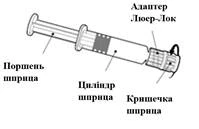
Hold the syringe by the barrel, not the plunger. Unscrew the syringe cap by turning it counterclockwise.
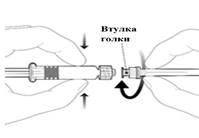
To attach the needle, connect the hub to the Luer-Lock adapter and turn a quarter turn clockwise until the needle is fully secured. Do not pull the plunger out of the syringe barrel. If this occurs, do not administer the vaccine. Any unused product or waste must be disposed of in accordance with local requirements.
Children.
INFANRIX vaccine is used in children from 2 months of age.
Overdose.
Post-marketing pharmacovigilance reports have included cases of overdose. Adverse reactions occurring after overdose were not specific and were similar to those observed during normal administration of the vaccine.
Adverse reactions. Clinical trials
The safety profile below is based on data from 20 clinical trials involving 11,469 patients who received 18,420 doses of the vaccine. As with aDTaP and combined vaccines containing aDTaP, an increased frequency of local reactions and fever has been reported after booster vaccination compared to the primary vaccination course.
The frequency of adverse reactions is defined as follows:
Very common: ≥ 1/10
Common: ≥ 1/100 to < 1/10
Uncommon: ≥ 1/1,000 to < 1/100
Rare: ≥ 1/10,000 to < 1/1,000
Very rare: < 1/10,000
Blood and lymphatic system disorders
Very rare: lymphadenopathy¹.
Metabolism and nutrition disorders
Common: loss of appetite².
Psychiatric disorders
Very common: irritability.
Common: restlessness², high-pitched screaming.
Nervous system disorders
Very common: somnolence.
Uncommon: headache¹.
Respiratory, thoracic and mediastinal disorders
Uncommon: cough¹, bronchitis¹.
Gastrointestinal disorders
Common: gastrointestinal disorders such as diarrhea and vomiting.
Skin and subcutaneous tissue disorders
Common: pruritus.
Uncommon: rash.
Rare: urticaria.
General disorders and administration site reactions:
Very common: erythema, local swelling at injection site (< 50 mm), fever > 38°C.
Common: pain², local swelling at injection site (> 50 mm)³.
Uncommon: reactions at injection site including induration, fatigue¹, fever > 39.1°C, diffuse swelling of the limb into which the injection was administered, sometimes extending to the adjacent joint³.
Post-marketing pharmacovigilance
Blood and lymphatic system disorders
Thrombocytopenia⁴.
Immune system disorders
Allergic reactions (including anaphylactic and anaphylactoid reactions).
Nervous system disorders
Collapse or shock-like state (hypotonic-hyporesponsive episodes), seizures (with or without fever) within 2–3 days after vaccination.
Respiratory disorders
Apnea in preterm infants (≤ 28 weeks gestation) (see section "Special considerations for use").
Skin and subcutaneous tissue disorders
Angioneurotic edema.
General disorders and pathological reactions at injection site
Swelling of the entire limb into which the vaccine was administered³.
¹ Observed only after booster vaccination.
² Observed very commonly after booster vaccination.
³ In children who received primary doses of acellular pertussis vaccine, the likelihood of swelling reactions after booster dose administration is higher compared to children who received whole-cell pertussis vaccines. Local swelling (> 50 mm) and diffuse swelling may occur more frequently (very commonly and commonly, respectively) during booster vaccination at ages between 4 and 6 years. These reactions resolve on average within 4 days.
⁴ Observed with diphtheria and tetanus vaccines.
Reporting suspected adverse reactions
Reporting of suspected adverse reactions after medicinal product registration is of great importance. It allows continuous monitoring of the benefit/risk balance of the medicinal product. Medical and pharmaceutical professionals, as well as patients or their legal representatives, should report all cases of suspected adverse reactions and lack of efficacy through the Automated Information System for Pharmacovigilance at: https://aisf.dec.gov.ua.
Shelf life. 3 years. The expiry date is indicated on the packaging.
Storage conditions. Store at 2–8°C. Do not freeze. Protect from light. Keep out of reach of children.
Incompatibility. INFANRIX vaccine must not be mixed with other vaccines in the same syringe, except for HIBERIX or Act-HIB.
Packaging. Injection suspension, 1 dose (0.5 mL) in a pre-filled syringe No. 1 in a kit with one or two needles. The cap and plunger rubber stopper of the pre-filled syringe are made of synthetic rubber.
Prescription status. Prescription only.
Manufacturer. GlaxoSmithKline Biologicals S.A., Belgium / GlaxoSmithKline Biologicals S.A., Belgium.
Manufacturer's location and address of place of business. Rue de l’Institut, 89, 1330 Rixensart, Belgium / Rue de l’Institut, 89 1330 Rixensart, Belgium.
Marketing authorization holder and/or its representative. LLC "GlaxoSmithKline Pharmaceuticals Ukraine".
Address of marketing authorization holder and/or its representative. 1-B Pavla Tychyny Avenue, Kyiv, 02152, Ukraine. Tel: (044) 585-51-85, Fax: (044) 585-51-92.
For all cases of suspected adverse reactions and lack of efficacy of the medicinal product, reports can be submitted to LLC "GlaxoSmithKline Pharmaceuticals Ukraine" via 24-hour hotline (044) 585-51-85 or by email at [email protected].