Glutazon
Ukraine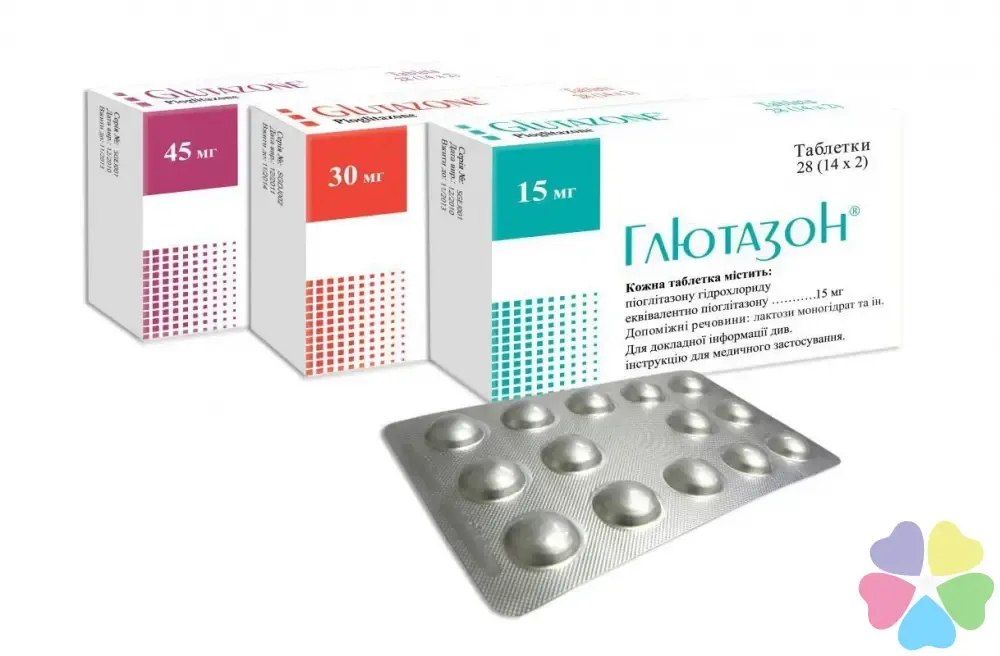
Table of Contents
INSTRUCTIONS FOR MEDICAL USE OF THE MEDICINAL PRODUCT GLUTAZONE® (GLUTAZONE®)
Composition:
Active substance: pioglitazone;
Each tablet contains 15 mg, 30 mg, or 45 mg of pioglitazone hydrochloride calculated as pioglitazone;
Excipients: lactose monohydrate, hydroxypropyl cellulose, calcium carboxymethyl cellulose, magnesium stearate.
Pharmaceutical form. Tablets.
Main physicochemical properties:
15 mg tablets: white, round, flat tablets with "K" embossed on one side and smooth on the other;
30 mg tablets: white, round, biconvex tablets, smooth on both sides;
45 mg tablets: white, round, biconvex tablets, smooth on both sides.
Pharmacotherapeutic group.
Antidiabetic agents. Hypoglycemic agents, excluding insulin. Thiazolidinediones.
ATC code A10BG03.
Pharmacological Properties.
Pharmacodynamics.
The action of pioglitazone may be mediated by reducing insulin resistance. Pioglitazone is believed to act by activating specific nuclear receptors (peroxisome proliferator-activated receptor gamma [PPAR-γ]), leading to increased insulin sensitivity in liver, adipose, and skeletal muscle cells in animals. Treatment with pioglitazone has been shown to reduce hepatic glucose production and increase peripheral glucose utilization in the setting of insulin resistance.
Fasting and postprandial glycemic control improves in patients with type 2 diabetes mellitus. Improvement in glycemic control is associated with decreased plasma insulin concentrations both fasting and postprandial. A clinical trial comparing pioglitazone with gliclazide as monotherapy was continued for up to two years to assess time to treatment failure (defined as HbA1c ≥ 8.0% after the first six months of therapy). Kaplan-Meier analysis showed a shorter time to treatment failure in patients receiving gliclazide compared to those receiving pioglitazone. After two years, glycemic control (defined as HbA1c < 8.0%) was maintained in 69% of patients receiving pioglitazone compared to 50% of patients receiving gliclazide. In a two-year study of combination therapy comparing pioglitazone with gliclazide added to metformin, glycemic control, measured as mean change in HbA1c from baseline, was similar between treatment groups at one year. The rate of HbA1c deterioration during the second year was lower with pioglitazone than with gliclazide.
In a placebo-controlled trial, patients with inadequate glycemic control despite a three-month period of insulin optimization were randomized to pioglitazone or placebo for 12 months. Patients receiving pioglitazone showed a mean reduction in HbA1c of 0.45% compared to those continuing insulin alone, as well as a reduction in insulin dose in the pioglitazone group.
HOMA analysis indicates that pioglitazone improves β-cell function and increases insulin sensitivity. Two-year clinical studies demonstrated sustained effects.
During one-year clinical trials, pioglitazone consistently led to a statistically significant reduction in the albumin/creatinine ratio compared to baseline.
The effect of pioglitazone (45 mg as monotherapy compared to placebo) was studied in a small 18-week trial involving patients with type 2 diabetes. Pioglitazone was associated with significant weight gain. Visceral fat decreased significantly, while subcutaneous fat mass increased. These changes in body fat distribution with pioglitazone were accompanied by improved insulin sensitivity. In most clinical trials, a reduction in total plasma triglycerides and free fatty acids, as well as an increase in high-density lipoprotein cholesterol (HDL-C), was observed compared to placebo, along with a small but clinically insignificant increase in low-density lipoprotein cholesterol (LDL-C) levels.
In clinical trials lasting up to two years, pioglitazone reduced total plasma triglycerides and free fatty acids and increased HDL-C levels compared to placebo, metformin, or gliclazide. Pioglitazone did not cause a statistically significant increase in LDL-C levels compared to placebo, whereas reductions were observed with metformin and gliclazide. In a 20-week study, pioglitazone not only reduced fasting triglyceride levels but also decreased postprandial hypertriglyceridemia by affecting both absorbed and liver-synthesized triglycerides. These effects were independent of pioglitazone's influence on glycemia and were statistically significantly different from those of glyburide.
In the PROactive cardiovascular outcomes trial, 5238 patients with type 2 diabetes and established serious macrovascular disease were randomized to receive pioglitazone or placebo in addition to existing antidiabetic and cardiovascular therapies for up to 3.5 years. The mean age of the study population was 62 years; mean duration of diabetes was 9.5 years. Approximately one-third of patients received insulin in combination with metformin and/or sulfonylureas. To be eligible, patients had to have one or more of the following conditions: myocardial infarction, stroke, percutaneous coronary intervention, coronary artery bypass grafting, acute coronary syndrome, ischemic heart disease, or peripheral arterial obstructive disease. Nearly half of the patients had a history of myocardial infarction, and about 20% had a history of stroke. Approximately half of the study population met at least two cardiovascular disease inclusion criteria. Almost all patients (95%) received cardiovascular medications (beta-blockers, angiotensin-converting enzyme [ACE] inhibitors, angiotensin II antagonists, calcium channel blockers, nitrates, diuretics, acetylsalicylic acid, statins, fibrates).
Although the trial failed to meet its primary endpoint—a composite of all-cause mortality, non-fatal myocardial infarction, stroke, acute coronary syndrome, major leg amputation, coronary revascularization, and leg revascularization—the results indicate no long-term cardiovascular concerns associated with pioglitazone use. However, the incidence of edema, weight gain, and heart failure increased. No increase in mortality due to heart failure was observed.
Pharmacokinetics.
Absorption. After oral administration, pioglitazone is rapidly absorbed; maximum plasma concentrations of unchanged pioglitazone are typically reached within 2 hours. Plasma concentration increases proportionally with doses ranging from 2 to 60 mg. Steady state is achieved after 4–7 days of dosing. Repeated administration does not lead to accumulation of the drug or its metabolites. Food intake does not affect absorption. The absolute bioavailability of pioglitazone exceeds 80%.
Distribution. The estimated volume of distribution in humans is 0.25 L/kg. Pioglitazone and all its active metabolites are extensively bound to plasma proteins (>99%).
Metabolism. Pioglitazone is extensively metabolized in the liver by hydroxylation of aliphatic methylene groups. This is primarily mediated by the CYP2C8 isoenzyme of the cytochrome P450 system, although other isoenzymes may play a minor role. Three of the six identified metabolites are active (M-II, M-III, and M-IV). Considering activity, concentration, and protein binding, pioglitazone and its metabolite M-III contribute equally to efficacy. On this basis, the contribution of M-IV to efficacy is approximately three times greater than that of pioglitazone, while the relative contribution of M-II is minimal.
In vitro studies provided no evidence that pioglitazone inhibits any cytochrome P450 isoenzyme subtype. In humans, pioglitazone does not induce the major cytochrome P450 isoenzymes 1A, 2C8/9, or 3A4.
Elimination. 55% of pioglitazone is excreted in feces and 45% in urine. The mean elimination half-life of unchanged pioglitazone is 5–6 hours, while for all active metabolites it ranges from 16 to 23 hours.
Elderly patients. Pharmacokinetic parameters in patients aged 65 years and older are similar to those in younger patients.
Patients with renal impairment. In patients with impaired renal function, plasma concentrations of pioglitazone and its active metabolites are lower than in patients with normal renal function, but the clearance of the parent compound is similar. Therefore, the concentration of free (unbound) pioglitazone remains unchanged.
Patients with hepatic impairment. Total plasma concentration of pioglitazone is unchanged, but with an increased volume of distribution, clearance is reduced, leading to an increased fraction of unbound pioglitazone.
Clinical characteristics.
Indications.
Glutazon® is indicated as second- or third-line therapy for type 2 diabetes mellitus:
as monotherapy:
- in adult patients (particularly in patients with excess body weight) when diet and exercise have failed to provide adequate blood glucose control, and in cases of contraindications or intolerance to metformin;
as dual therapy in combination with:
- metformin in adult patients (particularly in patients with excess body weight) who have inadequate glycaemic control despite treatment with metformin monotherapy at the maximum tolerated dose;
- sulfonylurea derivatives in adult patients (with intolerance or contraindications to metformin) who have inadequate glycaemic control despite treatment with sulfonylurea monotherapy at the maximum tolerated dose;
as triple therapy in combination with:
- metformin and sulfonylurea derivatives in adult patients (particularly with excess body weight) who have inadequate glycaemic control despite dual combination therapy.
Glutazon® is also indicated in combination with insulin in patients with type 2 diabetes who have inadequate glycaemic control on insulin therapy and in whom metformin is contraindicated or not tolerated.
After initiating treatment with pioglitazone, the therapeutic response should be carefully evaluated every 3–6 months (e.g., by the degree of reduction in HbA1c levels). If an adequate response to pioglitazone therapy is not achieved, treatment should be discontinued. Given the potential risks of long-term pioglitazone therapy, physicians prescribing this medication should confirm an acceptable safety profile through routine monitoring (see section "Special precautions").
Contraindications.
- Hypersensitivity to the active substance or to any of the excipients.
- Diabetic ketoacidosis.
- Hepatic impairment.
- Heart failure, current or in medical history (NYHA stages I–IV).
- Bladder cancer, current or in medical history.
- Macroscopic haematuria of unknown etiology.
Interaction with other medicinal products and other forms of interaction.
Drug interaction studies have demonstrated that pioglitazone does not significantly affect the pharmacokinetics and pharmacodynamics of digoxin, warfarin, phenprocoumon, and metformin. Concomitant administration of pioglitazone with sulfonylurea derivatives does not affect the pharmacokinetics of these agents. Human studies do not suggest induction of the major cytochrome P450 enzymes 1A, 2C8/9, and 3A4. In vitro studies have not shown inhibition of any cytochrome P450 isoenzyme. Therefore, interactions with substances metabolized by these enzymes (e.g., oral contraceptives, cyclosporine, calcium channel blockers, and HMG-CoA reductase inhibitors) are unlikely.
Concomitant use of pioglitazone with gemfibrozil (an inhibitor of the cytochrome P450 2C8 enzyme) has been reported to increase the area under the plasma concentration-time curve (AUC) of pioglitazone by threefold. Due to the potential for increased risk of dose-dependent adverse effects, a dose reduction of pioglitazone may be required when coadministered with gemfibrozil. Close glycaemic monitoring is necessary in such cases (see section "Special precautions").
Concomitant administration of pioglitazone with rifampicin (an inducer of the cytochrome P450 2C8 enzyme) results in a 54% decrease in pioglitazone AUC. An increase in the pioglitazone dose may be required when coadministered with rifampicin, provided that close glycaemic monitoring is maintained.
Special precautions for use.
Fluid retention and heart failure.
Pioglitazone may cause fluid retention, which can exacerbate or precipitate congestive heart failure. Treatment of patients who have at least one risk factor for developing chronic heart failure (e.g., advanced age, history of myocardial infarction or ischemic heart disease (IHD)) should be initiated at the lowest dose, with gradual dose escalation thereafter. These patients should be closely monitored for signs and symptoms of heart failure, weight gain, or development of edema, especially in patients with reduced cardiac reserve. Cases of heart failure have been reported with the use of pioglitazone in combination with insulin or in patients with a history of heart failure. Since both insulin and pioglitazone are associated with fluid retention, their concomitant use may increase the risk of edema. Patients receiving this combination require careful monitoring for manifestations of heart failure, weight gain, and edema. There are data indicating the occurrence of peripheral edema and heart failure in patients taking pioglitazone in combination with nonsteroidal anti-inflammatory drugs, including selective COX-2 inhibitors. If any worsening of cardiovascular status occurs, pioglitazone should be discontinued.
Clinical trials evaluating cardiovascular outcomes in patients up to 75 years of age with type 2 diabetes and serious macrovascular disease, adding pioglitazone to existing antidiabetic and cardiovascular therapy for up to 3.5 years, demonstrated an increased incidence of heart failure without an increase in mortality.
Elderly patients.
Pioglitazone should be used with caution in combination with insulin in elderly patients due to an increased risk of severe heart failure. Additionally, due to age-related risk factors (particularly bladder cancer, fractures, and heart failure), the benefit-risk ratio should be carefully evaluated before and during pioglitazone therapy.
Bladder cancer.
Meta-analysis of controlled clinical trials indicates an increased risk of bladder cancer in patients treated with pioglitazone. The incidence of bladder cancer was 0.06% in the treatment group compared to 0.02% in the control group.
Epidemiological data also support a slight increase in the risk of bladder cancer in diabetic patients receiving pioglitazone, although not all studies have shown a statistically significant increase in risk.
Before initiating pioglitazone therapy, all risk factors for bladder cancer (e.g., age, smoking, occupational exposure, chemotherapy (e.g., cyclophosphamide), pelvic radiation therapy) should be carefully assessed. Furthermore, all patients with unexplained macroscopic hematuria should undergo thorough evaluation prior to starting pioglitazone. Patients taking pioglitazone should be advised to seek immediate medical attention if they develop macroscopic hematuria or other urinary symptoms during treatment.
Liver function monitoring.
Rare post-marketing reports of liver function abnormalities have been reported (see section "Adverse reactions"). Therefore, patients receiving pioglitazone therapy should have periodic monitoring of liver enzymes. Prior to initiating pioglitazone treatment, liver enzyme levels should be assessed in all patients. Pioglitazone should not be prescribed to patients with elevated alanine aminotransferase (ALT) levels (more than 2.5 times the upper limit of normal) or with clinical evidence of liver disease. After starting therapy, periodic monitoring of liver enzymes is recommended based on clinical presentation. If ALT levels increase to three times the upper limit of normal during treatment, liver enzymes should be re-evaluated as soon as possible. If ALT levels remain three times above the upper limit of normal, therapy should be discontinued. If any patient develops symptoms suggestive of liver dysfunction, such as nausea, vomiting, anorexia, abdominal pain, fatigue, and/or dark urine, liver enzyme levels should be checked. The decision whether to continue pioglitazone therapy should be based on clinical assessment and laboratory findings. The drug should be discontinued if jaundice occurs.
Weight gain.
There is evidence of dose-dependent weight gain, which may be due to fat accumulation and, in some cases, fluid retention. Weight gain may sometimes be a symptom of heart failure; therefore, body weight should be closely monitored. Dietary management is an essential component of diabetes treatment. Patients are advised to strictly control their caloric intake.
Hematology.
During pioglitazone treatment, a slight decrease in hemoglobin levels (relative reduction of 4%) and hematocrit (relative reduction of 4.1%) has been observed due to plasma volume expansion. Similar changes were observed with dual therapy of pioglitazone and metformin (relative reduction in hemoglobin: 3–4%; hematocrit: 3.6–4.1%) and to a lesser extent with sulfonylureas and insulin (relative reduction in hemoglobin: 1–2%; hematocrit: 1–3.2%).
Hypoglycemia.
Due to increased tissue sensitivity to insulin, patients receiving pioglitazone in dual or triple therapy with sulfonylureas or dual therapy with insulin may have an increased risk of dose-dependent hypoglycemia. In cases of hypoglycemia risk, a reduction in the dose of sulfonylurea or insulin may be necessary.
Ocular effects.
There are data on the occurrence or worsening of macular edema, associated with visual impairment, in patients receiving thiazolidinediones, including pioglitazone. Most of these patients also had peripheral edema. It is unknown whether there is a direct causal relationship between pioglitazone use and macular edema. Therefore, physicians should be aware that visual disturbances in patients receiving pioglitazone therapy may be due to macular edema, and referral to an ophthalmologist should be considered.
Other.
Clinical data suggest an increased risk of fractures in women during pioglitazone therapy, which should be considered during long-term treatment. Epidemiological data indicate a similar incidence of fractures in both women and men receiving pioglitazone. Therefore, physicians should consider the risk of fractures in patients undergoing prolonged pioglitazone therapy.
Due to increased tissue sensitivity to insulin, treatment with pioglitazone in women with polycystic ovary syndrome may result in resumption of ovulation. These women are at risk of becoming pregnant. Patients should be informed about the possibility of pregnancy. If a woman plans pregnancy or becomes pregnant, pioglitazone should be discontinued.
Pioglitazone should be used with caution when co-administered with inhibitors (e.g., gemfibrozil) or inducers (e.g., rifampicin) of cytochrome P450 2C8. In such cases, careful glycemic monitoring is required, and the dose of pioglitazone or the hypoglycemic regimen may need to be adjusted.
If you have an intolerance to certain sugars, consult your doctor before taking this medicine, as the product contains lactose.
Use during pregnancy or breastfeeding.
Pregnancy.
There are no adequate data on the safety of pioglitazone use during pregnancy. Animal studies have shown that pioglitazone causes fetal growth restriction due to reduced maternal hyperinsulinemia and increased insulin resistance occurring during pregnancy, thereby reducing the availability of metabolic substrates for fetal growth. The relevance of this mechanism in humans is unknown; therefore, pioglitazone should not be used during pregnancy.
Breastfeeding period.
Preclinical studies have shown that pioglitazone is excreted in the milk of rats. It is unknown whether pioglitazone is excreted in human breast milk. The drug should not be administered to women who are breastfeeding.
Fertility.
In laboratory animal studies, no effects of pioglitazone on mating, fertilization, or fertility index were observed.
Ability to affect reaction speed when driving or operating machinery.
Glutazon® has no effect or has a negligible effect on the ability to drive or operate machinery. However, patients experiencing visual disturbances should exercise caution when driving or operating machinery.
Dosage and Administration.
The drug should be taken once daily, regardless of food intake. The tablet should be taken with a glass of water.
The initial dose of pioglitazone is 15 mg or 30 mg once daily. If necessary, the dose may be increased up to 45 mg once daily.
When pioglitazone is used in combination with insulin, the insulin dose should remain unchanged or be reduced if the patient reports symptoms of hypoglycemia.
Elderly patients.
Dose adjustment of pioglitazone in elderly patients is not required. Treatment should be initiated at the lowest available dose. The dose should be increased gradually, especially when pioglitazone is used in combination with insulin.
Patients with renal impairment.
Dose adjustment of pioglitazone is not required in patients with renal impairment (creatinine clearance > 4 ml/min). Pioglitazone is not recommended for patients on dialysis due to lack of information regarding its potential effects.
Patients with hepatic impairment.
Pioglitazone should not be used in patients with hepatic impairment.
Pediatric patients.
Safety and efficacy of Glutazon® in children under 18 years of age have not been studied. There is no available data. Glutazon® is contraindicated in children (under 18 years of age).
Overdose.
The highest reported dose was 120 mg daily for 4 days, followed by 180 mg daily for 7 days, which was not associated with any symptoms.
Hypoglycemia may occur when pioglitazone is used in combination with sulfonylurea derivatives or insulin.
Treatment: symptomatic and supportive.
Adverse Reactions
Based on clinical trial experience with pioglitazone, the following adverse reactions have been observed, listed by organ system classes in decreasing order of frequency: very common (≥ 1/10); common (≥ 1/100 to < 1/10); uncommon (≥ 1/1000 to < 1/100); rare (≥ 1/10000 to < 1/1000); very rare (< 1/10000); frequency not known (cannot be estimated from available data). Within each organ system class, adverse reactions are listed in decreasing order of frequency followed by decreasing severity.
Pioglitazone monotherapy.
Infections and infestations.
Common: upper respiratory tract infections.
Uncommon: sinusitis.
Benign, malignant and unspecified neoplasms (including cysts and polyps).
Uncommon: bladder cancer.
Immune system disorders.
Frequency not known: hypersensitivity reactions and allergic reactions, including anaphylaxis, angioedema, urticaria.
Nervous system disorders.
Common: hypoesthesia.
Uncommon: insomnia.
Eye disorders.
Common: vision disorders1.
Frequency not known: macular edema.
Musculoskeletal and connective tissue disorders.
Common: bone fractures3.
Investigations.
Common: increased body weight5.
Frequency not known: increased ALT6.
Pioglitazone in combination therapy with metformin.
Infections and infestations.
Common: upper respiratory tract infections.
Uncommon: sinusitis.
Benign, malignant and unspecified neoplasms (including cysts and polyps).
Uncommon: bladder cancer.
Blood and lymphatic system disorders.
Common: anemia.
Immune system disorders.
Frequency not known: hypersensitivity reactions and allergic reactions, including anaphylaxis, angioedema, urticaria.
Nervous system disorders.
Common: hypoesthesia, headache.
Uncommon: insomnia.
Eye disorders.
Common: vision disorders1.
Frequency not known: macular edema.
Gastrointestinal disorders.
Uncommon: flatulence.
Musculoskeletal and connective tissue disorders.
Common: bone fractures3; arthralgia.
Renal and urinary disorders.
Common: hematuria.
Reproductive system and breast disorders.
Common: erectile dysfunction.
Investigations.
Common: increased body weight5.
Frequency not known: increased ALT6.
Pioglitazone in combination therapy with sulfonylurea derivatives.
Infections and infestations.
Common: upper respiratory tract infections.
Uncommon: sinusitis.
Benign, malignant and unspecified neoplasms (including cysts and polyps).
Uncommon: bladder cancer.
Immune system disorders.
Frequency not known: hypersensitivity reactions and allergic reactions, including anaphylaxis, angioedema, urticaria.
Metabolism and nutrition disorders.
Uncommon: hypoglycemia, increased appetite.
Nervous system disorders.
Common: hypoesthesia, dizziness.
Uncommon: headache, insomnia.
Eye disorders.
Uncommon: vision disorders1.
Frequency not known: macular edema.
Ear and labyrinth disorders.
Uncommon: vertigo.
Gastrointestinal disorders.
Common: flatulence.
Skin and subcutaneous tissue disorders.
Uncommon: increased sweating.
Musculoskeletal and connective tissue disorders.
Common: bone fractures3.
Renal and urinary disorders.
Uncommon: glucosuria, proteinuria.
General disorders and administration site conditions.
Uncommon: fatigue.
Investigations.
Common: increased body weight5.
Uncommon: increased lactate dehydrogenase.
Frequency not known: increased ALT6.
Pioglitazone in triple combination therapy with metformin and sulfonylurea derivatives.
Infections and infestations.
Common: upper respiratory tract infections.
Uncommon: sinusitis.
Benign, malignant and unspecified neoplasms (including cysts and polyps).
Uncommon: bladder cancer.
Immune system disorders.
Frequency not known: hypersensitivity reactions and allergic reactions, including anaphylaxis, angioedema, urticaria.
Metabolism and nutrition disorders.
Very common: hypoglycemia.
Nervous system disorders.
Common: hypoesthesia.
Uncommon: insomnia.
Eye disorders.
Frequency not known: macular edema.
Musculoskeletal and connective tissue disorders.
Common: bone fractures3, arthralgia.
Investigations.
Common: increased body weight5, increased plasma creatine phosphokinase.
Frequency not known: increased ALT6.
Pioglitazone in combination therapy with insulin.
Infections and infestations.
Common: upper respiratory tract infections, bronchitis.
Uncommon: sinusitis.
Benign, malignant and unspecified neoplasms (including cysts and polyps).
Uncommon: bladder cancer.
Immune system disorders.
Frequency not known: hypersensitivity reactions and allergic reactions, including anaphylaxis, angioedema, urticaria.
Metabolism and nutrition disorders.
Common: hypoglycemia.
Nervous system disorders.
Common: hypoesthesia.
Uncommon: insomnia.
Eye disorders.
Frequency not known: macular edema.
Cardiac disorders.
Common: heart failure2.
Respiratory, thoracic and mediastinal disorders.
Common: dyspnea (shortness of breath).
Musculoskeletal and connective tissue disorders.
Common: bone fractures3, arthralgia, back pain.
General disorders and administration site conditions.
Very common: edema4.
Investigations.
Common: increased body weight5.
Frequency not known: increased ALT6.
1 Vision disturbances have been reported primarily at the beginning of treatment, associated with changes in blood glucose levels leading to temporary changes in lens turgor and refractive index, as observed with other hypoglycemic agents.
2 The frequency of reports of heart failure during pioglitazone treatment was similar to that in placebo, metformin, and sulfonylurea treatment groups; however, it increased when pioglitazone was used in combination with insulin or in patients with pre-existing heart failure.
3 In clinical studies, a higher incidence of bone fractures with pioglitazone use was observed in women; no increase was observed in men. During the post-marketing period, fractures have been reported in both sexes (see section "Special precautions").
4 Edema occurs in 6–9% of patients treated with pioglitazone compared to 2–5% of patients treated with sulfonylureas or metformin. Edema is usually mild to moderate in severity and does not require discontinuation of treatment.
5 Mean weight gain during one year of pioglitazone monotherapy was 2–3 kg, and 1.5 kg when combined with metformin. This weight gain is similar to that observed with sulfonylurea use.
6 The frequency of ALT elevation with pioglitazone use was up to three times the upper limit of normal, similar to placebo and lower than with metformin or sulfonylurea derivatives. Rare cases of elevated liver enzymes and hepatocellular dysfunction have been observed with pioglitazone. Very rare cases of fatal outcomes have been reported, although a causal relationship has not been established.
Reporting suspected adverse reactions
Reporting suspected adverse reactions after a medicinal product is authorized is important. It allows continued monitoring of the benefit-risk balance of the medicinal product. Healthcare professionals and patients, as well as their legal representatives, are encouraged to report any suspected adverse reactions and lack of efficacy via the Automated Information System for Pharmacovigilance at: https://aisf.dec.gov.ua.
Shelf life.
3 years.
Storage conditions.
Store at temperatures not exceeding 25 °C in the original packaging.
Keep out of reach of children.
Packaging.
14 tablets in a blister; 2 blisters in a cardboard box.
10 tablets in a blister; 3 blisters in a cardboard box.
Prescription status.
Prescription only.
Manufacturer.
KUSUM PHARM LLC
Manufacturer's location and address of place of business.
54 Skryabina Street, Sumy, Sumy region, 40020, Ukraine.
or
Manufacturer.
GLEDPHARM LTD
Manufacturer's location and address of place of business.
54 Davydovskoho Hryhoriia Street, Sumy, Sumy region, 40020, Ukraine.