Glycerol
Ukraine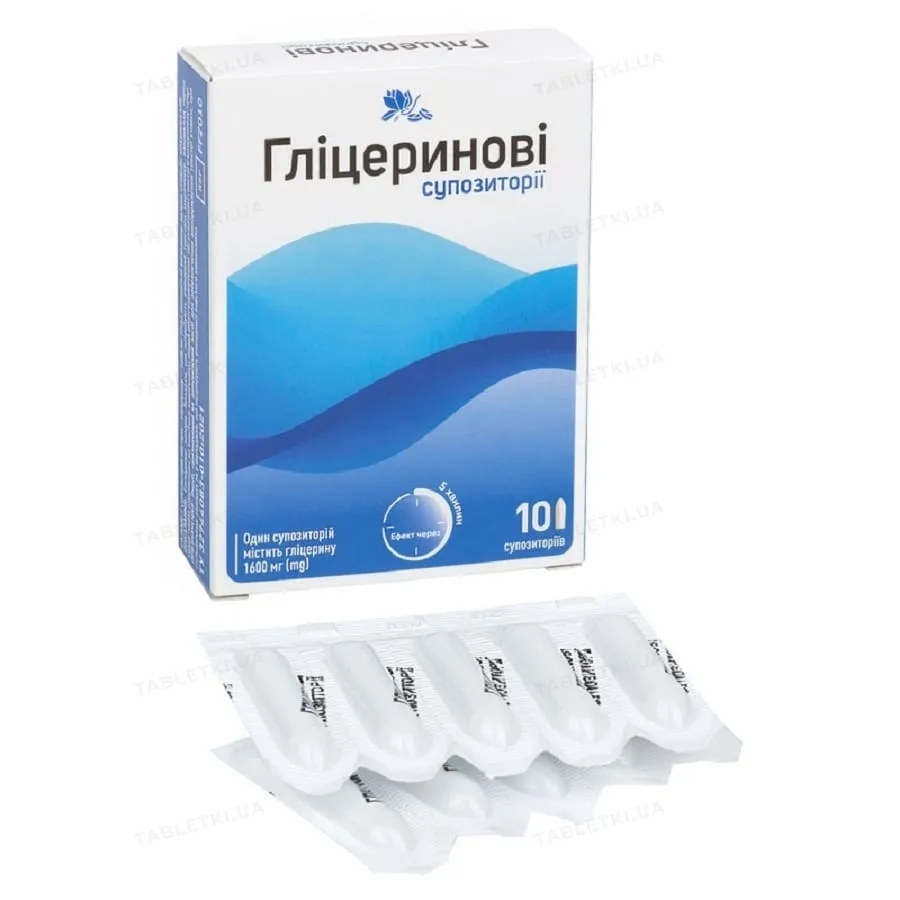
Table of Contents
INSTRUCTION FOR MEDICAL USE OF THE MEDICINAL PRODUCT GLYCERIN
Composition:
Active substance: glycerol;
1 suppository contains glycerol 0.88 g or 2.63 g;
Excipients: sodium carbonate decahydrate; stearic acid; macrogol 400.
Pharmaceutical form. Suppositories.
Main physico-chemical properties: suppositories are semi-transparent, almost colorless or with a slight yellowish tint, with a greasy surface, hygroscopic. The presence of a cup-shaped depression, air channel, cloudiness of suppositories, slight softening of the surface layer, and condensation on the packaging is permitted.
Pharmacotherapeutic group.
Laxatives.
ATC code A06 AX01.
Pharmacological Properties.
Pharmacodynamics.
Pure glycerin has an irritant effect, which disappears when water (30–50%), petrolatum, or lanolin is added. When administered into the rectum, suppositories exert a mild irritant effect on the mucous membrane and reflexively stimulate defecation.
When used as rectal suppositories, facilitates the passage of fecal masses.
The effect of the medicinal product occurs within 5–30 minutes.
Pharmacokinetics.
After rectal administration, absorption is weak, and the residence time in the body is short.
It practically does not enter the systemic circulation and does not cause systemic adverse effects.
Clinical characteristics.
Indications. Constipation of various etiologies (when oral administration of drugs is not possible).
Contraindications.
Hypersensitivity to the components of the drug. Intestinal obstruction, renal failure, appendicitis, bleeding, diarrhea, acute hemorrhoids, anal fissures, inflammatory diseases, tumors of the rectum, undiagnosed abdominal pain.
Interaction with other medicinal products and other forms of interaction.
The drug may interact with other medicinal products.
Glycerol suppositories may reduce the effect of other drugs administered rectally. A several-hour interval should be observed.
Special precautions for use.
It is not recommended to use suppositories for treatment courses longer than 1 week.
Use with caution in patients with impaired kidney function, allergies, nausea, or vomiting.
Hands should be thoroughly washed before and after suppository administration.
Use during pregnancy or breastfeeding.
During pregnancy, this medicinal product should be used only if the expected benefit to the pregnant woman outweighs the potential risk to the fetus.
It is unknown whether glycerin is excreted in breast milk; therefore, the physician may prescribe the drug only if the expected benefit to the breastfeeding woman outweighs the potential risk to the infant.
Ability to affect the speed of reactions while driving or operating machinery.
Has no effect.
Method of Administration and Dosage.
One suppository should be administered once daily, 15–20 minutes after breakfast.
The suppository is inserted into the rectum and should be retained for at least 5 minutes, unless bowel evacuation occurs earlier. Residual suppository material is eliminated from the body together with fecal matter. If necessary, the dose may be increased to two suppositories per day.
For adults and children aged 5 years and older: one suppository (containing 2.63 g of glycerol) once daily. For children under 5 years: one suppository (containing 0.88 g of glycerol) once daily.
Children.
No restrictions.
Overdose .
Frequent loose stools, which resolve spontaneously after discontinuation of the drug.
Adverse reactions.
Allergic reactions are possible; pain, nausea, vomiting, intestinal bleeding, spasms of abdominal organs.
With prolonged use, irritation and discomfort in the rectum have been observed; occasionally catarrhal proctitis.
Shelf life. 2 years.
Storage conditions.
Store in the original packaging at a temperature not exceeding 25 °C.
Keep out of reach of children.
Packaging.
5 suppositories per strip, 2 strips per pack.
Prescription status. Over-the-counter.
Manufacturer. LLC "FARMEKS GROUP".
Manufacturer's location and address of business activity.
Ukraine, 08301, Kyiv region, city of Boryspil, Shevchenka Street, building 100.
INSTRUCTION
for medical use of medicinal product
GLYCEROL
Composition: active ingredient: glycerol;
1 suppository contains 0.88 g or 2.63 g of glycerol;
excipients: sodium carbonate decahydrate; stearic acid; macrogol 400.
Pharmaceutical form. Suppositories.
Main physicochemical properties: semi-transparent suppositories, almost colorless or with a slight yellowish tint, with a greasy surface, hygroscopic. The presence of a funnel-shaped depression, air core, cloudiness of suppositories, slight softening of the surface layer, and condensation on the packaging is permitted.
Pharmacotherapeutic group.
Laxatives.
ATC code A06 AX01.
Pharmacological properties.
Pharmacodynamics. In pure form, glycerol has an irritating effect, which disappears when water (30–50%), petroleum jelly, or lanolin is added. When administered into the rectum, the suppositories exert a mild irritant effect on the mucous membrane and reflexively stimulate defecation.
When used as rectal suppositories, facilitates the evacuation of fecal masses.
The effect of the medicinal product occurs within 5–30 minutes.
Pharmacokinetics. After rectal administration, absorption is weak, and residence in the body is short-term. Practically does not enter systemic circulation and does not cause systemic adverse effects.
Clinical characteristics.
Indications. Constipation of various etiologies (when oral administration of drugs is not possible).
Contraindications.
Hypersensitivity to the components of the medicinal product. Intestinal obstruction, renal failure, appendicitis, bleeding, diarrhea, hemorrhoids in the stage of exacerbation, anal fissures, inflammatory diseases, tumors of the rectum, undiagnosed abdominal pain.
Interaction with other medicinal products and other types of interactions.
The drug may interact with other medicinal products.
Glycerol suppositories may reduce the efficacy of other drugs administered rectally. An interval of several hours should be maintained.
Special precautions.
It is not recommended to use suppositories for treatment courses longer than 1 week.
Use with caution in patients with impaired kidney function, allergies, nausea, or vomiting.
Hands should be thoroughly washed before and after administration of suppositories.
Use during pregnancy or breastfeeding.
During pregnancy, the medicinal product should be used only when the expected benefit to the pregnant woman outweighs the potential risk to the fetus.
It is unknown whether glycerol is excreted in breast milk; therefore, the physician may prescribe the drug only when the expected benefit to the breastfeeding woman outweighs the potential risk to the infant.
Ability to influence reaction speed when driving or operating machinery.
Does not affect.
Method of administration and dosage.
Administer 1 suppository once daily, 15–20 minutes after breakfast.
The suppository is inserted into the rectum and retained for at least 5 minutes, unless defecation occurs earlier. Residual suppository material is expelled from the body along with feces. If necessary, the dose may be increased to 2 suppositories per day.
For adults and children aged 5 years and older: 1 suppository (containing 2.63 g glycerol) once daily. For children under 5 years: 1 suppository (containing 0.88 g glycerol) once daily.
Children.
No restrictions.
Overdose.
Frequent watery stools, which resolve spontaneously after discontinuation of the drug.
Adverse reactions.
Allergic reactions are possible; pain, nausea, vomiting, intestinal bleeding, spasms of abdominal organs.
With prolonged use, irritation and discomfort in the rectum have been observed; occasionally catarrhal proctitis.
Shelf life. 2 years.
Storage conditions.
Store in the original packaging at a temperature not exceeding 25 °C.
Keep out of reach of children.
Packaging.
5 suppositories per strip, 2 strips per pack.
Prescription status. Over-the-counter.
Manufacturer. LLC "FARMEKS GROUP".
Manufacturer's location and address of business activity.
Ukraine, 08301, Kyiv region, city of Boryspil, Shevchenka Street, building 100.