Gemcitabine amaksa
Ukraine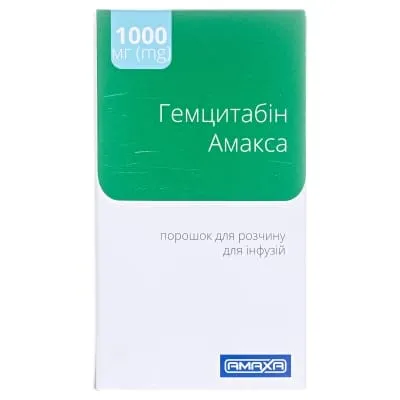
Table of Contents
INSTRUCTIONS FOR MEDICAL USE OF THE MEDICINAL PRODUCT HEMCITABINE AMAXA GEMCITABINE AMAXA
Composition:
Active substance: gemcitabine;
1 vial contains 200 mg or 1000 mg of gemcitabine (as gemcitabine hydrochloride);
1 ml of reconstituted infusion solution contains 38 mg of gemcitabine (as hydrochloride);
Excipients: mannitol (E 421); sodium acetate, trihydrate (E 262); sodium hydroxide (E 524) (3.8 %).
Pharmaceutical form. Powder for solution for infusion.
Main physicochemical properties: white or almost white powder.
Pharmacotherapeutic group. Antineoplastic agents. Pyrimidine analogues. ATC code L01BC05.
Pharmacological properties.
Pharmacodynamics.
Gemcitabine exhibits cell cycle specificity, primarily causing cell death during DNA synthesis (S-phase), as well as blocking cell growth at the G1/S-phase boundary of the cycle.
Gemcitabine (dFdC) is a pyrimidine antimetabolite that undergoes intracellular metabolism by nucleoside kinases to form active difluorodeoxycytidine diphosphate (dFdCDP) and triphosphate (dFdCTP) nucleosides. The cytotoxic effect of gemcitabine results from the combined actions of these diphosphate and triphosphate metabolites, leading to inhibition of DNA synthesis. First, the diphosphate metabolite inhibits ribonucleotide reductase, the enzyme catalyzing the formation of deoxynucleoside triphosphates required for DNA synthesis. Inhibition of this enzyme by dFdCDP leads to reduced concentrations of deoxynucleotides, including dCTP. Second, dFdCTP competes with dCTP during DNA synthesis (self-potentiation).
Similarly, a small amount of gemcitabine may be incorporated into RNA. Thus, the reduction in intracellular dCTP concentration facilitates the incorporation of triphosphate nucleosides into the DNA strand. The epsilon-DNA polymerases are unable to remove gemcitabine or repair the newly synthesized DNA strands. After incorporation of gemcitabine metabolites into the growing DNA chain, one additional nucleotide is added, which results in complete inhibition of further DNA synthesis (masked chain termination) and programmed cell death known as apoptosis.
Pharmacokinetics.
Peak plasma concentration (measured 5 minutes before the end of infusion) ranged from 3.2 to 45.5 µg/mL. Plasma concentration of the parent compound after administration of a 1000 mg/m² dose over 30 minutes exceeded 5 µg/mL approximately 30 minutes after completion of infusion and remained above 0.4 µg/mL for an additional hour.
Distribution
The volume of distribution in the central compartment is 12.4 L/m² in women and 17.5 L/m² in men (interindividual variability: 91.9%). The volume of distribution in peripheral blood is 47.4 L/m² and is independent of sex.
Plasma protein binding is considered negligible.
Elimination half-life ranges from 42 to 94 minutes, depending on patient age and sex. After administration at recommended doses, elimination of gemcitabine is practically complete within 5–11 hours after the start of infusion. When administered once weekly, gemcitabine does not accumulate.
Metabolism
Gemcitabine Amaksa is rapidly metabolized by cytidine deaminase in the liver, kidneys, blood, and other tissues. Intracellular metabolism of gemcitabine produces gemcitabine mono-, di-, and triphosphates (dFdCMP, dFdCDP, and dFdCTP, respectively), with dFdCDP and dFdCTP considered the active metabolites. These intracellular metabolites are not detectable in plasma or urine. The primary metabolite, 2'-deoxy-2',2'-difluorouridine (dFdU), is inactive and is detectable in plasma and urine.
Excretion
Systemic clearance ranges from 29.2 to 92.2 L/h/m², depending on patient sex and age (interindividual variability: 52.2%). Clearance is approximately 25% lower in women than in men. Although clearance is relatively high, it decreases with age in both men and women. When the recommended dose of 1000 mg/m² is administered via 30-minute infusion, the lower clearance in women and men is not a reason to reduce the gemcitabine dose.
Renal excretion: less than 10% of the administered dose is excreted unchanged. Renal clearance ranges from 2 to 7 L/h/m².
The amount of drug excreted within one week after administration accounts for 92–98% of the dose, of which 99% is excreted in urine, primarily as dFdU, and 1% of the administered dose is excreted in feces.
Kinetics of dFdCTP
This metabolite is detectable in mononuclear cells of peripheral blood.
Terminal elimination half-life ranges from 0.7 to 12 hours.
Intracellular concentrations increase proportionally with gemcitabine dose (35–350 mg/m²/30 min), achieving steady-state concentrations of 0.4–5 µg/mL. When plasma gemcitabine concentration exceeds 5 µg/mL, dFdCTP concentrations in mononuclear cells do not increase further, indicating saturation of the metabolic process forming this metabolite. Initial plasma concentration after administration of 1000 mg/m² over 30 minutes exceeds 5 µg/mL approximately 30 minutes after completion of infusion and remains above 0.4 µg/mL for the subsequent hour.
Kinetics of dFdU
Peak plasma concentration (3–15 minutes after completion of a 30-minute infusion of 1000 mg/m²) ranges from 28 to 52 µg/mL. Residual plasma concentration when administered once weekly ranges from 0.07 to 1.12 µg/mL, with no accumulation observed.
The decline in dFdU plasma concentration follows a triphasic pattern over time, with a mean terminal half-life of 65 hours (range: 33–84 hours).
Formation of dFdU from the parent compound accounts for 91–98%.
Mean volume of distribution in central blood is 18 L/m² (range: 11–22 L/m²).
Mean steady-state volume of distribution (Vss) is 150 L/m² (range: 96–228 L/m²).
dFdU is extensively distributed into tissues.
Mean clearance is 2.5 L/h/m² (range: 1–4 L/h/m²).
Excretion in urine is complete.
Combination therapy with gemcitabine and paclitaxel
Combination therapy with gemcitabine and paclitaxel does not affect the pharmacokinetics of either drug.
Combination therapy with gemcitabine and carboplatin
Combination therapy with gemcitabine and carboplatin does not affect the pharmacokinetics of gemcitabine.
Renal impairment
Moderate to mild renal impairment (glomerular filtration rate of 30–80 mL/min) does not have a clinically significant prolonged effect on the pharmacokinetics of gemcitabine.
Clinical characteristics.
Indications.
Bladder cancer. Gemcitabine Amaksa in combination with cispllatin is indicated for the treatment of patients with locally recurrent or metastatic bladder cancer.
Pancreatic cancer. Gemcitabine Amaksa is indicated for the treatment of patients with locally advanced or metastatic adenocarcinomas of the pancreas.
Non-small cell lung cancer (NSCLC). Gemcitabine Amaksa in combination with cisplatin is indicated as a first-line treatment for patients with locally advanced or metastatic non-small cell lung cancer. Gemcitabine Amaksa as monotherapy is indicated for the treatment of elderly patients and patients with other performance status.
Ovarian cancer. Gemcitabine Amaksa in combination with carboplatin is indicated for the treatment of patients with locally advanced or metastatic epithelial ovarian carcinoma. The drug is indicated for the treatment of patients with recurrence of epithelial ovarian carcinoma after a remission period of at least 6 months following prior first-line platinum-based therapy.
Breast cancer. Gemcitabine Amaksa in combination with paclitaxel is indicated for the treatment of patients with unresectable, locally recurrent or metastatic breast cancer after prior adjuvant/neoadjuvant chemotherapy. An anthracycline should be administered prior to chemotherapy, unless contraindicated.
Biliary tract cancer. Gemcitabine Amaksa is indicated for the treatment of patients with biliary tract cancer.
Contraindications.
Hypersensitivity to the active substance or to any of the excipients of the medicinal product.
Breast-feeding period (see section "Use during pregnancy or breast-feeding").
Special precautions.
Preparation of infusion solution
As with all cytotoxic agents, great care should be taken in the preparation and administration of the infusion solution. The solution should be prepared in a safety cabinet using protective clothing and gloves. If a safety cabinet is not available, protective clothing should be supplemented with a mask and protective goggles.
In case of contact with the eyes, serious irritation may occur. The eyes should be immediately and thoroughly rinsed with water. If irritation persists, medical advice must be sought. In case of skin contact, the affected area should be immediately washed with water.
Interaction with other medicinal products and other forms of interaction.
No specific interaction studies have been conducted (see section "Pharmacokinetics").
Radiotherapy
Concurrent radiotherapy (administered simultaneously with gemcitabine or within ≤ 7 days after). Toxicity resulting from different therapies depends on many factors, including gemcitabine dose, frequency of infusions, radiation dose, planned technique, and volume and area of irradiation.
Preclinical and clinical studies have shown that gemcitabine has radiosensitizing activity. In one study, when gemcitabine at a dose of 1000 mg/m² was administered over a period of up to 6 weeks concurrently with thoracic radiotherapy in patients with non-small cell lung cancer (NSCLC), significant toxicity was observed in the form of severe and potentially life-threatening mucositis, esophagitis, and pneumonitis, especially in patients treated with high-dose radiotherapy (median treatment volume – 4,795 cm³). In subsequent studies, it was proposed to administer gemcitabine at lower doses in combination with concurrent radiotherapy with expected toxicity, as was done in a phase II NSCLC study, where thoracic irradiation at a dose of 66 Gy was administered together with gemcitabine (600 mg/m², 4 times) and cisplatin (80 mg/m², 2 times) over 6 weeks. The optimal regimen for safe use of Gemcitabine Amaksa with therapeutic radiation doses has not yet been established for all tumor types.
Non-concurrent radiotherapy (administered with an interval > 7 days). Analysis of data does not indicate increased toxicity when gemcitabine is administered more than 7 days before or 7 days after radiotherapy, except for local inflammatory reactions in previously irradiated areas. Data suggest that gemcitabine administration may be initiated after acute radiation reactions have resolved or, at least, one week after completion of radiotherapy. Radiation-induced injuries of target tissues (esophagitis, colitis, pneumonitis) have been observed regardless of whether gemcitabine was administered concurrently or non-concurrently.
Others
The use of live attenuated vaccines, including yellow fever vaccine, is not recommended due to the risk of developing systemic, potentially fatal disease, particularly in immunosuppressed patients.
Special precautions for use.
Prolonging the infusion duration and increasing the dosing frequency enhance toxicity.
Hematologic toxicity
Gemcitabine may suppress bone marrow function, manifesting as leukopenia, thrombocytopenia, and anemia.
Patients receiving gemcitabine should be monitored before each dose for platelet, white blood cell, and granulocyte counts. If drug-induced bone marrow suppression is detected, consideration should be given to discontinuing or modifying therapy (see section "Dosage and administration"). However, myelosuppression is usually transient and most often does not require dose reduction or treatment discontinuation.
Peripheral blood cell counts may continue to decline even after discontinuation of gemcitabine therapy. Treatment should be initiated cautiously in patients with pre-existing bone marrow dysfunction. As with other cytotoxic agents, the risk of cumulative bone marrow suppression should be considered when gemcitabine is administered in combination with other chemotherapeutic agents.
Hepatic or renal impairment
Gemcitabine Amaksa should be used with caution in patients with hepatic or renal impairment, as insufficient data are available to recommend specific dosing for this patient group (see section "Dosage and administration"). Administration of gemcitabine to patients with concomitant liver metastases, or with a history of hepatitis and alcoholism, as well as cirrhosis, may lead to exacerbation of hepatic insufficiency. Renal and hepatic function (including virological testing) should be periodically monitored.
Concomitant radiotherapy
Toxicity has been reported during concomitant radiotherapy (administered simultaneously with gemcitabine or within ≤ 7 days thereafter) (see section "Interaction with other medicinal products and other forms of interaction" for detailed information and recommendations).
Live vaccines
Administration of yellow fever vaccine and other live attenuated vaccines is not recommended for patients being treated with gemcitabine (see section "Interaction with other medicinal products and other forms of interaction").
Reversible posterior encephalopathy syndrome (RPES)
Cases of reversible posterior encephalopathy syndrome (RPES), potentially with severe outcomes, have been reported in patients receiving gemcitabine either as monotherapy or in combination with other chemotherapeutic agents. In most patients who received gemcitabine and developed RPES, acute arterial hypertension and epileptic seizures were observed; other symptoms such as headache, lethargy, confusion, and visual loss may also occur.
This condition (syndrome) is diagnosed by magnetic resonance imaging (MRI). RPES is a reversible condition if appropriate supportive measures are promptly initiated. If RPES develops during therapy, gemcitabine should be discontinued and supportive measures initiated, including blood pressure control and anticonvulsant therapy.
Cardiovascular system
Due to the risk of cardiac and/or vascular disorders associated with gemcitabine administration, special caution is required when prescribing the drug to patients with a history of cardiovascular disease.
Capillary leak syndrome
Capillary leak syndrome has been reported in patients receiving gemcitabine monotherapy or combination therapy with other chemotherapeutic agents (see section "Adverse reactions"). With early detection and appropriate treatment, capillary leak syndrome is usually treatable, but fatal cases have been reported. This condition is caused by increased systemic capillary permeability, during which fluid and proteins leak from the intravascular space into the interstitium. Clinical symptoms include generalized edema, weight gain, hypoalbuminemia, severe hypotension, acute renal failure, and pulmonary edema.
If capillary leak syndrome develops during treatment, gemcitabine should be permanently discontinued and appropriate therapy initiated. Capillary leak syndrome may occur in later treatment cycles and is often associated with adult respiratory distress syndrome.
Respiratory system
Pulmonary toxicity, sometimes severe (such as pulmonary edema, interstitial pneumonitis, or adult respiratory distress syndrome (ARDS)), has been reported in association with gemcitabine therapy. If such events occur, interruption of gemcitabine therapy should be considered. Early symptomatic treatment may improve the clinical condition.
Urinary and reproductive system
Hemolytic-uremic syndrome (HUS)
Clinical manifestations associated with HUS have rarely been reported in post-marketing data from patients receiving gemcitabine (see section "Adverse reactions"). HUS is a potentially life-threatening condition. If any signs of microangiopathic hemolytic anemia—such as rapidly declining hemoglobin with concomitant thrombocytopenia, elevated serum bilirubin, serum creatinine, blood urea, or lactate dehydrogenase—are detected, gemcitabine should be discontinued. Even after discontinuation of therapy, renal failure may become irreversible and dialysis may be required.
Carcinogenesis
Long-term animal studies have not revealed any carcinogenic potential of gemcitabine.
Effects on fertility
Fertility studies in mice showed that gemcitabine caused hypospermatogenesis in males. Therefore, men undergoing treatment with gemcitabine should avoid planning pregnancy during therapy and for 6 months after treatment. Due to the potential for loss of fertility following gemcitabine therapy, men are advised to consult specialists about sperm cryopreservation prior to starting treatment.
Preclinical data indicate that gemcitabine is mutagenic in the in vitro mouse lymphoma (L5178Y) mutagenicity test and in the in vivo micronucleus test in bone marrow cells.
Skin
Severe cutaneous adverse reactions, including Stevens-Johnson syndrome, toxic epidermal necrolysis, and acute generalized exanthematous pustulosis, have been observed during gemcitabine therapy, which may be life-threatening or fatal. Patients should be informed about the signs and symptoms and should be closely monitored for skin reactions. Gemcitabine should be discontinued immediately upon the appearance of signs or symptoms suggestive of these reactions.
Sodium
200 mg of gemcitabine contains 3.56 mg (0.15 mmol) of sodium.
1000 mg of gemcitabine contains 17.81 mg (0.77 mmol) of sodium.
This should be taken into account for patients on a sodium-restricted diet.
Use during pregnancy or breastfeeding.
Pregnancy
There are insufficient data on the use of gemcitabine in pregnant women. Animal studies have shown reproductive toxicity. Considering the results of animal studies and the mechanism of action of gemcitabine, this medicinal product should not be used during pregnancy unless clearly necessary. Women should be advised to avoid pregnancy during treatment with gemcitabine and to inform their physician immediately if they become pregnant.
Breastfeeding
It is unknown whether gemcitabine is excreted in human milk, and adverse reactions in breastfed infants cannot be excluded; therefore, breastfeeding should be discontinued during treatment with gemcitabine.
Effects on fertility
Fertility studies in mice showed that gemcitabine caused hypospermatogenesis in male mice. Therefore, men are advised to use reliable contraception methods during treatment with gemcitabine and for 6 months after therapy. Due to the potential of gemcitabine to cause infertility, men are advised to consider sperm cryopreservation before starting treatment.
Ability to affect reaction speed when driving or operating machinery.
No studies have been conducted to evaluate the effect of gemcitabine on the ability to drive or operate machinery. Since gemcitabine may cause mild to moderate somnolence, particularly when combined with alcohol, patients should avoid operating vehicles or machinery until it is established that they are not experiencing somnolence.
Method of Administration and Dosage
Gemcitabine Amaksa must be prescribed only by a physician experienced in anticancer chemotherapy.
Recommended Doses
Bladder Cancer
Combination therapy. The recommended dose of gemcitabine is 1000 mg/m² body surface area administered intravenously over a 30-minute infusion on days 1, 8, and 15 of each 28-day cycle, in combination with cisplatin. Cisplatin should be administered at the recommended dose of 70 mg/m² body surface area on day 1 after gemcitabine or on day 2 of each 28-day cycle. This 4-week cycle is then repeated. The dose of the drug may be reduced in each cycle or during a particular cycle depending on the degree of toxicity experienced by the patient.
Pancreatic Cancer
The recommended dose of gemcitabine is 1000 mg/m² body surface area administered intravenously over a 30-minute infusion once weekly for 7 weeks, followed by a one-week break. Subsequent cycles consist of weekly infusions for 3 consecutive weeks followed by a one-week break. Dose reduction in each cycle or during a particular cycle may be considered depending on the degree of toxicity experienced by the patient.
Non-Small Cell Lung Cancer
Monotherapy. The recommended dose is 1000 mg/m² body surface area administered intravenously over a 30-minute infusion once weekly for 3 weeks, followed by a one-week break. This 4-week cycle is repeated. Dose reduction in each cycle or during a particular cycle may be performed depending on the degree of toxicity experienced by the patient.
Combination therapy. The recommended dose is 1250 mg/m² body surface area administered intravenously over a 30-minute infusion on days 1 and 8 of each 21-day cycle. The dose of the drug may be reduced in each cycle or during a particular cycle depending on the degree of toxicity experienced by the patient. Cisplatin should be administered at a recommended dose of 75–100 mg/m² once every 3 weeks.
Breast Cancer
Combination therapy. Gemcitabine Amaksa in combination with paclitaxel is recommended to be administered as follows: paclitaxel (175 mg/m²) is administered on day 1 over a 3-hour intravenous infusion, followed by gemcitabine (1250 mg/m²) administered intravenously over a 30-minute infusion on days 1 and 8 of each 21-day cycle. The dose of the drug may be reduced in each cycle or during a particular cycle depending on the degree of toxicity experienced by the patient. Prior to initiating combination therapy with gemcitabine and paclitaxel, patients must have an absolute granulocyte count of at least 1500 (x10⁶/L).
Ovarian Cancer
Combination therapy. Gemcitabine Amaksa in combination with carboplatin is recommended as follows: gemcitabine 1000 mg/m² is administered intravenously over a 30-minute infusion on days 1 and 8 of each 21-day cycle. On day 1, after gemcitabine administration, carboplatin is administered at a dose providing an AUC of 4.0 mg/mL×min. The dose of the drug may be reduced in each cycle or during a particular cycle depending on the degree of toxicity experienced by the patient.
Bile Duct Cancer
Monotherapy. Adults. The recommended dose of Gemcitabine Amaksa is 1000 mg/m² body surface area, to be administered intravenously over 30 minutes. The infusion should be given once weekly for 3 consecutive weeks, followed by a one-week break. This 4-week cycle should be repeated. Dose reduction in each cycle or during a particular cycle may be considered depending on the extent of toxicity experienced by the patient.
Combination therapy. Adults. Gemcitabine Amaksa in combination with cisplatin: cisplatin 70 mg/m² is recommended to be administered on day 1 of the cycle via intravenous infusion, followed by Gemcitabine Amaksa at a dose of 1250 mg/m². Gemcitabine Amaksa should be administered on days 1 and 8 of each 21-day cycle intravenously over a 30-minute infusion. This 3-week cycle should be repeated. Dose reduction in each cycle or during a particular cycle may be considered depending on the degree of toxicity experienced by the patient.
Toxicity Monitoring and Dose Adjustment Based on Toxicity
Modification of Dose Related to Non-Hematological Toxicity
Periodic physical examinations and monitoring of renal and liver function are required to detect non-hematological toxicity. The dose of the drug may be reduced in each cycle or during a particular cycle depending on the degree of toxicity experienced by the patient. In general, in cases of severe non-hematological toxicity (grade III or IV), except for nausea/vomiting, treatment with gemcitabine should be discontinued or the dose reduced (decision made by the physician). Treatment should be withheld until signs of toxicity resolve. For dose adjustments of cisplatin, carboplatin, and paclitaxel in combination therapy, refer to the instructions for medical use of the respective medicinal product.
Dose Modification Based on Hematological Toxicity
At the beginning of a treatment cycle
Patients receiving Gemcitabine Amaksa should have platelet and granulocyte counts checked before each dose. The absolute granulocyte count prior to the start of a cycle must be at least 1500 (x10⁶/L), and platelet count must be at least 100,000 (x10⁶/L).
During the treatment cycle
Table 1
Dose modification of gemcitabine during the cycle
| Dose modification of Gemcitabine Amaksa during the treatment cycle according to indications: bladder cancer, NSCLC, pancreatic cancer – as monotherapy or in combination with cisplatin |
|||
| Absolute neutrophil count (x10⁶/L) |
Platelet count (x10⁶/L) |
Percentage of standard gemcitabine dose (%) |
|
| > 1000 |
and |
> 100000 |
100 |
| 500–1000 |
or |
50000–100000 |
75 |
| < 500 |
or |
< 50000 |
delay administration* |
*Refrain from administering the dose during the cycle until the absolute granulocyte count reaches at least 500 (x10⁶/L) and platelets reach 50,000 (x10⁶/L).
Table 2
| Dose modification of gemcitabine during the treatment cycle for breast cancer when used in combination with paclitaxel |
|||
| Absolute neutrophil count (x10⁶/L) |
Platelet count (x10⁶/L) |
Percentage of standard gemcitabine dose (%) |
|
| ≥ 1200 |
and |
> 75000 |
100 |
| 1000– < 1200 |
or |
50000–75000 |
75 |
| 700– < 1000 |
and |
≥ 50000 |
50 |
| < 700 |
or |
< 50000 |
delay administration* |
*Dose administration should not be resumed during the same cycle. Treatment should be restarted on day 1 of the following cycle, as soon as the absolute granulocyte count reaches at least 1,500 (x10⁶/L) and platelets reach 100,000 (x10⁶/L).
Table 3
| Dose modification of gemcitabine during the treatment cycle for ovarian cancer indication when used in combination with carboplatin |
|||
| Absolute neutrophil count (x106/L) |
Platelet count (x106/L) |
Percentage of standard gemcitabine dose (%) |
|
| > 1500 |
and |
≥ 100000 |
100 |
| 1000–1500 |
or |
75000–100000 |
50 |
| < 1000 |
or |
< 75000 |
withhold administration* |
*Dose resumption is not allowed during the same cycle. Treatment should be restarted on day 1 of the next cycle, as soon as the absolute neutrophil count reaches at least 1,500 (x10⁶/L) and platelet count reaches 100,000 (x10⁶/L).
Dose modifications due to hematological toxicity in subsequent cycles for all indications
The dose of gemcitabine must be reduced to 75% of the full dose administered at the beginning of the cycle in the event of the following manifestations of hematological toxicity:
- Absolute neutrophil count < 500 x 10⁶/L for more than 5 days.
- Absolute neutrophil count < 100 x 10⁶/L for more than 3 days.
- Febrile neutropenia.
- Platelet count < 25,000 x 10⁶/L.
- Delay of the cycle by more than 1 week due to toxicity.
Method of administration
Gemcitabine Amaksa is well tolerated during infusion and can therefore be administered in an outpatient setting. In case of extravasation, infusion must be stopped immediately and administration continued into another vein. Close monitoring of the patient is required after administration of the medicinal product. Instructions for reconstitution of the solution are provided in the section "Special precautions for handling".
Special patient populations
Patients with hepatic or renal impairment. Gemcitabine Amaksa should be used with caution in patients with hepatic or renal impairment, as insufficient data are available from clinical studies to recommend specific doses for such patients (see sections "Pharmacokinetics" and "Special warnings and precautions for use").
Elderly patients (aged 65 years and older). Gemcitabine Amaksa is well tolerated in patients aged 65 years and older. There is no evidence to suggest that dose adjustment is required for elderly patients beyond that recommended for all patients (see section "Pharmacokinetics").
Instructions for solution preparation (and further dilution, if necessary)
The only approved diluent for reconstitution of sterile gemcitabine powder is 9 mg/mL (0.9%) sodium chloride injection solution (without preservatives). Due to solubility, the maximum concentration of gemcitabine after reconstitution is 40 mg/mL. Dilution at concentrations exceeding 40 mg/mL may result in incomplete dissolution and should be avoided.
Solution preparation and any further dilution must be performed under aseptic conditions.
To prepare the solution, add at least 5 mL of 0.9% sodium chloride injection solution to a vial containing 200 mg of gemcitabine powder, or at least 25 mL of 0.9% sodium chloride injection solution to a vial containing 1000 mg of gemcitabine powder. The total volume after reconstitution will be 5.26 mL (vials containing 200 mg gemcitabine) and 26.3 mL (vials containing 1000 mg gemcitabine). This provides a gemcitabine concentration of 38 mg/mL, which also accounts for the volume of displacement of the lyophilized powder. Shake to dissolve. The prepared solution may be further diluted with 0.9% sodium chloride injection solution without preservatives. The appropriate amount of medicinal product can be administered immediately after preparation or further diluted with 0.9% sodium chloride injection solution. The resulting solution may be clear, colorless, or slightly yellowish.
Parenteral medicinal products should be visually inspected for particulate matter and discoloration prior to administration. If particulate matter is present, the solution must not be used. Any unused portions of the medicinal product or waste materials should be disposed of in accordance with applicable legislation. The solution should be visually inspected for particulate matter and discoloration prior to administration.
Children.
Gemcitabine Amaksa is not recommended for use in children (under 18 years of age) due to insufficient data on safety and efficacy.
Overdose.
There is no known antidote for gemcitabine overdose. Clinically tolerable toxicity has been observed with doses up to 5700 mg/m² administered as a 30-minute intravenous infusion every 2 weeks. In case of suspected overdose, patient monitoring with appropriate blood tests is required, and symptomatic treatment should be administered as necessary.
Adverse reactions
The most common adverse reactions associated with the use of Gemcitabine Amaksa include nausea, with or without vomiting; elevated levels of transaminases (ALT and AST) and alkaline phosphatase in the liver, reported in nearly 60% of patients; proteinuria and hematuria, reported in approximately 50% of patients; dyspnea, reported in 10–40% of patients (particularly common in patients with lung cancer); and allergic skin rashes observed in nearly 25% of patients, with 10% of patients reporting pruritus. The frequency and severity of adverse reactions depend on the dose, infusion rate, and intervals between doses. Adverse reactions requiring dose limitation include thrombocytopenia, leukopenia, and granulocytopenia (see section "Dosage and administration").
Table 4 lists adverse reactions and their frequency observed during clinical trials. Within each category, adverse reactions are listed in order of decreasing severity, with frequency categories as follows: very common (≥ 1/10); common (≥ 1/100 to < 1/10); uncommon (≥ 1/1,000 to < 1/100); rare (≥ 1/10,000 to < 1/1,000); very rare (< 1/10,000); frequency not known (cannot be estimated from available data).
Table 4
| Organs and systems |
Frequency |
| Blood and lymphatic system disorders |
Very common: leucopenia (grade III neutropenia – 19.3%, grade IV – 6%). Bone marrow suppression is usually mild to moderate in severity and most markedly affects granulocyte counts (see sections "Special warnings and precautions for use" and "Dosage and administration"), thrombocytopenia, anemia. Common: febrile neutropenia. Very rare: thrombocytosis, thrombotic microangiopathy. |
| Immune system disorders |
Very rare: anaphylactoid reaction. |
| Metabolism and nutrition disorders |
Common: anorexia. |
| Nervous system disorders |
Common: headache, insomnia, somnolence. Uncommon: cerebrovascular accident (stroke). Very rare: reversible posterior encephalopathy syndrome (see section "Special warnings and precautions for use"). |
| Cardiac disorders |
Uncommon: arrhythmia, most frequently supraventricular in origin, heart failure. Rare: myocardial infarction, clinical manifestations of peripheral vasculitis and gangrene, arterial hypotension. Very rare: capillary leak syndrome (see section "Special warnings and precautions for use"). |
| Respiratory, thoracic and mediastinal disorders |
Very common: dyspnoea (most frequently mild and resolves without treatment). Common: cough, rhinitis. Uncommon: interstitial pneumonitis, bronchospasm (usually mild and transient, but parenteral treatment may be required). Rare: pulmonary oedema, adult respiratory distress syndrome (see section "Special warnings and precautions for use"). |
| Gastrointestinal disorders |
Very common: nausea, vomiting. Common: diarrhoea, stomatitis and oral ulcers, constipation. Very rare: ischaemic colitis. |
| Hepatobiliary disorders |
Very common: increased levels of liver enzymes such as aspartate aminotransferase (AST), alanine aminotransferase (ALT), and alkaline phosphatase. Common: increased bilirubin levels. Uncommon: severe hepatotoxicity leading to liver failure and fatal outcome. Rare: increased gamma-glutamyl transferase (GGT) levels. |
| Skin and subcutaneous tissue disorders |
Very common: allergic skin rashes, often accompanied by pruritus; alopecia. Common: pruritus, increased sweating. Rare: severe skin reactions including desquamation and bullous rashes, ulcers, bulla formation, exfoliation. Very rare: toxic epidermal necrolysis, Stevens-Johnson syndrome. Frequency unknown: pseudo-cellulitis, acute generalized exanthematous pustulosis. |
| Musculoskeletal and connective tissue disorders |
Common: back pain, myalgia. |
| Renal and urinary disorders |
Very common: haematuria, mild proteinuria. Uncommon: renal failure, haemolytic-uraemic syndrome (see section "Special warnings and precautions for use"). |
| General disorders |
Very common: influenza-like symptoms (most frequently observed are fever, headache, chills, myalgia, asthenia, and anorexia; cough, rhinitis, malaise, increased sweating, and sleep disturbances have also been reported), oedema/peripheral oedema including facial oedema (in most cases oedema regresses after discontinuation of treatment). Common: fever, asthenia, chills. Rare: injection site reactions (mostly of moderate severity). |
| Injury, poisoning and procedural complications |
Rare: radiation recall (see section "Interaction with other medicinal products and other forms of interaction"), "radiation memory". |
| Infections and infestations |
Common: infections. Frequency unknown: sepsis. |
Combination therapy in the treatment of breast cancer. The incidence of hematological toxicity of grade III and IV, particularly neutropenia, increases when gemcitabine is used in combination with paclitaxel. The increased frequency of these adverse reactions is not associated with a higher incidence of infections or hemorrhagic events. Fatigue and febrile neutropenia occur more frequently with the combination of gemcitabine and paclitaxel. Weakness not related to anemia usually resolves after the first cycle of therapy.
Table 5
Combination therapy in the treatment of breast cancer. Grade III and IV adverse reactions with paclitaxel monotherapy compared to combination therapy with gemcitabine and paclitaxel
Adverse reactions |
Number of patients (%) |
|||
| Paclitaxel monotherapy (N=259) |
Combination therapy with gemcitabine and paclitaxel (N=262) |
|||
| Grade III |
Grade IV |
Grade III |
Grade IV |
|
| Hematological |
||||
| Anemia |
5 (1.9) |
1 (0.4) |
15 (5.7) |
3 (1.1) |
| Thrombocytopenia |
0 |
0 |
14 (5.3) |
1 (0.4) |
| Neutropenia |
11 (4.2) |
17 (6.6)* |
82 (31.3) |
45 (17.2)* |
| Non-hematological |
||||
| Febrile neutropenia |
3 (1.2) |
0 |
12 (4.6) |
1 (0.4) |
| Fatigue |
3 (1.2) |
1 (0.4) |
15 (5.7) |
2 (0.8) |
| Diarrhea |
5 (1.9) |
0 |
8 (3.1) |
0 |
| Motor neuropathy |
2 (0.8) |
0 |
6 (2.3) |
1 (0.4) |
| Sensory neuropathy |
9 (3.5) |
0 |
14 (5.3) |
1 (0.4) |
*Grade IV neutropenia lasting more than 7 days was observed in 12.6% of patients in the combination therapy group and in 5.0% of patients in the paclitaxel monotherapy group.
Table 6
Combination therapy in bladder cancer. Grade III and IV adverse reactions with MVAC (methotrexate, vinblastine, doxorubicin, cisplatin) compared to combination therapy with gemcitabine and cisplatin
Adverse Reactions |
Number of patients (%) |
|||
| Combined MVAC regimen (methotrexate, vinblastine, doxorubicin, cisplatin) (N=196) |
Combination therapy with gemcitabine and cisplatin (N=200) |
|||
| Grade III |
Grade IV |
Grade III |
Grade IV |
|
| Hematological |
||||
| Anemia |
30 (16) |
4 (2) |
47 (24) |
7 (4) |
| Thrombocytopenia |
15 (8) |
25 (13) |
57 (29) |
57 (29) |
| Non-hematological |
||||
| Nausea and vomiting |
37 (19) |
3 (2) |
44 (22) |
0 (0) |
| Diarrhea |
15 (8) |
1 (1) |
6 (3) |
0 (0) |
| Infection |
19 (10) |
10 (5) |
4 (2) |
1 (1) |
| Stomatitis |
34 (18) |
8 (4) |
2 (1) |
0 (0) |
Table 7
Combined therapy in ovarian cancer. Grade III and IV adverse reactions with carboplatin monotherapy compared to combination therapy with gemcitabine and carboplatin
Adverse Reactions |
Number of patients (%) |
|||
| Carboplatin (N=174) |
Combination of gemcitabine with carboplatin (N=175) |
|||
| Grade III |
Grade IV |
Grade III |
Grade IV |
|
| Hematological |
||||
| Anemia |
10 (5.7) |
4 (2.3) |
39 (22.3) |
9 (5.1) |
| Neutropenia |
19 (10.9) |
2 (1.1) |
73 (41.7) |
50 (28.6) |
| Thrombocytopenia |
18 (10.3) |
2 (1.1) |
53 (30.3) |
8 (4.6) |
| Leukopenia |
11 (6.3) |
1 (0.6) |
84 (48.0) |
9 (5.1) |
| Non-hematological |
||||
| Hemorrhage |
0 (0) |
0 (0) |
3 (1.8) |
0 (0) |
| Febrile neutropenia |
0 (0) |
0 (0) |
2 (1.1) |
0 (0) |
| Infection without neutropenia |
0 (0) |
0 (0) |
0 (0) |
1 (0.6) |
The phenomenon of sensory neuropathy was also observed more frequently with combination therapy compared to carboplatin monotherapy.
Reporting of suspected adverse reactions
It is important to report suspected adverse reactions after the medicinal product has been authorized. This allows continued monitoring of the benefit-risk balance of the medicinal product. Healthcare and pharmaceutical professionals, as well as patients or their legal representatives, should report all suspected adverse reactions and lack of efficacy through the Automated Pharmacovigilance Information System at the following link: https://aisf.dec.gov.ua.
Shelf life
Unopened vial – 3 years.
Reconstituted solution. Chemical and physical in-use stability has been demonstrated for 24 hours at a temperature not exceeding 25 °C. From a microbiological standpoint, the product should be used immediately. If the solution is not administered immediately, the responsibility for storage duration and conditions of the ready-to-use solution lies with the user. The solution may be stored for up to 24 hours at a temperature not exceeding 25 °C, provided that reconstitution (and further dilution, if performed) was carried out under controlled and validated aseptic conditions. The reconstituted gemcitabine solution must not be refrigerated, as this may lead to crystallization.
Storage conditions
Keep out of reach of children. Store in the original packaging to protect from light at a temperature not exceeding 25 °C. Do not refrigerate the reconstituted solution.
Incompatibilities
The only tested solvent for reconstitution of the sterile powder Gemcitabine Amaxa is 0.9% sodium chloride injection solution without preservatives.
Packaging
Glass vials containing 200 mg or 1000 mg of powder for infusion solution per vial; 1 vial per cardboard box.
Prescription status
By prescription only.
Manufacturer
AqVida GmbH / AqVida GmbH.
Manufacturer’s address
Kaiser-Wilhelm-Str. 89, 20355 Hamburg, Germany / Kaiser-Wilhelm-Str. 89, 20355 Hamburg, Germany.
Marketing Authorization Holder
Amaxa Ltd / Amaxa Ltd.
Address of the Marketing Authorization Holder
31 John Islip Street, London SW1P 4FE, United Kingdom / 31 John Islip Street, London SW1P 4FE, United Kingdom.