Flocoxib-zdorovia
Ukraine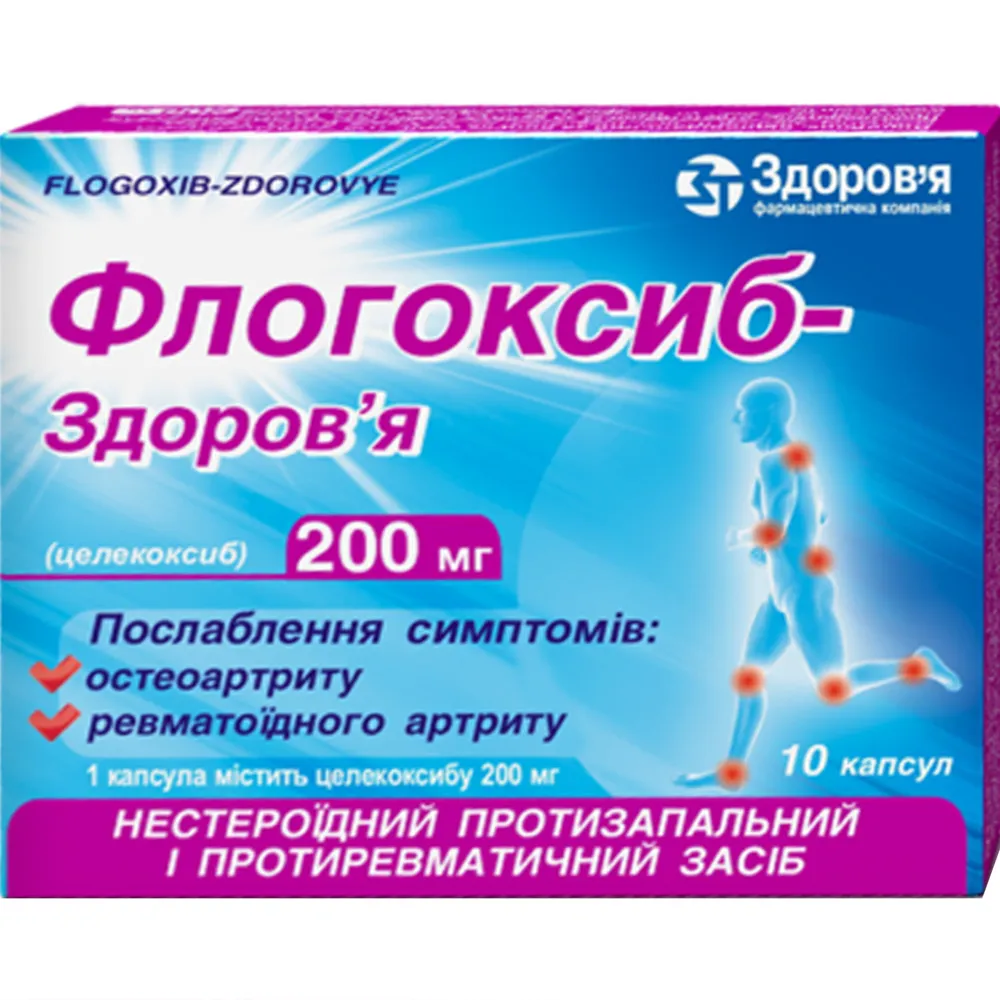
Table of Contents
INSTRUCTIONS FOR MEDICAL USE OF THE MEDICINAL PRODUCT FLOGOXIB-ZDOROVYE (FLOGOXIB-ZDOROVYE)
Composition:
Active substance: celecoxib;
1 capsule contains celecoxib 100 mg or 200 mg;
Excipients: lactose monohydrate; sodium croscarmellose; sodium lauryl sulfate; povidone; magnesium stearate; capsule shell contains erythrosine (E 127), titanium dioxide (E 171), quinoline yellow (E 104), gelatin, black printing ink (if the company trademark is applied – ZT; contains shellac Glaze 45 % solution in ethanol, iron oxide black (E 172), propylene glycol, concentrated ammonia solution) (100 mg dosage) or patent blue V (E 131), titanium dioxide (E 171), gelatin (200 mg dosage).
Pharmaceutical form. Capsules.
Main physicochemical properties: hard gelatin capsules with opaque body and cap of yellow color (100 mg dosage) or light blue to blue color (200 mg dosage). The contents of the capsules – white powder. The presence of powder particle agglomerates is acceptable. The company trademark – ZT – may be printed on the capsule (100 mg dosage).
Pharmacotherapeutic group. Anti-inflammatory and antirheumatic agents. Coxibs.
ATC code M01AH01.
Pharmacological properties.
Pharmacodynamics.
A nonsteroidal anti-inflammatory drug (NSAID) that exhibits anti-inflammatory, analgesic, and antipyretic activity. The mechanism of action of celecoxib is believed to be due to inhibition of prostaglandin synthesis primarily by inhibiting cyclooxygenase-2 (COX-2); at therapeutic concentrations in humans, celecoxib does not inhibit the cyclooxygenase-1 (COX-1) isoenzyme. In animal studies, celecoxib reduced the incidence and multiplicity of colorectal tumors.
Platelets. Celecoxib, at single doses up to 800 mg and multiple doses of 600 mg twice daily for up to 7 days (exceeding recommended therapeutic doses), did not reduce platelet aggregation or prolong bleeding time. Celecoxib cannot replace acetylsalicylic acid in the prevention of cardiovascular diseases due to its lack of effect on platelets. It is unknown whether celecoxib affects platelets in terms of increasing the risk of serious cardiovascular thrombotic adverse reactions associated with celecoxib use.
Fluid retention. Inhibition of PGE2 synthesis may lead to sodium and water retention due to increased reabsorption in the thick ascending limb of the renal medullary loop and possibly in other segments of the distal nephron. PGE2 is believed to suppress water reabsorption in the collecting ducts by counteracting the effect of antidiuretic hormone.
Pharmacokinetics.
Absorption. Maximum plasma concentration (Cmax) of celecoxib is reached approximately 3 hours after oral administration. On an empty stomach, Cmax and area under the curve (AUC) are approximately dose-proportional up to 200 mg twice daily; at higher doses, less than proportional increases in Cmax and AUC are observed. Studies on absolute bioavailability have not been conducted. At steady state, equilibrium is achieved by day 5 or earlier with repeated dosing.
Pharmacokinetic parameters of a single dose (200 mg) of celecoxib in healthy volunteers under fasting conditions:
| Mean (CV (%)) values of pharmacokinetic parameters |
||||
| Cmax, ng/mL |
Tmax, h |
Effective t1/2, h |
Vss/F, L |
CL/F, L/h |
| 705 (38) |
2.8 (37) |
11.2 (31) |
429 (34) |
27.7 (28) |
Effect of food. When capsules of the drug are taken together with a high-fat meal, Cmax is reached approximately 1-2 hours later, and AUC increases by 10-20%. When administered on an empty stomach at doses above 200 mg, the increase in Cmax and AUC is less than proportional, which is considered to be a consequence of the low solubility of the drug in an aqueous environment.
Concomitant use of celecoxib with antacids containing aluminum and magnesium resulted in reduced plasma concentrations of celecoxib, with a 37% decrease in Cmax and a 10% decrease in AUC. Celecoxib at doses up to 200 mg twice daily may be taken independently of food intake. Higher doses of the drug (400 mg twice daily) should be taken with food to improve absorption.
AUC of celecoxib was equivalent when administered as an intact capsule or when the capsule contents were mixed with applesauce. After administration of the capsule contents mixed with applesauce, no significant changes in Cmax, Tmax, or elimination half-life (t1/2) were observed.
Distribution. Within the clinical dose range, celecoxib is highly bound to plasma proteins (~97%). Celecoxib binds primarily to albumin and to a lesser extent to α1-acid glycoprotein. The apparent volume of distribution at steady state (Vss/F) is approximately 400 L, indicating extensive distribution of the drug into tissues. Celecoxib is predominantly not bound to erythrocytes.
Metabolism. Metabolism of celecoxib is primarily mediated by the CYP2C9 isoenzyme. Three metabolites have been identified in human plasma: the primary alcohol, the corresponding carboxylic acid, and its glucuronide conjugate. These metabolites are inactive with respect to inhibition of COX-1 or COX-2.
Excretion. Celecoxib is primarily eliminated via hepatic metabolism, with only a small amount (<3%) of unchanged drug detected in urine and feces. After a single oral dose of radiolabeled celecoxib, approximately 57% of the dose was excreted in feces and 27% in urine. The main metabolite in both urine and feces was the carboxylic acid (73% of dose), with a small amount of glucuronide also detected in urine. The low solubility of the drug is believed to prolong the absorption process, resulting in a more variable t1/2. The effective elimination half-life is approximately 11 hours under fasting conditions. The apparent plasma clearance (CL/F) is about 500 mL/min.
Elderly patients. In elderly patients (over 65 years of age), steady-state Cmax was 40% higher and AUC was 50% higher compared to younger patients. In elderly women, Cmax and AUC for celecoxib are higher than in elderly men, but this increase is primarily due to lower body weight in women. Overall, dose adjustment in elderly patients is not required. However, treatment should be initiated with the lowest recommended dose in patients with body weight less than 50 kg.
Children. Population pharmacokinetic analysis of celecoxib in children has not been studied.
Race. AUC of celecoxib is approximately 40% higher in Black/African American individuals compared to Caucasian patients. The reason and clinical significance of this observation are unknown.
Hepatic impairment. In patients with mild (Child-Pugh class A) and moderate (Child-Pugh class B) hepatic impairment, steady-state AUC of celecoxib is approximately 40% and 180% higher, respectively, compared to healthy volunteers. Therefore, in patients with moderate hepatic impairment (Child-Pugh class B), the recommended daily dose should be reduced by approximately 50%. Studies in patients with severe hepatic impairment (Child-Pugh class C) have not been conducted. The drug is not recommended for use in patients with severe hepatic impairment.
Renal impairment. AUC of celecoxib was approximately 40% lower in patients with chronic renal impairment (glomerular filtration rate 35–60 mL/min) compared to patients with normal renal function. No significant correlation between glomerular filtration rate and celecoxib clearance was observed. Studies in patients with severe renal impairment have not been conducted. As with other NSAIDs, the drug is not recommended for use in patients with severe renal impairment.
Interaction with other medicinal products. Celecoxib is not an inhibitor of CYP450 isoenzymes 2C9, 2C19, or 3A4.
Lithium. The mean steady-state plasma lithium concentration increased by approximately 17% in individuals receiving lithium at a dose of 450 mg twice daily concomitantly with celecoxib at a dose of 200 mg twice daily, compared to those receiving lithium alone.
Fluconazole. Concomitant administration of fluconazole at a dose of 200 mg once daily resulted in a doubling of celecoxib plasma concentrations. This increase is due to fluconazole's inhibition of celecoxib metabolism mediated by the CYP2C9 isoenzyme.
Other medicinal products. Data are available from in vivo studies investigating the effect of celecoxib on the pharmacokinetics and/or pharmacodynamics of glyburide, ketoconazole, methotrexate, phenytoin, and tolbutamide, which did not reveal clinically significant interactions with these medicinal products.
CYP2C9 isoenzyme activity is reduced in individuals with genetic polymorphisms leading to decreased enzyme activity (e.g., patients homozygous for CYP2C9*2 and CYP2C9*3 alleles). Limited data in patients with the homozygous CYP2C9*3/*3 genotype indicate that systemic concentrations of celecoxib in these patients were 3- to 7-fold higher compared to patients with CYP2C9*1/*1 or *1/*3 genotypes. The pharmacokinetics of celecoxib have not been evaluated in individuals with other CYP2C9 polymorphisms such as *2, *5, *6, *9, and *11. The frequency of the homozygous *3/*3 genotype has been found to range from 0.3% to 1% across different ethnic groups.
Clinical characteristics.
Indications.
For symptomatic treatment of osteoarthritis, rheumatoid arthritis, and ankylosing spondylitis.
For the treatment of acute pain in adult patients.
For the treatment of primary dysmenorrhea.
Contraindications.
Hypersensitivity to celecoxib (e.g., anaphylactic reactions and severe skin reactions), acetylsalicylic acid, other NSAIDs, or to any component of the medicinal product.
History of allergic-type reactions to sulfonamides.
Bronchial asthma, urticaria, or other allergic-type reactions after administration of acetylsalicylic acid or other NSAIDs. In such patients, severe, sometimes fatal, anaphylactic reactions to NSAIDs have been reported (see section "Special precautions for use").
Treatment of perioperative pain associated with coronary artery bypass graft (CABG) surgery.
Acute gastrointestinal bleeding.
Interaction with other medicinal products and other forms of interaction.
Inhibitors or inducers of CYP2C9. Metabolism of celecoxib is primarily mediated by the CYP2C9 isoenzyme of the cytochrome P450 (CYP) system in the liver. Concomitant use of celecoxib with medicinal products that inhibit CYP2C9 (e.g., fluconazole) may increase the effect and toxicity of celecoxib, whereas coadministration with CYP2C9 inducers (e.g., rifampicin) may reduce the efficacy of celecoxib.
When considering celecoxib administration, the medical history of each patient should be evaluated. Dose adjustment of celecoxib may be warranted when used concomitantly with CYP2C9 inhibitors or inducers (see section "Pharmacokinetics").
Substrates of CYP2D6. Celecoxib is an inhibitor of the CYP2D6 isoenzyme in vitro, although it is not a substrate of this enzyme. Therefore, there is a potential for in vivo interaction with medicinal products metabolized by CYP2D6 (e.g., atomoxetine), and celecoxib may increase the effect and toxicity of these drugs.
When considering celecoxib administration, the medical history of each patient should be evaluated. Dose adjustment of celecoxib may be warranted when used concomitantly with CYP2D6 substrates (see section "Pharmacokinetics").
Medicinal products affecting hemostasis. Celecoxib and anticoagulants such as warfarin exhibit a synergistic effect on bleeding. Concomitant use of celecoxib and anticoagulants increases the risk of serious bleeding compared to use of either drug alone. Serotonin released by platelets plays an important role in hemostasis. Studies have shown that concomitant use of drugs that inhibit serotonin reuptake with NSAIDs increases the risk of bleeding more than NSAID monotherapy.
Patients receiving Phlogoxib-Zdorovya and anticoagulants (e.g., warfarin), antiplatelet agents (e.g., acetylsalicylic acid), selective serotonin reuptake inhibitors (SSRIs), or serotonin-norepinephrine reuptake inhibitors (SNRIs) should be monitored for signs of bleeding (see section "Special precautions for use").
Lithium. NSAIDs have been reported to increase plasma lithium levels and reduce renal lithium clearance. The average minimum plasma concentration of lithium increased by 15%, and renal clearance decreased by approximately 20%. This effect is attributed to inhibition of prostaglandin synthesis in the kidneys by NSAIDs.
When Phlogoxib-Zdorovya is used concomitantly with lithium-containing preparations, patients should be monitored for signs of lithium toxicity.
Acetylsalicylic acid. Concomitant use of NSAIDs and acetylsalicylic acid at analgesic doses does not provide greater therapeutic benefit than NSAID use alone. However, concomitant use of acetylsalicylic acid with NSAIDs increases the frequency of gastrointestinal adverse reactions compared to NSAID use alone. Concomitant use of celecoxib and acetylsalicylic acid at analgesic doses is generally not recommended due to increased risk of bleeding (see section "Special precautions for use"). Celecoxib does not interfere with the cardioprotective antiplatelet effect of acetylsalicylic acid (at doses of 100–325 mg). Celecoxib cannot be used as a substitute for low-dose acetylsalicylic acid for prevention of cardiovascular diseases.
NSAIDs and salicylates. Concomitant use of celecoxib with other NSAIDs or salicylates (e.g., diflunisal, salsalate) increases the risk of gastrointestinal toxicity with little or no increase in efficacy (see section "Special precautions for use").
Concomitant use of celecoxib with other NSAIDs or salicylates is not recommended.
ACE inhibitors, β-blockers, and angiotensin II antagonists. NSAIDs may attenuate the antihypertensive effect of angiotensin-converting enzyme (ACE) inhibitors, angiotensin II antagonists, or β-blockers (including propranolol).
In elderly patients, dehydrated patients (including those on diuretics), or patients with impaired renal function, concomitant use of ACE inhibitors and NSAIDs may lead to worsening of renal function, including development of acute renal failure. Usually, the patient's condition returns to baseline after discontinuation of the NSAID.
When Phlogoxib-Zdorovya is used concomitantly with ACE inhibitors, angiotensin receptor blockers, or β-blockers, blood pressure should be monitored to ensure the desired blood pressure level is achieved.
When Phlogoxib-Zdorovya is used concomitantly with ACE inhibitors or angiotensin receptor blockers in elderly patients, dehydrated patients, or those with impaired renal function, patients should be monitored for signs of renal impairment (see section "Special precautions for use").
Adequate hydration of such patients should be ensured, and renal function should be assessed at the start of combined therapy and periodically thereafter.
Diuretics. In some patients, NSAIDs may reduce the natriuretic effect of furosemide and thiazides. This reaction is attributed to inhibition of renal prostaglandin synthesis.
When Phlogoxib-Zdorovya is used concomitantly with diuretics, patients should be monitored for signs of worsening renal function, and the effectiveness of the diuretic, including antihypertensive effect, should be confirmed (see section "Special precautions for use").
Digoxin. Increased serum digoxin concentrations and prolonged digoxin t1/2 have been reported with concomitant use of celecoxib and digoxin.
During concomitant use of Phlogoxib-Zdorovya and digoxin, serum digoxin levels should be monitored.
Metotrexate. Concomitant use of NSAIDs and methotrexate may increase the risk of methotrexate toxicity (e.g., neutropenia, thrombocytopenia, renal impairment). Celecoxib does not affect the pharmacokinetics of methotrexate.
During concomitant use of Phlogoxib-Zdorovya and methotrexate, patients should be monitored for signs of methotrexate toxicity.
Cyclosporine. Concomitant use of Phlogoxib-Zdorovya with cyclosporine may increase the latter's toxicity.
During concomitant use of Phlogoxib-Zdorovya with cyclosporine, patients should be monitored for signs of worsening renal function.
Pemetrexed. Concomitant use of Phlogoxib-Zdorovya and pemetrexed may increase the risk of pemetrexed-associated myelosuppression and renal and gastrointestinal toxicity (see the pemetrexed product information).
When Phlogoxib-Zdorovya is used concomitantly with pemetrexed in patients with renal impairment (creatinine clearance between 45 and 79 mL/min), signs of myelosuppression and renal and gastrointestinal toxicity should be monitored.
NSAIDs with short t1/2 (e.g., diclofenac, indomethacin) should be avoided for 2 days before and after, as well as on the day of pemetrexed administration.
In the absence of data on potential interactions between pemetrexed and NSAIDs with longer t1/2 (e.g., meloxicam, nabumetone), patients receiving these NSAIDs should discontinue their use at least 5 days before pemetrexed administration, on the day of pemetrexed administration, and for 2 days thereafter.
Corticosteroids. Concomitant use of corticosteroids with Phlogoxib-Zdorovya may increase the risk of gastrointestinal ulcers or bleeding.
Patients receiving Phlogoxib-Zdorovya and corticosteroids concomitantly should be monitored for signs of bleeding (see section "Special precautions for use").
Special precautions for use.
Cardiovascular thrombotic events. Long-term use of NSAIDs, both selective and non-selective with respect to COX-2, may increase the risk of serious cardiovascular thrombotic events, including myocardial infarction and stroke, which may be fatal. It is unknown whether this risk is similar for all NSAIDs. The relative increase in the frequency of serious cardiovascular thrombotic complications compared to baseline frequency associated with NSAID use occurs both in patients with known cardiovascular diseases and risk factors for their development, and in patients without such diseases and risk factors. However, patients with known cardiovascular diseases or risk factors for their development had a higher absolute frequency of serious cardiovascular thrombotic complications due to the higher baseline frequency of these factors and diseases. The increased risk of cardiovascular thrombotic complications has been most consistently observed with higher doses of the drug.
When celecoxib was administered at a dose of 400 mg twice daily and at a dose of 200 mg twice daily for adenoma prevention, an approximately threefold increase in the risk of cardiovascular death, myocardial infarction, or stroke was observed compared to placebo. This increased risk compared to placebo was primarily due to an increased frequency of myocardial infarction.
In a study evaluating the overall safety of celecoxib compared to ibuprofen or naproxen, the relative risk of cardiovascular thrombotic events associated with the COX-2 inhibitor celecoxib was not greater than that associated with the non-selective NSAIDs naproxen and ibuprofen (see section "Pharmacodynamics").
To minimize the potential risk of cardiovascular adverse events in patients taking the drug, each individual patient should receive the lowest effective dose for the shortest duration consistent with the treatment goal. Physicians and patients should remain vigilant for the development of such events, even in the absence of prior cardiovascular symptoms. Patients should be informed about the signs and/or symptoms of serious cardiovascular toxicity and the measures to be taken if they occur.
There is no convincing evidence that concomitant use of acetylsalicylic acid reduces the increased risk of serious cardiovascular thrombotic events associated with NSAID use. Concomitant use of acetylsalicylic acid and celecoxib increases the risk of serious gastrointestinal adverse reactions.
According to clinical trial data, the incidence of arterial hypertension in patients receiving celecoxib, ibuprofen, and diclofenac was 2.4%, 4.2%, and 2.5%, respectively.
Post-CABG state. When various NSAIDs, selective for COX-2, were used to treat pain in the first 10–14 days after coronary artery bypass graft (CABG) surgery, an increased incidence of myocardial infarction and stroke was observed. The use of NSAIDs after CABG surgery is contraindicated (see section "Contraindications").
Post-myocardial infarction patients. Studies conducted by the Danish National Registry demonstrated that patients who used NSAIDs in the period following myocardial infarction were at increased risk of recurrent myocardial infarction, cardiovascular death, and death from any cause, starting from the first week of treatment. In the same cohort, the incidence of death in the first year after myocardial infarction was 20 cases per 100 patient-years among NSAID users compared to 12 cases per 100 patient-years among non-users. Although the absolute number of deaths decreases after the first year following myocardial infarction, analysis of results from at least four subsequent years of follow-up showed that the elevated relative risk of death in NSAID users persists.
The use of the drug Phlogoxib-Zdorovya should be avoided in patients with recent myocardial infarction, except when the expected benefit outweighs the risk of recurrence of thrombotic cardiovascular complications. If Phlogoxib-Zdorovya is administered to patients with recent myocardial infarction, patients should be monitored for signs of myocardial ischemia.
Arterial hypertension. As with all NSAIDs, the use of the drug may lead to the development or worsening of pre-existing arterial hypertension, which may increase the frequency of cardiovascular events. In patients taking ACE inhibitors, thiazide diuretics, or loop diuretics, the effectiveness of therapy with these drugs may be reduced when NSAIDs are used. Careful monitoring of blood pressure should be performed at the initiation of treatment and throughout the treatment course.
Heart failure and edema. Studies have demonstrated approximately a twofold increase in hospitalization rates due to heart failure in patients receiving both COX-2 selective and non-selective agents compared to those receiving placebo. An increased risk of myocardial infarction, hospitalization due to heart failure, and death has been established with NSAID use. Some patients taking NSAIDs, including celecoxib, have experienced fluid retention and edema. Celecoxib may attenuate the cardiovascular effects of diuretics, ACE inhibitors, or angiotensin receptor blockers used in these conditions (see section "Interaction with other medicinal products and other forms of interaction"). The cumulative incidence of peripheral edema after 9 months in patients receiving celecoxib 400 mg twice daily (4 and 2 times higher than the recommended doses for osteoarthritis and rheumatoid arthritis, respectively), ibuprofen 800 mg three times daily, and diclofenac 75 mg twice daily was 4.5%, 6.9%, and 4.7%, respectively. The use of Phlogoxib-Zdorovya should be avoided in patients with severe heart failure, except when the expected benefit outweighs the risk of worsening heart failure. If the drug is administered to patients with severe heart failure, monitoring for signs of worsening heart failure should be performed.
Gastrointestinal effects. Risk of gastrointestinal ulceration, bleeding, or perforation. NSAIDs, including celecoxib, can cause serious gastrointestinal events, including inflammation, bleeding, ulceration, and perforation of the esophagus, stomach, small or large intestine, which may be fatal. These serious adverse reactions may occur in patients taking NSAIDs at any time, with or without warning symptoms. Warning symptoms were present in only one out of five patients who developed a serious upper gastrointestinal adverse reaction while taking NSAIDs. The incidence of upper gastrointestinal ulcers, severe bleeding, or perforation due to NSAID use was approximately 1% among patients taking celecoxib for 3–6 months and approximately 2–4% in the subgroup of patients taking the drug for 1 year. However, the risk exists even with short-term treatment.
Gastrointestinal bleeding, ulceration, and perforation risk factors. In patients with a history of peptic ulcer and/or gastrointestinal bleeding taking NSAIDs, the risk of gastrointestinal bleeding is more than 10 times higher than in patients without these risk factors. Other factors increasing the risk of gastrointestinal bleeding in patients taking NSAIDs include concomitant use of oral corticosteroids, acetylsalicylic acid, selective serotonin reuptake inhibitors, or anticoagulants, longer duration of NSAID therapy, tobacco smoking, alcohol consumption, advanced age, and poor general health. Most fatal gastrointestinal adverse reactions involve elderly or debilitated patients. Additionally, patients with progressive liver disease and/or coagulopathy are prone to increased gastrointestinal bleeding.
The incidence of complicated ulcers and symptomatic ulcers after 9 months was 0.78% among all patients receiving celecoxib, ibuprofen, and diclofenac, and 2.19% in the subgroup of patients taking low-dose acetylsalicylic acid. In patients aged 65 years and older, this incidence after 9 months was 1.4%, and with concomitant use of acetylsalicylic acid, it was 3.06%.
To minimize the potential risk of gastrointestinal adverse events, each individual patient should receive the lowest effective dose for the shortest duration consistent with the treatment goal, avoid concomitant use of more than one NSAID, and avoid use in high-risk patients except when the expected benefit outweighs the increased risk of bleeding. Physicians and patients should remain vigilant for signs and symptoms of gastrointestinal ulceration and bleeding during drug use and discontinue the drug if serious gastrointestinal adverse reactions are suspected until such reactions are ruled out, and promptly conduct additional evaluation and treatment. For patients in high-risk groups, consideration should be given to using alternative non-NSAID medications. When low-dose acetylsalicylic acid is used concomitantly with celecoxib for cardiovascular event prevention, more careful monitoring for signs of gastrointestinal bleeding should be performed (see section "Interaction with other medicinal products and other forms of interaction").
Hepatic effects. Up to 15% of patients taking NSAIDs may have borderline elevations in one or more liver enzymes, and significant elevations in alanine aminotransferase (ALT) or aspartate aminotransferase (AST) (approximately 3 or more times the upper limit of normal) have been observed in approximately 1% of patients. With NSAID use, including celecoxib, isolated cases of severe hepatic reactions, including fulminant hepatitis, hepatic necrosis, and hepatic failure (some of which were fatal), have been reported. Data indicate that the incidence of borderline elevation in liver enzymes (1.2–3 times the upper limit of normal) was 6% with celecoxib and 5% with placebo, while significant elevations in ALT and AST were observed in approximately 0.2% of patients taking celecoxib and 0.3% of patients receiving placebo.
Patients should be informed about symptoms of hepatotoxicity (e.g., nausea, increased fatigue, lethargy, diarrhea, pruritus, jaundice, right upper quadrant pain, and flu-like symptoms). If clinical signs and symptoms of liver disease or systemic manifestations (e.g., eosinophilia, rash) develop, the drug should be discontinued and a clinical evaluation performed.
Renal effects. Long-term use of NSAIDs has led to renal papillary necrosis and other forms of renal injury. Renal toxicity has also been observed in patients in whom renal prostaglandins play a compensatory role in maintaining renal perfusion. In such patients, NSAID use may cause dose-dependent reduction in prostaglandin production and, consequently, reduced renal blood flow, potentially accelerating the development of clinical signs of renal decompensation. Patients at highest risk of this reaction include those with impaired renal function, heart failure, hepatic dysfunction, patients taking diuretics, ACE inhibitors, angiotensin II receptor antagonists, and elderly patients. Usually, after discontinuation of NSAID therapy, the patient's condition returns to the pre-treatment state. The effect of celecoxib on the kidneys may accelerate the progression of pre-existing renal dysfunction.
Hydration should be restored and hypovolemia corrected before initiating celecoxib therapy if present. In patients with impaired renal or hepatic function, heart failure, dehydration, or hypovolemia, renal function should be monitored during Phlogoxib-Zdorovya use (see section "Interaction with other medicinal products and other forms of interaction"). The use of Phlogoxib-Zdorovya should be avoided in patients with progressive renal disease, except when the expected benefit outweighs the risk of worsening renal function. If Phlogoxib-Zdorovya is administered to patients with progressive renal disease, monitoring for signs of worsening renal function should be performed.
Hyperkalemia. Cases of increased serum potassium concentration, including hyperkalemia, have been reported with NSAID use, even in some patients without impaired renal function. In patients with normal renal function, these effects were associated with a hyporeninemic-hypoaldosteronemic state.
Anaphylactoid reactions. Anaphylactic reactions may occur in patients with or without known sensitivity to celecoxib, as well as in patients with aspirin-induced asthma. As with other NSAIDs, anaphylactoid reactions have been observed in patients who have not previously used celecoxib. Celecoxib is a sulfonamide-containing drug, and both NSAIDs and sulfonamide-containing drugs can cause allergic-type reactions, including anaphylactic symptoms and life-threatening or less severe episodes of bronchial asthma in some sensitive individuals (see section "Contraindications"). In the event of an anaphylactoid reaction, immediate medical attention should be sought.
Exacerbation of bronchial asthma associated with acetylsalicylic acid sensitivity. "Aspirin-induced asthma" may occur in patients with bronchial asthma, which may include chronic rhinosinusitis complicated by nasal polyps or the development of severe, potentially fatal bronchospasm after taking acetylsalicylic acid or other NSAIDs. Since cross-reactivity (including bronchospasm) between acetylsalicylic acid and other NSAIDs has been observed in patients sensitive to acetylsalicylic acid, the drug should not be administered to patients with this form of acetylsalicylic acid sensitivity. When Phlogoxib-Zdorovya is administered to patients with bronchial asthma (without known acetylsalicylic acid sensitivity), careful monitoring for changes in signs and symptoms of bronchial asthma should be performed.
Skin reactions. Celecoxib may cause serious skin adverse reactions such as erythema multiforme, exfoliative dermatitis, Stevens-Johnson syndrome, drug rash with eosinophilia and systemic symptoms (DRESS), acute generalized exanthematous pustulosis, and toxic epidermal necrolysis, which may be fatal. These serious adverse reactions may occur unexpectedly. Patients should be informed about signs and symptoms indicating serious skin changes; drug administration should be discontinued at the first appearance of skin rash or any other sign of hypersensitivity.
Premature closure of the fetal arterial duct. Celecoxib may cause premature closure of the fetal arterial duct. NSAID use should be avoided in pregnant women starting from the 30th week of pregnancy (third trimester).
Hematological effects. Anemia may occasionally occur in patients taking celecoxib. Data indicate that the incidence of anemia was 0.6% with celecoxib and 0.4% with placebo. In patients taking the drug long-term, hemoglobin or hematocrit levels should be checked if any signs or symptoms of anemia or blood loss occur. NSAIDs, including Phlogoxib-Zdorovya, may increase the risk of bleeding. Concomitant factors such as coagulation disorders or concomitant use of warfarin, other anticoagulants, antiplatelet agents (e.g., acetylsalicylic acid), serotonin reuptake inhibitors, and serotonin-norepinephrine reuptake inhibitors may increase this risk. Such patients should be monitored for signs of bleeding (see section "Interaction with other medicinal products and other forms of interaction").
Laboratory tests. Since serious gastrointestinal bleeding may develop without warning symptoms, physicians should monitor for signs or symptoms of gastrointestinal bleeding. For patients taking NSAIDs long-term, periodic complete blood count and biochemical blood tests should be performed.
Data indicate that increased blood urea nitrogen levels were observed more frequently in patients taking celecoxib compared to those receiving placebo. Such laboratory test deviations from normal have also been observed in patients receiving other NSAIDs. The clinical significance of this deviation is not established.
Inflammation. The pharmacological activity of the drug in reducing inflammation and possibly lowering elevated body temperature may diminish these diagnostic signs in detecting infectious complications when infection is not suspected as the cause of pain.
Disseminated intravascular coagulation. Since there is a risk of disseminated intravascular coagulation in children with systemic manifestations of juvenile rheumatoid arthritis during celecoxib use, patients should be monitored for signs and symptoms of coagulation disorders or bleeding, and patients and caregivers should be informed to report symptoms as soon as possible.
Fertility. Due to the mechanism of action, the use of NSAIDs, including celecoxib, may delay or impair follicular rupture during ovulation, which in some women has been associated with reversible infertility. Therefore, it is recommended that women planning pregnancy or undergoing infertility evaluation discontinue the use of NSAIDs, including celecoxib.
The drug contains lactose. If a patient has established intolerance to certain sugars, consultation with a physician is recommended before taking this drug.
Use during pregnancy or breastfeeding.
Pregnancy.
Inhibition of prostaglandin synthesis may adversely affect pregnancy. Celecoxib should not be used in late pregnancy, starting from the 30th week, as it may cause premature closure of the fetal arterial duct. Studies involving pregnant women have not been conducted; therefore, celecoxib should not be used in women during the third trimester of pregnancy. Data on the effects of celecoxib on pregnancy course and fetal development when taken during the first or second trimester are limited. Starting from the 20th week of pregnancy, NSAID use may cause oligohydramnios due to fetal renal dysfunction. This condition may occur soon after starting treatment and is usually reversible after discontinuation of therapy. Additionally, there have been reports of arterial duct constriction after treatment during the second trimester, which in most cases resolved after discontinuation of therapy. Prenatal monitoring for oligohydramnios and arterial duct constriction may be advisable if NSAID exposure occurred for several days starting from the 20th gestational week. NSAID use should be discontinued if oligohydramnios or arterial duct constriction is detected.
In animals, intake of prostaglandin synthesis inhibitors leads to increased pre- and post-implantation losses.
All pregnancies are associated with a background risk of congenital defects, fetal loss, or other adverse outcomes. Typically, regardless of drug exposure, all clinically recognized pregnancies have an estimated risk of major congenital defects of about 2–4% and 15–20% fetal loss. The estimated background risk of adverse outcomes associated with celecoxib use is unknown.
Labor and delivery.
The effect of celecoxib on labor and delivery in pregnant women has not been studied. In animals, NSAIDs, including celecoxib, inhibit prostaglandin synthesis, leading to delayed delivery and increased rates of stillbirth.
Lactation period. Limited data indicate low levels of celecoxib in the breast milk of breastfeeding women. Average daily doses of the drug received through breast milk by infants were 10–40 mcg/kg/day, which is less than 1% of the body-weight-adjusted therapeutic dose for a two-year-old child. Data indicate no adverse reactions in two children aged 17 and 22 months who were breastfed.
Celecoxib should be used with caution in breastfeeding women, considering the mother's need for Phlogoxib-Zdorovya, as well as any potential adverse effects of the drug or the impact of the mother's underlying condition on the infant.
Ability to affect reaction speed when driving or operating machinery. During celecoxib use, if adverse reactions such as dizziness, vertigo, or somnolence occur, patients should refrain from driving or operating machinery.
Method of Administration and Dosage
Before deciding to use the drug, the potential benefits and risks of treatment should be carefully weighed, and alternative treatment options should be considered. Each individual patient should receive the lowest effective dose for the shortest duration consistent with the treatment objective.
The drug may be taken regardless of food intake.
Osteoarthritis. The recommended dose for relief of signs and symptoms of osteoarthritis is 200 mg once daily, which can be administered as a single 200 mg dose or in divided doses of 100 mg twice daily.
Rheumatoid arthritis. The recommended dose for relief of signs and symptoms of rheumatoid arthritis is 100–200 mg twice daily.
Ankylosing spondylitis. The recommended dose for treatment of signs and symptoms of ankylosing spondylitis is 200 mg daily, which may be administered as a single daily dose or divided into two doses (100 mg twice daily). If no response is observed after 6 weeks of treatment, the daily dose may be increased to 400 mg. If no therapeutic effect is observed after 6 weeks of treatment with 400 mg daily, alternative treatment options should be considered.
Treatment of acute pain and primary dysmenorrhea. The initial recommended dose is 400 mg. If necessary, an additional 200 mg dose may be administered on the first day. In subsequent days, the recommended dose is 200 mg twice daily, as needed.
Special patient groups
Hepatic impairment. In patients with moderate hepatic impairment (Child-Pugh class B), the recommended daily dose should be reduced by 50%. The drug is not recommended for patients with severe hepatic impairment.
Patients with slow metabolism of CYP2C9 isoenzyme substrates. Celecoxib should be used with caution in patients with confirmed or suspected (based on genotyping results or medical history regarding other CYP2C9 substrates such as warfarin, phenytoin) slow metabolism of CYP2C9 isoenzyme substrates. For patients with slow metabolism (i.e., those with CYP2C9*3/*3 genotype), consideration should be given to initiating treatment with half the lowest recommended dose. For patients with slow metabolism and juvenile rheumatoid arthritis, alternative treatment options should be considered.
Renal impairment. The use of Phlogoxib-Zdorovya is not recommended in patients with severe renal impairment.
Elderly patients. Elderly patients are at greater risk of developing serious adverse reactions affecting the cardiovascular system, gastrointestinal tract, and/or kidneys compared to younger patients.
If the anticipated benefit outweighs the potential risks, treatment should be initiated with the lowest available dose, and patients should be monitored for adverse reactions. Clinical studies have not shown significant differences in efficacy between elderly and younger patients. No differences were observed in renal function (assessed by glomerular filtration rate, blood urea nitrogen, and creatinine) or platelet function (assessed by bleeding time and platelet aggregation) between elderly and younger individuals. However, as with other NSAIDs, including those selectively inhibiting COX-2, post-marketing surveillance has revealed a higher number of spontaneous reports of fatal gastrointestinal events and acute renal failure in elderly patients compared to younger patients.
Children
The drug is not indicated for use in children.
Overdose
Symptoms following acute NSAID overdose are usually limited to lethargy, drowsiness, nausea, vomiting, and epigastric pain, and are generally reversible with supportive care. Gastrointestinal bleeding may occur. Hypertension, acute renal failure, respiratory depression, and coma are possible but rare.
No cases of overdose were reported during clinical trials. Administration of doses up to 2400 mg daily for up to 10 days did not result in serious toxicity. In cases of NSAID overdose, symptomatic and supportive treatment should be initiated. There is no specific antidote. Information on the elimination of celecoxib by hemodialysis is lacking; however, due to its high plasma protein binding (>97%), dialysis is unlikely to be beneficial in overdose. Within 4 hours of oral ingestion, in patients showing symptoms of overdose or in cases of significant overdose, vomiting may be induced and/or activated charcoal (60–100 g for adults, 1–2 g per kg body weight for children) and/or an osmotic laxative may be administered. Due to the high degree of plasma protein binding, forced diuresis, alkalinization of urine, hemodialysis, or hemoperfusion may be ineffective. For additional information on overdose management, contact a poison control center.
Adverse Reactions.
Controlled studies of the drug used for the treatment of arthritis conducted prior to the drug's market approval.
The table below lists all adverse reactions, regardless of causal relationship, that were reported in ≥ 2% of patients during controlled studies involving patients with osteoarthritis or rheumatoid arthritis, including placebo and/or active control groups. Because these studies varied in duration and patient exposure time, these percentages do not reflect the cumulative incidence of adverse reactions.
Adverse reactions occurring in more than 2% of patients receiving celecoxib during controlled studies of the drug used for the treatment of arthritis conducted prior to the drug's market approval.
| CBS N=4146 |
Placebo N=1864 |
NSAIDs N=1366 |
DMARDs N=387 |
IBU N=345 |
|
| Gastrointestinal disorders Stomach pain Diarrhea Dyspepsia Flatulence Nausea |
4.1% 5.6% 8.8% 2.2% 3.5% |
2.8% 3.8% 6.2% 1.0% 4.2% |
7.7% 5.3% 12.2% 3.6% 6.0% |
9.0% 9.3% 10.9% 4.1% 3.4% |
9.0% 5.8% 12.8% 3.5% 6.7% |
| General disorders Back pain Peripheral edema Injury, accidental |
2.8% 2.1% 2.9% |
3.6% 1.1% 2.3% |
2.2% 2.1% 3.0% |
2.6% 1.0% 2.6% |
0.9% 3.5% 3.2% |
| Nervous system disorders Dizziness Headache |
2.0% 15.8% |
1.7% 20.2% |
2.6% 14.5% |
1.3% 15.5% |
2.3% 15.4% |
| Psychiatric disorders Insomnia |
2.3% |
2.3% |
2.9% |
1.3% |
1.4% |
| Respiratory system disorders Pharyngitis Rhinitis Sinusitis Upper respiratory tract infection |
2.3% 2.0% 5.0% 8.1% |
1.1% 1.3% 4.3% 6.7% |
1.7% 2.4% 4.0% 9.9% |
1.6% 2.3% 5.4% 9.8% |
2.6% 0.6% 5.8% 9.9% |
| Skin disorders Rash |
2.2% |
2.1% |
2.1% |
1.3% |
1.2% |
CVS – celecoxib at a dose of 100–200 mg twice daily or at a dose of 200 mg once daily;
NSA – naproxen at a dose of 500 mg twice daily;
DCF – diclofenac at a dose of 75 mg twice daily;
IBU – ibuprofen at a dose of 800 mg three times daily.
The following adverse reactions were reported in 0.1–1.9% of patients receiving celecoxib (100–200 mg twice daily or 200 mg once daily).
Gastrointestinal disorders: constipation, diverticulitis, dysphagia, eructation, esophagitis, gastritis, gastroenteritis, gastroesophageal reflux, hemorrhoids, hiatal hernia, melena, dry mouth, stomatitis, tenesmus, vomiting.
Cardiovascular system disorders: worsening of hypertension, angina pectoris, ischemic heart disease, myocardial infarction.
General disorders and administration site conditions: exacerbation of allergy, allergic reaction, chest pain, cyst, generalized edema, facial edema, increased fatigue, increased body temperature, hot flushes, influenza-like symptoms, pain, peripheral pain.
Central and peripheral nervous system disorders: leg cramps, hypertension, hypesthesia, migraine, paresthesia, vertigo.
Ear and labyrinth disorders: deafness, tinnitus.
Heart rate and rhythm disorders: palpitations, tachycardia.
Hepatobiliary disorders: liver function abnormalities, increased AST levels, increased ALT levels.
Metabolism and nutrition disorders: increased blood urea nitrogen, increased creatine phosphokinase, hypercholesterolemia, hyperglycemia, hypokalemia, increased non-protein nitrogen, increased creatinine, increased alkaline phosphatase, weight gain.
Musculoskeletal system disorders: arthralgia, arthritis, myalgia, synovitis, tendonitis.
Blood and lymphatic system disorders: anemia, ecchymosis, epistaxis, thrombocytosis.
Psychiatric disorders: anorexia, anxiety, increased appetite, depression, nervousness, somnolence.
Respiratory system disorders: bronchitis, bronchospasm, worsening of bronchospasm, cough, dyspnea, laryngitis, pneumonia.
Skin and subcutaneous tissue disorders: alopecia, dermatitis, photosensitivity reactions, pruritus, erythematous rash, maculopapular rash, skin disorders, dry skin, increased sweating, urticaria.
Application site disorders: panniculitis, contact dermatitis.
Renal and urinary system disorders: albuminuria, cystitis, dysuria, hematuria, frequent urination, urolithiasis.
The following serious adverse reactions (causal relationship not assessed) were reported in < 0.1% of patients.
Cardiovascular system disorders: syncope, congestive heart failure, ventricular fibrillation, pulmonary artery thromboembolism, acute cerebrovascular accident, peripheral gangrene, thrombophlebitis.
Gastrointestinal disorders: intestinal obstruction, intestinal perforation, gastrointestinal hemorrhage, hemorrhagic colitis, esophageal perforation, pancreatitis.
General disorders and administration site conditions: sepsis, sudden death.
Hepatobiliary disorders: cholelithiasis.
Blood and lymphatic system disorders: thrombocytopenia.
Central and peripheral nervous system disorders: ataxia, suicide.
Renal and urinary system disorders: acute renal failure.
Long-term safety study of celecoxib in arthritis treatment.
Hematological disorders. The incidence of clinically significant hemoglobin decrease (> 2 g/dL) was lower in patients receiving celecoxib 400 mg twice daily (0.5%) compared to those receiving diclofenac 75 mg twice daily (1.3%) or ibuprofen 800 mg three times daily (1.9%). This lower incidence with celecoxib was maintained both with and without concomitant acetylsalicylic acid use.
Discontinuation due to adverse reactions/Serious adverse reactions. The cumulative incidence of discontinuation due to adverse reactions over 9 months, calculated by the Kaplan-Meier method, was 24%, 29%, and 26% for celecoxib, diclofenac, and ibuprofen, respectively. The incidence of serious adverse reactions (i.e., those leading to hospitalization or life-threatening events, or otherwise medically significant) regardless of causal relationship, was similar across treatment groups (8%, 7%, and 8%, respectively).
Study of drug use in the treatment of juvenile rheumatoid arthritis.
The clinical trial included patients with juvenile rheumatoid arthritis aged 2 to 17 years, who received either celecoxib or naproxen. 77 patients with juvenile rheumatoid arthritis received celecoxib at a dose of 3 mg/kg twice daily, 82 patients received celecoxib at a dose of 6 mg/kg twice daily, and 83 patients received naproxen at a dose of 7.5 mg/kg twice daily. The most common adverse reactions (≥ 5%) reported in patients receiving celecoxib were headache, fever (hyperthermia), upper abdominal pain, cough, nasopharyngitis, abdominal pain, nausea, arthralgia, diarrhea, and vomiting. The most common adverse reactions (≥ 5%) reported in patients receiving naproxen were headache, nausea, vomiting, fever, upper abdominal pain, diarrhea, cough, abdominal pain, and dizziness. In this study, celecoxib administered at doses of 3 and 6 mg/kg twice daily compared to naproxen showed no adverse effect on growth and development. There were no significant differences between treatment groups in the number of clinical uveitis flares or systemic manifestations of juvenile rheumatoid arthritis.
In the open-label extension phase of the above study, 202 patients with juvenile rheumatoid arthritis received celecoxib at a dose of 6 mg/kg twice daily. The frequency of adverse reactions was similar to that previously observed; no unexpected clinically significant adverse reactions were reported.
Adverse reactions occurring in ≥ 5% of patients with juvenile rheumatoid arthritis in any treatment group, categorized by system organ class (% of patients with adverse reactions).
| System organ classes |
All doses twice daily |
||
| Celecoxib 3 mg/kg N=77 |
Celecoxib 6 mg/kg |
Naproxen 7.5 mg/kg |
|
| Any reaction |
64 |
70 |
72 |
| Eye disorders |
5 |
5 |
5 |
| Gastrointestinal disorders |
26 |
24 |
36 |
| Abdominal pain, unspecified |
4 |
7 |
7 |
| Upper abdominal pain |
8 |
6 |
10 |
| Vomiting, unspecified |
3 |
6 |
11 |
| Diarrhea, unspecified |
5 |
4 |
8 |
| Nausea |
7 |
4 |
11 |
| General disorders |
13 |
11 |
18 |
| Pyrexia |
8 |
9 |
11 |
| Infections |
25 |
20 |
27 |
| Nasopharyngitis |
5 |
6 |
5 |
| Injury and poisoning |
4 |
6 |
5 |
| Investigations* |
3 |
11 |
7 |
| Musculoskeletal system disorders |
8 |
10 |
17 |
| Arthralgia |
3 |
7 |
4 |
| Nervous system disorders |
17 |
11 |
21 |
| Headache, unspecified |
13 |
10 |
16 |
| Dizziness (excluding vertigo) |
1 |
1 |
7 |
| Respiratory system disorders |
8 |
15 |
15 |
| Cough |
7 |
7 |
8 |
| Skin and subcutaneous tissue disorders |
10 |
7 |
18 |
* Abnormal laboratory findings, including prolonged activated partial thromboplastin time, bacteriuria (without further specification), elevated blood creatine phosphokinase, positive blood culture, elevated blood glucose, elevated blood pressure, elevated blood uric acid, decreased hematocrit, presence of hematuria, decreased hemoglobin, abnormal liver function biochemical tests (without further specification), presence of proteinuria, increased transaminase levels (without further specification), abnormal urine test results (without further specification).
Other studies conducted prior to drug marketing.
Adverse reactions observed in ankylosing spondylitis treatment studies. The drug was studied at doses up to 400 mg once daily. The types of adverse reactions reported in ankylosing spondylitis treatment studies were similar to those reported in osteoarthritis/rheumatoid arthritis studies.
Adverse reactions observed in pain relief and dysmenorrhea treatment studies. In studies involving patients with pain following oral surgery, all participants received a single dose of the investigational drug. In studies on the treatment of primary dysmenorrhea and post-orthopedic surgical pain, celecoxib was studied at doses up to 600 mg daily. The types of adverse reactions reported in pain relief and dysmenorrhea treatment studies were the same as those reported in arthritis studies. The only additional adverse reaction recorded in post-orthopedic surgical pain studies was alveolar osteitis following tooth extraction (post-extraction socket alveolitis).
PreSAP study and celecoxib adenoma prevention study.
Adverse reactions in long-term placebo-controlled polyp prevention studies. The effect of celecoxib on patients in the adenoma prevention study and the PreSAP study was at doses of 400–800 mg daily for up to 3 years.
Certain adverse reactions occurred in a higher percentage of patients than in arthritis treatment studies conducted prior to drug marketing (treatment duration up to 12 weeks). The table below lists adverse reactions that occurred more frequently in patients receiving celecoxib compared to patients in pre-marketing arthritis treatment studies.
Adverse reactions |
Celecoxib (400–800 mg daily), N=2285 |
Placebo N=1303 |
| Diarrhea |
10.5% |
7.0% |
| Gastroesophageal reflux disease |
4.7% |
3.1% |
| Nausea |
6.8% |
5.3% |
| Vomiting |
3.2% |
2.1% |
| Dyspnea |
2.8% |
1.6% |
| Arterial hypertension |
12.5% |
9.8% |
| Nephrolithiasis |
2.1% |
0.8% |
The following additional adverse reactions were observed in ≥ 0.1% and < 1% of patients treated with celecoxib, with a frequency higher than in the placebo group in long-term polyp prevention studies, and were either not reported during controlled clinical trials of the drug for arthritis treatment conducted prior to marketing approval or were observed more frequently in long-term placebo-controlled polyp prevention studies:
Central and peripheral nervous system disorders: ischemic stroke.
Eye disorders: vitreous opacity, conjunctival haemorrhage.
Ear and labyrinth disorders: labyrinthitis.
Cardiac disorders: unstable angina, aortic valve dysfunction, coronary artery atherosclerosis, sinus bradycardia, ventricular hypertrophy.
Vascular disorders: deep vein thrombosis.
Reproductive system and breast disorders: ovarian cyst.
Investigations: increased blood potassium, increased blood sodium, increased blood testosterone.
Injury, poisoning and procedural complications: epicondylitis, tendon rupture.
Post-marketing experience
The following adverse reactions have been identified during post-marketing use of celecoxib. Because these reactions are reported voluntarily from a population of uncertain size, it is not always possible to reliably estimate their frequency or establish a causal relationship to drug exposure.
Cardiac disorders: vasculitis, deep vein thrombosis.
General disorders and administration site conditions: anaphylactoid reaction, angioneurotic oedema.
Hepatobiliary disorders: liver necrosis, hepatitis, jaundice, liver failure.
Blood and lymphatic system disorders: agranulocytosis, aplastic anaemia, pancytopenia, leucopenia.
Metabolism and nutrition disorders: hypoglycaemia, hyponatraemia.
Central and peripheral nervous system disorders: aseptic meningitis, ageusia (taste anaesthesia), anosmia (loss of smell), fatal intracranial haemorrhage.
Renal and urinary disorders: interstitial nephritis.
Shelf life. 3 years.
Storage conditions. Store in the original packaging at a temperature not exceeding 25 °C.
Keep out of the reach of children.
Packaging. Capsules, 10, 10x2 in blisters in a carton.
Prescription status. Prescription only.
Manufacturer. LIMITED LIABILITY COMPANY "CORPORATION "ZDOROV'YA".
Manufacturer's address and place of business.
22 Shevchenka Street, Kharkiv, Kharkiv Oblast, 61013, Ukraine.