Phenobarbital-zn
Ukraine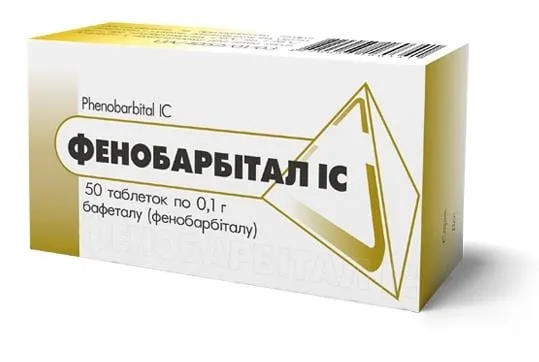
Table of Contents
INSTRUCTIONS FOR MEDICAL USE OF THE MEDICINAL PRODUCT PHENOBARBITAL-ZN (PHENOBARBITAL-ZN)
Composition:
Active substance: phenobarbital;
1 tablet contains phenobarbital 50 mg or 100 mg;
Excipients: lactose monohydrate; microcrystalline cellulose; povidone; colloidal anhydrous silicon dioxide; hypromellose; sodium croscarmellose; sodium lauryl sulfate; magnesium stearate.
Pharmaceutical form. Tablets.
Main physico-chemical properties: white or almost white tablets with a flat surface and a bevelled edge.
Pharmacotherapeutic group. Antiepileptic agents. ATC code N03A A02.
Pharmacological properties.
Pharmacodynamics.
Phenobarbital is a derivative of barbituric acid. It exerts an anticonvulsant effect: during its administration, excitation of neurons in the epileptic focus may be reduced. It acts as an enzyme inducer, increasing the activity of the mono-oxygenase enzyme system. It produces a sedative effect. It suppresses the activity of motor areas of the cerebral cortex and subcortex. It increases the content of the endogenous inhibitory neurotransmitter GABA in the CNS and reduces the excitatory action of amino acids (glutamate, aspartate) on the CNS.
Pharmacokinetics.
The drug is slowly but almost completely absorbed from the gastrointestinal tract (80%). Maximum blood concentration is observed 1–2 hours after administration and is evenly distributed in the organs and tissues of the body. The half-life in adults is 2–4 days (in newborns, up to 7 days). It penetrates through histohematogenous barriers and into breast milk. It is slowly eliminated from the body, creating conditions for drug accumulation. Phenobarbital is approximately 45% bound to plasma proteins and is only partially metabolized by hepatic microsomal enzymes. It is excreted by the kidneys both unchanged (up to 25% of the dose is excreted in urine) and as metabolites. Renal excretion of unchanged phenobarbital depends on urine pH and may increase in an alkaline environment.
Clinical characteristics.
Indications.
Epilepsy, chorea, spastic paralyses, peripheral arterial spasm, eclampsia.
Contraindications.
Hypersensitivity to the components of the drug, severe liver disease, kidney damage with impaired function, diabetes mellitus, depression, myasthenia gravis, porphyria, alcoholism, drug and narcotic dependence (including in medical history), pronounced arterial hypotension, acute myocardial infarction. Respiratory diseases with dyspnea and obstructive syndrome.
Phenobarbital-ZN is absolutely contraindicated in depressive disorders with a tendency towards suicidal behavior.
Interaction with other medicinal products and other types of interactions.
Phenobarbital induces liver enzymes and, accordingly, may accelerate the metabolism of certain drugs metabolized by these enzymes (including indirect anticoagulants, cardiac glycosides, antimicrobial, antiviral, antifungal, antiepileptic, anticonvulsant, oral hypoglycemic, hormonal, immunosuppressive, cytostatic, antiarrhythmic, antihypertensive medicinal products). Phenobarbital enhances the effect of analgesics, local anesthetics, and medicinal products that depress the central nervous system (anesthetic agents, neuroleptics, tranquilizers), as well as alcohol.
Concomitant use of Phenobarbital-ZN with other sedative drugs leads to enhanced sedative and hypnotic effects and is accompanied by respiratory depression. Drugs with acidic properties (ascorbic acid, ammonium chloride) enhance the effect of barbiturates. There may be an effect on the blood concentration of phenytoin, as well as carbamazepine and clonazepam. MAO inhibitors prolong the effect of phenobarbital. Rifampicin may reduce the effect of phenobarbital. When used together with gold preparations, the risk of kidney damage increases. With prolonged concomitant use with nonsteroidal anti-inflammatory drugs, there is a risk of gastric ulceration and bleeding. Concomitant use of phenobarbital with zidovudine enhances the toxicity of both drugs. Phenobarbital-ZN may accelerate the metabolism of oral contraceptives, leading to loss of their efficacy.
Patients receiving concomitant treatment with valproates and phenobarbital should be under medical supervision for signs of hyperammonemia. In half of the reported cases, hyperammonemia was asymptomatic and did not necessarily lead to clinical encephalopathy.
Special precautions for use.
The risk of developing Stevens-Johnson syndrome and Lyell's syndrome is highest during the first weeks of treatment. If chest pain persists after taking the medication, medical advice must be sought to exclude acute coronary syndrome.
Prolonged use of the drug should be avoided due to the possibility of accumulation and development of dependence. Barbiturates, like benzodiazepines, are characterized by withdrawal syndrome. Use with caution in decompensated heart failure, severe arterial hypotension, acute intoxication with medicinal agents, bronchial asthma, hepatic and renal dysfunction, hyperkinesias, hyperthyroidism, adrenal insufficiency, and in cases of acute or persistent pain. Due to the presence of lactose in Phenobarbital-ZN, the drug is not recommended for patients with hereditary disorders such as galactose intolerance, lactase deficiency, Lapp lactase deficiency, or glucose-galactose malabsorption.
Use during pregnancy or breastfeeding.
The use of the drug is contraindicated during the first trimester of pregnancy. When phenobarbital is used during the third trimester of pregnancy, newborns may develop drug dependence and withdrawal syndrome, manifested by seizures, irritability, and impaired blood coagulation. Use during labor may lead to respiratory depression in the newborn. Phenobarbital passes into breast milk in significant amounts. Therefore, if it is necessary to administer the drug during breastfeeding, a decision regarding discontinuation of breastfeeding should be made.
Ability to affect reaction speed when driving or operating machinery.
The drug should not be used by drivers of vehicles or during work involving other machinery.
Dosage and Administration.
The drug should be taken orally after meals. Dosage is determined by the physician depending on the patient's condition: single doses for adults range from 50 to 200 mg, administered twice daily, with gradual dose escalation. The maximum daily dose for adults is 500 mg. If skin reactions occur, the drug should be discontinued. Discontinuation must be carried out gradually over a prolonged period.
The duration of treatment depends on the course of the disease.
Children.
The drug is not recommended for use in children.
Overdose.
Symptoms: ataxia, nystagmus, nausea, respiratory depression up to respiratory arrest; CNS depression progressing to coma; headache, tachycardia, weakness, decreased arterial pressure, and depression of cardiovascular function, including cardiac rhythm disturbances. Large doses of the drug may cause hypothermia, bradycardia, reduced diuresis, vascular collapse, and lead to a comatose state.
Treatment involves gastric lavage and symptomatic therapy, primarily consisting of monitoring of vital functions (respiration, pulse, arterial pressure).
Adverse Reactions
Nervous system disorders: asthenia, dizziness, weakness, ataxia, impaired motor coordination, nystagmus, hallucinations, depression, paradoxical excitation, insomnia (in children and elderly patients), decreased attention span, fatigue, somnolence, confusion, slowed reaction time, headache, cognitive disturbances.
Musculoskeletal system disorders: with prolonged use – impaired osteogenesis and development of rickets.
Gastrointestinal disorders: nausea, vomiting, constipation, epigastric heaviness; with prolonged use – impaired liver function.
Hematopoietic system disorders: agranulocytosis, megaloblastic anemia, thrombocytopenia, anemia.
Cardiovascular system disorders: decreased arterial pressure, bradycardia.
Immune system disorders: skin rash, urticaria, facial swelling. Hypersensitivity reactions, including angioneurotic edema.
With prolonged use – drug dependence, folate deficiency, impotence, withdrawal syndrome, which may occur after abrupt discontinuation of the drug and is characterized by the emergence of nightmares and nervousness.
Increased body temperature, lymphadenopathy, leukocytosis, lymphocytosis, leukopenia, collapse.
Other: difficulty breathing.
Skin and mucous membranes disorders: photosensitization, polymorphic exudative erythema, exfoliative dermatitis, Stevens-Johnson syndrome, toxic epidermal necrolysis (Lyell's syndrome).
Shelf life. 3 years.
Storage conditions.
Store in original packaging at a temperature not exceeding 25 °C.
Keep out of reach of children.
Packaging.
Tablets 50 mg or 100 mg, 50 tablets (10x5) in blisters.
Prescription status.
Prescription only.
Manufacturer.
LLC "Kharkiv Pharmaceutical Enterprise "Zdorov'ya Narodu".
Manufacturer's address and place of business.
41 Kuilikivska Street, Kharkiv, Kharkiv Oblast, 61002, Ukraine.