Phenobarbital ic
Ukraine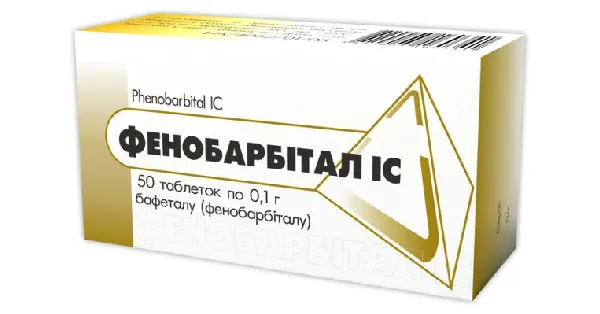
Table of Contents
INSTRUCTION FOR MEDICAL USE OF THE MEDICINAL PRODUCT PHENOBARBITAL IS (PHENOBARBITAL IS)
Composition:
Active substance: phenobarbital;
One tablet contains phenobarbital 5 mg or 50 mg or 100 mg;
Excipients: lactose monohydrate, potato starch, calcium stearate, gelatin, sodium croscarmellose (for 50 mg and 100 mg dosages).
Pharmaceutical form. Tablets.
Main physicochemical properties: white, flat cylindrical tablets with bevelled edges and a score line; the trade mark of the manufacturer is imprinted on one side of the tablet, and a line is present on the other side.
Pharmacotherapeutic group.
Antiepileptic agents. Barbiturates and their derivatives. ATC code N03A A02.
Pharmacological properties.
Pharmacodynamics.
Phenobarbital is a derivative of barbituric acid. It exerts a pronounced anticonvulsant effect and reduces excitability of neurons at epileptic foci. It acts as an enzyme inducer, enhancing the activity of the mono-oxygenase enzyme system. It produces a sedative effect. It suppresses the activity of motor cortical and subcortical regions of the brain. It increases the concentration in the central nervous system (CNS) of the endogenous inhibitory neurotransmitter GABA, and reduces the excitatory effects of amino acids (glutamate, aspartate) on the CNS.
Pharmacokinetics.
The drug is slowly but almost completely absorbed from the gastrointestinal tract (80%) and uniformly distributed in the organs and tissues of the body. Maximum plasma concentration is reached within 1–2 hours after administration. The effect begins within 30–60 minutes. The elimination half-life in adults is 2–4 days; in newborns, it may be up to 7 days. The drug penetrates histohematic barriers, enters breast milk, and crosses the placenta. It is slowly eliminated from the body, creating conditions for drug accumulation. Phenobarbital is approximately 45% bound to plasma proteins and is only partially metabolized by hepatic microsomal enzymes. It is excreted by the kidneys both unchanged (up to 25% of the dose is excreted in urine) and as metabolites. Renal excretion of unchanged phenobarbital depends on urine pH and can be increased in an alkaline environment.
In patients previously treated with barbituric acid derivatives, the duration of action of the drug is shortened due to accelerated hepatic metabolism of phenobarbital, as barbiturates induce liver enzymes. In elderly patients, phenobarbital metabolism is reduced, resulting in a prolonged elimination half-life, which necessitates dose reduction and extended dosing intervals.
Clinical characteristics.
Indications.
Epilepsy, chorea, spastic paralyses, peripheral arterial spasm, eclampsia, hemolytic disease of the newborn.
Contraindications.
Hypersensitivity to the components of the medicinal product, pronounced arterial hypotension, acute myocardial infarction, severe liver diseases, renal impairment with dysfunction, diabetes mellitus, myasthenia, porphyria, depression, alcoholism, drug and narcotic dependence (including in medical history), respiratory diseases with dyspnea, obstructive syndrome. Pregnancy period (I trimester). Lactation period. Phenobarbital is absolutely contraindicated in depressive disorders with patient's tendency to suicidal behavior.
Interaction with other medicinal products and other types of interactions.
Phenobarbital induces liver enzymes and thus may accelerate the metabolism of certain medicinal products metabolized by these enzymes, including paracetamol, salicylates, indirect anticoagulants, cardiac glycosides (digoxin), antimicrobial agents (chloramphenicol, doxycycline, metronidazole, rifampicin, sulfonamides), antiviral, antifungal agents (griseofulvin, itraconazole), antiepileptic (anticonvulsant) drugs, psychotropic agents (tricyclic antidepressants), hormonal agents (estrogens, progestogens, corticosteroids, thyroid hormones), immunosuppressive agents (glucocorticoids, cyclosporine, cytostatics), antiarrhythmics, antihypertensives (β-blockers, calcium channel blockers), oral hypoglycemic agents, etc. Phenobarbital may accelerate the metabolism of oral contraceptives, leading to loss of their efficacy. Possible influence on blood concentration of phenytoin, as well as carbamazepine and clonazepam. Phenobarbital enhances the effect of analgesics, anesthetics, neuroleptics, and tranquilizers. When used with other medicinal products that depress the CNS, mutual potentiation of action (sedative-hypnotic effect) is possible, which may be accompanied by respiratory depression. Alcohol enhances the effect of the medicinal product and may increase its toxicity. The medicinal product increases the toxicity of methotrexate. Medicinal products with acidic properties (ascorbic acid, ammonium chloride), and preparations containing valproic acid, enhance the effect of barbiturates. Patients receiving concomitant treatment with valproates and phenobarbital should be monitored for signs of hyperammonemia. In half of the reported cases, hyperammonemia was asymptomatic and did not necessarily lead to encephalopathy. Monoamine oxidase inhibitors (MAO) prolong the effect of phenobarbital. Rifampicin may reduce the effect of phenobarbital. When used together with gold preparations, the risk of renal damage increases. With prolonged concomitant use of nonsteroidal anti-inflammatory drugs, there is a risk of gastric ulceration and bleeding. Concurrent use of phenobarbital with zidovudine enhances the toxicity of both medicinal products.
Special precautions.
Phenobarbital is absolutely contraindicated in depressive disorders associated with a tendency towards suicidal behaviour.
Life-threatening skin reactions, including Stevens-Johnson syndrome or toxic epidermal necrolysis (Lyell's syndrome), have been reported during phenobarbital treatment. Therefore, if characteristic symptoms appear (e.g. progressive skin rash, often with blisters, and mucous membrane lesions), the use of Phenobarbital IS must be discontinued immediately, and phenobarbital-containing drugs must never be used again. The risk of developing Stevens-Johnson syndrome or Lyell's syndrome is highest during the first weeks of treatment. Early diagnosis and immediate discontinuation of the drug suspected of causing symptoms of Stevens-Johnson syndrome or toxic epidermal necrolysis provide the best treatment outcomes.
Prolonged use of phenobarbital should be avoided due to the possibility of drug accumulation and dependence development. Barbiturates are characterized by a withdrawal syndrome.
The drug should be prescribed with caution in patients with arterial hypotension (see section "Contraindications"), decompensated heart failure (see section "Contraindications"), impaired liver function (see section "Contraindications"), bronchial asthma (see section "Contraindications"), hyperkinesias, hyperthyroidism, adrenal insufficiency, acute and chronic pain, and acute intoxication with medicinal products.
Drug discontinuation should be carried out gradually over a prolonged period.
Due to the presence of lactose, the drug should not be administered to patients with rare hereditary disorders of galactose intolerance, lactase deficiency, or glucose-galactose malabsorption.
Use during pregnancy or breastfeeding.
The use of phenobarbital during the first trimester of pregnancy is contraindicated. Administration of phenobarbital during the third trimester of pregnancy may lead to physical dependence, resulting in withdrawal syndrome in the newborn, manifested as seizures, excitability, and impaired blood clotting.
The use of phenobarbital during labour may cause respiratory depression in the newborn.
Phenobarbital passes into breast milk in significant amounts and may suppress the infant's CNS; therefore, if drug administration is necessary, breastfeeding should be discontinued.
Ability to affect reaction speed when driving or operating machinery.
During treatment, patients should refrain from driving vehicles or operating machinery.
Dosage and Administration
The medicinal product should be taken orally, after meals. Dosage should be established according to the patient's condition.
Adults.
Single doses – from 50 to 200 mg, administered twice daily, with gradual dose escalation. Maximum daily dose for adults – 500 mg.
Children.
| Child's age |
Single dose (mg) |
Daily dose (mg) |
| Under 6 months |
5 |
10 |
| From 6 months to 1 year |
10 |
20 |
| 1−2 years |
20 |
40 |
| 3−4 years |
30 |
60 |
| 5−6 years |
40 |
80 |
| 7−9 years |
50 |
100 |
| 10−14 years |
75 |
150 |
For children under 3 years of age, the required number of tablets should be crushed into a powder, dissolved in a small amount of water, and administered as a suspension.
The duration of treatment depends on the course of the disease.
Children.
Used in pediatric practice (see section "Administration and dosage").
Overdose.
Symptoms of acute barbiturate poisoning of mild or moderate severity: dizziness, increased fatigue, even deep sleep from which the patient cannot be awakened. Hypersensitivity reactions may occur: angioneurotic edema, itching, rash (including urticaria).
Symptoms of acute severe barbiturate poisoning: CNS depression up to deep coma, accompanied by tissue hypoxia; shallow breathing, initially rapid, then slowed respiration, respiratory depression up to respiratory arrest; cardiovascular depression, including arrhythmias, decreased arterial pressure, up to collapse-like state; decreased body temperature, reduced diuresis, tachycardia or bradycardia, diminished or absent reflexes, nystagmus, headache, nausea, weakness.
If poisoning is not treated, fatal outcome may occur due to circulatory failure, respiratory paralysis, or pulmonary edema.
Treatment: symptomatic therapy (primarily monitoring of vital functions: respiration, pulse, arterial pressure). Patients may require intensive care. It is necessary to stabilize and normalize respiration and circulation. Respiratory failure is managed by artificial ventilation; shock is treated by infusions of plasma and plasma substitutes. If a short time has passed since drug intake (no more than 6 hours), gastric lavage should be performed, followed by administration of an adsorbent (activated charcoal) and sodium sulfate. To accelerate elimination of barbiturates from the body, forced alkaline diuresis, hemodialysis, and/or hemoperfusion may be performed.
Side effects.
Immune system disorders: hypersensitivity reactions, including angioedema, skin rash (including urticaria), pruritus.
Nervous system disorders: asthenia, weakness, ataxia, impaired motor coordination, hyperkinesia (in children), nystagmus, hallucinations, paradoxical excitation, decreased attention span, increased fatigue, slowed reaction time, headache, cognitive disturbances, insomnia (mainly in children and elderly patients), somnolence, dizziness, confusion, depression.
Gastrointestinal disorders: nausea, vomiting, constipation, epigastric fullness; with prolonged use – liver function impairment.
Blood and lymphatic system disorders: thrombocytopenia, agranulocytosis, anemia, megaloblastic anemia.
Cardiovascular disorders: arterial hypotension, bradycardia.
Respiratory system disorders: dyspnea.
Skin and subcutaneous tissue disorders: increased skin photosensitivity (photosensitization), polymorphic exudative erythema, Stevens-Johnson syndrome, toxic epidermal necrolysis (Lyell's syndrome), exfoliative dermatitis.
Musculoskeletal and connective tissue disorders: with prolonged use, there is a risk of impaired osteogenesis and rickets development. Cases of decreased bone mineral density, osteopenia, osteoporosis, and fractures have been reported in patients receiving long-term phenobarbital therapy. The mechanism of phenobarbital's effect on bone metabolism has not been established.
Other: increased body temperature, lymphadenopathy, leukocytosis, lymphocytosis, leukopenia, collapse.
With prolonged use of phenobarbital, folate deficiency, impotence, drug dependence, and withdrawal syndrome may develop. The withdrawal syndrome usually occurs after abrupt discontinuation of the drug and is accompanied by nightmares and anxiety.
Shelf life.
3 years.
Storage conditions.
Store in the original packaging at a temperature not exceeding 25 °C.
Keep out of reach of children.
Packaging.
10 tablets in a blister; 5 blisters in a pack.
Prescription status.
Prescription only.
Manufacturer.
Limited liability company "INTERKHIM".
Manufacturer's address and location of business activity.
40-A, 21st km, Starokyivska Road, Odesa, Ukraine, 65025.