Erlotinib-vista
Ukraine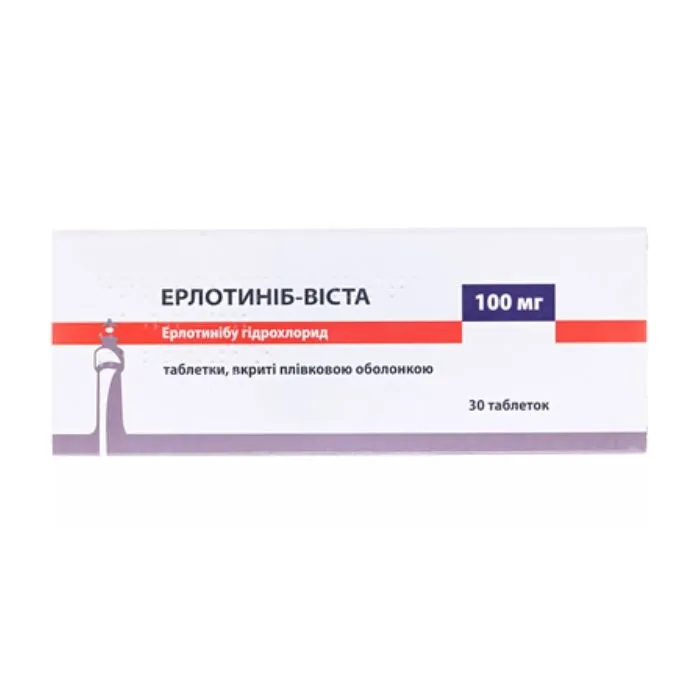
Table of Contents
INSTRUCTION FOR MEDICAL USE OF THE MEDICINAL PRODUCT ERLONIB-VISTA (ERLOTINIB-VISTA)
Composition:
active substance: erlotinib;
one film-coated tablet contains erlotinib hydrochloride 27.32 mg equivalent to 25 mg of erlotinib, or erlotinib hydrochloride 109.27 mg equivalent to 100 mg of erlotinib, or erlotinib hydrochloride 163.90 mg equivalent to 150 mg of erlotinib;
excipients: lactose monohydrate; microcrystalline cellulose; sodium starch glycolate (type A); magnesium stearate;
film coating: polyvinyl alcohol; titanium dioxide (E 171); macrogol; talc; methacrylic acid copolymer (type A); sodium bicarbonate.
Pharmaceutical form. Film-coated tablets.
Main physicochemical properties:
25 mg tablets: round, biconvex, film-coated tablets of white to yellowish color, with "25" engraved on one side;
100 mg tablets: round, biconvex, film-coated tablets of white to yellowish color, with "100" engraved on one side;
150 mg tablets: round, biconvex, film-coated tablets of white to yellowish color, with "150" engraved on one side.
Pharmacotherapeutic group. Antineoplastic agents. Protein kinase inhibitors. Erlotinib. ATC code L01EB02.
Pharmacological Properties
Pharmacodynamics
Erlotinib is a tyrosine kinase inhibitor of the epidermal growth factor receptor (EGFR)/human epidermal growth factor receptor type 1 (HER1). Erlotinib causes pronounced inhibition of intracellular phosphorylation of EGFR. EGFR is expressed on the surface of both normal and cancer cells. In preclinical models, inhibition of EGFR phosphotyrosine leads to cell growth arrest and cell death. EGFR-activating mutations may lead to persistent activation of anti-apoptotic and proliferative signaling pathways. The high efficacy of erlotinib in blocking EGFR-mediated signal transduction in these EGFR mutation-positive tumors is explained by the strong binding of erlotinib to the ATP-binding site in the mutated kinase domain of EGFR. By blocking downstream signal transmission, cell proliferation is inhibited and cell death is induced via natural apoptosis. In mouse models with enhanced expression of these EGFR-activating mutations, tumor regression has been observed.
Pharmacokinetics
Absorption
Maximum plasma concentration of erlotinib is reached approximately 4 hours after oral administration. Studies in healthy volunteers have estimated the absolute bioavailability of the drug to be 59%. Exposure after oral administration may be increased by food intake.
Distribution
Erlotinib has a mean apparent volume of distribution of 232 L and distributes into human tumor tissues. In a study involving 4 patients (3 with non-small cell lung cancer [NSCLC] and 1 with laryngeal cancer) who received erlotinib at a dose of 150 mg daily, tumor samples obtained during surgery on day 9 of treatment contained erlotinib in tissue at a mean concentration of 1185 ng/g. This corresponds to an overall mean of 63% (range 5–161%) of the maximum plasma concentration at steady state. The primary active metabolites were present in tumor tissue at a mean concentration of 160 ng/g, corresponding to an overall mean of 113% (range 88–130%) of the maximum plasma concentration at steady state. Protein binding in plasma is approximately 95%. Erlotinib binds to serum albumin and alpha-1-acid glycoprotein (AAG).
Metabolism
Erlotinib is metabolized in the liver by cytochrome P450 enzymes, primarily by CYP3A4, and to a lesser extent by CYP1A2. Extrahepatic metabolism of erlotinib occurs via CYP3A4 in the small intestine, and CYP1A1 in the lungs and CYP1B1 in tumor tissue may also contribute to erlotinib metabolic clearance. Metabolism occurs via three pathways: 1) O-demethylation of one or both side chains followed by oxidation to carboxylic acids; 2) oxidation of the acetylenic portion of the molecule followed by hydrolysis to arylcarboxylic acids; 3) aromatic hydroxylation of the phenyl-acetylene group. The primary metabolites of erlotinib, OSI-420 and OSI-413, formed by O-demethylation of one of the side chains, have activity comparable to erlotinib in preclinical in vitro assays and in vivo tumor models. These metabolites are present in plasma at concentrations less than 10% of erlotinib, and their pharmacokinetics are similar to those of erlotinib.
Elimination
Erlotinib metabolites are primarily excreted in feces (>90%), with a small amount of the orally administered dose (approximately 9%) eliminated via the kidneys. Less than 2% of the orally administered dose is excreted as unchanged drug. Population pharmacokinetic analysis in 591 patients receiving erlotinib as monotherapy showed a mean apparent clearance of 4.47 L/h and a median elimination half-life of 36.2 hours. Therefore, the time to reach steady-state plasma concentration is expected to be approximately 7–8 days.
Pharmacokinetics in Special Patient Populations
Population pharmacokinetic analysis showed no clinically significant relationships between predicted apparent clearance and patient age, body weight, sex, or ethnicity. Erlotinib pharmacokinetics correlated with serum total bilirubin, alpha-1-acid glycoprotein (AAG) levels, and current smoking status. Erlotinib clearance was reduced with increased serum total bilirubin and AAG concentrations. The clinical significance of this observation is unknown. However, accelerated clearance of erlotinib has been observed in smokers, as confirmed in a pharmacokinetic study of a single 150 mg dose of erlotinib administered to non-smokers and current smokers. The geometric mean maximum concentration (Cmax) was 1056 ng/mL in non-smokers and 689 ng/mL in smokers, with a mean ratio of 65.2% (95% CI: 44.3–95.9; p = 0.031). The geometric mean AUC0-inf was 18726 ng·h/mL in non-smokers and 6718 ng·h/mL in smokers, with a mean ratio of 35.9% (95% CI: 23.7–54.3; p < 0.0001). The geometric mean concentration at 24 hours was 288 ng/mL in non-smokers and 34.8 ng/mL in smokers, with a mean ratio of 12.1% (95% CI: 4.82–30.2; p = 0.0001).
In a phase III baseline study, in smoking patients with non-small cell lung cancer, the minimum steady-state plasma concentration was 0.65 µg/mL (n=16), which is two times lower than in former smokers or non-smokers (1.28 µg/mL, n=108). This was accompanied by a 24% increase in plasma clearance of erlotinib. In a phase I dose-escalation study involving NSCLC patients who smoked during the study, steady-state pharmacokinetic analysis showed dose-proportional increases in erlotinib exposure when the dose was increased from 150 mg to the maximum tolerated dose of 300 mg. The steady-state minimum plasma concentration after a 300 mg dose in continuing smokers in this study was 1.22 µg/mL (n=17) (see sections "Dosage and Administration", "Special Warnings and Precautions", "Interaction with Other Medicinal Products and Other Forms of Interaction").
Based on pharmacokinetic study results, patients who smoke are advised to stop smoking during erlotinib treatment, as reduced plasma concentrations of the drug may occur.
According to population pharmacokinetic analysis, erlotinib exposure increased by approximately 11% in the presence of opioid medications.
A second population pharmacokinetic analysis was conducted using data from 204 patients with pancreatic cancer who received erlotinib in combination with gemcitabine. This analysis showed that covariates affecting erlotinib clearance in patients with pancreatic cancer were essentially the same as those observed in previous monotherapy pharmacokinetic analyses. No new covariate effects were identified. Concomitant administration of gemcitabine does not affect the plasma clearance of erlotinib.
Children
No specific studies have been conducted in children.
Elderly Patients
No specific studies have been conducted in elderly patients.
Hepatic Impairment
Erlotinib clearance is primarily hepatic. In patients with solid tumors and moderate hepatic impairment (Child-Pugh score 7–9), geometric mean values of AUC0-t and Cmax for erlotinib were 27000 ng·h/mL and 805 ng/mL, respectively, compared to 29300 ng·h/mL and 1090 ng/mL in patients with normal liver function, including those with primary liver cancer or liver metastases. Although Cmax was statistically significantly lower in patients with moderate hepatic impairment, this difference is not considered clinically significant. There are no data on the effect of severe hepatic dysfunction on erlotinib pharmacokinetics. In population pharmacokinetic analysis, increased serum total bilirubin concentration was associated with slower erlotinib elimination.
Renal Impairment
Erlotinib and its metabolites are excreted in urine in small amounts—less than 9% of a single dose. In population pharmacokinetic analysis, no clinically significant relationship was observed between erlotinib clearance and creatinine clearance. There are no data in patients with creatinine clearance <15 mL/min.
Clinical characteristics.
Indications.
Non-small cell lung cancer.
First-line treatment of patients with locally advanced or metastatic non-small cell lung cancer (NSCLC) harboring EGFR-activating mutations.
Erlotinib-Vista is also indicated for maintenance treatment of patients with locally advanced or metastatic non-small cell lung cancer (NSCLC) with EGFR-activating mutations who have stable disease after first-line chemotherapy.
Treatment of locally advanced or metastatic non-small cell lung cancer following failure of at least one prior chemotherapy regimen. Erlotinib-Vista is indicated for patients with tumors lacking EGFR-activating mutations when no other treatment options are suitable.
When prescribing Erlotinib-Vista, factors associated with prolonged survival should be considered. No survival benefit or other clinically meaningful treatment effects have been demonstrated in patients whose tumors lack epidermal growth factor receptors (EGFR) as determined by immunohistochemical testing.
Pancreatic cancer.
Treatment of metastatic pancreatic cancer in combination with gemcitabine. When prescribing Erlotinib-Vista, factors associated with prolonged survival should be considered.
No survival benefit has been demonstrated in patients with locally advanced pancreatic cancer.
Contraindications.
Hypersensitivity to erlotinib or to any component of the medicinal product.
Interaction with other medicinal products and other forms of interaction.
Interaction studies have been conducted only in adult patients.
Erlotinib and other CYP substrates.
Erlotinib is a potent inhibitor of CYP1A1 and a moderate-to-strong inhibitor of CYP3A4 and CYP2C8, as well as a potent inhibitor of glucuronidation via UGT1A1 in vitro.
The physiological significance of potent CYP1A1 inhibition is unknown due to the very limited expression of CYP1A1 in human tissues.
Concomitant administration of erlotinib with ciprofloxacin, a moderate inhibitor of CYP1A2, increased erlotinib exposure (AUC) by 39%, while the maximum concentration (Cmax) did not change significantly. Similarly, exposure (AUC) of active metabolites increased by 60% and 48% for AUC and Cmax, respectively. The clinical significance of this increased exposure has not been established. Therefore, caution is required when prescribing erlotinib with ciprofloxacin or potent CYP1A2 inhibitors (e.g., fluvoxamine). If erlotinib-related adverse reactions occur, the dose of the medicinal product may be reduced.
Prior or concomitant treatment with erlotinib did not alter the clearance of prototype CYP3A4 substrates midazolam and erythromycin. However, a reduction in oral bioavailability of midazolam by up to 24% was observed. In another clinical study, erlotinib was shown not to affect the pharmacokinetics of paclitaxel, a CYP3A4/2C8 substrate, when administered concomitantly. Therefore, clinically significant interactions with clearance of other CYP3A4 substrates are unlikely. Inhibition of glucuronidation may lead to interactions with medicinal products that are substrates of UGT1A1 and are eliminated exclusively via this metabolic pathway. In patients with low UGT1A1 expression or genetically determined disorders of glucuronidation (e.g., Gilbert’s syndrome), serum bilirubin concentrations may increase; therefore, caution is required during treatment.
Erlotinib is metabolized in the liver primarily by hepatic cytochromes, especially CYP3A4, and to a lesser extent by CYP1A2. Extrahepatic metabolism involving CYP3A4 in the small intestine, CYP1A1 in the lungs, and CYP1B1 in tumor tissue may also contribute to erlotinib's metabolic clearance. Potential interactions may occur with active substances that are metabolized by these enzymes or that are their inducers or inhibitors.
Potent inhibitors of CYP3A4 activity reduce erlotinib metabolism and increase its plasma concentration. In a clinical study, concomitant administration of erlotinib with ketoconazole (200 mg orally twice daily for 5 days), a potent CYP3A4 inhibitor, resulted in an 86% increase in erlotinib exposure (AUC) and a 69% increase in Cmax. Caution is required when prescribing Erlotinib-Vista with potent CYP3A4 inhibitors, including azole antifungal agents (ketoconazole, itraconazole, voriconazole), protease inhibitors, erythromycin, and clarithromycin. If toxicity develops, the dose of Erlotinib-Vista should be reduced.
Potent inducers of CYP3A4 activity increase erlotinib metabolism and significantly reduce its plasma concentration. In a clinical study, concomitant administration of erlotinib and rifampicin (600 mg orally once daily for 7 days), a potent CYP3A4 inducer, led to a 69% reduction in median erlotinib AUC. When rifampicin was co-administered with a single 450 mg dose of erlotinib, the average erlotinib exposure (AUC) was 57.5% of that observed after a single 150 mg dose of erlotinib in the absence of rifampicin therapy. Concomitant use of Erlotinib-Vista and CYP3A4 inducers should be avoided. For patients requiring concomitant treatment with erlotinib and a potent CYP3A4 inducer (such as rifampicin), dose escalation of Erlotinib-Vista to 300 mg should be considered with careful monitoring of the patient (including renal and hepatic function and serum electrolyte levels). If well tolerated for more than 2 weeks, the dose of Erlotinib-Vista may be increased to 450 mg with close safety monitoring. Reduced erlotinib exposure is possible when co-administered with other CYP3A4 inducers (e.g., phenytoin, carbamazepine, barbiturates, St. John’s wort-containing products). Concomitant use of these agents with erlotinib requires caution. Where possible, alternative medicinal products that are not potent CYP3A4 inducers should be prescribed.
Erlotinib and anticoagulants, coumarin derivatives.
An increased international normalized ratio (INR) and bleeding events, including isolated cases with fatal outcomes, have been reported with concomitant use of erlotinib and coumarin-derived anticoagulants, including warfarin. Patients receiving coumarin-derived anticoagulants should have their prothrombin time or INR monitored regularly.
Erlotinib and statins.
The risk of statin-induced myopathy, including rare cases of rhabdomyolysis, may be increased when erlotinib is used concomitantly with statins.
Erlotinib and smoking patients.
Pharmacokinetic studies in non-smokers and current smokers showed that smoking reduces AUCinf, Cmax, and plasma concentration of erlotinib at 24 hours by 2.8-, 1.5-, and 9-fold, respectively. Therefore, smokers should be advised to quit smoking as early as possible before starting erlotinib treatment due to reduced plasma concentrations of erlotinib if smoking continues. Based on results of the CURRENTS study, no evidence supported the use of a higher erlotinib dose of 300 mg versus the recommended 150 mg dose in active smokers. Safety data were comparable between 300 mg and 150 mg doses; however, a significant increase in the frequency of rash, interstitial lung disease, and diarrhea was observed in patients receiving higher erlotinib doses (see sections “Method of administration and dosage,” “Special instructions,” “Pharmacokinetics”).
Erlotinib and P-glycoprotein inhibitors.
Erlotinib is a substrate of the P-glycoprotein drug transporter. Concomitant administration of erlotinib with P-glycoprotein inhibitors (e.g., cyclosporine, verapamil) may impair the distribution and/or elimination of erlotinib. The consequences of such interactions, particularly for the central nervous system (e.g., toxic effects), have not been established. Caution is required in such situations.
Erlotinib and medicinal products affecting pH.
Erlotinib has reduced solubility at pH values above 5. Medicinal products affecting pH in the upper gastrointestinal tract may influence erlotinib solubility and bioavailability. Concomitant administration of erlotinib with omeprazole, a proton pump inhibitor, reduced erlotinib exposure (AUC) and maximum concentration (Cmax) by 46% and 61%, respectively. Tmax and elimination half-life were unchanged. When erlotinib was administered concomitantly with ranitidine (300 mg), an H2-receptor antagonist, erlotinib exposure (AUC) and Cmax decreased by 33% and 54%, respectively. Increasing the erlotinib dose when co-administered with such medicinal products is unlikely to compensate for the reduced exposure. However, when erlotinib was administered 2 hours before or 10 hours after ranitidine (150 mg twice daily), AUC and Cmax of erlotinib decreased by only 15% and 17%, respectively. The effect of antacids on erlotinib absorption has not been studied, but impaired absorption of erlotinib is possible, potentially leading to reduced plasma levels of erlotinib. Therefore, concomitant use of erlotinib with proton pump inhibitors should be avoided. If antacid therapy is necessary during erlotinib treatment, these medicinal products should be taken at least 4 hours before or 2 hours after the daily dose of erlotinib. If ranitidine is prescribed, its administration should be staggered relative to erlotinib: the medicinal product should be taken at least 2 hours before or 10 hours after ranitidine.
Erlotinib and gemcitabine.
In a phase Ib study, no significant effect of gemcitabine on erlotinib pharmacokinetics or of erlotinib on gemcitabine pharmacokinetics was observed.
Erlotinib and carboplatin/paclitaxel.
Erlotinib increases platinum concentration in plasma. In a clinical study, concomitant administration of erlotinib with carboplatin and paclitaxel resulted in a statistically significant 10.6% increase in AUC0-48 of total platinum, but this was not clinically significant. In clinical practice, other concomitant factors may contribute to increased carboplatin exposure, such as impaired renal function. No significant effect of carboplatin or paclitaxel on erlotinib pharmacokinetics was observed.
Erlotinib and capecitabine.
Capecitabine may cause increased erlotinib concentrations. Following administration of erlotinib in combination with capecitabine, a statistically significant increase in erlotinib AUC and a marginal increase in Cmax were observed compared to values from another study where erlotinib was used as monotherapy. No significant effect of erlotinib on capecitabine pharmacokinetics was observed.
Erlotinib and proteasome inhibitors.
Based on the mechanism of action, proteasome inhibitors, including bortezomib, may affect the activity of epidermal growth factor receptor (EGFR) inhibitors, including erlotinib. Limited clinical data and preclinical study results, showing proteasome-mediated degradation of EGFR, support such an effect.
Special precautions.
Testing for epidermal growth factor receptor (EGFR) mutations.
When considering the use of Erlotinib-Vista as first-line or maintenance treatment for locally advanced or metastatic NSCLC, it is important to determine the EGFR mutation status.
According to local medical practice, a validated, reliable, and sensitive test with a defined limit of positivity and demonstrated utility for determining EGFR mutation status should be used, employing tumor DNA from a tissue sample or cell-free DNA (cf-DNA) from a blood sample (plasma).
If a plasma-based cf-DNA test is used and results for activating mutations are negative, tissue testing should be performed if possible, as false-negative results with plasma-based tests may occur.
Use in smokers.
Smokers should be advised to quit smoking, as erlotinib plasma concentrations are reduced in smokers compared to non-smokers. The degree of reduction in erlotinib plasma concentration is likely to be clinically significant (see sections “Method of administration and dosage”, “Interaction with other medicinal products and other forms of interaction”, “Pharmacokinetics”).
Interstitial lung disease.
Cases of interstitial lung disease (ILD)-like events, including fatal ILD, have been observed infrequently in patients with non-small cell lung cancer (NSCLC), pancreatic cancer, or other advanced solid tumors receiving erlotinib. In the pivotal BR.21 study in patients with NSCLC receiving placebo or erlotinib, the incidence of ILD was 0.8% in each group. According to a meta-analysis of randomized controlled clinical trials in NSCLC (excluding phase I and single-arm phase II trials due to lack of control groups), the incidence of ILD-like events was 0.9% in erlotinib treatment groups and 0.4% in control groups. In the pancreatic cancer study, when erlotinib was used in combination with gemcitabine, the incidence of ILD-like events in patients with pancreatic cancer receiving erlotinib and gemcitabine was 2.5%, compared to 0.4% in the group receiving gemcitabine and placebo. Reported diagnoses in patients with suspected ILD-like events included pneumonia, radiation pneumonitis, hypersensitivity pneumonitis, interstitial pneumonia, interstitial lung disease, obliterative bronchiolitis, pulmonary fibrosis, acute respiratory distress syndrome (ARDS), lung infiltration, and alveolitis. Symptoms appeared within days to several months after initiation of erlotinib therapy. Often, confounding or predisposing factors were present, such as concomitant or prior chemotherapy, radiotherapy, underlying parenchymal lung disease, metastatic lung involvement, or lung infection. A higher incidence of ILD (approximately 5%, with a fatality rate of 1.5%) has been observed in patients enrolled in studies conducted in Japan. In patients with acute onset of new and/or worsening respiratory symptoms of unknown origin (dyspnea, cough, fever), erlotinib treatment should be temporarily discontinued pending diagnostic evaluation. Patients receiving concomitant erlotinib and gemcitabine therapy should be closely monitored for potential development of ILD-like toxicity. In the event of ILD development, erlotinib should be discontinued and appropriate treatment initiated if necessary (see section “Adverse reactions”).
Diarrhea, dehydration, electrolyte imbalance, and renal failure.
Diarrhea (including very rare cases with fatal outcome) was observed in approximately 50% of patients receiving erlotinib therapy. In cases of severe or moderate diarrhea, antidiarrheal agents such as loperamide should be prescribed. In some cases, dose reduction of the drug may be necessary. In clinical trials, doses were reduced in 50 mg increments. Dose reductions in 25 mg steps have not been studied. Erlotinib-Vista treatment should be interrupted and appropriate measures taken to correct dehydration in cases of severe or persistent diarrhea, nausea, anorexia, or vomiting accompanied by dehydration (see section “Adverse reactions”). Hypokalemia and renal failure (including fatal cases) have been reported rarely. In some cases, dehydration was caused by diarrhea, vomiting, and/or anorexia, while in others, interpretation was complicated by concomitant chemotherapy. In more severe or persistent cases of diarrhea or cases leading to dehydration, particularly in patient groups with risk factors (concomitant use of other medicinal products, presence of symptoms or diseases, or other predisposing factors, including advanced age), treatment with Erlotinib-Vista should be interrupted and appropriate measures taken, including intensive intravenous rehydration. Renal function and serum electrolyte levels, including potassium, should be monitored in patients at risk of dehydration.
Hepatotoxicity.
Serious cases of drug-induced liver injury, including hepatitis, acute hepatitis, and hepatic failure (including fatal cases), have been reported during erlotinib treatment. Factors complicating interpretation include pre-existing liver disease and concomitant use of hepatotoxic medicinal products. Periodic monitoring of liver function is recommended during erlotinib treatment. The frequency of liver function monitoring should be increased in patients with pre-existing hepatic insufficiency or biliary obstruction. Patients reporting possible symptoms should undergo immediate clinical evaluation and liver function tests.
Erlotinib-Vista treatment should be interrupted in the presence of marked abnormalities in liver function (see section “Adverse reactions”). Erlotinib-Vista is not recommended in patients with severe hepatic impairment.
Gastrointestinal perforations.
Patients receiving Erlotinib-Vista are at increased risk of gastrointestinal perforation, which occurs infrequently (including isolated fatal cases). Increased risk of gastrointestinal perforation is observed in patients receiving concomitant therapy with anti-angiogenic agents, corticosteroids, non-steroidal anti-inflammatory drugs (NSAIDs), and/or taxane-based chemotherapy, as well as in patients with a history of peptic ulcer or diverticular disease. Erlotinib-Vista treatment should be permanently discontinued in the event of gastrointestinal perforation (see section “Adverse reactions”).
Bullous and exfoliative skin lesions.
Bullous, vesicular, and exfoliative skin reactions have been observed during erlotinib treatment, including very rare cases of Stevens-Johnson syndrome/toxic epidermal necrolysis, which in some cases were fatal (see section “Adverse reactions”). Treatment with Erlotinib-Vista should be temporarily interrupted or discontinued in the event of such bullous, vesicular, or exfoliative skin lesions. Patients with bullous and exfoliative skin lesions should be evaluated for skin infections and treated according to local treatment guidelines.
Ocular disorders.
Patients presenting signs and symptoms typical of keratitis, such as acute onset or worsening of ocular inflammation, lacrimation, photophobia, blurred vision, eye pain, and/or redness, should be referred immediately for ophthalmologic evaluation. Erlotinib treatment should be temporarily or permanently discontinued if ulcerative keratitis is confirmed. The benefit-risk balance of continuing Erlotinib-Vista treatment should be carefully considered in patients diagnosed with keratitis. Erlotinib should be used with caution in patients with a history of keratitis, ulcerative keratitis, or severe dry eye. Contact lens use is also a risk factor for keratitis and corneal ulceration. Cases of corneal perforation or ulceration during erlotinib treatment have been reported very rarely (see section “Adverse reactions”).
Interaction with other medicinal products.
Strong inducers of CYP3A4 enzymes may reduce erlotinib efficacy, while strong inhibitors of CYP3A4 may lead to increased toxicity. Concomitant use of Erlotinib-Vista with medicinal products of these types should be avoided (see section “Interaction with other medicinal products and other forms of interaction”).
Other forms of interaction.
Erlotinib has reduced solubility at pH values above 5. Medicinal products that alter the pH in the upper gastrointestinal tract (GIT), such as proton pump inhibitors, H2-receptor antagonists, and antacids, may affect erlotinib solubility and, consequently, its bioavailability. Increasing the erlotinib dose when co-administered with these agents is unlikely to compensate for the reduced exposure. Concomitant use of Erlotinib-Vista with proton pump inhibitors should be avoided. The consequences of concomitant use of erlotinib with H2-receptor antagonists and antacids are unknown, but reduced bioavailability is possible. Therefore, concomitant use should be avoided (see section “Interaction with other medicinal products and other forms of interaction”). If antacid therapy is required during treatment with Erlotinib-Vista, these medicinal products should be taken at least 4 hours before or 2 hours after the daily dose of Erlotinib-Vista.
Important information on excipients.
Erlotinib-Vista, film-coated tablets, 25 mg, 100 mg, 150 mg, contains lactose.
If a patient has been diagnosed with intolerance to certain sugars, consultation with a physician is necessary before taking this medicinal product.
Erlotinib-Vista, film-coated tablets, 25 mg, 100 mg, contains less than 1 mmol (less than 23 mg) of sodium per tablet, i.e., essentially sodium-free.
Erlotinib-Vista, film-coated tablets, 150 mg, contains 25.20 mg of sodium.
| Caution should be exercised when administering to patients on a sodium-controlled diet. |
Use in pregnancy or breastfeeding.
Pregnancy.
There are insufficient data on the use of erlotinib in pregnant women. Animal studies have shown no evidence of teratogenic effects or delivery abnormalities. However, the possibility of a negative effect on pregnancy cannot be excluded, as increased embryofetal lethality was observed in studies conducted in rats and rabbits. The potential risk to humans is unknown.
Women of childbearing potential.
Women of reproductive age should avoid pregnancy and use reliable methods of contraception during treatment with Erlotinib-Vista and for at least 2 weeks after the end of treatment. Treatment of a pregnant woman should be continued only if the expected benefit to the mother outweighs the potential risk to the fetus.
Breastfeeding.
It is unknown whether erlotinib is excreted in human breast milk.
Studies on the effect of erlotinib on milk production or its presence in breast milk have not been conducted. Since the potential harm to infants who are breastfed is unknown, women who are breastfeeding are recommended to discontinue breastfeeding during the use of the medicinal product and for at least 2 weeks after receiving the last dose.
Fertility.
Animal studies indicate no impairment of fertility. However, the possibility of an undesirable effect on fertility cannot be excluded, as effects on reproductive parameters were observed in animal studies. The potential risk to humans is unknown.
Ability to influence the reaction rate when driving or operating machinery.
Studies on the influence on the ability to drive vehicles or operate machinery have not been conducted; however, the effect of erlotinib is not expected to impair cognitive function.
Method of Administration and Dosage.
Treatment with Erlotinib-Vista should be initiated and supervised by a physician experienced in the use of anticancer therapies.
Non-small cell lung cancer.
Prior to initiating treatment with Erlotinib-Vista, patients with advanced or metastatic non-small cell lung cancer who have not previously received chemotherapy should be tested for epidermal growth factor receptor (EGFR) mutations.
The recommended dose of Erlotinib-Vista is 150 mg once daily, taken 1 hour before or 2 hours after a meal.
Pancreatic cancer.
The recommended dose of Erlotinib-Vista is 100 mg once daily, taken 1 hour before or 2 hours after a meal, in combination with gemcitabine (see also the gemcitabine product information for medical use, indication – pancreatic cancer).
If a patient does not develop skin rash within the first 4–8 weeks of treatment, the continuation of therapy with Erlotinib-Vista should be reconsidered (see section "Pharmacodynamics").
If dose adjustment is required, the dose should be reduced in 50 mg decrements (see section "Special precautions for use"). Concomitant use of CYP3A4 substrates and modulators may necessitate dose adjustments (see section "Interaction with other medicinal products and other types of interactions").
Hepatic impairment.
Erlotinib is eliminated via hepatic metabolism and excreted in bile. Although erlotinib exposure was approximately similar in patients with moderate hepatic impairment (Child-Pugh score 7–9) compared to those with normal liver function, caution should be exercised when administering Erlotinib-Vista to patients with hepatic insufficiency. In the event of severe adverse reactions, the dose of Erlotinib-Vista should be reduced or treatment discontinued. The safety and efficacy of Erlotinib-Vista in patients with severe hepatic impairment (AST/SGOT [aspartate aminotransferase/serum glutamic-oxaloacetic transaminase] and ALT/SGPT [alanine aminotransferase/serum glutamic-pyruvic transaminase] >5× upper limit of normal [ULN]) have not been studied; therefore, erlotinib is not recommended in these patients (see section "Pharmacokinetics").
Renal impairment.
The safety and efficacy of Erlotinib-Vista in patients with renal impairment (serum creatinine concentration 1.5 times above the upper limit of normal [ULN]) have not been established. Based on pharmacokinetic data, dose adjustment is not recommended for patients with mild to moderate renal impairment (see section "Pharmacokinetics"). Erlotinib-Vista is not recommended for patients with severe renal impairment.
Use in smokers.
Smoking reduces erlotinib exposure by 50–60%. The maximum tolerated dose of Erlotinib-Vista in patients with non-small cell lung cancer who smoke is 300 mg.
A dose of 300 mg did not demonstrate improved efficacy in second-line treatment following ineffective chemotherapy compared to the recommended dose of 150 mg in patients who continue to smoke. Safety profiles were comparable between the 300 mg and 150 mg doses; however, patients receiving the higher erlotinib dose experienced a significant increase in the frequency of rash, interstitial lung disease, and diarrhea.
Therefore, patients who continue to smoke are advised to quit smoking (see sections "Special precautions for use", "Interaction with other medicinal products and other types of interactions", "Pharmacokinetics").
Children.
The safety and efficacy of erlotinib in patients under 18 years of age have not been established for the approved indications. Erlotinib-Vista is not recommended for use in pediatric patients.
Overdose.
Symptoms. Single oral doses of erlotinib up to 1000 mg in healthy volunteers and up to 1600 mg in cancer patients were generally well tolerated. Tolerability of multiple doses of the drug twice daily at 200 mg in healthy volunteers worsened only after several days of administration. According to data from these studies, overdose may result in severe adverse reactions such as diarrhea, rash, and possibly elevated levels of hepatic transaminases.
Treatment. In case of suspected overdose, treatment should be discontinued and symptomatic therapy should be initiated.
Adverse reactions.
The safety profile of erlotinib is based on data from more than 1500 patients who received at least one dose of erlotinib as monotherapy (150 mg) and more than 300 patients who received erlotinib at a dose of 100 or 150 mg in combination with gemcitabine.
Non-small cell lung cancer (erlotinib used as monotherapy).
First-line treatment of patients with EGFR mutations.
In an open-label, randomized Phase III trial (ML20650), the safety of erlotinib in first-line treatment of patients with NSCLC and activating EGFR mutations was evaluated in 75 patients; no new safety signals were observed in these patients.
The most common adverse reactions in patients treated with erlotinib in study ML20650 were rash and diarrhea, most of which were Grade 1/2 in severity and did not require intervention.
Maintenance treatment.
In two other double-blind, randomized, placebo-controlled Phase III trials, BO18192 (SATURN) and BO25460 (IUNO), erlotinib was administered as maintenance therapy following first-line chemotherapy. These trials included a total of 1532 patients with advanced, recurrent, or metastatic NSCLC after standard platinum-based first-line chemotherapy.
The most common adverse reactions observed in patients treated with erlotinib in trials BO18192 and BO25460 were rash and diarrhea.
Second and further lines of treatment.
In the randomized, double-blind trial BR.21 (in which erlotinib was used in second-line therapy), the most common adverse reactions were rash and diarrhea, most of which were Grade 1 or 2 in severity and resolved without intervention. In study BR.21, the median time to onset of rash was 8 days and to onset of diarrhea was 12 days.
Pancreatic cancer (concomitant use of erlotinib with gemcitabine).
The most common adverse reactions in the pivotal trial PA.3 in patients with pancreatic cancer who received erlotinib 100 mg in combination with gemcitabine were fatigue, rash, and diarrhea. The median time to onset of rash was 10 days and to onset of diarrhea was 15 days.
Adverse reaction table.
Table 1 summarizes adverse reactions reported during clinical trials and post-marketing surveillance with erlotinib used alone or in combination with chemotherapy. Adverse reactions are categorized by organ system according to MedDRA (Medical Dictionary for Regulatory Activities). The frequency of adverse reactions is defined using the following categories: very common (≥ 1/10), common (≥ 1/100 to < 1/10), uncommon (≥ 1/1000 to < 1/100), rare (≥ 1/10,000 to < 1/1000), very rare (< 1/10,000), and not known (cannot be estimated from available data). Within each frequency group, adverse reactions are listed in order of decreasing severity.
Table 1. Adverse reactions based on clinical trials and post-marketing surveillance.
| Infections and infestations |
|
| Very common |
infection* |
| Metabolism and nutrition disorders |
|
| Very common |
anorexia, weight decreased |
| Psychiatric disorders |
|
| Very common |
depression |
| Nervous system disorders |
|
| Very common |
neuropathy, headache |
| Eye disorders |
|
| Very common |
dry keratoconjunctivitis |
| Common |
keratitis, conjunctivitis |
| Uncommon |
eyelash changes* |
| Very rare |
corneal perforation, corneal ulcer, uveitis |
| Respiratory, thoracic and mediastinal disorders |
|
| Very common |
dyspnea, cough |
| Common |
epistaxis |
| Uncommon |
interstitial lung disease* |
| Gastrointestinal disorders |
|
| Very common |
diarrhea*, nausea, vomiting, stomatitis, abdominal pain, dyspepsia, flatulence |
| Common |
gastrointestinal hemorrhage* |
| Uncommon |
gastrointestinal perforations* |
| Rare |
pneumatosis intestinalis |
| Hepatobiliary disorders |
|
| Very common |
liver function test abnormalities* |
| Rare |
hepatic failure*, hepatitis |
| Not known |
acute hepatitis |
| Skin and subcutaneous tissue disorders |
|
| Very common |
rash*, pruritus |
| Common |
alopecia, dry skin, paronychia, folliculitis, acne/ acneiform dermatitis, skin fissures |
| Uncommon |
hirsutism, eyebrow changes, nail brittleness and loosening, mild skin reactions such as hyperpigmentation |
| Rare |
palmar-plantar erythrodysesthesia syndrome |
| Very rare |
Stevens-Johnson syndrome/toxic epidermal necrolysis* |
| Renal and urinary disorders |
|
| Common |
renal failure |
| Uncommon |
nephritis, proteinuria |
| General disorders and administration site conditions |
|
| Very common |
fatigue, pyrexia, chills |
*See section "Description of selected adverse reactions" below.
Description of selected adverse reactions.
Rash.
Rash includes acneiform dermatitis. Overall, rash presents as mild or moderate erythematous and papulopustular rash, which may occur or worsen in areas exposed to sunlight. Patients exposed to sunlight may be advised to wear protective clothing and/or use sunscreen (e.g., containing minerals).
Diarrhea.
Diarrhea may lead to dehydration, hypokalemia, and renal failure. Fatal cases have been reported (see section "Special warnings and precautions for use").
Table 2. Frequency and severity of rash and diarrhea observed in clinical studies.
| Study |
Indication |
Rash (%) |
Diarrhea (%) |
||||||||
| Severity |
Actions taken |
Severity |
Actions taken |
||||||||
| All grades |
3 |
4 |
Discontinuation |
Dose modification |
All grades |
3 |
4 |
Discontinuation |
Dose modification |
||
| ML20650 |
NSCLC |
80 |
9 |
0 |
1 |
11 |
57 |
4 |
0 |
1 |
7 |
| BO18192 |
NSCLC |
49.2 |
6.0 |
0 |
1 |
8.3 |
20.3 |
1.8 |
0 |
< 1 |
3 |
| BO25460 |
NSCLC |
39.4 |
5.0 |
0 |
0 |
5.6 |
24.2 |
2.5 |
0 |
0 |
2.8 |
| BR.21 |
NSCLC |
75 |
9 |
1 |
6 |
54 |
6 |
1 |
1 |
||
| PA.3 |
Pancreatic cancer |
- |
5 |
1 |
2 |
- |
5 |
1 |
2 |
||
Infection
These may be severe infections with or without neutropenia, including pneumonia, sepsis, and cellulitis.
Eyelash changes
Changes include eyelash growth, excessive growth, and thickening of eyelashes.
Interstitial lung disease (ILD)
ILD includes fatal cases in patients receiving erlotinib for the treatment of NSCLC or other progressive solid tumors. A higher incidence was observed in patients in Japan (see section "Special precautions").
Gastrointestinal hemorrhage
Gastrointestinal hemorrhage includes fatal outcomes (see section "Special precautions"). In clinical trials, some cases were associated with concomitant use of warfarin, and others with concomitant use of NSAIDs (see section "Interaction with other medicinal products and other forms of interaction"). Gastrointestinal tract perforations also include fatal outcomes (see section "Special precautions").
Hepatic function abnormalities
Abnormalities include increased levels of alanine aminotransferase (ALT), aspartate aminotransferase (AST), and bilirubin. Cases were mainly mild or moderate in severity, transient, or associated with liver metastases.
Hepatic failure
Includes fatal cases. Risk factors include pre-existing liver disease or concomitant use of hepatotoxic medicinal products (see section "Special precautions").
Stevens-Johnson syndrome/toxic epidermal necrolysis
Includes fatal cases (see section "Special precautions").
Reporting of suspected adverse reactions
Reporting suspected adverse reactions after authorization of the medicinal product is important. It allows continued monitoring of the benefit-risk balance of the medicinal product. Healthcare professionals are required to report any suspected adverse reactions through the national reporting system.
Shelf life
4 years.
Storage conditions
No special temperature storage conditions are required for this medicinal product. Keep out of reach of children.
Packaging
10 tablets of 25 mg, or 100 mg, or 150 mg in a blister; 3 blisters in a cardboard box.
Prescription status
Prescription only.
Manufacturer
Remedica Limited
Manufacturer's address and place of business
Acharnon Street, Limassol Industrial Estate, Limassol, 3056, Cyprus