Exista
Ukraine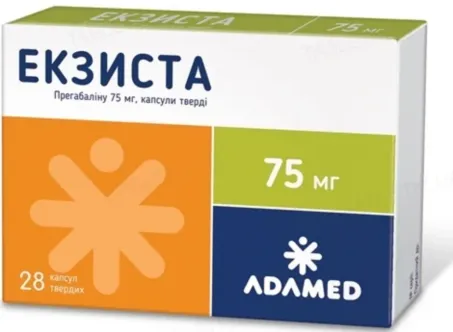
Table of Contents
INSTRUCTIONS FOR MEDICAL USE OF THE MEDICINAL PRODUCT Egzysta (Egzysta)
Composition:
Active substance: pregabalin;
1 capsule contains 75 mg, 150 mg, or 300 mg of pregabalin;
Excipients: lactose monohydrate, maize starch, talc;
capsule shell: iron oxide red (E 172), titanium dioxide (E 171), gelatin (for 75 mg and 300 mg capsules); titanium dioxide (E 171), gelatin (for 150 mg capsules).
Pharmaceutical form. Hard capsules.
Main physicochemical properties:
- 75 mg hard capsules: size 4 hard gelatin capsules, opaque red-brown cap, opaque white body with black imprint "75 mg", containing white or almost white powder;
- 150 mg hard capsules: size 2 hard gelatin capsules, opaque white cap and body, containing white or almost white powder;
- 300 mg hard capsules: size 0 hard gelatin capsules, opaque brown-red cap, opaque white body, containing white or almost white powder.
Pharmacotherapeutic group. Analgesics. Other analgesics and antipyretics. Gabapentinoids. Pregabalin. ATC code N02BF02.
Pharmacological Properties
Pharmacodynamics
The active substance is pregabalin, a gamma-aminobutyric acid analogue [(S)-3-(aminomethyl)-5-methylhexanoic acid].
Mechanism of action
Pregabalin binds to the α2–δ auxiliary subunit of voltage-dependent calcium channels in the central nervous system (CNS).
Clinical efficacy and safety
Neuropathic pain
The efficacy of the medicinal product has been demonstrated in clinical studies for the treatment of diabetic neuropathy, postherpetic neuralgia, and spinal cord injury. The efficacy of pregabalin in other types of neuropathic pain has not been studied.
Pregabalin was studied in 10 controlled clinical trials of up to 13 weeks' duration with a dosing regimen of twice daily, and in trials of up to 8 weeks' duration with a regimen of three times daily. Overall, safety and efficacy profiles for the twice-daily and three-times-daily regimens were similar.
In clinical trials of up to 12 weeks' duration in which the medicinal product was used for the treatment of neuropathic pain, reduction in peripheral and central pain was observed after the first week and persisted throughout the treatment period.
In controlled clinical trials of peripheral neuropathic pain, 35% of patients receiving pregabalin and 18% of patients receiving placebo experienced a 50% improvement on the pain rating scale. Among patients who did not experience somnolence, such improvement was observed in 33% of patients receiving pregabalin and 18% of patients receiving placebo. Among patients who experienced somnolopenia, the proportion of responders was 48% in the pregabalin group and 16% in the placebo group.
In a controlled clinical trial of central neuropathic pain, 22% of patients receiving pregabalin and 7% of patients receiving placebo experienced a 50% improvement on the pain rating scale.
Epilepsy
Adjunctive therapy. Pregabalin was studied in three controlled clinical trials of 12 weeks' duration with dosing regimens of twice daily or three times daily. Overall, safety and efficacy profiles for the twice-daily and three-times-daily regimens were similar.
Reduction in seizure frequency was observed as early as the first week.
Children. The efficacy and safety of pregabalin as adjunctive therapy in children under 12 years of age and adolescents have not been established. Adverse reactions observed in a pharmacokinetic and tolerability study involving patients aged 3 months to 16 years (n = 65) were similar to those in adults. Based on a 12-week placebo-controlled study involving 295 pediatric patients aged 4 to 16 years and a 14-day placebo-controlled study involving 175 pediatric patients aged 1 month to 4 years, evaluating the efficacy and safety of pregabalin as adjunctive therapy for partial seizures, as well as two open-label safety studies of 1 year's duration involving 54 and 431 pediatric patients aged 3 months to 16 years with epilepsy, adverse reactions such as pyrexia and upper respiratory tract infections occurred more frequently in children than in adult patients with epilepsy (see sections "Pharmacokinetics", "Dosage and administration", and "Adverse reactions").
In the 12-week placebo-controlled study, children (aged 4 to 16 years) were administered pregabalin at 2.5 mg/kg/day (maximum 150 mg/day), 10 mg/kg/day (maximum 600 mg/day), or placebo. At least a 50% reduction in partial seizures from baseline was observed in 40.6% of patients receiving pregabalin at 10 mg/kg/day (p = 0.0068 vs. placebo), 29.1% of patients receiving pregabalin at 2.5 mg/kg/day (p = 0.2600 vs. placebo), and 22.6% of those receiving placebo.
In the 14-day placebo-controlled study, pediatric patients (aged 1 month to <4 years) received pregabalin at 7 mg/kg/day, 14 mg/kg/day, or placebo. Mean seizure frequency over 24 hours at baseline and at the final visit was 4.7 and 3.8, respectively, with pregabalin 7 mg/kg/day; 5.4 and 1.4 with pregabalin 14 mg/kg/day; and 2.9 and 2.3 in the placebo group. Pregabalin at 14 mg/kg/day significantly reduced the logarithmically transformed seizure frequency compared to placebo (p = 0.0223); pregabalin at 7 mg/kg/day did not show improvement compared to placebo.
In a 12-week placebo-controlled study of patients with primary generalized tonic-clonic (PGTC) seizures, 219 patients aged 5 to 65 years (including 66 patients aged 5 to 16 years) received pregabalin at 5 mg/kg/day (maximum 300 mg/day), 10 mg/kg/day (maximum 600 mg/day), or placebo as adjunctive therapy. At least a 50% reduction in PGTC seizure frequency was observed in 41.3%, 38.9%, and 41.7% of patients receiving pregabalin at 5 mg/kg/day, pregabalin at 10 mg/kg/day, and placebo, respectively.
Monotherapy (for patients with newly diagnosed disease). Pregabalin was studied in one controlled clinical trial of 56 weeks' duration with a twice-daily dosing regimen. Pregabalin did not demonstrate non-inferiority compared to lamotrigine based on the 6-month endpoint assessment of seizure freedom. Pregabalin and lamotrigine were equally safe and well tolerated.
Generalized anxiety disorder
Pregabalin was studied in six controlled trials of 4–6 weeks' duration, one 8-week trial involving elderly patients, and one long-term relapse prevention study with a double-blind relapse prevention phase lasting 6 months.
Reduction in symptoms of generalized anxiety disorder according to the Hamilton Anxiety Rating Scale (HAM-A) was observed as early as week 1.
In controlled clinical trials (4–8 weeks' duration), 52% of patients receiving pregabalin and 38% of patients in the placebo group experienced at least a 50% improvement in total HAM-A score from baseline to endpoint.
During controlled trials, blurred vision was observed more frequently in patients receiving pregabalin than in those receiving placebo. In most cases, this effect resolved with continued therapy. Ophthalmological examinations (including visual acuity testing, formal visual field testing, and fundus examination with dilated pupils) were performed in over 3,600 patients in controlled clinical trials. Among these patients, visual acuity worsened in 6.5% of patients in the pregabalin group and 4.8% in the placebo group. Visual field changes were observed in 12.4% of patients receiving pregabalin and 11.7% of patients in the placebo group. Fundus changes were observed in 1.7% of patients receiving pregabalin and 2.1% of patients in the placebo group.
Fibromyalgia
The efficacy of pregabalin was established in one 14-week double-blind placebo-controlled multicenter trial (F1) and one 6-week randomized withdrawal trial (F2). These trials included patients diagnosed with fibromyalgia based on American College of Rheumatology criteria (widespread pain lasting at least 3 months and pain in at least 11 of 18 specific tender points). The trials demonstrated reduction in pain on the visual analog scale. Additional improvement was demonstrated by patient global assessment and fibromyalgia impact questionnaire.
Children. A 15-week placebo-controlled trial was conducted in 107 children aged 12–17 years with fibromyalgia, who received pregabalin at doses of 75–450 mg/day. The primary efficacy endpoint (change in overall pain intensity from baseline to week 15 measured on an 11-point rating scale) showed numerically greater improvement in patients receiving pregabalin compared to placebo, but this improvement did not reach statistical significance. The most common adverse reactions observed in clinical trials were dizziness, nausea, headache, weight gain, and fatigue. The overall safety profile in adolescents was similar to that in adults with fibromyalgia.
Pharmacokinetics
Pharmacokinetic parameters of pregabalin at steady state were similar in healthy volunteers, patients with epilepsy taking antiepileptic drugs, and patients with chronic pain.
Absorption
Pregabalin is rapidly absorbed after oral administration on an empty stomach and reaches maximum plasma concentration within 1 hour after single or multiple doses. The calculated oral bioavailability of pregabalin is ≥ 90% and is dose-independent. Steady-state concentrations are achieved within 24–48 hours with repeated administration. The rate of pregabalin absorption is reduced when taken with food, resulting in approximately a 25–30% reduction in maximum concentration (Cmax) and prolongation of time to maximum concentration (tmax) to approximately 2.5 hours. However, administration of pregabalin with food did not have a clinically significant effect on the extent of absorption.
Distribution
Preclinical studies have shown that pregabalin crosses the blood-brain barrier in mice, rats, and monkeys. It has been shown to cross the placenta in rats and to be excreted in rat milk during lactation. In humans, the volume of distribution of pregabalin after oral administration is approximately 0.56 L/kg. Pregabalin does not bind to plasma proteins.
Metabolism
In humans, pregabalin undergoes minimal metabolism. After administration of radiolabeled pregabalin, approximately 98% of the radioactivity was excreted in urine as unchanged pregabalin. The fraction of the N-methylated metabolite of pregabalin—the main metabolite—excreted in urine was 0.9% of the administered dose. Racemization of the S-enantiomer of pregabalin to the R-enantiomer did not occur during preclinical studies.
Pregabalin is eliminated from systemic circulation unchanged, primarily via the kidneys. The mean elimination half-life of pregabalin is 6.3 hours. Plasma and renal clearance of pregabalin are directly proportional to creatinine clearance (see subsection "Renal impairment" below).
Dose adjustment is required for patients with renal impairment or patients on hemodialysis (see table in section "Dosage and administration").
Linearity/Non-linearity
The pharmacokinetics of pregabalin are linear over the entire recommended dose range. The interpatient variability in pregabalin pharmacokinetics is low (< 20%). Pharmacokinetics after multiple doses are predictable based on data obtained after single-dose administration. Therefore, routine monitoring of plasma pregabalin concentrations is not necessary.
Gender
Clinical study results indicate no clinically significant effect of gender on plasma concentrations of pregabalin.
Renal impairment
Pregabalin clearance is directly proportional to creatinine clearance. In addition, pregabalin is effectively removed from plasma by hemodialysis (after 4 hours of hemodialysis, plasma pregabalin concentration decreases by approximately 50%). Since the drug is primarily eliminated by the kidneys, dose reduction is required for patients with renal impairment, and a supplemental dose should be administered after hemodialysis (see table in section "Dosage and administration").
Hepatic impairment
Specific pharmacokinetic studies in patients with hepatic impairment have not been conducted. Since pregabalin undergoes minimal metabolism and is excreted in urine predominantly unchanged, it is unlikely that hepatic impairment would have a significant effect on plasma concentrations of pregabalin.
Children
Pregabalin pharmacokinetics were evaluated in children with epilepsy (age groups: 1 to 23 months, 2 to 6 years, 7 to 11 years, and 12 to 16 years) receiving doses of 2.5 mg/kg/day, 5 mg/kg/day, 10 mg/kg/day, and 15 mg/kg/day in a pharmacokinetic and tolerability study.
After oral administration of pregabalin to children on an empty stomach, tmax in plasma was generally similar across all age groups and ranged from 0.5 to 2 hours after administration.
Cmax and area under the concentration-time curve (AUC) values of pregabalin increased linearly with dose in each age group. In children with body weight below 30 kg, AUC values were 30% lower, due to a 43% increase in body weight-adjusted clearance in these patients compared to patients with body weight ≥ 30 kg.
The terminal elimination half-life of pregabalin was approximately 3–4 hours in children under 6 years of age and 4–6 hours in children aged 7 years and older.
Population pharmacokinetic analysis showed that creatinine clearance was a significant covariate for oral pregabalin clearance, and body weight was a significant covariate for the apparent volume of distribution of oral pregabalin, and this relationship was similar in children and adult patients.
Pregabalin pharmacokinetics have not been studied in patients under 3 months of age (see sections "Pharmacodynamics", "Dosage and administration", and "Adverse reactions").
Elderly patients
Pregabalin clearance tends to decrease with age. This decrease in pregabalin clearance with oral administration is consistent with the age-related decline in creatinine clearance. Elderly patients with age-related renal impairment may require dose reduction of pregabalin (see table in section "Dosage and administration").
Lactation period
Pregabalin pharmacokinetics after administration at a dose of 150 mg every 12 hours (daily dose 300 mg) were evaluated in 10 breastfeeding women at least 12 weeks postpartum. Lactation did not affect or had minimal effect on pregabalin pharmacokinetics. Pregabalin passed into breast milk, with an average steady-state concentration approximately 76% of the maternal plasma concentration. The calculated infant dose received via breast milk (assuming average milk intake of 150 mL/kg/day) from a woman taking pregabalin at a daily dose of 300 mg or the maximum dose of 600 mg/day was 0.31 mg/kg/day or 0.62 mg/kg/day, respectively. This corresponds to approximately 7% of the total daily dose received by the mother, normalized to body weight.
Clinical Characteristics
Indications
Neuropathic pain. The medicinal product Exista is indicated for the treatment of peripheral or central neuropathic pain in adults.
Epilepsy. The medicinal product Exista is indicated in adults as adjunctive therapy for partial seizures, with or without secondary generalization.
Generalized anxiety disorder. The medicinal product Exista is indicated for the treatment of generalized anxiety disorder in adults.
Fibromyalgia.
Contraindications Hypersensitivity to the active substance or to any of the excipients listed in the section "Composition".
Interaction with other medicinal products and other forms of interaction
Since pregabalin is predominantly excreted unchanged in urine, undergoes negligible metabolism in humans (≤ 2% of the dose is excreted in urine as metabolites), does not inhibit the metabolism of other drugs in vitro, and does not bind to plasma proteins, it is unlikely that the medicinal product may cause or be subject to pharmacokinetic interactions.
In vivo studies and population pharmacokinetic analysis
In in vivo studies, no clinically significant pharmacokinetic interactions were observed between pregabalin and phenytoin, carbamazepine, valproic acid, lamotrigine, gabapentin, lorazepam, oxycodone, or ethanol. Population pharmacokinetic analysis demonstrated that oral antidiabetic agents, diuretics, insulin, phenobarbital, tiagabine, and topiramate have no clinically significant effect on pregabalin clearance.
Oral contraceptives norethisterone and/or ethinylestradiol
Concomitant administration of pregabalin with oral contraceptives containing norethisterone and/or ethinylestradiol does not affect the steady-state pharmacokinetics of either agent.
Medicinal products affecting the CNS
Pregabalin may potentiate the effects of ethanol and lorazepam. During post-marketing surveillance, cases of respiratory depression, coma, and fatal outcomes have been reported in patients taking pregabalin concomitantly with opioids and/or other medicinal products that depress CNS function. Pregabalin is likely to enhance cognitive and basic motor function impairment caused by oxycodone.
Interactions in elderly patients
No specific pharmacodynamic interaction studies involving elderly volunteers have been conducted. Drug interaction studies have been performed only in adult patients.
Special precautions for use
Patients with diabetes
According to current clinical practice, some patients with diabetes who experience weight gain during pregabalin therapy may require adjustment of their antidiabetic medication doses.
Hypersensitivity reactions
Post-marketing reports have described hypersensitivity reactions, including angioedema. If symptoms of angioedema such as facial swelling, perioral swelling, or upper airway swelling occur, pregabalin should be discontinued immediately.
Serious skin reactions
Rare cases of serious skin reactions, including Stevens–Johnson syndrome and toxic epidermal necrolysis, have been reported during treatment with pregabalin, which may be life-threatening or fatal. Patients should be informed about the possible signs of these reactions, and skin condition should be closely monitored. If signs or symptoms suggestive of serious skin reactions occur, pregabalin should be discontinued immediately and alternative treatment considered (if necessary).
Dizziness, somnolence, loss of consciousness, confusion, and psychiatric disturbances
Pregabalin use has been associated with dizziness and somnolence, which may increase the risk of accidental injuries (e.g., falls) in elderly patients. Post-marketing reports have also described cases of loss of consciousness, confusion, and psychiatric disturbances. Therefore, patients should be advised to exercise caution until they are aware of the potential effects of this medicinal product.
Visual disorders
During controlled clinical trials, blurred vision was reported more frequently in patients receiving pregabalin than in those receiving placebo. This effect usually resolved with continued therapy. In clinical studies involving ophthalmological examinations, the incidence of decreased visual acuity and visual field changes was higher in patients receiving pregabalin compared to those in the placebo group; however, the incidence of fundus changes was higher in the placebo group (see section "Pharmacodynamics").
Post-marketing reports have also described ocular adverse reactions, including vision loss, blurred vision, or other changes in visual acuity, many of which were transient. These ocular symptoms may resolve or diminish after discontinuation of pregabalin.
Renal impairment
Cases of renal impairment, sometimes reversible after discontinuation of pregabalin, have been reported.
Discontinuation of concomitant antiepileptic drugs
There is insufficient data on whether concomitant antiepileptic drugs can be discontinued after seizure control has been achieved with the addition of pregabalin, to switch to pregabalin monotherapy.
Heart failure
Post-marketing cases of congestive heart failure have been reported in some patients taking pregabalin. This reaction was mostly observed during treatment of neuropathic pain in elderly patients with pre-existing cardiovascular disorders. Pregabalin should be used with caution in such patients. This condition may resolve after discontinuation of pregabalin.
Treatment of central neuropathic pain due to spinal cord injury
When treating central neuropathic pain due to spinal cord injury, the overall incidence of adverse reactions, particularly those affecting the central nervous system (especially somnolence), increases. This may be related to additive effects of concomitant medications (e.g., antispastic agents) required for the management of this condition. This should be taken into account when prescribing pregabalin for this indication.
Respiratory depression
Severe respiratory depression has been reported with the use of pregabalin. Patients with respiratory disorders, respiratory or neurological diseases, renal impairment, those taking concomitant CNS depressants, and elderly patients are at higher risk of developing this serious adverse reaction. Such patients may require dose adjustments.
Suicidal thoughts
Cases of suicidal ideation and behavior have been reported in patients receiving antiepileptic drugs for various indications. A meta-analysis of data from randomized, placebo-controlled antiepileptic drug trials also showed a small increased risk of suicidal thoughts and behavior. The mechanism of this risk is unknown, and available data do not exclude a potential increased risk with pregabalin use.
Post-marketing reports have described cases of suicidal ideation and behavior in patients receiving pregabalin (see section "Adverse reactions"). An epidemiological study using a self-controlled design (comparing treatment periods with non-treatment periods within individual patients) demonstrated an increased risk of new-onset suicidal behavior and fatal outcomes due to suicide in patients receiving pregabalin.
Patients (and caregivers) should seek medical help if signs of suicidal thoughts or behavior emerge. In such cases, close monitoring of the patient should be ensured, and appropriate treatment considered. In cases of suicidal ideation or behavior, the need for discontinuation of pregabalin therapy should also be evaluated.
Worsening of lower gastrointestinal tract function
Post-marketing reports have described events related to impaired lower gastrointestinal tract function (intestinal obstruction, paralytic ileus, constipation) with pregabalin use, particularly when used concomitantly with medications that may cause constipation, such as opioid analgesics. When pregabalin is used concomitantly with opioids, preventive measures for constipation should be implemented (especially in women and elderly patients).
Concomitant use with opioid medications
Caution is recommended when prescribing pregabalin concomitantly with opioids due to the risk of CNS depression (see section "Interaction with other medicinal products and other forms of interaction"). In a case-control study among individuals taking opioids, the risk of opioid-related death was higher in patients receiving pregabalin in addition to an opioid compared to those taking opioids alone (adjusted odds ratio [aOR] 1.68; 95% confidence interval [CI] 1.19–2.36). This increased risk was observed at low pregabalin doses (≤ 300 mg: aOR 1.52; 95% CI 1.04–2.22), with a trend toward higher risk at higher doses (> 300 mg: aOR 2.55; 95% CI 1.24–5.06).
Misuse, abuse, or dependence
Pregabalin may cause drug dependence, which can occur even at therapeutic doses. Cases of abuse and misuse have been reported. Patients with a history of substance abuse are at higher risk of misuse, abuse, and dependence, and pregabalin should be used with caution in such patients. The risk of misuse, abuse, or dependence should be carefully assessed before prescribing pregabalin.
Patients receiving pregabalin should be monitored for signs of misuse, abuse, or dependence, such as development of tolerance, dose escalation, or drug-seeking behavior.
Withdrawal symptoms
Withdrawal symptoms have been observed in some patients after discontinuation of short-term or long-term pregabalin therapy. Reported events include insomnia, headache, nausea, anxiety, diarrhea, flu-like symptoms, restlessness, depression, suicidal thoughts, pain, seizures, hyperhidrosis, and dizziness, which may indicate drug dependence. The occurrence of withdrawal symptoms after stopping pregabalin may indicate drug dependence (see section "Adverse reactions"). This information should be communicated to patients prior to starting therapy.
If pregabalin therapy needs to be discontinued, it is recommended to do so gradually over at least one week, regardless of the indication (see section "Dosage and administration").
Seizures, including status epilepticus and generalized seizures, may occur during pregabalin therapy or shortly after its discontinuation.
Data on discontinuation after long-term use suggest that the frequency and severity of withdrawal symptoms may depend on the dose.
Encephalopathy
Cases of encephalopathy have been reported with pregabalin use, primarily in patients with concomitant conditions that may predispose to encephalopathy.
Women of childbearing potential / contraception
Use of the medicinal product Exista during the first trimester of pregnancy may cause serious congenital malformations in the fetus. Pregabalin should not be used during pregnancy unless the expected benefit to the mother clearly outweighs the potential risk to the fetus. Women of childbearing potential should use effective contraception during treatment.
Lactose intolerance
Exista contains lactose. This medicinal product should not be administered to patients with rare hereditary conditions such as galactose intolerance, lactase deficiency, or glucose-galactose malabsorption syndrome.
Use during pregnancy or breastfeeding
Women of childbearing potential / contraception
Since the potential risk in humans is unknown, women of childbearing potential should use effective contraception during treatment with pregabalin.
Pregnancy
Animal studies have shown reproductive toxicity. Pregabalin has been shown to cross the placenta in rats (see section "Pharmacokinetics"). Pregabalin may cross the human placenta.
Data from a Scandinavian observational study involving over 2,700 pregnant women who took pregabalin during the first trimester of pregnancy showed a higher prevalence of major congenital malformations among the pediatric population (live-born or stillborn infants) in the pregabalin group compared to the non-exposed group (5.9% vs. 4.1%). The risk of congenital malformations in children whose mothers took pregabalin during the first trimester was slightly higher compared to the non-exposed group (adjusted prevalence ratio 1.14, 95% CI: 0.96–1.35), as well as compared to the lamotrigine (1.29, 1.01–1.65) or duloxetine (1.39, 1.07–1.82) groups. Analysis of specific malformations showed an increased risk of nervous system, eye, orofacial clefts, urinary tract, and genital organ malformations, although the number of cases was small and statistical estimates imprecise.
The medicinal product should not be used during pregnancy unless clearly necessary (i.e., only when the expected benefit to the mother clearly outweighs the potential risk to the fetus).
Breastfeeding period
A small amount of pregabalin has been detected in human breast milk. Therefore, women should be advised that breastfeeding is not recommended during pregabalin treatment.
Fertility
There are no clinical data on the effect of pregabalin on female fertility.
In a clinical study evaluating the effect of pregabalin on sperm motility, healthy male volunteers received pregabalin 600 mg daily. After 3 months of treatment, no effect on sperm motility was observed.
In fertility studies in rats, adverse effects on reproductive function in females and on reproductive function and development in males were observed. The clinical relevance of these findings is unknown.
Ability to affect reaction speed when driving or operating machinery
Exista may have a slight or moderate influence on the ability to drive or operate machinery. The medicinal product may cause dizziness and somnolence and thereby affect the ability to drive or operate machinery. Therefore, patients should be advised to refrain from driving, operating complex machinery, or engaging in other potentially hazardous activities until they know how this medicinal product affects their ability to perform such activities.
Method of Administration and Dosage
Method of Administration
The medicinal product Exista is intended for oral use only.
This medicinal product may be taken independently of food intake.
Dosage
The dose range of the drug may vary between 150–600 mg per day. The daily dose should be divided into 2 or 3 doses.
Neuropathic Pain
Treatment with pregabalin may be initiated at a dose of 150 mg per day, divided into 2 or 3 doses. Depending on individual response and tolerability, the dose may be increased to 300 mg per day after 3–7 days, and if necessary, to the maximum dose of 600 mg per day after another 7 days.
Epilepsy
Treatment with pregabalin may be initiated at a dose of 150 mg per day, divided into 2 or 3 doses. Depending on individual response and tolerability, the dose may be increased to 300 mg per day after the first week of treatment. After another week, the dose may be further increased to the maximum of 600 mg per day.
Generalized Anxiety Disorder
The dose, divided into 2 or 3 doses, may range between 150–600 mg per day. The need for continued therapy should be periodically reviewed.
Treatment with pregabalin may be initiated at a dose of 150 mg per day. Depending on individual response and tolerability, the dose may be increased to 300 mg per day after the first week of treatment. After another week of treatment, the dose may be increased to 450 mg per day. After an additional week, the dose may be increased to the maximum of 600 mg per day.
Fibromyalgia
The recommended dose of the drug for the treatment of fibromyalgia ranges from 300 mg to 450 mg per day. Treatment should be initiated at a dose of 75 mg twice daily (150 mg per day). Depending on efficacy and tolerability, the dose may be increased to 150 mg twice daily (300 mg per day) within one week. For patients in whom a dose of 300 mg per day is insufficiently effective, the dose may be increased to 225 mg twice daily (450 mg per day). Although a study evaluated a dose of 600 mg per day, there is no evidence that this dose provides additional benefit; moreover, it was less well tolerated. Due to dose-dependent adverse reactions, doses exceeding 450 mg per day are not recommended. Since the medicinal product Exista is primarily eliminated via the kidneys, dosage adjustment is required in patients with renal impairment.
Discontinuation of Pregabalin
According to current clinical practice, pregabalin therapy should be discontinued gradually over a period of at least one week, regardless of the indication.
Renal Impairment
Pregabalin is eliminated from systemic circulation unchanged, primarily via the kidneys. Since pregabalin clearance is directly proportional to creatinine clearance (see section "Pharmacokinetics"), dosage reduction in patients with renal impairment should be individualized as indicated in the table, based on creatinine clearance (CLcr) calculated using the formula:

Pregabalin is effectively removed from plasma by hemodialysis (50% of the drug within 4 hours). For patients undergoing hemodialysis, the daily dose of pregabalin should be adjusted according to renal function. In addition to the daily dose, an extra dose of the drug should be administered immediately after each 4-hour hemodialysis session (see table).
Table
Dosage Adjustment of Pregabalin According to Renal Function
| Creatinine clearance (CLcr) (mL/min) |
Total daily dose of pregabalin * |
Dosing regimen |
|
| Initial dose (mg/day) |
Maximum dose (mg/day) |
||
| ≥ 60 |
150 |
600 |
2 or 3 times daily |
| ≥ 30 – < 60 |
75 |
300 |
2 or 3 times daily |
| ≥ 15 – < 30 |
25**–50** |
150 |
1 or 2 times daily |
| < 15 |
25** |
75 |
Once daily |
| Additional dose after hemodialysis (mg) |
|||
| 25** |
100 |
Single dose+ |
|
* The total daily dose (mg per day) should be divided into several doses according to the dosing regimen to obtain the single dose amount (mg/dose).
- Additional dose refers to an extra single dose.
** to allow for dose adjustment, use alternative medicinal products at the appropriate dose
Hepatic impairment
Dose adjustment is not required in patients with hepatic dysfunction (see section "Pharmacokinetics").
Elderly patients (aged 65 years and older)
Elderly patients may require a reduced dose of pregabalin due to impaired renal function (see section "Special precautions for use").
Children
The safety and efficacy of the medicinal product Exista in children (under 18 years of age) have not been established. Currently available information is presented in the section "Adverse reactions" as well as in the sections "Pharmacodynamics" and "Pharmacokinetics", but it is insufficient to provide dosing recommendations for this patient population.
Overdose
Following marketing of the drug, the most commonly reported adverse reactions associated with pregabalin overdose have been somnolence, confusion, agitation, and restlessness. Seizures have also been observed.
Coma has been reported rarely.
Treatment of pregabalin overdose consists of general supportive measures; hemodialysis may be required if necessary (see the table in the section "Dosage and administration").
Adverse Reactions
In the clinical development program for pregabalin, more than 8,900 patients received the drug, of whom 5,600 participated in double-blind, placebo-controlled trials. The most commonly reported adverse reactions were dizziness and somnolence. Adverse reactions were generally mild to moderate in severity. In all controlled trials, the discontinuation rate due to adverse reactions was 12% among patients receiving pregabalin and 5% among those receiving placebo. The most common adverse reactions leading to discontinuation of pregabalin were dizziness and somnolence.
Below are listed all adverse reactions occurring more frequently than with placebo and in more than one patient. These adverse reactions are categorized by system organ class and frequency: very common (≥ 1/10); common (≥ 1/100 to < 1/10); uncommon (≥ 1/1,000 to < 1/100); rare (≥ 1/10,000 to < 1/1,000); very rare (< 1/10,000); frequency not known (cannot be estimated from available data). Within each frequency grouping, adverse reactions are listed in order of decreasing severity.
The adverse reactions listed may also be related to the underlying disease and/or concomitant use of other medicinal products.
During treatment of central neuropathic pain due to spinal cord injury, the overall frequency of adverse reactions increased, particularly CNS-related adverse reactions, especially somnolence (see section "Special Warnings and Precautions for Use").
Additional adverse reactions reported after marketing authorization are listed below and indicated in italics.
Infections and infestations
Common: nasopharyngitis.
Blood and lymphatic system disorders
Uncommon: neutropenia.
Immune system disorders
Uncommon: hypersensitivity.
Rare: angioedema, allergic reactions, anaphylactoid reactions.
Metabolism and nutrition disorders
Common: increased appetite.
Uncommon: loss of appetite, hypoglycemia.
Psychiatric disorders
Common: euphoric mood, confusion, irritability, disorientation, insomnia, decreased libido.
Uncommon: hallucinations, panic attacks, restlessness, agitation, depression, depressed mood, elevated mood, aggression, mood alterations, depersonalization, difficulty in finding words, pathological dreams, increased libido, anorgasmia, apathy.
Rare: disinhibition, suicidal behaviour, suicidal ideation.
Frequency not known: drug dependence.
Nervous system disorders
Very common: dizziness, somnolence, headache.
Common: ataxia, coordination impairment, tremor, dysarthria, amnesia, memory impairment, attention disturbance, paresthesia, hypesthesia, sedation, balance disorder, lethargy.
Uncommon: syncope, stupor, myoclonus, loss of consciousness, psychomotor hyperactivity, dyskinesia, postural dizziness, intention tremor, nystagmus, cognitive disorder, mental impairment, speech disorder, hyporeflexia, hyperesthesia, burning sensation, ageusia, malaise, apathy, perioral paresthesia, myoclonus.
Rare: convulsions, parosmia, hypokinesia, dysphagia, hypalgesia, dependence, cerebellar syndrome, cogwheel syndrome, coma, delirium, encephalopathy, extrapyramidal disorder, Guillain-Barré syndrome, intracranial hypertension, manic reactions, paranoid reactions, sleep disorders, parkinsonism.
Eye disorders
Common: blurred vision, diplopia, conjunctivitis.
Uncommon: peripheral vision loss, visual disturbance, eye swelling, visual field defects, reduced visual acuity, eye pain, asthenopia, photopsia, dry eyes, increased lacrimation, eye irritation, blepharitis, accommodation disorder, eye hemorrhage, photophobia, retinal edema.
Rare: vision loss, keratitis, oscillopsia, altered depth perception, mydriasis, strabismus, visual brightness, anisocoria, corneal ulcer, exophthalmos, oculomotor nerve paralysis, iritis, keratoconjunctivitis, miosis, night blindness, ophthalmoplegia, optic nerve atrophy, optic disc edema, ptosis, uveitis.
Ear and labyrinth disorders
Common: vertigo.
Uncommon: hyperacusis.
Cardiac disorders
Uncommon: tachycardia, first-degree atrioventricular block, sinus bradycardia, congestive heart failure.
Rare: QT interval prolongation, sinus tachycardia, sinus arrhythmia.
Vascular disorders
Uncommon: hypotension, hypertension, flushing, hyperemia, cold extremities.
Respiratory, thoracic and mediastinal disorders
Common: pharyngolaryngeal pain.
Uncommon: dyspnea, epistaxis, cough, nasal congestion, rhinitis, snoring, dryness of nasal mucosa.
Rare: pulmonary edema, throat tightness, laryngospasm, apnea, atelectasis, bronchiolitis, hiccup, pulmonary fibrosis, yawning.
Frequency not known: respiratory depression.
Gastrointestinal disorders
Common: vomiting, nausea, constipation, diarrhea, flatulence, abdominal distension, dry mouth, gastroenteritis.
Uncommon: gastroesophageal reflux disease, hypersalivation, oral hypoaesthesia, cholecystitis, cholelithiasis, colitis, gastrointestinal hemorrhage, melena, tongue swelling, rectal bleeding.
Rare: ascites, pancreatitis, tongue swelling, dysphagia, aphthous stomatitis, esophageal ulcer, periodontal abscess.
Hepatobiliary disorders
Uncommon: increased liver enzymes*.
Rare: jaundice.
Very rare: liver failure, hepatitis.
Skin and subcutaneous tissue disorders
Common: pressure ulcers.
Uncommon: papular rash, urticaria, hyperhidrosis, pruritus, alopecia, dry skin, eczema, hirsutism, skin ulcers, vesiculobullous rash.
Rare: Stevens-Johnson syndrome, cold sweat, exfoliative dermatitis, lichenoid dermatitis, melanosis, nail disorders, petechial rash, purpura, pustular rash, skin atrophy, skin necrosis, skin and subcutaneous nodules, toxic epidermal necrolysis.
Musculoskeletal and connective tissue disorders
Common: muscle cramps, arthralgia, back pain, limb pain, neck muscle spasms.
Uncommon: joint swelling, myalgia, muscle twitching, neck pain, muscle stiffness.
Rare: rhabdomyolysis.
Renal and urinary disorders
Uncommon: urinary incontinence, dysuria, albuminuria, hematuria, kidney stone formation, nephritis.
Rare: renal failure, oliguria, urinary retention, acute renal failure, glomerulonephritis, pyelonephritis.
Reproductive system and breast disorders
Common: erectile dysfunction, impotence.
Uncommon: sexual dysfunction, ejaculation delay, dysmenorrhea, breast pain, leukorrhea, menorrhagia, metrorrhagia.
Rare: amenorrhea, galactorrhea, breast enlargement, gynecomastia, cervicitis, balanitis, epididymitis.
General disorders and administration site conditions
Common: peripheral edema, edema, gait disturbance, fall, feeling drunk, unusual sensations, fatigue.
Uncommon: generalized edema, facial edema, chest tightness, pain, hot flush, thirst, chills, generalized weakness, malaise, abscess, lipodermatitis, photosensitivity reactions.
Rare: granuloma, self-injurious behavior, retroperitoneal fibrosis, shock.
Investigations
Common: weight increased.
Uncommon: increased blood creatine phosphokinase, increased blood glucose, decreased platelet count, increased blood creatinine, decreased blood potassium, weight decreased.
Rare: decreased white blood cell count.
* Increased alanine aminotransferase (ALT) and increased aspartate aminotransferase (AST).
In some patients, withdrawal symptoms have been observed after discontinuation of short-term or long-term pregabalin therapy. Reported reactions include insomnia, headache, nausea, anxiety, diarrhea, flu-like symptoms, convulsions, restlessness, depression, suicidal thoughts, pain, hyperhidrosis, and dizziness, indicating physical dependence. This information should be communicated to the patient prior to starting therapy.
Data on discontinuation of long-term pregabalin use suggest that the frequency and severity of withdrawal symptoms may be dose-dependent.
Paediatric population. The safety profile of pregabalin established in five studies involving children with partial seizures, with or without secondary generalization (a 12-week efficacy and safety study in patients aged 4 to 16 years, n = 295; a 14-day efficacy and safety study in patients aged 1 month to <4 years, n = 175; a pharmacokinetic and tolerability study, n = 65; two open-label, 1-year safety studies, n = 54 and n = 431), was similar to that observed in adult epilepsy studies. The most commonly reported adverse events in the 12-week pregabalin treatment study were somnolence, fever, upper respiratory tract infections, increased appetite, weight gain, and nasopharyngitis (see sections "Pharmacodynamics", "Pharmacokinetics", and "Dosage and Administration").
Reporting suspected adverse reactions
Reporting of suspected adverse reactions after marketing authorization is important. It allows continued monitoring of the benefit-risk balance of the medicinal product. Healthcare professionals and patients, or their legal representatives, are encouraged to report all suspected adverse reactions and lack of efficacy via the Automated Pharmacovigilance Information System at: https://aisf.dec.gov.ua.
Shelf life. 3 years.
Storage conditions. Store in the original packaging at a temperature not exceeding 30 °C.
Packaging
For 75 mg and 150 mg capsules — 14 capsules in a blister, 2 or 4 blisters per cardboard box.
For 300 mg capsules — 14 capsules in a blister, 2 blisters per cardboard box.
Prescription status. Prescription only.
Manufacturer. Adamed Pharma S.A., Poland.
Manufacturer's address and location of its operations
ul. marsz. J. Pilsudskiego 5, 95–200, Pabianice, Poland.