Exib®
Ukraine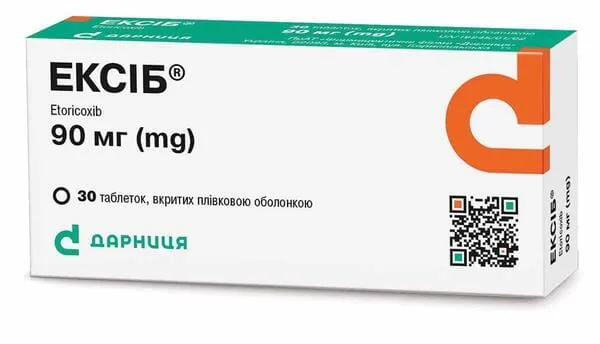
Table of Contents
INSTRUCTION FOR MEDICAL USE OF THE MEDICINAL PRODUCT EXXIB®
Composition:
Active substance: etoricoxib;
One film-coated tablet contains etoricoxib 60 mg, 90 mg, or 120 mg;
Excipients: calcium hydrogen phosphate, microcrystalline cellulose, sodium croscarmellose, crospovidone, sodium stearyl fumarate, talc, Opadry II 85F green – for 60 mg and 120 mg tablets, Opadry II 85F white – for 90 mg tablets.
Pharmaceutical form. Film-coated tablets.
Main physicochemical properties:
60 mg tablets: round, biconvex film-coated tablets of dark green color.
90 mg tablets: round, biconvex film-coated tablets of white or almost white color.
120 mg tablets: round, biconvex film-coated tablets of light green color.
Pharmacotherapeutic group. Nonsteroidal anti-inflammatory and antirheumatic agents. Coxibs. ATC code M01AH05.
Pharmacological Properties
Pharmacodynamics
Mechanism of Action
Etoricoxib is an oral selective inhibitor of cyclooxygenase-2 (COX-2) within the clinical dose range.
In clinical pharmacological studies, etoricoxib dose-dependently inhibited COX-2 without inhibiting cyclooxygenase-1 (COX-1) when administered at doses up to 150 mg per day. Etoricoxib does not inhibit gastric prostaglandin synthesis and does not affect platelet function.
Cyclooxygenase is responsible for the production of prostaglandins. Two isoforms have been identified – COX-1 and COX-2. COX-2 is the inducible isoform of the enzyme triggered by inflammatory stimuli and is considered the primary factor responsible for the synthesis of prostanoic mediators of pain, inflammation, and fever. COX-2 is also involved in ovulation, implantation, and closure of the arterial duct, regulation of kidney function and the central nervous system (fever induction, pain perception, cognitive function). It may also participate in the process of ulcer healing. COX-2 has been identified in tissue surrounding gastric ulcers in humans, but its significance for ulcer healing has not been established.
Efficacy
In patients with osteoarthritis, etoricoxib 60 mg once daily significantly improved pain symptoms and patient assessment of disease status. These positive effects were observed as early as day 2 of treatment and persisted throughout the treatment period up to 52 weeks. In studies using etoricoxib 30 mg once daily, the efficacy of this agent exceeded that of placebo over a 12-week treatment period (using the same assessment criteria as in other studies). In a dose-finding study, etoricoxib 60 mg demonstrated significantly greater improvement compared to 30 mg in all three primary endpoints after 6 weeks of treatment. The 30 mg dose has not been studied in hand osteoarthritis.
In patients with rheumatoid arthritis, etoricoxib 60 mg and 90 mg once daily significantly improved pain intensity, inflammation, and joint mobility. In studies evaluating the 60 mg and 90 mg doses, the positive effect was maintained over the 12-week treatment period. In a study comparing the 60 mg and 90 mg doses, both etoricoxib regimens – 60 mg once daily and 90 mg once daily – were more effective than placebo. The 90 mg dose was more effective than the 60 mg dose according to the Patient's Global Assessment of Pain (0–100 mm visual analog scale), with a mean improvement of 2.71 mm (95% CI: -4.98 mm, -0.45 mm).
In patients with acute gouty arthritis attacks, etoricoxib 120 mg once daily for 8 days reduced moderate to severe joint pain and inflammation compared to indomethacin 50 mg three times daily. Reduction in pain intensity was observed as early as 4 hours after initiation of treatment.
In patients with ankylosing spondylitis, etoricoxib 90 mg once daily provided significant improvement in back pain, inflammation, stiffness, and improved functional capacity. Clinical benefits of etoricoxib were observed on day 2 of therapy and persisted throughout the 52-week treatment period. In a second dose-comparison study evaluating 60 mg versus 90 mg, etoricoxib 60 mg once daily and 90 mg once daily demonstrated similar efficacy compared to naproxen 1000 mg daily. In patients who did not show an adequate response during 60 mg daily treatment over 6 weeks, increasing the dose to 90 mg daily improved assessment of back pain intensity (0–100 mm visual analog scale) compared to continuing 60 mg daily, with a mean improvement of -2.70 mm (95% CI: -4.88 mm, -0.52 mm).
In a clinical study of postoperative dental pain, etoricoxib 90 mg once daily was administered for up to three days. In the subgroup of patients with moderate baseline pain, etoricoxib 90 mg demonstrated analgesic efficacy similar to ibuprofen 600 mg (16.11 vs 16.39; P = 0.722) and superior to that of acetaminophen/codeine 600 mg/60 mg (11.00; P < 0.001) and placebo (6.84; P < 0.001), as measured by the Total Pain Relief over 6 hours (TOPAR6). The proportion of patients reporting use of rescue analgesics within 24 hours was 40.8% in the etoricoxib 90 mg group, 25.5% in the ibuprofen 600 mg every 6 hours group, and 46.7% in the acetaminophen/codeine 600 mg/60 mg every 6 hours group, compared to 76.2% of patients receiving placebo. In this study, the onset of analgesic action (perceptible pain relief) with 90 mg etoricoxib occurred as early as 28 minutes after dosing.
Safety
Medial: A Long-term Safety Study Program of Etoricoxib and Diclofenac in Arthritis
The MEDAL program was a prospectively designed safety outcomes program evaluating cardiovascular safety based on combined data from three randomized, double-blind, active comparator-controlled trials (the MEDAL, EDGE II, and EDGE studies).
In the MEDAL study, designed to assess cardiovascular effects, 17,804 patients with osteoarthritis and 5,700 with rheumatoid arthritis received either etoricoxib 60 mg (for osteoarthritis) or 90 mg (for both osteoarthritis and rheumatoid arthritis) or diclofenac 150 mg daily for a mean duration of 20.3 months (maximum 42.3 months, median 21.3 months). In this study, only serious adverse reactions and treatment discontinuations due to any adverse reactions were recorded.
The EDGE and EDGE II studies compared gastrointestinal tolerability of etoricoxib and diclofenac. The EDGE study included 7,111 patients with osteoarthritis receiving etoricoxib 90 mg daily (1.5 times the recommended dose for osteoarthritis treatment) or diclofenac 150 mg daily for a mean duration of 9.1 months (maximum 16.6 months, median 11.4 months). The EDGE II study included 4,086 patients with rheumatoid arthritis receiving etoricoxib 90 mg daily or diclofenac 150 mg daily for a mean duration of 19.2 months (maximum 33.1 months, median 24 months).
The combined MEDAL program included 34,701 patients with osteoarthritis and rheumatoid arthritis treated for a mean duration of 17.9 months (maximum 42.3 months, median 16.3 months); approximately 12,800 patients received treatment for more than 24 months. Patients enrolled in this program had varying baseline cardiovascular and gastrointestinal (GI) risk factors. Patients with recent myocardial infarction, coronary artery bypass grafting, or percutaneous coronary intervention within 6 months prior to study enrollment were excluded. The use of gastroprotective agents and low-dose acetylsalicylic acid was permitted in the studies.
Overall Safety
There were no significant differences in the frequency of thrombotic cardiovascular events between etoricoxib and diclofenac. Cardiorenal adverse reactions were observed more frequently with etoricoxib than with diclofenac; this effect was dose-dependent (see detailed results below). Adverse reactions involving the gastrointestinal tract and liver occurred significantly more frequently with diclofenac than with etoricoxib. The frequency of adverse reactions in the EDGE and EDGE II studies, as well as serious adverse reactions or those leading to study drug discontinuation in the MEDAL study, was higher with etoricoxib than with diclofenac.
Cardiovascular Safety
The incidence of confirmed serious thrombotic cardiovascular adverse events (including cardiac events, cerebrovascular events, and peripheral vascular events) was compared between etoricoxib and diclofenac (data summarized in Table 1). There were no significant differences in the rates of thrombotic complications between etoricoxib and diclofenac across all analyzed subgroups, including patients with cardiovascular risk. When analyzed separately, the relative risk of confirmed serious thrombotic cardiovascular adverse events with etoricoxib 60 mg or 90 mg versus diclofenac 150 mg was similar.
Table 1
Incidence of Confirmed Thrombotic Cardiovascular Events (Combined MEDAL Program)
| Complications |
Etoricoxib (N=16819) 25836 patient-years |
Diclofenac (N=16483) 24766 patient-years |
Comparison between treatment groups |
|||
| Incidence rate† (95% CI) |
Incidence rate† (95% CI) |
Relative risk (95% CI) |
||||
| Confirmed serious thrombotic cardiovascular adverse events |
||||||
| Per protocol |
1.24 (1.11; 1.38) |
1.30 (1.17; 1.45) |
0.95 (0.81; 1.11) |
|||
| Intention-to-treat |
1.25 (1.14; 1.36) |
1.19 (1.08; 1.30) |
1.05 (0.93; 1.19) |
|||
| Confirmed cardiac complications |
||||||
| Per protocol |
0.71 (0.61; 0.82) |
0.78 (0.68; 0.90) |
0.90 (0.74; 1.10) |
|||
| Intention-to-treat |
0.69 (0.61; 0.78) |
0.70 (0.62; 0.79) |
0.99 (0.84; 1.17) |
|||
| Confirmed cerebrovascular complications |
||||||
| Per protocol |
0.34 (0.28; 0.42) |
0.32 (0.25; 0.40) |
1.08 (0.80; 1.46) |
|||
| Intention-to-treat |
0.33 (0.28; 0.39) |
0.29 (0.24; 0.35) |
1.12 (0.87; 1.44) |
|||
| Confirmed peripheral vascular complications |
||||||
| Per protocol |
0.20 (0.15; 0.27) |
0.22 (0.17; 0.29) |
0.92 (0.63; 1.35) |
|||
| Intention-to-treat |
0.24 (0.20; 0.30) |
0.23 (0.18; 0.28) |
1.08 (0.81; 1.44) |
|||
| †Events per 100 patient-years; CI – confidence interval. N – total number of patients in the per-protocol population. Per protocol: all complications during the study therapy or within 14 days after its discontinuation (except patients who took < 75% of the study drug or used non-study nonsteroidal anti-inflammatory drugs (NSAIDs) for > 10% of the total period). Intention-to-treat: all confirmed complications up to the end of the study (including patients who may have received interventions unrelated to the study, followed by discontinuation of the study drug). Total number of randomized patients: 17412 in the etoricoxib group and 17289 in the diclofenac group. |
||||||
The cardiovascular mortality rate, as well as overall mortality, was similar in the etoricoxib and diclofenac treatment groups.
Cardiorenal complications
Approximately 50% of patients enrolled in the MEDAL study had a history of arterial hypertension at baseline. In this study, the rate of treatment discontinuation due to adverse reactions related to arterial hypertension was statistically significantly higher in the etoricoxib group than in the diclofenac group. The frequency of the adverse reaction "congestive heart failure" (treatment discontinuation and serious events) was similar with etoricoxib 60 mg and diclofenac 150 mg; however, the frequency of these events was higher with etoricoxib 90 mg compared to diclofenac 150 mg (statistically significant difference with etoricoxib 90 mg compared to diclofenac 150 mg in the OA MEDAL group). The frequency of confirmed adverse reactions related to congestive heart failure (events that were serious and required hospitalization or emergency care) was slightly higher with etoricoxib compared to diclofenac 150 mg, and this effect was dose-dependent. The rate of treatment discontinuation due to adverse reactions related to edema was significantly higher with etoricoxib compared to diclofenac 150 mg, and this effect was dose-dependent (statistically significant difference with etoricoxib 90 mg, but not with etoricoxib 60 mg).
Cardiorenal outcomes observed in the EDGE and EDGE II studies were consistent with data reported in the MEDAL study.
In individual studies of the MEDAL program, the absolute frequency of treatment discontinuation in any etoricoxib treatment group (60 mg or 90 mg) was up to 2.6% for arterial hypertension, up to 1.9% for edema, and up to 1.1% for congestive heart failure, with a higher frequency of drug discontinuation observed with etoricoxib 90 mg compared to 60 mg.
Gastrointestinal tolerability results in the MEDAL program
A significantly lower rate of treatment discontinuation due to any clinical gastrointestinal (GI) complications (e.g., dyspepsia, abdominal pain, ulcer) was observed with etoricoxib compared to diclofenac in each of the three MEDAL program studies. The rates of treatment discontinuation due to clinical GI reactions per 100 patient-years over the entire study period were as follows: 3.23 for etoricoxib and 4.96 for diclofenac in the MEDAL study; 9.12 for etoricoxib and 12.28 for diclofenac in the EDGE study; 3.71 for etoricoxib and 4.81 for diclofenac in the EDGE II study.
Gastrointestinal safety results from the MEDAL program
Overall upper gastrointestinal (GI) events were defined as perforations, ulcers, and bleeding. A subgroup of overall upper GI events considered complicated included perforations, obstructions, and complicated bleeding; a subgroup of overall upper GI events considered uncomplicated included uncomplicated bleeding and uncomplicated ulcers. A significantly lower rate of overall upper GI events was observed with etoricoxib compared to diclofenac. There was no significant difference between etoricoxib and diclofenac regarding the rate of complicated events. For the subgroup of events such as upper GI bleeding (combined complicated and uncomplicated), there was no significant difference between etoricoxib and diclofenac. The advantage of etoricoxib over diclofenac regarding the effect on the upper GI tract was not statistically significant in patients who were concurrently using low-dose acetylsalicylic acid (approximately 33% of patients).
The rate per 100 patient-years of confirmed complicated and uncomplicated clinical upper GI events (perforations, ulcers, and bleeding) was 0.67 (95% CI 0.57; 0.77) with etoricoxib and 0.97 (95% CI 0.85; 1.10) with diclofenac, with a relative risk of 0.69 (95% CI 0.57; 0.83).
The rate of confirmed upper GI events in elderly patients was determined; the greatest reduction was observed in patients aged ≥ 75 years (1.35 [95% CI 0.94; 1.87] events per 100 patient-years with etoricoxib compared to 2.78 [95% CI 2.14; 3.56] with diclofenac).
Rates of confirmed clinical lower GI events (perforation of the small or large intestine, obstruction, or bleeding) did not differ statistically between etoricoxib and diclofenac.
Hepatic safety results from the MEDAL program
Etoricoxib was associated with a statistically significantly lower frequency of treatment discontinuation due to hepatic adverse reactions compared to diclofenac. In the combined MEDAL program, 0.3% of patients taking etoricoxib and 2.7% of patients taking diclofenac discontinued treatment due to hepatic adverse reactions. The rate per 100 patient-years was 0.22 with etoricoxib and 1.84 with diclofenac (p-value < 0.001 for etoricoxib compared to diclofenac). However, in the MEDAL program, most hepatic adverse reactions were non-serious.
Additional cardiovascular safety data regarding thrombotic complications
In clinical trials, excluding the MEDAL program studies, approximately 3100 patients received etoricoxib at doses ≥ 60 mg daily for 12 weeks or longer. There was no significant difference in the rates of confirmed serious thrombotic cardiovascular complications between patients taking etoricoxib at doses ≥ 60 mg, placebo, or other NSAIDs (except naproxen). However, the frequency of such events was higher in patients receiving etoricoxib compared to those receiving naproxen 500 mg twice daily. The difference in antithrombotic activity between some COX-1 inhibiting NSAIDs and selective COX-2 inhibitors may be clinically significant in patients at risk of thromboembolic complications. Selective COX-2 inhibitors reduce systemic (and thus possibly endothelial) prostacyclin formation without affecting platelet thromboxane. The clinical significance of these data is unknown.
Additional gastrointestinal safety data
During two 12-week double-blind endoscopic studies, the cumulative incidence of gastroduodenal ulcers was significantly lower in patients receiving etoricoxib 120 mg once daily compared to patients receiving naproxen 500 mg twice daily or ibuprofen 800 mg three times daily. The incidence of ulcers was higher with etoricoxib than with placebo.
Renal function study in elderly patients
In a randomized, double-blind, placebo-controlled parallel-group study, the effects of 15 days of treatment with etoricoxib (90 mg), celecoxib (200 mg twice daily), naproxen (500 mg twice daily), and placebo on sodium excretion, blood pressure, and other renal function parameters were evaluated in patients aged 60 to 85 years on a diet containing 200 mEq/day of salt. Etoricoxib, celecoxib, and naproxen had similar effects on urinary sodium excretion after 2 weeks of treatment. All active comparator drugs showed an increase in systolic blood pressure compared to placebo; however, etoricoxib was associated with a statistically significant increase on day 14 compared to celecoxib and naproxen (mean change in systolic pressure from baseline: etoricoxib 7.7 mm Hg, celecoxib 2.4 mm Hg, naproxen 3.6 mm Hg).
Pharmacokinetics.
Absorption
Etoricoxib is well absorbed after oral administration. Absolute bioavailability is approximately 100%. After administration of 120 mg once daily to steady state, maximum plasma concentration (geometric mean Cmax = 3.6 µg/mL) is reached approximately 1 hour (Tmax) after dosing in adults under fasting conditions. The geometric mean AUC0–24h is 37.8 µg·h/mL. Within the clinical dose range, the pharmacokinetics of etoricoxib are linear.
Administration of the 120 mg dose with food (high-fat meal) did not affect the extent of etoricoxib absorption. The rate of absorption was altered, characterized by a 36% reduction in Cmax and a 2-hour increase in Tmax. These findings are not considered clinically significant. In clinical studies, etoricoxib was administered regardless of food intake.
Distribution
Etoricoxib is approximately 92% bound to human plasma proteins over a concentration range of 0.05 to 5 µg/mL. The volume of distribution at steady state (Vdss) is approximately 120 L in humans.
Etoricoxib crosses the placental barrier in rats and rabbits and crosses the blood-brain barrier in rats.
Metabolism
Etoricoxib is actively metabolized, with less than 1% of the dose excreted unchanged in urine. The primary metabolic pathway is the formation of the 6'-hydroxymethyl derivative, catalyzed by cytochrome enzymes. CYP3A4 contributes to etoricoxib metabolism in vivo. In vitro studies indicate that CYP2D6, CYP2C9, CYP1A2, and CYP2C19 may also catalyze the primary metabolic pathway, but their quantitative contributions have not been studied in vivo.
Five metabolites have been identified in humans. The major metabolite is the 6'-carboxylic acid derivative of etoricoxib, formed by further oxidation of the 6'-hydroxymethyl derivative. These primary metabolites are either inactive or weakly active inhibitors of COX-2. None of these metabolites inhibit COX-1.
Excretion
After a single intravenous dose of 25 mg radiolabeled etoricoxib to healthy volunteers, 70% of the radioactive drug was excreted in urine and 20% in feces, primarily as metabolites. Less than 2% was excreted as unchanged drug.
Elimination of etoricoxib occurs almost entirely via metabolism followed by renal excretion. Steady-state concentrations of etoricoxib are achieved within 7 days with a dosing regimen of 120 mg once daily, with an accumulation index of approximately 2, corresponding to an elimination half-life of approximately 22 hours. Plasma clearance after intravenous administration of 25 mg is approximately 50 mL/min.
Special patient populations
Elderly patients. Pharmacokinetics in elderly patients (aged 65 years and older) are similar to those in younger patients.
Gender. Pharmacokinetics of etoricoxib are similar in males and females.
Hepatic impairment. In patients with mild hepatic impairment (5–6 points on the Child–Pugh scale), administration of etoricoxib 60 mg once daily resulted in a mean AUC approximately 16% higher than in healthy volunteers receiving the same dose. In patients with moderate hepatic impairment (7–9 points on the Child–Pugh scale), administration of etoricoxib 60 mg every other day resulted in a mean AUC similar to that in healthy volunteers receiving 60 mg once daily; administration of etoricoxib 30 mg once daily has not been studied in this patient group. There are no clinical or pharmacokinetic data available for patients with severe hepatic impairment (≥ 10 points on the Child–Pugh scale).
Renal impairment. The pharmacokinetics of a single 120 mg dose of etoricoxib in patients with moderate and severe renal impairment, as well as in patients with end-stage renal disease undergoing hemodialysis, do not differ significantly from those in healthy volunteers. Etoricoxib is minimally removed during hemodialysis (dialysis clearance approximately 50 mL/min).
Children. The pharmacokinetics of etoricoxib in children (under 12 years of age) have not been studied.
In pharmacokinetic studies (n=16) conducted in adolescents (aged 12 to 17 years), pharmacokinetics in patients with body weight 40–60 kg receiving etoricoxib 60 mg once daily and in patients with body weight over 60 kg receiving etoricoxib 90 mg once daily were similar to those in adults receiving etoricoxib 90 mg once daily. The safety and efficacy of etoricoxib in children have not been established.
Clinical characteristics.
Indications.
Symptomatic therapy in osteoarthritis, rheumatoid arthritis, ankylosing spondylitis, as well as for pain and signs of inflammation associated with acute gouty arthritis.
Short-term treatment of moderate postoperative pain associated with dental surgery.
The decision to prescribe a selective COX-2 inhibitor should be based on an assessment of all individual patient risks.
Contraindications.
The medicinal product Exib® is contraindicated:
- in patients with hypersensitivity to the active substance or to any of the excipients;
- in active peptic ulcer or active gastrointestinal bleeding;
- in patients who have experienced bronchospasm, acute rhinitis, nasal polyps, angioedema, urticaria, or other allergic reactions after taking acetylsalicylic acid or NSAIDs, including COX-2 inhibitors;
- during pregnancy and breastfeeding;
- in severe hepatic impairment (serum albumin < 25 g/L or ≥ 10 points on the Child-Pugh scale);
- when the calculated creatinine clearance is < 30 mL/min;
- in children under 16 years of age;
- in inflammatory bowel diseases;
- in congestive heart failure (NYHA II–IV);
- in patients with arterial hypertension in whom blood pressure values are consistently above 140/90 mm Hg and are inadequately controlled;
- in diagnosed ischemic heart disease, peripheral arterial disease, and/or cerebrovascular disease.
Interaction with other medicinal products and other forms of interaction.
Pharmacodynamic interactions
Oral anticoagulants. In patients whose condition is stabilized on long-term warfarin therapy, administration of etoricoxib at a dose of 120 mg once daily is associated with an approximately 13% increase in the international normalized ratio (INR). Therefore, in patients receiving oral anticoagulants, INR values should be monitored frequently, especially during the first few days of etoricoxib treatment or when its dosage is changed.
Diuretics, angiotensin-converting enzyme (ACE) inhibitors, and angiotensin II receptor antagonists. NSAIDs may attenuate the effect of diuretics and other antihypertensive agents. In some patients with impaired renal function (e.g., dehydrated patients or elderly patients with compromised renal function), concomitant use of an ACE inhibitor or angiotensin II receptor antagonist with drugs that inhibit cyclooxygenase may lead to further deterioration in renal function, including acute renal failure, which is usually reversible. The possibility of such interactions should be considered in patients receiving etoricoxib concomitantly with ACE inhibitors or angiotensin II receptor antagonists. Therefore, such combinations should be prescribed with caution, especially in elderly patients. Adequate hydration should be ensured, and monitoring of renal function should be considered at the beginning of combined therapy and periodically thereafter.
Acetylsalicylic acid. In a study involving healthy volunteers at steady state, administration of etoricoxib 120 mg once daily did not affect the antiplatelet activity of acetylsalicylic acid (81 mg once daily). Etoricoxib may be administered concomitantly with low-dose acetylsalicylic acid used for cardiovascular disease prevention. However, concomitant use of low-dose acetylsalicylic acid and etoricoxib may increase the incidence of gastrointestinal ulcers and other complications compared to etoricoxib monotherapy. Concomitant use of etoricoxib with acetylsalicylic acid doses higher than those used for prophylaxis, as well as with other NSAIDs, is not recommended.
Cyclosporine and tacrolimus. Although the interaction between etoricoxib and these medicinal products has not been studied, concomitant use of any NSAID with cyclosporine or tacrolimus may enhance the nephrotoxic effects of the latter. Renal function should be monitored when etoricoxib is used concomitantly with either of these agents.
Pharmacokinetic interactions
Effect of etoricoxib on the pharmacokinetics of other drugs.
Lithium. NSAIDs reduce renal excretion of lithium, thereby increasing its plasma concentration. Careful monitoring of lithium blood levels and dose adjustment should be performed during concomitant use of these drugs, as well as upon discontinuation of NSAID therapy.
Metotrexate. Two studies evaluated the effects of etoricoxib administered at doses of 60 mg, 90 mg, or 120 mg once daily for 7 days in patients receiving weekly methotrexate at doses of 7.5–20 mg for rheumatoid arthritis. Etoricoxib at doses of 60 mg and 90 mg did not affect plasma concentration or renal clearance of methotrexate. In one study, administration of etoricoxib 120 mg did not affect methotrexate plasma concentration or renal clearance, whereas in another study, etoricoxib 120 mg increased methotrexate plasma concentration by 28% and decreased its renal clearance by 13%. Appropriate monitoring for signs of methotrexate toxicity should be performed when etoricoxib is co-administered with methotrexate.
Oral contraceptives. Etoricoxib 60 mg administered concomitantly with oral contraceptives containing 35 mcg ethinylestradiol and 0.5–1 mg norethindrone for 21 days increased the steady-state AUC0–24h of ethinylestradiol by 37%. Etoricoxib 120 mg administered concomitantly with these oral contraceptives, either simultaneously or 12 hours apart, increased the steady-state AUC0–24h of ethinylestradiol by 50–60%. This increase in ethinylestradiol concentration should be considered when selecting an oral contraceptive with varying ethinylestradiol content for concomitant use with etoricoxib. Increased exposure to ethinylestradiol may increase the incidence of adverse reactions associated with oral contraceptives (e.g., venous thromboembolism in women at risk).
Hormone replacement therapy. Administration of 120 mg etoricoxib with hormone replacement therapy containing conjugated estrogens (0.625 mg Premarin™) for 28 days increased the steady-state AUC0–24h of unconjugated estrone (by 41%), equilin (by 76%), and 17-β-estradiol (by 22%). The effect of etoricoxib doses recommended for long-term use (60 mg and 90 mg) has not been studied. Compared to increasing the dose from 0.625 mg to 1.25 mg in monotherapy with Premarin™, the effect of etoricoxib 120 mg on the AUC0–24h of estrogenic components of Premarin™ was less than half. The clinical significance of this increase is unknown, and the use of high-dose Premarin™ concomitantly with etoricoxib has not been studied. This increase in estrogen concentration should be considered when selecting a hormonal preparation for postmenopausal use during concomitant administration with etoricoxib, as increased estrogen exposure may elevate the risk of adverse reactions during hormone replacement therapy.
Prednisone/prednisolone. In interaction studies, etoricoxib did not show clinically significant effects on the pharmacokinetics of prednisone/prednisolone.
Digoxin. Administration of etoricoxib 120 mg once daily for 10 days in healthy volunteers did not affect the steady-state AUC0–24h or renal excretion of digoxin. However, an increase in digoxin Cmax (by approximately 33%) was observed. This increase is generally not clinically significant in most patients. Nevertheless, patients at high risk of digoxin toxicity should be monitored when etoricoxib and digoxin are co-administered.
Effect of etoricoxib on drugs metabolized by sulfotransferases
Etoricoxib is an inhibitor of human sulfotransferase activity, particularly SULT1E1, and may also increase serum concentrations of ethinylestradiol. Since data on the effects of numerous sulfotransferases are still limited and the clinical effects of many drugs are under investigation, caution is advised when prescribing etoricoxib concomitantly with other drugs primarily metabolized by human sulfotransferases (e.g., oral salbutamol and minoxidil).
Effect of etoricoxib on drugs metabolized by CYP isoenzymes
In vitro data indicate no expected inhibition of cytochrome P450 (CYP) enzymes 1A2, 2C9, 2C19, 2D6, 2E1, or 3A4. In studies involving healthy volunteers, daily administration of etoricoxib 120 mg did not affect hepatic CYP3A4 activity, as assessed by the erythromycin breath test.
Effect of other drugs on the pharmacokinetics of etoricoxib
The primary metabolic pathway of etoricoxib depends on CYP enzymes. CYP3A4 contributes to etoricoxib metabolism in vivo. In vitro studies suggest that CYP2D6, CYP2C9, CYP1A2, and CYP2C19 may also catalyze the primary metabolic pathway of etoricoxib, although their quantitative contributions have not been studied in vivo.
Ketoconazole. Ketoconazole is a potent inhibitor of CYP3A4. When administered at 400 mg once daily for 11 days to healthy volunteers, ketoconazole did not have a clinically significant effect on the pharmacokinetics of a single 60 mg dose of etoricoxib (43% increase in AUC).
Voriconazole and miconazole. Concomitant administration of voriconazole orally or miconazole as an oral gel for local use (potent CYP3A4 inhibitors) with etoricoxib resulted in a slight increase in etoricoxib exposure; however, according to published data, this was not considered clinically significant.
Rifampicin. Concomitant use of etoricoxib and rifampicin (a potent inducer of CYP enzymes) resulted in a 65% reduction in plasma concentration of etoricoxib. This may be associated with recurrence of symptoms when used concomitantly with etoricoxib. While these data may suggest the need for dose adjustment, etoricoxib should not be used at doses exceeding those specified for each indication, as the combined use of rifampicin and etoricoxib at such doses has not been studied.
Antacids. Antacid medications do not have a clinically significant effect on the pharmacokinetics of etoricoxib.
Special precautions for use.
Gastrointestinal (GI) effects
Serious upper GI complications (perforations, ulcers, or bleeding), sometimes fatal, have been reported in patients taking etoricoxib.
NSAIDs should be prescribed with caution to patients at increased risk of GI complications, elderly patients, patients taking other NSAIDs or acetylsalicylic acid concomitantly, and patients with a history of gastrointestinal disorders, specifically peptic ulcers or gastrointestinal bleeding.
There is an additional risk of GI adverse reactions (gastrointestinal ulcer or other GI complications) when etoricoxib is used concomitantly with acetylsalicylic acid (even at low doses). In long-term clinical trials, no significant difference in GI safety was observed between selective COX-2 inhibitors + acetylsalicylic acid and traditional NSAIDs + acetylsalicylic acid.
Cardiovascular effects
Clinical studies indicate that the use of selective COX-2 inhibitors may be associated with an increased risk of thrombotic events (particularly myocardial infarction and stroke) compared to placebo and some NSAIDs. Since the risk of cardiovascular complications increases with higher doses and longer duration of etoricoxib treatment, the drug should be prescribed at the shortest possible duration and at the lowest effective daily dose. The need for symptomatic pain relief and the patient's response to treatment should be regularly reassessed, especially in patients with osteoarthritis.
Etoricoxib should be prescribed to patients with significant cardiovascular risk factors (e.g., arterial hypertension, hyperlipidemia, diabetes mellitus, smoking) only after careful evaluation of the risk of complications.
Selective COX-2 inhibitors do not replace acetylsalicylic acid for the prevention of thromboembolic cardiovascular events, as they lack antiplatelet activity. Therefore, antiplatelet agents should not be discontinued.
Renal effects
Renal prostaglandins may play a compensatory role in maintaining renal perfusion. Therefore, in conditions associated with impaired renal perfusion, the use of etoricoxib may reduce prostaglandin synthesis and consequently decrease renal blood flow, thereby worsening renal function. The risk of such reactions is particularly high in patients with pre-existing severe renal impairment, decompensated heart failure, or cirrhosis. Renal function should be monitored in these patients.
Fluid retention, edema, and arterial hypertension
As with other drugs that inhibit prostaglandin synthesis, fluid retention, edema, and arterial hypertension have been observed in patients receiving etoricoxib. All NSAIDs, including etoricoxib, may lead to the development or exacerbation of congestive heart failure. Dose-dependent effects are described in the section "Pharmacological properties. Pharmacodynamics." The drug should be used with caution in patients with heart failure, left ventricular dysfunction, or a history of arterial hypertension, as well as in patients with edema from any other cause. If clinical signs of worsening condition occur, appropriate measures should be taken, including discontinuation of etoricoxib.
Etoricoxib, particularly at high doses, may lead to more frequent and severe arterial hypertension compared to some other NSAIDs and selective COX-2 inhibitors. Therefore, arterial hypertension should be controlled before initiating etoricoxib therapy, and blood pressure should be closely monitored during treatment. Blood pressure should be monitored within the first 2 weeks after starting therapy and periodically thereafter. If blood pressure increases significantly, alternative therapy should be considered.
Hepatic effects
Elevations in alanine aminotransferase (ALT) and/or aspartate aminotransferase (AST) levels (approximately 3 times or more above the upper limit of normal (ULN)) have been observed in approximately 1% of patients receiving etoricoxib at doses of 30 mg, 60 mg, and 90 mg daily for up to 1 year in clinical trials.
All patients with symptoms of hepatic dysfunction or with abnormal liver function tests should be monitored. Etoricoxib should be discontinued in the presence of signs of liver dysfunction or persistent abnormal liver function tests (≥3 times ULN).
General considerations
If deterioration in the function of any of the organ systems mentioned above occurs during treatment, appropriate measures should be taken and discontinuation of etoricoxib should be considered. Appropriate medical monitoring is required when etoricoxib is used in elderly patients and in patients with renal, hepatic, or cardiac impairment.
Initiation of etoricoxib therapy should be done with caution in dehydrated patients. Rehydration is recommended before starting etoricoxib.
Serious skin reactions, in some cases fatal, including exfoliative dermatitis, Stevens-Johnson syndrome, and toxic epidermal necrolysis, have been very rarely reported during post-marketing surveillance with NSAIDs and some selective COX-2 inhibitors (see section "Adverse reactions"). The highest risk of such reactions occurs at the beginning of therapy, with most cases manifesting within the first month of treatment. Serious hypersensitivity reactions (such as anaphylaxis and angioneurotic edema) have been observed in patients taking etoricoxib. Some selective COX-2 inhibitors may increase the risk of skin reactions in patients with a history of allergic reactions to any drug. Etoricoxib should be discontinued at the first signs of skin rash, mucosal lesions, or other signs of hypersensitivity.
Etoricoxib may mask symptoms of fever and other signs of inflammation.
Concomitant use of etoricoxib with warfarin or other oral anticoagulants should be done with caution.
The use of etoricoxib, as with other drugs that inhibit cyclooxygenase/prostaglandin synthesis, is not recommended in women attempting to conceive.
Important information on excipients
This medicinal product contains less than 1 mmol (23 mg)/dose of sodium, i.e., essentially sodium-free.
Use during pregnancy or breastfeeding.
Pregnancy
There are no clinical data on the use of etoricoxib during pregnancy. Animal studies have shown reproductive toxicity. The potential risk to pregnant women is unknown. The use of etoricoxib during the third trimester of pregnancy, as with other drugs that inhibit prostaglandin synthesis, may lead to uterine inertia and, consequently, delayed or prolonged labor, as well as premature closure of the ductus arteriosus and pulmonary hypertension. Cases of impaired fetal renal function leading to reduced amniotic fluid volume (oligohydramnios) have been reported in pregnant women taking nonsteroidal anti-inflammatory drugs (NSAIDs) from the 20th week of pregnancy onward. This may occasionally result in renal impairment in newborns. These effects may occur soon after initiating NSAID therapy; oligohydramnios is usually reversible upon discontinuation of the drug. Etoricoxib is contraindicated during pregnancy. If a woman becomes pregnant while taking etoricoxib, the drug should be discontinued immediately.
Breastfeeding
It is unknown whether etoricoxib is excreted in human breast milk. In rats, etoricoxib is excreted in milk. Women taking etoricoxib should not breastfeed.
Fertility
The use of etoricoxib, as with other COX-2 inhibitors, is not recommended in women attempting to conceive.
Ability to influence driving and use of machines
Patients who experience dizziness, vertigo, or somnolence while taking etoricoxib should not drive or operate machinery.
Method of Administration and Dosage
The medicinal product Exib® should be administered orally. The medicinal product can be taken independently of food intake. The onset of the drug's effect occurs faster when taken before meals. This should be considered if rapid symptom relief is required.
Since the risk of cardiovascular adverse events associated with etoricoxib use increases with higher doses and longer duration of exposure, treatment should be initiated using the shortest possible course and the lowest effective daily dose. The need for symptom relief and response to therapy should be periodically re-evaluated, especially in patients with osteoarthritis.
Osteoarthritis
The recommended dose is 30 mg once daily. In some patients, if symptoms are insufficiently relieved, increasing the dose to 60 mg once daily may improve efficacy. If no therapeutic effect is observed, alternative treatment options should be considered.
Rheumatoid Arthritis
The recommended dose is 60 mg once daily. In some patients, if symptoms are insufficiently relieved, increasing the dose to 90 mg once daily may enhance the therapeutic effect. Once clinical stability is achieved, the dose should be reduced to 60 mg once daily. If no improvement is observed, alternative treatment options should be considered.
Ankylosing Spondylitis
The recommended dose is 60 mg once daily. In some patients, if symptoms are insufficiently relieved, increasing the dose to 90 mg once daily may improve the therapeutic effect. Once clinical stability is achieved, the dose should be reduced to 60 mg once daily. If no improvement is observed, alternative treatment options should be considered.
Acute Pain
In cases of acute pain, etoricoxib should be used only during the acute symptomatic period.
Acute Gouty Arthritis
The recommended dose is 120 mg once daily. In clinical trials of acute gouty arthritis, etoricoxib was administered for 8 days.
Postoperative Dental Pain
The recommended dose is 90 mg once daily for a maximum of 3 days. Some patients may require additional postoperative analgesia.
Doses exceeding those recommended for each indication have not demonstrated additional efficacy or have not been studied; therefore:
- The dose in osteoarthritis should not exceed 60 mg per day;
- The dose in rheumatoid arthritis and ankylosing spondylitis should not exceed 90 mg per day;
- The dose in acute gout should not exceed 120 mg per day for a maximum treatment duration of 8 days;
- The dose for acute pain following dental surgery should not exceed 90 mg per day for a maximum of 3 days.
Elderly Patients
Dosage adjustment is not required for elderly patients. However, as with other medicinal products, Exib® should be prescribed with caution in elderly patients.
Hepatic Impairment
Regardless of the indication, patients with mild hepatic impairment (Child–Pugh score 5–6) should not exceed a dose of 60 mg once daily. Patients with moderate hepatic impairment (Child–Pugh score 7–9) should not exceed a dose of 30 mg once daily, regardless of the indication.
Clinical experience with etoricoxib use is limited, particularly in patients with moderate hepatic impairment; therefore, the drug should be used with caution. There is no clinical experience with etoricoxib in patients with severe hepatic impairment (Child–Pugh score ≥ 10); therefore, the medicinal product is contraindicated in these patients.
Renal Impairment
Dosage adjustment is not required in patients with creatinine clearance ≥ 30 mL/min. Etoricoxib is contraindicated in patients with creatinine clearance < 30 mL/min.
Children
The medicinal product Exib® is contraindicated in children under 16 years of age.
Overdose.
During clinical trials, no significant toxic effects were observed after single doses of etoricoxib up to 500 mg or multiple doses up to 150 mg daily for 21 days. Cases of acute etoricoxib overdose have been reported, although in most cases no adverse reactions were reported. The most commonly observed adverse reactions were consistent with the safety profile of etoricoxib (gastrointestinal, cardiac, and renal effects).
In case of overdose, standard supportive measures should be applied, such as removal of the unabsorbed drug from the gastrointestinal tract, clinical monitoring, and, if necessary, supportive treatment.
Etoricoxib is not eliminated by hemodialysis; it is unknown whether the drug is eliminated by peritoneal dialysis.
Adverse reactions.
The safety of etoricoxib was evaluated in clinical studies involving 9295 patients, including 6757 patients with osteoarthritis, rheumatoid arthritis, chronic low back pain, or ankylosing spondylitis (approximately 600 patients with osteoarthritis or rheumatoid arthritis received treatment for 1 year or longer).
During clinical studies, the adverse event profile was consistent in patients with osteoarthritis or rheumatoid arthritis who received etoricoxib for 1 year or longer.
In a clinical study involving patients with acute gouty arthritis, etoricoxib was administered at a dose of 120 mg once daily for 8 days. The adverse event profile in this study was generally similar to that observed in studies involving patients with osteoarthritis, rheumatoid arthritis, and chronic low back pain.
In the cardiovascular safety assessment program, data from three active-comparator controlled studies included 17,412 patients with osteoarthritis or rheumatoid arthritis who received etoricoxib (at doses of 60 mg or 90 mg) for a mean duration of approximately 18 months. Safety data and more detailed information on this program are provided in the section "Pharmacological properties".
In clinical studies involving patients with acute postoperative pain following dental, abdominal-gynecological surgical procedures, including 1222 patients treated with etoricoxib (at doses of 90 mg or 120 mg), the adverse event profile was generally similar to that observed in studies involving patients with osteoarthritis, rheumatoid arthritis, and chronic low back pain.
The adverse reactions listed below were reported more frequently with the use of the drug than with placebo in clinical studies involving patients with osteoarthritis, rheumatoid arthritis, chronic low back pain, or ankylosing spondylitis who received etoricoxib at doses of 30 mg, 60 mg, or 90 mg for 12 weeks (studies within the MEDAL program, short-term acute pain studies, and post-marketing experience).
Table 2
| System organ class |
Adverse reactions |
Frequency category* |
| Infections and infestations |
alveolar osteitis |
common |
| gastroenteritis, upper respiratory tract infections, urinary tract infections |
uncommon |
|
| Blood and lymphatic system disorders |
anaemia (mainly due to gastrointestinal bleeding), leucopenia, thrombocytopenia |
uncommon |
| Immune system disorders |
hypersensitivity‡ ß |
uncommon |
| angioedema, anaphylactic/anaphylactoid reactions, including shock‡ |
rare |
|
| Metabolism and nutrition disorders |
oedema/fluid retention |
common |
| decreased or increased appetite, weight gain |
uncommon |
|
| Psychiatric disorders |
anxiety, depression, impaired mental ability, hallucinations‡ |
uncommon |
| confusional state‡, restlessness‡ |
rare |
|
| Nervous system disorders |
dizziness, headache |
common |
| dysgeusia, insomnia, paraesthesia/anaesthesia, somnolence |
uncommon |
|
| Eye disorders |
blurred vision, conjunctivitis |
uncommon |
| Ear and labyrinth disorders |
tinnitus, dizziness |
uncommon |
| Cardiac disorders |
palpitations, arrhythmia‡ |
common |
| atrial fibrillation, tachycardia‡, congestive heart failure, non-specific ECG changes, angina pectoris‡, myocardial infarction§ |
uncommon |
|
| Vascular disorders |
hypertension |
common |
| flushing, cerebral ischaemia§, transient ischaemic attack, hypertensive crisis‡, vasculitis‡ |
uncommon |
|
| Respiratory, thoracic and mediastinal disorders |
bronchospasm‡ |
common |
| cough, dyspnoea, epistaxis |
uncommon |
|
| Gastrointestinal disorders |
abdominal pain |
very common |
| constipation, flatulence, gastritis, heartburn/acid reflux, diarrhoea, dyspepsia/epigastric discomfort, nausea, vomiting, oesophagitis, oral ulcers |
common |
|
| abdominal distension, change in bowel habit, dry mouth, gastroduodenal ulcers, peptic ulcers including gastrointestinal perforation and bleeding, irritable bowel syndrome, pancreatitis‡ |
uncommon |
|
| Hepatobiliary disorders |
increased ALT, increased AST |
common |
| hepatitis‡ |
rare |
|
| hepatic failure‡, jaundice‡ |
rare† |
|
| Skin and subcutaneous tissue disorders |
ecchymosis |
common |
| facial swelling, pruritus, rash, erythema‡, urticaria‡ |
uncommon |
|
| Stevens-Johnson syndrome‡, toxic epidermal necrolysis‡, drug-induced fixed erythema‡ |
rare† |
|
| Musculoskeletal and connective tissue disorders |
muscle cramps/spasms, musculoskeletal pain/stiffness |
uncommon |
| Renal and urinary disorders |
proteinuria, increased serum creatinine, renal failure/dysfunction‡ (see section "Special precautions") |
uncommon |
| General disorders and administration site conditions |
asthenia/fatigue, influenza-like symptoms |
common |
| chest pain |
uncommon |
|
| Investigations |
increased blood urea nitrogen, increased creatine phosphokinase, hyperkalaemia, increased uric acid |
uncommon |
| decreased blood sodium |
rare |
* The frequency category is defined for each adverse reaction term according to its frequency in the clinical trial database: very common (≥ 1/10); common (≥ 1/100, < 1/10); uncommon (≥ 1/1,000, < 1/100); rare (≥ 1/10,000, < 1/1,000); very rare (< 1/10,000).
‡ Adverse reaction identified during post-marketing surveillance. Frequency was determined based on the highest frequency observed in clinical trials (data collected for approved indications and doses).
† The frequency category "rare" was defined in accordance with the Guideline on summary of product characteristics (SmPC) (2nd revision, September 2009), based on the calculated upper limit of the 95% CI for 0 events, taking into account the number of participants who received etoricoxib in the pooled Phase III analysis by dose and indication (n=15,470).
ß Hypersensitivity includes the following terms: allergy, drug allergy, drug hypersensitivity, hypersensitivity, unspecified hypersensitivity, hypersensitivity reaction, and unspecified allergy.
§ Based on analyses of long-term, placebo-controlled and active comparator-controlled clinical trials, selective COX-2 inhibitors have been associated with an increased risk of serious arterial thrombotic events, including myocardial infarction and stroke. According to available data, the absolute increase in risk of such events is unlikely to exceed 1% per year (uncommon).
Serious adverse reactions reported with NSAID use include nephrotoxicity, including interstitial nephritis and nephrotic syndrome; therefore, occurrence of these events cannot be excluded with etoricoxib use.
Reporting suspected adverse reactions
Reporting suspected adverse reactions after medicine authorization is an important procedure. It allows continuous monitoring of the benefit-risk balance of the medicine. Healthcare professionals should report any suspected adverse reactions through the national reporting system.
Shelf life. 3 years.
Storage conditions.
Store in the original packaging at a temperature not exceeding 25 °C.
Keep out of reach of children.
Packaging.
60 mg, 90 mg: 10 tablets in a blister pack; 1 or 3 blisters per carton;
120 mg: 10 tablets in a blister pack; 1 blister per carton.
Prescription status. Prescription only.
Manufacturer. JSC "Pharmaceutical Company "Darnytsia".
Manufacturer's address and location of its business activities.
13, Boryspilska Street, Kyiv, 02093, Ukraine.