Excorge
Ukraine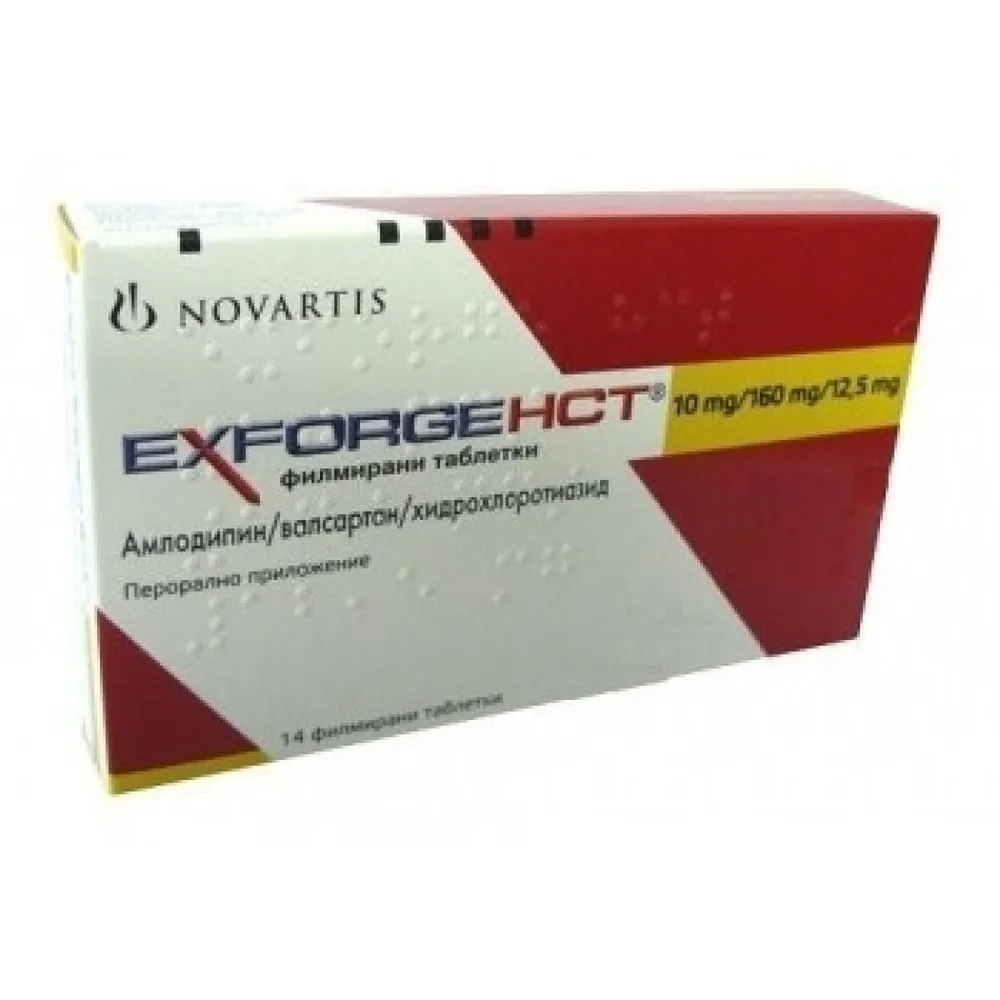
Table of Contents
INSTRUCTIONS FOR MEDICAL USE OF THE MEDICINAL PRODUCT EXFORGE® (EXFORGE)
Composition:
Active substances: amlodipine besylate and valsartan;
1 tablet contains amlodipine besylate 6.94 mg equivalent to 5 mg of amlodipine base and
80 mg of valsartan, or amlodipine besylate 6.94 mg equivalent to 5 mg of amlodipine base and 160 mg of valsartan, or amlodipine besylate 13.87 mg equivalent to 10 mg of amlodipine base and 160 mg of valsartan;
Excipients: microcrystalline cellulose; crospovidone, type A; magnesium stearate; colloidal anhydrous silicon dioxide; macrogol 4000; talc; hypromellose, substitution type 2910 (3 mPa·s); titanium dioxide (E 171); iron oxide yellow (E 172); iron oxide red (E 172) – only for 10 mg/160 mg tablets.
Pharmaceutical form. Film-coated tablets.
Main physicochemical properties:
5 mg/80 mg tablets: dark yellow, round-shaped, film-coated, beveled edges, marked with "NVR" on one side and "NV" on the other;
5 mg/160 mg tablets: dark yellow, oval-shaped, film-coated, beveled edges, marked with "NVR" on one side and "ESE" on the other;
10 mg/160 mg tablets: light yellow, oval-shaped, film-coated, beveled edges, marked with "NVR" on one side and "UIC" on the other.
Pharmacotherapeutic group. Combined angiotensin II inhibitors.
ATC code: C09DB01.
Pharmacological properties.
Pharmacodynamics.
Exforge contains two antihypertensive components with complementary mechanisms of blood pressure control in patients with essential hypertension: amlodipine, belonging to the class of calcium channel blockers, and valsartan, belonging to the class of angiotensin II antagonists. The combination of these ingredients provides additive antihypertensive effects and reduces arterial pressure to a greater extent than either component alone.
Amlodipine
Amlodipine inhibits transmembrane influx of calcium ions into vascular and cardiac smooth muscle cells. The antihypertensive mechanism of amlodipine is due to direct relaxation of vascular smooth muscle, resulting in reduced peripheral vascular resistance and consequent lowering of arterial pressure. Experimental data confirm that amlodipine binds at both dihydropyridine and non-dihydropyridine binding sites. The processes of cardiac and vascular smooth muscle contraction depend on the influx of extracellular calcium into these cells through specific ion channels.
After administration of therapeutic doses to patients with arterial hypertension, amlodipine induces vasodilation, leading to reduced arterial pressure in both supine and standing positions. This reduction in arterial pressure is not accompanied by significant changes in heart rate or plasma catecholamine levels during long-term treatment.
The effect correlates with plasma concentrations in both young and elderly patients.
In patients with arterial hypertension and normal renal function, therapeutic doses of amlodipine reduce renal vascular resistance and increase glomerular filtration rate and effective renal plasma flow, without altering filtration fraction or proteinuria.
As with other calcium channel blockers, hemodynamic studies of cardiac function at rest and during exercise (or walking) in patients with normal ventricular function treated with amlodipine generally show a slight increase in cardiac index without significant effects on dP/dt, end-diastolic pressure, or left ventricular volume. Hemodynamic studies have shown that amlodipine does not exhibit negative inotropic effects at therapeutic doses in intact animals and humans, even when co-administered with beta-blockers.
Amlodipine does not alter sinus node function or atrioventricular conduction in healthy animals or humans. In clinical trials where amlodipine was used in combination with beta-blockers in patients with arterial hypertension or angina, no changes in electrocardiographic parameters were observed.
Use in patients with arterial hypertension
A randomized, double-blind trial on morbidity and mortality – the Antihypertensive and Lipid-Lowering treatment to prevent Heart Attack Trial (ALLHAT) – was conducted to compare newer antihypertensive therapies: amlodipine 2.5–10 mg daily (a calcium channel blocker) or lisinopril 10–40 mg daily (an ACE inhibitor) as first-line therapy, compared to the thiazide diuretic chlorthalidone 12.5–25 mg daily, in patients with mild to moderate arterial hypertension.
A total of 33,357 hypertensive patients aged 55 years and older were randomized and followed for a mean of 4.9 years. Each patient had at least one additional risk factor for ischemic heart disease, including prior myocardial infarction or stroke (>6 months before enrollment) or documented other cardiovascular disease with evidence of atherosclerosis (51.5% overall), type 2 diabetes (36.1%), high-density lipoprotein cholesterol concentration <35 mg/dL or <0.906 mmol/L (11.6%), left ventricular hypertrophy diagnosed by ECG or echocardiography (20.9%), or current smoking at enrollment (21.9%).
The primary endpoint was fatal or non-fatal myocardial infarction due to ischemic heart disease. No significant differences in the primary endpoint were observed between amlodipine and chlorthalidone therapy: risk ratio (RR) 0.98, 95% CI (0.90–1.07), p = 0.65. Among secondary endpoints, the incidence of heart failure (a component of the composite cardiovascular outcome) was significantly higher in the amlodipine group compared to the chlorthalidone group (10.2% vs. 7.7%, RR = 1.38, 95% CI (1.25–1.52), p < 0.001). However, no significant difference in all-cause mortality was observed between the amlodipine and chlorthalidone groups: RR = 0.96, 95% CI (0.89–1.02), p = 0.20.
Valsartan
Valsartan is an orally active, potent, and specific angiotensin II receptor antagonist. It selectively acts on AT1 subtype receptors, which mediate the known effects of angiotensin II. Increased angiotensin II levels resulting from AT1 receptor blockade by valsartan may stimulate unopposed AT2 receptors, potentially counterbalancing AT1-mediated effects. Valsartan has no partial agonist activity at AT1 receptors and exhibits approximately 20,000-fold greater affinity for AT1 receptors than for AT2 receptors.
Valsartan does not inhibit ACE (also known as kininase II), the enzyme that converts angiotensin I to angiotensin II and degrades bradykinin. Due to the lack of ACE inhibition and absence of potentiation of bradykinin or substance P activity, angiotensin II receptor antagonists are generally not associated with cough. In clinical trials comparing valsartan with an ACE inhibitor, the incidence of dry cough was significantly lower (p < 0.05) in patients treated with valsartan than in those receiving an ACE inhibitor (2.6% vs. 7.9%, respectively). In patients who previously received an ACE inhibitor and developed dry cough, this adverse effect occurred in 19.5% of cases with valsartan treatment and in 19% with thiazide diuretic treatment, compared to 68.5% in the ACE inhibitor group (p < 0.05). Valsartan does not interact with or block receptors of other hormones or ion channels known to play important roles in cardiovascular regulation.
Administration of the drug to patients with arterial hypertension reduces arterial pressure without affecting pulse rate.
In most patients, antihypertensive activity begins within 2 hours after a single oral dose, with maximal blood pressure reduction achieved within 4–6 hours.
The antihypertensive effect persists for more than 24 hours after a single dose. With regular administration, maximal therapeutic effect is usually achieved within 2–4 weeks and is maintained during long-term treatment. Abrupt discontinuation of valsartan does not lead to rebound hypertension or other adverse clinical effects.
It has been established that valsartan significantly reduces hospitalization rates in patients with chronic heart failure (NYHA class II–IV). A more pronounced effect was observed in patients not receiving ACE inhibitors or beta-blockers. Valsartan has also been shown to reduce cardiovascular mortality in clinically stable patients with left ventricular pathology or left ventricular dysfunction after myocardial infarction.
Other studies: dual blockade of the renin-angiotensin-aldosterone system (RAAS)
Two large randomized controlled trials (ONTARGET – ONgoing Telmisartan Alone and in combination with Ramipril Global Endpoint Trial, and VA NEPHRON-D – The Veterans Affairs Nephropathy in Diabetes) evaluated the use of combined ACE inhibitor and ARB therapy.
The ONTARGET trial included patients with cardiovascular or cerebrovascular disease or type 2 diabetes with documented target organ damage. The VA NEPHRON-D trial included patients with type 2 diabetes and diabetic nephropathy.
In these studies, no significant benefits on renal and/or cardiovascular outcomes or mortality were observed with dual therapy compared to monotherapy, while an increased risk of hyperkalemia, acute kidney injury, and/or hypotension was demonstrated. Due to the similarity in pharmacokinetic properties, these findings are relevant to other ACE inhibitors and ARBs.
Therefore, concomitant use of ACE inhibitors and ARBs is not recommended in patients with diabetic nephropathy.
The ALTITUDE trial (Aliskiren Trial in Type 2 Diabetes Using Cardiovascular and Renal Disease Endpoints) aimed to evaluate the benefit of adding aliskiren to standard therapy with an ACE inhibitor or ARB in patients with type 2 diabetes and chronic kidney disease, cardiovascular disease, or both. The trial was terminated early due to an increased risk of adverse events. Cardiovascular death and stroke occurred numerically more frequently in the aliskiren group than in the placebo group, and the aliskiren group also reported more frequent adverse events and serious adverse events of special interest (hyperkalemia, hypotension, and renal dysfunction) compared to placebo.
Valsartan/amlodipine
The combination of amlodipine and valsartan provides dose-dependent additive reductions in arterial pressure across the therapeutic dose range. The antihypertensive effect after a single dose persists for 24 hours.
More than 1,400 patients with arterial hypertension were treated with Exforge once daily in two placebo-controlled trials.
Exforge was studied in two placebo-controlled trials involving patients with uncomplicated mild to moderate essential hypertension (mean seated diastolic pressure ≥95 and <110 mm Hg).
Patients at high cardiovascular risk were excluded: those with heart failure, type 1 diabetes, poorly controlled type 2 diabetes, or history of myocardial infarction or stroke within one year.
In a multicenter, randomized, double-blind, active-controlled, parallel-group trial, normalization of blood pressure (to seated diastolic pressure <90 mm Hg at the end of the study) was achieved in patients whose blood pressure was inadequately controlled on monotherapy with 160 mg valsartan. Blood pressure normalized in 75% of patients receiving 10 mg/160 mg amlodipine/valsartan, 62% receiving 5 mg/160 mg amlodipine/valsartan, compared to 53% receiving 160 mg valsartan alone. Adding 10 mg and 5 mg amlodipine resulted in additional reductions in systolic/diastolic pressure of 6/4.8 mm Hg and 3.9/2.9 mm Hg, respectively, compared to 160 mg valsartan alone.
In another multicenter, randomized, double-blind, active-controlled, parallel-group trial, normalization of blood pressure (to seated diastolic pressure <90 mm Hg at the end of the study) was achieved in patients whose blood pressure was inadequately controlled on monotherapy with 10 mg amlodipine. Blood pressure normalized in 78% of patients receiving 10 mg/160 mg amlodipine/valsartan, compared to 67% continuing on 10 mg amlodipine alone. Adding 160 mg valsartan resulted in an additional reduction in systolic/diastolic pressure of 2.9/2.1 mm Hg compared to 10 mg amlodipine alone.
Exforge was studied in an active-controlled trial involving 130 patients with essential hypertension and a mean seated diastolic pressure ≥110 mm Hg and <120 mm Hg. In this trial (baseline blood pressure 171/113 mm Hg), treatment with Exforge at doses from 5 mg/160 mg to 10 mg/160 mg reduced sustained blood pressure by 36/29 mm Hg, compared to 32/28 mm Hg with lisinopril/hydrochlorothiazide at doses from 10 mg/12.5 mg to 20 mg/12.5 mg.
In two long-term trials, the effect of Exforge was maintained for over one year. Abrupt discontinuation did not lead to rapid rebound in blood pressure.
In patients whose blood pressure is adequately controlled with amlodipine but who experience unacceptable edema, combination therapy may provide similar blood pressure control with reduced edema.
Age, sex, race, and body mass index (≥30 kg/m², <30 kg/m²) did not influence clinical response to Exforge.
Studies of Exforge have not been conducted in populations other than those with arterial hypertension. However, studies with valsartan have been conducted in patients with heart failure and post-myocardial infarction, and studies with amlodipine in patients with chronic stable angina, vasospastic angina, and angiographically confirmed ischemic heart disease.
Pharmacokinetics.
Linearity.
Valsartan and amlodipine exhibit linear pharmacokinetics.
Amlodipine.
Absorption. After oral administration of therapeutic doses of amlodipine alone, maximum plasma concentration (Cmax) is reached within 6–12 hours. Absolute bioavailability is estimated to be between 64% and 80%. Food intake does not affect amlodipine bioavailability.
Distribution. The volume of distribution is approximately 21 L/kg. In vitro studies have shown that approximately 97.5% of circulating amlodipine is protein-bound in patients with essential hypertension.
Metabolism. Amlodipine is extensively metabolized (approximately 90%) in the liver to inactive metabolites.
Elimination. Amlodipine elimination from plasma is biphasic, with a terminal half-life of approximately 30–50 hours. Steady-state plasma levels are reached after 7–8 days of continuous administration. About 10% of the parent compound and 60% of its metabolites are excreted in urine.
Valsartan
Absorption. After oral administration, Cmax of valsartan in plasma is reached within 2–4 hours. Mean absolute bioavailability is approximately 23%. Food reduces valsartan exposure, as measured by AUC, by about 40% and Cmax by 50%, although plasma concentrations 8 hours after dosing are similar in fasting and fed patients. The reduction in AUC does not result in clinically significant reduction in therapeutic effect; therefore, valsartan can be administered independently of food.
Distribution. The steady-state volume of distribution after intravenous administration is approximately 17 L, indicating limited tissue distribution. Valsartan is highly protein-bound (94–97%), primarily to serum albumin.
Metabolism. Valsartan undergoes minimal biotransformation, with only about 20% of the dose converted to metabolites. A hydroxymetabolite has been identified in plasma at low concentrations (<10% of valsartan AUC) and is pharmacologically inactive.
Elimination. Valsartan exhibits multi-exponential elimination kinetics (T1/2α <1 hour and T1/2β ~9 hours). Valsartan is primarily excreted unchanged in feces (~83% of dose) and urine (~13% of dose). After intravenous administration, plasma clearance is approximately 2 L/h, and renal clearance is about 0.62 L/h (~30% of total clearance). The elimination half-life of valsartan is 6 hours.
Valsartan/amlodipine
After oral administration of Exforge, Cmax of valsartan and amlodipine in plasma is reached at 3 hours and 6–8 hours, respectively. The rate and extent of absorption of Exforge are bioequivalent to the individual administration of valsartan and amlodipine.
Special populations
Children
Pharmacokinetic data in pediatric patients are not available.
Elderly patients (aged 65 years and older)
Time to reach Cmax of amlodipine in plasma is similar in younger and elderly patients. However, amlodipine clearance tends to be reduced in the elderly, leading to increased AUC and prolonged elimination half-life. Mean systemic AUC of valsartan is 70% higher in elderly patients than in younger patients; therefore, caution is advised when increasing the dose.
Renal impairment
Renal dysfunction does not significantly affect amlodipine pharmacokinetics. As expected for a compound with only 30% of total plasma clearance being renal, no correlation was observed between renal function and systemic exposure to valsartan.
Hepatic impairment
In patients with hepatic impairment, amlodipine clearance is reduced, resulting in an increase in AUC of approximately 40–60%. On average, exposure (as measured by AUC) to valsartan in patients with mild to moderate chronic liver disease is approximately twice that in healthy, age-, sex-, and weight-matched volunteers. Patients with liver disease should use the drug with caution.
Clinical characteristics.
Indications.
Essential hypertension in adult patients whose blood pressure is not controlled by monotherapy with amlodipine or valsartan.
Contraindications.
-
Hypersensitivity to the active substance, dihydropyridine derivatives, or to any of the excipients of the medicinal product.
-
Severe hepatic impairment, biliary cirrhosis, or cholestasis.
-
Concomitant use of angiotensin II receptor antagonists (ARA), including valsartan, or angiotensin-converting enzyme (ACE) inhibitors with aliskiren in patients with diabetes mellitus or renal dysfunction (GFR < 60 mL/min/1.73 m²).
-
Pregnancy and planned pregnancy (see section "Use in pregnancy or breast-feeding").
-
Severe hypotension.
-
Shock (including cardiogenic shock).
-
Obstruction of the left ventricular outflow tract (e.g. hypertrophic obstructive cardiomyopathy and severe aortic stenosis).
-
Hemodynamically unstable heart failure following acute myocardial infarction.
Interaction with other medicinal products and other forms of interaction.
Drug-drug interactions
Studies on drug-drug interactions of Exforge with other medicinal products have not been conducted.
Medicinal products requiring caution during concomitant use
Other antihypertensive agents
Commonly used antihypertensive agents (e.g. alpha-blockers, diuretics) and other medicinal products that may cause hypotensive adverse effects (e.g. tricyclic antidepressants, alpha-blockers used for the treatment of benign prostatic hyperplasia) may potentiate the antihypertensive effect of the combination.
Interactions related to amlodipine
Concomitant use not recommended
Grapefruit or grapefruit juice
The use of amlodipine with grapefruit or grapefruit juice is not recommended, as in some patients bioavailability may be increased, leading to an enhanced hypotensive effect of the drug.
Medicinal products requiring caution during concomitant use
CYP3A4 inhibitors
Concomitant use of amlodipine with moderate or strong CYP3A4 inhibitors (protease inhibitors, azole antifungals, macrolides such as erythromycin or clarithromycin, verapamil, or diltiazem) may lead to a significant increase in systemic exposure to amlodipine. Clinical manifestations of such pharmacokinetic changes may be more pronounced in elderly patients. Clinical monitoring and dose adjustment may be necessary.
CYP3A4 inducers (anticonvulsants (e.g. carbamazepine, phenobarbital, phenytoin, fosphenytoin, primidone), rifampicin, St John's wort (Hypericum perforatum))
When known CYP3A4 inducers are used concomitantly, plasma concentrations of amlodipine may change. Therefore, blood pressure should be monitored and dosage adjusted during and after concomitant use, especially with strong CYP3A4 inducers (e.g. rifampicin, Hypericum perforatum).
Simvastatin
Repeated administration of 10 mg amlodipine with 80 mg simvastatin results in a 77% increase in simvastatin exposure compared to simvastatin alone. A daily simvastatin dose reduction to 20 mg is recommended for patients taking amlodipine.
Dantrolene (infusions)
In animals, lethal cases of ventricular fibrillation and cardiovascular collapse associated with hyperkalemia have been observed after intravenous administration of verapamil and dantrolene. Due to the risk of hyperkalemia, concomitant use of calcium channel blockers such as amlodipine should be avoided in patients predisposed to malignant hyperthermia and during treatment of malignant hyperthermia.
Other
In clinical studies, amlodipine did not affect the pharmacokinetics of atorvastatin, digoxin, warfarin, or cyclosporine.
Interactions related to valsartan
Concomitant use not recommended
Lithium
When lithium is used concomitantly with ACE inhibitors or angiotensin II receptor antagonists, including valsartan, reversible increases in serum lithium concentrations and lithium toxicity have been reported. Concomitant use of valsartan and lithium is not recommended. If such combination therapy is necessary, serum lithium levels should be closely monitored. The risk of increased lithium toxicity may be further elevated when Exforge is used concomitantly with diuretics.
Potassium supplements, potassium-sparing diuretics, potassium-containing salt substitutes, or other agents that may increase potassium levels
When medicinal products that affect potassium levels are used in combination with valsartan, frequent monitoring of plasma potassium levels should be anticipated.
Medicinal products requiring caution during concomitant use
Non-steroidal anti-inflammatory drugs (NSAIDs), including selective COX-2 inhibitors, acetylsalicylic acid (> 3 g/day), and non-selective NSAIDs
Concomitant use of angiotensin II antagonists and NSAIDs may result in attenuation of the antihypertensive effect. Additionally, concomitant use of angiotensin II antagonists and NSAIDs may increase the risk of worsening renal function and elevated serum potassium levels. Therefore, monitoring of renal function and ensuring adequate hydration are recommended at the start of treatment.
Inhibitors of uptake transporters (rifampicin, cyclosporine) or efflux transporters (ritonavir)
In vitro studies using human liver tissue have shown that valsartan is a substrate of the hepatic uptake transporter OATP1B1 and the hepatic efflux transporter MRP2. Concomitant use of inhibitors of uptake transporters (rifampicin, cyclosporine) or efflux transporters (ritonavir) may increase systemic exposure to valsartan.
Dual blockade of the RAS with ARAs, ACE inhibitors, or aliskiren
Clinical trial results have shown that dual blockade of the RAS with combined use of ACE inhibitors, ARAs, or aliskiren leads to an increased incidence of adverse events such as hypotension, hyperkalemia, and impaired renal function (including acute renal failure), compared to treatment with a single agent acting on the RAS. Therefore, concomitant use of ARAs—including valsartan—or ACE inhibitors with aliskiren is contraindicated in patients with diabetes mellitus or renal dysfunction (GFR < 60 mL/min/1.73 m²).
Other
During monotherapy with valsartan, no clinically significant drug interactions have been identified with the following medicinal products: cimetidine, warfarin, furosemide, digoxin, atenolol, indomethacin, hydrochlorothiazide, amlodipine, or glyburide.
Special precautions for use.
The safety and efficacy of amlodipine in the treatment of hypertensive crisis have not been established.
Patients with sodium deficiency and/or reduced blood volume
Excessive hypotension was observed in patients with uncomplicated arterial hypertension (0.4%) treated with Exforge in placebo-controlled studies. Symptomatic hypotension may occur in patients with activated renin-angiotensin system (with low sodium levels and/or reduced blood volume, or those receiving high doses of diuretics) who are taking angiotensin receptor blockers. Correction of this condition is recommended before initiating Exforge therapy, or close medical monitoring at the beginning of treatment.
If arterial hypotension occurs during Exforge therapy, the patient should be placed in a supine position and, if necessary, receive intravenous infusion of physiological saline. Treatment may be continued after stabilization of blood pressure.
Hyperkalemia
Concomitant use of potassium supplements, potassium-sparing diuretics, potassium-containing salt substitutes, or other drugs that may increase potassium levels (e.g., heparin, etc.) should be administered with caution, and frequent monitoring of serum potassium levels is required.
Renal artery stenosis
Exforge should be used with caution in the treatment of hypertension in patients with unilateral or bilateral renal artery stenosis or stenosis of the artery of a solitary kidney, as serum urea and creatinine levels may increase.
Kidney transplantation
There is no experience with the safe use of Exforge in patients who have recently undergone kidney transplantation.
Hepatic impairment
Valsartan is primarily excreted unchanged in bile. The elimination half-life of amlodipine is prolonged and the AUC (plasma concentration–time) is increased in patients with hepatic impairment; dosage recommendations have not been established. Particular caution is required when using Exforge in patients with mild to moderate hepatic impairment or with obstructive biliary disorders.
The maximum recommended dose for patients with mild or moderate hepatic impairment without cholestasis is 80 mg of valsartan.
Renal impairment
Dose adjustment is not required in patients with mild to moderate renal impairment (eGFR > 30 mL/min/1.73 m²). In patients with moderate renal impairment, monitoring of serum potassium and creatinine levels is recommended.
Concomitant use of angiotensin receptor antagonists, including valsartan, or angiotensin-converting enzyme (ACE) inhibitors with aliskiren is contraindicated in patients with renal impairment (eGFR < 60 mL/min/1.73 m²).
Primary hyperaldosteronism
Patients with primary hyperaldosteronism should not receive the angiotensin II antagonist valsartan, as their renin-angiotensin system is already disrupted due to the underlying disease.
Angioedema
Angioedema, including laryngeal and glottal edema that may lead to airway obstruction, and/or swelling of the face, lips, pharynx, and/or tongue, has been observed in patients taking valsartan. Some of these patients had a history of angioedema with other drugs, including angiotensin-converting enzyme inhibitors (ACE inhibitors). Exforge should be discontinued immediately if angioedema occurs; re-administration is not recommended.
Heart failure/post-myocardial infarction
Due to suppression of the renin-angiotensin-aldosterone system, renal dysfunction may occur in susceptible patients. In patients with severe heart failure, in whom kidney function may depend on the activity of the renin-angiotensin-aldosterone system, treatment with ACE inhibitors and angiotensin receptor antagonists has led to oliguria and/or progressive azotemia, and in rare cases, acute renal failure and/or death. Similar outcomes have been observed with valsartan. Renal function should be assessed in patients with heart failure or after myocardial infarction.
In a long-term, placebo-controlled study (PRAISE-2) of amlodipine in patients with NYHA (New York Heart Association) class III–IV non-ischemic heart failure, the incidence of pulmonary edema was higher with amlodipine compared to placebo, although there was no significant difference in the development or worsening of heart failure. Calcium channel blockers, including amlodipine, should be used with caution in patients with congestive heart failure, as they may increase the risk of cardiovascular events and mortality.
Aortic and mitral valve stenosis
As with other vasodilators, particular caution should be exercised in patients with known mitral valve stenosis or severe aortic stenosis of low degree.
Dual blockade of the renin-angiotensin-aldosterone system (RAAS)
Available data indicate that concomitant use of ACE inhibitors, angiotensin receptor antagonists (ARBs), or aliskiren increases the risk of hypotension, hyperkalemia, and renal impairment (including acute renal failure). Therefore, dual blockade of the RAAS by combining ACE inhibitors, ARBs, or aliskiren is not recommended.
If dual blockade is considered absolutely necessary, it should be performed only under specialist supervision with frequent and careful monitoring of renal function, electrolyte levels, and blood pressure. Concomitant use of ACE inhibitors and ARBs is not recommended in patients with diabetic nephropathy.
The use of Exforge has not been studied in patients with conditions other than arterial hypertension.
Use during pregnancy or breastfeeding.
Pregnancy
Exforge is contraindicated in pregnant women or women who are planning to become pregnant. If pregnancy is confirmed during treatment with this medication, it should be discontinued immediately and replaced with a medication approved for use during pregnancy.
Epidemiological data on the teratogenic risk following exposure to ACE inhibitors during the first trimester of pregnancy are inconclusive; however, a small increased risk cannot be excluded. Although controlled epidemiological data on angiotensin II receptor antagonists (ARBs) are lacking, a similar risk may exist with drugs of this class.
Exposure to ARBs during the second and third trimesters is known to have toxic effects on the fetus (impaired renal function, oligohydramnios, delayed skull ossification) and the newborn (renal failure, arterial hypotension, hyperkalemia).
If ARBs have been used from the second trimester of pregnancy, ultrasound evaluation of fetal renal function and skull ossification is recommended.
Newborns whose mothers took ARBs should be closely monitored for the development of arterial hypotension.
Breastfeeding
Amlodipine is excreted in breast milk. The fraction of the maternal dose received by the infant is estimated at an interquartile range of 3–7%, with a maximum of 15%. The effect of amlodipine on infants is unknown.
Due to the lack of information on the use of Exforge during breastfeeding, the drug is not recommended during this period; alternative medications with a well-established safety profile should be considered, especially when breastfeeding newborns or preterm infants.
Fertility
Clinical studies on the effect on fertility have not been conducted.
Valsartan
Valsartan did not cause adverse effects on the reproductive system in male and female rats following oral administration at doses up to 200 mg/kg/day. This dose is 6 times higher than the maximum recommended human dose on a mg/m² basis (based on a daily oral dose of 320 mg for a 60 kg patient).
Amlodipine
In some patients treated with calcium channel blockers, reversible biochemical changes in sperm heads have been reported. Clinical data on the effect of amlodipine on fertility are insufficient. In one study in rats, adverse effects on male fertility were observed.
Ability to affect reaction speed when driving or operating machinery.
Dizziness or weakness may occur in patients taking Exforge after drug administration; therefore, patients should take this into account when driving or operating potentially hazardous machinery.
Amlodipine may have a slight to moderate effect on the ability to drive or operate machinery. If patients experience dizziness, headache, fatigue, or nausea while taking amlodipine, their reaction time may be impaired.
Method of Administration and Dosage
Patients whose blood pressure is not adequately controlled with monotherapy using amlodipine or valsartan may be switched to combination therapy with Exforge. The recommended dose is 1 tablet per day. Exforge tablets may be taken independently of food intake. It is recommended to take Exforge with a small amount of water.
Patients currently receiving valsartan and amlodipine as separate agents may be switched to Exforge containing the same doses of the components.
Prior to switching to fixed-dose combination therapy, individual dose titration of the components (i.e., amlodipine and valsartan) is recommended. However, direct substitution of monotherapy with a fixed-dose combination may be considered if clinically indicated.
Maximum daily dose: 1 tablet of Exforge 5 mg/80 mg, or 1 tablet of Exforge 5 mg/160 mg, or 1 tablet of Exforge 10 mg/160 mg (maximum permitted doses of the drug components are 10 mg amlodipine and 320 mg valsartan).
Dosage for Specific Patient Groups
Renal Impairment
There are no available clinical data on the use of Exforge in patients with severe renal impairment.
Dose adjustment is not required in patients with mild or moderate renal impairment. In patients with moderate renal impairment, monitoring of serum potassium and creatinine levels is recommended.
Concomitant use of Exforge with aliskiren is contraindicated in patients with renal impairment (eGFR < 60 mL/min/1.73 m²).
Diabetes Mellitus
Concomitant use of Exforge with aliskiren is contraindicated in patients with diabetes mellitus.
Hepatic Impairment
Exforge is contraindicated in patients with severe hepatic impairment.
Exforge should be used with caution in patients with hepatic impairment or biliary obstruction. For patients with mild to moderate hepatic impairment without cholestasis, the maximum recommended dose is 80 mg of valsartan.
Dosage recommendations for amlodipine in patients with mild or moderate hepatic impairment have not been established. When switching elderly patients with arterial hypertension (see section "Indications") and hepatic impairment to amlodipine or Exforge, the lowest recommended dose of amlodipine should be initiated, either as monotherapy or in combination therapy.
Elderly Patients (Age 65 Years and Older)
Standard dosing regimens are recommended for elderly patients.
Caution should be exercised when increasing the dose in elderly patients.
When switching elderly patients with arterial hypertension (see section "Indications") and hepatic impairment to amlodipine or Exforge, the lowest recommended dose of amlodipine should be initiated, either as monotherapy or in combination therapy.
Pediatric Population
The safety and efficacy of Exforge in children (under 18 years of age) have not been established. Data are lacking.
Children
Studies on the treatment of children (under 18 years of age) with this medication have not been conducted. Therefore, until more comprehensive information becomes available, Exforge is not recommended for use in pediatric patients.
Overdose
Symptoms
There is currently no experience with Exforge overdose. The principal symptom of valsartan overdose is likely to be marked hypotension with dizziness. Overdose of amlodipine may lead to progressive peripheral vasodilation and possibly reflex tachycardia. Marked and potentially prolonged systemic hypotension, including shock with fatal outcome, has been reported following amlodipine administration.
Rare cases of non-cardiogenic pulmonary edema have been reported as a consequence of amlodipine overdose, which may present with delayed onset (24–48 hours after ingestion) and may require mechanical ventilation. Early resuscitation measures (including fluid loading) to support perfusion and cardiac output may act as triggering factors.
Treatment
If the drug has been recently ingested, induce emesis or perform gastric lavage. Absorption of amlodipine is significantly reduced when activated charcoal is administered immediately or within two hours after amlodipine intake.
Clinically significant hypotension caused by Exforge overdose requires active cardiovascular support, including frequent monitoring of cardiac and respiratory function, placing the patient in a supine position with legs elevated, attention to circulating fluid volume and urinary output. A vasoconstrictor agent may be used to restore vascular tone and blood pressure, provided there are no contraindications to its use. In cases of persistent hypotension due to calcium channel blockade, intravenous calcium gluconate may be beneficial.
Hemodialysis is unlikely to remove valsartan or amlodipine effectively.
Adverse reactions.
The safety of Exforge was evaluated in 5 controlled clinical studies involving 5175 patients, of whom 2613 received valsartan in combination with amlodipine. Adverse reactions observed most frequently or considered significant or severe include: nasopharyngitis, influenza, hypersensitivity, headache, syncope, orthostatic hypotension, edema, soft tissue swelling, facial swelling, peripheral edema, increased fatigue, facial flushing, asthenia, and hot flushes.
The following criteria were used to assess the frequency of adverse reactions: very common (≥ 1/10); common (≥ 1/100, < 1/10); uncommon (≥ 1/1000, < 1/100); rare (≥ 1/10 000, < 1/1000); very rare (< 1/10 000); not known (frequency cannot be estimated from the available data).
| MedDRA system organ class |
Adverse reaction |
Frequency |
||
| Exforge |
Amlodipine |
Valsartan |
||
| Infections and infestations |
Nasopharyngitis |
Common |
-- |
-- |
| Influenza |
Common |
-- |
-- |
|
| Blood and lymphatic system disorders |
Decreased hemoglobin and hematocrit levels |
-- |
-- |
Unknown |
| Leukopenia |
-- |
Very rare |
-- |
|
| Neutropenia |
-- |
-- |
Unknown |
|
| Thrombocytopenia, sometimes with purpura |
-- |
Very rare |
Unknown |
|
| Immune system disorders |
Hypersensitivity |
Uncommon |
Very rare |
Not known |
| Nutrition and metabolism disorders |
Anorexia |
Uncommon |
-- |
-- |
| Hypercalcemia |
Uncommon |
-- |
-- |
|
| Hyperglycemia |
-- |
Very rare |
-- |
|
| Hyperlipidemia |
Uncommon |
-- |
-- |
|
| Hyperuricemia |
Uncommon |
-- |
-- |
|
| Hypokalemia |
Common |
-- |
-- |
|
| Hypoatremia |
Uncommon |
-- |
-- |
|
| Psychiatric disorders |
Depression |
-- |
Uncommon |
-- |
| Anxiety |
Uncommon |
-- |
-- |
|
| Insomnia / sleep disturbances |
-- |
Uncommon |
-- |
|
| Mood swings |
-- |
Uncommon |
-- |
|
| Confusion |
-- |
Uncommon |
-- |
|
| Nervous system disorders |
Coordination disorder |
Uncommon |
-- |
-- |
| Dizziness |
Uncommon |
Common |
-- |
|
| Postural dizziness |
Uncommon |
-- |
-- |
|
| Dysgeusia |
-- |
Uncommon |
-- |
|
| Extrapyramidal syndrome |
-- |
Unknown |
-- |
|
| Headache |
Common |
Common |
-- |
|
| Hypertension |
-- |
Very rare |
-- |
|
| Paraesthesia |
Uncommon |
Uncommon |
-- |
|
| Peripheral neuropathy, neuropathy |
-- |
Very rare |
-- |
|
| Somnolence |
Uncommon |
Common |
-- |
|
| Syncope |
-- |
Uncommon |
-- |
|
| Tremor |
-- |
Uncommon |
-- |
|
| Hypoesthesia |
-- |
Uncommon |
-- |
|
| Eye disorders |
Visual disturbance |
Uncommon |
Uncommon |
-- |
| Blurred vision |
Uncommon |
Uncommon |
-- |
|
| Ear and labyrinth disorders |
Tinnitus |
Uncommon |
Uncommon |
-- |
| Dizziness |
Uncommon |
-- |
Uncommon |
|
| Cardiac disorders |
Palpitations |
Uncommon |
Common |
-- |
| Syncope |
Uncommon |
-- |
-- |
|
| Tachycardia |
Uncommon |
-- |
-- |
|
| Arrhythmias (including bradycardia, ventricular tachycardia, atrial fibrillation) |
-- |
Very rare |
-- |
|
| Myocardial infarction |
-- |
Very rare |
-- |
|
| Vascular disorders |
Flushing |
-- |
Common |
-- |
| Hypotension |
Uncommon |
Uncommon |
-- |
|
| Orthostatic hypotension |
Uncommon |
-- |
-- |
|
| Angioedema |
-- |
Very rare |
Unknown |
|
| Respiratory system disorders |
Cough |
Uncommon |
Very rare |
Very rare |
| Dyspnea |
-- |
Uncommon |
-- |
|
| Pharyngolaryngeal pain |
Uncommon |
-- |
-- |
|
| Rhinitis |
-- |
Uncommon |
-- |
|
| Gastrointestinal disorders |
Abdominal discomfort and upper abdominal pain |
Uncommon |
Common |
Uncommon |
| Change in defecation rhythm |
-- |
Uncommon |
-- |
|
| Constipation |
Uncommon |
-- |
-- |
|
| Diarrhea |
Uncommon |
Uncommon |
-- |
|
| Dry mouth |
Uncommon |
Uncommon |
-- |
|
| Dyspepsia |
-- |
Uncommon |
-- |
|
| Gastritis |
-- |
Very rare |
-- |
|
| Gingival hyperplasia |
-- |
Very rare |
-- |
|
| Nausea |
Uncommon |
Common |
-- |
|
| Pancreatitis |
-- |
Very rare |
-- |
|
| Vomiting |
-- |
Uncommon |
-- |
|
| Hepatobiliary disorders |
Abnormal liver function tests, including increased blood bilirubin levels |
-- |
Very rare* |
Unknown |
| Hepatitis |
-- |
Very rare |
-- |
|
| Intrahepatic cholestasis, jaundice |
-- |
Very rare |
-- |
|
| Skin and subcutaneous tissue disorders |
Alopecia |
-- |
Uncommon |
-- |
| Angioedema |
-- |
Very rare |
Unknown |
|
| Bullous dermatitis |
-- |
-- |
Unknown |
|
| Erythema |
Uncommon |
-- |
-- |
|
| Multiform erythema |
-- |
Very rare |
-- |
|
| Exanthema |
Uncommon |
Uncommon |
-- |
|
| Hyperhidrosis |
Uncommon |
Uncommon |
-- |
|
| Photosensitivity |
-- |
Uncommon |
-- |
|
| Pruritus |
Uncommon |
Uncommon |
Unknown |
|
| Purpura |
-- |
Uncommon |
-- |
|
| Rash |
Uncommon |
Uncommon |
Unknown |
|
| Skin discoloration |
-- |
Uncommon |
-- |
|
| Urticaria and other forms of rash |
-- |
Very rare |
-- |
|
| Exfoliative dermatitis |
-- |
Very rare |
-- |
|
| Stevens-Johnson syndrome |
-- |
Very rare |
-- |
|
| Quincke's edema |
-- |
Very rare |
-- |
|
| Toxic epidermal necrolysis |
-- |
Unknown |
-- |
|
| Musculoskeletal and connective tissue disorders |
Arthralgia |
Uncommon |
Uncommon |
-- |
| Back pain |
Uncommon |
Uncommon |
-- |
|
| Joint swelling |
Uncommon |
-- |
-- |
|
| Muscle cramps |
Uncommon |
Uncommon |
-- |
|
| Muscle pain |
-- |
Uncommon |
Unknown |
|
| Ankle swelling |
-- |
Common |
-- |
|
| Heaviness sensation |
Uncommon |
-- |
-- |
|
| Renal and urinary disorders |
Increase in blood creatinine levels |
-- |
-- |
Unknown |
| Urinary disorder |
-- |
Uncommon |
-- |
|
| Nocturia |
-- |
Uncommon |
-- |
|
| Polyuria |
Uncommon |
Uncommon |
-- |
|
| Polyuria |
Uncommon |
-- |
-- |
|
| Renal failure and renal function impairment |
-- |
-- |
Unknown |
|
| Reproductive system disorders |
Impotence |
-- |
Uncommon |
-- |
| Erectile dysfunction |
Uncommon |
-- |
-- |
|
| Gynecomastia |
-- |
Uncommon |
-- |
|
| General disorders |
Asthenia |
Common |
Uncommon |
-- |
| Discomfort, malaise |
-- |
Uncommon |
-- |
|
| Increased fatigue |
Common |
Common |
Uncommon |
|
| Facial swelling |
Common |
-- |
-- |
|
| Flushing, hot flushes |
Common |
-- |
-- |
|
| Chest pain, non-cardiac |
-- |
Uncommon |
-- |
|
| Edema |
Common |
Common |
-- |
|
| Peripheral edema |
Common |
-- |
-- |
|
| Pain |
-- |
Uncommon |
-- |
|
| Soft tissue swelling |
Common |
-- |
-- |
|
| Investigations |
Increase in blood potassium levels |
-- |
-- |
Unknown |
| Increased body weight |
-- |
Uncommon |
-- |
|
| Decreased body weight |
-- |
Uncommon |
-- |
|
* Mainly associated with cholestasis.
Additional information on the combination
Peripheral edema, a known side effect of amlodipine, generally occurred less frequently in patients receiving the amlodipine/valsartan combination than with amlodipine alone. In double-blind, controlled clinical studies, the average incidence of peripheral edema, uniformly distributed across the entire dose range, was 5.1% for the amlodipine/valsartan combination.
Additional information on the drug components
Adverse reactions previously observed with one of the drug components (amlodipine or valsartan) may also occur with the use of Exforge, even if they were not reported during clinical studies or in the post-marketing period.
Amlodipine
| Common |
Somnolence, dizziness, palpitations, abdominal pain, nausea, ankle swelling. |
| Uncommon |
Insomnia, mood changes (including anxiety), depression, tremor, dysgeusia, syncope, hypoesthesia, visual disturbances (including diplopia), tinnitus, hypotension, dyspnea, rhinitis, vomiting, dyspepsia, alopecia, purpura, skin discoloration, hyperhidrosis, pruritus, exanthema, myalgia, muscle cramps, pain, urinary disorders, increased frequency of urination, impotence, gynecomastia, chest pain, malaise, weight gain or weight loss. |
| Rare |
Confusion. |
| Very rare |
Leukopenia, thrombocytopenia, allergic reactions, hyperglycemia, hypertension, peripheral neuropathy, myocardial infarction, arrhythmia (including bradycardia, ventricular tachycardia and atrial fibrillation), vasculitis, pancreatitis, gastritis, gingival hyperplasia, hepatitis, jaundice, increased liver enzymes, usually associated with cholestasis, angioneurotic edema, erythema multiforme, urticaria, exfoliative dermatitis, Stevens-Johnson syndrome, Quincke's edema, photosensitivity. |
| Not known |
Toxic epidermal necrolysis. |
Isolated cases of extrapyramidal syndrome have been reported.
Valsartan
The additional adverse reactions listed below have been observed during clinical trials of valsartan monotherapy, regardless of causal relationship to the investigational drug.
| Unknown |
Decreased hemoglobin levels, decreased hematocrit levels, neutropenia, thrombocytopenia, increased serum potassium levels, increased liver function tests, including serum bilirubin concentration, renal failure and renal function disorders, increased serum creatinine levels, angioneurotic edema, myalgia, vasculitis, hypersensitivity reactions, including serum sickness. |
Reporting of adverse reactions following marketing authorization of the medicinal product is of great importance. It enables continuous monitoring of the benefit-risk balance of the medicinal product. Medical and pharmaceutical professionals, as well as patients or their legal representatives, should report all suspected adverse reactions and lack of efficacy through the automated pharmacovigilance information system at the following link: https://aisf.dec.gov.ua.
Shelf life. 3 years.
Storage conditions. Store at temperatures not exceeding 30 °C, in the original packaging, in a dry, child-proof place.
Packaging. 14 tablets per blister; 1 or 2 blisters per carton.
Prescription status. Prescription only.
Manufacturer.
Novartis Pharma S.p.A.
Manufacturer's address and place of business.
Via Provinciale Skito 131, 80058 Torre Annunziata (Naples Province), Italy.