Jakavi
Ukraine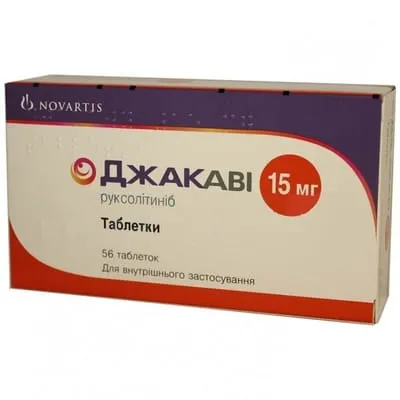
Table of Contents
INSTRUCTIONS FOR MEDICAL USE OF THE MEDICINAL PRODUCT JAKAVI (JAKAVI®)
Composition:
Active substance: ruxolitinib;
1 tablet contains 5 mg, 15 mg, or 20 mg of ruxolitinib (as phosphate);
Excipients: lactose monohydrate, microcrystalline cellulose, sodium starch glycolate (type A), hydroxypropylcellulose, povidone, colloidal anhydrous silicon dioxide, magnesium stearate.
Pharmaceutical form. Tablets.
Main physicochemical properties:
5 mg tablets: round, biconvex, white to almost white tablets approximately 7.5 mm in diameter, with "NVR" debossed on one side and "L5" on the other;
15 mg tablets: oval, biconvex, white to almost white tablets approximately 15.0 × 7.0 mm in size, with "NVR" debossed on one side and "L15" on the other;
20 mg tablets: elongated, biconvex, white to almost white tablets approximately 16.5 × 7.4 mm in size, with "NVR" debossed on one side and "L20" on the other.
Pharmacotherapeutic group. Antineoplastic agents. Protein kinase inhibitors. Janus kinase (JAK) inhibitors.
ATC code L01E J01.
Pharmacological Properties
Pharmacodynamics
Ruxolitinib is a selective inhibitor of Janus kinases (JAKs) JAK1 and JAK2 (IC50 values for JAK1 and JAK2 enzymes are 3.3 nmol and 2.8 nmol, respectively). These enzymes mediate signal transduction of several cytokines and growth factors important for hematopoiesis and the immune system. Myelofibrosis (MF) and polycythemia vera (PV) are myeloproliferative neoplasms known to be associated with dysregulation of JAK1- and JAK2-mediated signaling. This dysregulation is underpinned by high levels of circulating cytokines that activate the JAK–STAT pathway, mutations in which the mutant gene product gains new and pathological functions—such as the JAK2V617F mutation—as well as loss of negative regulatory mechanisms. In patients with MF, dysregulation of JAK-mediated signaling occurs irrespective of JAK2V617F mutation status. Activating mutations in JAK2 (V617F or exon 12) are observed in more than 95% of patients with PV. Ruxolitinib inhibits JAK–STAT pathway signaling and cellular proliferation in cytokine-dependent hematologic malignancy cell models, as well as in Ba/F3 proliferating cells expressing the modified JAK2V617F protein, with IC50 values ranging from 80 to 320 nmol.
The JAK–STAT signaling pathways play a critical role in regulating development, proliferation, and activation of several types of immune cells important in the pathogenesis of graft-versus-host disease (GvHD).
Pharmacodynamic Effects
Ruxolitinib inhibits cytokine-induced phosphorylation of STAT3 in whole blood of healthy volunteers and patients with MF and PV. Administration of ruxolitinib results in maximal inhibition of STAT3 phosphorylation 2 hours after dosing, with return to near baseline levels by 8 hours in both healthy volunteers and MF patients, indicating no accumulation of parent drug or active metabolites. Elevated baseline levels of inflammatory markers associated with systemic symptoms—such as tumor necrosis factor α (TNFα), interleukin-6 (IL-6), and C-reactive protein (CRP)—in patients with MF were reduced following treatment with ruxolitinib. Over time, no evidence of resistance to the pharmacodynamic effects of ruxolitinib was observed in patients with MF. Similarly, patients with PV showed elevated baseline levels of inflammatory markers, which decreased after treatment with ruxolitinib. Careful evaluation of QT interval in healthy volunteers revealed no evidence of QT/QTc prolongation following single doses of ruxolitinib exceeding the therapeutic dose (up to 200 mg), indicating that ruxolitinib has no effect on cardiac repolarization.
Pharmacokinetics
Absorption
Ruxolitinib belongs to class 1 of the Biopharmaceutics Classification System (BCS), characterized by high permeability, high solubility, and rapid dissolution. Clinical studies have shown that ruxolitinib is rapidly absorbed after oral administration, reaching peak plasma concentration (Cmax) approximately 1 hour after dosing. Based on human mass balance study data, the absorption of ruxolitinib after oral administration, either as parent drug or metabolites formed during first-pass metabolism, is 95% or greater. Mean Cmax and total exposure (AUC) of ruxolitinib increased proportionally over the single-dose range of 5 to 200 mg. No clinically significant changes in ruxolitinib pharmacokinetics were observed when administered with a high-fat meal. When administered with a high-fat meal, mean Cmax was moderately reduced (by 24%), while mean AUC remained nearly unchanged (increased by 4%).
Distribution
In patients with MF and PV, the mean steady-state volume of distribution is approximately 75 liters. Ruxolitinib is highly bound to plasma proteins (primarily albumin) in vitro, with clinically significant concentrations bound at approximately 97%. Whole-body autoradiographic studies in rats showed that ruxolitinib does not cross the blood-brain barrier.
Biotransformation
Ruxolitinib is primarily metabolized by CYP3A4 (>50%) with additional contribution from CYP2C9. The parent compound is the predominant form in human plasma, accounting for approximately 60% of drug-related material in circulation. Two major active metabolites have been identified in plasma, representing 25% and 11% of the AUC of the parent compound, respectively. These metabolites exhibit 1/2 to 1/5 of the JAK-associated pharmacological activity of the parent compound. Overall, the sum of all active metabolites contributes up to 18% of the total pharmacodynamic activity of ruxolitinib. At clinically relevant concentrations, ruxolitinib does not inhibit the activity of CYP1A2, CYP2B6, CYP2C8, CYP2C9, CYP2C19, CYP2D6, or CYP3A4, and is not a strong inducer of CYP1A2, CYP2B6, or CYP3A4, based on in vitro studies. In vitro data suggest that ruxolitinib may inhibit P-glycoprotein and breast cancer resistance protein (BCRP).
Elimination
Ruxolitinib is primarily eliminated via metabolism. The mean elimination half-life of ruxolitinib is approximately 3 hours. After a single oral dose of [14C]-labeled ruxolitinib administered to healthy adults, excretion occurred predominantly through metabolism, with 74% of the radioactive compound excreted in urine and 22% in feces. Unchanged parent compound accounted for less than 1% of the total excreted radioactivity.
Linearity/Non-linearity
Dose proportionality was demonstrated in studies involving single and multiple doses of the drug.
Special Patient Populations
Effect of Body Surface Area, Age, Gender, or Race
No significant differences in ruxolitinib pharmacokinetics were observed in studies involving healthy volunteers of different genders and races. In population pharmacokinetic analyses of MF patients, no apparent dependence of oral clearance on patient age or race was observed. Predicted oral clearance in MF patients was 17.7 L/h in females and 22.1 L/h in males, with 39% variability. In PV patients, clearance was 12.7 L/h with 42% variability. In population pharmacokinetic analyses of PV patients, no dependence of oral clearance on patient gender, age, or race was observed. Clearance was 10.4 L/h in patients with acute GvHD and 7.8 L/h in patients with chronic GvHD, with inter-individual variability of 49%. In population pharmacokinetic analyses of GvHD patients, no dependence of oral clearance on gender, age, or race was observed. Exposure increased in GvHD patients with low body surface area (BSA). In patients with BSA of 1 m², 1.25 m², and 1.5 m², predicted mean exposure (AUC) was 31%, 22%, and 12% higher, respectively, compared to a typical adult (1.79 m²).
Pediatric Population
The pharmacokinetics of Jakavi in children (under 18 years of age) with MF and PV have not been established. The pharmacokinetic profile observed in children with acute or chronic GvHD was comparable to that observed in the general patient population.
Ruxolitinib has not been studied in children under 12 years of age with acute or chronic GvHD.
Renal Impairment
Renal function was assessed using the Modification of Diet in Renal Disease (MDRD) equation and creatinine clearance. After a single 25 mg dose of ruxolitinib, exposure was similar in patients with varying degrees of renal impairment and in those with normal renal function. However, plasma AUC values of ruxolitinib metabolites generally increased with worsening renal impairment and were most notably elevated in patients with severe renal impairment. The clinical significance of increased metabolite exposure for safety is unknown. Dose adjustment is recommended for patients with severe renal impairment and end-stage renal disease (see section "Dosage and Administration"). Administration of the drug only on dialysis days reduces metabolite exposure and pharmacodynamic effect, particularly on the days between dialysis sessions.
Hepatic Impairment
After a single 25 mg dose of ruxolitinib, mean AUC values of ruxolitinib increased by 87%, 28%, and 65% in patients with mild, moderate, and severe hepatic impairment, respectively, compared to patients with normal liver function. No clear correlation between drug AUC and degree of hepatic impairment as assessed by Child–Pugh score was observed. Terminal elimination half-life was prolonged in patients with hepatic impairment compared to healthy control volunteers (4.1–5 hours vs. 2.8 hours). A dose reduction of approximately 50% is recommended for MF and PV patients with hepatic impairment (see section "Dosage and Administration").
For patients with GvHD and hepatic impairment unrelated to GvHD, the initial dose of ruxolitinib should be reduced by 50%.
Preclinical Safety Data
Ruxolitinib was evaluated in safety pharmacology studies, repeat-dose toxicity studies, genotoxicity, reproductive toxicity, and carcinogenicity studies. Target organs associated with the pharmacological action of ruxolitinib in repeat-dose toxicity studies include bone marrow, peripheral blood, and lymphoid tissues. Infections, typically associated with immunosuppression, were observed in dogs. Adverse reductions in blood pressure and increases in heart rate were observed in telemetry studies in dogs; adverse reductions in minute respiratory volume were observed in respiratory function studies in rats. The no-observed-adverse-effect levels (based on unbound Cmax values) in dog and rat studies were 15.7 and 10.4 times higher, respectively, than the maximum recommended human dose of 25 mg twice daily. No neuropharmacological effects were observed in neuropharmacology studies with ruxolitinib. In animal studies, ruxolitinib administration resulted in reduced fetal body weight and increased post-implantation loss. No evidence of teratogenic effects was observed in studies in rats and rabbits. However, exposure margins and the highest clinical dose were low, limiting extrapolation to humans. No effects on fertility were observed. In prenatal and postnatal development studies in animals, slightly prolonged gestation period, reduced number of implantation sites, and reduced litter size were observed. Offspring showed reduced mean initial body weight and a short period of reduced mean body weight gain. In lactating rats, ruxolitinib and/or its metabolites were excreted in breast milk at concentrations 13 times higher than those in plasma of lactating females. Ruxolitinib showed no mutagenic or clastogenic properties. Ruxolitinib showed no carcinogenic properties in a transgenic model (Tg.rasH2 mice).
Clinical characteristics.
Indications.
Myelofibrosis.
Treatment of diseases associated with splenomegaly or symptoms of primary myelofibrosis (also known as chronic idiopathic myelofibrosis) in adult patients, myelofibrosis due to polycythemia vera, or myelofibrosis due to essential thrombocythemia.
Polycythemia vera.
Treatment of polycythemia vera in adult patients with resistance to or intolerance of hydroxyurea.
Graft-versus-host disease (GVHD).
Treatment of patients aged 12 years and older with acute graft-versus-host disease or chronic graft-versus-host disease who have an inadequate response to corticosteroid therapy or other systemic treatments.
Contraindications.
Hypersensitivity to the active substance or to any of the excipients of the medicinal product. Pregnancy and breastfeeding period.
Interaction with other medicinal products and other forms of interaction.
Interaction studies have been conducted only in adults.
Ruxolitinib is eliminated from the body via metabolism catalyzed by CYP3A4 and CYP2C9. Therefore, concomitant use of medicinal products that inhibit these enzymes may lead to increased exposure to ruxolitinib.
Interactions requiring dose reduction of ruxolitinib
CYP3A4 inhibitors
Strong CYP3A4 inhibitors (boceprevir, clarithromycin, indinavir, itraconazole, ketoconazole, lopinavir/ritonavir, mibefradil, nefazodone, nelfinavir, posaconazole, saquinavir, telaprevir, telithromycin, voriconazole, etc.)
In healthy volunteers, co-administration of ruxolitinib (single 10 mg dose) with the strong CYP3A4 inhibitor ketoconazole resulted in increases of 33% and 91% in Cmax and AUC of ruxolitinib, respectively, compared to values of Cmax and AUC when ruxolitinib was administered alone. The elimination half-life was prolonged from 3.7 to 6 hours when ruxolitinib was co-administered with ketoconazole.
When ruxolitinib is used concomitantly with strong CYP3A4 inhibitors, the standard dose of ruxolitinib should be reduced by approximately 50% and administered twice daily. Patients should be closely monitored (e.g., twice weekly) for the development of cytopenias, and dose titration should be performed based on safety and efficacy (see section "Dosage and administration").
Dual inhibitors of CYP2C9 and CYP3A4
In healthy volunteers, co-administration of ruxolitinib (single 10 mg dose) with the dual CYP2C9 and CYP3A4 inhibitor fluconazole resulted in increases of 47% and 232% in Cmax and AUC of ruxolitinib, respectively, compared to values when ruxolitinib was administered alone.
A dose reduction of ruxolitinib by 50% should be considered when co-administered with medicinal products that are dual inhibitors of CYP2C9 and CYP3A4 (e.g., fluconazole). Concomitant use of ruxolitinib with fluconazole at doses exceeding 200 mg daily should be avoided.
Enzyme inducers
Inducers of CYP3A4 (avasimibe, carbamazepine, phenobarbital, phenytoin, rifabutin, rifampicin (rifampin), St. John’s wort (Hypericum perforatum), etc.)
Patients should be closely monitored, and the dose of the medicinal product should be titrated based on safety and efficacy (see section "Dosage and administration").
In healthy volunteers who received ruxolitinib (single 50 mg dose) after administration of the strong CYP3A4 inducer rifampicin (600 mg daily for 10 days), the AUC of ruxolitinib was 70% lower than after administration of Jakavi alone. Exposure to active metabolites of ruxolitinib was unchanged. Overall, the pharmacodynamic activity of ruxolitinib was not altered, confirming minimal impact of CYP3A4 enzyme induction on the pharmacodynamics of ruxolitinib. However, this result may be related to the use of a high dose of ruxolitinib, leading to a pharmacodynamic effect approaching Emax. It is possible that at the beginning of treatment with ruxolitinib in combination with a strong enzyme inducer, an increase in the ruxolitinib dose may be necessary for some patients.
Other interactions affecting ruxolitinib
Mild or moderate CYP3A4 inhibitors (ciprofloxacin, erythromycin, amprenavir, atazanavir, diltiazem, cimetidine, etc.)
In healthy volunteers, co-administration of ruxolitinib (single 10 mg dose) with erythromycin 500 mg twice daily for four days resulted in increases of 8% and 27% in Cmax and AUC of ruxolitinib, respectively, compared to values when ruxolitinib was administered alone.
Dose adjustment of ruxolitinib is not recommended when co-administered with mild or moderate CYP3A4 inhibitors (e.g., erythromycin). However, at the beginning of treatment with ruxolitinib in combination with a moderate CYP3A4 enzyme inhibitor, patients should be closely monitored for the development of cytopenias.
Effect of ruxolitinib on other medicinal products
Substrates transported by P-glycoprotein or other transporters
Ruxolitinib may inhibit the activity of P-glycoprotein and breast cancer resistance protein (BCRP) in the intestine. This may lead to increased systemic exposure to substrates of these transporters, such as dabigatran etexilate, cyclosporine, rosuvastatin, and possibly digoxin. Therapeutic drug monitoring or clinical monitoring of such substrates is recommended.
The expected inhibition of intestinal P-glycoprotein and breast cancer resistance protein may be minimized if the time interval between administration of the medicinal products is as long as possible.
A study in healthy volunteers showed that ruxolitinib did not inhibit the metabolism of orally administered midazolam, a CYP3A4 substrate. Therefore, increased exposure to CYP3A4 substrates when co-administered with ruxolitinib is not expected. In another study in healthy volunteers, ruxolitinib had no effect on the pharmacokinetics of oral contraceptives containing ethinylestradiol and levonorgestrel. Thus, ruxolitinib is not expected to affect the efficacy of oral contraceptives when co-administered.
Special precautions for use.
Myelosuppression
Treatment with Jakavi may lead to hematological adverse reactions, including thrombocytopenia, anemia, and neutropenia. A complete blood count, including differential white blood cell count, should be performed before initiating treatment with Jakavi. Treatment should be discontinued in patients with platelet counts below 50,000/mm³ (50 × 10⁹/L) or absolute neutrophil counts below 500/mm³ (0.5 × 10⁹/L) (see section "Dosage and administration").
Patients with myelofibrosis (MF) and low baseline platelet counts (< 200,000/mm³ (< 200 × 10⁹/L)) are more likely to develop thrombocytopenia during treatment.
Thrombocytopenia is generally reversible and typically managed by dose reduction or temporary interruption of Jakavi treatment (see sections "Dosage and administration" and "Adverse reactions"). However, platelet transfusions may be clinically indicated.
Patients with anemia may require blood transfusions. Dose adjustments or treatment interruptions may be considered for patients who develop anemia.
Patients with hemoglobin levels below 10.0 g/dL (100 g/L) at baseline have a higher risk of developing hemoglobin levels below 8 g/dL (80 g/L) during treatment compared to patients with higher baseline hemoglobin levels (79.3% vs. 30.1%). More frequent monitoring of hematological parameters and clinical signs of adverse reactions related to Jakavi use is recommended for patients with baseline hemoglobin levels below 10.0 g/dL (100 g/L). Neutropenia (absolute neutrophil count < 500 (< 0.5 × 10⁹/L)) was generally reversible and typically managed by temporary interruption of Jakavi treatment (see sections "Dosage and administration" and "Adverse reactions"). Complete blood counts should be performed as clinically indicated, and dose adjustments should be made as necessary (see sections "Dosage and administration" and "Adverse reactions").
Infections
Severe bacterial, mycobacterial, fungal, viral, and other opportunistic infections have been observed in patients receiving Jakavi. Patients should be assessed for risk of developing severe infections. Physicians should closely monitor patients receiving Jakavi for signs and symptoms of infection and initiate appropriate treatment promptly if needed. Treatment with Jakavi should not be initiated until active serious infections have been resolved.
Cases of tuberculosis have been reported in patients treated with Jakavi. According to local guidelines, patients should be screened for active and latent ("hidden") tuberculosis before starting treatment. This may include medical history review, assessment of prior exposure to tuberculosis, and/or appropriate screening tests such as chest X-ray, tuberculin skin test, and/or interferon-gamma release assay, depending on circumstances. There is a risk of false-negative tuberculin skin test results, particularly in patients with severe illness or impaired immunity.
In patients with chronic hepatitis B virus (HBV) infection receiving Jakavi, increases in viral load (HBV DNA titers) with or without elevated alanine aminotransferase and aspartate aminotransferase levels have been observed. Screening for HBV infection is recommended before initiating treatment with Jakavi. Patients with chronic HBV infection should receive treatment and monitoring according to clinical guidelines.
Herpes zoster
Physicians should counsel patients about early symptoms of herpes zoster and inform them that treatment should be initiated as early as possible.
Progressive multifocal leukoencephalopathy (PML)
Cases of progressive multifocal leukoencephalopathy (PML) have been reported in patients receiving Jakavi. Physicians should be particularly vigilant for symptoms suggestive of PML, which patients may not notice (e.g., cognitive, neurological, or psychiatric symptoms). Patients should be monitored for the development of new or worsening symptoms, and if such symptoms occur, consultation with a neurologist and appropriate diagnostic investigations to rule out PML should be considered. If PML is suspected, further administration of the drug should be discontinued until PML is excluded.
Lipid abnormalities/increased lipid levels
Treatment with Jakavi has been associated with increases in lipid parameters, including total cholesterol, high-density lipoprotein cholesterol (HDL-C), low-density lipoprotein cholesterol (LDL-C), and triglycerides. Monitoring of lipid levels and management of dyslipidemia according to clinical guidelines are recommended.
Major adverse cardiovascular events (MACE)
In a large randomized, active-controlled trial of tofacitinib (another JAK inhibitor) in patients aged 50 years and older with rheumatoid arthritis and at least one additional cardiovascular risk factor, a higher incidence of MACE—defined as cardiovascular death, non-fatal myocardial infarction (MI), and non-fatal stroke—was observed with tofacitinib compared to tumor necrosis factor (TNF) inhibitors.
Cases of MACE have been reported in patients receiving Jakavi. The benefit-risk balance should be carefully considered before initiating or continuing therapy with Jakavi, particularly in patients aged 65 years or older, patients who currently smoke or have a history of prolonged smoking, and patients with a history of atherosclerotic cardiovascular disease or other cardiovascular risk factors.
Thrombosis
In a large randomized, active-controlled trial of tofacitinib (another JAK inhibitor) in patients aged 50 years and older with rheumatoid arthritis and at least one additional cardiovascular risk factor, a dose-dependent higher incidence of venous thromboembolism (VTE), including deep vein thrombosis (DVT) and pulmonary embolism (PE), was observed with tofacitinib compared to TNF inhibitors.
Cases of deep vein thrombosis (DVT) and pulmonary embolism (PE) have been reported in patients receiving Jakavi. In clinical trials involving patients with myelofibrosis and polycythemia vera, the incidence of thromboembolic events was comparable between the Jakavi and control groups.
The benefit-risk balance should be carefully considered before initiating or continuing therapy with Jakavi, particularly in patients with cardiovascular risk factors (also see above "Major adverse cardiovascular events (MACE)").
Patients presenting with symptoms of thrombosis should be evaluated immediately and appropriate treatment initiated.
Secondary, newly diagnosed malignancies
In a large randomized, active-controlled trial of tofacitinib (another JAK inhibitor) in patients aged 50 years and older with rheumatoid arthritis and at least one additional cardiovascular risk factor, a higher incidence of malignancies, including lung cancer, lymphoma, and non-melanoma skin cancer (NMSC), was observed with tofacitinib compared to TNF inhibitors.
Cases of lymphoma and other malignancies have been reported in patients receiving JAK inhibitors, including Jakavi.
NMSC, including basal cell carcinoma, squamous cell carcinoma, and Merkel cell carcinoma, has been observed in patients treated with ruxolitinib. Most of these patients with MF or PV had a history of long-term hydroxyurea treatment and prior NMSC or precancerous skin lesions. Periodic skin examinations are recommended for patients at increased risk of skin cancer.
Special patient populations
Patients with renal impairment
The initial dose of Jakavi should be reduced in patients with severe renal impairment. For patients with MF and end-stage renal disease on hemodialysis, the initial dose should be determined based on platelet count, whereas the recommended initial dose for patients with PV is 10 mg once daily (see section "Dosage and administration"). Subsequent doses (20 mg once daily or two 10 mg doses 12 hours apart for MF patients; 10 mg once daily or two 5 mg doses 12 hours apart for PV patients) should be administered only on dialysis days, after completion of each hemodialysis session. Additional dose adjustments should be made based on careful monitoring of safety and efficacy (see sections "Dosage and administration" and "Pharmacokinetics").
Patients with hepatic impairment
The initial dose of Jakavi should be reduced by approximately 50% in patients with MF or PV and hepatic impairment. Further dose adjustments should be made based on safety and efficacy. For patients with graft-versus-host disease (GvHD) and hepatic impairment not related to GvHD, the initial dose of Jakavi should be reduced by approximately 50% (see sections "Dosage and administration" and "Pharmacokinetics").
Interactions
If Jakavi is co-administered with strong CYP3A4 inhibitors or dual inhibitors of CYP2C9 and CYP3A4 enzymes (e.g., fluconazole), the standard dose of Jakavi should be reduced by approximately 50% and administered twice daily (monitoring frequency information can be found in sections "Dosage and administration" and "Interaction with other medicinal products and other forms of interaction").
Concomitant use of cytoreductive therapy with Jakavi has been associated with cytopenia, which was manageable (see section "Dosage and administration").
Drug withdrawal syndrome
Symptoms of MF may return within approximately one week after temporary interruption or discontinuation of Jakavi. Cases of withdrawal have been observed in patients who experienced more severe serious adverse reactions, particularly in the presence of acute concomitant illness. Whether abrupt discontinuation of Jakavi contributes to these events has not been established. Unless abrupt discontinuation is necessary, gradual tapering of Jakavi should be considered, although the benefit of such tapering has not been proven.
Excipients
Jakavi contains lactose. Patients with known intolerance to certain sugars should consult their physician before taking this medicinal product. Patients with rare hereditary conditions such as galactose intolerance, severe lactase deficiency, or glucose-galactose malabsorption should not take this medicinal product.
This medicinal product contains less than 1 mmol sodium (23 mg) per dose, i.e., essentially "sodium-free".
Use during pregnancy or breastfeeding.
Pregnancy
There are no data on the use of Jakavi in pregnant women. Animal studies have shown that ruxolitinib is embryotoxic and fetotoxic. Teratogenicity was not observed in rats or rabbits. However, exposure margins and the highest clinical dose were low, limiting the interpretation of results regarding human safety. The potential risk to humans is unknown. As a precautionary measure, Jakavi is contraindicated during pregnancy (see section "Contraindications").
Women of childbearing potential/contraception
Women of childbearing potential should use effective contraception during treatment with Jakavi. In the event of pregnancy during treatment with Jakavi, a risk-benefit assessment should be conducted on an individual basis, with careful consideration of potential risks to the fetus.
Breastfeeding
Jakavi should not be used during breastfeeding; if treatment is initiated, breastfeeding should be discontinued. It is unknown whether ruxolitinib and/or its metabolites are excreted in human breast milk. Risk to the breastfed infant cannot be excluded. Available pharmacodynamic/toxicological animal study data indicate that ruxolitinib and its metabolites are excreted in animal milk.
Fertility
There are no data on the effect of ruxolitinib on human fertility. No effect on fertility was observed in animal studies.
Ability to drive and use machines.
Jakavi has no or negligible sedative effect. However, patients who experience dizziness after taking Jakavi should refrain from driving or operating machinery.
Dosage and Administration
Jakavi should be administered orally, independent of food intake.
If a dose of Jakavi is missed, the patient should not take an additional dose, but should take the next scheduled dose at the usual prescribed amount.
Treatment with Jakavi should be initiated by a physician experienced in the use of anticancer medicinal products.
Prior to starting therapy with Jakavi, a complete blood count, including differential white blood cell count, must be performed.
Complete blood count parameters, including differential white blood cell count, should be monitored every 2–4 weeks, and thereafter as clinically indicated, until Jakavi dosage is stabilized (see section "Special Warnings and Precautions for Use").
Dosage
Initial Dose
The recommended initial dose of Jakavi in myelofibrosis (MF) is determined based on platelet count (see table "Initial Doses in Myelofibrosis").
Initial Doses in Myelofibrosis
| Platelet count |
Initial dose |
| Over 200,000/mm³ (> 200 × 10⁹/L) |
20 mg orally twice daily |
| 100,000 to 200,000/mm³ (100 × 10⁹/L – 200 × 10⁹/L) |
15 mg orally twice daily |
| 75,000 to less than 100,000/mm³ (75 × 10⁹/L – < 100 × 10⁹/L) |
10 mg orally twice daily |
| 50,000 to less than 75,000/mm³ (50 × 10⁹/L – < 75 × 10⁹/L) |
5 mg orally twice daily |
The recommended starting dose of Jakavi for patients with polycythemia vera (PV) is 10 mg orally twice daily.
The recommended starting dose of Jakavi for acute and chronic graft-versus-host disease (GVHD) is 10 mg orally twice daily. Jakavi may be used in addition to prolonged corticosteroid therapy and/or calcineurin inhibitors (CNIs).
Dose modifications
Doses may be titrated based on safety and efficacy of the treatment.
Myelofibrosis and polycythemia vera
If efficacy is considered inadequate and blood counts are maintained at adequate levels, the dose may be increased from 5 mg twice daily to the maximum dose of 25 mg twice daily.
The initial dose should not be increased during the first four weeks of treatment, and thereafter dose increases should not occur more frequently than every 2 weeks.
Treatment should be discontinued if platelet count falls below 50,000/mm³ (50 × 10⁹/L) or absolute neutrophil count falls below 500/mm³ (0.5 × 10⁹/L). In PV, treatment should also be interrupted if hemoglobin levels fall below 8 g/dL (80 g/L). After blood parameters recover above these thresholds, treatment may be resumed at a dose of 5 mg twice daily, with gradual dose escalation based on careful monitoring of complete blood counts, including differential white blood cell count.
Dose reduction should be considered if platelet counts decrease during treatment, as outlined in the table "Dosing recommendations for patients with MF and thrombocytopenia", to avoid treatment interruption due to thrombocytopenia.
Dosing recommendations for patients with MF and thrombocytopenia
| Platelet count |
Dose at time of platelet reduction |
||||
| 25 mg twice daily |
20 mg twice daily |
15 mg twice daily |
10 mg twice daily |
5 mg twice daily |
|
| New dose |
|||||
| from 100,000 to < 125,000/mm³ (100 × 10⁹/L – 125 × 10⁹/L) |
20 mg twice daily |
15 mg twice daily |
No change |
No change |
No change |
| from 75,000 to < 100,000/mm³ (75 × 10⁹/L – 100 × 10⁹/L) |
10 mg twice daily |
10 mg twice daily |
10 mg twice daily |
No change |
No change |
| from 50,000 to < 75,000/mm³ (50 × 10⁹/L – 75 × 10⁹/L) |
5 mg twice daily |
5 mg twice daily |
5 mg twice daily |
5 mg twice daily |
No change |
| Less than 50,000/mm³ (< 50 × 10⁹/L) |
Treatment should be discontinued |
Treatment should be discontinued |
Treatment should be discontinued |
Treatment should be discontinued |
Treatment should be discontinued |
In IP, dose reduction should also be considered if hemoglobin levels are below 12 g/dL (120 g/L); dose reduction is recommended if hemoglobin levels fall below 10 g/dL (100 g/L).
Graft-versus-host reaction
Dose reduction and discontinuation should be considered for patients with GVHD and thrombocytopenia, neutropenia, or elevated total bilirubin after standard supportive therapy, including growth factors, anti-infective agents, and blood transfusions. It is recommended to reduce the dose by one level (from 10 mg twice daily to 5 mg twice daily or from 5 mg twice daily to 5 mg once daily). Treatment should be discontinued in patients who do not tolerate Jakavi at a dose of 5 mg once daily. Detailed dosing recommendations are provided in the table "Dosing recommendations during ruxolitinib therapy in patients with GVHD and thrombocytopenia, neutropenia, or elevated total bilirubin."
Dosing recommendations during ruxolitinib therapy in patients with GVHD and thrombocytopenia, neutropenia, or elevated total bilirubin
| Laboratory parameter |
Dosing recommendations |
| Platelet count < 20,000/mm³ (< 20 × 10⁹/L) |
Reduce Jakavi dose by one level. If platelet count remains ≥ 20,000/mm³ (≥ 20 × 10⁹/L) for 7 days, the dose may be increased back to the initial level; otherwise, continue treatment with the reduced dose. |
| Platelet count < 15,000/mm³ (< 15 × 10⁹/L) |
Discontinue Jakavi until platelet count reaches ≥ 20,000/mm³ (≥ 20 × 10⁹/L), then resume treatment at a dose reduced by one level. |
| Absolute neutrophil count (ANC) from ≥ 500/mm³ to < 750/mm³ (0.5 × 10⁹/L – 0.75 × 10⁹/L) |
Reduce Jakavi dose by one level. Resume treatment at the initial dose if ANC > 1,000/mm³ (> 1 × 10⁹/L). |
| Absolute neutrophil count < 500/mm³ (< 0.5 × 10⁹/L) |
Discontinue Jakavi until ANC > 500/mm³ (> 0.5 × 10⁹/L), then resume treatment at a dose reduced by one level. If ANC > 1,000/mm³ (> 1 × 10⁹/L), resume treatment at the initial dose. |
| Elevated total bilirubin not due to GVHD (without liver GVHD) |
> 3.0–5.0 × upper limit of normal (ULN): continue Jakavi at a dose reduced by one level until total bilirubin ≤ 3.0 × ULN. |
| > 5.0–10.0 × ULN: discontinue Jakavi for up to 14 days until total bilirubin ≤ 3.0 × ULN. If total bilirubin ≤ 3.0 × ULN, resume treatment at the current dose. If total bilirubin does not reach ≤ 3.0 × ULN within 14 days, resume treatment at a dose reduced by one level. |
|
| > 10.0 × ULN: discontinue Jakavi until total bilirubin ≤ 3.0 × ULN, then resume treatment at a dose reduced by one level. |
|
| Elevated total bilirubin due to GVHD (liver GVHD) |
> 3.0 × ULN: continue Jakavi at a dose reduced by one level until total bilirubin ≤ 3.0 × ULN. |
Dosage adjustment when co-administering strong CYP3A4 inhibitors or dual CYP2C9/3A4 inhibitors
When ruxolitinib is co-administered with strong CYP3A4 inhibitors or dual inhibitors of CYP2C9 and CYP3A4 enzymes (e.g., fluconazole), the standard dose of ruxolitinib should be reduced by approximately 50% and administered twice daily (see section "Interaction with other medicinal products and other forms of interaction"). Concomitant use of ruxolitinib with fluconazole at doses exceeding 200 mg daily should be avoided.
During co-administration of the medicinal product with strong CYP3A4 inhibitors or dual inhibitors of CYP2C9 and CYP3A4 enzymes, more frequent monitoring (e.g., twice weekly) of hematological parameters and clinical symptoms of adverse reactions associated with Jakavi use is recommended.
Special patient groups
Renal impairment
Dose adjustment is not required in patients with mild or moderate renal impairment.
For patients with severe renal impairment (creatinine clearance less than 30 mL/min), the recommended starting dose based on platelet count in MF should be reduced by approximately 50% and administered twice daily. The recommended starting dose for patients with GvHD and severe renal impairment is 5 mg twice daily. Patients should be closely monitored for safety and efficacy during treatment with Jakavi.
Limited data are available regarding dosing in patients with end-stage renal disease on hemodialysis.
Pharmacokinetic/pharmacodynamic modeling based on available data suggests that the initial dose of the medicinal product for patients with MF and end-stage renal disease on hemodialysis is a single dose of 15–20 mg or two doses of 10 mg each administered 12 hours apart; the initial dose should be administered after dialysis and only on the day of hemodialysis. For patients with MF and platelet counts between 100,000/mm³ (100 × 10⁹/L) and 200,000/mm³ (200 × 10⁹/L), a single dose of 15 mg is recommended. For patients with MF and platelet counts > 200,000/mm³ (> 200 × 10⁹/L), a single dose of 20 mg or two doses of 10 mg administered 12 hours apart is recommended. Subsequent doses should only be administered on hemodialysis days, after completion of each hemodialysis session (single dose or two doses of 10 mg administered 12 hours apart).
The recommended starting dose for patients with GvHD and end-stage renal disease on hemodialysis is 10 mg as a single dose or 5 mg twice daily with a 12-hour interval, administered after dialysis only on the day of hemodialysis. These dosing recommendations are based on modeling, and any dose modifications in patients with end-stage renal disease should be performed with careful monitoring of the safety and efficacy of the medicinal product in individual patients. Data on the use of the medicinal product in patients undergoing peritoneal dialysis or prolonged venovenous hemofiltration are lacking (see section "Pharmacokinetics").
There are no data available for patients with GvHD and end-stage renal disease.
Hepatic impairment
For patients with MF and any degree of hepatic impairment, the recommended starting dose based on platelet count should be reduced by approximately 50% and administered twice daily. Subsequent doses should be adjusted based on careful monitoring of safety and efficacy. The recommended starting dose is 5 mg twice daily for patients with GvHD. Patients diagnosed with hepatic impairment should undergo complete blood counts, including differential white blood cell counts, at least every one to two weeks during the first 6 weeks of treatment with Jakavi, and thereafter as clinically indicated, until liver function and blood parameters stabilize. The dose of Jakavi may be titrated to reduce the risk of cytopenia.
In patients with mild, moderate, or severe hepatic impairment not related to GvHD, the initial dose of ruxolitinib should be reduced by 50% (see section "Pharmacokinetics").
In patients with liver involvement related to GvHD and total bilirubin levels > 3 × ULN, more frequent blood monitoring for toxicity is recommended. A dose reduction by one level is advised.
Elderly patients (≥ 65 years of age)
No additional dose adjustment is required for elderly patients.
Discontinuation of treatment
Treatment of MF and GvHD with the medicinal product may be continued as long as the benefit-risk ratio remains positive. However, treatment should be discontinued after 6 months if no reduction in spleen size or symptom improvement is observed following initiation of therapy.
Patients who have demonstrated some degree of clinical improvement should discontinue ruxolitinib treatment if they experience a further increase in spleen size by 40% compared to baseline (approximately equivalent to a 25% increase in spleen volume) and no further noticeable symptom relief related to the disease.
In GvHD, gradual dose reduction of Jakavi should be considered in patients who respond to treatment and after discontinuation of corticosteroids. It is recommended to reduce the dose of Jakavi by 50% every two months. Consideration should be given to re-escalating the dose if signs or symptoms of GvHD recur during or after dose reduction of Jakavi.
Children
The safety and efficacy of Jakavi in children (under 18 years of age) with MF and GvHD have not been studied. Data are lacking (see section "Pharmacodynamics").
The safety and efficacy of Jakavi in children aged 12 years and older with GvHD are supported by data from phase 3 randomized REACH2 and REACH3 trials. The dose of Jakavi for children with GvHD is the same as for adults. The safety and efficacy of Jakavi in children under 12 years of age have not been established.
Overdose
There is no known antidote for overdose with Jakavi. Single doses of up to 200 mg have been associated with acceptable tolerability. Administration of doses higher than the recommended repeated doses has been associated with increased levels of myelosuppression, including leukopenia, anemia, and thrombocytopenia. In such cases, appropriate supportive therapy should be administered. Hemodialysis is not expected to result in accelerated elimination of ruxolitinib from the body.
Adverse Reactions
Summary of Safety Profile
Myelofibrosis
The most common adverse reactions reported were thrombocytopenia and anemia.
Hematologic adverse reactions (any grade according to Common Terminology Criteria for Adverse Events [CTCAE]) included anemia (83.8%), thrombocytopenia (80.5%), and neutropenia (20.8%).
Anemia, thrombocytopenia, and neutropenia are dose-dependent effects.
The three most common non-hematologic adverse reactions were bruising (33.3%), other bleeding events (including epistaxis, procedural bleeding, and hematuria) (24.3%), and dizziness (21.9%).
The three most common non-hematologic laboratory abnormalities were elevated alanine aminotransferase levels (40.7%), elevated aspartate aminotransferase levels (31.5%), and hypertriglyceridemia (25.2%). In phase 3 clinical trials in patients with MF, no cases of hypertriglyceridemia or aspartate aminotransferase elevation of CTCAE grade 3 or 4 were observed, and no cases of alanine aminotransferase elevation or hypercholesterolemia of CTCAE grade 4 were observed.
Discontinuation of therapy due to adverse reactions, regardless of causal relationship, occurred in 30.0% of patients.
Polycythemia Vera
The most commonly reported adverse reactions were anemia and increased alanine aminotransferase levels.
Hematologic adverse reactions (any grade according to CTCAE) included anemia (61.8%), thrombocytopenia (25.0%), and neutropenia (5.3%). Grade 3 or 4 anemia and thrombocytopenia according to CTCAE were observed in 2.9% and 2.6% of patients, respectively.
The three most common non-hematologic adverse reactions were weight gain (20.3%), dizziness (19.4%), and headache (17.9%).
The three most common non-hematologic laboratory abnormalities identified as adverse reactions were increased alanine aminotransferase levels (45.3%), increased aspartate aminotransferase levels (42.6%), and hypercholesterolemia (34.7%). Grade 4 increases in alanine aminotransferase levels or hypercholesterolemia according to CTCAE were not observed; one case of grade 4 increase in aspartate aminotransferase levels according to CTCAE was recorded.
Discontinuation of therapy due to adverse reactions, regardless of causal relationship, occurred in 19.4% of patients.
Acute Graft-versus-Host Disease (aGVHD)
The most common adverse reactions were thrombocytopenia, anemia, and neutropenia.
Hematologic laboratory abnormalities defined as adverse reactions included thrombocytopenia (85.2%), anemia (75.0%), and neutropenia (65.1%). Grade 3 anemia was recorded in 47.7% of patients (grade 4 is not defined according to CTCAE version 4.03). Grade 3 and grade 4 thrombocytopenia were observed in 31.3% and 47.7% of patients, respectively.
The three most common non-hematologic adverse reactions were cytomegalovirus (CMV) infection (32.3%), sepsis (25.4%), and urinary tract infections (17.9%).
The three most common non-hematologic laboratory abnormalities defined as adverse reactions were elevated alanine aminotransferase levels (54.9%), elevated aspartate aminotransferase levels (52.3%), and hypercholesterolemia (49.2%). The majority of these were grade 1 or 2 in severity.
Discontinuation of therapy due to adverse events, regardless of causal relationship, occurred in 29.4% of patients.
Chronic Graft-versus-Host Disease (cGVHD)
The most common adverse reactions were anemia, hypercholesterolemia, and elevated aspartate aminotransferase levels.
Hematologic laboratory abnormalities defined as adverse reactions included anemia (68.6%), thrombocytopenia (34.4%), and neutropenia (36.2%). Grade 3 anemia was recorded in 14.8% of patients (grade 4 is not defined according to CTCAE version 4.03). Grade 3 and grade 4 neutropenia were observed in 9.5% and 6.7% of patients, respectively.
The three most common non-hematologic adverse reactions were arterial hypertension (15.0%), headache (10.2%), and urinary tract infections (9.3%).
The three most common non-hematologic laboratory abnormalities defined as adverse reactions were hypercholesterolemia (52.3%), elevated aspartate aminotransferase levels (52.2%), and elevated alanine aminotransferase levels (43.1%). The majority of these were grade 1 or 2 in severity.
Discontinuation of therapy due to adverse events, regardless of causal relationship, occurred in 18.1% of patients.
Summary of Adverse Reactions from Clinical Trials
The safety in patients with MF was evaluated based on long-term follow-up data from two phase 3 trials (COMFORT I and COMFORT II), including data from patients initially randomized to ruxolitinib (n = 301) and patients who crossed over to ruxolitinib treatment from the control arm (n = 156). The median exposure duration, on which the frequency categories of adverse drug reactions (ADRs) are based, in MF patients was 30.5 months (range: 0.3 to 68.1 months).
The safety in patients with PV was evaluated based on long-term follow-up data from two phase 3 trials (RESPONSE, RESPONSE 2), including data from patients initially randomized to ruxolitinib (n = 184) and patients who crossed over to ruxolitinib treatment from the control arm (n = 156). The median exposure duration, on which the frequency categories of ADRs are based, in PV patients was 41.7 months (range: 0.03 to 59.7 months).
The safety of Jakavi in patients with acute GVHD was studied in the phase 3 REACH2 trial, including data from patients initially randomized to Jakavi (n = 152) and patients who crossed over to Jakavi treatment from the best available therapy (BAT) arm (n = 49). The median exposure duration, on which the frequency categories of ADRs are based, was 8.9 weeks (range: 0.3 to 66.1 weeks).
The safety of Jakavi in patients with chronic GVHD was studied in the phase 3 REACH3 trial, including data from patients initially randomized to Jakavi (n = 165) and patients who crossed over to Jakavi treatment from the best available therapy arm (n = 61). The median exposure duration, on which the frequency categories of ADRs are based, was 41.4 weeks (range: 0.7 to 127.3 weeks).
In the clinical trial program, the severity of adverse reactions to the drug was assessed based on CTCAE criteria, which define grade 1 as mild, grade 2 as moderate, grade 3 as severe, grade 4 as life-threatening or disabling, and grade 5 as fatal.
Adverse drug reactions observed during clinical trials in patients with MF and PV (see table "Frequency of Adverse Drug Reactions in Phase 3 Trials in Patients with MF and PV"), as well as in acute and chronic GVHD (see table "Frequency of Adverse Drug Reactions Reported in Phase 3 Trials in Patients with GVHD"), are listed by MedDRA system organ class. Within each system organ class, the most frequent adverse reactions are listed first. Frequencies for each adverse reaction were categorized as follows: very common (≥ 1/10); common (≥ 1/100 to < 1/10); uncommon (≥ 1/1000 to < 1/100); rare (≥ 1/10,000 to < 1/1000); very rare (< 1/10,000); and not known (cannot be estimated from available data).
Frequency of Adverse Drug Reactions in Phase 3 Trials in Patients with MF and PV
| Unwanted reactions |
Frequency in patients with MF |
Frequency in patients with MPN |
| Infections and infestations |
||
| Urinary tract infectionsd |
Very common |
Very common |
| Herpes zosterd |
Very common |
Very common |
| Pneumonia |
Very common |
Common |
| Sepsis |
Common |
Uncommon |
| Tuberculosis |
Uncommon |
Unknowne |
| Hepatitis B virus reactivation |
Unknowne |
Uncommon |
| Blood and lymphatic system disordersa,d |
||
| Anemiaa |
||
| CTCAE grade 4 (< 6.5 g/dL (< 65 g/L)) |
Very common |
Uncommon |
| CTCAE grade 3 (< 8.0–6.5 g/dL (< 80–65 g/L)) |
Very common |
Common |
| Any grade according to CTCAE |
Very common |
Very common |
| Thrombocytopeniaa |
||
| CTCAE grade 4 (< 25,000/mm3) |
Common |
Uncommon |
| CTCAE grade 3 (50,000–25,000/mm3) |
Very common |
Common |
| Any grade according to CTCAE |
Very common |
Very common |
| Neutropeniaa |
||
| CTCAE grade 4 (< 500/mm3) |
Common |
Uncommon |
| CTCAE grade 3 (< 1,000–500/mm3) |
Common |
Uncommon |
| Any grade according to CTCAE |
Very common |
Common |
| Pancytopeniaa,b |
Common |
Common |
| Bleeding (any bleeding, including intracranial hemorrhage, gastrointestinal bleeding, bruising, and other bleeding) |
Very common |
Very common |
| Contusions |
Very common |
Very common |
| Gastrointestinal bleeding |
Very common |
Common |
| Intracranial hemorrhage |
Common |
Uncommon |
| Other bleeding (including epistaxis, bleeding after procedures, and hematuria) |
Very common |
Very common |
| Metabolism and nutrition disorders |
||
| Hypercholesterolemiaa |
Very common |
Very common |
| Hypertriglyceridemiaa |
Very common |
Very common |
| Weight increased |
Very common |
Very common |
| Nervous system disorders |
||
| Dizziness |
Very common |
Very common |
| Headache |
Very common |
Very common |
| Gastrointestinal disorders |
||
| Elevated lipase levels |
Very common |
Very common |
| Constipation |
Very common |
Very common |
| Flatulence |
Common |
Common |
| Hepatobiliary disorders |
||
| Elevated alanine aminotransferase levelsa |
||
| CTCAE grade 3 (> 5–20 × ULN) |
Common |
Common |
| Any CTCAE grade |
Very common |
Very common |
| Elevated aspartate aminotransferase levelsa |
||
| Any CTCAE grade |
Very common |
Very common |
| Vascular disorders |
||
| Arterial hypertension |
Very common |
Very common |
a Frequency is determined based on new or worsening laboratory abnormalities from baseline levels.
b Pancytopenia is defined as hemoglobin level < 100 g/L, platelet count < 100 × 10⁹/L, and neutrophil count < 1.5 × 10⁹/L (or leukocyte count of grade 2 or higher if neutrophil count is not available), all occurring within a single laboratory assessment.
c Common Terminology Criteria for Adverse Events (CTCAE), version 3.0; grade 1 – mild, grade 2 – moderate, grade 3 – severe, grade 4 – life-threatening.
d These ADRs are described in the product monograph.
e These ADRs are from post-marketing experience.
Following discontinuation of the drug in patients with MF, return of MF symptoms may occur, such as fatigue, bone pain, fever, itching, night sweats, symptomatic splenomegaly, and weight loss. In clinical trials of MF, the total MF symptom score gradually returned to baseline levels within 7 days after treatment discontinuation (see section "Dosage and Administration").
Frequency of adverse drug reactions reported in phase 3 studies in patients with PV
| Adverse reactions |
Acute GvHD (REACH2) |
Chronic GvHD (REACH3) |
| Frequency |
Frequency |
|
| Infections and infestations |
||
| CMV infections |
Very common |
Common |
| Grade ≥ 3 according to CTCAE3 |
Very common |
Common |
| Sepsis |
Very common |
- |
| Grade ≥ 3 according to CTCAE |
Very common |
- |
| Urinary tract infections |
Very common |
Common |
| Grade ≥ 3 according to CTCAE |
Common |
Common |
| Viral infections NC |
- |
Common |
| Grade ≥ 3 according to CTCAE |
- |
Uncommon |
| Blood and lymphatic system disorders |
||
| Thrombocytopenia1 |
Very common |
Very common |
| Grade 3 according to CTCAE |
Very common |
Common |
| Grade 4 according to CTCAE |
Very common |
Very common |
| Anemia1 |
Very common |
Very common |
| Grade 3 according to CTCAE |
Very common |
Very common |
| Neutropenia1 |
Very common |
Very common |
| Grade 3 according to CTCAE |
Very common |
Common |
| Grade 4 according to CTCAE |
Very common |
Common |
| Pancytopenia1,2 |
Very common |
- |
| Metabolism and nutrition disorders |
||
| Hypercholesterolemia1 |
Very common |
Very common |
| Grade 3 according to CTCAE |
Common |
Common |
| Grade 4 according to CTCAE |
Common |
Uncommon |
| Weight increased |
- |
Common |
| Grade ≥ 3 according to CTCAE |
- |
Data not available5 |
| Nervous system disorders |
||
| Headache |
Common |
Very common |
| Grade ≥ 3 according to CTCAE |
Uncommon |
Common |
| Vascular disorders |
||
| Arterial hypertension |
Very common |
Very common |
| Grade ≥ 3 according to CTCAE |
Common |
Common |
| Gastrointestinal disorders |
||
| Increased lipase activity1 |
- |
Very common |
| Grade 3 according to CTCAE |
- |
Common |
| Grade 4 according to CTCAE |
- |
Uncommon |
| Increased amylase activity1 |
- |
Very common |
| Grade 3 according to CTCAE |
- |
Common |
| Grade 4 according to CTCAE |
- |
Common |
| Nausea |
Very common |
- |
| Grade ≥ 3 according to CTCAE |
Uncommon |
- |
| Constipation |
- |
Common |
| Grade ≥ 3 according to CTCAE |
- |
Data not available5 |
| Hepatobiliary disorders |
||
| Increased alanine aminotransferase level1 |
Very common |
Very common |
| Grade 3 according to CTCAE |
Very common |
Common |
| Grade 4 according to CTCAE |
Common |
Uncommon |
| Increased aspartate aminotransferase level1 |
Very common |
Very common |
| Grade 3 according to CTCAE |
Common |
Common |
| Grade 4 according to CTCAE |
Data not available5 |
Uncommon |
| Musculoskeletal and connective tissue disorders |
||
| Increased blood creatine phosphokinase level1 |
- |
Very common |
| Grade 3 according to CTCAE |
- |
Common |
| Grade 4 according to CTCAE |
- |
Common |
| Renal and urinary disorders |
||
| Increased blood creatinine level1 |
- |
Very common |
| Grade 3 according to CTCAE |
- |
Common |
| Grade 4 according to CTCAE |
- |
Data not available5 |
| 1 Frequency is based on new or worsening laboratory abnormalities from baseline values. |
||
Description of individual adverse reactions to the medicinal product
Anemia
In phase 3 clinical studies in patients with MF, the median time to first occurrence of anemia of CTCAE grade 2 or higher was 1.5 months. One patient (0.3%) discontinued treatment due to development of anemia.
In patients receiving ruxolitinib, the mean maximum decrease in hemoglobin level from baseline was 10 g/L after 8–12 weeks of therapy, after which hemoglobin levels gradually returned to a new steady-state level approximately 5 g/L below baseline. This pattern was observed in patients regardless of whether they received transfusions during treatment.
In the randomized, placebo-controlled COMFORT I study, red blood cell transfusions were administered to 60.6% of MF patients treated with Jakavi and to 37.7% of MF patients receiving placebo during the randomized treatment period. In the COMFORT II study, the frequency of red blood cell transfusions was 53.4% in the Jakavi group and 41.1% in the best available therapy group.
During the randomized period of the core studies, anemia was reported less frequently in patients with PV than in patients with MF (40.8% vs. 82.4%). In the PV patient population, events of CTCAE grade 3 and 4 were reported in 2.7%, compared to 42.56% in the MF patient population.
During phase 3 studies in patients with acute and chronic GVHD, anemia of CTCAE grade 3 was reported in 47.7% and 14.8% of patients, respectively.
Thrombocytopenia
In phase 3 clinical studies in MF patients who developed thrombocytopenia of CTCAE grade 3 or 4, the median time to first occurrence was approximately 8 weeks. Overall, thrombocytopenia was reversible after dose reduction or treatment interruption. The median time to platelet count recovery above 50,000/mm³ was 14 days. During the randomized period, platelet transfusions were administered to 4.7% of patients receiving ruxolitinib and to 4.0% of patients receiving control treatment regimens. Treatment discontinuation due to thrombocytopenia occurred in 0.7% of patients receiving ruxolitinib and in 0.9% of patients receiving control regimens. Patients with baseline platelet counts of 100,000–200,000/mm³ had a higher incidence of grade 3 or 4 thrombocytopenia compared to patients with baseline platelet counts > 200,000/mm³ (64.2% vs. 38.5%).
During the randomized period of the core studies, thrombocytopenia occurred less frequently in PV patients (16.8%) compared to MF patients (69.8%). The frequency of severe cases (i.e., CTCAE grade 3 or 4) in PV patients (2.7%) was lower than in MF patients (11.6%).
In a phase 3 study in patients with acute GVHD, thrombocytopenia of grade 3 and 4 occurred in 31.3% and 47.7% of patients, respectively. In a phase 3 study in patients with chronic GVHD, the frequency of grade 3 and 4 thrombocytopenia was lower (5.9% and 10.7%, respectively) compared to patients with acute GVHD.
Neutropenia
In phase 3 clinical studies in MF patients who developed neutropenia of CTCAE grade 3 or 4, the median time to first occurrence was approximately 12 weeks. During the randomized period, treatment interruption or dose reduction due to neutropenia was reported in 1.0% of patients, and treatment was discontinued due to neutropenia in 0.3% of patients.
During the randomized period of phase 3 studies in PV patients, neutropenia was reported in 1.6% of patients receiving ruxolitinib compared to 7% in the control group. One patient in the ruxolitinib group developed CTCAE grade 4 neutropenia. During long-term follow-up of patients receiving ruxolitinib, CTCAE grade 4 neutropenia was reported in two patients.
In phase 3 clinical studies in patients with acute GVHD, neutropenia of grade 3 or 4 occurred in 17.9% and 20.6% of patients, respectively. In phase 3 clinical studies in patients with chronic GVHD, the frequency of grade 3 or 4 neutropenia was lower (9.5% and 6.7%, respectively) compared to patients with acute GVHD.
Bleeding
In the core phase 3 studies in MF patients, bleeding events (including intracranial hemorrhage, gastrointestinal bleeding, bruising, and other bleeding) were reported in 32.6% of patients receiving ruxolitinib and in 23.2% of patients receiving control treatment (placebo or best available therapy). The frequency of grade 3–4 events was similar in patients treated with ruxolitinib or control treatment (4.7% vs. 3.1%). Most patients with bleeding during treatment reported bruising (65.3%). Bruising was reported more frequently in patients receiving ruxolitinib compared to those receiving control treatment (21.3% vs. 11.6%). Intracranial hemorrhage was reported in 1% of patients receiving ruxolitinib and in 0.9% of patients receiving control treatment. Gastrointestinal bleeding was reported in 5.0% of patients receiving ruxolitinib compared to 3.1% with control treatment. Other bleeding events (including epistaxis, post-procedural bleeding, and hematuria) were reported in 13.3% of patients receiving ruxolitinib and in 10.3% with control treatment.
During long-term follow-up in phase 3 studies in MF patients, the cumulative incidence of bleeding events increased proportionally with longer observation time. Bruising was the most commonly reported bleeding event (33.3%). Intracranial hemorrhage and gastrointestinal bleeding occurred in 1.3% and 10.1% of patients, respectively.
During the comparative period of phase 3 studies in PV patients, bleeding events (including intracranial hemorrhage, gastrointestinal bleeding, bruising, and other bleeding) were reported in 16.8% of patients receiving ruxolitinib, in 15.3% of patients receiving best available therapy in the RESPONSE study, and in 12.0% of patients receiving best available therapy in the RESPONSE 2 study. Bruising was reported in 10.3% of patients receiving ruxolitinib, in 8.1% of patients receiving best available therapy in the RESPONSE study, and in 2.7% of patients receiving best available therapy in the RESPONSE 2 study. No cases of intracranial hemorrhage or gastrointestinal bleeding were reported in patients receiving ruxolitinib. One patient receiving ruxolitinib experienced a grade 3 bleeding event (post-procedural bleeding); no grade 4 bleeding events were reported. Other bleeding events (including epistaxis, post-procedural bleeding, and gingival bleeding) were reported in 8.7% of patients receiving ruxolitinib, in 6.3% of patients receiving best available therapy in the RESPONSE study, and in 6.7% of patients receiving best available therapy in the RESPONSE 2 study.
During long-term follow-up in phase 3 studies in PV patients, the cumulative incidence of bleeding events increased proportionally with longer observation time. Bruising was the most commonly reported bleeding event (17.4%). Intracranial hemorrhage and gastrointestinal bleeding occurred in 0.3% and 3.5% of patients, respectively.
During the comparative period of the phase 3 study in patients with acute GVHD, bleeding events occurred in 25.0% and 22.0% of patients in the ruxolitinib and BMT groups, respectively. Bleeding events were generally similar between treatment groups: bruising (5.9% in the ruxolitinib group vs. 6.7% in the BMT group), gastrointestinal bleeding (9.2% vs. 6.7%), and other bleeding (13.2% vs. 10.7%). Intracranial hemorrhage occurred in 0.7% of patients in the BMT group and was not observed in any patient in the ruxolitinib group.
During the comparative period of the phase 3 study in patients with chronic GVHD, bleeding events occurred in 11.5% and 14.6% of patients in the ruxolitinib and BMT groups, respectively. Bleeding events were generally similar between treatment groups: bruising (4.2% in the ruxolitinib group vs. 2.5% in the BMT group), gastrointestinal bleeding (1.2% vs. 3.2%), and other bleeding (6.7% vs. 10.1%). No cases of intracranial hemorrhage were reported in either treatment group.
Infections
In the core phase 3 studies in MF patients, urinary tract infection of CTCAE grade 3 or 4 was reported in 1.0% of patients, herpes zoster in 4.3%, and tuberculosis in 1.0%. In phase 3 clinical studies, sepsis was reported in 3.0% of patients. Results from extended follow-up of patients treated with ruxolitinib showed no trend toward increasing sepsis frequency over time.
During the randomized period of phase 3 studies in PV patients, urinary tract infection of CTCAE grade 3 was reported in one case (0.5%), with no grade 4 events. The frequency of herpes zoster was similar in PV patients (4.3%) and MF patients (4.0%). One case of postherpetic neuralgia of CTCAE grade 3 was reported in PV patients. Pneumonia occurred in 0.5% of patients receiving ruxolitinib compared to 1.6% of patients receiving control treatment. No patient in the ruxolitinib group reported sepsis or tuberculosis.
During long-term follow-up in phase 3 studies in PV patients, urinary tract infections (11.8%), herpes zoster (14.7%), and pneumonia (7.1%) were frequently reported. Sepsis was recorded in 0.6% of patients. Tuberculosis was not observed in any patient during long-term follow-up.
During the comparative period of the phase 3 study in patients with acute GVHD, urinary tract infections were observed in 9.9% (grade ≥3, 3.3%) of patients in the ruxolitinib group compared to 10.7% (grade ≥3, 6.0%) in the BMT group. CMV infections occurred in 28.3% (grade ≥3, 9.3%) of patients in the ruxolitinib group compared to 24.0% (grade ≥3, 10.0%) in the BMT group. Sepsis was observed in 12.5% (grade ≥3, 11.1%) of patients in the ruxolitinib group compared to 8.7% (grade ≥3, 6.0%) in the BMT group. BK virus infection occurred only in the ruxolitinib group in 3 patients, with one case of grade 3. In extended follow-up of patients receiving ruxolitinib, urinary tract infections were observed in 17.9% (grade ≥3, 6.5%) of patients, and CMV infections in 32.3% (grade ≥3, 11.4%) of patients. CMV organ involvement was rare; CMV colitis, CMV enteritis, and CMV gastrointestinal infection of any severity were observed in four, two, and one patient, respectively. Sepsis cases, including septic shock, of any severity were observed in 25.4% (grade ≥3, 21.9%) of patients.
During the comparative period of the phase 3 study in patients with chronic GVHD, urinary tract infections were observed in 8.5% (grade ≥3, 1.2%) of patients in the ruxolitinib group compared to 6.3% (grade ≥3, 1.3%) in the BMT group. BK virus (Betapolyomavirus) infection occurred in 5.5% (grade ≥3, 0.6%) of patients in the ruxolitinib group compared to 1.3% in the BMT group. CMV infections occurred in 9.1% (grade ≥3, 1.8%) of patients in the ruxolitinib group compared to 10.8% (grade ≥3, 1.9%) in the BMT group. Sepsis cases occurred in 2.4% (grade ≥3, 2.4%) of patients in the ruxolitinib group compared to 6.3% (grade ≥3, 5.7%) in the BMT group. In extended follow-up of patients receiving ruxolitinib, urinary tract infections and BK virus infections (Betapolyomavirus) were observed in 9.3% (grade ≥3, 1.3%) and 4.9% (grade ≥3, 0.4%) of patients, respectively. CMV infections and sepsis cases were observed in 8.8% (grade ≥3, 1.3%) and 3.5% (grade ≥3, 3.5%) of patients.
Elevated lipase levels
During the randomized period of the RESPONSE study, reductions in lipase levels were higher in the ruxolitinib group compared to the control group, primarily due to differences in grade 1 elevations (18.2% vs. 8.1%). Grade ≥2 elevations were similar between treatment groups. In the RESPONSE 2 study, the frequency was comparable between the ruxolitinib group and the control group (10.8% vs. 8%). During long-term follow-up in phase 3 studies in PV patients, grade 3 and 4 lipase elevations were reported in 7.4% and 0.9% of patients, respectively. No concomitant signs or symptoms of pancreatitis were reported in these patients, nor was elevated lipase associated with pancreatitis.
In phase 3 studies in MF patients, elevated lipase levels were observed in 18.7% and 19.3% of patients in the ruxolitinib group compared to 16.6% and 14.0% in the control groups during COMFORT I and COMFORT II studies. No concomitant signs or symptoms of pancreatitis were reported in patients with elevated lipase levels.
During the comparative period of the phase 3 study in patients with acute GVHD, new or worsened lipase values were recorded in 19.7% of patients in the ruxolitinib group compared to 12.5% in the BMT group; corresponding increases in grade 3 (3.1% vs. 5.1%) and grade 4 (0% vs. 0.8%) events were similar. In extended follow-up of patients receiving ruxolitinib, elevated lipase activity was observed in 32.2% of patients; grade 3 and 4 events occurred in 8.7% and 2.2% of patients.
During the comparative period of the phase 3 study in patients with chronic GVHD, new or worsened lipase values were observed in 32.1% of patients in the ruxolitinib group compared to 23.5% in the BMT group; corresponding increases in grade 3 (10.6% vs. 6.2%) and grade 4 (0.6% vs. 0%) events were similar. In extended follow-up of patients receiving ruxolitinib, elevated lipase activity was observed in 35.9% of patients; grade 3 and 4 events occurred in 9.5% and 0.4% of patients.
Increased systolic blood pressure
In the core phase 3 studies in MF patients, an increase in systolic blood pressure from baseline by 20 mm Hg or more at least once during visits was documented in 31.5% of patients compared to 19.5% of patients receiving control treatment. In the COMFORT I study (MF patients), the mean increase in systolic blood pressure from baseline was 0–2 mm Hg with ruxolitinib treatment compared to a decrease of 2–5 mm Hg in the placebo group. Results from the COMFORT II study demonstrated minimal differences in mean values between MF patients receiving ruxolitinib compared to those receiving control treatment.
During the randomized period of the core study in PV patients, the mean systolic blood pressure increased by 0.65 mm Hg in the ruxolitinib group compared to a decrease of 2 mm Hg in the best available therapy group.
Children
A total of 20 patients aged 12 to <18 years with GVHD were analyzed for safety: 9 patients (5 in the ruxolitinib group and 4 in the BMT group) in the REACH2 study and 11 patients (4 in the ruxolitinib group and 7 in the BMT group) in the REACH3 study. Given the similar exposure observed in children and adults, adverse reactions to ruxolitinib when administered at the recommended dose of 10 mg twice daily are similar in frequency and severity.
Elderly patients
A total of 29 patients in the REACH2 study and 25 patients in the REACH3 study aged >65 years receiving ruxolitinib were analyzed for safety. No new safety concerns were identified, and the safety profile in patients aged >65 years was generally consistent with the safety profile observed in patients aged 18 to 65 years.
Reporting of suspected adverse reactions
Reporting of adverse reactions after medicinal product registration is important. It allows continuous monitoring of the benefit-risk balance of the medicinal product. Healthcare professionals, as well as patients or their legal representatives, should report all suspected adverse reactions and lack of efficacy through the Automated Pharmacovigilance Information System at the following link: https://aisf.dec.gov.ua
Shelf life.
3 years.
Storage conditions.
Store at temperatures not exceeding 25°C. Keep out of reach of children.
Packaging.
14 tablets per blister, 4 blisters per cardboard box.
Prescription status. Prescription only.
Manufacturer.
Novartis Pharma Stein AG / Novartis Pharma Stein AG.
Manufacturer's location and address of place of business.
Schaffhauserstrasse, 4332 Stein, Switzerland / Schaffhauserstrasse, 4332 Stein, Switzerland.