Durogesic®
Ukraine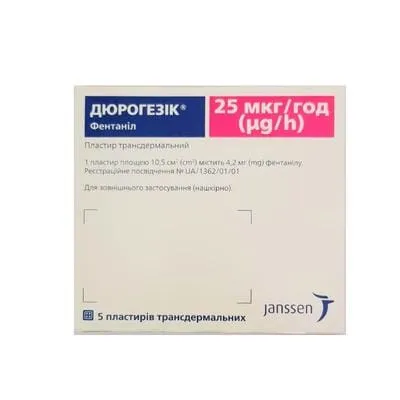
Table of Contents
INSTRUCTIONS FOR MEDICAL USE OF THE MEDICINAL PRODUCT DURAGESIC® (DUROGESIC®)
Composition:
active ingredient: fentanyl;
1 patch contains fentanyl 4.2 mg (25 μg/hour) or 8.4 mg (50 μg/hour), or 12.6 mg (75 μg/hour), or 16.8 mg (100 μg/hour);
excipients: adhesive layer: polyacrylate (Duro-Tak® 87-4287); backing layer: copolymer of polyethylene terephthalate and ethylene vinyl acetate; protective film: silicone-coated polyethylene terephthalate.
Medicinal form: Transdermal patch.
Main physicochemical properties: rectangular patch with a surface area of 10.5 cm² (for 25 μg/hour), 21.0 cm² (for 50 μg/hour), 31.5 cm² (for 75 μg/hour), 42 cm² (for 100 μg/hour), with rounded edges, transparent, bearing clear printed markings of the product name, strength, and edges in red (for 25 μg/hour), green (for 50 μg/hour), blue (for 75 μg/hour), grey (for 100 μg/hour) ink, with minimal visible inhomogeneities and shape deformations.
Pharmacotherapeutic group: Analgesics. Opioids. Phenylpiperidine derivatives.
ATC code: N02AB03.
Pharmacological Properties
Pharmacodynamics
Mechanism of Action
Fentanyl is a synthetic opioid analgesic that primarily interacts with μ-opioid receptors. The main therapeutic effects of the medicinal product Durogesic® are analgesia and sedation.
Children
The safety of Durogesic® has been evaluated in 3 open-label studies involving 289 children aged 2 to 17 years inclusive with chronic pain. Eighty of these children were aged 2 to 6 years inclusive. Of the 289 patients who participated in these 3 studies, 110 initiated treatment with Durogesic® at a dose of 12 mcg/hour. Of these 110 patients, 23 (20.9%) had previously received an oral morphine equivalent dose of < 30 mg per day, 66 (60.0%) received an oral morphine equivalent dose of 30 to 44 mg per day, and 12 (10.9%) received an oral morphine equivalent dose of at least 45 mg per day (data were missing for 9 (8.2%) patients). Initial doses of 25 mcg/hour and higher were administered to another 179 patients, 174 (97.2%) of whom had been receiving opioid doses corresponding to an oral morphine equivalent of at least 45 mg per day. Among the remaining 5 patients who received an initial dose of at least 25 mcg/hour but whose prior opioid doses were < 45 mg oral morphine equivalent per day, 1 (0.6%) had previously received an oral morphine equivalent dose of < 30 mg per day, and 4 (2.2%) received an oral morphine equivalent dose of 30 to 44 mg per day (see section "Adverse Reactions").
Pharmacokinetics
Absorption
Durogesic® provides continuous systemic release of fentanyl for 72 hours following application of the patch. After application of the Durogesic® patch, fentanyl is absorbed through the skin, and a fentanyl depot forms in the upper layers of the skin. Subsequently, fentanyl enters the systemic circulation. The polymer matrix and diffusion of fentanyl through the skin layers ensure a relatively constant release rate. The difference in fentanyl concentrations between the patch and the skin drives drug release. The mean bioavailability of fentanyl following transdermal administration is 92%.
After the first application of the Durogesic® patch, fentanyl serum concentrations gradually increase, typically reaching a plateau within 12–24 hours, and remain relatively constant for the remainder of the 72-hour application period. Steady-state serum concentrations are achieved by the end of the second 72-hour application period and are maintained with subsequent applications of patches of the same dosage strength. Due to accumulation, the AUC and Cmax values during the dosing interval at steady state are approximately 40% higher than after a single dose. The achievement and maintenance of steady serum concentrations are determined by the individual patient's skin permeability and fentanyl clearance. High inter-individual variability in plasma fentanyl concentrations has been observed.
Pharmacokinetic modeling predicts that serum fentanyl concentrations may increase by 14% (range 0–26%) if a new patch is applied after 24 hours instead of the recommended 72-hour interval following removal of the previous patch.
Increased skin temperature may enhance fentanyl absorption during transdermal administration (see section "Special Warnings and Precautions for Use"). Skin warming by application of a low-temperature electric heating pad at the site of Durogesic® patch application during the first 10 hours of a single patch application increased the mean AUC of fentanyl by a factor of 2.2 and the mean concentration at the end of the heating period by 61%.
Distribution
Fentanyl rapidly distributes into various tissues and organs, as indicated by its large volume of distribution (3–10 L/kg after intravenous administration). Fentanyl accumulates in skeletal muscle and adipose tissue and is slowly released back into the bloodstream.
In a study in cancer patients receiving transdermal fentanyl, plasma protein binding of the drug averaged 95% (range 77–100%). Fentanyl readily crosses the blood-brain barrier, penetrates the placenta, and is excreted in breast milk.
Metabolism
Fentanyl has a high clearance and is rapidly and extensively metabolized primarily by CYP3A4 in the liver. The main metabolite, norfentanyl, and other metabolites are inactive. The skin does not participate in the metabolism of transdermally administered fentanyl. This was confirmed by analysis of human keratinocytes during clinical studies, where 92% of the dose delivered from the patch was found unchanged in the systemic circulation.
Elimination
After 72-hour patch application, the elimination half-life of fentanyl ranges from 20 to 27 hours. Due to prolonged absorption of fentanyl from the skin after patch removal, the elimination half-life following transdermal administration is approximately 2–3 times longer than after intravenous administration.
Following intravenous administration, mean values of total fentanyl clearance in studies ranged from 34 to 66 L/h.
Within 72 hours after intravenous administration of fentanyl, approximately 75% of the dose is excreted in urine and about 9% in feces. Elimination occurs predominantly as metabolites, with less than 10% of the drug excreted unchanged.
Linearity/Non-linearity
Serum fentanyl concentrations are proportional to the size of the Durogesic® patch. The pharmacokinetics of transdermal fentanyl do not change with repeated administration.
Pharmacokinetic/Pharmacodynamic Relationship
There is high inter-individual variability in the pharmacokinetics of fentanyl, the relationship between fentanyl concentrations and therapeutic and adverse effects, and opioid tolerance. The minimum effective fentanyl concentration depends on pain intensity and prior opioid use. With increasing tolerance, both the minimum effective concentration and the toxic concentration increase. Therefore, it is not possible to define an optimal therapeutic concentration range for fentanyl. Individual dose adjustments of fentanyl should be based on patient response and tolerance level. The delayed onset period of 12–24 hours following application of the first patch or after a dose increase should also be taken into account.
Special Patient Populations
Elderly Patients
Data from studies of intravenous fentanyl administration suggest that elderly patients may have reduced clearance, prolonged elimination half-life, and increased sensitivity to drugs compared to younger patients. In a study of Durogesic® in healthy elderly volunteers, the pharmacokinetics of fentanyl did not differ significantly from those in younger healthy volunteers; however, peak serum concentrations were lower, and the elimination half-life was prolonged to approximately 34 hours. When elderly patients are treated with Durogesic®, careful monitoring for signs of fentanyl toxicity is recommended, and dose reduction should be considered if necessary (see section "Special Warnings and Precautions for Use").
Patients with Renal Impairment
The impact of renal impairment on fentanyl pharmacokinetics is expected to be limited, as unchanged fentanyl excretion in urine accounts for less than 10%, and there are no known active metabolites excreted by the kidneys. However, since the effect of renal impairment on fentanyl pharmacokinetics has not been formally studied, caution is recommended (see sections "Dosage and Administration" and "Special Warnings and Precautions for Use").
Patients with Hepatic Impairment
Patients with hepatic impairment should be closely monitored for signs of fentanyl toxicity, and the dose of transdermal Durogesic® patch should be reduced if necessary (see section "Special Warnings and Precautions for Use"). Data from patients with cirrhosis and modeling data indicate that patients with varying degrees of hepatic dysfunction receiving transdermal fentanyl may have increased fentanyl concentrations and reduced fentanyl clearance compared to patients without hepatic impairment. Modeling suggests that steady-state AUC values in patients with moderate hepatic impairment (Child-Pugh class B, score = 8) are approximately 1.36 times higher than in patients without hepatic impairment (Child-Pugh class A, score = 5.5). In patients with severe hepatic impairment (Child-Pugh class C, score = 12.5), fentanyl accumulates with each patch application, resulting in an approximately 3.72-fold increase in steady-state AUC.
Children
Fentanyl concentrations were measured in over 250 children aged 2 to 17 years who received fentanyl patches at doses ranging from 12.5 to 300 mcg/hour. When adjusted for body weight, clearance (L/h/kg) was approximately 80% higher in children aged 2 to 5 years and 25% higher in children aged 6 to 10 years compared to children aged 11 to 16 years, in whom clearance was similar to that in adults. These findings were taken into account when establishing dosage recommendations for children (see sections "Dosage and Administration" and "Special Warnings and Precautions for Use").
Clinical characteristics.
Indications.
Treatment of severe chronic pain in adult patients who require continuous long-term opioid therapy.
Long-term treatment of severe chronic pain in children aged 2 years and older who are already receiving opioid analgesic therapy.
Contraindications.
Hypersensitivity to fentanyl or any component of the patch.
Acute or postoperative pain, due to the inability to titrate the dose during short-term use and due to the risk of developing severe or life-threatening respiratory depression.
Severe respiratory insufficiency.
Due to the risk of fatal respiratory depression, Durogesic® is contraindicated:
- in patients who are not opioid-tolerant;
- in patients with acute or severe asthma;
- in patients with paralytic ileus;
- for the treatment of moderate pain.
Interaction with other medicinal products and other forms of interaction.
Pharmacodynamic interactions.
Central nervous system (CNS) acting agents / CNS depressants, including alcohol and narcotic CNS depressants.
Concomitant use of Durogesic® transdermal patch with other medicinal products that depress CNS function (including benzodiazepines and other sedatives/hypnotics, opioids, general anesthetics, phenothiazines, tranquilizers, sedative antihistamines, alcohol, and narcotic medicinal products that depress the CNS), as well as use of muscle relaxants and gabapentinoids (gabapentin and pregabalin), may result in respiratory depression, hypotension, excessive sedation, coma, including fatal outcomes. Concomitant administration of CNS depressants and Durogesic® should be limited to cases where alternative treatment is not possible. Administration of any of these medicinal products concomitantly with Durogesic® patch requires special care and close monitoring of patients. The dose and duration of treatment should be limited when used concomitantly (see section "Special precautions for use").
Monoamine oxidase inhibitors (MAOIs).
Durogesic® is not recommended for use in patients requiring concomitant therapy with MAOIs. Serious and unpredictable interactions with MAOIs have been reported, including potentiation of opioid effects or serotonergic effects. Durogesic® should not be used within 14 days after discontinuation of MAOI therapy.
Serotonergic medicinal products.
Concomitant use of fentanyl with serotonergic medicinal products such as selective serotonin reuptake inhibitors (SSRIs), serotonin-norepinephrine reuptake inhibitors (SNRIs), or monoamine oxidase inhibitors (MAOIs) may increase the risk of serotonin syndrome, which is life-threatening. Use concomitantly with caution. Patients should be closely monitored, especially at the beginning of treatment and during dose adjustments (see section "Special precautions for use").
Concomitant use with mixed opioid agonists/antagonists.
Concomitant use of buprenorphine, nalbuphine, or pentazocine is not recommended. These agents have high affinity for opioid receptors with relatively low intrinsic activity and may therefore partially antagonize the analgesic effect of fentanyl and may precipitate withdrawal symptoms in opioid-dependent patients (see section "Special precautions for use").
Pharmacokinetic interactions.
Inhibitors of cytochrome P450 3A4 (CYP3A4).
Fentanyl is a drug with high extraction ratio, which is rapidly and extensively metabolized, primarily by CYP3A4 enzymes.
Concomitant use of Durogesic® with inhibitors of cytochrome P450 3A4 (CYP3A4) may lead to increased plasma concentrations of fentanyl, which may enhance or prolong both therapeutic effects and adverse reactions, and may cause severe respiratory depression. The interaction with strong CYP3A4 inhibitors is expected to be greater than with weak or moderate inhibitors. Cases of severe respiratory depression have been reported after concomitant use of CYP3A4 inhibitors with transdermal fentanyl, including a fatal case after concomitant use with a moderate CYP3A4 inhibitor. Concomitant use of CYP3A4 inhibitors and Durogesic® is not recommended, except when the patient is under close supervision (see section "Special precautions for use"). Active substances such as amiodarone, cimetidine, clarithromycin, diltiazem, erythromycin, fluconazole, itraconazole, ketoconazole, nefazodone, ritonavir, verapamil, and voriconazole (this list is not exhaustive) may increase fentanyl concentrations. After concomitant use of weak, moderate, or strong CYP3A4 inhibitors with short-term intravenous administration of fentanyl, the reduction in clearance was usually ≤25%, but with concomitant use of ritonavir (a strong CYP3A4 inhibitor), fentanyl clearance was reduced by an average of 67%. The extent of interaction between CYP3A4 inhibitors and long-term transdermal fentanyl use is unknown, but it may be greater than with short-term intravenous administration.
Inducers of cytochrome P450 3A4 (CYP3A4) enzymes.
Concomitant use of transdermal fentanyl with CYP3A4 inducers may lead to decreased plasma concentrations of fentanyl and reduced therapeutic effect. Caution should be exercised when using CYP3A4 inducers concomitantly with Durogesic® patch. It may be necessary to increase the dose of Durogesic® or switch to another analgesic. Prior to discontinuation of concomitant CYP3A4 inducer therapy, fentanyl dose reduction and careful monitoring should be ensured. After discontinuation of CYP3A4 inducers, their effects gradually diminish, which may lead to increased plasma concentrations of fentanyl. This may result in enhanced or prolonged therapeutic effects and possible adverse reactions, including severe respiratory depression. In such cases, close monitoring of the patient is required until stable drug effects are achieved. Active substances such as carbamazepine, phenobarbital, phenytoin, and rifampicin (this list is not exhaustive) may lead to decreased plasma concentrations of fentanyl.
Children.
Interaction studies have been conducted only in adult patients.
Special precautions for use.
Patients who have experienced severe adverse reactions should be closely monitored for at least 24 hours after removal of Durogesic® or longer depending on clinical symptoms, as serum fentanyl concentration decreases gradually and reaches 50% after 20–27 hours.
Patients and caregivers should be informed that Durogesic® contains an active substance in an amount that may be fatal, especially for children. Therefore, patches must be stored out of sight and out of reach of children both before and after use.
Due to risks, including potentially fatal outcomes associated with accidental ingestion, misuse, and abuse, patients and caregivers should be advised to store Durogesic® in a secure place inaccessible to others.
Patients who have not previously been treated with opioids and who are opioid-naïve.
Use of Durogesic® in opioid-naïve patients has rarely been associated with significant respiratory depression and/or fatal outcomes when used as initial opioid therapy, especially in patients whose pain is not caused by oncological diseases. The possibility of severe or life-threatening hypoventilation exists even when the lowest dose of Durogesic® is used as initial therapy in opioid-naïve patients, particularly in elderly patients and in patients with impaired liver or kidney function. The tendency to develop tolerance varies among different patients. Durogesic® is recommended for use in patients who have developed opioid tolerance (see section "Dosage and administration").
Respiratory depression.
Significant respiratory depression may occur in some patients using the Durogesic® patch. Patients should be monitored for such effects. Respiratory depression may persist even after removal of the Durogesic® patch. The frequency of respiratory depression increases with higher doses of Durogesic® (see section "Overdose").
Opioids may cause sleep-related breathing disorders, including central sleep apnea (CSA), and nocturnal hypoxia. Opioid use increases the risk of CSA in a dose-dependent manner. Consideration should be given to reducing the total opioid dose in patients with CSA.
Risks associated with concomitant use of central nervous system (CNS) depressants, including sedatives such as benzodiazepines or similar medicinal products, alcohol, and other CNS depressant drugs.
Concomitant use of Durogesic® with sedative drugs such as benzodiazepines or similar medicinal products, alcohol, or other CNS depressants may result in sedation, respiratory depression, coma, and fatal outcomes. Because of these risks, concomitant use of sedative drugs should be limited to cases where alternative treatments are not possible. If a decision is made to prescribe Durogesic® concomitantly with sedative drugs, the lowest effective dose should be used, and the duration of treatment should be as short as possible.
Patients should be closely monitored for signs and symptoms of respiratory depression and sedation. Therefore, it is strongly recommended to inform patients and caregivers about the potential occurrence of such symptoms (see section "Interaction with other medicinal products and other forms of interaction").
Chronic pulmonary diseases.
Durogesic® may cause a number of severe adverse reactions in patients with chronic obstructive and other pulmonary diseases. In such patients, opioids may reduce respiratory center stimulation and increase ventilatory resistance.
Opioid use disorder (dependence and abuse)
Repeated use of Durogesic® may lead to opioid use disorder (OUD). Higher doses and longer duration of opioid use may increase the risk of developing OUD. Misuse of Durogesic® or intentional incorrect use may lead to overdose and/or fatal outcomes. The risk of OUD is increased in patients with personal or family history (parents, siblings) of substance use disorders (including alcohol use disorders), in smokers, or in patients with other psychiatric disorders in personal history (such as major depressive disorder, anxiety, or personality disorders).
Before initiating treatment with Durogesic® and during therapy, treatment goals and plans for discontinuation should be agreed upon with the patient (see section "Dosage and administration"). Before and during treatment, the patient should also be informed about the risk of developing and signs of OUD. Patients should be advised to contact their physician if these signs appear.
Patients receiving opioid medicinal products should be monitored for signs of OUD, such as drug-seeking behavior (e.g., early requests for additional doses), especially in patients at increased risk of such disorders. Monitoring includes assessing concomitant use of other opioids and psychoactive medicinal products (such as benzodiazepines). Consideration should be given to referring patients showing signs and symptoms of OUD for consultation with an addiction specialist. Information on discontinuation of opioid use can be found in the section "Long-term effects of treatment and tolerance" below.
Long-term effects of treatment and tolerance.
With repeated use of opioids, all patients may develop tolerance to analgesic effects, opioid-induced hyperalgesia, physical and psychological dependence, while incomplete tolerance may develop to certain adverse reactions such as opioid-induced constipation. It has been reported that patients may not experience significant reduction in pain intensity with continuous long-term opioid therapy, especially patients with chronic non-cancer-related pain. Frequent contact between physician and patient should be maintained during treatment to assess the need for continued therapy (see section "Dosage and administration"). When a decision is made that continued treatment provides no benefit, the dose should be gradually reduced to avoid withdrawal symptoms.
Durogesic® should not be abruptly discontinued in patients physically dependent on opioids. Withdrawal syndrome may occur upon abrupt discontinuation or dose reduction. Rapid dose reduction of Durogesic® in opioid-dependent patients has been reported to lead to severe withdrawal symptoms and uncontrolled pain (see sections "Dosage and administration" and "Adverse reactions"). If therapy is no longer required, gradual dose reduction is recommended to minimize withdrawal symptoms. Gradual tapering of high-dose therapy may take weeks or even months. Opioid withdrawal syndrome is characterized by the following symptoms (all or some of them): restlessness, lacrimation, rhinorrhea, yawning, sweating, chills, myalgia, miosis, and palpitations. Other symptoms may also develop, including irritability, agitation, anxiety, hyperkinesia, tremor, weakness, insomnia, anorexia, abdominal cramps, nausea, vomiting, diarrhea, increased blood pressure, increased respiratory rate, or heart rate.
Central nervous system disorders, including increased intracranial pressure.
Durogesic® should be used with caution in patients who may be particularly sensitive to increased CO₂ levels, i.e., patients with increased intracranial pressure, impaired consciousness, or coma. Durogesic® should be used with caution in patients with brain tumors.
Cardiac disorders.
Fentanyl may cause bradycardia and therefore should be used with caution in patients with bradyarrhythmias.
Arterial hypotension.
Opioids may cause arterial hypotension, especially in patients with acute hypovolemia. Existing symptomatic hypotension and/or hypovolemia should be treated before initiating transdermal fentanyl patch therapy.
Hepatic impairment.
Since fentanyl is metabolized to inactive metabolites in the liver, hepatic impairment may lead to delayed elimination of the drug. If patients with hepatic impairment are treated with Durogesic®, they should be closely monitored for signs of fentanyl toxicity, and the dose of Durogesic® should be reduced if necessary (see section "Pharmacological properties").
Renal impairment.
Although renal impairment is not expected to have a clinically significant effect on fentanyl elimination, caution should be exercised since the pharmacokinetics of fentanyl have not been evaluated in this patient population (see section "Pharmacological properties"). Treatment should only be initiated when benefits outweigh the risks. If patients with renal impairment are treated with Durogesic®, they should be carefully monitored for signs of fentanyl toxicity, and the dose should be reduced if necessary. Additional restrictions apply to opioid-naïve patients with renal impairment (see section "Dosage and administration").
Fever/external heat sources.
Fentanyl concentration may increase with elevated skin temperature (see section "Pharmacological properties"). Therefore, patients with fever should be closely monitored for opioid-related adverse reactions, and the Durogesic® dose should be adjusted if necessary. There is a risk of temperature-dependent increase in fentanyl release from the patch, which may lead to overdose and death.
All patients must avoid direct exposure of external heat sources such as heating pads, electric blankets, heated water beds, heat lamps, sunbeds, sunbathing, hot water bottles, hot baths, saunas, jacuzzis, to the site of Durogesic® patch application.
Serotonin syndrome.
Durogesic® should be used with caution when co-administered with medicinal products affecting serotonergic neurotransmitter systems.
Potentially life-threatening serotonin syndrome may occur with concomitant use of serotonergic medicinal products such as selective serotonin reuptake inhibitors (SSRIs) and serotonin-norepinephrine reuptake inhibitors (SNRIs), as well as with medicinal products that reduce serotonin metabolism (including monoamine oxidase inhibitors (MAOIs)), even at recommended doses (see section "Interaction with other medicinal products and other forms of interaction").
Serotonin syndrome may include mental status changes (e.g., agitation, hallucinations, coma), autonomic nervous system disturbances (e.g., tachycardia, blood pressure fluctuations, hyperthermia), neuromuscular abnormalities (e.g., hyperreflexia, incoordination, rigidity), and/or gastrointestinal symptoms (e.g., nausea, vomiting, diarrhea).
Durogesic® patch use should be discontinued if serotonin syndrome is suspected.
Interactions with other medicinal products
Inhibitors of CYP3A4.
Concomitant use of Durogesic® patch with cytochrome P450 3A4 (CYP3A4) inhibitors may increase plasma fentanyl concentrations, potentially enhancing or prolonging both therapeutic effects and adverse reactions, and causing serious respiratory depression. Therefore, concomitant use of Durogesic® and CYP3A4 inhibitors is not recommended, except when expected benefits outweigh the increased risk of adverse reactions.
It is not recommended to apply the first Durogesic® patch within 2 days after discontinuation of CYP3A4 inhibitor therapy. However, the duration of respiratory depression may vary, and for some CYP3A4 inhibitors with long half-lives, such as amiodarone, or time-dependent inhibitors such as erythromycin, idelalisib, nicardipine, and ritonavir, a longer interval may be required. Therefore, before applying the first Durogesic® patch, refer to the prescribing information of the CYP3A4 inhibitor regarding its half-life and duration of inhibitory effect. A patient receiving Durogesic® therapy should wait at least 1 week after removal of the last patch before starting therapy with a CYP3A4 inhibitor. If concomitant use of Durogesic® patch and CYP3A4 inhibitors cannot be avoided, careful monitoring for symptoms of increased or prolonged fentanyl effects and adverse reactions (particularly respiratory depression) should be ensured. Additionally, the dose of Durogesic® patch should be reduced or discontinued if necessary (see section " Interaction with other medicinal products and other forms of interaction").
Accidental use of Durogesic® patch.
Accidental application of a fentanyl patch to the skin of a person for whom it is not prescribed (especially a child), during sleep or close physical contact with a patient, may lead to opioid overdose. The patch should be immediately removed if accidentally applied to the skin (see section "Overdose").
Elderly patients.
Data from studies of intravenous fentanyl administration indicate that elderly patients may have reduced clearance, prolonged half-life, and increased sensitivity to drugs compared to younger patients. If elderly patients are treated with Durogesic®, they should be carefully monitored for signs of fentanyl toxicity, and the dose of Durogesic® should be reduced if necessary (see section "Pharmacokinetics").
Effect on the gastrointestinal system.
Opioids increase tone and reduce propulsive contractions of gastrointestinal smooth muscle. As a result, gastrointestinal transit time is prolonged, which may cause constipation. Patients should be advised on preventive measures for constipation, and consideration should be given to prescribing laxatives prophylactically. Durogesic® should be used with extreme caution in patients with chronic constipation. Use of Durogesic® patch should be discontinued in the presence of or suspicion of paralytic ileus.
Patients with myasthenia gravis.
Non-epileptic (myo)clonic reactions may occur. Caution should be exercised when treating patients with myasthenia.
Concomitant use with mixed opioid agonists/antagonists.
Concomitant use of buprenorphine, nalbuphine, or pentazocine is not recommended (see section "Interaction with other medicinal products and other forms of interaction").
Children.
Durogesic® is not used in children who have not previously received opioid treatment (see section "Dosage and administration"). The risk of severe or life-threatening hypoventilation exists regardless of the dose of the transdermal Durogesic® patch. Use of Durogesic® patch in children under 2 years of age has not been studied. Durogesic® patch may be used in patients aged 2 years and older only if they have opioid tolerance (see section "Dosage and administration").
To prevent accidental ingestion of the patch by children, careful selection of the application site and monitoring of patch adhesion are required (see section "Dosage and administration").
Opioid-induced hyperalgesia.
Opioid-induced hyperalgesia (OIH) is a paradoxical response to opioids, characterized by increased pain sensitivity despite stable or increased opioid exposure. This differs from tolerance, where higher opioid doses are required to achieve the same analgesic effect or to treat pain recurrence. OIH may manifest as increased pain intensity, more generalized pain (i.e., less localized), or pain from normally non-painful stimuli (allodynia), without signs of disease progression. In suspected OIH, opioid dose should be reduced if possible.
Use during pregnancy or breastfeeding.
Pregnancy.
There are insufficient data on the use of Durogesic® in pregnant women. Animal studies have shown some reproductive toxicity. The potential risk to humans is unknown, but in other dosage forms, fentanyl, particularly intravenous, has been shown to cross the placenta. Cases of neonatal withdrawal syndrome have been reported in newborns whose mothers continuously used Durogesic® during pregnancy. Durogesic® should not be used during pregnancy except when clearly necessary.
Use of Durogesic® patch during labor is not recommended, as the medicinal product is not intended for treatment of acute or postoperative pain (see section "Contraindications"), and because fentanyl crosses the placenta and may cause respiratory depression in the newborn.
Breastfeeding.
Fentanyl is excreted in breast milk and may cause sedation/respiratory depression in the newborn. Breastfeeding should be discontinued during use of Durogesic® patch and for at least 72 hours after patch removal.
Fertility.
There are no clinical data on the effect of fentanyl on fertility. Some rat studies have shown reduced fertility and increased embryonic mortality when the drug was administered at toxic maternal doses.
Ability to affect reaction speed when driving or operating machinery.
Durogesic® may affect mental and/or physical functions required for potentially hazardous work, such as driving a car or operating machinery.
Method of Administration and Dosage.
Dose Selection.
The dosage of the medicinal product Durogesic® should be individually adjusted according to the patient's condition, and should be regularly assessed after application of the patch. The lowest effective dose should be used. The patches are designed to release 25, 50, 75, and 100 mcg of fentanyl per hour into the systemic circulation, which corresponds to approximately 0.6, 1.2, 1.8, and 2.4 mg per day.
Initial Dose Selection.
The initial dose of Durogesic® is selected based on the patient's prior opioid analgesic regimen. Durogesic® is recommended for use in opioid-tolerant patients. The patient's overall condition, body weight, age, degree of debilitation, and level of opioid tolerance should also be taken into account.
Adults.
Opioid-Tolerant Patients.
To determine the dosage of Durogesic® when switching a patient from oral or intravenous opioids, refer to the "Equianalgesic dose conversion table" provided below. Subsequently, the dose may be titrated upward or downward in increments of 25 mcg/hour to achieve the lowest effective dose, depending on the patient's response to treatment and additional analgesic requirements.
Patients who have not previously taken opioids.
Generally, the use of transdermal fentanyl is not recommended in patients who have not previously been exposed to opioids. In such cases, alternative routes of administration (oral, parenteral) should be considered. To prevent overdose, it is recommended to initiate treatment with the lowest possible dose of immediate-release opioids (morphine, hydromorphone, oxycodone, tramadol, or codeine) and titrate gradually until a dose equivalent to 25 mcg/hour of Durogesic® is reached. The patient may then be switched to Durogesic® 25 mcg/hour patch.
If oral opioid medications cannot be used at the beginning of treatment and the Durogesic® patch is the only available option for patients who have not previously taken opioids, the lowest dose of Durogesic® – 25 mcg/hour – should be applied. In such cases, the patient must be under close monitoring. There is a risk of developing severe or life-threatening hypoventilation, even with the use of the lowest dose of the drug during initial therapy (see sections "Special Warnings and Precautions" and "Overdose").
Equianalgesic Dose Conversion
For patients currently receiving opioid analgesics, the initial dose of Durogesic® should be determined based on the daily dose of their previous analgesic. To calculate the appropriate initial dose of Durogesic®, follow the instructions below:
- Calculate the previous daily dose of the analgesic (mg/day).
- Convert this value to the equianalgesic 24-hour oral morphine dose using the multiplication factor from Table 1 corresponding to the route of administration.
- To determine the Durogesic® dosage corresponding to the calculated equianalgesic 24-hour oral morphine dose, use either Table 2 or Table 3 as follows:
- Table 2 – for determining the dose in adult patients requiring a change in opioid analgesic and who have a less stable clinical condition (the conversion ratio of oral morphine to transdermal fentanyl is approximately 150:1);
- Table 3 – for determining the dose in adult patients on a stable and well-tolerated treatment regimen (the conversion ratio of oral morphine to transdermal fentanyl is approximately 100:1).
Table 1
Equianalgesic dose conversion table: multiplication factors for converting the daily dose of previous opioid analgesics to the equianalgesic 24-hour oral morphine dose (dose in mg/day of previous analgesic × factor = equianalgesic 24-hour oral morphine dose)
| Previous opioid analgesic |
Route of administration |
Multiplication factor |
| Morphine |
Oral |
1a |
| Parenteral |
3 |
|
| Buprenorphine |
Sublingual |
75 |
| Parenteral |
100 |
|
| Codeine |
Oral |
0.15 |
| Parenteral |
0.23b |
|
| Heroin |
Oral |
0.5 |
| Parenteral |
6b |
|
| Fentanyl |
Oral |
|
| Parenteral |
300 |
|
| Hydromorphone |
Oral |
4 |
| Parenteral |
20b |
|
| Ketobemidone |
Oral |
1 |
| Parenteral |
3 |
|
| Levorphanol |
Oral |
7.5 |
| Parenteral |
15b |
|
| Methadone |
Oral |
1.5 |
| Parenteral |
3b |
|
| Oxycodone |
Oral |
1.5 |
| Parenteral |
3 |
|
| Oxymorphone |
Rectal |
3 |
| Parenteral |
30b |
|
| Pethidine |
Oral |
|
| Parenteral |
0.4b |
|
| Tapentadol |
Oral |
0.4 |
| Parenteral |
|
|
| Tramadol |
Oral |
0.25 |
| Parenteral |
0.3 |
a The ratio of oral to intramuscular morphine dosing is based on clinical experience in patients with chronic pain.
b Based on study data of single-dose intramuscular administration of each substance compared to morphine to determine relative potency. Oral doses correspond to recommendations for switching from parenteral to oral administration.
Table 2
Recommended initial dose of Durogesic® based on the daily oral morphine dose (for patients requiring a change in opioid analgesic or who are less clinically stable: the conversion ratio of oral morphine to transdermal fentanyl is approximately 75 : 1)1.
| Oral daily dose of morphine (mg/day) |
Durogesic® dosage (mcg/hour) |
| 90–134 |
25 |
| 135–224 |
50 |
| 225–314 |
75 |
| 315–404 |
100 |
| 405–494 |
125 |
| 495–584 |
150 |
| 585–674 |
175 |
| 675–764 |
200 |
| 765–854 |
225 |
| 855–944 |
250 |
| 945–1034 |
275 |
| 1035–1124 |
300 |
1 The daily oral morphine doses listed were used in clinical studies for conversion to Durogesic® patch.
Table 3
Recommended initial dose of Durogesic® based on daily oral morphine dose (for patients on stable, well-tolerated opioid therapy: the conversion ratio of oral morphine to transdermal fentanyl is approximately 100:1).
| Oral morphine daily dose (mg/day) |
Durogesic® dosage (mcg/hour) |
| 45–89 |
25 |
| 90–149 |
50 |
| 150–209 |
75 |
| 210–269 |
100 |
| 270–329 |
125 |
| 330–389 |
150 |
| 390–449 |
175 |
| 450–509 |
200 |
| 510–569 |
225 |
| 570–629 |
250 |
| 630–689 |
275 |
| 690–749 |
300 |
Initial assessment of the maximum analgesic effect of Durogesic® patch cannot be made earlier than 24 hours after patch application. This time interval is due to the gradual increase in serum fentanyl concentration following application.
For successful transition from one analgesic to another, previous pain therapy should be gradually discontinued after application of the initial dose of Durogesic® patch.
Dose selection and maintenance therapy.
The patch should be replaced every 72 hours.
The dose should be individually titrated based on daily use of supplemental analgesics until a balance between adequate pain relief and tolerability is achieved. The dose is usually increased in increments of 25 mcg/hour; however, the patient's condition and need for additional analgesia should be considered (a daily oral morphine dose of 90 mg approximately corresponds to a Durogesic® dose of 25 mcg/hour). After a dose increase, up to 6 days may be required to reach steady-state at the new dosage level. Therefore, after increasing the dose, patients should use the patch with the increased dose for two 72-hour periods before any further dose escalation.
To achieve doses exceeding 100 mcg/hour, multiple patches may be applied simultaneously. Patients may periodically require additional doses of short-acting analgesics for breakthrough pain. In some patients, additional or alternative analgesic measures may be necessary when using Durogesic® doses exceeding 300 mcg/hour.
In the absence of adequate analgesia, consider possible hyperalgesia, tolerance, or progression of the underlying disease (see section "Special precautions").
If adequate analgesia is not achieved after application of the initial dose, the patch may be replaced after 48 hours with a patch of the same strength or the dose may be increased after 72 hours.
If replacement of the patch is required before 72 hours (e.g., the patch detaches), a patch of the same strength should be applied to a different skin site. This may lead to increased fentanyl blood concentrations (see section "Pharmacological properties"); in such cases, careful patient monitoring is essential.
Treatment duration and treatment goals.
Prior to initiating Durogesic® therapy, a treatment strategy including treatment duration, treatment goals, and a plan for discontinuation according to pain management guidelines should be agreed upon with the patient. During treatment, frequent contact between physician and patient is necessary to evaluate the need for continued therapy, the appropriateness of discontinuation, and, if necessary, dose adjustments. In the absence of adequate analgesia, consider possible hyperalgesia, tolerance, or progression of the underlying disease (see section "Special precautions").
Discontinuation of Durogesic® therapy.
When discontinuation of Durogesic® is required, switching from this product to another opioid should be done gradually, starting with a low dose and slowly increasing. This regimen is necessary due to the gradual decline in fentanyl concentration after removal of the Durogesic® patch; the serum fentanyl concentration decreases by 50% over 20 hours or longer. Opioid analgesic discontinuation should always be gradual to prevent withdrawal syndrome (see sections "Special precautions" and "Adverse reactions"). Rapid discontinuation of opioid analgesics in patients physically dependent on opioids has been reported to result in severe withdrawal symptoms and uncontrolled pain. Dose reduction should be based on the individual dose, duration of treatment, patient's response to pain, and presence of withdrawal symptoms. Patients who have received long-term treatment may require a more gradual dose reduction. For patients treated for a short duration, a faster dose reduction schedule may be considered.
Opioid withdrawal symptoms may occur in some patients after switching medications or reducing the dose.
Tables 1, 2, and 3 are intended only for dose conversion when switching from other opioid analgesics to Durogesic®, and not when switching from Durogesic® patch therapy to other opioid analgesics, to avoid incorrect dose calculation and potential overdose.
Special patient populations.
Elderly patients.
Elderly patients receiving Durogesic® require careful monitoring, and the dose should be individually titrated according to the patient's condition (see sections "Special precautions" and "Pharmacological properties"). Opioid-naïve elderly patients should not receive Durogesic®, except when the expected benefit outweighs the potential risks. In such cases, initial treatment should only consider the 12 mcg/hour dose*—see information below.
Patients with renal or hepatic impairment.
Patients with renal or hepatic impairment require careful monitoring, and the dose should be individually titrated according to the patient's condition (see sections "Special precautions" and "Pharmacological properties").
Opioid-naïve patients with renal or hepatic impairment should not receive Durogesic®, except when the expected benefit outweighs the potential risks. In such cases, initial treatment should only consider the 12 mcg/hour dose*—see information below.
Children.
Patients aged 16 years and older.
Dosing recommendations for adult patients should be followed.
Patients aged 2 to 16 years.
Durogesic® patch may be used in patients aged 2 to 16 years only if they are opioid-tolerant and have previously received opioid analgesics in a dose equivalent to at least 30 mg of oral morphine per day. When switching pediatric patients from oral or parenteral opioids to Durogesic®, dose selection should be based on Table 1. Recommendations for determining the Durogesic® dose based on daily oral morphine dose are provided in Table 4.
Table 4
Recommended Durogesic® dosage for children1 according to daily oral morphine dose2.
| Oral daily dose of morphine (mg/day) |
Durogesic® dosage (mcg/hour) |
| 30–44 |
12* see information below |
| 45–134 |
25 |
-
Dose conversion for doses exceeding 25 mcg/hour of Duragesic® in children corresponds to the conversion for adult patients (see Table 2).
-
The daily oral morphine doses listed were used in clinical studies when switching to Duragesic® patch.
During two pediatric studies, the required dose of transdermal fentanyl patch was conservatively calculated: 30 to 44 mg/day of oral morphine or equivalent opioid dose was replaced with one Duragesic® patch at a dose of 12 mcg/hour* see information below. It should be noted that this conversion can only be used when switching patients from oral morphine (or equivalent agent) to the Duragesic® patch. This method must not be used to convert dosing when switching from transdermal fentanyl to other opioid analgesics due to the risk of overdose.
The analgesic effect of the first dose of Duragesic® patch may not be optimal during the first 24 hours. Therefore, during the first 12 hours after switching to Duragesic® patch, the patient should continue to receive their previous usual analgesic dose. During the subsequent 12 hours, these analgesics may be administered as clinically needed.
It is recommended to monitor the patient for at least 48 hours after initiation of therapy with Duragesic® patch or until dose stabilization, for the development of adverse reactions, which may include hypoventilation (see section "Special precautions").
Duragesic® must not be used in children under 2 years of age, as safety and efficacy in this patient group have not been established.
Dose titration and maintenance therapy in children.
The patch should be replaced every 72 hours.
Dosage must be individually titrated, balancing the achievement of adequate analgesia against treatment tolerability.
Dosage adjustments must not be made at intervals shorter than 72 hours. If adequate analgesia is not achieved, additional analgesics such as morphine or short-acting opioids should be administered. Depending on the child’s additional analgesic requirements and pain condition, a decision may be made to increase the dose. The dose should be increased by 12 mcg/hour* see information below.
* To achieve the required dosage, the appropriate medicinal product with the corresponding active substance content should be used.
Method of administration.
Duragesic® is intended for transdermal administration.
Duragesic® should be applied to an intact, non-irradiated, flat area of skin on the trunk or upper parts of the arms.
For small children, the upper back area should be selected for patch application to minimize the risk of the child removing the patch.
The application site should be chosen with minimal hair coverage. Prior to application, hair at the site should be clipped (not shaved). If the application site needs to be washed before patch application, this should be done using clean water only. Soap, lotions, oils, or other products should not be used, as they may irritate the skin or alter its properties. The skin must be completely dry before application. The patch should be inspected prior to use. Patches that are cut, torn, or otherwise damaged must not be used.
Duragesic® should be applied immediately after opening the sealed pouch. To remove the Duragesic® patch from its protective pouch, bend the pouch along the notch located near the tip of the arrow on the pouch label, then carefully tear open the pouch material. Open the pouch like a book. The protective liner has a slit in the middle. Fold the patch in half at the center and remove each half of the protective liner, taking care not to touch the adhesive side of the patch with fingers. After removing both halves of the protective liner, the transdermal patch should be firmly pressed with the palm of the hand onto the application site for 30 seconds. Ensure that the system adheres firmly to the skin, especially at the edges. After completing the procedure, wash hands with clean water.
Duragesic® is designed for continuous use over 72 hours. A new patch must be applied to a different skin area after removal of the used patch. The same skin site must not be used again until several days have passed.
Children.
Duragesic® patch is indicated for long-term treatment of severe chronic pain in children aged 2 years and older who are already receiving opioid analgesic therapy.
Overdose.
Symptoms. Signs of fentanyl overdose are an extension of its pharmacological effects, the most serious consequence being respiratory depression. Toxic leukoencephalopathy has also been observed in cases of fentanyl overdose.
Treatment. Immediate safety measures for treatment of respiratory depression include prompt removal of the patch and physical and verbal stimulation of the patient. These measures may be supplemented by administration of a specific opioid antagonist, naloxone. Respiratory depression following overdose may last longer than the duration of action of the opioid antagonist. The interval between intravenous doses of the antagonist should be carefully selected; repeated doses or prolonged infusion of naloxone may be required due to continued absorption of fentanyl from the skin after patch removal. The loss of analgesic effect may lead to the development of acute pain episodes and catecholamine release.
If clinically indicated, respiratory support should be ensured and maintained. Oxygen should be administered via an oropharyngeal airway or endotracheal tube under continuous monitoring, and assisted ventilation should be provided if necessary. Adequate body temperature and fluid intake should be maintained. In cases of severe or persistent hypotension, hypovolemia should be considered. Management should include parenteral administration of appropriate fluids.
Adverse reactions
The safety of the medicinal product Durogesic® was evaluated in 1565 adults and 289 children who participated in 11 clinical trials assessing the use of the product for the treatment of chronic pain, both related and unrelated to oncological diseases. Each study subject received at least one dose of the medicinal product and had corresponding safety data. Based on the pooled safety data from these clinical trials, the most frequently observed adverse reactions (≥10% of cases) were: nausea (35.7%), vomiting (23.2%), constipation (23.1%), somnolence (15.0%), dizziness (13.1%), headache (11.8%).
Adverse reactions reported during these clinical studies and during post-marketing surveillance are listed in Table 5.
Unwanted adverse reactions are classified by organ system and grouped according to frequency: very common (≥1/10); common (≥1/100 to <1/10); uncommon (≥1/1000 to <1/100); rare (≥1/10000 to <1/1000); very rare (<1/10000); frequency not known (cannot be estimated from the available data). Adverse reactions are grouped by organ systems and listed in order of decreasing severity within each frequency category.
Table 5
Adverse reactions in adults and children.
| Very common |
Common |
Uncommon |
Rare |
Unknown |
| Immune system disorders |
||||
| Hypersensitivity |
Anaphylactic shock, anaphylactic reactions, anaphylactoid reactions |
|||
| Endocrine disorders |
||||
| Androgen deficiency |
||||
| Metabolism and nutrition disorders |
||||
| Anorexia |
||||
| Psychiatric disorders |
||||
| Insomnia, depression, anxiety, confusion, hallucinations |
Agitated delirium, disorientation, euphoria |
Delirium, dependence |
||
| Nervous system disorders |
||||
| Somnolence, dizziness, headache |
Tremor, paraesthesia |
Hypoaesthesia, convulsions (including clonic convulsions and grand mal epileptic seizure), amnesia, suppression of consciousness, loss of consciousness |
||
| Eye disorders |
||||
| Blurred vision |
Miosis |
|||
| Ear and labyrinth disorders |
||||
| Vertigo |
||||
| Cardiac disorders |
||||
| Palpitations, tachycardia |
Bradycardia, cyanosis |
|||
| Vascular disorders |
||||
| Arterial hypertension |
Arterial hypotension |
|||
| Respiratory, thoracic and mediastinal disorders |
||||
| Dyspnoea |
Respiratory depression, respiratory distress syndrome |
Apnoea, hypoventilation |
Bradypnoea |
|
| Gastrointestinal disorders |
||||
| Nausea, vomiting, constipation |
Diarrhoea, dry mouth, abdominal pain, upper abdominal pain, dyspepsia |
Intestinal obstruction, dysphagia |
Partial intestinal obstruction |
|
| Skin and subcutaneous tissue disorders |
||||
| Hyperhidrosis, pruritus, rash, erythema |
Exfoliative dermatitis, allergic dermatitis, skin reactions, dermatitis, contact dermatitis |
|||
| Musculoskeletal and connective tissue disorders |
||||
| Muscle spasms |
Muscle twitching |
|||
| Renal and urinary disorders |
||||
| Urinary retention |
||||
| Reproductive system and breast disorders |
||||
| Erectile dysfunction, sexual dysfunction |
||||
| General disorders and administration site conditions |
||||
| Feeling of fatigue, peripheral oedema, asthenia, malaise, feeling of cold |
Application site reactions, influenza-like illness, feeling of altered body temperature, hypersensitivity reactions at injection site, withdrawal syndrome, pyrexia* |
Application site dermatitis, application site eczema |
Tolerance to the medicinal product |
|
* The frequency (uncommon) was determined based on analysis of adverse events observed during clinical trials in adult and pediatric patients in whom pain was not caused by oncological conditions.
Adverse reactions in children.
The safety of Durogesic® was evaluated in 289 pediatric patients (< 18 years of age) who participated in 3 clinical trials for the treatment of chronic or continuous pain of malignant or benign origin. These patients received at least one dose of Durogesic® and had corresponding safety data (see section "Pharmacological properties").
The adverse reaction profile in children treated with Durogesic® was similar to that observed in adults. No risk factors specific to children aged 2 years and older were identified apart from those commonly observed with opioid use for pain relief associated with severe illness.
Based on pooled safety data from these 3 clinical trials, the most common adverse reactions (≥ 10% of cases) in children were: vomiting (33.9%), nausea (23.5%), headache (16.3%), constipation (13.5%), diarrhea (12.8%), and pruritus (12.8%).
Tolerance
Tolerance may develop with repeated administration.
Drug dependence
Repeated administration of Durogesic® may lead to drug dependence, even when used at therapeutic doses. The risk of developing drug dependence may vary depending on individual risk factors, dosage, and duration of opioid treatment (see section "Special precautions for use").
Opioid withdrawal symptoms
Opioid withdrawal symptoms (such as nausea, vomiting, diarrhea, anxiety, and tremor) may occur in some patients after switching from a previous opioid analgesic to Durogesic® or following abrupt discontinuation of therapy (see sections "Dosage and administration" and "Special precautions for use").
Neonatal withdrawal syndrome
Very rare cases of neonatal withdrawal syndrome have been reported in newborns whose mothers had continuously used Durogesic® during pregnancy (see section "Use in pregnancy or lactation").
Serotonin syndrome
Cases of serotonin syndrome have been reported with concomitant use of transdermal fentanyl and highly serotonergic active medicinal products (see sections "Special precautions for use" and "Interaction with other medicinal products and other forms of interaction").
Reporting of suspected adverse reactions
Reporting suspected adverse reactions after marketing authorization is important. It allows ongoing monitoring of the benefit-risk balance of the medicinal product. Healthcare professionals and patients, as well as their legal representatives, should report all suspected adverse reactions and lack of efficacy via the automated pharmacovigilance information system at the following link: https://aisf.dec.gov.ua.
Shelf life. 2 years.
Storage conditions. Store in the sealed pouch at a temperature not exceeding 25 °C. Keep out of reach of children.
Incompatibility.
To prevent deterioration of the adhesive properties of the Durogesic® patch, the application of creams, oils, lotions, or powders to the skin area where the patch is applied is not recommended.
Packaging.
Each patch is individually packaged in a heat-sealed pouch made of a composite material (polyethylene terephthalate, low-density polyethylene, aluminum foil). Five pouches are packed in a cardboard box.
Prescription status. Prescription only.
Manufacturer.
Janssen Pharmaceutica N.V.
Manufacturer's address and location of operations.
Turnhoutseweg 30, Beerse, 2340, Belgium / Turnhoutseweg 30, Beerse, 2340, Belgium.