Dimethylsulfoxide
Ukraine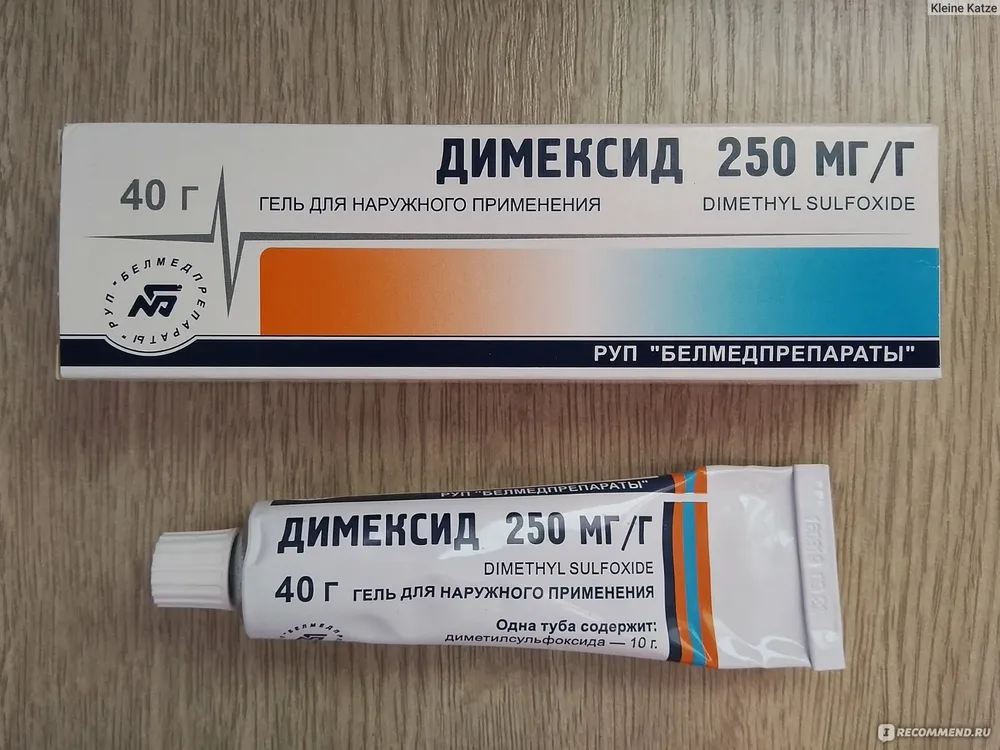
Table of Contents
INSTRUCTIONS FOR MEDICAL USE OF THE MEDICINAL PRODUCT DIMETHYLSULFOXIDE (DIMETHYLSULFOXID)
Composition:
Active ingredient: dimethylsulfoxide;
1 g of gel contains 250 or 500 mg of dimethylsulfoxide.
Excipients: sodium carmellose, mint flavoring, purified water.
Pharmaceutical form. Gel.
Main physicochemical properties: gel ranging from colorless to light yellow, with a characteristic odor.
Pharmacotherapeutic group. Topical preparations for joint and muscle pain. ATC code M02AX03.
Pharmacological properties.
Pharmacodynamics.
An anti-inflammatory agent for topical use, inactivates hydroxyl radicals and improves metabolic processes at the site of inflammation. Exhibits anesthetic and analgesic effects. Has moderate antiseptic and fibrinolytic effects. When applied locally, it rapidly and effectively penetrates through biological membranes. Also performs a transport function, facilitating deep penetration of other medicinal agents through the skin.
Pharmacokinetics.
After application to the skin and mucous membranes, it is rapidly and almost completely absorbed. Bioavailability ranges from 60–70%, with the extent of bioavailability and depth of penetration being directly proportional to the concentration of dimethyl sulfoxide. After local application to the skin, it can be detected in blood serum as early as 10 minutes post-application, with peak concentration observed within 4–8 hours. It penetrates well into tissue cells of all organs, except hair, nails, and tooth enamel. It is metabolized via oxidation to methylsulfonylmethane, followed by reduction to dimethyl sulfide. Dimethyl sulfoxide and its metabolites are excreted in urine and feces. Dimethyl sulfide may also be excreted through the skin and lungs, resulting in a characteristic garlic-like odor. No accumulation of dimethyl sulfoxide or its metabolites occurs in the body during prolonged use of the drug.
Clinical characteristics.
Indications.
For the relief of pain syndrome as part of combination therapy in the following diseases and conditions:
- rheumatoid arthritis;
- osteoarthritis;
- arthropathy;
- contusions;
- ligament injuries;
- traumatic infiltrates.
Contraindications.
Hypersensitivity to dimethyl sulfoxide and other components of the medicinal product; severe hepatic and/or renal insufficiency; cardiac and circulatory failure; angina pectoris; severe atherosclerosis; glaucoma; cataract; myocardial infarction; stroke; coma; pregnancy; breastfeeding; age under 12 years.
Interaction with other medicinal products and other types of interactions.
Dimethyl sulfoxide enhances the effects of ethanol (alcohol inhibits drug elimination) and insulin, acetylsalicylic acid, butazone, digitalis preparations, quinidine, and nitroglycerin. Increases the absorption rate and enhances the effects of other topical medicinal products applied simultaneously. Compatible with heparin, antibacterial agents, and nonsteroidal anti-inflammatory drugs. The medicinal product DIMETHYL SULFOXIDE must not be used concomitantly with sulindac (a nonsteroidal anti-inflammatory drug) due to the risk of severe toxic reactions (peripheral neuropathy). Increases microbial sensitivity to aminoglycosides and beta-lactam antibiotics, chloramphenicol, rifampicin, and griseofulvin. Sensitizes the body to the effects of medicinal products used for general and local anesthesia.
Special precautions for use
Due to the possibility of individual intolerance to the drug, a skin tolerance test is recommended. For this purpose, apply the gel to a small area of the skin on the dorsal surface of the wrist. The appearance of marked hyperemia and itching indicates hypersensitivity to the drug.
If hypersensitivity is detected in the patient, medicinal products containing dimethyl sulfoxide should not be prescribed. In case of allergic reactions occurring during treatment, discontinue use of the product.
Do not apply to damaged skin or skin with allergic manifestations. Do not apply to facial skin.
Avoid contact of the product with mucous membranes and eyes. In case of accidental contact, immediately rinse thoroughly with water.
Use with caution in patients with a history of allergies, as well as in individuals suffering from ischemic heart disease.
Since dimethyl sulfoxide may enhance not only the activity but also the toxicity of certain medicinal products, concomitant use with other locally applied agents should be performed with caution.
Use during pregnancy or breastfeeding
Use during pregnancy or breastfeeding is contraindicated. Breastfeeding must be discontinued for the duration of treatment with this medicinal product.
Ability to influence reaction rate when driving or operating machinery
Use with caution, taking into account the effect on the central nervous system, particularly the possibility of dizziness occurring.
Method of Administration and Dosage.
Apply the medicinal product externally. For adults and children aged 12 years and older, apply a thin layer of gel to the affected area 1–2 times daily and gently rub in. For use on sensitive areas, use the gel containing dimethyl sulfoxide at a concentration of 250 mg/g. Treatment duration is 10–14 days. Repeat courses may be administered no sooner than 10 days after completion of the previous course.
Children.
Do not use in children under 12 years of age.
Overdose.
Overdose of the medicinal product may cause an increased manifestation of adverse effects. In such cases, discontinue use of the product and wash the treated skin area. Treat symptomatically.
Side effects.
Dimethyl sulfoxide is generally well tolerated, but in some patients the following may occur:
Immune system disorders: allergic reactions including dermatitis, skin rash, angioedema, increased skin pigmentation, itching, burning, hyperemia, erythema, dryness of the skin.
Gastrointestinal disorders: transient garlic-like breath odor (due to dimethyl sulfide — a metabolite of dimethyl sulfoxide), nausea, vomiting, diarrhea.
Central and peripheral nervous system disorders: headache, dizziness, insomnia, adynamia.
Respiratory system disorders: bronchospasm.
Reporting of suspected adverse reactions.
Reporting suspected adverse reactions after registration of the medicinal product is important. It allows continuous monitoring of the benefit-risk balance of the medicinal product. Medical and pharmaceutical professionals, as well as patients or their legal representatives, should report all suspected adverse reactions and lack of efficacy via the Automated Pharmacovigilance Information System at: https://aisf.dec.gov.ua
Shelf life.
3 years. Do not use after the expiry date stated on the packaging.
Storage conditions.
Store at a temperature not exceeding 25 °C. Keep out of reach of children.
Packaging.
15 g or 30 g in a tube; 1 tube per cardboard box.
Supply category.
Over-the-counter (without prescription).
Manufacturer.
Ukrainian-Spanish joint venture "Sperko Ukraine".
Manufacturer's address and place of business.
25, 600-Richchya Street, Vinnytsia, Ukraine, 21027.