Budicort neb
Ukraine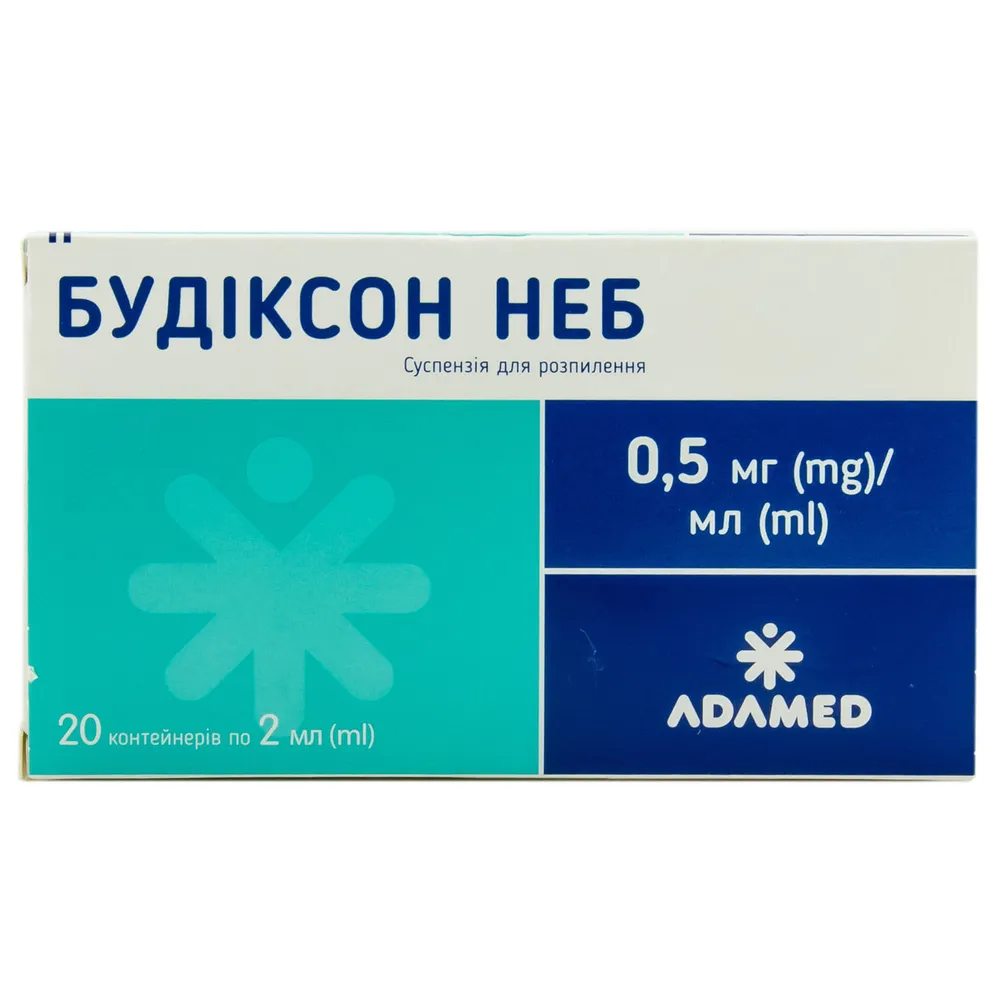
Table of Contents
INSTRUCTIONS FOR MEDICAL USE OF THE MEDICINAL PRODUCT Budixon Neb (Budixon Neb)
Composition:
Active substance: budesonide;
1 ml of nebulizer suspension contains 0.25 mg or 0.5 mg of budesonide;
Excipients: disodium edetate, sodium chloride, Tween 80, anhydrous citric acid, sodium citrate, water for injections.
Pharmaceutical form. Nebulizer suspension.
Main physicochemical characteristics: white homogeneous suspension.
Pharmacotherapeutic group.
Inhalation agents used in obstructive airway diseases. Glucocorticoids. ATC code R03BA02.
Pharmacological properties.
Pharmacodynamics.
Budesonide is a glucocorticosteroid with potent local anti-inflammatory activity, the frequency and severity of whose adverse effects are lower than those of oral corticosteroids.
Local anti-inflammatory effect
The precise mechanism of action of glucocorticosteroids in the treatment of bronchial asthma has not been fully elucidated. The anti-inflammatory effects involving T-cells, eosinophils, and mast cells are believed to play an important role. These reactions include inhibition of inflammatory mediator release and suppression of cytokine-mediated immune responses. The potency of budesonide, measured as affinity for the glucocorticosteroid receptor, is approximately 15 times greater than that of prednisolone.
A clinical study in patients with asthma comparing inhaled and oral formulations of budesonide at doses calculated to achieve similar systemic bioavailability demonstrated a statistically significant efficacy advantage of inhaled budesonide over oral budesonide compared to placebo. Thus, the therapeutic effect of standard doses of inhaled budesonide can largely be attributed to a direct action on the airways.
In a provocation study, pretreatment with budesonide for 4 weeks resulted in reduced bronchoconstriction during both immediate and late-phase asthmatic reactions.
Airway reactivity
Budesonide exerts an anti-inflammatory effect leading to reduced bronchoconstriction in both immediate and late-phase allergic reactions. In patients with bronchial hyperreactivity, budesonide reduces airway responsiveness to histamine and methacholine.
Studies have demonstrated that the earlier treatment with budesonide is initiated after the onset of bronchial asthma symptoms, the greater the improvement in lung function that can be expected.
In studies involving healthy volunteers, administration of the drug as an inhalation suspension resulted in a dose-dependent effect on plasma and urinary cortisol levels. When used at recommended doses, budesonide has significantly less impact on adrenal gland function than 10 mg of prednisone, as confirmed by ACTH stimulation tests.
In children aged 3 years and older, no systemic effect was observed after doses up to 400 µg per day. A systemic effect may occur at doses between 400 and 800 µg per day, while such effects were frequently observed at doses exceeding 800 µg per day.
Exercise-induced bronchial asthma
Inhaled budesonide therapy has been effectively used for the prevention of asthma attacks triggered by physical exertion.
Effect on plasma cortisol concentration
In studies involving healthy volunteers, administration of budesonide as a nebulized suspension resulted in a dose-dependent effect on plasma and urinary cortisol levels. Budesonide, when administered at recommended doses, has significantly less effect on adrenal function than 10 mg of prednisone, as confirmed by ACTH testing.
Children
Clinical use: bronchial asthma
The efficacy of budesonide has been studied in numerous trials, which have demonstrated the drug's effectiveness in both adults and children when administered once or twice daily for prophylactic treatment of persistent asthma.
Clinical use: croup
Several studies in children with croup compared treatment with budesonide nebulized suspension versus placebo. Representative examples of studies evaluating its use in the treatment of children with croup are provided below.
Efficacy in children with mild to moderate croup
To determine whether nebulized budesonide suspension improves croup symptom scores and reduces hospitalization duration, a randomized, double-blind, placebo-controlled study was conducted in
87 children (aged 7 months to 9 years) hospitalized with a clinical diagnosis of croup. Participants received an initial dose of budesonide (2 mg) as a nebulized suspension or placebo, followed by doses of 1 mg or placebo every 12 hours. Nebulized budesonide suspension significantly improved croup scores at 12 and 24 hours, and at 2 hours in patients with initial croup symptom scores above 3 points. Hospitalization duration was also reduced by 33%.
Efficacy in children with moderate to severe croup
To compare the efficacy of budesonide versus placebo, a randomized, double-blind, placebo-controlled study was conducted in 83 infants and children (aged 6 months to 8 years) hospitalized with a clinical diagnosis of croup syndrome. Patients received budesonide nebulized suspension at a dose of 2 mg or placebo every 12 hours for up to 36 hours or until discharge. Total croup symptom scores were assessed before drug administration and at 2, 6, 12, 24, 36, and 48 hours after the initial dose. At 2 hours, both budesonide and placebo groups showed similar improvement in croup symptom scores, with no statistically significant difference between groups. At 6 hours, croup symptom scores in the budesonide group were significantly better than in the placebo group, and this improvement compared to placebo remained evident at 12 and 24 hours.
Pharmacokinetics.
Absorption
In adults, the systemic bioavailability of budesonide after administration of a nebulized suspension via a jet nebulizer is approximately 15% of the nominal dose and 40–70% of the dose delivered to the patient. A minor portion of this amount is due to absorption of the drug that has been swallowed. Maximum plasma concentration (Cmax) is reached approximately 10–30 minutes after the start of nebulization and is about 4 nmol/L following a 2 mg dose.
Distribution
The volume of distribution of budesonide is approximately 3 L/kg body weight. Plasma protein binding averages 85–90%.
Metabolism
Budesonide undergoes extensive (≈90%) first-pass hepatic metabolism into metabolites with low glucocorticosteroid activity. The glucocorticosteroid activity of the main metabolites of budesonide, 6β-hydroxybudesonide and 16α-hydroxyprednisolone, is less than 1% of that of budesonide.
Metabolism of budesonide occurs primarily via the CYP3A4 enzyme, belonging to the cytochrome P450 superfamily.
Elimination
Budesonide metabolites are excreted predominantly by the kidneys, either unchanged or in conjugated form. Unchanged budesonide is not detected in urine. In healthy adult volunteers, systemic clearance of budesonide is typically high (approximately 1.2 L/min), and the terminal half-life after intravenous administration averages 2–3 hours.
Linearity
Budesonide kinetics are dose-proportional when administered at clinically relevant doses.
Children
In children aged 4–6 years with bronchial asthma, systemic clearance of budesonide is approximately 0.5 L/min. Clearance per kg body weight in children is about 50% higher than in adults. In children with bronchial asthma, the terminal half-life of budesonide after inhalation is approximately 2.3 hours, a value similar to that observed in healthy volunteers. In children aged 4–6 years with bronchial asthma, systemic bioavailability of budesonide after administration of nebulized suspension via a jet nebulizer (Pari LC Jet Plus with Pari Master compressor) is approximately 6% of the nominal dose and 26% of the dose delivered to the patient. Systemic bioavailability in children is approximately half that in adults.
In children aged 4–6 years with bronchial asthma, Cmax is reached within 20 minutes after the start of nebulization and is approximately 2.4 nmol/L after administration of a 1 mg dose. Exposure parameters of budesonide (Cmax and AUC) after a single 1 mg dose administered via nebulization in children aged 4–6 years are comparable to those observed in healthy adult volunteers receiving the same dose via the same nebulization system.
Clinical characteristics.
Indications.
The medicinal product contains a potent non-halogenated corticosteroid – budesonide, intended for the treatment of bronchial asthma in patients in whom administration via nebulizers using compressed air or dry powder inhalers is ineffective or inappropriate.
Budicort Neb is recommended for use in infants and children with croup (a complication of acute viral infection of the upper respiratory tract, also known as laryngotracheobronchitis or subglottic laryngitis), which constitutes an indication for hospitalization.
Contraindications.
Hypersensitivity to budesonide or to any other component of the medicinal product.
Interaction with other medicinal products and other forms of interaction.
Budesonide metabolism is primarily mediated by CYP3A4. Inhibitors of this enzyme, such as ketoconazole and itraconazole, may increase systemic exposure to budesonide several-fold (see sections "Pharmacological properties", "Special precautions for use"). Combinations of budesonide with potent CYP3A inhibitors should be avoided, except when the benefit outweighs the increased risk of systemic adverse effects associated with corticosteroid use; if such a combination cannot be avoided, patients should be monitored for the occurrence of systemic adverse effects related to corticosteroid therapy. When Budicort Neb is used concomitantly with antifungal agents (such as itraconazole and ketoconazole), the interval between administration of these medicinal products should be as long as possible. Consideration may be given to reducing the dose of budesonide.
Limited data on similar interactions with high doses of inhaled budesonide show that concomitant administration of itraconazole 200 mg once daily increases plasma concentrations of inhaled budesonide (single dose 1000 mcg) significantly (on average by 4 times).
In women concurrently using estrogens or hormonal contraceptives, plasma concentrations of budesonide were increased and glucocorticoid effects were enhanced; however, this effect was absent when budesonide was used together with low-dose combined oral contraceptives.
Due to possible suppression of adrenal function, the ACTH stimulation test for diagnosing pituitary insufficiency may yield false results (low values).
Children
Interaction studies have been conducted only in adult patients.
Special precautions for use.
Budesonide is not intended for rapid relief of acute asthma episodes requiring the use of fast-acting inhaled bronchodilators.
Oropharyngeal candidiasis may develop during treatment with inhaled glucocorticosteroids. This infection may require treatment with appropriate antifungal agents, and in some patients, discontinuation of inhaled glucocorticosteroid therapy may be necessary (see section "Dosage and administration").
Patients without steroid dependence. Therapeutic effect is usually achieved within 10 days. In patients with excessive mucus secretion in the bronchi, a short-term (approximately 2 weeks) course of oral corticosteroids may initially be added. After completion of oral corticosteroid therapy, treatment with budesonide alone may be sufficient.
Patients with steroid dependence. Transition from oral corticosteroids to Budison Neb can be initiated when the patient is in a relatively stable phase of the disease. For approximately 10 days, Budison Neb should be used in combination with the previously used dose of oral corticosteroid.
Thereafter, the dose of oral corticosteroids should be gradually reduced (e.g., by 2.5 mg of prednisolone or equivalent per month) to the lowest possible level. In many cases, oral corticosteroids can be completely replaced by budesonide.
Concomitant use of budesonide with ketoconazole, itraconazole, HIV protease inhibitors, cobicistat-containing products, or other potent inhibitors of the CYP3A4 isoenzyme should be avoided, except when the benefit outweighs the increased risk. If such combination cannot be avoided, patients should be monitored for the development of systemic corticosteroid-related adverse effects. This interaction has limited clinical significance during short-term (1–2 weeks) treatment with itraconazole, ketoconazole, or other potent CYP3A inhibitors, but should be considered during prolonged therapy. A reduction in the dose of budesonide should also be considered (see section "Interaction with other medicinal products and other forms of interaction").
Particular caution is required when switching therapy from oral glucocorticosteroids to inhaled corticosteroid treatment. During this period, there is a risk of temporary adrenal insufficiency.
Patients who have required emergency high-dose glucocorticosteroid therapy or prolonged treatment with inhaled glucocorticosteroids at the highest recommended dose are also at risk of adrenal insufficiency during periods of severe stress. In stressful situations or during planned surgical procedures, an increase in the dose of oral glucocorticosteroids may be considered.
Switching from oral glucocorticosteroid therapy to inhaled corticosteroid treatment may lead to the emergence of allergic or arthritic conditions such as rhinitis, eczema, and myalgia-arthralgia. Specific treatment should be initiated for these conditions. Inadequate glucocorticosteroid therapy may be suspected if symptoms such as fatigue, headache, nausea, or vomiting occur, although this is rare. In such cases, temporary dose escalation of oral glucocorticosteroids may sometimes be required.
Systemic effects may occur with the use of any inhaled glucocorticosteroids, especially when high doses are used over prolonged periods. The likelihood of such effects is significantly lower with inhaled corticosteroids than with oral administration.
Possible systemic effects include Cushing's syndrome, Cushingoid features, adrenal suppression, growth retardation in children and adolescents, decreased bone mineral density, cataract, glaucoma, and a range of psychiatric and behavioral disorders, including psychomotor hyperactivity, sleep disturbances, anxiety, depression, or aggression, particularly in children (see section "Adverse reactions"). Therefore, the dose of inhaled glucocorticosteroids should be titrated to the lowest effective dose that maintains adequate control of bronchial asthma.
The drug should be used with particular caution in patients with active or inactive pulmonary tuberculosis and fungal or viral respiratory tract infections.
As with other forms of inhaled therapy, paradoxical bronchospasm may occur immediately after administration of budesonide, characterized by increased wheezing shortly after inhalation. If this occurs, treatment with inhaled budesonide should be discontinued immediately, the patient should be evaluated, and alternative therapy initiated if necessary.
Patients should be advised to consult a physician if symptoms do not improve with regular use of the recommended doses of the drug.
In case of symptom exacerbation, an additional short course of oral glucocorticosteroid therapy should be prescribed.
Impaired liver function may affect the elimination of glucocorticosteroids from the body, resulting in reduced clearance and increased systemic exposure. Patients should be warned about the possible development of adverse effects.
Pneumonia in patients with COPD
An increased incidence of pneumonia, including pneumonia requiring hospitalization, has been observed in patients with COPD receiving inhaled corticosteroids. Some evidence suggests an increased risk of pneumonia with higher corticosteroid doses, although this has not been consistently demonstrated in all studies.
There are no definitive clinical data showing differences among inhaled corticosteroid-containing products regarding the level of pneumonia risk.
Physicians should closely monitor patients with COPD for signs of pneumonia, as clinical symptoms of pneumonia and COPD exacerbation are often similar.
Risk factors for pneumonia in patients with COPD include current tobacco smoking, advanced age, low body mass index (BMI), and severe COPD.
Visual disturbances
Visual disturbances may result from systemic effects and local application of corticosteroids. If a patient develops symptoms such as blurred vision or other visual disturbances, referral to an ophthalmologist should be considered to determine possible causes, including cataract, glaucoma, or rare conditions such as central serous chorioretinopathy (CSCR), which has been reported after both systemic and local corticosteroid use.
Children
Effect on growth
Regular monitoring of growth is recommended in children receiving long-term inhaled corticosteroid therapy. If growth velocity slows, therapy should be re-evaluated with the aim of reducing the inhaled corticosteroid dose to the lowest possible level that maintains effective control of bronchial asthma. The benefits of corticosteroid therapy should be carefully weighed against the potential risk of growth suppression. Additionally, referral to a pediatric pulmonologist is important.
This medicinal product contains less than 1 mmol (23 mg)/dose of sodium, i.e., essentially sodium-free.
Use during pregnancy or breastfeeding.
Pregnancy
Most results from prospective epidemiological studies and post-marketing international data indicate that treatment with inhaled budesonide during pregnancy does not adversely affect fetal/neonatal health. Adequate asthma management is important for both the mother and the fetus. Animal studies have demonstrated that glucocorticosteroids may cause developmental abnormalities. However, these findings are not considered clinically relevant to humans when recommended doses are used, but inhaled budesonide therapy should be regularly reviewed and administered at the lowest effective dose.
The use of budesonide during pregnancy requires careful consideration of the benefit to the woman versus the risk to the fetus. Inhaled glucocorticosteroids should be preferred over oral glucocorticosteroids due to their lower systemic effects when used at doses required to achieve equivalent respiratory response.
Breastfeeding period
Budesonide passes into breast milk. However, no adverse effects on the breastfed infant are expected when therapeutic doses of budesonide are used. Budesonide may be used during breastfeeding.
Maintenance treatment with inhaled budesonide (200 or 400 mcg twice daily) in breastfeeding women with bronchial asthma results in only minimal systemic exposure to budesonide in breastfed infants.
In a pharmacokinetic study, the calculated daily infant dose was 0.3% of the maternal daily dose for both dose levels, and the average plasma concentration in breastfed infants was estimated to be one six-hundredth of the concentration observed in maternal plasma, assuming complete oral bioavailability in the infant. Budesonide concentrations in all infant plasma samples were below the limit of quantification.
Considering available data on inhaled budesonide and the fact that budesonide exhibits linear pharmacokinetic properties within therapeutic dose ranges after nasal, inhaled, oral, or rectal administration, exposure to budesonide in breastfed infants is expected to be low when therapeutic doses are used.
Ability to influence reaction speed when driving or operating machinery.
Budison Neb has no effect or has negligible effect on the ability to drive vehicles or operate machinery.
Method of Administration and Dosage
Dosing
The dosage of Budecort Neb should be determined individually. The dose delivered to the patient depends on the nebulizing equipment used. Nebulization time and delivered dose depend on airflow rate, nebulizer chamber volume, and fill volume. The airflow rate through the nebulizing device should be 6–8 liters per minute. The appropriate fill volume for most nebulizers is 2–4 mL. The dose should be reduced to the minimum required to maintain adequate control of bronchial asthma. The highest dose (2 mg per day) should be prescribed for children under 12 years only in cases of severe asthma and for a limited period.
Bronchial Asthma
If the recommended daily dose is up to 1 mg, Budecort Neb can be administered once daily.
Budecort Neb may be used once daily in patients who have not previously been treated with glucocorticoids and in patients whose symptoms are well controlled with inhaled glucocorticoids. Budecort Neb can be administered once daily in the morning or evening. If symptoms worsen, the daily dose should be increased. When the daily dose exceeds 1 mg, the medication should be administered twice daily.
Recommended Initial Dose
Children
Children aged 6 months to 12 years: The total daily dose is 0.25 to 0.5 mg. In children receiving oral glucocorticoids, the daily dose may be increased up to 1 mg if necessary.
In young children unable to inhale the product through a spacer, the medication should be administered using a face mask.
Children aged 12 years: Dosing is the same as for adults.
Adults, including elderly patients: The total daily dose is 1 to 2 mg twice daily. In very severe cases, the dose may be further increased.
Maintenance Dose
The lowest effective maintenance dose is recommended.
Children aged 6 months to 12 years: The total daily dose is 0.25 to 2 mg.
Adults, including elderly patients and children aged 12 years and older: The total daily dose is 0.5 to 1 mg twice daily.
Clinical improvement following administration of Budecort Neb can be expected within several hours of initiating treatment.
Budecort Neb is intended for long-term treatment and does not provide rapid relief of symptoms during acute asthma attacks, for which fast-acting bronchodilators are indicated.
Patients requiring increased glucocorticoid doses to improve treatment efficacy are generally advised to increase the dose of Budecort Neb rather than initiate oral glucocorticoids, due to a lower risk of systemic adverse effects.
Patients Receiving Oral Glucocorticoids
After achieving adequate asthma control, Budecort Neb may allow replacement or significant reduction of oral glucocorticoid dosage. When switching from oral glucocorticoids to Budecort Neb, the patient's condition should be stable. It is recommended to administer high doses of Budecort Neb for 10 days in combination with the previously used oral glucocorticoid at the same dose.
Thereafter, the oral glucocorticoid dose should be gradually reduced (e.g., approximately 2.5 mg of prednisolone or equivalent dose of other glucocorticoids per month) to the lowest dose that maintains symptom control. Often, oral glucocorticoids can be completely replaced by Budecort Neb. Additional information on discontinuation of glucocorticoids: see section "Special Warnings and Precautions for Use."
Budesonide suspension for nebulization reaches the lungs during breathing after administration. It is very important that the patient breathes calmly and evenly through the nebulizer spacer or face mask.
Croup
The usual dose for infants and children with croup syndrome is 2 mg of budesonide for nebulization. This dose may be administered as a single dose or divided into two doses of 1 mg each, administered 30 minutes apart. This dosing regimen may be repeated every 12 hours, up to a maximum of 36 hours or until therapeutic effect is achieved.
Patients with Renal or Hepatic Impairment
There are no data on the use of Budecort Neb in patients with renal or hepatic impairment. Budesonide is primarily metabolized in the liver; therefore, increased serum levels may occur in patients with severe liver cirrhosis. Dose adjustment of Budecort Neb is not necessary in patients with renal impairment.
Method of Administration
Budecort Neb suspension for nebulization should be used with a nebulizer equipped with a spacer or a face mask.
To minimize the risk of developing oral and pharyngeal candidiasis, the patient should rinse the mouth with water after each inhalation.
Patients should also be advised to wash their face with water after using a nebulizer with a face mask to prevent skin irritation.
Ultrasonic nebulizers should not be used, as they do not provide adequate dosing of budesonide.
The nebulizer and compressor should produce droplets with a diameter of 3 to 5 μm.
The dose of budesonide received by the patient ranges from 11% to 22% of the dose contained in the nebulizer and depends on:
- nebulization time,
- chamber volume,
- technical characteristics of the compressor and nebulizer (nebulization kit),
- patient's tidal volume,
- use of a spacer or face mask.
To achieve maximum budesonide delivery, the nebulizer should have an appropriate flow rate (6–8 L/min). The chamber volume should be between 2 and 6 mL.
For younger children, a well-fitting face mask should be used to ensure delivery of the maximum amount of budesonide.
Before opening, the plastic container containing the medication should be shaken thoroughly.
The nebulizer chamber should be washed after each use. The chamber and mask should be cleaned with warm water and mild detergent, then thoroughly rinsed with water and dried, connected to the compressor. Before using the nebulizer, the manufacturer's instructions for operation should be consulted.
Budecort Neb suspension may be mixed with 0.9% sodium chloride solution and with solutions of terbutaline, salbutamol, fenoterol, acetylcysteine, sodium cromoglicate, or ipratropium bromide.
The suspension in the plastic container may be divided to obtain the appropriate dose of active ingredient.
An opened plastic container should be stored in an aluminum pouch protected from light.
The prepared mixture should be used within 30 minutes.
Dosing Recommendations
Table 1
| Dose (mg) |
Volume of Budison Neb drug, suspension for nebulization |
|
| 0.25 mg/ml |
0.5 mg/ml |
|
| 0.25 |
1 ml |
- |
| 0.5 |
2 ml |
1 ml |
| 0.75 |
3 ml |
- |
| 1.0 |
4 ml |
2 ml |
| 1.5 |
6 ml |
3 ml |
| 2.0 |
8 ml |
4 ml |
Children.
Budeson Neb should be used in children as indicated (see sections "Indications" and "Special precautions").
Overdose.
Acute overdose of Budeson Neb is not expected to cause clinically significant problems, even when excessive doses are administered.
The preparation contains 0.1 mg/mL of sodium edetate, which has been shown to cause bronchoconstriction if its concentration exceeds 1.2 mg/mL.
Adverse reactions.
The adverse reactions listed below are systematized according to the frequency of occurrence: very common (≥1/10), common (≥1/100, <1/10), uncommon (≥1/1000, <1/100), rare (≥1/10000, <1/1000), very rare (<1/10000), frequency not known (frequency cannot be determined from the available data).
| System Organ Class |
Frequency |
Adverse Reactions |
| Infections and infestations |
Common |
Oropharyngeal candidiasis Pneumonia (in patients with COPD) |
| Immune system disorders |
Uncommon |
Immediate and delayed hypersensitivity reactions*, including rash, contact dermatitis, urticaria, angioedema, anaphylactic reaction |
| Endocrine disorders |
Uncommon |
Signs and symptoms of systemic glucocorticosteroid effects, including adrenal suppression and growth retardation** |
| Eye disorders |
Frequency unknown |
Glaucoma |
| Uncommon |
Cataract Blurred vision (see also section "Special precautions for use") |
|
| Musculoskeletal and connective tissue disorders |
Uncommon |
Muscle spasms, muscle tremor |
| Psychiatric disorders |
Uncommon |
Anxiety Depression |
| Uncommon |
Restlessness Behavioural changes (mainly in children) Sleep disorders Psychomotor hyperactivity Aggression |
|
| Respiratory, thoracic and mediastinal disorders |
Common |
Cough Hoarseness Throat irritation |
| Uncommon |
Bronchospasm Dysphonia Hoarseness**** |
|
| Skin and subcutaneous tissue disorders |
Uncommon |
Contusion |
| Nervous system disorders |
Uncommon |
Tremor*** |
* See below for description of individual adverse reactions; facial skin irritation.
** Applies to children and young people, see below.
*** Based on frequency recorded during clinical trials.
**** Rarely in children.
Description of individual adverse reactions
Occasionally, when using a nebulizer with a face mask, hypersensitivity reactions in the form of facial skin irritation have been reported. To prevent irritation, patients should wash their face after each use of the face mask.
There is an increased risk of pneumonia in patients with newly diagnosed COPD who initiate inhaled glucocorticosteroid therapy. However, a pooled analysis of eight clinical trials involving 4,643 COPD patients treated with budesonide and 3,643 patients randomized to treatment without inhaled glucocorticosteroids did not demonstrate an increased risk of pneumonia. Results from the first seven of these eight studies were published as a separate meta-analysis.
Oropharyngeal candidiasis may occur due to deposition of the drug. Patients should be instructed to rinse their mouth with water after each inhalation of the maintenance dose to minimize this risk.
As with any inhaled therapy, very rare cases of paradoxical bronchospasm may occur (see section "Special precautions").
In clinical placebo-controlled studies, cataract was infrequently reported, also in the placebo group.
A pooled analysis of clinical trials involving 13,119 patients receiving inhaled budesonide and 7,278 patients receiving placebo was conducted. The incidence of anxiety was 0.52% in the inhaled budesonide group and 0.63% in the placebo group. In contrast, the incidence of depression was 0.67% in the inhaled budesonide group and 1.15% in the placebo group.
Systemic effects may occur with inhaled glucocorticosteroids, likely dependent on dose, duration of exposure, concomitant and prior corticosteroid therapy, and individual sensitivity.
Effect on growth in children
In children receiving long-term inhaled glucocorticosteroid therapy, regular monitoring of growth is recommended. If growth is slowed, therapy should be re-evaluated with the aim of reducing the inhaled corticosteroid dose. The benefits of glucocorticosteroid therapy should be carefully weighed against the potential risk of growth suppression. Additionally, it is important to refer the patient to a pediatric pulmonologist.
Children
Due to the risk of growth retardation in children, growth monitoring is required.
Reporting of adverse reactions after marketing authorization is important. It allows continued monitoring of the benefit-risk balance of the medicinal product. Medical and pharmaceutical professionals, as well as patients or their legal representatives, should report all suspected adverse reactions and lack of efficacy via the Automated Information System for Pharmacovigilance at: https://aisf.dec.gov.ua.
Shelf life. 36 months.
After opening the envelope, the containers inside should be used within 3 months. After reconstitution or dilution, the suspension must be used within 30 minutes.
Storage conditions.
Store below 30°C, in a place inaccessible to children. Do not freeze. Store in the original packaging and in the envelope to protect from light.
Packaging.
2 mL in a container; 5 containers in an envelope; 4 envelopes with the instruction for medical use in a cardboard box.
Prescription status. Prescription only.
Manufacturer.
AT "Adamed Pharma", Poland.
Manufacturer's address and location of operations.
5 J. Pilsudskiego Marsh. St., 95-200 Pabianice, Poland.