Biseptol®
Ukraine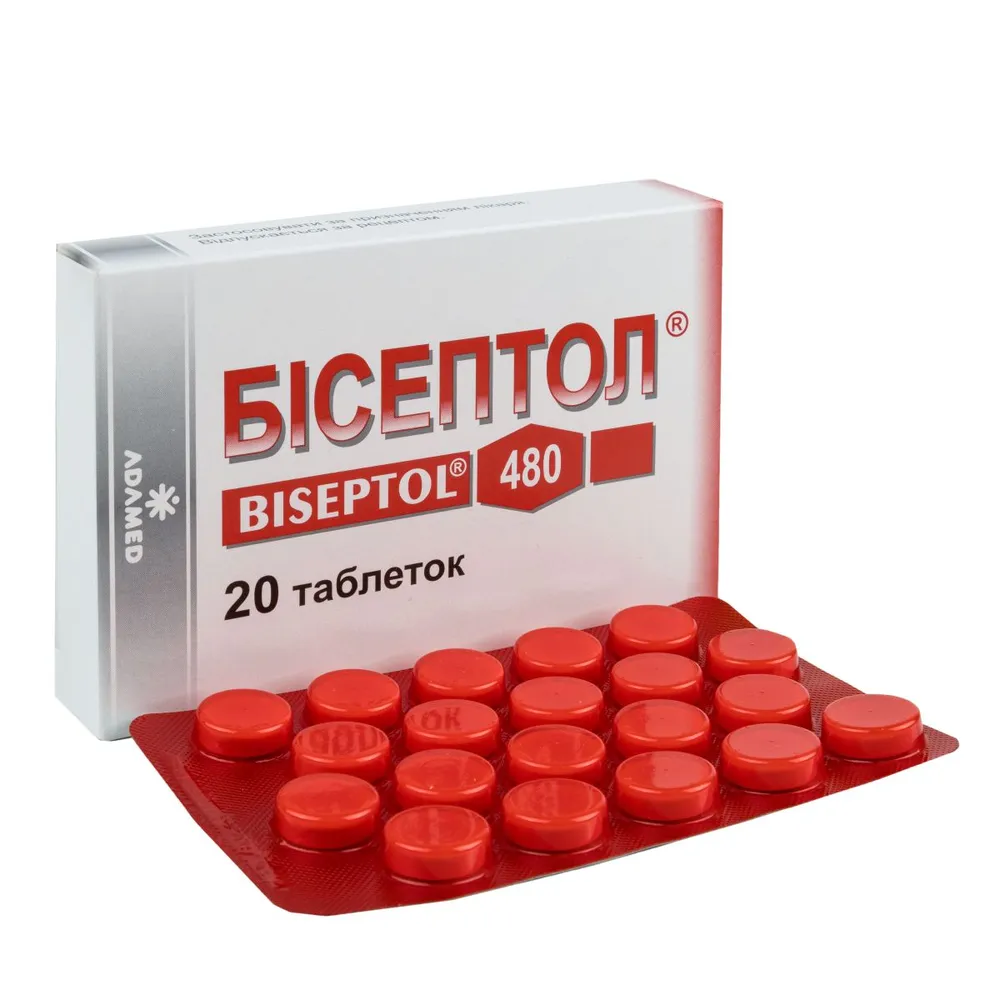
Table of Contents
INSTRUCTIONS FOR MEDICAL USE OF THE MEDICINAL PRODUCT BISEPTOL® (BISEPTOL®)
Composition:
Active substances: sulfamethoxazole, trimethoprim (co-trimoxazole);
1 tablet 100 mg/20 mg contains sulfamethoxazole 100 mg, trimethoprim 20 mg;
1 tablet 400 mg/80 mg contains sulfamethoxazole 400 mg, trimethoprim 80 mg;
Excipients: potato starch, talc, magnesium stearate, polyvinyl alcohol.
Pharmaceutical form. Tablets.
Main physico-chemical properties:
tablets 100 mg/20 mg – white tablets with a yellowish tint, round-shaped, flat on both sides, with a bevel, engraved with the letters "Bs" on one side;
tablets 400 mg/80 mg – white tablets with a yellowish tint, round-shaped, flat on both sides, with a bevel, engraved with a line "-" on one side, with the letters "Bs" above it.
Pharmacotherapeutic group. Antimicrobial agents for systemic use.
ATC code J01EE01.
Pharmacological Properties
Pharmacodynamics
A combined bactericidal medicinal product containing sulfamethoxazole—a sulfonamide with intermediate duration of action that inhibits folic acid synthesis through competitive antagonism with para-aminobenzoic acid—and trimethoprim—an inhibitor of bacterial dihydrofolate reductase responsible for the synthesis of biologically active tetrahydrofolic acid. The combination of these two substances in a 5 to 1 ratio is known as co-trimoxazole.
The combination of components acting on a single pathway of biochemical transformations promotes synergistic antibacterial activity and delays the development of bacterial resistance.
Co-trimoxazole is active in vitro against E. coli (including enteropathogenic strains), indole-positive strains of Proteus spp. (including P. vulgaris), Morganella morganii, Klebsiella spp., Proteus mirabilis, Enterobacter sp., Haemophilus influenzae, Streptococcus pneumoniae, Shigella flexneri, Shigella sonnei, Neisseria gonorrhoeae, and Pneumocystis jirovecii.
Pharmacokinetics
Both components of the medicinal product are rapidly absorbed into the bloodstream from the gastrointestinal tract. Maximum serum concentrations of both components are reached within 1–4 hours after oral administration. Trimethoprim is protein-bound in serum by approximately 70%, while sulfamethoxazole is protein-bound by 44–62%.
Distribution of the two components differs: sulfamethoxazole is distributed exclusively in the extracellular fluid, whereas trimethoprim distributes throughout all body fluids.
High concentrations of trimethoprim are found in bronchial gland secretions, the prostate gland, and bile. Sulfamethoxazole concentrations in body fluids are somewhat lower. Both compounds appear in high concentrations in sputum, vaginal secretions, and middle ear fluid.
The volume of distribution is 0.36 L/kg for sulfamethoxazole and 2.0 L/kg for trimethoprim.
Both components are metabolized in the liver: sulfamethoxazole via acetylation and conjugation with glucuronic acid, and trimethoprim via oxidation and hydroxylation.
Elimination occurs primarily via the kidneys through glomerular filtration and active tubular secretion.
Concentrations of active compounds in urine are significantly higher than in blood. Within 72 hours, 84.5% of the administered dose of sulfamethoxazole and 66.8% of trimethoprim are excreted in urine.
The elimination half-life is approximately 10 hours for sulfamethoxazole and 8–10 hours for trimethoprim. In cases of renal impairment, the half-life of both components is prolonged.
Sulfamethoxazole and trimethoprim cross into breast milk and pass into the fetal circulation.
Children and Adolescents
The pharmacokinetics of both components of Biseptol® (trimethoprim and sulfamethoxazole) in children and adolescents with normal renal function are age-dependent. Reduced elimination rates of both trimethoprim and sulfamethoxazole have been observed in infants during the first two months of life. Thereafter, elimination rates and total clearance of both components increase, and the elimination half-life decreases. These pharmacokinetic changes are most pronounced in children aged 1.7 to 24 months and diminish with age when comparing younger children (1 to 3.6 years), children aged 7.5 to 10 years, and adults (see section "Dosage and Administration").
Clinical characteristics.
Indications.
Use for the treatment of infections caused by pathogenic microorganisms sensitive to the medicinal product, when the benefit of such treatment outweighs the potential risk; the possibility of using a single antibacterial agent should be considered. When deciding on the prescription of the medicinal product Biseptol®, official recommendations regarding the appropriate use of antibacterial agents must be taken into account.
Otorhinolaryngological and respiratory tract infections: acute and chronic bronchitis, bronchiectasis, pneumonia (including that caused by Pneumocystis jirovecii), pharyngitis, tonsillitis (in infections caused by β-hemolytic streptococci group A, the eradication rate is not entirely sufficient), sinusitis, otitis media.
Renal and urinary tract infections: acute and chronic cystitis, pyelonephritis, urethritis, prostatitis, chancroid.
Gastrointestinal tract infections: typhoid fever and paratyphoid, shigellosis (caused by sensitive strains of Shigella flexneri and Shigella sonnei, if antibacterial therapy is indicated), traveler's diarrhea caused by enterotoxigenic strains of Escherichia coli, cholera (in addition to fluid and electrolyte replacement).
Other bacterial infections: acute and chronic osteomyelitis, brucellosis, nocardiosis, actinomycosis, toxoplasmosis, South American blastomycosis.
Contraindications.
- Hypersensitivity to trimethoprim and sulfamethoxazole (including sulfonamide derivatives, sulfonylurea antidiabetic agents, as well as thiazide diuretics) and to excipients of the medicinal product.
- Acute hepatitis, hepatic dysfunction, severe liver failure, including diagnosed parenchymal liver damage, porphyria.
- Blood disorders, hematopoietic disorders, severe hematological disorders, megaloblastic anemia due to folic acid deficiency, glucose-6-phosphate dehydrogenase deficiency (risk of hemolysis);
- Severe renal impairment characterized by creatinine clearance less than 15 mL/min, if plasma concentration monitoring of the drug is not feasible (except in cases of hemodialysis).
- The medicinal product is contraindicated in patients undergoing chemotherapy.
- The medicinal product must not be prescribed in combination with dofetilide.
̶ Pediatric use under 6 years of age (for this pharmaceutical form).
Interaction with other medicinal products and other types of interactions.
Laboratory tests: trimethoprim may affect serum/plasma creatinine measurements using the alkaline picrate reaction. This may lead to an increase in serum/plasma creatinine concentration by 10%. Creatinine clearance is reduced: renal tubular secretion of creatinine decreases from 23% to 9%, while glomerular filtration remains unchanged.
Nonsteroidal anti-inflammatory drugs, sulfonylurea antidiabetic agents, phenytoin,
indirect anticoagulants, barbiturates increase the risk of adverse effects.
Ascorbic acid increases crystalluria.
In patients receiving Biseptol® and cyclosporine following kidney transplantation, reversible deterioration of renal function may occur, manifested by increased creatinine levels, likely due to the action of trimethoprim.
Trimethoprim has low affinity for human dihydrofolate reductase but may enhance methotrexate toxicity, especially in the presence of other risk factors: advanced age, hypoalbuminemia, renal dysfunction, bone marrow suppression. This adverse effect of the drug may be particularly pronounced when methotrexate is administered at high doses. It is recommended to treat such patients with folic acid or calcium folinate to prevent effects on hematopoiesis.
Cases of pancytopenia have been reported in patients receiving trimethoprim and methotrexate.
Co-trimoxazole increases the concentration of free methotrexate fraction in serum due to displacement from protein binding.
Biseptol**®** may potentiate the effects of medicinal products metabolized by CYP2C8 (e.g., pioglitazone, repaglinide, rosiglitazone, paclitaxel, amiodarone, dapsone, repaglinide, rosiglitazone, and pioglitazone) or CYP2C9 (e.g., glipizide and glyburide), or eliminated via renal OCT2 (e.g., metformin), thereby increasing the risk of hypoglycemia. Additional monitoring of blood glucose levels may be required.
Paclitaxel and amiodarone have a narrow therapeutic index. If a patient is receiving paclitaxel or amiodarone, consideration should be given to prescribing an alternative antibiotic.
Both dapsone and Biseptol**®** can cause methemoglobinuria. Patients receiving dapsone in combination with Biseptol**®** should be monitored for methemoglobinuria. Alternative treatment methods should be considered if possible.
Zidovudine: in some cases, concomitant use of co-trimoxazole and zidovudine increases the risk of hematological disorders induced by co-trimoxazole. If co-administration of co-trimoxazole and zidovudine is necessary, blood parameters should be monitored.
Warfarin: co-trimoxazole has been shown to enhance the anticoagulant activity of warfarin by stereoselective inhibition of its metabolism. Sulfamethoxazole may displace warfarin from plasma albumin binding in vitro. Therefore, careful monitoring of anticoagulant therapy is advisable during co-trimoxazole treatment.
In patients receiving indomethacin, plasma concentration of sulfamethoxazole may increase. One case of toxic delirium after concomitant administration of Biseptol® and amantadine has been reported.
When co-trimoxazole is used concomitantly with medicinal products that form cations at physiological pH and are partially excreted by the kidneys via active secretion (e.g., procainamide, amantadine), competitive inhibition of this process may occur, potentially leading to increased plasma concentrations of one or both drugs.
Rifampicin: when co-trimoxazole and rifampicin are used concomitantly for one week, a reduction in the elimination half-life of trimethoprim has been observed. However, this has no significant clinical relevance.
Trimethoprim must not be used in combination with dofetilide. Administration of trimethoprim 260 mg and sulfamethoxazole 800 mg twice daily in combination with dofetilide 500 mg twice daily for 4 days leads to increased maximum concentration of dofetilide, resulting in serious ventricular arrhythmias.
In elderly patients, the combination of co-trimoxazole with certain diuretics, particularly thiazides, increases the risk of thrombocytopenia with or without purpura.
Co-trimoxazole may increase serum digoxin concentration, especially in elderly patients.
Concomitant use of the drug with tricyclic antidepressants reduces the activity of the latter.
The drug reduces the effectiveness of oral contraception; therefore, patients should be advised to use additional contraceptive measures during treatment with Biseptol**®**.
The drug inhibits phenytoin metabolism: in individuals taking both drugs, the elimination half-life of phenytoin increases by approximately 39%, and phenytoin clearance decreases by approximately 27%.
When the medicinal product is prescribed concomitantly with pyrimethamine, used for malaria prophylaxis at doses exceeding 25 mg/week, patients may develop megaloblastic anemia.
Lamivudine: administration of trimethoprim and sulfamethoxazole at a dose of 800 mg + 160 mg (co-trimoxazole) increases the effect of lamivudine on the body by 40% due to trimethoprim content. Lamivudine does not affect the pharmacokinetics of trimethoprim or sulfamethoxazole.
Hyperkalemia: caution should be exercised in patients taking any other medicinal products that may cause hyperkalemia, such as angiotensin-converting enzyme inhibitors, angiotensin receptor blockers, and potassium-sparing diuretics like spironolactone. Concomitant use of trimethoprim-sulfamethoxazole (co-trimoxazole) with these agents may lead to clinically significant hyperkalemia.
Folinic acid: additional administration of folinic acid has been shown to affect the antimicrobial efficacy of trimethoprim-sulfamethoxazole. This has been observed in the prevention and treatment of pneumonia caused by Pneumocystis jirovecii.
Azathioprine: conflicting clinical reports have been noted regarding the interaction between azathioprine and trimethoprim-sulfamethoxazole, which led to serious hematological disorders.
Special precautions for use.
Life-threatening complications associated with the use of sulfonamides have been reported, including Stevens-Johnson syndrome, toxic epidermal necrolysis, fulminant hepatic necrosis, aplastic anemia, agranulocytosis, other blood disorders, and respiratory hypersensitivity reactions.
Life-threatening skin reactions, including Stevens-Johnson syndrome and toxic epidermal necrolysis, have been reported in association with sulfamethoxazole use.
Patients should be informed about subjective and objective symptoms of skin reactions and the necessity for careful monitoring. The highest risk of developing serious skin reactions (Stevens-Johnson syndrome and toxic epidermal necrolysis) occurs during the first weeks of treatment.
Treatment with Biseptol**®** should be discontinued immediately if subjective or objective symptoms of Stevens-Johnson syndrome or toxic epidermal necrolysis appear (such as sudden onset of skin rash, often with blisters or mucosal involvement) (see section "Adverse reactions").
The best outcomes in treating Stevens-Johnson syndrome or toxic epidermal necrolysis are observed when early diagnosis is made and the causative drug is promptly withdrawn. Immediate discontinuation of the drug improves the prognosis.
If a patient develops Stevens-Johnson syndrome or toxic epidermal necrolysis during treatment with Biseptol**®**, this medication should not be administered again in the future.
If a skin rash or any other adverse reaction occurs (including sore throat, fever, joint pain, pallor, purpura, jaundice, which cannot be explained by other causes), the drug should be discontinued. Cough, dyspnea, and development of pulmonary infiltrates may also indicate a hypersensitivity reaction. Caution should be exercised when prescribing the drug to patients with a history of severe allergic reactions or bronchial asthma.
Except in exceptional cases, Biseptol**®** should not be prescribed to patients with serious, persistent blood cell abnormalities. The drug has occasionally been used in patients receiving cytotoxic agents for leukemia treatment, without any observed adverse effects on bone marrow or peripheral blood.
Due to the potential for hemolysis, Biseptol**®** should not be prescribed to patients with certain hemoglobinopathies (Hb-Zurich, Hb-Cologne), except in cases of urgent need and only in minimal doses.
Prolonged treatment with the drug is not recommended. Treatment in elderly patients should not be prolonged. In elderly patients, treatment with Biseptol**®** increases the risk of kidney or liver damage, severe skin reactions, bone marrow suppression (including blood cell formation), and thrombocytopenia with or without purpura. Concomitant use of diuretics increases the risk of bleeding.
Treatment of streptococcal pharyngitis with co-trimoxazole often results in unsatisfactory outcomes due to failure to eradicate the bacteria. Co-trimoxazole is not indicated for the treatment of streptococcal pharyngitis or tonsillitis.
Trimethoprim interferes with phenylalanine metabolism, but does not affect the condition of patients with phenylketonuria when an appropriate diet is followed.
As with any sulfonamide, caution is required in patients with porphyria or thyroid dysfunction. Patients who are slow acetylators are more prone to developing idiosyncratic reactions to sulfonamides. Caution is also advised due to possible effects on antimicrobial efficacy (see section "Interaction with other medicinal products and other forms of interaction").
Biseptol**®** should be used cautiously in patients with impaired liver or kidney function, folate deficiency (e.g., elderly patients, patients with alcoholism, patients on anticonvulsant therapy, patients with malabsorption syndrome, or malnourished patients), and in patients with blood disorders. Elderly patients and those with probable folate deficiency should be considered for additional folate supplementation during treatment.
To prevent crystalluria and tubular obstruction in the kidneys, patients should consume sufficient fluids (at least 1.5 L per day). The risk of crystalluria increases with poor nutrition.
During prolonged treatment, blood counts, liver function, and kidney function should be closely monitored. Folic acid (5–10 mg/day) may be added during treatment to mitigate hematological effects without compromising the antibacterial efficacy of the drug.
Caution should be exercised when prescribing Biseptol**®** to patients with X-linked mental retardation, as folate deficiency may exacerbate psychomotor disturbances associated with the condition.
In HIV/AIDS patients receiving Biseptol**®** for Pneumocystis infection, the following symptoms occur more frequently: rash, fever, leukopenia, elevated aminotransferase levels, hyperkalemia, and hyponatremia.
Concomitant use of drugs that cause hyperkalemia, including co-trimoxazole, in combination with spironolactone, may lead to severe hyperkalemia.
During treatment, patients should avoid direct sunlight exposure or use protective clothing and/or photoprotective agents due to photosensitivity.
Pseudomembranous colitis may develop during co-trimoxazole treatment (as with other antibacterial agents).
The course of the disease may range from mild to life-threatening. Therefore, correct diagnosis of this condition is crucial in patients who develop diarrhea during antibacterial therapy. Antibacterial treatment alters the normal flora of the colon and may lead to overgrowth of anaerobic bacilli. Toxins produced by Clostridium difficile are a major cause of colitis.
In mild cases of pseudomembranous colitis, discontinuation of the drug is usually sufficient. In moderate to severe cases, patients require fluid, electrolyte, protein replacement, and antibacterial agents active against Clostridium difficile (metronidazole or vancomycin). Drugs that inhibit peristalsis or other antidiarrheal agents should not be used.
Prolonged treatment may lead to overgrowth of resistant microorganisms and fungi. In case of superinfection, appropriate treatment should be initiated immediately.
If other possible causes are excluded, the use of the drug may be associated with metabolic acidosis. Careful monitoring is recommended if metabolic acidosis is suspected.
Combination of antibiotics with co-trimoxazole should be used only when, in the physician’s opinion, the benefit of treatment outweighs the potential risk. Consideration should be given to using a single effective antibacterial agent.
Effect on laboratory test results. Trimethoprim may interfere with serum methotrexate concentration measurements using the enzymatic method, but does not affect results obtained by radioimmunoassay.
Co-trimoxazole may increase creatinine values by approximately 10% in the Jaffe test with alkaline picrate.
Respiratory toxicity
During treatment with sulfamethoxazole/trimethoprim, very rare but severe cases of respiratory toxicity have been reported, sometimes progressing to acute respiratory distress syndrome (ARDS). The onset of pulmonary manifestations such as cough, fever, and dyspnea, in combination with radiological signs of pulmonary infiltrates and worsening lung function, may be early signs of ARDS. In such cases, sulfamethoxazole/trimethoprim should be discontinued and appropriate treatment initiated.
Hemophagocytic lymphohistiocytosis (HLH)
Very rarely, cases of hemophagocytic lymphohistiocytosis have been reported in patients receiving sulfamethoxazole/trimethoprim. Hemophagocytic lymphohistiocytosis (HLH) is a life-threatening syndrome of pathological immune activation, characterized by clinical signs and symptoms of excessive systemic inflammation (e.g., fever, hepatosplenomegaly, hypertriglyceridemia, hypofibrinogenemia, elevated serum ferritin, cytopenia, and hemophagocytosis). Patients developing early signs of pathological immune activation should be evaluated immediately. If the diagnosis of hemophagocytic lymphohistiocytosis is confirmed, treatment with sulfamethoxazole/trimethoprim should be discontinued.
Use during pregnancy or breastfeeding.
Biseptol**®** must not be used during pregnancy or breastfeeding.
Use during pregnancy
There are no reliable data on the use of trimethoprim and sulfamethoxazole in pregnant women. Case-control studies have shown a possible association between folic acid antagonists and fetal malformations.
Trimethoprim is a folic acid antagonist, and animal studies have shown that both active substances can cause fetal developmental abnormalities.
Co-trimoxazole should not be used during pregnancy, especially in the first trimester, except when absolutely necessary. If co-trimoxazole must be used during pregnancy, additional folic acid supplementation should be considered.
Sulfamethoxazole competes with bilirubin for binding sites on plasma albumin. When administered to the mother before delivery, significant drug concentrations obtained from the mother may persist in the newborn for several days, and there is a risk of bilirubin precipitation or worsening hyperbilirubinemia, which theoretically increases the risk of kernicterus. This is particularly relevant for newborns at increased risk of hyperbilirubinemia, such as preterm infants and infants with glucose-6-phosphate dehydrogenase deficiency.
Use during breastfeeding
Components of co-trimoxazole (trimethoprim and sulfamethoxazole) pass into breast milk. Co-trimoxazole should be avoided in late pregnancy and during breastfeeding, as well as in mothers or infants with hyperbilirubinemia or at risk of developing it. Additionally, co-trimoxazole should not be used in infants under eight weeks of age due to the risk of neonatal hyperbilirubinemia.
Co-trimoxazole must not be used in infants during the first 6 weeks of life.
Ability to affect reaction speed when driving or operating machinery.
The drug does not impair psychomotor performance or the ability to drive vehicles or operate machinery.
However, if adverse effects on the nervous system occur during treatment (dizziness, headache, seizures, nervousness, fatigue), which may reduce psychomotor reaction speed, driving and operating complex machinery should be avoided.
Dosage and Administration
Adults and children aged 12 years and older. The usual initial dose is 2 tablets of Biseptol**®** 400 mg / 80 mg or 8 tablets of Biseptol**®** 100 mg / 20 mg twice daily (morning and evening). Should be taken after meals with plenty of fluid. In severe infections, higher daily doses may be prescribed – up to 3 tablets of Biseptol**®** 400 mg / 80 mg or 12 tablets of Biseptol**®** 100 mg / 20 mg twice daily. For maintenance therapy lasting more than 14 days, it is recommended to take 1 tablet of Biseptol**®** 400 mg / 80 mg or 4 tablets of Biseptol**®** 100 mg / 20 mg twice daily.
Children aged 6–12 years. The recommended daily dose for children is 6 mg of trimethoprim and 30 mg of sulfamethoxazole per 1 kg of body weight. This dose should be divided into two administrations.
The recommended daily dose for children aged 6 to 12 years is 1 tablet of Biseptol**®** 400 mg / 80 mg or 4 tablets of Biseptol**®** 100 mg / 20 mg twice daily.
Children under 6 years of age should be prescribed other dosage forms of co-trimoxazole (e.g. suspension).
Duration of treatment: In acute infections, except for gonorrhea, treatment should last at least 5 days or 2 days beyond symptom resolution. A 3-day course may be sufficient for women with uncomplicated acute cystitis. However, in children with this condition, the drug is recommended for 5–7 days. In acute brucellosis, treatment duration should be at least 4 weeks, and in nocardiosis – even longer (6–8 tablets of Biseptol**®** 400 mg / 80 mg daily for 3 months).
Treatment of pneumonia caused by Pneumocystis jirovecii in adults and children:
The recommended dose of co-trimoxazole for patients with confirmed infection is 90–120 mg/kg body weight per day, administered every 6 hours for 21 days.
Table 1. Maximum doses of Biseptol® depending on body weight in patients with Pneumocystis jirovecii pneumonia.
| Body weight [kg] |
Dose administered every 6 hours (mg co-trimoxazole) |
| 16 24 32 40 48 64 80 |
480 720 960 1200 1440 1920 2400 |
For the prevention and treatment of toxoplasmosis, the dosing regimen used for the treatment of Pneumocystis jirovecii pneumonia may be applied (see above).
For uncomplicated gonorrhea, a single-day treatment course is possible – 5 tablets of Biseptol**®** 400 mg / 80 mg twice daily (morning and evening), or a two-day treatment course – 4 tablets of Biseptol**®** 400 mg / 80 mg twice daily.
Prophylaxis of infections caused by Pneumocystis jirovecii
Adults and children aged 12 years and older: 960 mg of co-trimoxazole (8 tablets of Biseptol® 120 or 2 tablets of Biseptol® 480) once daily for 7 days. If the drug is poorly tolerated, the daily dose may be reduced to 480 mg.
Children aged 6–12 years: 900 mg of co-trimoxazole per m² body surface area per day, given in two equal doses every 12 hours, for 3 consecutive days.
Table 2. Recommended doses of Biseptol® for prophylaxis of Pneumocystis jirovecii-induced pneumonia in children
| Body surface [m2] |
Dose administered every 12 hours (mg co-trimoxazole) |
| 0.53 1.06 |
240 480 |
Special patient groups
For patients with impaired renal function, the dose can be adjusted according to the following scheme (adults and children aged 12 years and older):
| Serum creatinine level |
Daily dose (% of usual dose) |
Dosing frequency |
|
| Creatinine clearance, mL/min |
Creatinine clearance, μmol/L |
||
| > 25 |
Men: < 265 Women: < 175 |
100 |
Every 12 hours |
| 15–25 |
Men: 265–620 Women: 175–400 |
50 |
Every 12 or 24 hours |
| < 15 |
Men: > 620 Women: > 400 |
The drug should be avoided except when hemodialysis is performed. |
|
Plasma concentration measurement of sulfamethoxazole is recommended on the 2nd to 3rd day of treatment (12 hours after drug administration). If the plasma concentration of sulfamethoxazole reaches 150 µg/mL, treatment should be suspended until the sulfamethoxazole concentration decreases to 120 µg/mL.
Patients undergoing regular hemodialysis should receive 50% of the usual dose of the drug before hemodialysis and half of the administered dose after completion of the procedure. Hemodialysis lasts 4 hours, during which 44% of trimethoprim and 57% of sulfamethoxazole are removed from the body. The drug is not recommended for use on days when hemodialysis is not performed.
Biseptol**®** should be used with special caution in elderly patients, as adverse reactions occur more frequently in this patient group, especially in individuals with renal or hepatic impairment or when other medicinal products are used concomitantly.
Children.
The tablet formulation of the drug is used for the treatment of children aged 6 years and older. For children under 6 years of age, other formulations of the drug (e.g. suspension) should be used if necessary.
Overdose.
The dose of Biseptol**®** that may be life-threatening is unknown. In case of sulfonamide overdose, symptoms include loss of appetite, colicky pain, nausea, vomiting, diarrhea, dizziness, headache, drowsiness, and loss of consciousness. Fever, hematuria, and crystalluria may occur. Chronic overdose may lead to bone marrow suppression and hepatitis.
Acute trimethoprim overdose may cause nausea, vomiting, dizziness, headache, mental depression, and confusion, as well as bone marrow suppression.
If symptoms of overdose occur, the drug should be discontinued immediately. Induce vomiting and administer large amounts of fluid, provided diuresis is insufficient and renal function is normal. Acidification of urine accelerates the elimination of trimethoprim but may increase the risk of sulfonamide crystallization in the kidneys. Blood counts, serum electrolytes, and other biochemical parameters should be monitored. In case of bone marrow damage or symptoms of hepatitis, standard treatment for such conditions should be initiated. Hemodialysis is poorly effective. Peritoneal dialysis is ineffective.
Chronic poisoning is characterized by suppression of bone marrow function, manifesting as thrombocytopenia, leukopenia, or megaloblastic anemia. In such cases, leucovorin (5–15 mg daily) should be administered.
Adverse Reactions
Mostly, adequate data for assessing the frequency of adverse reactions were not available. Furthermore, the frequency of occurrence depends on the nosology for which the medicinal product is prescribed.
Data on adverse reactions with frequencies from "very common" to "rare" are derived from published large-scale clinical trials. Very rare adverse reactions were primarily observed during post-marketing surveillance.
For classification of adverse reactions according to their frequency, the following scale is used: very common ≥ 1/10, common ≥ 1/100 and < 1/10, uncommon ≥ 1/1000 and < 1/100, rare ≥ 1/10,000 and < 1/1000, very rare < 1/10,000, frequency not known – cannot be estimated based on available data.
The most common adverse reactions during treatment with Biseptol**®** are gastrointestinal disorders (nausea, vomiting, loss of appetite) and skin allergic reactions (rash, urticaria).
Rarely, life-threatening symptoms may occur: Stevens-Johnson syndrome, toxic epidermal necrolysis (Lyell's syndrome), acute liver necrosis.
Fungal infections such as candidiasis may develop during treatment.
Other adverse effects include:
Infections and parasitic diseases: common: fungal infections; very rare: pseudomembranous colitis.
Blood and lymphatic system disorders: very rare: hemolytic or aplastic anemia, megaloblastic anemia, eosinophilia, methemoglobinemia, leukopenia, neutropenia and thrombocytopenia, agranulocytosis, pancytopenia or purpura, hemolysis in patients with glucose-6-phosphate dehydrogenase deficiency, hypoprothrombinemia.
Immune system disorders: very rare: allergic myocarditis, chills, photophobia, anaphylactic reactions (including severe, life-threatening reactions), allergic vasculitis resembling Henoch-Schönlein purpura, angioneurotic edema, allergic skin reaction, generalized skin reactions, skin inflammation with desquamation, rash, serum sickness, nodular periarteritis, systemic lupus erythematosus.
Respiratory hypersensitivity symptoms, conjunctival and scleral hyperemia. Severe hypersensitivity reactions during treatment of Pneumocystis pneumonia, rash, pyrexia, neutropenia, thrombocytopenia, elevated liver enzymes, hyperkalemia, hyponatremia, rhabdomyolysis.
Gastrointestinal disorders: common: diarrhea, nausea (with or without vomiting); uncommon: vomiting; very rare: glossitis, stomatitis, pancreatitis; frequency not known: abdominal pain, loss of appetite, isolated cases of pseudomembranous enterocolitis, pseudodiphtheritic intestinal inflammation, increased bilirubin concentration, elevated serum liver enzymes.
Hepatobiliary disorders: very rare: increased serum aminotransferase and bilirubin levels, cholestatic jaundice, liver necrosis; frequency not known: hepatitis, vanishing bile duct syndrome, fulminant hepatitis.
Renal and urinary tract disorders: increased diuresis, crystalluria, renal failure, interstitial nephritis, nephrotoxic syndrome with oliguria or anuria, increased serum non-protein nitrogen and creatinine.
Metabolism and nutrition disorders: very common: hyperkalemia; very rare: hyponatremia, decreased appetite, hypoglycemia, metabolic acidosis.
Psychiatric disorders: very rare: depression, hallucinations, acute psychosis, delirium and psychosis in elderly patients; frequency not known: psychotic disorder.
Nervous system disorders: common: headache; very rare: aseptic meningitis*, seizures, peripheral neuropathy, ataxia, apathy, dizziness; frequency not known: restlessness, tinnitus, peripheral nerve inflammation, paresthesia, uveitis.
Ear and labyrinth disorders: very rare: vertigo, tinnitus.
Eye disorders: very rare: uveitis.
Endocrine system disorders: sulfonamides have chemical similarity to certain antithyroid drugs, diuretics (acetazolamide and thiazides), and oral antidiabetic agents, which may cause cross-allergy.
Skin and subcutaneous tissue disorders: common: rash; very rare: photosensitization, angioedema, exfoliative dermatitis, persistent drug eruption, polymorphic erythema, Stevens-Johnson syndrome*, toxic epidermal necrolysis*; frequency not known: urticaria, skin pruritus, desquamative dermatitis.
Musculoskeletal and connective tissue disorders: very rare: arthralgia, myalgia; frequency not known: isolated cases of rhabdomyolysis.
Respiratory, thoracic and mediastinal disorders: very rare: dyspnea*, cough*, lung infiltrates*.
Renal and urinary system disorders: very rare: impaired renal function (sometimes renal failure), tubulointerstitial nephritis, uveitis, renal tubular acidosis.
General disorders: weakness, fatigue, insomnia.
* See description of individual adverse reactions below.
Description of individual adverse reactions is provided below.
Aseptic meningitis
Symptoms of aseptic meningitis were reversible after discontinuation of the medicinal product but recurred upon re-administration of trimethoprim or sulfamethoxazole alone.
Pulmonary hypersensitivity reactions
Cough, dyspnea, and lung infiltrates may be early signs of respiratory hypersensitivity, which very rarely may be fatal.
Hepatobiliary disorders
Cholestatic jaundice and liver necrosis may be fatal.
Severe cutaneous adverse reactions (SCARs)
Cases of Stevens-Johnson syndrome (SJS) and toxic epidermal necrolysis (TEN) have been reported (see section "Special precautions for use").
Adverse reactions during treatment of Pneumocystis pneumonia (PCP)
Very rare: severe hypersensitivity reactions, rash, pyrexia, neutropenia, thrombocytopenia, elevated liver enzymes, hyperkalemia, hyponatremia, rhabdomyolysis.
When high doses are used in PCP therapy, severe hypersensitivity reactions have been observed, requiring discontinuation of the drug. Severe hypersensitivity reactions were observed in PCP patients who were re-administered co-trimoxazole, sometimes after only a few days' interruption. If signs of bone marrow suppression occur, folate deficiency should be corrected with calcium folinate (5–10 mg/day).
Rhabdomyolysis has been observed in HIV-positive patients receiving co-trimoxazole for prophylaxis or treatment of PCP.
Adverse reactions in AIDS patients: the frequency of adverse reactions, particularly rash, fever, leukopenia, and elevated serum aminotransferase activity, is significantly higher in AIDS patients than in other patients.
HIV-infected patients with frequent comorbidities usually receive long-term prophylaxis or treatment of pneumonia caused by Pneumocystis carinii (Pneumocystis jirovecii) using high doses of Biseptol®. Apart from a slightly increased number of additional adverse effects, the adverse effect profile in these patients is similar to that in non-HIV-infected populations. However, certain adverse effects occur more frequently (in approximately 65% of patients) and are often more severe, necessitating discontinuation of Biseptol® treatment in 20–25% of patients. Specifically, the following adverse reactions have been observed additionally or with higher frequency:
Blood and lymphatic system disorders: predominantly neutropenia, but also anemia, leukopenia, granulocytopenia and thrombocytopenia, agranulocytosis.
Immune system disorders: fever, usually associated with skin rashes, allergic reactions such as angioneurotic edema, anaphylactoid reactions and serum sickness, hypersensitivity reactions.
Metabolism and nutrition disorders: hyperkalemia. HIV-infected patients require careful monitoring of serum potassium levels; hyponatremia, hypoglycemia.
Psychiatric disorders: acute psychosis.
Nervous system disorders: neuropathy (including peripheral neuritis and paresthesia), hallucinations, uveitis. Aseptic meningitis or meningitis-like symptoms, ataxia, seizures, resting tremor resembling Parkinson's disease, sometimes combined with apathy, foot cramps and wide-based gait, vertigo, tinnitus.
Respiratory disorders: pneumonitis with eosinophilic infiltration.
Gastrointestinal disorders: anorexia, nausea with or without vomiting, diarrhea, stomatitis, glossitis, pancreatitis.
Hepatobiliary disorders: elevated liver enzymes/ transaminases, cholestatic jaundice, severe hepatitis.
Skin and subcutaneous tissue disorders: maculopapular rashes, which usually resolve rapidly after discontinuation of the drug, often accompanied by pruritus, photosensitivity, polymorphic erythema, Stevens-Johnson syndrome, toxic epidermal necrolysis (Lyell's syndrome), Henoch-Schönlein purpura.
Musculoskeletal disorders: arthralgia, myalgia, rhabdomyolysis.
Renal and urinary tract disorders: impaired renal function, azotemia, elevated serum creatinine, crystalluria. Sulfonamides, including Biseptol®, may enhance diuresis, particularly in patients with edema due to cardiovascular diseases.
Shelf life. 5 years.
Storage conditions.
Store at temperatures not exceeding 25°C. Keep out of reach of children.
Packaging.
Tablets 100 mg/20 mg.
20 tablets per blister, 1 blister per cardboard box; 1000 tablets in a container.
Tablets 400 mg/80 mg.
20 tablets per blister, 1 blister per cardboard box; 14 tablets per blister, 1 blister per cardboard box; 1000 tablets in a container.
Prescription status.
Prescription only.
Manufacturer.
Adamed Pharma S.A., Poland
Manufacturer's address and place of business.
5 Józefa Piłsudskiego Marshal Street, 95-200 Pabianice, Poland