Analdim
Ukraine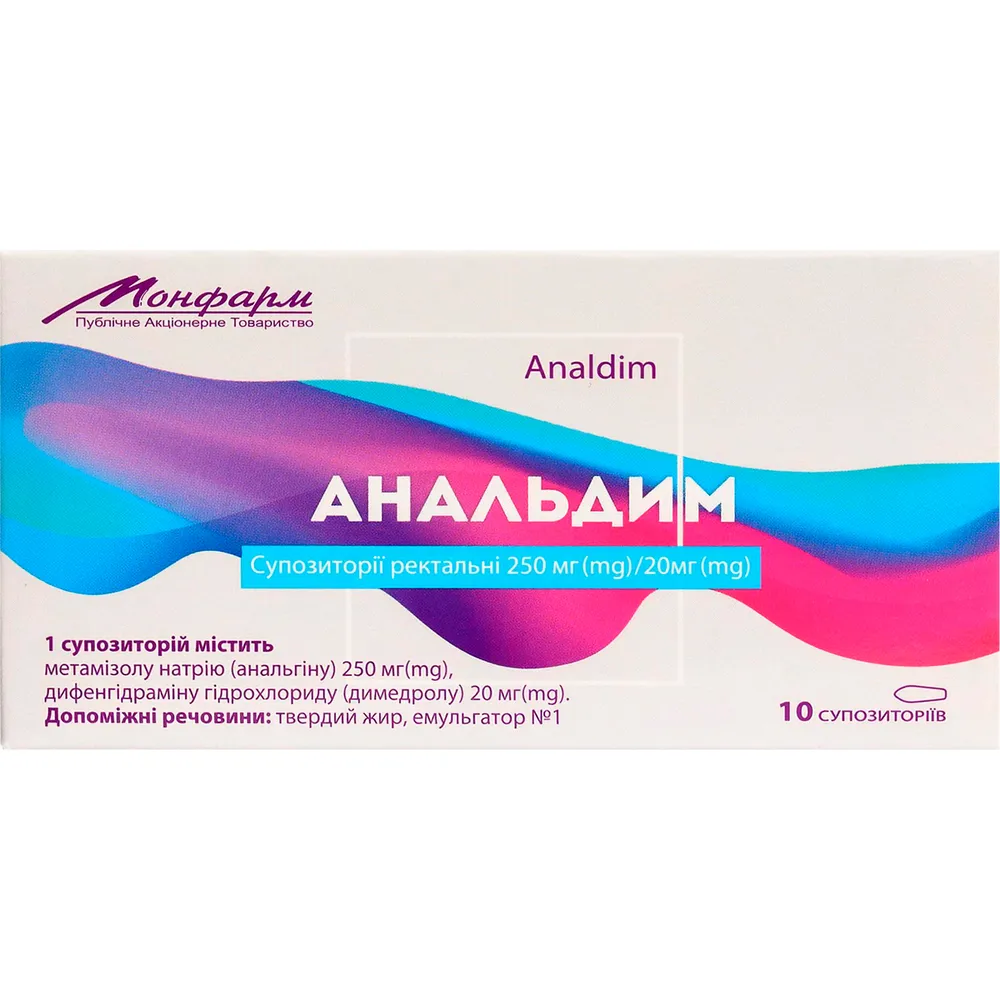
Table of Contents
I N S T R U C T I O N for medical use of the medicinal product ANALDIM (ANALDIM)
Composition:
Active substances: metamizole sodium, diphenhydramine hydrochloride;
1 suppository contains 100 mg or 250 mg of sodium metamizole (analgin) and 10 mg or 20 mg of diphenhydramine hydrochloride (dimedrol), respectively;
Excipients: hard fat, emulsifier No. 1.
Pharmaceutical form. Rectal suppositories.
Main physicochemical properties: suppositories from white to white with yellowish or creamy tint.
Pharmacotherapeutic group.
Analgesics and antipyretics. ATC code N02BB52.
Pharmacological properties.
Pharmacodynamics.
Analgin, a pyrazolone derivative, has pronounced analgesic and antipyretic effects, which are due to inhibition of bradykinin and prostaglandin synthesis. Dimedrol exerts antihistaminic, sedative, central cholinolytic, and anti-inflammatory effects. In addition, dimedrol potentiates the effect of analgin.
Pharmacokinetics.
Analgin and dimedrol are rapidly absorbed in the rectum, and peak blood concentrations are rapidly achieved within 1–2 hours. Analgin and dimedrol are widely distributed in the body and readily penetrate the central nervous system. Analgin is excreted in the urine unchanged as well as in conjugation with sulfuric and glucuronic acids; dimedrol is metabolized in the liver. The effect of the drug lasts for 5–6 hours after administration.
Clinical characteristics.
Indications.
Pain of various origins (headache, pain due to burns, neuralgia, radiculitis, myositis, postoperative pain), high body temperature.
Contraindications.
Severe impairment of liver or kidney function, blood disorders (anemia of any etiology, cytostatic or infectious neutropenia; agranulocytosis, leukopenia), glucose-6-phosphate dehydrogenase deficiency, rhinitis, conjunctivitis or bronchospasm following intake of nonsteroidal anti-inflammatory drugs, bronchial asthma, hypersensitivity to the drug, suspicion of acute surgical pathology, hypersensitivity to other antihistamines, pheochromocytoma, epilepsy, congenital long QT syndrome or ongoing use of drugs that may prolong the QT interval, closed-angle glaucoma, benign prostatic hyperplasia, pyloric stenosis, peptic ulcer disease with stenosis of the stomach or duodenum, urinary bladder neck stenosis, bradycardia, cardiac arrhythmias, hypersensitivity to other pyrazolone derivatives (phenylbutazone, tribromsalan, antipyrine). Agranulocytosis caused by metamizole, other pyrazolones or pyrazolidines in medical history. Impairment of bone marrow function or diseases of the hematopoietic system.
Special safety precautions.
| Agranulocytosis Treatment with metamizole may cause agranulocytosis, including fatal cases (see section "Adverse reactions"). This condition may occur even if previous use of metamizole was without adverse consequences. Metamizole-induced agranulocytosis is an idiosyncratic adverse reaction unrelated to the dose of the drug and may occur at any time during treatment, as well as shortly after its discontinuation. Patients should be informed about the necessity to discontinue treatment and seek immediate medical attention if any symptoms indicating agranulocytosis occur (e.g.: fever, chills, sore throat and painful lesions of the mucous membranes, particularly in the mouth, nose and throat, as well as in the genital or anal area). If metamizole is used for fever, some symptoms of developing agranulocytosis may remain unnoticed. Similarly, these symptoms may be overlooked in patients receiving antibiotic therapy. If signs and symptoms indicating agranulocytosis occur, treatment should be immediately discontinued and a complete blood count should be performed. If the diagnosis is confirmed, treatment must not be resumed (see section "Contraindications"). |
Sodium metamizole: Do not exceed the recommended doses of the drug.
Do not use the drug to relieve acute abdominal pain (prior to determining the cause).
Since sodium metamizole has anti-inflammatory and analgesic properties, it may mask signs of infection, symptoms of non-infectious diseases, and complications associated with pain syndrome, which may complicate their diagnosis.
Alcohol consumption should be avoided during treatment. Use in children should be carried out under constant medical supervision. The drug should be used with caution in the following patients: elderly patients – may lead to an increased frequency of adverse reactions, especially affecting the gastrointestinal tract; patients with existing allergic conditions (including pollinosis) or a history of such diseases – increased risk of allergic reactions; patients with impaired renal function or a history of kidney diseases (pyelonephritis, glomerulonephritis); patients with inflammatory bowel diseases, including ulcerative colitis and Crohn's disease; patients with marked arterial hypotension or cardiovascular insufficiency; patients with chronic alcoholism; and patients receiving cytostatic drugs simultaneously (only under physician control).
Continuous medical monitoring is required when treating children.
Patients should be warned before starting treatment that if they experience difficulty swallowing, gum bleeding, pallor of the skin, asthenia, or develop vaginitis or proctitis, the drug should be discontinued immediately.
The drug should also be discontinued at the first sign of skin rashes or mucosal lesions. In case of these symptoms, patients should seek immediate medical advice.
Severe skin reactions
Severe skin reactions have been reported during treatment with metamizole, including Stevens-Johnson syndrome, toxic epidermal necrolysis, and drug reaction with eosinophilia and systemic symptoms (DRESS syndrome), which may be fatal.
Patients should be informed about the signs and symptoms of skin reactions and closely monitored.
If signs or symptoms suggestive of these reactions occur, treatment with metamizole should be discontinued and must never be restarted (see section "Contraindications").
Risk of drug-induced liver injury
Cases of acute hepatitis, predominantly hepatocellular in nature, have been observed in patients taking sodium metamizole. Symptoms appeared from several days to several months after initiation of treatment. Manifestations included elevated serum liver enzymes, with or without jaundice, often in the context of hypersensitivity reactions to other drugs (e.g., skin rashes, blood dyscrasias, fever, and eosinophilia) or accompanied by features of autoimmune hepatitis. Most patients recovered after discontinuation of sodium metamizole; however, in isolated cases, progression to liver failure requiring liver transplantation has been reported.
The mechanism of sodium metamizole-induced liver injury is not fully understood, but available data suggest an immune-allergic mechanism.
Patients should be instructed to promptly inform their physician if symptoms suggestive of liver injury occur. If liver injury is suspected, sodium metamizole should be discontinued, and liver function tests should be evaluated.
Cases of liver injury during treatment with sodium metamizole are very rare, but the exact incidence of this adverse reaction cannot be determined. Hepatic injury has recurred in some patients upon re-exposure to sodium metamizole. Therefore, if a patient previously experienced liver injury during treatment with sodium metamizole and no other cause of liver injury has been identified, drugs containing sodium metamizole should not be readministered.
During drug intake, urine may turn red due to the excretion of a metabolite of sodium metamizole.
Diphenhydramine: Use with caution in patients with hyperthyroidism, chronic obstructive pulmonary diseases, elevated intraocular pressure, cardiovascular diseases, and in elderly patients.
The drug may cause dry eyes and discomfort during contact lens wear.
Alcohol consumption is contraindicated during treatment with this drug. Exposure to UV radiation should also be avoided. Use of diphenhydramine as an antiemetic may complicate the diagnosis of appendicitis and recognition of symptoms of overdose with other drugs.
Regular long-term use of the drug is not recommended due to the myelotoxicity of sodium metamizole.
Interaction with other medicinal products and other forms of interaction.
Diphenhydramine
Enhances the effects of ethanol and agents that depress the central nervous system: neuroleptics, tranquilizers, hypnotics, analgesics, and narcotics. Monoamine oxidase inhibitors enhance the anticholinergic activity of diphenhydramine.
Antagonistic interaction occurs when used concomitantly with psychostimulants. Concurrent use of diphenhydramine with antihypertensive drugs may increase feelings of fatigue. Diphenhydramine reduces the effectiveness of apomorphine as an emetic agent in poisoning treatment. It enhances anticholinergic effects of drugs with antimuscarinic activity. It should not be prescribed together with preparations containing diphenhydramine, including topical formulations. When used concomitantly with analeptics, the risk of seizures increases.
Concomitant use of diphenhydramine with tricyclic antidepressants may enhance its antimuscarinic effect, potentially leading to increased intraocular pressure in glaucoma.
Sodium metamizole
Radiographic contrast agents, colloidal plasma substitutes, and penicillin should not be used during treatment with sodium metamizole.
Chlorpromazine or other phenothiazine derivatives – may lead to the development of pronounced hypothermia.
Indirect anticoagulants, phenytoin, glucocorticosteroids, indomethacin, ibuprofen – sodium metamizole increases the activity of these drugs by displacing them from protein binding.
Phenylbutazone, glutethimide, barbiturates, and other inducers of hepatic microsomal enzymes – reduce the effectiveness of sodium metamizole.
Tricyclic antidepressants, hormonal contraceptives, allopurinol, and alcohol – may increase the toxicity of sodium metamizole. Sodium metamizole enhances the sedative effect of alcohol.
Other nonsteroidal anti-inflammatory drugs (NSAIDs) – potentiate their analgesic and antipyretic effects but increase the risk of additive adverse effects.
Sedatives and tranquilizers (such as cyamemazine, trioxazine, valocordin), codeine, H2-receptor histamine blockers, propranolol enhance the analgesic effect of sodium metamizole.
Metamizole may induce metabolic enzymes, particularly CYP2B6 and CYP3A4.
Concomitant use of metamizole with bupropion, efavirenz, methadone, valproate, tacrolimus, or escitalopram may lead to decreased plasma concentrations of these drugs, potentially reducing their clinical efficacy. Therefore, coadministration of these drugs with metamizole is recommended with caution; monitoring of clinical response and/or drug levels may be necessary.
Sarcolysin, mercaptopurine, thiimazole, drugs that suppress bone marrow activity, including gold compounds – increase the risk of hematotoxicity, including the development of leukopenia.
Methotrexate – high doses of metamizole may lead to increased methotrexate plasma concentration and enhanced toxic effects (primarily on the gastrointestinal tract and hematopoietic system). Cyclosporine – plasma concentration of cyclosporine may be reduced.
Sulfonylurea oral hypoglycemic agents – possible potentiation of their hypoglycemic effect when used concomitantly with NSAIDs, including sodium metamizole. Diuretics (furosemide) – possible reduction of diuretic effect.
Special precautions for use.
Use with caution in patients engaged in activities requiring rapid psychomotor reactions.
Use during pregnancy or breastfeeding.
The drug is contraindicated during pregnancy. Breastfeeding should be discontinued during treatment.
Ability to affect reaction speed when driving vehicles or operating machinery.
During treatment, driving vehicles and operating machinery should be avoided.
Method of Administration and Dosage
The medication is administered rectally. Frequency of administration – 1–3 suppositories per day.
Children aged 1–4 years are prescribed one suppository containing 100 mg of analgin and 10 mg of dimethidrine.
Children aged 5 years and older, as well as adults, are prescribed suppositories containing 250 mg of analgin and 20 mg of dimethidrine; children aged 5 years and older – one suppository, adults – 1–2 suppositories.
The duration of treatment is determined individually. The medication is used until fever and pain symptoms subside; usually for 1 to 3–4 days.
Children
The medication is indicated for children aged 1 year and older.
Overdose
Symptoms: hypothermia, palpitations, pronounced decrease in arterial pressure, tachycardia, dysphagia, dyspnea, tinnitus, nausea, vomiting, gastralgia/gastritis, weakness, drowsiness, delirium, impaired consciousness, convulsive syndrome; acute agranulocytosis, hemorrhagic syndrome, oliguria, anuria, acute renal or hepatic failure, and respiratory muscle paralysis may develop.
Treatment: discontinue the medication, induce vomiting, gastric lavage, administration of saline laxatives and enterosorbents, forced diuresis, symptomatic therapy aimed at supporting vital functions. In severe cases, hemodialysis, hemoperfusion, or peritoneal dialysis may be required.
In case of the first signs of overdose, seek immediate medical assistance!
Side effects.
Skin and subcutaneous tissue disorders: severe skin reactions have been reported with metamizole use, including Stevens-Johnson syndrome, toxic epidermal necrolysis, and drug reaction with eosinophilia and systemic symptoms (DRESS syndrome) (see section "Special precautions"). Frequency is unknown.
Hepatobiliary disorders: increased liver transaminase activity, liver function abnormalities, hepatitis, jaundice, drug-induced liver injury, including acute hepatitis (see section "Special precautions").
Immune system disorders: allergic reactions, skin rashes (papular, maculopapular, erythematous-urticarial), urticaria, pruritus, angioedema (Quincke's edema), contact dermatitis, mucosal rashes, conjunctivitis, skin hyperemia, angioneurotic edema, bronchospastic syndrome, anaphylactic shock, Stevens-Johnson syndrome, Lyell's syndrome.
Nervous system disorders: due to the action of dimenhydrinate – drowsiness, insomnia, reduced attention, decreased psychomotor reaction speed, restlessness, impaired motor coordination, increased excitability (especially in children), nervousness, irritability, euphoria, confusion, tremor, sweating, chills, neuritis, seizures, paresthesia, mydriasis, diplopia, visual disturbances, acute labyrinthitis, tinnitus, dizziness, headache, numbness of the oral mucosa, general weakness.
Blood and lymphatic system disorders: possible suppression of hematopoiesis (thrombocytopenia, granulocytopenia, leukopenia, hemolytic anemia, hemolytic jaundice – agranulocytosis).
Gastrointestinal disorders: dry mouth, nausea, vomiting, epigastric pain, diarrhea, constipation.
Renal and urinary disorders: frequent and/or difficult urination, urinary retention, transient oliguria, anuria, proteinuria, interstitial nephritis.
Cardiovascular disorders: chest tightness, palpitations, tachycardia, extrasystoles, dyspnea, decreased blood pressure.
Respiratory system disorders: in patients predisposed to bronchospasm, attacks may be provoked.
Other: increased menstrual frequency, early menstruation; dryness in the nose and throat, nasal congestion; bronchial secretion thickening; photosensitization, dry eyes; hepatitis; anorexia; increased intraocular pressure.
Reporting suspected adverse reactions.
Reporting suspected adverse reactions after marketing authorization is highly important. It allows continuous monitoring of the benefit-risk balance of the medicinal product. Healthcare professionals and patients, as well as their legal representatives, should report all suspected adverse reactions and lack of efficacy via the automated pharmacovigilance information system at: https://aisf.dec.gov.ua.
Shelf life.
2 years.
Storage conditions.
Store in the original packaging at a temperature not exceeding 25 °C.
Keep out of reach of children.
Packaging.
5 suppositories per strip. 2 strips per cardboard box.
Prescription status.
Prescription only.
Manufacturer.
JSC " Monfarm ".
Manufacturer's address and location of its business activities.
8, Zavodska St., Avramivka village, Uman district, Cherkasy region, 19161, Ukraine.