Alendra
Ukraine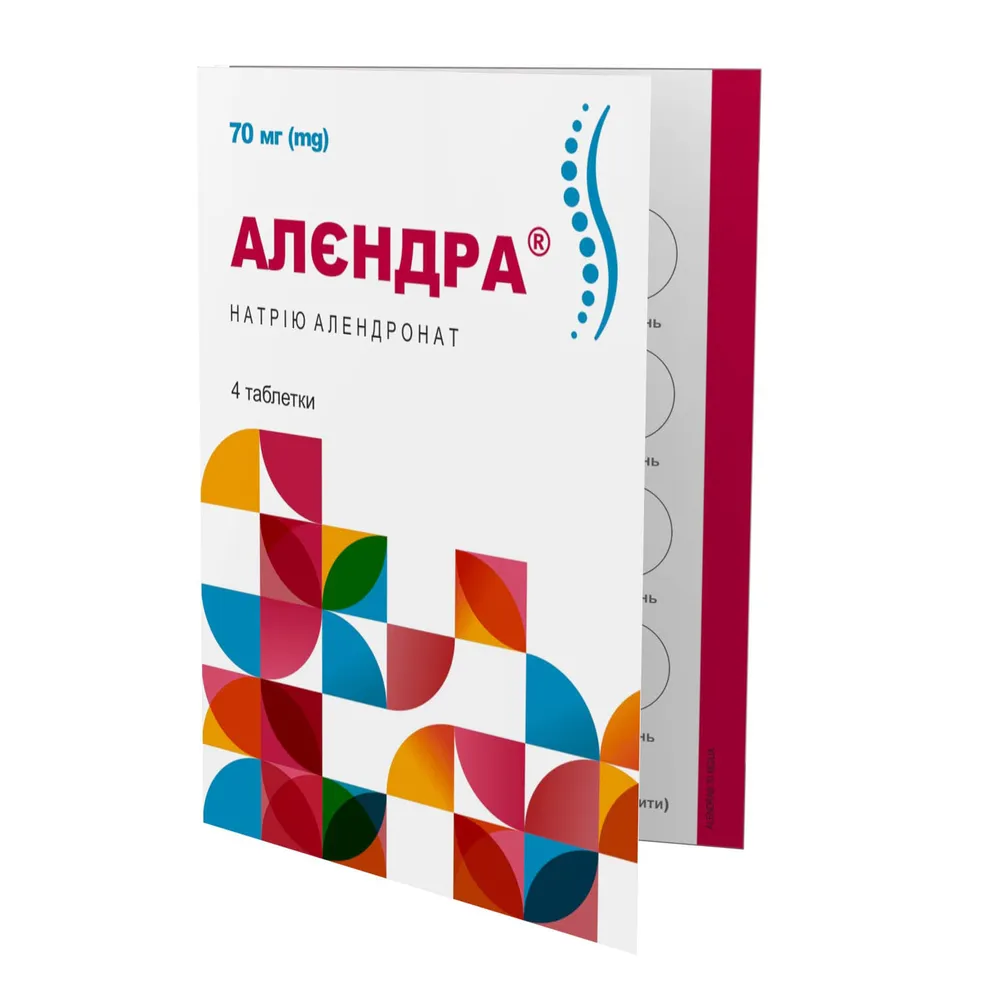
Table of Contents
- INSTRUCTION for medical use of the medicinal product ALENDRA® (ALENDRA®)
- Composition:
- Pharmacological properties.
- Clinical characteristics.
- Special precautions.
- Method of Administration and Dosage
- Adverse Reactions
- Composition:
- Pharmacological properties.
- Clinical Characteristics.
- Special precautions for use.
- Method of Administration and Dosage
- Adverse Reactions
INSTRUCTION for medical use of the medicinal product ALENDRA® (ALENDRA®)
Composition:
active substance: alendronic acid;
1 tablet contains sodium alendronate equivalent to 70 mg alendronic acid;
excipients: microcrystalline cellulose, lactose monohydrate, sodium croscarmellose, magnesium stearate, colloidal anhydrous silicon dioxide.
Pharmaceutical form. Tablets.
Main physicochemical properties: oval, biconvex tablets of white or almost white color.
Pharmacotherapeutic group.
Agents affecting bone structure and mineralization. ATC code M05B A04.
Pharmacological properties.
Pharmacodynamics.
Sodium alendronate belongs to the group of aminobisphosphonates. It is a synthetic analogue of natural pyrophosphate. It inhibits precipitation of calcium phosphate, blocks its transformation into hydroxyapatite, retards aggregation of apatite crystals leading to formation of larger crystals, and accelerates the reverse dissolution of these crystals. The selective action is due to high affinity of bisphosphonates for the mineral components of bone. It acts as an effective non-hormonal specific inhibitor of osteoclast-mediated bone resorption. The exact mechanisms of this process have not been fully elucidated. It restores the positive balance between resorption and bone restoration. Increases bone mineral density of the spine and pelvis, promotes formation of bone tissue with normal histological structure, and prevents the occurrence of new bone fractures. Reduces serum calcium levels by inhibiting bone resorption and decreasing calcium release from bone tissue. The calcium-lowering effect of the drug, mediated through suppression of osteoclasts, is observed within 1–2 days.
Pharmacokinetics.
Sodium alendronate is absorbed in the gastrointestinal tract by 25%. Absolute bioavailability of tablets (5 to 10 mg) taken on an empty stomach 2 hours before meals is 0.64% in women and 0.59% in men. Bioavailability decreases (by approximately 40%) when sodium alendronate is taken 30 minutes to 1 hour before a regular breakfast. Bioavailability of sodium alendronate is negligible when administered with food or within two hours after meals. Concomitant intake of sodium alendronate with other beverages (including mineral water, coffee, orange juice) reduces its bioavailability by 60%. Animal studies have shown that after intravenous administration at a dose of 1 mg/kg, sodium alendronate is temporarily distributed in soft tissues, but then rapidly redistributes. Half of the absorbed dose is excreted primarily unchanged by the kidneys within 72 hours, while the remainder accumulates in bone tissue for a long time and is eliminated very slowly due to binding to bone. The elimination half-life of sodium alendronate from bone is several years.
Approximately 78% of alendronate is bound to plasma proteins and it is not metabolized. Plasma concentration of the drug is low (less than 5 ng/mL) and decreases by 95% within 6 hours after intravenous infusion.
After a single intravenous dose of 10 mg alendronate, renal clearance was 71 mL/min, and systemic clearance did not exceed 200 mL/min.
Clinical characteristics.
Indications.
Treatment of postmenopausal osteoporosis. The drug reduces the risk of vertebral and hip fractures.
Contraindications.
- Hypersensitivity to sodium alendronate or to any other component of the drug;
- esophageal abnormalities (stricture or achalasia) that cause delayed emptying of the esophageal contents;
- inability to stand or sit upright for at least 30 minutes;
- hypocalcemia;
- severe renal impairment (creatinine clearance < 35 ml/min).
Interaction with other medicinal products and other forms of interaction.
The absorption of sodium alendronate may be impaired when taken simultaneously with food, beverages (including mineral water), calcium supplements (including dietary supplements), antacids, and certain other oral medications. The interval between administration of sodium alendronate and other orally administered medicinal products should be at least 30 minutes (see section "Method of administration and dosage").
Estrogens
No adverse effects of concomitant administration of sodium alendronate and estrogen-containing drugs have been observed.
Nonsteroidal anti-inflammatory drugs (NSAIDs)
NSAIDs may cause irritative effects on the gastrointestinal mucosa. Caution should be exercised when co-administering sodium alendronate and NSAIDs.
No other clinically significant drug interactions are expected.
Special precautions.
Gastrointestinal adverse reactions.
Sodium alendronate may cause local irritation of the mucosa of the upper gastrointestinal tract. Since there is a risk of exacerbation of the underlying disease, the drug should be prescribed with caution to patients with dysphagia, esophageal disorders, gastritis, duodenitis, peptic ulcer disease, as well as to patients who have had severe gastrointestinal diseases in the past year (gastric ulcer, acute gastrointestinal bleeding, surgical interventions in the upper gastrointestinal tract, except for pyloroplasty).
The drug should be prescribed individually to patients with Barrett's esophagus, only if the expected benefit outweighs the potential risk.
Since administration of the drug may cause esophagitis (inflammation of the esophagus), esophageal ulcers or erosions, which in rare cases may lead to the development of esophageal stricture, careful monitoring for any signs of such effects is required. If symptoms such as dysphagia, pain on swallowing, retrosternal pain, or heartburn (new onset or worsening of existing heartburn) occur, the drug should be discontinued and the patient should consult a physician.
The risk of severe adverse reactions affecting the esophagus is higher in individuals who do not take alendronate sodium properly and/or continue taking the drug after the onset of esophageal mucosal irritation symptoms. Therefore, the patient must strictly follow the physician's instructions regarding dosage and administration (see section "Administration and dosage").
Although during the pre-registration period no increased risk of gastric or duodenal ulcer was identified, rare cases of these diseases have been reported during the post-marketing period; some of them had a severe course with complications.
Osteonecrosis of the jaw
Overall, osteonecrosis of the jaw has been associated with tooth extraction and/or presence of local infection (including osteomyelitis) in oncology patients receiving intravenous bisphosphonates. Most of these patients were also receiving chemotherapy and corticosteroids. Cases of jaw osteonecrosis have also been reported in patients with osteoporosis treated with oral bisphosphonates.
When assessing individual risk of developing jaw osteonecrosis, the following risk factors should be considered:
- Potency of the bisphosphonate (highest with zoledronic acid), route of administration (see above), and cumulative dose;
- Oncological disease, chemotherapy, radiotherapy, corticosteroids, anti-angiogenic agents, smoking;
- Poor dental history, inadequate oral hygiene, invasive dental procedures, poorly fitting dentures.
Patients with poor oral hygiene should undergo a dental examination and receive appropriate preventive dental care before starting bisphosphonate therapy. During treatment, invasive dental procedures should be avoided whenever possible in such patients.
In patients who develop jaw osteonecrosis during bisphosphonate therapy, dental surgical procedures may worsen the condition. There are no additional data on reducing the risk of jaw osteonecrosis by discontinuing bisphosphonates in patients requiring dental intervention. The clinical decision regarding patient management should be based on an individual benefit-risk assessment.
During bisphosphonate therapy, all patients should maintain proper oral hygiene, undergo regular dental check-ups, and report any dental symptoms (pain, swelling, tooth mobility).
Osteonecrosis of the external auditory canal
Cases of osteonecrosis of the external auditory canal have been reported during bisphosphonate therapy, primarily associated with long-term treatment (see section "Adverse reactions"). Possible risk factors for osteonecrosis of the external auditory canal include steroid hormone therapy and chemotherapy, and/or local risk factors such as infection or trauma. The likelihood of developing osteonecrosis of the external auditory canal should be evaluated in patients receiving bisphosphonates who present with ear symptoms (ear pain or discharge from the external auditory canal, chronic ear infections).
Musculoskeletal pain
Bone, joint, and/or muscle pain has been reported in patients treated with bisphosphonates. In rare cases, these symptoms were severe and/or affected the ability to perform daily activities. The time from initiation of bisphosphonate therapy to symptom onset ranged from one day to several months. In most patients, symptoms improved after discontinuation of treatment. Recurrence of symptoms occurred upon re-administration of the same or another bisphosphonate.
Atypical femoral fractures
Atypical subtrochanteric and diaphyseal femoral fractures have been reported in patients receiving bisphosphonates, particularly during long-term osteoporosis treatment.
These fractures may occur at any site along the femur (from the lesser trochanter to the supracondylar region), following minimal or no trauma. Some patients may experience thigh or groin pain for a period (from several weeks to several months) before the fracture is diagnosed. Fractures are often bilateral. Therefore, when an atypical femoral fracture is detected in one limb of a patient receiving bisphosphonates, the contralateral femur should be examined to rule out a similar lesion. It should be noted that such fractures heal poorly. Thus, the decision to discontinue bisphosphonate therapy in patients suspected of having atypical femoral fractures should be made by the physician based on an individual benefit-risk assessment. Additionally, patients receiving bisphosphonates should be advised to promptly report any new thigh, groin, or hip joint pain to their physician. If such symptoms occur, the patient should be evaluated for femoral fracture.
Severe skin adverse reactions
During the post-marketing period, severe skin adverse reactions have been reported, including Stevens-Johnson syndrome and toxic epidermal necrolysis.
Missed dose
Patients should be advised that if a dose is missed, they should take one tablet the following morning. Subsequent dosing should continue as usual—the next tablet should be taken on the day originally designated for dosing (see section "Administration and dosage").
Renal impairment
Sodium alendronate is contraindicated in patients with severe renal impairment, particularly with creatinine clearance < 35 mL/min (see section "Contraindications").
Mineral metabolism and hypocalcemia
Other potential causes of osteoporosis, apart from estrogen deficiency and age-related changes, should be considered. Hypocalcemia must be corrected prior to initiating sodium alendronate therapy (see section "Contraindications"). Other disorders of mineral metabolism (such as vitamin D deficiency and hypoparathyroidism) should also be effectively treated. In patients with these conditions, serum calcium levels and signs of hypocalcemia should be monitored during treatment.
Due to increased bone mineralization induced by sodium alendronate, hypocalcemia and hypophosphatemia may develop, particularly in patients taking glucocorticoids (due to reduced calcium absorption). Hypocalcemia is usually mild and asymptomatic. However, cases of clinically symptomatic hypocalcemia (in some cases severe) may occur, especially in patients with risk factors for calcium metabolism disorders (e.g., hypoparathyroidism, vitamin D deficiency, malabsorption/impaired calcium absorption). Therefore, ensuring adequate intake of calcium and vitamin D is particularly important for patients taking glucocorticoids.
Excipients
The drug contains lactose. If you have been diagnosed with an intolerance to certain sugars, consult your doctor before taking this medicinal product.
Use during pregnancy or breastfeeding.
The drug is contraindicated during pregnancy and breastfeeding.
Effect on ability to drive or operate machinery.
No effect of sodium alendronate on the ability to drive or operate machinery has been observed. However, certain adverse reactions reported with the use of this drug may affect the ability of some patients to drive or operate machinery. Individual responses to sodium alendronate may vary.
Method of Administration and Dosage
Recommended dose: 1 tablet of 70 mg once weekly.
The optimal duration of bisphosphonate treatment for osteoporosis has not been established. The decision on the need to continue treatment with sodium alendronate should be made individually by the physician based on periodic assessment of the benefit-risk ratio (especially after 5 or more years of treatment).
The tablet should be taken with water at least 30 minutes before the first meal, beverage, or other medicinal products. Other beverages (including mineral water), food, and certain medications may reduce the absorption of sodium alendronate (see section "Interaction with Other Medicinal Products and Other Forms of Interaction").
To facilitate the passage of the drug into the stomach and thus minimize its irritating effect on the mucous membranes of the oral cavity, pharynx, and esophagus, the following should be observed:
- Take the tablet in the morning after waking up, with a full glass of water (not less than 200 mL);
- Do not chew the tablet due to the risk of developing oral and pharyngeal ulcers;
- The first meal of the day should be taken no sooner than 30 minutes after taking the tablet;
- Patients should remain upright (sitting or standing) for at least 30 minutes after taking the tablet;
- The drug should not be taken immediately before bedtime or before rising in the morning.
The interval between administration of alendronate and other orally administered medications should be at least 30 minutes.
Additional calcium and vitamin D supplementation should be taken if dietary intake of these nutrients is inadequate.
The tablet should be taken on the same day each week. If a dose is missed, one tablet should be taken the following morning. Subsequent doses should be taken as usual on the chosen day of the week (see section "Special Instructions").
Use in elderly patients
Dosage adjustment is not required for elderly patients.
Renal impairment
No dosage adjustment is necessary for patients with creatinine clearance greater than 35 mL/min.
Alendronate is not recommended for patients with creatinine clearance less than 35 mL/min due to lack of experience with the use of the drug in such patients.
The effect of the drug has not been studied in the treatment of corticosteroid-induced osteoporosis.
Children
Not recommended for use in children under 18 years of age.
Overdose
Symptoms: hypocalcemia, hypophosphatemia, and gastrointestinal adverse reactions (dyspepsia, heartburn, esophagitis, gastritis, or gastric ulcer).
Treatment: to bind alendronate, milk or antacids should be administered. Due to the risk of esophageal irritation, vomiting should not be induced. The patient should remain in an upright position.
Adverse Reactions
Immune system disorders: hypersensitivity reactions, including urticaria, allergic reactions, and angioedema.
Nervous system disorders: headache, dizziness, taste disturbances (bitter or unusual taste in the mouth after taking the medication).
Eye disorders: uveitis, scleritis, episcleritis.
Ear and labyrinth disorders: vertigo, external auditory canal osteonecrosis (belongs to adverse reactions typical for bisphosphonates).
Gastrointestinal disorders: abdominal pain, dyspepsia, constipation, diarrhea, flatulence, oral, pharyngeal, and esophageal ulcers, dysphagia, abdominal wall tension, heartburn, gastric content regurgitation, nausea, vomiting, gastritis, esophagitis, esophageal erosion, esophageal strictures, perforation, ulcer, gastrointestinal bleeding (including oral cavity, pharynx, esophagus, stomach), melena.
Skin and subcutaneous tissue disorders: rash, pruritus, erythema (redness); photosensitivity reactions (rash exacerbated by light exposure); severe skin reactions, including Stevens-Johnson syndrome and toxic epidermal necrolysis; hair loss (alopecia).
Musculoskeletal and connective tissue disorders: bone, muscle, or joint pain, osteonecrosis of the jaw, atypical femoral fractures, joint swelling.
Metabolic and nutritional disorders: hypocalcemia with corresponding clinical symptoms, often associated with predisposing factors.
General disorders: transient symptoms (muscle pain, malaise, and rarely fever), which usually occur at the beginning of treatment, asthenia, peripheral edema.
Investigations: hypocalcemia, hypophosphatemia (during treatment with alendronate 10 mg/kg/day).
Shelf life: 3 years.
Storage conditions:
Store at a temperature not exceeding 25 °C in the original packaging.
Keep out of reach of children.
Packaging:
4 tablets in a blister pack. 1 blister pack in a cardboard box.
Prescription status:
By prescription only.
Manufacturer:
LLC "GLEDFARM LTD"
Manufacturer's address:
54 Davydovskoho Hryhorii Street, Sumy, Sumy region, 40020, Ukraine.
INSTRUCTION
for medical use of the medicinal product
ALENDRА®
(ALENDRA®)
Composition:
Active substance: alendronic acid;
1 tablet contains sodium alendronate equivalent to 70 mg alendronic acid;
Excipients: microcrystalline cellulose, lactose monohydrate, sodium croscarmellose, magnesium stearate, colloidal anhydrous silicon dioxide.
Pharmaceutical form. Tablets.
Main physicochemical properties: oval, biconvex tablets of white or almost white color.
Pharmacotherapeutic group.
Drugs affecting bone structure and mineralization. ATC code M05B A04.
Pharmacological properties.
Pharmacodynamics.
Sodium alendronate belongs to the group of aminobisphosphonates. It is a synthetic analogue of natural pyrophosphate. It inhibits precipitation of calcium phosphate, blocks its transformation into hydroxyapatite, delays aggregation of apatite crystals leading to formation of larger crystals, and accelerates reverse dissolution of these crystals. The selective action is due to high affinity of bisphosphonates for bone mineral components. It acts as an effective non-hormonal specific inhibitor of osteoclast-mediated bone resorption. The exact mechanisms of this process have not been fully elucidated. It restores the positive balance between bone resorption and bone formation. It increases bone mineral density of the spine and pelvis, promotes formation of bone tissue with normal histological structure, prevents the occurrence of new bone fractures, and reduces serum calcium levels by inhibiting bone resorption and decreasing calcium release from bone tissue. The calcium-lowering effect of the drug, mediated through inhibition of osteoclasts, is observed within 1–2 days.
Pharmacokinetics.
Sodium alendronate is absorbed in the gastrointestinal tract by 25%. The absolute bioavailability of tablets (5 to 10 mg) taken on an empty stomach 2 hours before a meal is 0.64% in women and 0.59% in men. Bioavailability decreases (by approximately 40%) when sodium alendronate is taken 30 minutes to 1 hour before a regular breakfast. The bioavailability of sodium alendronate is negligible when taken with food or within two hours after eating. Concurrent intake of sodium alendronate with other beverages (including mineral water, coffee, orange juice) reduces its bioavailability by 60%. Animal studies have shown that after intravenous administration at a dose of 1 mg/kg, sodium alendronate is temporarily distributed in soft tissues, but then rapidly redistributes. Half of the absorbed dose is excreted, mainly unchanged, via the kidneys within 72 hours, while the remainder accumulates in bone tissue for a long time and is eliminated very slowly due to binding to bone. The half-life of elimination of sodium alendronate from bone is several years.
Approximately 78% of alendronate binds to plasma proteins and is not metabolized. The concentration of the drug in blood plasma is low (less than 5 ng/mL) and decreases by 95% within 6 hours after intravenous infusion.
After a single intravenous administration of 10 mg alendronate, renal clearance was 71 mL/min, and systemic clearance did not exceed 200 mL/min.
Clinical Characteristics.
Indications.
Treatment of postmenopausal osteoporosis. The drug reduces the risk of vertebral and hip fractures.
Contraindications.
- Hypersensitivity to sodium alendronate or to any other component of the drug;
- esophageal abnormalities (such as stricture or achalasia) that cause delayed emptying of the esophagus;
- inability to stand or sit upright for at least 30 minutes;
- hypocalcemia;
- severe renal impairment (creatinine clearance < 35 ml/min).
Interaction with other medicinal products and other forms of interaction.
The absorption of sodium alendronate may be impaired when taken simultaneously with food, beverages (including mineral water), calcium supplements (including dietary supplements), antacids, and certain other oral medications. An interval of at least 30 minutes should be maintained between administration of sodium alendronate and other oral medicinal products (see section "Instructions for use and dosage").
Estrogens
No adverse effects have been observed with concomitant use of sodium alendronate and estrogen-containing drugs.
Nonsteroidal anti-inflammatory drugs (NSAIDs)
NSAIDs may cause irritative effects on the gastrointestinal mucosa. Caution should be exercised when co-administering sodium alendronate and NSAIDs.
No other clinically significant drug interactions are expected.
Special precautions for use.
Adverse reactions from the upper gastrointestinal tract.
Sodium alendronate may cause local irritation of the mucosa of the upper gastrointestinal tract. Since there is a risk of exacerbation of the underlying disease, the drug should be prescribed with caution to patients with dysphagia, esophageal disorders, gastritis, duodenitis, peptic ulcer disease, and those who have had severe gastrointestinal diseases (gastric ulcer, acute gastrointestinal bleeding, surgical interventions in the upper gastrointestinal tract, except for pyloroplasty) within the past year.
The drug should be prescribed individually to patients with Barrett's esophagus, provided that the expected benefit outweighs the risk.
Since administration of the drug may cause esophagitis (inflammation of the esophagus), esophageal ulcers or erosions, which in rare cases may be complicated by the development of esophageal stricture, careful monitoring for any signs of such effects is required. If symptoms such as dysphagia, pain on swallowing, retrosternal pain, or heartburn (new onset or worsening of existing heartburn) occur, the drug should be discontinued and medical advice should be sought immediately.
The risk of severe adverse reactions affecting the esophagus is higher in individuals who do not take alendronate sodium properly and/or continue taking the drug after symptoms of esophageal mucosal irritation appear. Therefore, patients must strictly follow the physician's instructions regarding dosage and administration of the drug (see section "Method of administration and dosage").
Although an increased risk of gastric and duodenal ulcers was not observed during the pre-registration period, rare cases of these conditions have been reported during the post-marketing period, some of which were severe and associated with complications.
Osteonecrosis of the jaw
Overall, osteonecrosis of the jaw has been associated with tooth extraction and/or presence of local infection (including osteomyelitis) in oncology patients receiving intravenous bisphosphonates. Most of these patients were undergoing chemotherapy and/or corticosteroid therapy. Cases of osteonecrosis of the jaw have also been reported in patients with osteoporosis receiving oral bisphosphonates.
When assessing individual risk of developing osteonecrosis of the jaw, the following risk factors should be considered:
- Potency of the bisphosphonate (highest with zoledronic acid), route of administration (see above), and cumulative dose;
- Oncological disease, chemotherapy, radiotherapy, corticosteroids, anti-angiogenic agents, smoking;
- Poor dental history, inadequate oral hygiene, invasive dental procedures, poorly fitting dentures.
Patients with poor oral hygiene should undergo a dental examination and receive appropriate preventive dental care before starting bisphosphonate therapy. During treatment, invasive dental procedures should be avoided whenever possible in such patients.
In patients who develop osteonecrosis of the jaw during bisphosphonate therapy, dental surgical interventions may worsen the condition. There are no additional data on reducing the risk of osteonecrosis of the jaw by discontinuing bisphosphonates in patients requiring dental procedures. The clinical decision regarding patient management should be based on an individual benefit-risk assessment.
During bisphosphonate therapy, all patients should maintain adequate oral hygiene, undergo regular dental check-ups, and report any dental symptoms (tooth pain, swelling, tooth mobility).
Osteonecrosis of the external auditory canal
Cases of osteonecrosis of the external auditory canal have been reported during bisphosphonate therapy, primarily associated with long-term treatment (see section "Adverse reactions"). Possible risk factors for osteonecrosis of the external auditory canal include steroid therapy and chemotherapy, and/or local risk factors such as infection or trauma. The likelihood of developing osteonecrosis of the external auditory canal should be evaluated in patients receiving bisphosphonates who present with ear symptoms (ear pain, discharge from the external auditory canal, or chronic ear infections).
Musculoskeletal pain
Bone, joint, and/or muscle pain has been reported in patients receiving bisphosphonates. In rare cases, these symptoms were severe and/or affected the ability to perform daily activities. The time from initiation of bisphosphonate therapy to symptom onset ranged from one day to several months. In most patients, symptoms improved after discontinuation of the drug. Recurrence of symptoms occurred upon re-administration of the same or another bisphosphonate.
Atypical femoral fractures
Atypical subtrochanteric and diaphyseal femoral fractures have been reported in patients receiving bisphosphonates, particularly with long-term treatment for osteoporosis.
These fractures may occur anywhere along the femur (from the lesser trochanter to the supracondylar region), following minimal or no trauma. Some patients may experience pain in the groin or thigh area for a period (from several weeks to several months) before the fracture is diagnosed. Fractures are often bilateral. Therefore, if an atypical femoral fracture is detected in one limb of a patient receiving bisphosphonates, the contralateral limb should be examined to rule out a similar fracture. It should be noted that such fractures heal poorly. Thus, the decision to discontinue bisphosphonate therapy in patients suspected of having atypical femoral fractures should be made by the physician based on an individual benefit-risk assessment. Additionally, patients receiving bisphosphonates should be advised to promptly report any new thigh, groin, or hip pain to their physician. If such symptoms occur, patients should be evaluated for femoral fracture.
Severe skin adverse reactions
In the post-marketing period, severe skin adverse reactions have been reported, including Stevens-Johnson syndrome and toxic epidermal necrolysis.
Missed dose
Patients should be advised that if a dose is missed, they should take one tablet the following morning. Subsequent dosing should continue as usual—the next tablet should be taken on the day originally designated for administration (see section "Method of administration and dosage").
Renal impairment
Sodium alendronate is contraindicated in patients with severe renal impairment, particularly when creatinine clearance is < 35 mL/min (see section "Contraindications").
Mineral metabolism and hypocalcemia
Other potential causes of osteoporosis, apart from estrogen deficiency and age-related changes, should be considered. Hypocalcemia must be corrected prior to initiating sodium alendronate therapy (see section "Contraindications"). Other disorders of mineral metabolism (such as vitamin D deficiency and hypoparathyroidism) should also be adequately treated. In patients with such conditions, serum calcium levels and signs of hypocalcemia should be monitored during treatment.
Due to increased bone mineralization induced by sodium alendronate, hypocalcemia and hypophosphatemia may develop, particularly in patients receiving glucocorticoids (due to reduced calcium absorption). Hypocalcemia is usually mild and asymptomatic. However, clinically symptomatic hypocalcemia (in some cases severe) may occur, particularly in patients with risk factors for calcium metabolism disorders (e.g., hypoparathyroidism, vitamin D deficiency, malabsorption/impaired calcium absorption). Therefore, ensuring adequate intake of calcium and vitamin D is especially important for patients receiving glucocorticoids.
Excipients
The drug contains lactose. If you have been diagnosed with an intolerance to certain sugars, consult your doctor before taking this medication.
Use during pregnancy or breastfeeding.
The drug is contraindicated during pregnancy and breastfeeding.
Ability to influence reaction rate while driving or operating machinery.
No effects of sodium alendronate on the ability to drive or operate machinery have been observed. However, certain adverse reactions reported with the use of the drug may affect the ability of some patients to drive or operate machinery. Individual responses to sodium alendronate may vary.
Method of Administration and Dosage
Recommended dose: 1 tablet of 70 mg once weekly.
The optimal duration of treatment with bisphosphonates for osteoporosis has not been established. The decision on the need to continue treatment with sodium alendronate should be made by the physician individually for each patient based on periodic assessment of the benefit-risk ratio (especially after 5 or more years of treatment).
The tablet should be taken with water at least 30 minutes before the first meal, drink, or intake of any other medicinal products. Other beverages (including mineral water), food, and certain medications may reduce the absorption of sodium alendronate (see section "Interaction with other medicinal products and other forms of interaction").
To facilitate the passage of the drug into the stomach and thereby minimize its irritating effect on the mucous membranes of the oral cavity, pharynx, and esophagus, the following instructions must be observed:
- Take the tablet in the morning after waking up, with a full glass of water (not less than 200 ml);
- Do not chew the tablet due to the risk of developing ulcers in the oral cavity and pharynx;
- The first meal of the day should be taken no sooner than 30 minutes after taking the tablet;
- Patients should remain upright (sitting or standing) for at least 30 minutes after taking the tablet;
- The drug must not be taken immediately before bedtime or before getting up in the morning.
The interval between administration of alendronate and other orally administered medications should be at least 30 minutes.
Additional calcium and vitamin D supplementation should be taken if dietary intake of these nutrients is insufficient.
The tablet should be taken on the same day each week. If a dose is missed, one tablet should be taken the following morning. Subsequent doses should continue as usual—on the day originally chosen for weekly administration (see section "Special Instructions").
Use in elderly patients
Dosage adjustment is not required for elderly patients.
Renal impairment
No dosage adjustment is necessary for patients with creatinine clearance greater than 35 mL/min.
Alendronate is not recommended for patients with creatinine clearance less than 35 mL/min due to lack of experience with the use of the drug in this population.
The effect of the drug has not been studied in the treatment of corticosteroid-induced osteoporosis.
Pediatric use
Do not use in children under 18 years of age.
Overdose
Symptoms: hypocalcemia, hypophosphatemia, and adverse reactions in the upper gastrointestinal tract (dyspepsia, heartburn, esophagitis, gastritis, or gastric ulcer).
Treatment: to bind alendronate, milk should be consumed or antacids administered. Due to the risk of esophageal irritation, vomiting should not be induced; the patient should maintain an upright position.
Adverse Reactions
Immune system disorders: Hypersensitivity reactions, including urticaria, allergic reactions, and angioedema.
Nervous system disorders: Headache, dizziness, taste disturbances (bitter or unusual taste in the mouth after taking the medicine).
Eye disorders: Uveitis, scleritis, episcleritis.
Ear and labyrinth disorders: Vertigo, external auditory canal osteonecrosis (belongs to adverse reactions typical for bisphosphonates).
Gastrointestinal disorders: Abdominal pain, dyspepsia, constipation, diarrhea, flatulence, oral, pharyngeal, and esophageal ulcers, dysphagia, abdominal wall tension, heartburn, gastric content regurgitation, nausea, vomiting, gastritis, esophagitis, esophageal erosion, esophageal strictures, perforation, ulcer, gastrointestinal bleeding (including in the oral cavity, pharynx, esophagus, stomach), melena.
Skin and subcutaneous tissue disorders: Rash, pruritus, erythema (redness); photosensitivity reactions (rash aggravated by light exposure); severe skin reactions, including Stevens-Johnson syndrome and toxic epidermal necrolysis; hair loss (alopecia).
Musculoskeletal and connective tissue disorders: Bone, muscle, or joint pain, osteonecrosis of the jaw, atypical femoral fractures, joint swelling.
Metabolic and nutritional disorders: Hypocalcemia with corresponding clinical symptoms, often associated with predisposing factors.
General disorders: Transient symptoms (muscle pain, malaise, and rarely fever), which usually occur at the beginning of treatment, asthenia, peripheral edema.
Investigations: Hypocalcemia, hypophosphatemia (during treatment with alendronate 10 mg/kg daily).
Shelf life: 3 years.
Storage conditions:
Store at a temperature not exceeding 25°C, in the original packaging.
Keep out of reach and sight of children.
Packaging:
4 tablets in a blister pack. 1 blister pack in a cardboard box.
Prescription status:
Prescription only.
Manufacturer:
KUSUM HEALTHCARE PVT LTD.
Manufacturer's address:
SP-289 (A), RIICO Industrial Area, Chopanki, Bhiwadi, Dist. Alwar (Rajasthan), India.