Alotendin
Ukraine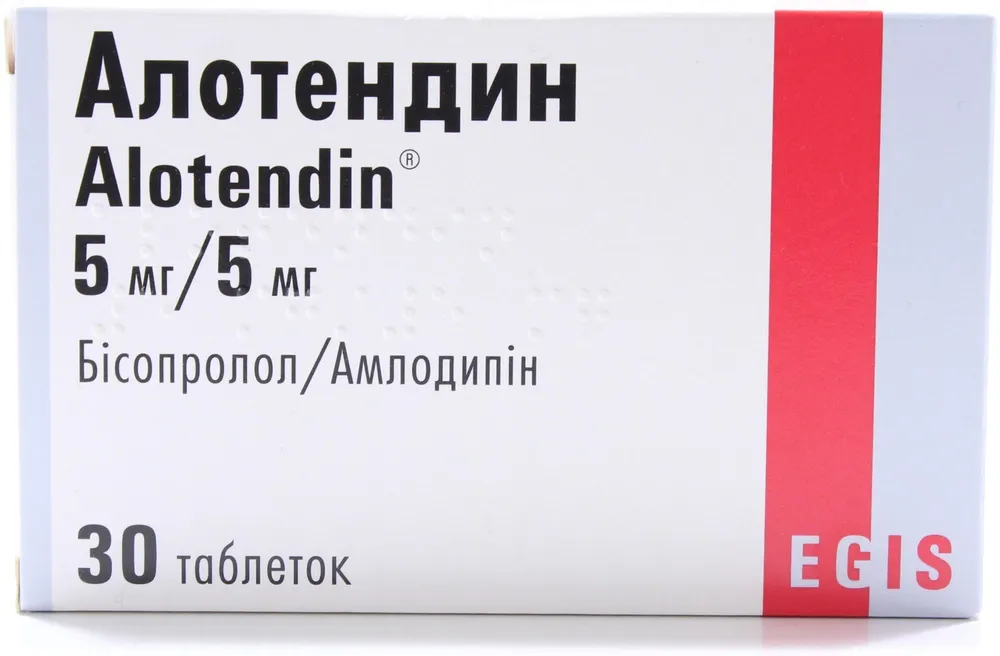
Table of Contents
INSTRUCTIONS FOR MEDICAL USE OF THE MEDICINAL PRODUCT ALOTENDIN®
Composition:
Active substances: amlodipine, bisoprolol;
1 tablet of ALOTENDIN 5 mg / 5 mg contains 5 mg of bisoprolol fumarate and 5 mg of amlodipine, equivalent to 6.95 mg of amlodipine besylate;
1 tablet of ALOTENDIN 10 mg / 5 mg contains 10 mg of bisoprolol fumarate and 5 mg of amlodipine, equivalent to 6.95 mg of amlodipine besylate;
1 tablet of ALOTENDIN 5 mg / 10 mg contains 5 mg of bisoprolol fumarate and 10 mg of amlodipine, equivalent to 13.9 mg of amlodipine besylate;
1 tablet of ALOTENDIN 10 mg / 10 mg contains 10 mg of bisoprolol fumarate and 10 mg of amlodipine, equivalent to 13.9 mg of amlodipine besylate;
Excipients: microcrystalline cellulose, sodium starch glycolate (type A), colloidal anhydrous silicon dioxide, magnesium stearate.
Pharmaceutical form. Tablets.
Main physicochemical properties:
Tablets 5 mg / 5 mg: white or almost white, elongated, slightly biconvex tablets, odorless, with a score on one side and engraved "MS" on the other;
Tablets 10 mg / 5 mg: white or almost white, oval, slightly biconvex tablets, odorless, with a score on one side and engraved "MS" on the other;
Tablets 5 mg / 10 mg: white or almost white, round, flat with beveled edges, odorless, with a score on one side and engraved "MS" on the other;
Tablets 10 mg / 10 mg: white or almost white, round, slightly biconvex tablets, odorless, with a score on one side and engraved "MS" on the other.
Pharmacotherapeutic group. Selective β-blockers and other antihypertensive agents.
ATC code C07FB.
Pharmacological properties.
Pharmacodynamics.
Amlodipine is a calcium ion antagonist (slow calcium channel blocker) that inhibits transmembrane influx of calcium ions into vascular and myocardial smooth muscle cells. The antihypertensive mechanism of amlodipine is due to a direct vasodilatory effect on vascular smooth muscle. The antianginal effect of amlodipine is achieved via two mechanisms:
- Peripheral arteriolar dilation, resulting in reduced total peripheral resistance (afterload). Since heart rate remains unchanged, the reduced cardiac workload decreases myocardial energy consumption and oxygen demand;
- Dilation of major coronary arteries and arterioles in both normal and ischemic myocardial regions. This vasodilation increases oxygen delivery to the myocardium in patients with vasospastic angina (Prinzmetal's angina or variant angina).
In patients with arterial hypertension, once-daily administration of amlodipine provides clinically significant blood pressure reduction over 24 hours. Due to the slow onset of action of amlodipine, a sudden drop in blood pressure does not occur.
In patients with angina, amlodipine prolongs total exercise duration, time to onset of angina, and time to significant ST-segment depression. It also reduces the frequency of angina attacks and the need for nitroglycerin use.
Amlodipine does not cause undesirable metabolic effects or changes in plasma lipid levels, making it suitable for use in patients with bronchial asthma, diabetes mellitus, and gout.
Bisoprolol is a potent, highly selective β1-adrenoceptor blocker without intrinsic sympathomimetic activity or significant membrane-stabilizing properties.
It exhibits only low affinity for β2-receptors in bronchial and vascular smooth muscle, as well as for β-receptors involved in metabolic regulation. Thus, bisoprolol does not affect airway resistance or β2-mediated metabolic effects. The β1-selectivity extends beyond the therapeutic dose range. Bisoprolol has no evident negative inotropic effect.
Maximum effect occurs 3–4 hours after oral administration.
The elimination half-life from plasma is 10–12 hours, ensuring a sustained therapeutic effect for 24 hours after a single daily dose.
The maximal antihypertensive effect is typically achieved within 2 weeks of treatment initiation.
In acute administration to patients with ischemic heart disease without chronic heart failure, bisoprolol reduces heart rate and stroke volume, thereby decreasing cardiac output and oxygen consumption. With continued use, elevated peripheral resistance initially decreases.
The antihypertensive effect of β-blockers is partly mediated by reduced renin activity.
Combination of amlodipine/bisoprolol
This combination enhances antihypertensive and antianginal efficacy through complementary mechanisms of action of the two active substances: the vasoselective effect of the calcium channel blocker amlodipine (reducing peripheral resistance) and the cardioprotective effect of the cardioselective β-blocker bisoprolol (reducing cardiac output).
Pharmacokinetics.
Amlodipine
Absorption
After oral administration at therapeutic doses, amlodipine is well absorbed and reaches peak plasma concentration within 6–12 hours. Food intake does not affect amlodipine bioavailability. Absolute bioavailability ranges from 64% to 80%.
Distribution
The volume of distribution is approximately 21 L/kg. Steady-state plasma concentration (5–15 ng/mL) is achieved after 7–8 days of continuous treatment. In vitro studies indicate that approximately 97.5% of circulating amlodipine is plasma protein-bound.
Metabolism and elimination
Amlodipine is metabolized (approximately 90%) in the liver to inactive metabolites. 10% is excreted unchanged in urine, 60% as metabolites, and 20–25% in feces. Plasma concentration decline exhibits biphasic characteristics.
The elimination half-life from plasma is approximately 35–50 hours, allowing once-daily dosing.
Total clearance is 7 mL/min/kg (approximately 25 L/h for a 60-kg patient; 19 L/h in elderly patients).
Elderly patients
Time to peak plasma concentration of amlodipine is similar in elderly and younger individuals. In elderly patients, amlodipine clearance tends to be reduced, leading to increased AUC and prolonged half-life. Increased AUC and half-life in patients with heart failure were consistent with expectations in the studied age group (see section "Special precautions for use").
Patients with renal impairment
Amlodipine is extensively metabolized to inactive metabolites. 10% of the unchanged drug is excreted in urine. Changes in amlodipine plasma concentration are not related to the degree of renal impairment. Standard amlodipine doses can be used in these patients. Amlodipine is not removed by dialysis.
Use in patients with hepatic impairment
Clinical data on amlodipine use in patients with hepatic impairment are very limited. In patients with hepatic insufficiency, amlodipine clearance is reduced, resulting in approximately 40–60% increase in half-life and AUC.
Bisoprolol
Absorption
Bisoprolol is almost completely absorbed (up to 90%) from the gastrointestinal tract.
Absolute bioavailability of bisoprolol is approximately 90% after oral administration—first-pass hepatic metabolism is minimal (approximately 10%).
Distribution
Volume of distribution is 3.5 L/kg. Plasma protein binding is 30%.
Metabolism and elimination
Bisoprolol is eliminated via two pathways: 50% is metabolized in the liver to inactive metabolites, which are subsequently excreted by the kidneys; the remaining 50% is excreted unchanged by the kidneys.
Since bisoprolol is equally eliminated via hepatic and renal pathways, dose adjustment is not required in patients with mild to moderate hepatic impairment or renal insufficiency. Total clearance is approximately 15 L/h. Elimination half-life is 10–12 hours.
Bisoprolol kinetics are linear and independent of age.
Combination of amlodipine/bisoprolol
Pharmacokinetic interaction studies between these two compounds have not been conducted. However, even if such an interaction exists, according to bioequivalence study results, the effect when using Alothindin should be equivalent to that of amlodipine and bisoprolol administered separately at the same doses as in the combination.
Clinical characteristics.
Indications.
Arterial hypertension, as monotherapy or in combination with other antihypertensive agents.
Chronic stable angina, as monotherapy or in combination with other antianginal agents.
As a replacement therapy in patients whose blood pressure and/or chronic stable angina are adequately controlled by concomitant administration of amlodipine and bisoprolol at the same doses.
Contraindications.
Hypersensitivity to the active substances or to dihydropyridine derivatives, or to any of the excipients of the medicinal product.
Contraindications for amlodipine use:
- Severe arterial hypotension.
- Shock (including cardiogenic shock).
- Left ventricular outflow tract obstruction (e.g., severe aortic stenosis).
- Hemodynamically unstable heart failure following acute myocardial infarction.
- Unstable angina.
Contraindications for bisoprolol use:
- Acute heart failure or decompensated heart failure requiring inotropic therapy.
- Cardiogenic shock.
- Second- or third-degree atrioventricular (AV) block.
- Sinus node syndrome.
- Sinoatrial block, bradycardia (heart rate less than 60 beats per minute), arterial hypotension prior to initiation of treatment (systolic blood pressure < 100 mm Hg).
- Symptomatic hypotension.
- Bronchial asthma, chronic obstructive pulmonary disease.
- Marked disturbances of peripheral circulation, Raynaud's syndrome.
- Untreated phaeochromocytoma.
- Metabolic acidosis.
Interaction with other medicinal products and other forms of interaction.
Amlodipine
Medicinal products requiring caution when used concomitantly: thiazide diuretics, beta-blockers, long-acting nitrates, sublingual nitroglycerin, nonsteroidal anti-inflammatory drugs, antibiotics, and oral hypoglycemic agents.
Concomitant administration of amlodipine with digoxin does not alter digoxin plasma concentrations and does not affect its renal clearance.
Concomitant administration of amlodipine with cimetidine does not affect amlodipine pharmacokinetics.
Concomitant administration of amlodipine with warfarin does not significantly affect prothrombin time.
Effect of other medicinal products on amlodipine.
- CYP3A4 inhibitors. Concomitant use of amlodipine with strong or moderate CYP3A4 inhibitors (protease inhibitors, azole antifungals, macrolides such as erythromycin or clarithromycin, verapamil, or diltiazem) may lead to a significant increase in amlodipine exposure, increasing the risk of hypotension. The clinical significance of such changes may be more pronounced in elderly patients. Clinical monitoring and dose adjustment may be necessary.
- CYP3A4 inducers. When CYP3A4 inducers are used concomitantly, plasma concentrations of amlodipine may change. Therefore, blood pressure should be monitored and dosage adjusted both during and after concomitant therapy, especially with strong CYP3A4 inducers (e.g., rifampicin, St. John’s wort).
The use of amlodipine together with grapefruit or grapefruit juice is not recommended, as in some patients bioavailability may be increased, leading to an enhanced hypotensive effect.
- Dantrolene (infusions).
Ventricular fibrillation with fatal outcome and cardiovascular collapse associated with hyperkalemia have been observed in animals following intravenous administration of verapamil and dantrolene. Due to the risk of hyperkalemia, calcium channel blockers such as amlodipine should be avoided in patients predisposed to malignant hyperthermia and during treatment of malignant hyperthermia.
Effect of amlodipine on other medicinal products.
The hypotensive effect of amlodipine potentiates the hypotensive effect of other antihypertensive agents.
Tacrolimus.
There is a risk of increased blood levels of tacrolimus when used concomitantly with amlodipine. To avoid tacrolimus toxicity during concomitant use with amlodipine, monitoring of tacrolimus blood levels and, if necessary, dose adjustment are required.
mTOR inhibitors (mammalian target of rapamycin)
mTOR inhibitors such as sirolimus, temsirolimus, and everolimus are substrates of CYP3A. Amlodipine is a weak inhibitor of CYP3A. When used concomitantly with mTOR inhibitors, amlodipine may enhance their effects.
Clarithromycin.
The risk of arterial hypotension increases in patients receiving clarithromycin and amlodipine simultaneously, as clarithromycin is a CYP3A inhibitor. Clinical monitoring of such patients is recommended.
Cyclosporine.
Interaction studies between cyclosporine and amlodipine have been conducted only in patients with kidney transplants, in whom variable increases in cyclosporine trough concentrations (on average 0–40%) were observed. In kidney transplant recipients receiving amlodipine, monitoring of cyclosporine concentrations should be considered, and cyclosporine dosage reduced if necessary.
Simvastatin.
Concomitant administration of multiple doses of amlodipine 10 mg and simvastatin 80 mg resulted in a 77% increase in simvastatin exposure compared to simvastatin alone. In patients receiving amlodipine, the simvastatin dose should be limited to 20 mg daily.
Clinical interaction studies have shown that amlodipine does not affect the pharmacokinetics of atorvastatin, digoxin, or warfarin.
Bisoprolol
Concomitant use not recommended:
- Calcium antagonists (verapamil and to a lesser extent – diltiazem): negatively affect contractility, atrioventricular conduction, and blood pressure. Intravenous administration of verapamil to patients receiving β-blockers may lead to marked arterial hypotension and atrioventricular block.
- Centrally acting antihypertensive agents (clonidine, methyldopa, moxonidine, rilmenidine): concomitant use may lead to decreased heart rate (HR), cardiac output, and vasodilation. Sudden withdrawal increases the risk of withdrawal syndrome manifesting as arterial hypertension.
Medicinal products requiring caution when used concomitantly:
- Dihydropyridine-type calcium antagonists, such as felodipine, nifedipine: concomitant use with bisoprolol increases the risk of arterial hypotension, and a further deterioration in ventricular pump function in patients with heart failure cannot be excluded.
- Class I antiarrhythmic agents (e.g., disopyramide, quinidine, lidocaine, phenytoin, flecainide, propafenone): may affect AV conduction and exert a negative inotropic effect on myocardium.
- Class III antiarrhythmic agents (e.g., amiodarone): effects on AV conduction may be enhanced.
- Parasympathomimetics: when used concomitantly with bisoprolol, may prolong atrioventricular conduction time and thereby increase the risk of bradycardia.
- Topical agents containing β-blockers (ophthalmic solutions for glaucoma treatment) may augment the systemic effect of bisoprolol.
- Insulin and oral antidiabetic agents: enhanced hypoglycemic effect. β-adrenoceptor blockade may mask symptoms of hypoglycemia.
- Analgesics: may suppress reflex tachycardia and increase the risk of hypotension (for more details on general anesthesia, see section "Special precautions").
- Cardiac glycosides: reduction in HR, prolonged atrioventricular conduction.
- Nonsteroidal anti-inflammatory drugs: reduced antihypertensive effect.
- β-sympathomimetics (isoprenaline, dobutamine): combination with bisoprolol may reduce the effects of both agents.
- Sympathomimetics activating both α- and β-adrenoceptors (e.g., adrenaline, noradrenaline): when used with bisoprolol, the α-adrenoceptor-mediated vasoconstrictor effect of these agents may become apparent, leading to increased blood pressure. This interaction is more likely with non-selective β-blockers.
- Antihypertensive agents and other medicinal products with potential to reduce blood pressure (e.g., tricyclic antidepressants, barbiturates, phenothiazines) increase the risk of hypotension when used concomitantly with bisoprolol.
Medicinal products with cautionary notes regarding concomitant use:
-
Mefloquine: increased risk of bradycardia.
-
Monoamine oxidase inhibitors (except MAO-B inhibitors): enhanced hypotensive effect of β-blockers and increased risk of hypertensive crisis.
-
Rifampicin: a slight reduction in the elimination half-life of bisoprolol may occur due to effects on hepatic enzyme metabolism. However, dose adjustment is not required.
-
Ergotamine derivatives: exacerbation of peripheral circulatory disturbances.
Special precautions for use.
Amlodipine
The safety and efficacy of amlodipine in hypertensive crisis have not been evaluated.
Patients with heart failure.
Amlodipine should be used with caution in this patient population. In a long-term placebo-controlled study in patients with severe heart failure [NYHA Class III and IV (New York Heart Association)], the incidence of pulmonary edema was higher with amlodipine compared to placebo. Calcium channel blockers, including amlodipine, should be used with caution in patients with congestive heart failure, as they may increase the risk of cardiovascular complications and future mortality.
Patients with hepatic impairment.
The elimination half-life and AUC parameters of amlodipine are higher in patients with hepatic impairment; however, no specific dosage recommendations are available. Therefore, amlodipine should be initiated at the lowest dose in such patients. Caution is required both when initiating treatment and when increasing the dose. Patients with severe hepatic impairment may require slow dose titration and close monitoring.
Elderly patients.
Dosage increases in this patient group should be performed cautiously.
Patients with renal impairment.
Standard doses of the drug are recommended for this patient group. Plasma concentrations of amlodipine do not correlate with the degree of renal impairment. Amlodipine is not removed by dialysis.
Bisoprolol
Treatment should not be abruptly discontinued in patients with ischemic heart disease unless absolutely necessary, as this may lead to transient worsening of the condition. Bisoprolol should be prescribed with caution in patients with arterial hypertension or angina pectoris associated with heart failure.
Bisoprolol should be used with caution in the following conditions:
- Diabetes mellitus with marked fluctuations in blood glucose levels — symptoms of hypoglycemia (e.g., tachycardia, palpitations, or sweating) may be masked;
- Prolonged fasting or strict diet;
- Concomitant desensitization therapy. Bisoprolol may increase sensitivity to allergens and the severity of anaphylactoid reactions. In such cases, adrenaline treatment may not always be effective;
- First-degree atrioventricular (AV) block;
- Prinzmetal's angina. Cases of coronary artery spasm have been observed. Despite its high beta-1 selectivity, bisoprolol may not fully prevent angina attacks in patients with Prinzmetal's angina;
- Peripheral arterial occlusive disease (initial therapy may exacerbate symptoms);
- Psoriasis. Bisoprolol should be used in patients with psoriasis or a history of psoriasis only after careful benefit-risk assessment;
- Thyrotoxicosis. Symptoms of thyrotoxicosis may be masked during bisoprolol treatment;
- Pheochromocytoma. Bisoprolol may be used in patients with pheochromocytoma only after prior treatment with alpha-adrenoreceptor blockers;
- General anesthesia. The anesthesiologist must be informed about the use of beta-adrenoreceptor blockers prior to general anesthesia. Beta-blockers reduce the risk of arrhythmias and myocardial ischemia during anesthesia, intubation, and the postoperative period. It is recommended to continue beta-blocker therapy during the intraoperative period. The anesthesiologist should consider the potential interaction with other drugs, which may lead to bradyarrhythmia, reflex tachycardia, and reduced capacity of reflex mechanisms to compensate for hypotension. If bisoprolol must be discontinued before surgery, the dose should be gradually reduced and discontinued 48 hours prior to general anesthesia;
- Bronchial asthma and other chronic obstructive airway diseases. Although cardioselective beta-blockers (β1) have less effect on lung function compared to non-selective beta-blockers, their use, like all beta-blockers, should be avoided in obstructive airway diseases unless there are strong indications for therapy. If necessary, bisoprolol should be used with caution. Bronchodilator therapy should be administered concomitantly in bronchial asthma and other chronic obstructive airway diseases that may cause symptoms. In some patients with asthma, airway resistance may increase, and the dose of β2-agonists may need to be increased.
Use during pregnancy or breastfeeding.
Pregnancy.
Bisoprolol has pharmacological properties that may cause harmful effects on the course of pregnancy and/or fetal/neonatal development.
Beta-adrenoreceptor blockers reduce placental perfusion, which may lead to intrauterine growth retardation, fetal death, spontaneous abortion, or preterm delivery. Hypoglycemia and bradycardia may occur in the fetus and newborn. If beta-blocker therapy is necessary, selective β1-adrenoreceptor blockers are preferred.
The safety of amlodipine use in pregnant women has not been established.
Amlodipine should be used during pregnancy only when no safer alternative is available and when the risk associated with the underlying disease outweighs the potential harm of treatment to the mother and fetus.
Reproductive toxicity was observed in animal studies with high doses.
The medicinal product should not be used during pregnancy unless clearly indicated. If treatment with Alothindin is considered necessary, monitoring of uteroplacental circulation and fetal growth should be performed. If adverse effects on pregnancy or the fetus occur, alternative therapy should be considered. Newborns should be closely monitored. Hypoglycemia and bradycardia are usually expected within the first 3 days.
Breastfeeding.
Amlodipine passes into breast milk. The amount of the maternal dose received by the infant has been estimated to be in the interquartile range of 3–7%, with a maximum of 15%. The effect of amlodipine on infants is unknown.
It is not known whether bisoprolol passes into breast milk.
Therefore, amlodipine/bisoprolol tablets are not recommended during breastfeeding.
Ability to affect reaction speed when driving or operating machinery.
Amlodipine may have a slight or moderate effect on reaction speed when driving or operating machinery. If patients taking amlodipine experience dizziness, headache, fatigue, or nausea, their reaction ability may be impaired.
In a study of patients with ischemic heart disease, bisoprolol did not affect reaction speed.
The ability to drive or operate machinery may be impaired under the influence of the medicinal product Alothindin, depending on the individual patient's response. Such effects are mainly possible at the beginning of therapy, during changes in therapy, and when alcohol is consumed concurrently.
Method of Administration and Dosage.
The recommended daily dose of the medicinal product Alothendin is 1 tablet of the appropriate strength, taken independently of food intake, preferably in the morning. Tablets should be swallowed whole without chewing.
Treatment should not be discontinued abruptly, as this may lead to a temporary worsening of the clinical condition. This is particularly relevant for patients with ischemic heart disease. Gradual dose reduction is recommended.
Hepatic Impairment
In case of hepatic insufficiency, elimination of amlodipine is slowed. Specific dosage recommendations for amlodipine are lacking; therefore, the drug should be administered with caution in patients with impaired liver function. In cases of severe hepatic insufficiency, the daily dose of bisoprolol should not exceed 10 mg.
Renal Impairment
Dosage adjustment is not required for patients with mild or moderate renal impairment. Amlodipine is not removed by dialysis. In cases of severe renal impairment (creatinine clearance < 20 mL/min), the daily dose of bisoprolol should not exceed 10 mg.
Elderly Patients
Elderly patients may be given the usual doses; however, caution is recommended when increasing the dose (see section "Pharmacological Properties").
Children
The efficacy and safety of the medicinal product in children and adolescents (under 18 years of age) have not been established.
Alothendin is not recommended for use in children.
Overdose.
Amlodipine
Experience with intentional overdose of the drug is limited.
Symptoms: available information suggests that significant amlodipine overdose may lead to excessive peripheral vasodilation and possibly reflex tachycardia. Cases of severe and prolonged systemic arterial hypotension have been reported, including shock with fatal outcome.
Treatment: clinically significant arterial hypotension due to amlodipine overdose requires active cardiovascular support, including monitoring of cardiac and respiratory function, circulating fluid volume, and urine output. The patient should be placed in a supine position with legs elevated.
Vasoconstrictor agents may be used to restore vascular tone and blood pressure, provided there are no contraindications to their use. Intravenous calcium gluconate may help counteract the effects of calcium channel blockade.
In some cases, gastric lavage may be beneficial. Administration of activated charcoal in healthy volunteers within 2 hours after 10 mg amlodipine intake significantly reduced its absorption.
Since amlodipine is highly protein-bound, dialysis is of minimal benefit.
Bisoprolol
Symptoms
The most common symptoms of overdose are bradycardia, arterial hypotension, acute heart failure, bronchospasm, and hypoglycemia. There is wide individual variability in sensitivity to a single high dose of bisoprolol; patients with heart failure may be more sensitive to the drug.
Treatment
In case of overdose, immediate medical attention is required.
Depending on the degree of overdose, treatment with the drug should be discontinued and supportive and symptomatic therapy initiated. Bisoprolol is reportedly poorly dialyzable. The following general measures are based on the expected pharmacological effects and recommendations for management of overdose with other beta-blockers.
In case of bradycardia: intravenous administration of atropine. If no response is observed, isoprenaline or another agent with positive chronotropic effect should be administered cautiously. In exceptional cases, cardiac pacing may be required.
In case of arterial hypotension: administration of vasoconstrictor agents, intravenous glucagon.
In case of second- or third-degree atrioventricular block: careful monitoring and treatment with intravenous isoprenaline or cardiac pacing.
In case of exacerbation of chronic heart failure: intravenous diuretics, positive inotropic agents, and vasodilators should be used.
In case of bronchospasm: bronchodilator agents (e.g., isoprenaline), β2-adrenergic agonists and/or aminophylline should be administered.
In case of hypoglycemia: intravenous glucose administration.
Adverse Reactions
The adverse reactions listed below may be associated with the active substances amlodipine and bisoprolol.
The frequency of adverse reactions is defined as follows:
very common (≥1/10);
common (≥1/100 to <1/10);
uncommon (≥1/1,000 to <1/100);
rare (≥1/10,000 to <1/1,000);
very rare (<1/10,000);
frequency not known (cannot be estimated from the available data).
With amlodipine use, the most commonly observed adverse reactions are: somnolence, dizziness, headache, palpitations, flushing, abdominal pain, nausea, edema (especially in the ankles and legs), and increased fatigue.
Blood and lymphatic system disorders
Very rare: leukopenia, thrombocytopenia.
Immune system disorders
Very rare: allergic reactions.
Metabolism and nutrition disorders
Very rare: hyperglycemia.
Psychiatric disorders
Uncommon: insomnia, mood changes (including anxiety), depression.
Rare: confusion.
Nervous system disorders
Common: headache, dizziness, somnolence (especially at the beginning of treatment).
Uncommon: syncope, hypoaesthesia, paraesthesia, dysgeusia, tremor.
Very rare: hypertonia, peripheral neuropathy.
Frequency not known: extrapyramidal disorder.
Eye disorders
Common: visual disturbances (including diplopia).
Ear and labyrinth disorders
Uncommon: tinnitus (ringing in the ears).
Cardiac disorders
Common: palpitations.
Uncommon: arrhythmia (including bradycardia, ventricular tachycardia, and atrial fibrillation).
Very rare: myocardial infarction.
Vascular disorders
Common: flushing.
Uncommon: arterial hypotension.
Very rare: vasculitis.
Respiratory, thoracic and mediastinal disorders
Common: dyspnoea.
Uncommon: cough, rhinitis.
Gastrointestinal disorders
Common: nausea, abdominal pain, dyspepsia, disturbances in intestinal motility (including diarrhoea and constipation).
Uncommon: vomiting, dry mouth.
Very rare: gastritis, gingival hyperplasia, pancreatitis.
Hepatobiliary disorders
Very rare: hepatitis, jaundice, increased levels of liver enzymes (in most cases associated with cholestasis).
Skin and subcutaneous tissue disorders
Uncommon: alopecia, purpura, skin discoloration, increased sweating, pruritus, rash, exanthema, urticaria.
Very rare: angioneurotic oedema, erythema multiforme, exfoliative dermatitis, Stevens-Johnson syndrome, Quincke's oedema, photosensitivity.
Frequency not known: toxic epidermal necrolysis.
Musculoskeletal and connective tissue disorders
Common: leg swelling, muscle cramps.
Uncommon: arthralgia, myalgia, back pain.
Renal and urinary disorders
Uncommon: micturition disorder, nocturia, increased urinary frequency.
Reproductive system and breast disorders
Uncommon: impotence, gynaecomastia.
General disorders and administration site conditions
Very common: oedema.
Common: fatigue, asthenia.
Uncommon: chest pain, pain, malaise.
Investigations
Uncommon: weight increase, weight decrease.
With bisoprolol use
Metabolism and nutrition disorders
Rare: increased blood triglyceride levels.
Psychiatric disorders
Uncommon: depression.
Rare: nightmares, hallucinations.
Nervous system disorders
Common: dizziness*, headache*.
Uncommon: sleep disorders.
Rare: syncope.
Eye disorders
Rare: decreased tear production (should be considered in patients wearing contact lenses).
Very rare: conjunctivitis.
Ear and labyrinth disorders
Rare: hearing impairment.
Cardiac disorders
Uncommon: AV conduction disturbances, worsening of pre-existing heart failure, bradycardia.
Respiratory, thoracic and mediastinal disorders
Uncommon: bronchospasm (especially in patients with bronchial asthma or history of obstructive airway disease).
Rare: allergic rhinitis.
Gastrointestinal disorders
Common: nausea, vomiting, diarrhoea, constipation.
Hepatobiliary disorders
Rare: hepatitis.
Skin and subcutaneous tissue disorders
Rare: hypersensitivity reactions including pruritus, erythema, rash, angioneurotic oedema.
Very rare: alopecia, psoriasis or psoriasis exacerbation.
Musculoskeletal and connective tissue disorders
Uncommon: muscle weakness and cramps.
Vascular disorders
Common: worsening of peripheral circulation (feeling of cold extremities).
Uncommon: arterial hypotension (especially in patients with heart failure).
Reproductive system and breast disorders
Rare: impotence, erectile dysfunction.
General disorders
Common: fatigue*.
Uncommon: exhaustion.
Investigations
Rare: increased liver enzyme levels [alanine aminotransferase (ALT), aspartate aminotransferase (AST)].
* These symptoms occur primarily at the beginning of therapy. They are usually mild and often resolve within 1–2 weeks.
Shelf life. 5 years.
Storage conditions. Store at a temperature not exceeding 30 °C in a place inaccessible to children.
Packaging.
7 tablets in a blister; 4 or 8 blisters in a cardboard pack.
10 tablets in a blister; 3 or 9 blisters in a cardboard pack.
Prescription status. Prescription only.
Manufacturer. Egis Pharmaceuticals PLC.
Manufacturer's address.
1165 Budapest, Bekásmegyer, Bekény Street 118-120, Hungary.