Alfapeg® - with peginterferon alfa-2b
Ukraine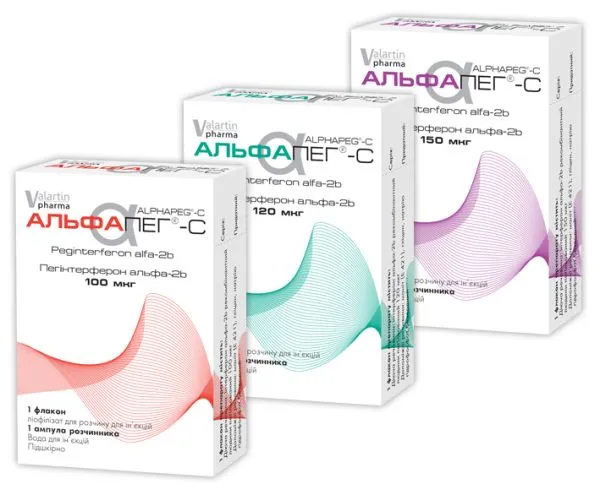
Table of Contents
INSTRUCTIONS FOR MEDICAL USE OF THE MEDICINAL PRODUCT ALFAPEG®-C Peginterferon alfa-2b (ALPHAPEG®-C Peginterferon alfa-2b)
Composition:
Active substance: peginterferon alfa-2b;
1 vial contains 100 mcg, or 120 mcg, or 150 mcg of pegylated recombinant human alpha-2b interferon;
Excipients: mannite (E 421), glycine, anhydrous sodium hydrogen phosphate.
Pharmaceutical form. Lyophilisate for solution for injection.
Main physicochemical characteristics: lyophilized powder or porous mass of white color; hygroscopic. The prepared solution is a clear, colorless solution.
Pharmacotherapeutic group. Immunostimulants. Peginterferon alfa-2b.
ATC code L03A B10.
Immunological and biological properties.
Pharmacodynamics. ALFAPEG**®**-C, like natural leukocyte interferon, has three types of biological activity: immunomodulatory, antiviral, and antitumor.
The mechanism of action of the drug is based on interferon binding to specific cellular receptors in the body, inducing a complex of intracellular mechanisms that leads to the production of enzymes preventing viral replication, enhancing macrophage phagocytic activity, increasing lymphocyte cytotoxicity against target cells, and inhibiting proliferation of metastatic cells.
The attachment of activated polyethylene glycol with a molecular weight of 20 kDa to recombinant human interferon alfa-2b, on one hand, ensures prolonged interferon action by doubling the molecular weight of the final product, thus extending its half-life in blood serum compared to non-modified interferon; on the other hand, it reduces its immunogenicity and toxicity.
Clinical characteristics.
Indications. Treatment of chronic hepatitis C in patients aged 18 years and older in the absence of decompensated liver disease.
For treatment of chronic hepatitis C, combination therapy with ribavirin is used. Combination therapy is indicated:
- in treatment-naïve patients;
- in patients in whom previous combination therapy with interferon alfa (any non-pegylated form) and ribavirin or monotherapy with interferon alfa was ineffective.
Contraindications.
- Hypersensitivity to interferon alfa-2b or to any of the excipients of the drug.
- Severe cardiac disease in medical history, including unstable or uncontrolled cardiovascular disorders within the last 6 months.
- Severe debilitating diseases.
- Thyroid disorders, except those controlled by conventional therapy.
- Autoimmune hepatitis or history of autoimmune disease.
- Liver disease in the decompensated stage.
- Epilepsy and/or central nervous system disorders.
- Use in patients with hepatitis C virus (HCV)/HIV co-infection and liver cirrhosis ≥ 6 points on the Child–Pugh scale.
- Psychiatric disorders, severe depression, suicidal ideation, or suicide attempts in medical history.
- Combination of the medicinal product ALFPEG**®**-C with telbivudine.
- Pregnancy.
- Pediatric age.
Combination therapy
When using ALFPEG**®**-C in combination with ribavirin as part of combination therapy for chronic hepatitis C, also refer to the contraindications section for ribavirin.
Interaction with other medicinal products and other forms of interaction.
Caution is required when prescribing the drug concomitantly with medications potentially nephrotoxic.
Repeated co-administration of peginterferon alfa-2b and ribavirin showed no signs of pharmacokinetic interaction between them.
A clinical study of the combination of telbivudine (600 mg daily) with pegylated interferon alfa-2a (180 μg once weekly administered subcutaneously) demonstrated that this combination is associated with an increased risk of peripheral neuropathy. The mechanism of these reactions is unknown (see the telbivudine product information). Furthermore, the safety and efficacy of telbivudine in combination with interferons for the treatment of chronic hepatitis B have not been demonstrated. Therefore, the combination of the medicinal product ALFPEG**®**-C with telbivudine is contraindicated (see section "Contraindications").
Results from a study of cytochrome P450 substrates in patients with chronic hepatitis C who received peginterferon alfa-2b once weekly at a dose of 1.5 μg/kg for 4 weeks showed no changes in the activity of CYP1A2, CYP3A4, or N-acetyltransferase. An increase in the activity of CYP2C8/9 and CYP2D6 was observed. Therefore, peginterferon alfa-2b should be prescribed with caution in combination with drugs metabolized by CYP2C8/9 and CYP2D6, especially those with a narrow therapeutic index (e.g., warfarin, phenytoin, and flecainide). In patients receiving high doses of methadone as part of combination therapy, QT interval prolongation may occur.
The use of nucleoside analogs as monotherapy or in combination with other nucleosides has led to the development of lactic acidosis. From a pharmacological standpoint, ribavirin increases the levels of phosphorylated metabolites of purine nucleosides in vitro. This activity may increase the risk of lactic acidosis induced by purine nucleoside analogs (e.g., didanosine or abacavir). Concomitant use of ribavirin and didanosine is not recommended. Cases of mitochondrial toxicity, including lactic acidosis and pancreatitis, some of which were fatal, have been reported (see the ribavirin product information for medical use).
When zidovudine is included in the treatment regimen for viral hepatitis C, cases of exacerbated anemia due to ribavirin have been reported, although the exact mechanism of this phenomenon is unknown. Concomitant use of ribavirin and zidovudine is not recommended due to the increased risk of anemia (see section "Special precautions"). If a patient already has anemia, consideration should be given to replacing zidovudine in the combined antiretroviral therapy regimen. This is particularly important for patients who have previously developed anemia during zidovudine treatment.
Special precautions for use.
ALFPEG®-C should be administered under the supervision of a physician. Patients should be informed about the benefits of this therapy and possible adverse reactions.
Depending on individual sensitivity, some patients may experience a reduced speed of psychomotor reactions, manifested as somnolence, weakness, and increased fatigue.
Central nervous system (CNS) and psychiatric disorders. Severe CNS-related conditions, including depression, suicidal ideation, and suicide attempts, have been observed in some patients during and even after discontinuation of therapy, primarily within a 6-month follow-up period. Other CNS disorders observed during alpha-interferon therapy include aggressive behavior (sometimes directed toward others, e.g., homicidal ideation), bipolar disorders, mania, confusion, and mental status changes. Patients should be closely monitored for any signs of psychiatric disorders. If such symptoms occur, the physician should consider the potential seriousness of these adverse effects and evaluate the need for appropriate therapy. If psychiatric symptoms persist or worsen, or if suicidal or homicidal ideation develops, discontinuation of ALFPEG®-C is recommended, with continued monitoring of the patient and, if necessary, psychiatric intervention.
Patients with current or past history of severe psychiatric disorders. If peginterferon alfa-2b treatment is considered necessary for adult patients with current or past severe psychiatric disorders, therapy should only be initiated after appropriate individualized diagnosis and treatment of the psychiatric condition.
The use of ALFPEG®-C in children and adolescents with current or past severe psychiatric disorders is contraindicated. During treatment and the 6-month post-treatment observation period, suicidal thoughts and suicide attempts occurred more frequently in children and adolescents receiving interferon alfa-2b in combination with ribavirin than in adult patients (2.4% vs. 1%). Other psychiatric adverse reactions (e.g., depression, emotional lability, and somnolence) have been observed in both adults and children/adolescents.
Patients using psychoactive substances. Interferon therapy may exacerbate psychiatric symptoms in patients infected with hepatitis C virus (HCV) who have concomitant psychiatric disorders or substance use disorders. If alpha-interferon therapy is considered necessary for such patients, a thorough assessment of concomitant psychiatric conditions and potential substance use should be performed before initiating therapy. A multidisciplinary approach, including consultation with a psychiatrist or addiction specialist, should be used for evaluation, treatment, and monitoring. Patients should be closely monitored during and even after therapy. Early intervention is recommended in case of recurrence or development of psychiatric disorders or substance use.
Hypersensitivity reactions. In rare cases, therapy with interferon alfa-2b has been complicated by hypersensitivity reactions (e.g., urticaria, angioedema, bronchospasm, anaphylaxis). If such reactions occur during administration of ALFPEG®-C, treatment should be discontinued immediately and appropriate symptomatic therapy initiated. Transient rash does not require discontinuation of therapy.
Cardiovascular disorders. As with interferon alfa-2b therapy, patients with a history of or current congestive heart failure, myocardial infarction, and/or arrhythmias should be under continuous medical supervision. Electrocardiography is recommended before and during treatment in patients with cardiac disease. Arrhythmias (mainly supraventricular) are usually manageable with standard therapy but may require discontinuation of ALFPEG®-C. Data in children and adolescents with a history of cardiac disease are lacking.
Hepatic impairment. ALFPEG®-C increases the risk of hepatic decompensation and death in patients with decompensated liver cirrhosis. As with all interferons, treatment with ALFPEG®-C should be discontinued if prolonged coagulation time occurs, which may indicate hepatic decompensation. Liver enzymes and liver function should be monitored in patients with liver cirrhosis.
Fever. Since fever may occur as part of the influenza-like syndrome commonly observed during interferon therapy, other causes of persistent hyperthermia should be ruled out.
Hydration. Adequate hydration is necessary during treatment with ALFPEG®-C, as some patients may develop hypotension associated with dehydration.
Respiratory disorders. Pulmonary infiltrates, pneumonitis, and pneumonia, sometimes fatal, have been rarely observed in patients receiving interferon alfa therapy. Patients presenting with fever, cough, dyspnea, or other respiratory symptoms should undergo chest radiography. If infiltrates or impaired lung function are detected, close monitoring is required and therapy may need to be discontinued. Immediate discontinuation of therapy and corticosteroid treatment may help resolve pulmonary adverse events.
Autoimmune disorders. The development of autoantibodies and autoimmune disorders has been observed during alpha-interferon therapy. Patients predisposed to autoimmune disorders are at increased risk. Patients with signs of autoimmune disorders require close monitoring, and the benefit-risk ratio of continuing interferon therapy should be reassessed. Cases of Vogt-Koyanagi-Harada (VKH) syndrome have been reported in patients with chronic hepatitis C treated with interferon. VKH syndrome is a granulomatous inflammatory disorder affecting the eyes, auditory system, meninges, and skin. If VKH syndrome is suspected, antiviral therapy should be discontinued and corticosteroid therapy considered.
Ocular disorders. Ophthalmologic disorders, including retinal hemorrhages, retinal exudates, and retinal artery or vein occlusion, have occurred in some patients during alpha-interferon therapy (see section "Adverse reactions"). All patients should undergo an ophthalmologic examination before starting therapy. Any patient reporting visual symptoms, including decreased visual acuity or visual field defects, should undergo immediate and complete ophthalmologic evaluation. Such retinal adverse events are more common in patients with concomitant diseases; therefore, patients with diabetes mellitus or arterial hypertension should undergo periodic ophthalmologic examinations during ALFPEG®-C therapy. Therapy with ALFPEG®-C should be discontinued if new or worsening ophthalmologic disorders occur.
Thyroid disorders. Thyroid dysfunction (hypothyroidism or hyperthyroidism) has occurred infrequently in patients with chronic hepatitis C receiving alpha-interferon. Approximately 21% of children receiving peginterferon alfa/ribavirin therapy showed elevated TSH (thyroid-stimulating hormone) levels, and 2% showed transient levels below the lower limit of normal. TSH levels should be measured before initiating ALFPEG®-C therapy, and standard treatment should be initiated if thyroid pathology is detected. TSH levels should be monitored during interferon alfa therapy if symptoms of thyroid dysfunction occur. ALFPEG®-C therapy may be continued if thyroid function can be maintained within normal limits with concomitant medication.
Metabolic disorders. Cases of hypertriglyceridemia and worsening hypertriglyceridemia (sometimes severe) have been observed; therefore, monitoring of blood lipid levels is recommended.
HIV/HCV co-infection.
Mitochondrial toxicity and lactic acidosis.
HIV-infected patients receiving highly active antiretroviral therapy (HAART) may be at increased risk of lactic acidosis. Caution is required when adding ALFPEG®-C and ribavirin to HAART (see ribavirin prescribing information).
Hepatic decompensation in HCV/HIV co-infected patients with advanced cirrhosis.
In co-infected patients with advanced cirrhosis receiving HAART, the risk of hepatic decompensation and fatal outcome may increase. Other risk factors for higher risk of hepatic decompensation include didanosine use and elevated serum bilirubin levels.
Co-infected patients receiving antiretroviral and anti-hepatitis therapy should be closely monitored and assessed using the Child-Pugh scoring system. Anti-hepatitis therapy should be immediately discontinued in patients with progressive hepatic decompensation, and antiretroviral therapy should be re-evaluated.
Hematologic disorders in HCV/HIV co-infected patients. HCV/HIV co-infected patients receiving peginterferon alfa-2b/ribavirin therapy and HAART have an increased risk of hematologic disorders (neutropenia, thrombocytopenia, and anemia) compared to patients infected with HCV only. Although most disorders can be managed by dose reduction, careful monitoring of hematologic parameters is required in these patients.
Patients receiving combined therapy with ALFPEG®-C, ribavirin, and zidovudine have an increased risk of anemia; therefore, concomitant use of this combination with zidovudine is not recommended.
Patients with low CD4+ cell counts. Data on the efficacy and safety of therapy in patients co-infected with HIV and hepatitis C virus with CD4+ cell counts < 200/μL are limited; therefore, treatment in patients with low CD4+ cell counts should be performed with caution.
Dental and periodontal disorders. Dental and periodontal disorders (which may lead to tooth loss) have been reported in patients receiving combination therapy with peginterferon alfa-2b and ribavirin. In addition, dry mouth may damage teeth and oral mucosa during long-term combination therapy with ribavirin. Patients should be advised to brush their teeth thoroughly twice daily and undergo regular dental check-ups. In patients experiencing vomiting, the oral cavity should be rinsed thoroughly afterward.
Organ transplantation. The safety and efficacy of mono- or combination therapy with ALFPEG®-C and ribavirin for the treatment of hepatitis C in patients with transplanted liver or other organs have not been studied. Preliminary data suggest a possible association between increased frequency of kidney transplant rejection and interferon alfa therapy. Cases of liver transplant rejection have also been reported.
Patients with psoriasis or sarcoidosis. Given reported cases of exacerbation of psoriasis and sarcoidosis during alpha-interferon therapy, ALFPEG®-C should be used in patients with psoriasis or sarcoidosis only if the expected benefit outweighs the potential risk.
Laboratory tests. All patients should undergo complete blood count, biochemical blood tests, and thyroid function tests before starting ALFPEG®-C therapy and during treatment (at weeks 2 and 4, and as needed thereafter). Acceptable baseline blood values for initiating therapy are:
- Platelets ≥100 × 10⁹/L;
- Neutrophils ≥1.5 × 10⁹/L;
- TSH within normal range.
HCV RNA levels should be periodically monitored during therapy.
Important information about certain ingredients. The product contains less than 1 mmol of sodium (23 mg) per 0.5 mL, i.e., it is practically sodium-free.
Combined therapy with ALFPEG®-C and ribavirin should not be initiated until a negative pregnancy test result is obtained.
When prescribing combination therapy with ALFPEG®-C and ribavirin, refer to the ribavirin prescribing information.
The product in vials with compromised integrity, damaged labeling, after expiration date, or improper storage must not be used. The reconstituted solution should be inspected before administration: it should be clear and colorless.
Use during pregnancy or breastfeeding.
Since interferon alfa-2b has been shown to have abortifacient effects in primates, ALFPEG®-C is likely to have similar effects. There is no information on the excretion of this product's components into breast milk. Due to the potential for adverse reactions in infants, breastfeeding should be discontinued before starting therapy.
For combination therapy with ribavirin: ALFPEG®-C with ribavirin should be prescribed to women of childbearing potential only if they use effective contraception during therapy and for 4 months after completion of treatment. Male patients and their partners must both use effective contraception during therapy and for 7 months after completion of treatment. Ribavirin causes severe congenital malformations when used during pregnancy; therefore, ribavirin therapy is contraindicated in pregnant women.
Ability to affect reaction speed when driving or operating machinery.
Driving or operating complex machinery is not recommended during therapy with this product if fatigue, somnolence, or confusion occurs.
When using combination therapy with ribavirin, refer to the special precautions for ribavirin use.
Method of Administration and Dosage.
The dose is calculated based on the patient's body weight.
The dose indicated on the package will be contained in 0.5 mL of the prepared solution, namely: 100 mcg/0.5 mL, 120 mcg/0.5 mL, 150 mcg/0.5 mL.
Reconstitution is performed as follows: 0.7 mL of water for injections is slowly injected into the vial with ALPHAPEG**®**-C, directing the stream of liquid along the vial wall. The vial is gently rotated from side to side until the lyophilisate is completely dissolved, without shaking.
The resulting solution should be clear and colorless.
Up to 0.5 mL of the solution (depending on the required dose of the drug) is used for administration.
ALPHAPEG**®**-C solution is administered subcutaneously.
If the patient performs injections independently, they should be instructed to change the injection site with each administration.
Chronic Hepatitis C:
- Treatment is carried out using ALPHAPEG**®**-C in combination therapy with ribavirin.
ALPHAPEG**®**-C is administered subcutaneously once weekly. The dose is individually calculated based on the patient's body weight at 1.5 mcg/kg. Ribavirin is taken orally with food twice daily, in the morning and evening. The required dose of ribavirin for combination therapy is determined based on the patient's body weight (Table 1).
Table 1
| Patient body weight |
Daily dose of ribavirin |
Number of 200 mg capsules |
| < 65 kg |
800 mg |
4 (2 in the morning, 2 in the evening) |
| 65-85 kg |
1000 mg |
5 (2 in the morning, 3 in the evening) |
| 86-105 kg |
1200 mg |
6 (3 in the morning, 3 in the evening) |
| > 105 kg |
1400 mg |
7 (3 in the morning, 4 in the evening) |
Predicted duration of therapy.
In patients infected with hepatitis C virus (HCV) genotype 1 who do not achieve virological response by week 12 of treatment (absence of HCV RNA), the probability of achieving sustained virological response is very low. For patients infected with hepatitis C virus genotype 1 who do achieve virological response by week 12 of treatment, therapy should be continued for the next 9 months (total of 48 weeks).
Genotype 2 or 3: the recommended duration of treatment is 24 weeks.
Dose modification.
If severe adverse events or deterioration in laboratory parameters occur during treatment, dose adjustment or discontinuation of therapy until resolution of adverse effects should be considered.
Dose reduction of AALFAPAG**®**-C is recommended in case of neutrophil count decrease to less than 0.75×10⁹/L or platelet count decrease to less than 50×10⁹/L. Therapy should be discontinued if neutrophil count decreases to less than 0.50×10⁹/L or platelet count decreases to less than 25×10⁹/L.
Table 2
Recommendations for dose modification during combination therapy
with AALFAPAG**®**-C and ribavirin
| Laboratory parameters |
Reduce ribavirin dose only if: |
Reduce dose of ALFAPeG®-C only if: |
Discontinue ALFAPeG®-C and ribavirin if: |
| Hemoglobin level |
<10 g/dL |
- |
<8.5 g/dL |
| Hemoglobin level in patients with compensated heart disease |
Hemoglobin level decreased by ≥2 g/dL within any 4 weeks during treatment |
<12 g/dL four weeks after dose reduction |
|
| Leukocyte count |
- |
<1.5·109/L |
<1.0·109/L |
| Neutrophil granulocyte count |
- |
<0.75·109/L |
<0.5·109/L |
| Platelet count |
- |
<50·109/L |
<25·109/L |
Children.
The drug is not used in children.
Overdose.
Adverse effects after overdose correspond to the characteristics of adverse reactions described in the section "Adverse Reactions."
There have been reports of overdose exceeding the recommended dose by 10.5 times. The maximum daily dose was 1200 mcg/day. Overall, adverse effects observed in cases of overdose with similar drugs correspond to the known safety profile. Standard methods for accelerating elimination of the drug, such as dialysis, have not demonstrated effectiveness. There is no specific antidote; therefore, in cases of overdose, symptomatic treatment and careful monitoring of the patient are recommended.
Adverse Reactions
In adults, the most commonly reported adverse reactions associated with interferon alpha therapy in combination with ribavirin are fatigue, headache, and injection site reaction. Less frequently observed adverse reactions include nausea, chills, insomnia, anemia, fever, myalgia, asthenia, pain, alopecia, anorexia, weight loss, depression, rash, and irritation. Most adverse reactions are mild to moderate in severity and do not require dose modification or discontinuation of therapy. Fatigue, alopecia, pruritus, nausea, anorexia, weight loss, irritation, and insomnia occurred significantly less frequently in patients receiving monotherapy compared to those receiving combination therapy with ribavirin.
Infections and infestations: bacterial infection (including sepsis), fungal infection, influenza, upper respiratory tract infection, bronchitis, herpes simplex, sinusitis, otitis, rhinitis, injection site infection, lower respiratory tract infection.
Blood and lymphatic system disorders: anemia, neutropenia, hemolytic anemia, leukopenia, thrombocytopenia, lymphadenopathy; very rarely – aplastic anemia, erythrocytic aplasia.
Immune system disorders: drug hypersensitivity reactions; rarely – sarcoidosis; acute hypersensitivity reactions have been occasionally observed, including angioedema, anaphylaxis, anaphylactic reactions (including anaphylactic shock), idiopathic thrombocytopenic purpura, thrombotic thrombocytopenic purpura, systemic lupus erythematosus, bronchospasm.
Endocrine disorders: thyroid dysfunction, including hypothyroidism or hyperthyroidism.
Metabolism and nutrition disorders: anorexia, hypocalcemia, hyperuricemia, dehydration, increased appetite, diabetes mellitus, hypertriglyceridemia; rarely – diabetic ketoacidosis.
Psychiatric disorders: depression, decreased concentration, insomnia, aggression, anxiety, irritability, mood changes, inappropriate behavior, nervousness, sleep disorders, decreased libido, apathy, nightmares, crying, suicidal ideation, suicide attempt, suicide, psychosis, hallucinations, panic attacks; rarely – bipolar disorders, mania, homicidal ideation.
Nervous system disorders: headache, dizziness, amnesia, memory impairment, syncope, migraine, ataxia, confusion, neuralgia, paresthesia, hypoesthesia, hyperesthesia, hypertonia, somnolence, attention disturbance, tremor, taste disturbance, neuropathy, peripheral neuropathy; rarely – seizures; very rarely – cerebrovascular hemorrhage, cerebrovascular ischemia, encephalopathy, facial nerve paralysis, mononeuropathy.
Eye disorders: visual disturbance, blurred vision, photophobia, conjunctivitis, eye irritation, lacrimation, eye pain, dry eyes, retinal pathological changes (exudative effusions); rarely – loss of visual acuity or visual field, retinal hemorrhage, retinopathy, retinal artery occlusion, retinal vein occlusion, optic neuritis, optic disc edema, macular edema.
Ear and labyrinth disorders: hearing disturbance/hearing loss, tinnitus, dizziness, ear pain.
Cardiac disorders: palpitations, tachycardia, myocardial infarction; rarely – congestive heart failure, cardiomyopathy, arrhythmia, pericarditis; very rarely – cardiac ischemia, exudative pericarditis.
Vascular disorders: hypotension, hypertension, facial flushing; rarely – vasculitis.
Respiratory, thoracic and mediastinal disorders: dysphonia, epistaxis, dyspnea, sputum production in airways, sinus sputum production, nasal congestion, rhinitis, increased upper respiratory tract secretion, sore throat; very rarely – interstitial lung disease, pulmonary fibrosis, pulmonary arterial hypertension*.
Gastrointestinal disorders: nausea, abdominal pain, diarrhea, dyspepsia, gastroesophageal reflux disease, stomatitis, oral ulcers, glossodynia, gingival bleeding, constipation, flatulence, hemorrhoids, cheilitis, abdominal distension, gingivitis, glossitis, dental disorders, pancreatitis, mouth pain; very rarely – ischemic colitis, ulcerative colitis.
Hepatobiliary disorders: hyperbilirubinemia, hepatomegaly.
Skin and subcutaneous tissue disorders: alopecia, psoriasis, photosensitivity reaction, maculopapular rash, dermatitis, erythematous rash, eczema, night sweats, sweating, acne, furunculosis, erythema, urticaria, hair texture changes, nail disorders; rarely – cutaneous sarcoidosis; very rarely – Stevens-Johnson syndrome, toxic epidermal necrolysis, erythema multiforme.
Musculoskeletal and connective tissue disorders: myalgia, arthralgia, musculoskeletal pain, arthritis, back pain, muscle cramps, limb pain, bone pain, muscle weakness; rarely – rhabdomyolysis, myositis, rheumatoid arthritis.
Renal and urinary disorders: frequent urination, polyuria, changes in urine parameters; rarely – renal dysfunction, renal failure.
Reproductive system and breast disorders: amenorrhea, mastalgia, menorrhagia, menstrual disorders, ovarian disorders, vaginal disorders, sexual dysfunction, prostatitis, erectile dysfunction.
General disorders and administration site conditions: injection site inflammation, fatigue, asthenia, irritability, chills, fever, influenza-like symptoms, pain, chest pain, discomfort in chest, injection site pain, malaise, facial edema, peripheral edema, abnormal sensation, thirst; rarely – necrosis at injection site.
Investigations: weight loss.
* Class warning for interferon products; see below "Pulmonary Arterial Hypertension".
Adverse reactions such as neutropenia and thrombocytopenia are usually mild (WHO Grade 1 and 2); however, more severe cases of neutropenia have been reported in patients receiving combination therapy with pegylated interferon and ribavirin (WHO Grade 3 and 4 in 21% and 7% of patients, respectively).
Cardiovascular adverse effects, particularly arrhythmias, have primarily occurred in patients with pre-existing cardiovascular disease or those previously treated with cardiotoxic agents. Cardiomyopathy, which may be reversible upon discontinuation of alpha interferon therapy, has rarely occurred in patients without prior heart disease.
Cases of pulmonary arterial hypertension (PAH) have been reported during treatment with alpha interferon products, particularly in patients with risk factors for PAH (e.g., portal hypertension, HIV infection, liver cirrhosis). Reports have occurred at various times, usually several months after initiation of alpha interferon therapy.
Ophthalmological disorders reported rarely during alpha interferon therapy include retinopathy (including macular edema), retinal hemorrhages, retinal artery or vein occlusion, retinal exudates, loss of visual acuity or visual field constriction, optic neuritis, and optic disc edema.
Various autoimmune and immune-mediated disorders have been reported during alpha interferon therapy, including thyroid dysfunction, systemic lupus erythematosus, rheumatoid arthritis (new-onset or exacerbation), idiopathic and thrombotic thrombocytopenic purpura, vasculitis, neuropathies including mononeuropathy and Vogt-Koyanagi-Harada syndrome.
Shelf life.
2 years from the date of manufacture in bulk.
Storage conditions.
Store in original packaging at 2 to 8 ºC, out of reach of children.
Incompatibilities. The medicinal product should be reconstituted only with the solvent provided. Mixing with other medicinal products is not permitted.
Packaging.
100 mcg, 120 mcg, or 150 mcg in vials.
One vial of lyophilisate in a cardboard box;
one vial of lyophilisate in a cardboard box together with solvent (2 ml of water for injection) in an ampoule.
Prescription category.
Prescription only.
Manufacturer.
LLC "VALARTIN PHARMA" (packaging from bulk form supplied by the manufacturer LLC "Scientific-Production Company "Interpharmbiotek", Ukraine).
Manufacturer's address and location of business activity.
60 Hrushevskoho St., village Chayky, Kyiv-Sviatoshyn district, Kyiv region, 08135, Ukraine.