Afinitor
Ukraine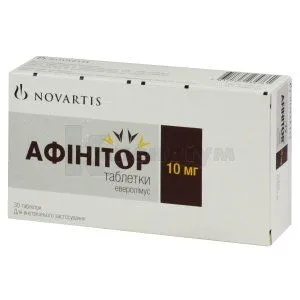
Table of Contents
INSTRUCTIONS FOR MEDICAL USE OF THE MEDICINAL PRODUCT AFINITOR (AFINITOR®)
Composition:
Active substance: everolimus;
1 tablet contains 2.5 mg or 5 mg or 10 mg of everolimus;
Excipients: lactose monohydrate, crospovidone, hypromellose, lactose monohydrate, magnesium stearate, butylated hydroxytoluene (E 321).
Pharmaceutical form. Tablets.
Main physicochemical properties:
oval-shaped tablets, white to slightly yellowish, with beveled edges, without a break line, with a smooth surface;
2.5 mg: tablets imprinted with "NVR" on one side and "LCL" on the other;
5 mg: tablets imprinted with "NVR" on one side and "5" on the other;
10 mg: tablets imprinted with "NVR" on one side and "UHE" on the other.
Pharmacotherapeutic group. Antineoplastic and immunomodulating agents. Antineoplastic agents. Protein kinase inhibitors. Mammalian target of rapamycin (mTOR) kinase inhibitors. Everolimus. ATC code L01EG02.
Pharmacological properties.
Pharmacodynamics.
Everolimus is a selective inhibitor of mTOR (mammalian target of rapamycin). mTOR is a key serine-threonine kinase whose activity is increased in the development of many types of human cancers.
Everolimus binds to the intracellular protein FKBP-12, forming a complex that inhibits the mTOR complex-1 (mTORC1). Inhibition of the mTORC1 signaling pathway interferes with translation and protein synthesis by reducing the activity of ribosomal protein kinase S6 (S6K1) and the eukaryotic elongation factor 4E-binding protein (4EBP-1), thereby regulating proteins involved in the cell cycle, angiogenesis, and glycolysis. S6K1 is believed to phosphorylate domain 1 of the activation function of the estrogen receptor, which is responsible for ligand-independent receptor activation. Everolimus reduces levels of vascular endothelial growth factor (VEGF), which promotes tumor angiogenesis. In patients with TSC, treatment with everolimus leads to increased VEGF-A concentrations and decreased VEGF-D levels. Everolimus is a potent inhibitor of tumor cell growth and proliferation, as well as of endothelial cells, fibroblasts, and vascular smooth muscle cells; it reduces glycolysis in solid tumors in vitro and in vivo.
Pharmacokinetics.
Absorption.
In patients with advanced solid tumors, maximum concentrations of everolimus (Cmax) were achieved at a median time of 1 hour after daily administration of 5 or 10 mg everolimus on an empty stomach or with a light, low-fat meal. Cmax values were dose-proportional over the range of 5 to 10 mg. Everolimus is a substrate and moderate inhibitor of P-glycoprotein (PgP).
Effect of food.
In healthy volunteers, a high-fat meal reduced systemic exposure to 10 mg of Afinitor (measured as AUC) by 22% and Cmax by 54%. A low-fat meal reduced AUC by 32% and Cmax by 42%.
However, food had no apparent effect on the concentration-time profile during the post-absorption phase.
Relative bioavailability/bioequivalence.
In a relative bioavailability study, AUC0–inf values after administration of 5 × 1 mg everolimus tablets as an aqueous suspension were equivalent to those after administration of intact 5 × 1 mg everolimus tablets. Cmax values after administration of 5 × 1 mg everolimus tablets as a suspension were 72% of those observed after administration of intact 5 × 1 mg everolimus tablets.
Distribution.
The blood-to-plasma ratio of everolimus, concentration-dependent within the range of 5 to 5000 ng/mL, ranges from 17% to 73%. The amount of everolimus in plasma constitutes approximately 20% of the total blood concentration observed in cancer patients receiving Afinitor 10 mg daily. Plasma protein binding is approximately 74% in both healthy volunteers and patients with moderate hepatic impairment.
In patients with progressive solid tumors, the volume of distribution (Vd) was 191 L for the central compartment and 517 L for the peripheral compartment.
Metabolism.
Everolimus is a substrate of CYP3A4 and P-glycoprotein (PgP). After oral administration, everolimus is the main circulating component in human blood. Six major metabolites of everolimus have been identified in human blood, including three monohydroxylated metabolites, two hydroxylated ring-opened products, and a phosphatidylcholine conjugate of everolimus. These metabolites were also detected in animals used in toxicity studies. The activity of these metabolites was approximately 100-fold lower than that of everolimus. Therefore, everolimus is primarily responsible for the overall pharmacological activity.
Elimination.
The mean CL/F of everolimus after a daily 10 mg dose in patients with advanced solid tumors was 24.5 L/hour. The mean elimination half-life of everolimus is approximately 30 hours.
Specific excretion studies in oncology patients have not been conducted; however, data are available from studies in transplant patients. After administration of a single radiolabeled dose of everolimus together with cyclosporine, 80% of radioactivity was excreted in feces and 5% in urine. The parent compound was not detected in feces or urine.
Steady-state pharmacokinetics.
After administration of everolimus in patients with advanced solid tumors, steady-state AUC0–τ values were dose-proportional over the daily dose range of 5 to 10 mg. Steady state was achieved within 2 weeks. Cmax values were dose-proportional over the range of 5 to 10 mg. tmax occurred 1–2 hours after dosing. AUC0–τ and trough concentrations prior to dosing were highly correlated.
Special patient populations.
Hepatic impairment.
The safety, tolerability, and pharmacokinetics of everolimus were evaluated in two studies of single oral doses of Afinitor involving 8 and 34 adult subjects with hepatic impairment compared to subjects with normal liver function.
In the first study, mean AUC of everolimus in 8 subjects with moderate hepatic impairment (Child–Pugh class B) was twice that observed in 8 subjects with normal liver function.
In the second study involving 34 subjects with varying degrees of hepatic impairment, drug exposure (i.e., AUC0–inf) in patients with mild (Child–Pugh class A), moderate (Child–Pugh class B), and severe (Child–Pugh class C) hepatic impairment was 1.6-, 3.3-, and 3.6-fold higher, respectively, than in healthy volunteers.
Modeling results from multiple-dose pharmacokinetic studies support dose adjustment of the drug in patients with hepatic impairment based on their Child–Pugh classification.
Based on the results of these two studies, dose adjustment is recommended for patients with hepatic impairment.
Renal impairment.
In patients with advanced solid tumors, no significant effect of creatinine clearance (25–178 mL/min) on CL/F of everolimus was observed. Renal impairment after transplantation (creatinine clearance range 11–107 mL/min) did not affect the pharmacokinetics of everolimus in transplant patients.
Geriatric patients.
In pharmacokinetic evaluations of oncology patients, age (27–85 years) had no significant effect on oral clearance of everolimus.
Ethnic origin.
Oral clearance of everolimus (CL/F) is similar in Mongoloid and Caucasian patients with comparable liver function. According to population pharmacokinetic analysis, oral clearance (CL/F) in post-transplant Negro patients is on average 20% higher.
Clinical characteristics.
Indications.
- Treatment in combination with exemestane of advanced hormone receptor-positive, HER2-negative breast cancer in postmenopausal women without rapidly progressing visceral disease, in whom prior therapy with nonsteroidal aromatase inhibitors resulted in recurrence or progression.
- Treatment of unresectable or metastatic, well-differentiated or moderately differentiated pancreatic neuroendocrine tumors in adult patients with progressive disease.
- Treatment of patients with neuroendocrine tumors of gastrointestinal tract or lung. The medicinal product Afinitor is indicated for the treatment of unresectable or metastatic, well-differentiated (grade 1 or grade 2), non-functioning neuroendocrine tumors of gastrointestinal tract or lung in adults with progressive disease.
- Treatment of patients with advanced renal cell carcinoma whose disease has progressed on or after VEGF-targeted therapy (vascular endothelial growth factor therapy).
Contraindications.
Hypersensitivity to the active substance, other derivatives of sirolimus, or to any excipient of the medicinal product.
Interaction with other medicinal products and other forms of interaction.
Everolimus is a substrate of CYP3A4 and also a substrate and moderate inhibitor of P-glycoprotein (PgP). Therefore, substances affecting CYP3A4 and/or PgP may influence the absorption and subsequent elimination of everolimus. In vitro, everolimus is a competitive inhibitor of CYP3A4 and a mixed inhibitor of CYP2D6.
Known and potential interactions with certain inhibitors and inducers of CYP3A4 and PgP are listed in Table 1.
Inhibitors of CYP3A4 and PgP that increase everolimus concentration.
Substances that inhibit CYP3A4 or PgP may increase everolimus blood concentrations by slowing down its metabolism or efflux from intestinal cells.
Inducers of CYP3A4 and PgP that decrease everolimus concentration.
Substances that induce CYP3A4 or PgP may reduce everolimus blood concentrations by accelerating its metabolism or efflux from intestinal cells.
Table 1
Effect of other active substances on everolimus.
| Active substance by type of interaction |
Interaction – change in AUC/Cmax of everolimus Geometric mean ratio (observed range) |
Recommendations for concomitant use |
|
| Potent CYP3A4/PgP inhibitors |
|||
| Ketoconazole |
AUC increased by Cmax increased by 4.1 times (range 2.6–7). |
Concomitant use of Afinitor with potent inhibitors is not recommended. |
|
| Itraconazole, posaconazole, voriconazole |
Not studied. A significant increase in everolimus concentration is possible. |
||
| Telithromycin, clarithromycin |
|||
| Nefazodone |
|||
| Ritonavir, atazanavir, saxquinavir, darunavir, indinavir, nelfinavir |
|||
| Moderate CYP3A4/PgP inhibitors |
|||
| Erythromycin |
AUC increased by 4.4 times (range 2–12.6). Cmax increased by 2 times (range 0.9–3.5). |
If concomitant use of moderate CYP3A4 or PgP inhibitors cannot be avoided, caution is advised. If a patient requires concomitant use of a moderate CYP3A4 or PgP inhibitor, dose reduction to 5 mg or 2.5 mg daily may be considered. However, clinical data on such dose adjustment are lacking. Due to inter-individual variability, the recommended dose adjustment may not be optimal for all patients; therefore, careful monitoring for adverse effects is recommended. When discontinuation of the moderate inhibitor occurs, consider that the elimination period is at least 2–3 days (average elimination time for most commonly used moderate inhibitors), and only after this period should Afinitor be resumed at the dose previously used before initiation of concomitant therapy. |
|
| Imatinib |
AUC increased by 3.7 times. Cmax increased by 2.2 times. |
||
| Verapamil |
AUC increased by 3.5 times (range 2.2–6.3). Cmax increased by 2.3 times (range 1.3–3.8). |
||
| Oral cyclosporine |
AUC increased by 2.7 times (range 1.5–4.7). Cmax increased by 1.8 times (range 1.3–2.6). |
||
| Cannabidiol (PgP inhibitor) |
AUC increased by 2.5 times. Cmax increased by 2.5 times. |
||
| Fluconazole |
Not studied. Increased everolimus concentration is possible. |
||
| Diltiazem |
|||
| Dronedarone |
Not studied. Increased everolimus concentration is possible. |
||
| Amprinavir, fosamprenavir |
Not studied. Increased everolimus concentration is possible. |
||
| Grapefruit juice or other food products affecting CYP3A4/PgP |
Not studied. Increased everolimus concentration is possible (effects may vary). |
This combination should be avoided. |
|
| Potent and moderate CYP3A4 inducers |
|||
| Rifampicin |
AUC decreased by 3% (range 0–80%). Cmax decreased by |
Concomitant use of potent CYP3A4 inducers is not recommended. If a patient requires concomitant use of a potent CYP3A4 inducer, consider increasing the dose from 10 mg daily to 20 mg daily, increasing the dose by 5 mg on day 4 and day 8 after starting the inducer. This dose adjustment is expected to maintain AUC within the range observed without inducers. However, clinical data on such dose adjustment are lacking. When discontinuation of the inducer occurs, consider that the elimination period is 3–5 days (sufficient time for enzyme induction to subside significantly), and only after this period should Afinitor be resumed at the dose previously used before initiation of concomitant therapy. |
|
| Dexamethasone |
Not studied. Decreased concentration is possible. |
||
| Antiepileptic drugs (e.g., carbamazepine, phenobarbital, phenytoin) |
Not studied. Decreased concentration is possible. |
||
| Efavirenz, nevirapine |
Not studied. Decreased concentration is possible. |
||
| St. John's wort (Hypericum perforatum) |
Not studied. Significant decrease in concentration is possible. |
Products containing St. John's wort should not be used during everolimus therapy. |
|
Drugs that may be affected by everolimus plasma concentrations.
Based on in vitro results, it is unlikely that systemic concentrations achieved after daily oral administration of the drug at a dose of 10 mg will lead to inhibition of PgP, CYP3A4, and CYP2D6. However, inhibition of intestinal CYP3A4 and PgP cannot be excluded. A drug interaction study in healthy volunteers showed that concomitant administration of oral midazolam, a sensitive CYP3A substrate probe, with everolimus resulted in a 25% increase in midazolam Cmax and a 30% increase in AUC(0–inf). This effect is likely due to inhibition of intestinal CYP3A4 by everolimus. Therefore, everolimus may affect the bioavailability of drugs that are substrates of CYP3A4 and/or PgP when administered concomitantly. However, a clinically significant impact on systemic exposure of CYP3A4 substrates is not expected.
Concomitant administration of everolimus and octreotide depot increased octreotide Cmin, with a geometric mean ratio (everolimus/placebo) of 1.47. A clinically significant impact on the efficacy response to everolimus in patients with progressive neuroendocrine tumors could not be established.
Concomitant administration of everolimus and exemestane increased Cmin and C2h of exemestane by 45% and 64%, respectively. However, corresponding steady-state estradiol levels (at 4 weeks) did not differ between the two treatment groups. No increase in frequency of adverse reactions associated with exemestane was observed in patients with hormone-receptor-positive, progressive breast cancer receiving the combination therapy. It is unlikely that the increased exemestane levels will affect efficacy or safety.
Concomitant use of angiotensin-converting enzyme (ACE) inhibitors.
Patients concomitantly using an ACE inhibitor (e.g., ramipril) have an increased risk of developing angioedema.
Vaccination.
Immune response to vaccines may be altered; therefore, during treatment with Afinitor, vaccine efficacy may be reduced. Live vaccines should be avoided during treatment with Afinitor. Examples of live vaccines include: intranasal influenza vaccine, measles, mumps, rubella vaccine, oral polio vaccine, BCG (Bacillus Calmette-Guérin), yellow fever vaccine, varicella vaccine, and typhoid vaccine TY21a.
Radiation therapy.
Enhanced toxicity of radiation therapy has been reported in patients receiving everolimus (see sections "Special precautions", "Adverse reactions").
Special precautions for use.
Non-infectious pneumonitis.
Non-infectious pneumonitis is a class effect of rapamycin derivatives, including Afinitor. Non-infectious pneumonitis (including interstitial lung disease) has been observed in patients treated with Afinitor, particularly in patients receiving Afinitor for advanced renal cell carcinoma (RCC). Some cases were severe, and fatal outcomes have been reported rarely. In patients presenting with non-specific respiratory symptoms such as hypoxia, pleural effusion, cough, or dyspnea, and in whom appropriate investigations have excluded infectious, neoplastic, or other non-medical causes, non-infectious pneumonitis should be considered. In patients with RCC, neuroendocrine tumors (NET), or hormone receptor-positive breast cancer, opportunistic infections such as Pneumocystis jirovecii (carinii) pneumonia (PJP/PCP) should be excluded from the differential diagnosis of non-infectious pneumonitis. Patients should be advised to promptly report any new or worsening respiratory symptoms.
Patients who have radiological findings suggestive of non-infectious pneumonitis but are asymptomatic or have only mild symptoms may continue Afinitor without dose adjustment. If symptoms are moderate (Grade 2) or severe (Grade 3), corticosteroid therapy may be indicated until clinical symptoms resolve.
For patients requiring corticosteroid treatment for non-infectious pneumonitis, prophylaxis against PJP/PCP may be considered.
Infections.
Afinitor has immunosuppressive properties and may predispose patients to bacterial, fungal, viral, or protozoal infections, including those caused by opportunistic pathogens. Infections observed in patients receiving Afinitor include local and systemic infections such as pneumonia, other bacterial infections, invasive fungal infections (e.g., aspergillosis, candidiasis, or PJP/PCP), and viral infections, including reactivation of hepatitis B virus. Some of these infections have been severe (e.g., leading to sepsis, including septic shock, respiratory or hepatic failure) and occasionally fatal.
Physicians and patients should be aware of the increased risk of infections with Afinitor. Patients with active infections should receive appropriate therapy, and infections should be fully resolved prior to initiating Afinitor treatment. During Afinitor therapy, patients should be closely monitored for signs and symptoms of infection. If an infection is diagnosed, appropriate treatment should be initiated promptly, and interruption or discontinuation of Afinitor should be considered.
In cases of diagnosed invasive systemic fungal infection, Afinitor should be discontinued immediately, and appropriate antifungal therapy should be initiated.
Cases of PJP/PCP pneumonia, sometimes fatal, have been reported in patients receiving everolimus. The development of PJP/PCP may be associated with concomitant use of corticosteroids or other immunosuppressants. Prophylaxis against PJP/PCP may be necessary when concomitant use with corticosteroids or other immunosuppressants is required.
Hypersensitivity reactions.
Hypersensitivity reactions, including anaphylaxis, dyspnea, flushing, erythema, chest pain, or angioedema (e.g., airway or tongue swelling with or without respiratory compromise), have been observed with everolimus use.
Concomitant use with angiotensin-converting enzyme (ACE) inhibitors.
Patients concurrently taking an ACE inhibitor (e.g., ramipril) have an increased risk of angioedema (manifested as swelling of the airways or tongue, with or without respiratory dysfunction).
Stomatitis.
Stomatitis, including oral ulcers and oral mucositis, is the most common adverse reaction in patients receiving Afinitor (everolimus). Stomatitis typically occurs within the first 8 weeks of treatment. An uncontrolled study in postmenopausal women with breast cancer receiving Afinitor (everolimus) and exemestane showed that a non-alcoholic corticosteroid oral solution used as a mouth rinse during the first 8 weeks of treatment may reduce the incidence and severity of stomatitis. Therefore, stomatitis management may include prophylactic (in adults) and/or therapeutic use of locally acting agents such as a non-alcoholic corticosteroid oral solution used as a mouth rinse. However, agents containing alcohol, hydrogen peroxide, iodine, or thyme derivatives should be avoided, as they may exacerbate the condition. Monitoring and treatment of fungal infections are recommended, particularly in patients receiving corticosteroids. Antifungal agents should not be used before a fungal infection is diagnosed.
Renal impairment.
Cases of renal impairment (including acute renal failure), some with fatal outcomes, have been observed in patients receiving Afinitor. Renal function should be monitored in patients with additional risk factors that may further impair kidney function.
Laboratory tests and monitoring.
Renal function.
Elevations in serum creatinine levels, usually mild, have been reported in clinical trials. Renal function, including blood urea nitrogen (BUN), proteinuria, and serum creatinine, should be monitored before initiating Afinitor therapy and periodically thereafter.
Blood glucose levels.
Hyperglycemia has been reported in clinical trials. Fasting serum glucose levels should be monitored before starting Afinitor and periodically thereafter. More frequent monitoring is recommended when Afinitor is used concomitantly with other medications that may cause hyperglycemia. Optimal glycemic control should be achieved, if possible, before initiating Afinitor.
Blood lipid levels.
Cases of dyslipidemia (including hypercholesterolemia and hypertriglyceridemia) have been reported. Cholesterol and triglyceride levels should be monitored before starting Afinitor and periodically thereafter, and managed appropriately with lipid-lowering therapy.
Hematological parameters.
Decreases in hemoglobin, lymphocytes, neutrophils, and platelets have been reported in clinical trials. Complete blood counts should be monitored before starting Afinitor and periodically thereafter.
Carcinoid tumors.
In a randomized, double-blind, multicenter study in patients with carcinoid tumors, Afinitor plus octreotide-depot (Sandostatin® LAR®) was compared with placebo plus octreotide-depot. The study results did not meet the primary efficacy endpoint (progression-free survival), and the interim analysis of overall survival numerically favored the placebo plus octreotide-depot group. Therefore, the safety and efficacy of Afinitor in patients with carcinoid tumors have not been established.
Prognostic factors for gastrointestinal or lung neuroendocrine tumors.
In patients with non-functioning gastrointestinal or lung neuroendocrine tumors and favorable baseline prognostic factors (e.g., ileal primary tumor location, normal chromogranin A levels, or absence of bone marrow involvement), an individual benefit-risk assessment should be performed before initiating Afinitor therapy. Limited evidence of benefit in progression-free survival was observed in the subgroup of patients with ileal primary tumor location.
Interactions.
Concomitant use with inhibitors and inducers of CYP3A4 and/or the P-glycoprotein (PgP) efflux pump should be avoided. If concomitant use of a moderate inhibitor or inducer of CYP3A4 and/or PgP cannot be avoided, patients should be closely monitored. Afinitor dose adjustments should be based on predicted AUC.
Concomitant use with strong CYP3A4/PgP inhibitors significantly increases everolimus plasma concentrations. There are insufficient data to recommend a dosing regimen in such cases. Therefore, concomitant use of Afinitor with strong CYP3A4 inhibitors is not recommended.
Afinitor should be used with caution in combination with orally administered CYP3A4 substrates that have a narrow therapeutic index due to potential drug interactions. When Afinitor is used with such substrates (e.g., pimozide, terfenadine, astemizole, cisapride, quinidine, ergot alkaloids, or carbamazepine), patients should be monitored for adverse effects described in the product information for these substrates.
Hepatic impairment.
Everolimus exposure increases in patients with mild (Child-Pugh class A), moderate (Child-Pugh class B), and severe (Child-Pugh class C) hepatic impairment.
Afinitor should be used in patients with severe hepatic impairment (Child-Pugh class C) only if the potential benefit outweighs the risk.
There are no clinical data on efficacy or safety to recommend dose adjustments to avoid adverse reactions in patients with hepatic impairment.
Vaccination.
Live vaccines should not be administered during treatment with Afinitor.
Lactose.
This medicinal product is contraindicated in patients with rare hereditary conditions such as galactose intolerance, total lactase deficiency, or glucose-galactose malabsorption.
Wound healing complications.
Impaired wound healing is a class effect of rapamycin derivatives, including Afinitor. Therefore, Afinitor should be used with caution in the perioperative period.
Complications of radiation therapy.
Serious and severe radiation reactions (including radiation esophagitis, radiation pneumonitis, and radiation dermatitis), including fatal cases, have been reported when everolimus was administered during or shortly after radiation therapy. Therefore, caution is warranted regarding the potential for enhanced radiation toxicity in patients receiving everolimus in close temporal proximity to radiation therapy.
Radiation recall reactions have also been reported in patients who received everolimus and had prior radiation therapy. If radiation recall occurs, interruption or discontinuation of everolimus should be considered.
Use during pregnancy or breastfeeding.
Contraception.
Women of reproductive potential should use a highly effective method of contraception (e.g., oral, injectable, or implantable non-estrogen-containing hormonal contraception, progestin-based contraceptives, hysterectomy, tubal ligation, complete abstinence, barrier methods, intrauterine devices, and/or female/male sterilization) during treatment with everolimus and for 8 weeks after the last dose. There are no restrictions for male patients regarding family planning.
Pregnancy.
There are insufficient data on the use of everolimus in pregnant women. Animal studies have demonstrated reproductive toxicity, including embryotoxicity and fetotoxicity. The potential risk to humans is unknown.
Everolimus is not recommended during pregnancy and in women of reproductive potential who are not using contraception.
Breastfeeding.
It is unknown whether everolimus is excreted in human breast milk. However, studies in animals have shown that everolimus and/or its metabolites are excreted in the milk of lactating rats. Therefore, women taking everolimus should not breastfeed during treatment and for 2 weeks after the last dose.
Fertility.
Data on the potential of everolimus to cause male or female infertility are limited. However, amenorrhea (secondary amenorrhea and other menstrual cycle disturbances) and associated luteinizing hormone (LH)/follicle-stimulating hormone (FSH) imbalance have been observed in female patients. Based on preclinical data, there is a risk of impaired fertility in both males and females receiving everolimus.
Ability to drive and use machines.
Afinitor has a minor or moderate influence on the ability to drive and use machines. If patients experience fatigue during treatment with Afinitor, they should refrain from driving or operating machinery.
Dosage and administration.
Treatment with Afinitor should be initiated and managed by a physician experienced in the use of anticancer therapies, in order to ensure appropriate clinical monitoring of the medicinal product.
Dosage.
The recommended dose of Afinitor is 10 mg once daily. Treatment should continue as long as clinical benefit is observed or until unacceptable toxicity occurs.
If a dose is missed, an additional dose should not be taken; instead, the next scheduled dose should be taken at the usual time.
Dose adjustments due to adverse reactions.
Dose modification, including temporary interruption or reduction of Afinitor, may be required to manage severe adverse reactions and/or suspected intolerance. Dose adjustments are generally not required for grade 1 adverse reactions. If dose reduction is necessary, the recommended dose is 5 mg once daily, which should not be further reduced.
Table 2 summarizes the recommendations for dose reduction, interruption, or discontinuation of Afinitor due to adverse reactions, as well as general patient management recommendations. The treating physician’s clinical judgment, based on an individual benefit-risk assessment, determines the management plan for each patient.
Table 2
Afinitor dose adjustment and patient management recommendations due to adverse reactions.
| Adverse reaction |
Severity1 |
Adjustment of Afinitor dose and patient management recommendations |
| Non-infectious pneumonitis |
Grade 2 |
Consider interrupting Afinitor treatment until symptoms improve to ≤ Grade 1. Resume Afinitor at a dose of 5 mg once daily. Discontinue treatment if symptoms do not improve within 4 weeks. |
| Grade 3 |
Withhold Afinitor treatment until symptoms improve to ≤ Grade 1. Consider resuming Afinitor at a dose of 5 mg once daily. If Grade 3 toxicity recurs, consider discontinuing treatment. |
|
| Grade 4 |
Permanently discontinue Afinitor. |
|
| Stomatitis |
Grade 2 |
Temporarily interrupt treatment until symptoms improve to ≤ Grade 1. Resume Afinitor at the same dose. If Grade 2 stomatitis recurs, interrupt treatment until symptoms improve to ≤ Grade 1. Resume Afinitor at a dose of 5 mg once daily. |
| Grade 3 |
Temporarily interrupt treatment until symptoms improve to ≤ Grade 1. Resume Afinitor at a dose of 5 mg once daily. |
|
| Grade 4 |
Permanently discontinue Afinitor. |
|
| Other non-hematological toxicities (excluding metabolic disorders) |
Grade 2 |
No dose adjustment is required for moderate toxicities. If toxicities worsen, temporarily interrupt treatment until symptoms improve to ≤ Grade 1. Resume Afinitor at the same dose. If Grade 2 toxicity recurs, interrupt Afinitor until symptoms improve to ≤ Grade 1. Resume treatment at a dose of 5 mg once daily. |
| Grade 3 |
Temporarily interrupt treatment until symptoms improve to ≤ Grade 1. Consider resuming Afinitor at a dose of 5 mg once daily. If Grade 3 toxicity recurs, consider discontinuing treatment. |
|
| Grade 4 |
Permanently discontinue Afinitor. |
|
| Metabolic disorders (e.g., hyperglycemia, dyslipidemia) |
Grade 2 |
No dose adjustment required. |
| Grade 3 |
Temporarily interrupt treatment. Resume Afinitor at a dose of 5 mg once daily. |
|
| Grade 4 |
Permanently discontinue Afinitor. |
|
| Thrombocytopenia |
Grade 2 |
Temporarily interrupt treatment until symptoms improve to ≤ Grade 1 (≥ 75 × 109/L). Resume Afinitor at the same dose. |
| Grade 3 and 4 |
Temporarily interrupt treatment until symptoms improve to ≤ Grade 1 (≥ 75 × 109/L). Resume Afinitor at a dose of 5 mg once daily. |
|
| Neutropenia |
Grade 2 |
No dose adjustment required. |
| Grade 3 |
Temporarily interrupt treatment until symptoms improve to ≤ Grade 2 (≥ 1 × 10⁹/L). Resume Afinitor at the same dose. |
|
| Grade 4 |
Temporarily interrupt treatment until symptoms improve to ≤ Grade 2 (≥ 1 × 10⁹/L). Resume Afinitor at a dose of 5 mg once daily. |
|
| Febrile neutropenia |
Grade 3 |
Temporarily interrupt treatment until symptoms improve to ≤ Grade 2 (≥ 1.25 × 10⁹/L) and fever resolves. Resume Afinitor at a dose of 5 mg once daily. |
| Grade 4 |
Permanently discontinue Afinitor. |
|
| 1Grading corresponds to the National Cancer Institute (US NCI) Common Terminology Criteria for Adverse Events (CTCAE) version 3.0. |
||
Special populations.
Elderly patients.
Dose adjustment is not required.
Renal impairment.
Dose adjustment is not required.
Hepatic impairment.
- Mild hepatic impairment (Child-Pugh class A): the recommended dose is 7.5 mg once daily.
- Moderate hepatic impairment (Child-Pugh class B): the recommended dose is 5 mg once daily.
- Severe hepatic impairment (Child-Pugh class C): Afinitor is recommended only if the potential benefit outweighs the risk. In such cases, the dose should not exceed 2.5 mg once daily.
Dose adjustment should be performed in case of changes in hepatic function (according to the Child-Pugh classification) during treatment.
Administration method.
Afinitor should be administered orally once daily at approximately the same time each day, independent of food intake. Tablets should be swallowed whole with a glass of water. Tablets must not be chewed or crushed.
Pediatric population.
The safety and efficacy of Afinitor in children (under 18 years of age) have not been established. Currently, there is no available data.
Overdose.
Human experience with overdose is very limited. In adult patients, single doses up to 70 mg resulted in a manageable acute tolerability profile. In all cases of overdose, general supportive measures should be initiated.
Adverse Reactions
Patients with RCC, NET and HR-positive breast cancer
The safety profile is based on pooled data from 2879 patients who received Afinitor for indications of RCC, NET and HR-positive breast cancer across 11 clinical trials, 5 of which were randomized, double-blind, placebo-controlled Phase III trials, and 6 were open-label Phase I and Phase II trials.
According to the pooled safety data, the most common adverse reactions (incidence ≥ 1/10) were, in descending order: stomatitis, rash, fatigue, diarrhea, infections, nausea, decreased appetite, anemia, altered taste, pneumonitis, peripheral edema, hyperglycemia, asthenia, pruritus, weight decreased, hypercholesterolemia, epistaxis, cough, and headache.
The most common adverse reactions of Grade 3–4 severity (incidence ≥ 1/100 and < 1/10) were stomatitis, anemia, hyperglycemia, infections, fatigue, diarrhea, pneumonitis, asthenia, thrombocytopenia, neutropenia, dyspnea, proteinuria, lymphopenia, hemorrhage, hypophosphatemia, rash, arterial hypertension, pneumonia, increased aspartate aminotransferase (AST) levels, increased alanine aminotransferase (ALT) levels, and diabetes mellitus. Severity grades were defined according to CTCAE versions 3.0 and 4.03.
Table 3 presents data covering adverse reactions observed at the highest frequency in clinical trials among patients receiving everolimus 10 mg daily compared to the placebo group. Table 5 presents data covering adverse reactions by number of cases based on pooled data from patients who received everolimus in three TSC trials (including both double-blind and one open-label extension trial). In Tables 4 and 5, adverse reactions are listed by MedDRA system organ class and frequency categories. Frequency categories are defined as follows: very common (≥ 1/10); common (≥ 1/100 to < 1/10); uncommon (≥ 1/1,000 to < 1/100); rare (≥ 1/10,000 to < 1/1,000); very rare (< 1/10,000); frequency not known (cannot be estimated from available data). Within each frequency grouping, adverse reactions are presented in descending order of severity.
Table 3
| Infections and infestations |
|
| Very common |
Infectionsa* |
| Blood and lymphatic system disorders |
|
| Very common |
Anaemia |
| Common |
Thrombocytopenia, neutropenia, leukopenia, lymphopenia |
| Uncommon |
Pancytopenia |
| Rare |
True red cell aplasia |
| Immune system disorders |
|
| Uncommon |
Hypersensitivity |
| Metabolism and nutrition disorders |
|
| Very common |
Decreased appetite, hyperglycaemia, hypercholesterolaemia |
| Common |
Hypertriglyceridaemia, hypophosphataemia, diabetes mellitus, hyperlipidaemia, hypokalaemia, dehydration, hypocalcaemia |
| Psychiatric disorders |
|
| Common |
Insomnia |
| Nervous system disorders |
|
| Very common |
Disturbances of taste, headache |
| Uncommon |
Aggression |
| Eye disorders |
|
| Common |
Periorbital oedema |
| Uncommon |
Conjunctivitis |
| Cardiac disorders |
|
| Uncommon |
Heart failure |
| Vascular disorders |
|
| Common |
Bleeding, arterial hypertension, lymphoedemag |
| Uncommon |
Hot flushes, deep vein thrombosis |
| Respiratory, thoracic and mediastinal disorders |
|
| Very common |
Pneumonitisc, epistaxis, cough |
| Common |
Dyspnoea |
| Uncommon |
Haemoptysis, pulmonary embolism |
| Rare |
Acute respiratory distress syndrome |
| Gastrointestinal disorders |
|
| Very common |
Stomatitisd, diarrhoea, nausea |
| Common |
Vomiting, dry mouth, abdominal pain, mucosal inflammation, oral and pharyngeal pain, dyspepsia, dysphagia |
| Hepatobiliary disorders |
|
| Common |
Elevated levels of alanine aminotransferase and aspartate aminotransferase |
| Skin and subcutaneous tissue disorders |
|
| Very common |
Rash, pruritus |
| Common |
Dry skin, nail disorders, mild alopecia, acne, erythema, onycholysis, palmar-plantar erythrodysesthesia syndrome, skin exfoliation, skin disorders |
| Rare |
Angioedema* |
| Bone and connective tissue disorders |
|
| Common |
Joint pain |
| Renal and urinary disorders |
|
| Common |
Proteinuria*, increased creatinine, renal failure* |
| Uncommon |
Increased daytime frequency of urination, acute renal failure* |
| Reproductive system and breast disorders |
|
| Common |
Irregular menstruatione |
| Uncommon |
Amenorrheae* |
| General disorders |
|
| Very common |
Fatigue, asthenia, peripheral oedema |
| Common |
Chills |
| Uncommon |
Non-cardiac chest pain, impaired wound healing |
| Investigations |
|
| Very common |
Decreased body weight |
| Injury, poisoning and procedural complications |
|
| Frequency unknownf |
Radiation recall syndrome |
| *See also section "Description of selected adverse reactions". aIncludes (common) pneumonia, urinary tract infections; (uncommon) bronchitis, herpes zoster, sepsis, abscess and isolated cases of opportunistic infections [e.g., aspergillosis, candidiasis, Pneumocystis jirovecii pneumonia PJP/PCP and hepatitis B (see section "Special warnings and precautions for use")] and (rare) viral myocarditis. bIncludes various cases of bleeding from different sites not specified separately. cIncludes (very common) pneumonitis, (common) interstitial lung disease, pulmonary infiltrates and (rare) pulmonary alveolar haemorrhage, pulmonary toxicity and alveolitis. dIncludes (very common) stomatitis, (common) aphthous stomatitis, oral and tongue mucosal ulceration and (uncommon) gingival pain, glossitis, glossodynia. eFrequency based on number of women aged 10 to 55 years included in the pooled data. fInformation on the adverse reaction was obtained from post-marketing studies. gInformation on the adverse reaction was obtained from post-marketing reports. Frequency was determined based on pooled safety data from oncology studies. |
|
Description of individual adverse reactions.
Use of everolimus in clinical trials resulted in serious cases of reactivation of hepatitis B virus, including fatal cases. Reactivation of infection is an expected phenomenon during immunosuppression.
During clinical trials and in post-marketing spontaneous reports, use of everolimus has been associated with cases of renal failure (including fatal outcomes), proteinuria, and increased serum creatinine concentration. Monitoring of renal function is recommended.
Based on clinical trial data and post-marketing spontaneous reports, use of everolimus has been associated with cases of amenorrhea (secondary amenorrhea and other menstrual cycle disorders).
Based on clinical trial data and post-marketing spontaneous surveillance reports, use of everolimus has been linked to cases of PJP/PCP pneumonia, sometimes with fatal outcome.
Based on clinical trial data and post-marketing spontaneous reports, cases of angioedema have occurred both with concomitant use of ACE inhibitors and without.
Elderly patients.
In the combined safety population, 37% of patients receiving Afinitor were aged ≥ 65 years. The frequency of adverse reactions leading to treatment discontinuation was higher in patients aged ≥ 65 years (20% vs. 13%). The most common adverse reactions leading to discontinuation were pneumonitis (including interstitial lung disease), stomatitis, fatigue, and dyspnea.
Reporting of suspected adverse reactions.
Reporting suspected adverse reactions after authorization of the medicinal product is important. It allows continued monitoring of the benefit-risk balance of the medicinal product. Healthcare professionals are encouraged to report any suspected adverse reactions through the national reporting system.
Shelf life. 3 years.
Storage conditions. Store at temperatures not exceeding 30 °C, protected from light and moisture. Keep out of reach of children.
Packaging. 10 tablets in a blister, 3 blisters in a cardboard box.
Prescription status. Prescription only.
Manufacturer.
- Novartis Pharma Stein AG.
- Sandoz S.r.l.
Manufacturer's address and location of operations.
- Schaffhauserstrasse, 4332 Stein, Switzerland.
- Strada Livezeni no. 7A, 540472 Târgu Mureș, Mureș County, Romania.