Zypsila
Poland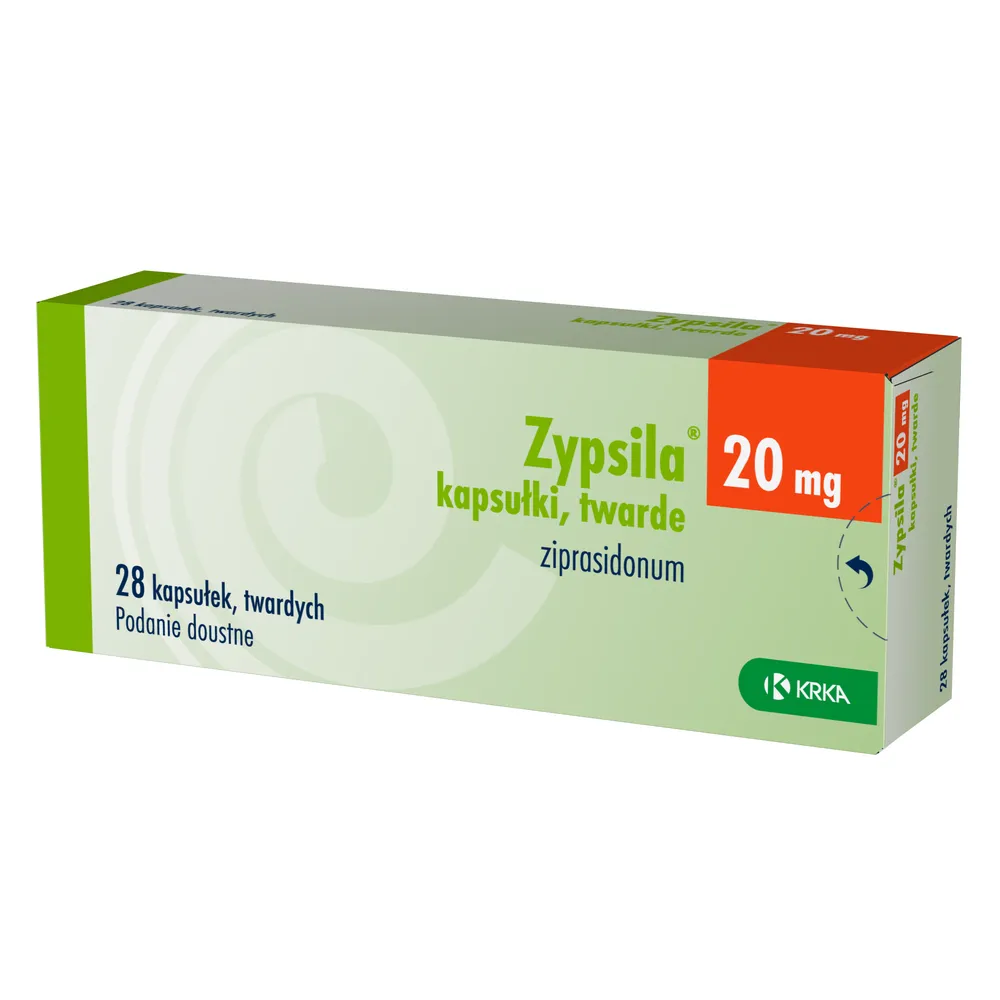
Table of Contents
Package leaflet: Information for the patient
Zypsila, 20 mg, hard capsules
Zypsila, 40 mg, hard capsules
Zypsila, 60 mg, hard capsules
Zypsila, 80 mg, hard capsules
ziprasidone
Please read this leaflet carefully before using this medicine, as it contains
important information for the patient.
- Keep this leaflet, as you may need to read it again.
- If you have any questions, please consult your doctor or pharmacist.
- This medicine has been prescribed for a specific individual. Do not pass it on to others. This medicine may harm others, even if their symptoms are the same.
- If you experience any adverse effects, including any not listed in this leaflet, inform your doctor or pharmacist. See section 4.
Leaflet contents
- What Zypsila is and what it is used for
- What you need to know before taking Zypsila
- How to take Zypsila
- Possible side effects
- How to store Zypsila
- Contents of the pack and other information
1. What Zypsila is and what it is used for
Zypsila belongs to a group of medicines called antipsychotics.
Zypsila is used in the treatment of schizophrenia in adults – a psychiatric disorder
characterized by symptoms such as: seeing, hearing or sensing things that are not real,
believing in things that are not true, excessive suspiciousness, social withdrawal or difficulty
in relating to others, restlessness, depression or anxiety.
Zypsila is also used in adults, as well as in children and adolescents aged 10–17 years, for the treatment of moderate manic or mixed episodes in bipolar affective disorder – psychiatric conditions characterized by alternating episodes of elevated (mania) or depressed (depression) mood. The most characteristic symptoms of a manic episode include: excessive excitement, inflated self-esteem, increased energy, reduced need for sleep, difficulty concentrating, hyperactivity, and repeated high-risk behaviors.
2. Important information before using Zypsila
When not to use Zypsila
- if the patient is allergic to ziprasidone or any of the other ingredients of this medicine (listed in section 6). Symptoms of an allergic reaction include: rash, itching, swelling of the face or lips, breathing difficulties;
- if the patient has or has ever had heart problems or recently suffered a heart attack;
- if the patient is taking medicines used to treat heart rhythm disorders or medicines that affect heart rhythm. See also the section below, "Zypsila and other medicines".
Warnings and precautions
Before starting treatment with Zypsila, discuss this with your doctor or pharmacist.
- if the patient has or has had blood clots in the past, either personally or in the family, because medicines of this class may increase the risk of blood clots;
- if the patient has liver function disorders;
- if the patient has or has ever had seizures or epilepsy;
- if the patient is elderly (over 65 years of age) and has dementia, with an increased risk of stroke;
- if the patient has a slow resting heart rate and (or) has been informed of reduced blood electrolyte levels due to prolonged, severe diarrhea, vomiting, or use of diuretics;
- if the patient experiences rapid or irregular heartbeat, fainting, collapse, or dizziness upon standing, which may indicate abnormal heart function.
Contact your doctor immediately if any of the following symptoms occur:
- severe skin reactions, such as blistering rash, including blisters in the mouth, skin peeling, fever, skin lesions, which may be symptoms of Stevens-Johnson syndrome. These reactions may be life-threatening.
- Zypsila may cause drowsiness, low blood pressure upon standing, dizziness, and gait disturbances, which may lead to falls. Exercise caution, especially if the patient is elderly or frail.
If the patient is scheduled for laboratory tests (such as blood or urine tests, tests assessing liver or heart function, etc.), inform the doctor about the use of Zypsila, as it may affect test results.
Children and adolescents
The safety and efficacy of ziprasidone in the treatment of schizophrenia in children and adolescents have not been established.
Zypsila and other medicines
Tell your doctor or pharmacist about all medicines the patient is currently taking or has recently taken, as well as any medicines the patient plans to take, including those available without a prescription.
DO NOT USE Zypsila if the patient is taking medicines used to treat heart rhythm disorders or medicines that may affect heart function, such as:
- class IA and III antiarrhythmics, arsenic trioxide, halofantrine, levomethadyl acetate, mesoridazine, thioridazine, pimozide, sparfloxacin, gatifloxacin, moxifloxacin, dolasetron mesylate, mefloquine, sertindole, or cisapride. These medicines may affect heart function by prolonging the QT interval. If in doubt, consult your doctor.
Before starting Zypsila, discuss this with your doctor or pharmacist.
Tell your doctor or pharmacist about any medicines currently or recently taken for the treatment of:
- bacterial infections; these are known as antibiotics; e.g. macrolide antibiotics or rifampicin;
- mood disorders (from depressive mood to elevated mood), agitation, and irritability. These medicines are known as mood stabilizers; e.g. lithium, carbamazepine, valproate;
- depression, including certain serotonergic medicines, e.g. selective serotonin reuptake inhibitors such as fluoxetine, paroxetine, sertraline; or herbal remedies, herbal preparations containing St. John's wort (Hypericum perforatum);
- epilepsy, e.g. phenytoin, phenobarbital, carbamazepine, ethosuximide;
- Parkinson's disease, e.g. levodopa, bromocriptine, ropinirole, pramipexole;
- and about any current or recent use of the following medicines: verapamil, quinidine, itraconazole, or ritonavir.
See also the section "When not to use Zypsila".
Taking Zypsila with food and drink
Zypsila MUST BE TAKEN DURING MAIN MEALS.
Do not drink alcohol while taking Zypsila, as this increases the risk of adverse effects.
Pregnancy and breastfeeding
If the patient is pregnant, breastfeeding, suspects she may be pregnant, or is planning to have a child, she should consult her doctor before using this medicine.
Pregnancy
Do not use Zypsila during pregnancy unless otherwise directed by a doctor, as there is a risk of harm to the fetus.
Newborns whose mothers have taken Zypsila during the last 3 months of pregnancy may experience the following symptoms: tremors, muscle stiffness and (or) weakness, drowsiness, agitation, breathing difficulties, feeding problems. If any of these symptoms occur in the newborn, seek medical advice immediately.
Breastfeeding
Breastfeeding must not be undertaken while taking Zypsila, as small amounts of the medicine may be excreted in breast milk.
Contraception
If the patient is able to become pregnant while taking this medicine, she should use an effective method of contraception.
Driving and operating machinery
Zypsila may cause drowsiness. If drowsiness occurs, the patient should refrain from driving, operating machinery, or performing other potentially hazardous activities until this subsides.
Zypsila contains lactose
If the patient has previously been diagnosed with intolerance to certain sugars, the patient should consult a doctor before taking this medicine.
3. How to use Zypsila
This medicine should always be taken exactly as directed by your doctor or pharmacist. If you are unsure,
you should consult your doctor or pharmacist.
The capsules should be taken with food and swallowed whole, without chewing, crushing, or opening them.
It is important not to chew, crush, or open the capsules, as this may affect the amount of medicine absorbed in the intestines.
Zypsila should be taken twice daily – one capsule in the morning with a substantial breakfast and one capsule in the evening with dinner.
The medicine should be taken at the same time each day.
Adults
The recommended dose is 40 to 80 mg, taken twice daily with food.
If long-term treatment is required, your doctor may adjust the dose. The maximum daily dose of 160 mg must not be exceeded.
Children and adolescents with bipolar disorder
The usual starting dose is 20 mg, taken with food. Your doctor will then determine the optimal dose for the child.
The maximum daily dose must not exceed 80 mg in children weighing <45 kg or 160 mg in children weighing ≥45 kg.
The safety and efficacy of ziprasidone in the treatment of schizophrenia in children and adolescents have not been established.
Elderly patients (aged over 65 years)
In elderly patients, the doctor will determine the appropriate dose. Doses in patients over 65 years of age are often lower than those used in younger patients.
Your doctor will inform you which dose is suitable for you.
Patients with impaired liver function
In patients with impaired liver function, a lower dose of Zypsila may be required. Your doctor will determine the appropriate dose for you.
Taking more Zypsila than recommended
Seek immediate medical advice from your doctor or go to the nearest hospital emergency department.
Take the medicine pack with you.
Symptoms of overdose may include drowsiness, tremor, seizures, and involuntary movements of the head and neck.
If you miss a dose of Zypsila
It is important to take Zypsila regularly at the same time each day. If you forget to take a dose, take it as soon as you remember, unless it is almost time for your next dose.
In that case, skip the missed dose and take the next one as scheduled. Do not take a double dose to make up for a missed dose.
Stopping Zypsila
Your doctor will inform you how long you should continue taking Zypsila. Do not stop taking Zypsila unless instructed by your doctor.
It is important to continue taking the medicine even if you feel better. Stopping treatment too early may cause symptoms to return.
If you have any further questions about the use of this medicine, consult your doctor or pharmacist.
4. Possible adverse reactions
Like any medicine, this medicine can cause adverse reactions, although not everyone experiences them.
Most adverse reactions are transient in nature. Sometimes it may be difficult to distinguish
the symptoms of the underlying disease from adverse reactions.
YOU MUST STOP taking Zypsila and contact your doctor immediately if
any of the following severe adverse reactions occur:
Common adverse reactions (may occur in up to 1 in 10 patients):
- Involuntary or abnormal movements, mainly affecting the face or tongue.
Uncommon adverse reactions (may occur in up to 1 in 100 patients):
- Fast or irregular heartbeat, dizziness upon standing, which may indicate abnormal heart function. These may be symptoms of a condition called orthostatic hypotension.
Rare adverse reactions (may occur in up to 1 in 1000 patients):
- Swelling of the face, lips, tongue or throat, difficulty swallowing or breathing, hives. These may be symptoms of a severe allergic reaction, such as angioedema.
- Fever, rapid breathing, sweating, muscle stiffness, tremor, difficulty swallowing and altered consciousness. These may be symptoms of a medical condition called neuroleptic malignant syndrome.
- Skin reactions, including mainly rash, fever and swollen lymph nodes, which may be symptoms of a condition called drug reaction with eosinophilia and systemic symptoms (DRESS). These reactions may be life-threatening.
- Confusion, agitation, high body temperature, excessive sweating, lack of muscle coordination, muscle tremor. These may be symptoms of a medical condition called serotonin syndrome.
- Fast, irregular heartbeat, fainting, which may be symptoms of a life-threatening condition called torsade de pointes.
- Priapism (prolonged, painful erection).
The following adverse reactions may occur. These adverse reactions are usually
mild to moderate in severity and may resolve over time. If an adverse reaction is severe or does not resolve, contact your doctor.
Very common adverse reactions (may occur in more than 1 in 10 patients):
- Difficulty sleeping
- Drowsiness or excessive daytime sleepiness
- Headache.
Common adverse reactions (may occur in up to 1 in 10 patients):
- Nasal congestion
- Extremely elevated, euphoric mood, unusual thought patterns and excessive physical activity, feeling of agitation or restlessness
- Motor restlessness
- Abnormal movements, including involuntary movements, muscle stiffness, slowed movements
- Dizziness
- Calming effect
- Blurred vision or visual disturbances
- High blood pressure
- Constipation, diarrhoea, nausea, vomiting and indigestion, dry mouth, increased salivation
- Rash
- Sexual dysfunction in men
- Fever
- Pain
- Increase or decrease in body weight
- Fatigue.
Uncommon adverse reactions (may occur in up to 1 in 100 patients):
- High levels of prolactin in the blood
- Increased appetite
- Panic attacks
- Feeling of nervousness or depression
- Decreased libido
- Loss of consciousness
- Difficulty controlling movements or involuntary movements
- Restless legs syndrome
- Throat tightness, nightmares
- Seizures, uncontrolled eye movements in a fixed position, clumsiness, speech disorders, tingling or numbness, reduced ability to concentrate, drooling
- Palpitations, shortness of breath
- Light sensitivity, dry eyes, tinnitus, ear pain
- Sore throat, gas, abdominal discomfort
- Itchy skin rash, acne
- Muscle cramps, stiffness or joint swelling
- Thirst, chest discomfort, abnormal gait
- Regurgitation of acid from the stomach (reflux), abdominal pain
- Hair loss
- Abnormal head posture (torticollis or neck spasm)
- Urinary incontinence, pain or difficulty urinating
- Abnormal milk production in the breasts
- Breast enlargement in men
- Absence of menstruation
- Abnormalities in blood tests or heart function tests
- Abnormalities in liver function tests
- Vertigo of labyrinthine origin
- General weakness and fatigue.
Rare adverse reactions (may occur in up to 1 in 1000 patients):
- Decreased calcium levels in the blood
- Slowed thinking, lack of emotion
- Facial drooping
- Paralysis
- Partial or complete loss of vision in one eye, itchy eyes
- Speech disorders, hiccups
- Loose stools
- Skin irritation
- Inability to open the mouth
- Difficulty completely emptying the bladder
- Withdrawal syndrome in newborns
- Reduced orgasm intensity
- Feeling of warmth
- Decreased or increased number of white blood cells (detected in blood tests)
- Red, raised skin lesions with inflammatory changes, covered with white scales, known as psoriasis.
Unknown (frequency cannot be estimated from available data):
- Slight increase in number of deaths in elderly patients with dementia treated with antipsychotic medicines (compared to patients not treated with such medicines)
- Blood clots in the veins, particularly in the legs (symptoms include swelling, pain and redness in the legs). These clots may travel through the bloodstream to the lungs, causing chest pain and breathing difficulties. If any of these symptoms occur, contact your doctor immediately.
Additional adverse reactions in children and adolescents
In clinical trials involving children and adolescents, adverse reactions were generally similar
to those in adults (see above), except for sedation and drowsiness, which occurred more
frequently in children. The most common adverse reactions in children and adolescents were sedation,
drowsiness, headache, fatigue, nausea, dizziness, vomiting, decreased appetite and
movement disorders.
Reporting of adverse reactions
If any adverse symptoms occur, including any adverse symptoms not listed
in this leaflet, inform your doctor or pharmacist. Adverse reactions can
be reported directly to the Department of Monitoring Adverse Reactions of Medicinal Products
of the Office for Registration of Medicinal Products, Medical Devices and Biocidal Products
Al. Jerozolimskie 181C, 02-222 Warsaw
Tel.: + 48 22 49 21 301
Fax: + 48 22 49 21 309
Website: https://smz.ezdrowie.gov.pl
Adverse reactions can also be reported to the marketing authorization holder.
Reporting adverse reactions helps to provide more information on the safety of this medicine.
5. How to store Zypsila
Keep the medicine out of the sight and reach of children.
Do not store above 30°C.
Store in the original packaging to protect from moisture.
Do not use this medicine after the expiry date stated on the packaging. The expiry date refers to the last day of the stated month.
Medicines should not be disposed of via wastewater or household waste. Ask your pharmacist how to dispose of medicines no longer required. This will help protect the environment.
6. Contents of the packaging and other information
What Zypsila contains
- The active substance is ziprasidone.
20 mg, hard capsules: Each hard capsule contains 20 mg of ziprasidone as ziprasidone hydrochloride.
40 mg, hard capsules: Each hard capsule contains 40 mg of ziprasidone as ziprasidone hydrochloride.
60 mg, hard capsules: Each hard capsule contains 60 mg of ziprasidone as ziprasidone hydrochloride.
80 mg, hard capsules: Each hard capsule contains 80 mg of ziprasidone as ziprasidone hydrochloride. - The other components (excipients) are: lactose monohydrate, pregelatinized corn starch, povidone K-25 and magnesium stearate in the capsule core; titanium dioxide (E 171), gelatin, indigo carmine (E 132) and yellow iron oxide (E 172) in the capsule shell. See section 2 "Zypsila contains lactose".
What Zypsila looks like and contents of the pack
20 mg, hard capsules
The capsule cap is pastel green, the body is white. The capsule contains powder ranging in colour from light pink to brownish.
40 mg, hard capsules
The capsule cap is dark green, the body is pastel green. The capsule contains powder ranging in colour from light pink to brownish.
60 mg, hard capsules
The capsule cap is dark green, the body is white. The capsule contains powder ranging in colour from light pink to brownish.
80 mg, hard capsules
The capsule cap is pastel green, the body is white. The capsule contains powder ranging in colour from light pink to brownish.
Pack sizes: 28, 30, 56, 60 or 90 hard capsules in blister packs, packed in a cardboard box.
Not all pack sizes may be marketed.
Marketing Authorisation Holder and Manufacturer
KRKA, d.d., Novo mesto, Šmarješka cesta 6, 8501 Novo mesto, Slovenia
This medicinal product is authorised in the Member States of the European Economic Area under the following names:
| Austria | Ziprasidon Krka |
| Bulgaria | Zypsila 20 (40/60/80) |
| Czech Republic | Zypsilan 20 (40/60/80) mg |
| Denmark | Ziprasidon Krka |
| Estonia | Ypsila |
| Finland | Ziprasidon Krka |
| Germany | Zipsilan 20 (40/60/80) mg Hard Capsules |
| Hungary | Ypsila 20 (40/60/80) |
| Lithuania | Zypsilan 20 (40/60/80) |
| Latvia | Ypsila 20 (40/60/80) mg hard capsules |
| Poland | Zypsila |
| Slovenia | Zypsila 20 (40/60/80) |
| Slovakia | Zypsilan |
| Spain | Ziprasidona Krka |
| Sweden | Ziprasidon Krka |
| Romania | Zypsila 20 (40/60/80) mg |