Trittico cr
Poland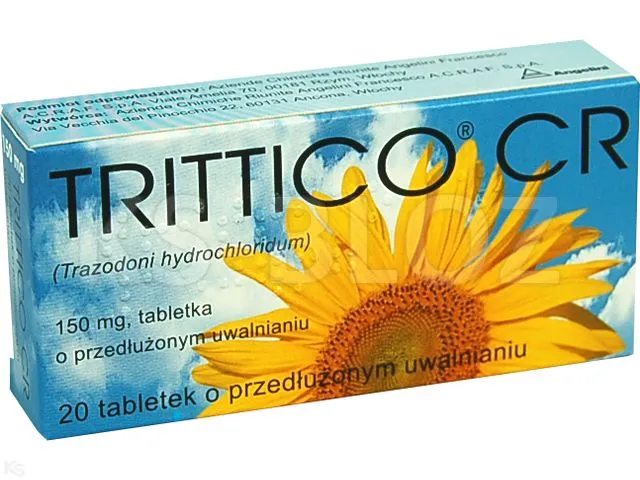
Table of Contents
Package leaflet: Information for the user
Trittico CR
75 mg, prolonged-release tablets
150 mg, prolonged-release tablets
Trazodone hydrochloride
Please read the entire leaflet carefully before using this medicine, as it contains important information for the patient.
- Keep this leaflet in case you need to read it again.
- If you have any questions, please consult your doctor or pharmacist.
- This medicine has been prescribed for a specific individual. Do not share it with others. This medicine may harm other people, even if their symptoms are the same.
- If you experience any adverse reactions, including those not listed in this leaflet, inform your doctor or pharmacist. See section 4.
Table of contents:
- What Trittico CR is and what it is used for
- Important information before taking Trittico CR
- How to take Trittico CR
- Possible side effects
- How to store Trittico CR
- Contents of the pack and other information
1. What Trittico CR is and what it is used for
Trittico CR contains trazodone, which has antidepressant and anxiolytic effects. Therapeutic action usually begins after approximately one week of treatment.
Trittico CR is indicated for depressive disorders of various origins, including depression associated with anxiety.
2. Important information before using Trittico CR
When not to use Trittico CR
Do not use Trittico CR if the patient is allergic to the active substance or to any of the other ingredients
of this medicine (listed in section 6).
Do not use if the patient is under the influence of alcohol or sedative medicines.
Do not use if the patient has acute myocardial infarction.
Warnings and precautions
Before starting treatment with Trittico CR, discuss this with your doctor or pharmacist.
- Trittico CR should be used with caution and under close medical supervision in patients with liver, kidney or heart disease, particularly those with conduction disorders, prolonged QT interval on ECG, atrioventricular block of any degree, or recent history of myocardial infarction.
- Trazodone does not affect the myocardium in the typical manner of tricyclic antidepressants; however, it may slow heart function and cause a drop in blood pressure, especially upon changing to an upright position, which may be accompanied by reflex tachycardia. Therefore, in patients concurrently receiving antihypertensive drugs with trazodone, dose reduction of antihypertensives may be necessary. The decision on dose reduction is made by the physician.
- Patients with depression may sometimes have thoughts of self-harm or suicide. These symptoms or behaviors may worsen at the beginning of treatment with antidepressants, as these drugs usually take about 2 weeks, sometimes longer, to become effective.
- The occurrence of suicidal thoughts, thoughts of self-harm or suicide attempts is more likely if:
- the patient has previously had suicidal thoughts or self-harming behavior;
- the patient is a young adult, as clinical trial data indicate an increased risk of suicidal behavior in individuals under 25 years of age with psychiatric disorders treated with antidepressants.
- If the patient experiences suicidal thoughts or thoughts of self-harm, contact a doctor immediately or go to hospital. It may be helpful to inform family members or friends about the depression or anxiety disorder and ask them to read this leaflet. The patient may ask family or friends for support and request them to inform him/her if they notice worsening of depression or anxiety, or other concerning behavioral changes. Close monitoring of the patient is especially important at the beginning of treatment and after dose adjustments.
- Exercise particular caution when using antidepressants in patients with schizophrenia or other psychotic disorders. If symptoms worsen, discontinue trazodone.
- Particular caution is also required when using trazodone in patients with epilepsy; abrupt increases or decreases in dose should especially be avoided.
- Caution is also advised in patients with hyperthyroidism, urinary retention (e.g. due to benign prostatic hyperplasia), acute angle-closure glaucoma, or increased intraocular pressure.
- Particular caution is recommended when using anticoagulant and/or antiplatelet drugs, and in patients with known bleeding tendencies.
- In elderly patients, trazodone may more frequently cause hypotension (especially upon changing to an upright position) or somnolence. This should be given special attention at the beginning of treatment and with each dose increase. These symptoms may be intensified by concomitant use of psychotropic or antihypertensive drugs, or by coexisting illness.
- During treatment with trazodone, hematological disorders may occasionally occur, such as agranulocytosis (manifesting as flu-like symptoms, sore throat, and fever), thrombocytopenia (which may present as bruising or petechiae), or anemia (manifesting as pallor). Rarely, liver function disorders, sometimes severe, such as jaundice and hepatocellular damage, have been reported. In such cases, trazodone should be discontinued immediately and medical advice sought.
- Very rarely, prolonged painful erection (priapism) has occurred, requiring discontinuation of trazodone and prompt medical intervention.
- Concomitant use of other antidepressants with neuroleptic drugs (used in schizophrenia) may cause very serious and life-threatening adverse reactions such as serotonin syndrome or neuroleptic malignant syndrome. Therefore, if symptoms such as confusion, muscle rigidity, tremors, seizures, shivering, or fever occur, trazodone should be discontinued immediately and medical advice sought.
- Gradual increase of the daily dose up to the maximum recommended reduces the risk of adverse effects.
- When discontinuing treatment with trazodone, especially long-term treatment, gradual dose reduction until complete discontinuation is recommended to minimize withdrawal symptoms such as nausea, headache, and malaise.
- This medicine should not be used in children and adolescents under 18 years of age. Use of drugs in this class in patients under 18 years of age may increase the risk of adverse effects such as suicidal ideation and suicide attempts, as well as hostility (aggression, defiance, anger). Furthermore, there are no data confirming the long-term safety of Trittico CR in children and adolescents regarding its impact on growth, maturation, and cognitive and behavioral development.
Effect on urine test results
In screening urine tests performed by specific methods (immunological assays), patients taking Trittico CR may show false-positive results indicating the presence of amphetamines. This is due to structural similarity between trazodone's metabolite and a derivative of amphetamine (ecstasy). In such cases, consult your doctor for additional testing using another method (mass spectrometry or liquid chromatography–tandem mass spectrometry).
If any of the above situations apply to the patient (or if the patient is unsure), consult a doctor or pharmacist before using Trittico CR.
Trittico CR and other medicines
Inform your doctor or pharmacist about all medicines currently taken, recently taken, or planned for use.
Some medicines may interact with each other or should not be used simultaneously with Trittico CR.
These include, among others:
- Antipsychotics, hypnotics, sedatives, anxiolytics, and antihistamines (trazodone may enhance their effects; the doctor will recommend appropriate dose adjustments).
- Oral contraceptives, phenytoin, carbamazepine, and barbiturates (may reduce the effectiveness of trazodone).
- Cimetidine and certain antipsychotics (may enhance or prolong the effects of antidepressants).
- Erythromycin, ketoconazole, itraconazole, ritonavir, indinavir, and nefazodone (may increase the risk of adverse effects of Trittico CR; if possible, avoid concomitant use with trazodone, or the doctor may consider reducing the trazodone dose).
- Carbamazepine (reduces plasma concentration of trazodone; the doctor may increase the dose after careful observation of the patient).
- Tricyclic antidepressants (concomitant use with trazodone should be avoided due to risk of serotonin syndrome and cardiovascular adverse effects).
- Fluoxetine (may increase the risk of serotonin syndrome).
- Monoamine oxidase inhibitors (MAOIs) (trazodone should not be used during MAOI treatment or within two weeks after discontinuation of MAOIs. MAOIs should not be started within one week after stopping trazodone).
- Phenothiazine derivatives such as chlorpromazine, fluphenazine, levomepromazine, or perphenazine (may cause severe orthostatic hypotension).
- Skeletal muscle relaxants and inhaled anesthetics (trazodone may enhance their effects; caution is required during concomitant use).
- Alcohol (trazodone enhances its sedative effect; alcohol consumption should be avoided during treatment with trazodone).
- Levodopa (trazodone may reduce its effectiveness).
- Clonidine (trazodone significantly reduces the effect of clonidine in animal studies. Human data on interactions between trazodone and other antihypertensive drugs are lacking, but a potential effect should be considered).
- Medicines known to prolong the QT interval (increase the risk of cardiac arrhythmias such as life-threatening ventricular arrhythmias; caution is required during concomitant use with trazodone).
- St. John's wort (Hypericum perforatum) preparations may increase adverse effects caused by trazodone.
- Anticoagulants and/or antiplatelet drugs (used to reduce blood clotting): blood coagulation may be altered, increasing the risk of bleeding.
- Digoxin, phenytoin (trazodone may increase their serum concentration, enhancing their effects).
Trittico CR with food and drink
The medicine can be taken with or without food.
Pregnancy and breastfeeding
If the patient is pregnant, breastfeeding, suspects she may be pregnant, or plans to become pregnant, she should consult a doctor or pharmacist before using this medicine.
Animal studies and limited data from human studies (fewer than 200 pregnant women) do not indicate adverse effects of trazodone on pregnancy or fetal and neonatal health. Currently, no further epidemiological data are available.
If trazodone was used until delivery, the newborn should be monitored for withdrawal symptoms.
In breastfeeding women, the possibility of drug transfer into breast milk should be considered.
Use of Trittico CR during pregnancy and breastfeeding should be limited to exceptional cases, after careful evaluation by the physician of benefit-risk balance.
Driving and operating machinery
Trazodone may slightly or moderately impair the ability to drive and operate machinery. Do not drive or operate machinery if the patient experiences somnolence, excessive sedation, dizziness, confusion, or blurred vision.
Trittico CR contains sucrose.
If the patient has been previously diagnosed with intolerance to certain sugars, the patient should consult a doctor before taking this medicine.
3. How to use Trittico CR
This medicine should always be used as directed by a doctor or pharmacist. If in doubt,
consult a doctor or pharmacist.
Trittico CR should only be used in adult patients.
It is recommended to start treatment with an evening dose. If necessary, the dose may be
gradually increased according to the doctor's instructions. The tablets should be taken orally, with or
without food, and treatment should last at least one month.
Trittico CR tablets can be divided into three parts, which facilitates individual dose adjustment
depending on disease severity, body weight, age, and the patient's general health condition.
Recommended dose
Adult patients
The usual dose is 75–150 mg once daily, taken in the evening before bedtime.
The dose may be gradually increased up to 300 mg per day, divided into two doses.
In hospitalized patients, the dose may be increased to 600 mg per day in divided doses.
Frail and elderly patients
Elderly patients should be given lower doses, depending on individual efficacy and tolerance.
Treatment should generally be initiated with the lowest possible dose.
The recommended initial dose is 100 mg per day, either as a single evening dose before bedtime or
divided into several doses. The dose may then be gradually increased according to the doctor's
instructions; however, single doses exceeding 100 mg should generally be avoided. It is unlikely that
doses above 300 mg per day will be required.
Patients with hepatic impairment
Trittico CR is metabolized in the liver, and its use may be associated with hepatotoxic effects.
Patients with liver dysfunction, especially severe impairment, should inform their doctor, who will
decide whether periodic monitoring of liver function is necessary.
Patients with renal impairment
Dose adjustment is usually not required. However, patients with renal impairment, particularly
severe, should inform their doctor before starting treatment with this medicine.
Use in children and adolescents
Trittico CR must not be used in children and adolescents under 18 years of age.
Taking more Trittico CR than recommended
The most common symptoms of trazodone overdose are drowsiness, dizziness, nausea, and vomiting.
In more severe cases, coma, tachycardia (rapid heartbeat), hypotension, hyponatremia (low blood sodium levels), seizures, respiratory disturbances, and ECG changes have been observed. Symptoms may appear within 24 hours after overdose or later.
Overdose of trazodone in combination with other antidepressants may lead to serotonin syndrome.
In case of overdose, the patient's stomach should be emptied promptly by inducing vomiting (if the patient is conscious), administering activated charcoal, or performing gastric lavage, and blood electrolyte levels should be corrected. There is no known specific antidote.
If more than the recommended dose of Trittico CR has been taken, seek immediate medical advice from a doctor or pharmacist, taking the medicine packaging along.
Missed dose of Trittico CR
If a dose is missed, do not take a double dose to make up for the missed dose. Instead, take the next dose at the scheduled time.
If you have any further questions regarding the use of this medicine, consult your doctor or pharmacist.
4. Possible adverse reactions
Like all medicines, this medicine can cause adverse reactions, although not everyone experiences them.
Reports have been received of suicidal thoughts and actions during treatment with trazodone or shortly after discontinuation.
The following adverse reactions of unknown frequency (frequency cannot be estimated from available data) have been observed in patients treated with trazodone, some of which also commonly occur in patients with untreated depression:
Abnormal blood test results, including agranulocytosis (marked decrease in the number of white blood cells – granulocytes), thrombocytopenia (reduced number of platelets), eosinophilia (increased number of eosinophilic leukocytes), leukopenia (reduced number of leukocytes), and anaemia (reduced number of red blood cells).
Allergic reactions.
Syndrome of inappropriate antidiuretic hormone secretion (causing fluid retention in the body).
Decreased blood sodium levels, weight loss, anorexia, increased appetite.
Suicidal thoughts or behaviours, confusion (disturbance of consciousness), insomnia, disorientation, mania, anxiety, nervousness, agitation (very rarely progressing to delirium), delusions, aggressive behaviour, hallucinations, nightmares, decreased libido, withdrawal syndrome.
Serotonin syndrome, seizures, neuroleptic malignant syndrome, dizziness, impaired balance, headache, somnolence, restlessness (mainly motor restlessness), reduced alertness, tremor, blurred vision, memory impairment, clonic muscle jerks (short, sudden muscle contractions), expressive aphasia (inability to utter certain words), paresthesia (sensation of pricking, tingling and numbness of limbs), involuntary body movements, altered taste.
Cardiac arrhythmias (including torsade de pointes), palpitations, premature ventricular contractions, ventricular couplets, ventricular tachycardia), bradycardia (slowed heart rate), tachycardia, abnormal ECG (prolonged QT interval).
Orthostatic hypotension (drop in blood pressure upon standing, causing dizziness or fainting), arterial hypertension, fainting.
Stuffy nose, shortness of breath.
Nausea, vomiting, dry mouth, constipation, diarrhoea, indigestion, abdominal pain, gastritis and enteritis, salivation, paralytic ileus (marked reduction or cessation of intestinal peristalsis).
Abnormal liver function (including jaundice and liver cell damage), intrahepatic cholestasis.
Skin rash, itching, excessive sweating.
Pain in limbs, back, muscles, joints.
Urinary disorders, urinary incontinence (loss of urine), urinary retention (inability to pass urine).
Priapism (painful prolonged erection).
Weakness, oedema, influenza-like symptoms, fatigue, chest pain, fever.
Increased liver enzyme activity.
Reporting of adverse reactions
If any adverse reactions occur, including any possible adverse reactions not listed in this leaflet, inform your doctor or pharmacist. Adverse reactions can be reported directly to:
Department of Monitoring of Adverse Drug Reactions, Office for Registration of Medicinal Products, Medical Devices and Biocidal Products,
Al. Jerozolimskie 181C, 02-222 Warsaw, tel. +48 22 49 21 301, fax: +48 22 49 21 309,
website: https://smz.ezdrowie.gov.pl .
Adverse reactions can also be reported to the marketing authorization holder.
Reporting adverse reactions helps provide more information on the safety of the medicine.
5. How to store Trittico CR
Keep this medicine out of the sight and reach of children.
Do not store above 25°C.
Do not use Trittico CR after the expiry date stated on the carton.
The expiry date refers to the last day of the stated month.
Medicines should not be disposed of via wastewater or household waste. Ask your pharmacist
how to dispose of medicines no longer required. Such measures help protect the environment.
6. Contents of the pack and other information
What Trittico CR contains
The active substance is trazodone hydrochloride.
Trittico CR 75 mg prolonged-release tablets: Each prolonged-release tablet contains 75 mg of trazodone hydrochloride, equivalent to 68.3 mg of trazodone.
Trittico CR 150 mg prolonged-release tablets: Each prolonged-release tablet contains 150 mg of trazodone hydrochloride, equivalent to 136.6 mg of trazodone.
The other ingredients are: sucrose, povidone, carnauba wax, magnesium stearate.
What Trittico CR looks like and contents of the pack
Trittico CR is in the form of prolonged-release tablets with score lines marked on both sides, allowing division into 3 equal doses.
Trittico CR 75 mg: The pack (cardboard box) contains 30 or 90 prolonged-release tablets.
Trittico CR 150 mg: The pack (cardboard box) contains 20, 60 or 90 prolonged-release tablets.
Marketing Authorisation Holder and Manufacturer
Marketing Authorisation Holder:
Aziende Chimiche Riunite Angelini Francesco A.C.R.A.F. S.p.A.
Viale Amelia 70
00181 Rome, Italy
Manufacturers:
Aziende Chimiche Riunite Angelini Francesco A.C.R.A.F. S.p.A.
Via Vecchia del Pinocchio 22 - 60131 Ancona, Italy
Istituto de Angeli S.r.L
Loc. Prulli n. 103/c
50066 Reggello (FI), Italy
Representative of the Marketing Authorisation Holder:
Angelini Pharma Polska Sp. z o.o.
Aleje Jerozolimskie 181B
02-222 Warsaw, Poland
Tel.: (22) 70 28 200
e-mail: [email protected]
The package leaflet in an appropriate format for blind or visually impaired persons is available at the representative's office of the Marketing Authorisation Holder.