Torvazin plus
Poland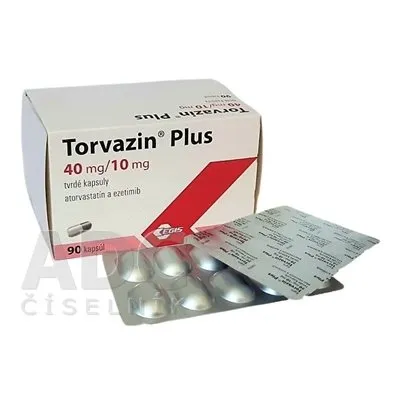
Table of Contents
Package leaflet: Information for the patient
Torvazin Plus, 10 mg + 10 mg, hard capsules
Torvazin Plus, 20 mg + 10 mg, hard capsules
Torvazin Plus, 40 mg + 10 mg, hard capsules
Atorvastatinum + Ezetimibum
Please read this leaflet carefully before taking this medicine, as it contains important
information for you.
- Keep this leaflet, as you may need to read it again.
- If you have any further questions, please ask your doctor or pharmacist.
- This medicine has been prescribed for a specific individual. Do not pass it on to others. This medicine may harm others, even if their symptoms are the same.
- If you experience any adverse reactions, including any not listed in this leaflet, tell your doctor or pharmacist. See section 4.
Contents of the leaflet:
- What Torvazin Plus is and what it is used for
- Important information before taking Torvazin Plus
- How to take Torvazin Plus
- Possible side effects
- How to store Torvazin Plus
- Contents of the package and other information
1. What Torvazin Plus is and what it is used for
Torvazin Plus contains two different active substances in one capsule. One of the active substances is atorvastatin, which belongs to a group of medicines called statins; the other active substance is ezetimibe.
Torvazin Plus is used in adult patients to reduce levels of total cholesterol, "bad" cholesterol (LDL), and fat substances known as triglycerides in the blood. Additionally, Torvazin Plus increases levels of "good" cholesterol (HDL).
This medicine reduces cholesterol levels in two ways: it reduces cholesterol absorption in the gastrointestinal tract and also decreases cholesterol production in the body.
In most people, high cholesterol does not affect how they feel, as it causes no symptoms. However, if left untreated, fatty deposits may build up in the walls of blood vessels, leading to narrowing of the vessels.
Sometimes these narrowed vessels may become blocked, which can cut off blood flow to the heart or brain, causing a heart attack or stroke. By reducing cholesterol levels, the risk of heart attack, stroke, or other related health problems can be reduced.
This medicine is used in patients in whom adequate cholesterol control cannot be achieved with a cholesterol-lowering diet alone. A low-cholesterol diet should still be followed during treatment.
Your doctor may prescribe Torvazin Plus if you are already taking atorvastatin and ezetimibe at the same doses.
This medicine does not help reduce body weight.
2. Important information before using Torvazin Plus
When not to use Torvazin Plus
- if the patient is allergic to atorvastatin, ezetimibe, or any of the other ingredients of this medicine (listed in section 6)
- if the patient currently has or has ever had liver disease
- if the patient has ever had unexplained abnormal blood test results indicating liver function
- if the patient is of childbearing age and is not using appropriate contraceptive methods
- if the patient is pregnant or trying to become pregnant
- if the patient is breastfeeding
- if the patient is taking glecaprevir with pibrentasvir for the treatment of hepatitis C virus infection.
Warnings and precautions
Before starting Torvazin Plus, discuss this with your doctor or pharmacist.
- if the patient has severe respiratory insufficiency
- if the patient is currently taking or has taken within the last 7 days fusidic acid (a medicine used to treat bacterial infections) orally or by injection. The combination of fusidic acid and this medicine may lead to serious muscle problems (rhabdomyolysis). (See section "Torvazin Plus and other medicines".)
- if the patient has had a stroke with bleeding into the brain or if the patient has small fluid-filled pockets in the brain following previous strokes
- if the patient has kidney problems
- if the patient has reduced thyroid gland activity (hypothyroidism)
- if the patient has previously experienced recurrent unexplained muscle pain or has a personal or family history of muscle disorders
- if the patient has previously experienced muscle disorders while taking other lipid-lowering medicines (e.g. other statins or fibrates)
- if the patient currently has or has previously had myasthenia (a disease causing generalised muscle weakness, including in some cases muscles involved in breathing) or ocular myasthenia (a disease causing weakness of eye muscles), because statins may sometimes worsen symptoms of the disease or lead to the development of myasthenia (see section 4).
- if the patient regularly consumes large amounts of alcohol
- if the patient has a history of liver disease
- if the patient is over 70 years of age.
Contact your doctor immediately if unexplained muscle pain,
tenderness or weakness occurs while taking Torvazin Plus. In rare
cases, muscle disorders may be severe, including muscle breakdown, which may lead to
kidney damage. It is known that atorvastatin may cause muscle disorders. Cases of muscle disorders
have also been reported during treatment with ezetimibe.
Inform your doctor or pharmacist if muscle weakness persists. Additional tests and
possibly additional medicines may be required for diagnosis and treatment of this condition.
During treatment with this medicine, your doctor will closely monitor you for diabetes
or risk of developing diabetes. You are at risk of developing diabetes if you have
high blood sugar and lipid levels, are overweight, and suffer from hypertension.
Inform your doctor about all medical conditions, including allergies.
Avoid concomitant use of Torvazin Plus and fibrates (medicines that reduce cholesterol levels), as this combination has not been studied.
Children and adolescents
Torvazin Plus is not recommended for use in children and adolescents under 18 years of age.
Torvazin Plus and other medicines
Tell your doctor or pharmacist about all medicines you are currently taking, have recently taken, or plan to take.
Some medicines may alter the effect of Torvazin Plus, or Torvazin Plus may alter their effect. This type of interaction may reduce the effectiveness of one or both medicines. Alternatively, it may increase the risk or severity of adverse effects, including rhabdomyolysis (breakdown of skeletal muscles), described in section 4.
- Medicines affecting the immune system, e.g. cyclosporine
- Some antibiotics, e.g. erythromycin, clarithromycin, telithromycin, rifampicin (medicines used to treat bacterial infections)
- Some antifungal medicines, e.g. ketoconazole, itraconazole, voriconazole, fluconazole, posaconazole
- Other lipid-regulating medicines, e.g. gemfibrozil, other fibrates, nicotinic acid and its derivatives, colestipol, cholestyramine
- Some calcium channel blockers used for angina and hypertension, e.g. amlodipine, diltiazem
- Medicines regulating heart function, e.g. digoxin, verapamil, amiodarone
- Letermovir, a medicine used to prevent cytomegalovirus infection
- Medicines used to treat HIV infection, e.g. ritonavir, lopinavir, atazanavir, indinavir, darunavir, efavirenz, fosamprenavir, delavirdine, combination of tipranavir/ritonavir, etc.
- Some medicines used to treat hepatitis C virus infection, e.g. telaprevir, boceprevir, and fixed-dose combinations containing elbasvir with grazoprevir, ledipasvir with sofosbuvir
- Fusidic acid. If the patient must take fusidic acid orally for a bacterial infection, temporary discontinuation of this medicine is required. Your doctor will advise when it is safe to restart Torvazin Plus. Concomitant use of this medicine with fusidic acid may rarely lead to muscle weakness, tenderness, and pain (rhabdomyolysis). For more information on rhabdomyolysis, see section 4.
- Daptomycin (a medicine used to treat complicated skin and soft tissue infections and bloodstream infections caused by bacteria)
- Other medicines with known interactions with this medicine:
- Warfarin, phenprocoumon, acenocoumarol, and fluindione (medicines preventing blood clots)
- Oral contraceptives (medicines preventing pregnancy)
- Stiripentol (an anticonvulsant used in epilepsy)
- Cimetidine (used in cases of heartburn and peptic ulcers)
- Phenazone (a pain-relieving medicine)
- Colchicine (used in the treatment of gout)
- Medicines neutralising gastric hydrochloric acid (indigestion remedies containing aluminium or magnesium)
- St. John’s wort (a herbal medicine used to treat depression)
Torvazin Plus, food and alcohol
Instructions on how to take this medicine are provided in section 3. Please note the following:
Grapefruit juice
Do not drink more than one or two small glasses of grapefruit juice per day, as large quantities of grapefruit juice may affect the action of this medicine.
Alcohol
Avoid excessive alcohol consumption during treatment with this medicine. For further information, see section 2 "Warnings and precautions".
Pregnancy and breastfeeding
Do not use Torvazin Plus if you are pregnant, trying to become pregnant, or suspect you may be pregnant. Women of childbearing potential should use appropriate contraceptive methods during treatment with this medicine. If pregnancy occurs during treatment with this medicine, stop taking it immediately and consult your doctor.
Do not use Torvazin Plus during breastfeeding.
The safety of using this medicine during pregnancy and breastfeeding has not been established.
If you are pregnant or breastfeeding, suspect you may be pregnant, or plan to have a child, consult your doctor or pharmacist before using this medicine.
Driving and using machines
Torvazin Plus is not expected to impair the ability to drive or operate machinery.
However, bear in mind that dizziness may occur in some patients after taking this medicine. If dizziness occurs, contact your doctor before driving or operating machinery.
Torvazin Plus contains sucrose and sodium
Torvazin Plus contains sucrose. If you have been previously diagnosed with intolerance to certain sugars, consult your doctor before taking this medicine.
This medicine contains less than 1 mmol (23 mg) of sodium per capsule, i.e. the medicine is considered "sodium-free".
3. How to use Torvazin Plus
This medicine should always be used exactly as your doctor or pharmacist has advised. If in doubt,
ask your doctor or pharmacist.
Before starting treatment with this medicine, a cholesterol-lowering diet should be initiated.
The recommended daily dose for adults is one capsule of a given strength taken once daily.
Torvazin Plus should be taken once daily.
The capsules may be taken at any time, independently of meals; however, it is advisable to take the
medicine at the same time each day.
The capsule should be swallowed whole with water.
This medicine is not suitable for initiating treatment.
Starting treatment or adjusting the dose, if necessary, should be done only by using the active
substances as separate medicines. Only after the appropriate doses have been established should
treatment be switched to Torvazin Plus.
If your doctor has prescribed Torvazin Plus together with cholestyramine or another bile acid-binding
medicine (intended to reduce cholesterol levels), this medicine should be taken at least 2 hours before
or 4 hours after taking bile acid-binding medicines.
Taking more Torvazin Plus than recommended
If you accidentally take more capsules of Torvazin Plus than prescribed (more than the usual dose),
contact your doctor immediately or go to the nearest hospital for advice.
Missing a dose of Torvazin Plus
If you miss a dose, take the next dose at the scheduled time, according to the regimen. Do not take
a double dose to make up for a missed dose.
Stopping Torvazin Plus
Tell your doctor if you wish to stop taking Torvazin Plus. Cholesterol levels may rise again if you stop
taking this medicine.
If you have any further questions about the use of this medicine, consult your doctor or pharmacist.
4. Possible adverse reactions
Like any medicine, this medicine can cause adverse reactions, although not everyone will experience them.
If any of the serious adverse reactions listed below occur, stop taking this medicine immediately and contact a doctor or go to
the emergency department of the nearest hospital without delay.
Rare (may occur in up to 1 in 1,000 people):
- Severe allergic reaction causing swelling of the face, tongue and throat, which may lead to severe breathing difficulties.
- Severe illness characterized by extensive peeling and swelling of the skin, formation of blisters on the skin, inside the mouth, eyes, genital organs, and fever. Skin rash with pink-red spots, especially on the palms or soles of the feet, possibly progressing to blister formation.
- Weakness, tenderness, pain or rupture of a muscle, or red-brown discoloration of urine, especially if occurring together with malaise or high fever, may be caused by abnormal muscle breakdown (rhabdomyolysis). Abnormal muscle breakdown may not always resolve even after discontinuation of this medicine and can be life-threatening and lead to kidney problems.
Very rare (may occur in up to 1 in 10,000 people):
- Unexpected or unusual bleeding or bruising may indicate liver function disorders. The patient should consult a doctor as soon as possible.
- Lupus-like syndrome (including skin rash, joint disorders and effects on blood cells).
Other possible adverse reactions
Common adverse reactions (may occur in up to 1 in 10 people):
- Common cold (inflammation of the mucous membranes of the nose and throat)
- Allergic reactions
- Increased blood glucose levels
- Headache
- Sore throat
- Nosebleeds
- Constipation
- Bloating (excessive intestinal gas)
- Indigestion
- Nausea
- Diarrhea
- Abdominal pain
- Muscle pain
- Joint pain
- Pain in arms and legs
- Muscle cramps
- Joint swelling
- Back pain
- Feeling of fatigue
- Increased values in certain blood laboratory tests assessing liver or muscle function (CK)
- Increased results in certain blood laboratory tests evaluating liver function (aminotransferases)
Uncommon adverse reactions (may occur in up to 1 in 100 people):
- Low blood sugar levels
- Weight gain
- Decreased or loss of appetite
- Nightmares
- Insomnia
- Dizziness
- Numbness or tingling in fingers of hands and feet
- Reduced sensation of pain or touch
- Taste disturbances
- Memory loss
- Blurred vision
- Ringing in the ears
- Hot flushes
- High blood pressure
- Cough
- Vomiting
- Belching
- Pancreatitis (leading to severe abdominal pain which may radiate to the back)
- Heartburn
- Dry mouth
- Gastritis
- Hepatitis
- Hives
- Itching
- Skin rash
- Hair loss
- Neck pain
- Muscle fatigue
- Malaise (feeling of general weakness)
- Weakness (lack of energy and strength)
- Chest pain
- Pain
- Swelling (especially of hands and feet)
- Fever
- Positive test results for white blood cells in urine
- Increased levels of liver enzymes in blood
Rare adverse reactions (may occur in up to 1 in 1,000 people):
- Decreased number of platelets, which may increase the risk of bruising/bleeding (thrombocytopenia)
- Nerve damage in arms and legs (such as numbness)
- Vision disturbances
- Cholestasis (yellowing of the skin and whites of the eyes)
- Raised red rash, sometimes with target-shaped lesions (erythema multiforme)
- Rash, which may appear on the skin or ulcerations in the mouth (lichenoid drug reaction)
- Purple skin lesions (signs of vasculitis)
- Muscle disease with muscle weakness (myopathy)
- Muscle inflammation
- Tendon damage
Very rare adverse reactions (may occur in up to 1 in 10,000 people):
- Hearing loss
- Liver failure
- Gynaecomastia (enlargement of breasts in males)
Unknown frequency (cannot be estimated from available data):
- Depression
- Shortness of breath
- Gallstones or cholecystitis (which may cause abdominal pain, nausea, vomiting)
- Persistent muscle weakness (immune-mediated necrotizing myopathy)
- Myasthenia (a disease causing general muscle weakness, including in some cases muscles involved in breathing)
- Ocular myasthenia (a disease causing weakness of eye muscles)
Talk to a doctor if the patient experiences weakness in arms or legs worsening
after periods of activity, double vision or drooping eyelids, difficulty swallowing or
shortness of breath.
Adverse reactions reported after use of certain statins
- Sexual dysfunction
- Breathing problems, including persistent cough and/or shortness of breath or fever.
- Diabetes. The risk of developing diabetes is higher in people with high blood glucose and lipid levels, overweight and high blood pressure. The doctor will monitor the patient's condition during treatment with this medicine.
Reporting of adverse reactions
If any adverse symptoms occur, including any adverse symptoms not listed
in this leaflet, inform a doctor, pharmacist or nurse. Adverse reactions
can be reported directly to the Department of Monitoring Adverse Reactions of Medicinal Products of the Office for Registration of Medicinal Products, Medical Devices and Biocidal Products:
Al. Jerozolimskie 181C, 02-222 Warsaw
Tel.: +48 22 49 21 301
Fax: +48 22 49 21 309
Website: https://smz.ezdrowie.gov.pl
Adverse reactions can also be reported to the marketing authorization holder.
Reporting adverse reactions helps to provide more information on the safety of the medicine.
5. How to store Torvazin Plus
Keep this medicine out of sight and reach of children.
Store below 30 ° C.
Store in the original packaging to protect from moisture.
Do not use this medicine after the expiry date stated on the packaging following EXP.
The expiry date refers to the last day of the stated month.
Medicines must not be disposed of via wastewater or household waste. Ask your pharmacist how to dispose of medicines no longer required. Such measures help protect the environment.
6. Contents of the pack and other information
What Torvazin Plus contains
-
The active substances in Torvazin Plus are atorvastatin (in the form of atorvastatin calcium trihydrate) and ezetimibe. Each capsule contains 10 mg, 20 mg, or 40 mg of atorvastatin and 10 mg of ezetimibe.
-
Other components are:
Core: Calcium carbonate, hydroxypropyl cellulose, polysorbate 80, sodium croscarmellose, sucrose, granules (sucrose and corn starch), talc, mannitol, microcrystalline cellulose, low-substituted hydroxypropyl cellulose, povidone (K-25), sodium lauryl sulfate, magnesium stearateCapsule shell:
Torvazin Plus 10 mg + 10 mg hard capsules:
Cap: titanium dioxide (E 171), yellow iron oxide (E 172), red iron oxide (E 172), black iron oxide (E 172), gelatin
Torvazin Plus 20 mg + 10 mg hard capsules:
Cap: titanium dioxide (E 171), red iron oxide (E 172), gelatin
Torvazin Plus 40 mg + 10 mg hard capsules:
Cap: titanium dioxide (E 171), yellow iron oxide (E 172), red iron oxide (E 172), black iron oxide (E 172), gelatin
Body of all capsules: titanium dioxide (E 171), yellow iron oxide (E 172), gelatin
What Torvazin Plus looks like and contents of the pack
Torvazin Plus 10 mg + 10 mg hard capsules:
A self-sealing hard gelatin capsule, size 0, with a caramel-colored cap and a yellow body, filled with pellets and a tablet.
Torvazin Plus 20 mg + 10 mg hard capsules:
A self-sealing hard gelatin capsule, size 0, with a reddish-brown cap and a yellow body, filled with pellets and a tablet.
Torvazin Plus 40 mg + 10 mg hard capsules:
A self-sealing hard gelatin capsule, size 0, with a dark brown cap and a yellow body, filled with pellets and a tablet.
Capsule contents:
Atorvastatin IR pellets:
Spherically shaped pellets.
Ezetimibe 10 mg tablet:
One round, flat tablet with beveled edges, engraved with a stylized letter E on one side and the number 612 on the other side.
Pack sizes: 30, 60, 70, 80, 90, 100, and 120 hard capsules in blisters made of OPA/Aluminum/PVC/Aluminum, packed in a cardboard box.
Not all pack sizes may be marketed.
Marketing Authorisation Holder and Manufacturer
Marketing Authorisation Holder
Egis Pharmaceuticals PLC
Keresztúri út 30-38
1106 Budapest
Hungary
Manufacturer
Egis Pharmaceuticals PLC
Bökényföldi út 118-120
1165 Budapest
Hungary
Egis Pharmaceuticals PLC
Mátyás király u. 65
9900 Körmend
Hungary
This medicinal product is authorised for sale in the European Economic Area under the following names:
Hungary: Torvazin Duo 10 mg/10 mg, 20 mg/10 mg, 40 mg/10 mg kemény kapszula
Poland: Torvazin Plus
Romania: Torvazin Plus 10 mg/10 mg, 20 mg/10 mg, 40 mg/10 mg capsule
Slovakia: Torvazin Plus 10 mg/10 mg, 20 mg/10 mg, 40 mg/10 mg
Bulgaria: Торвазин Плюс (atorvastatin/ezetimibe) 10 mg/10 mg, 20 mg/10 mg, 40 mg/10 mg твърди капсули
Lithuania: EXTROTAN 10 mg/10 mg, 20 mg/10 mg, 40 mg/10 mg kietosios kapsulės (atorvastatinas/ezetimibas)
Latvia: EXTROTAN 10 mg/10 mg, 20 mg/10 mg, 40 mg/10 mg cietās kapsulas
Spain: Atorduo 10mg/10mg, 20mg/10mg, 40mg/10mg cápsulas duras
Cyprus: Cholzet 10mg/10mg, 20mg/10mg, 40mg/10mg σκληρά καψάκια
Estonia: Atorduo 10mg/10mg, 20mg/10mg, 40mg/10mg kõvakapslid
France: Junaliza 10mg/10mg, 20mg/10mg, 40mg/10mg gélule
Portugal: Atorduo 10mg/10mg, 20mg/10mg, 40mg/10mg cápsulas
For further information, please contact the representative of the Marketing Authorisation Holder.
EGIS Polska sp. z o.o.:
ul. Komitetu Obrony Robotników 45D
02-146 Warsaw
Telephone number: +48 22 417 92 00
11.09.2024