Toramide
Poland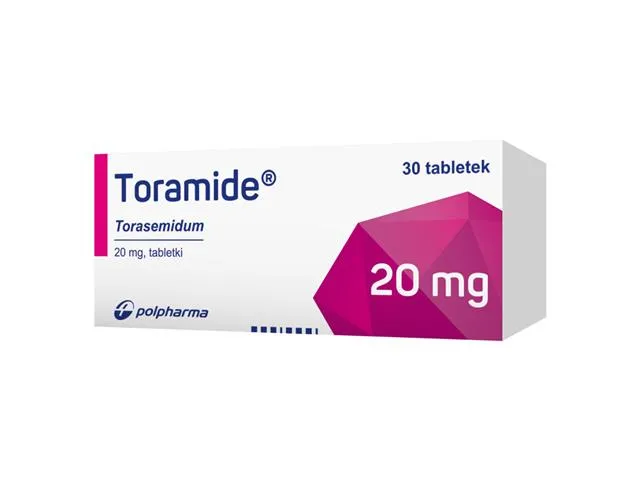
Table of Contents
Patient Information Leaflet
Toramide, 20 mg, tablets
Torasemidum
Please read the following information carefully before using this medicine, as it contains important information for the patient.
- Keep this leaflet for future reference.
- If you have any questions, please consult your doctor or pharmacist.
- This medicine has been prescribed for a specific individual. Do not share it with others. This medicine may harm other people, even if their symptoms are similar.
- If you experience any adverse reactions, including any not listed in this leaflet, inform your doctor or pharmacist. See section 4.
Table of Contents:
- What Toramide is and what it is used for
- Important information before taking Toramide
- How to take Toramide
- Possible side effects
- How to store Toramide
- Contents of the pack and other information
1. What Toramide is and what it is used for
Toramide is a loop diuretic.
Toramide is indicated for the treatment of:
- hepatic and renal edema
- edema associated with congestive heart failure and pulmonary edema.
2. Important information before using Toramide
When not to use Toramide:
- if the patient is allergic to torasemide, sulfonylurea derivatives, or any of the other components of this medicine (listed in section 6);
- if the patient has kidney failure with anuria (absence of urine production);
- if the patient has hepatic coma or pre-coma condition;
- if the patient has low blood pressure;
- if the patient has cardiac arrhythmias;
- if the patient is pregnant or breastfeeding;
- if the patient is concurrently using aminoglycoside antibiotics or cephalosporins, or if the patient has experienced kidney failure following the use of other nephrotoxic drugs.
Warnings and precautions
Before starting treatment with Toramide, discuss it with your doctor or pharmacist.
Special caution is required when using Toramide:
- during long-term treatment with torasemide – the doctor will recommend regular monitoring of electrolyte balance, glucose, uric acid, creatinine, and lipid levels in blood;
- in patients with a tendency to hyperuricemia (elevated uric acid levels in blood) or gout;
- in latent or manifest diabetes – the doctor will recommend monitoring carbohydrate metabolism.
Before starting treatment, the doctor should correct hypokalemia (low potassium levels in blood), hyponatremia (low sodium levels in blood), and micturition disorders (urination problems).
Children
There is insufficient data on the use of torasemide in children.
Toramide with other medicines
You must inform your doctor or pharmacist about all medicines currently used or recently used, as well as any medicines the patient intends to use, especially when using:
- cardiac glycosides (e.g. digoxin);
- muscle relaxants containing curare;
- theophylline (used in asthma treatment);
- antihypertensive drugs, e.g. angiotensin inhibitors (enalapril, ramipril);
- certain antibiotics (aminoglycosides and cephalosporins);
- cisplatin (used in cancer treatment);
- salicylates (e.g. acetylsalicylic acid);
- lithium salts (used in anxiety treatment);
- antidiabetic drugs;
- non-steroidal anti-inflammatory drugs (e.g. indomethacin, ibuprofen, naproxen);
- probenecid (used in gout treatment);
- cholestyramine (used in treating high cholesterol);
- corticosteroids (used as anti-inflammatory and antiallergic agents, and in treating hormonal disorders);
- laxatives;
- drugs that increase blood pressure, e.g. adrenaline and noradrenaline.
Pregnancy and breastfeeding
If the patient is pregnant or breastfeeding, suspects she may be pregnant, or is planning to have a child, she should consult her doctor or pharmacist before using this medicine.
Torasemide is contraindicated during pregnancy and breastfeeding.
Driving and operating machinery
As with other medicines that may cause changes in blood pressure, driving vehicles or operating machinery should be avoided if dizziness or other similar symptoms occur.
Toramide contains lactose
If the patient has previously been diagnosed with intolerance to certain sugars, the patient should consult a doctor before taking this medicine.
3. How to use Toramide
This medicine should always be used according to the instructions given by your doctor or pharmacist. If in doubt, consult your doctor or pharmacist.
Use in adults
The usual dose is 5 mg once daily. If necessary, the doctor may gradually increase the dose up to 20 mg once daily. In individual cases, doses up to 40 mg daily have been administered.
Use in elderly patients (aged over 65 years)
Elderly patients do not require any special dose adjustment.
Use in children
There is insufficient data on the use of torasemide in children.
Method of administration
Oral administration.
The tablets should be taken in the morning, without chewing, with a small amount of liquid.
Taking more than the recommended dose of Toramide
If you take more tablets than you should, contact your doctor immediately. The doctor will initiate appropriate treatment.
Symptoms of overdose may include increased urination, which can lead to drowsiness, confusion, hypotension, and circulatory collapse. Gastrointestinal disturbances may also occur. There is no specific antidote known. Symptoms of overdose require dose reduction or discontinuation of torasemide, together with fluid and electrolyte replacement.
If you miss a dose of Toramide
If you miss a dose, take it as soon as possible. Do not take a double dose to make up for the missed dose.
If you have any further questions about the use of this medicine, consult your doctor or pharmacist.
4. Possible adverse effects
Like all medicines, this medicine can cause adverse effects, although not everyone will experience them.
Toramide may cause the following adverse effects:
- decrease in the number of erythrocytes (red blood cells) and leukocytes (white blood cells) as well as platelets in peripheral blood;
- limb paresthesia (sensory disturbances);
- visual disturbances;
- tinnitus and hearing loss;
- thromboembolic complications and circulatory disorders associated with blood thickening;
- dryness of the mouth;
- gastrointestinal disturbances;
- pancreatitis;
- increased activity of certain liver enzymes, e.g. gamma-glutamyl transferase (GGT);
- allergic reactions such as itching, rash, and photosensitivity;
- urinary retention (urinary stasis) (in patients with narrowed urinary outflow);
- increased plasma urea and creatinine concentrations.
Diagnostic tests
As with other diuretic medicines, depending on the dose and duration of treatment, disturbances in water and electrolyte balance may occur, especially when salt intake is significantly restricted.
Hypokalemia may occur (particularly in cases of potassium-poor diet, or in the presence of vomiting, diarrhea, abuse of laxatives, or liver insufficiency).
If diuresis is pronounced, symptoms of electrolyte and fluid deficiency may occur, especially at the beginning of treatment and in elderly patients, such as:
- headaches and dizziness;
- low blood pressure;
- feeling of weakness, drowsiness;
- confusion, loss of appetite, and cramps.
If any of the described symptoms are observed, medical advice should be sought, as appropriate dose adjustment of the medicine may be necessary.
Increased plasma concentrations of uric acid, glucose, and lipids may occur.
Metabolic alkalosis may also be exacerbated.
Reporting of adverse effects
If any adverse symptoms occur, including any adverse effects not listed in this leaflet, inform your doctor or pharmacist. Adverse effects can be reported directly to the Department of Monitoring of Adverse Drug Reactions of the Office for Registration of Medicinal Products, Medical Devices and Biocidal Products
Al. Jerozolimskie 181C
02-222 Warsaw
Tel.: + 48 22 49 21 301
Fax: + 48 22 49 21 309
Website: https://smz.ezdrowie.gov.pl
Adverse effects can also be reported to the marketing authorization holder.
Reporting adverse effects helps to enhance the knowledge on the safety of the medicine.
5. How to store Toramide
Keep this medicine out of the sight and reach of children.
There are no special storage instructions for this medicine.
Do not use this medicine after the expiry date stated on the carton and blister pack following EXP.
The expiry date refers to the last day of the stated month.
The marking on the packaging following the abbreviation EXP indicates the expiry date, and following the abbreviation Lot/LOT indicates the batch number.
Medicines must not be disposed of via wastewater or household waste. Ask your pharmacist how to dispose of medicines you no longer use. This will help protect the environment.
6. Contents of the pack and other information
What Toramide contains
- The active substance is torasemide. Each tablet contains 20 mg of torasemide.
- The other ingredients are: monohydrate lactose, corn starch, colloidal anhydrous silica, magnesium stearate.
What Toramide looks like and contents of the pack
Toramide 20 mg is a white or almost white, round, biconvex tablet with a cross-shaped imprint on one side. The tablet can be divided into equal doses.
The pack contains 30 tablets.
Marketing Authorisation Holder and Manufacturer
Zakłady Farmaceutyczne POLPHARMA S.A.
ul. Pelplińska 19, 83-200 Starogard Gdański
tel. + 48 22 364 61 01