Topamax
Poland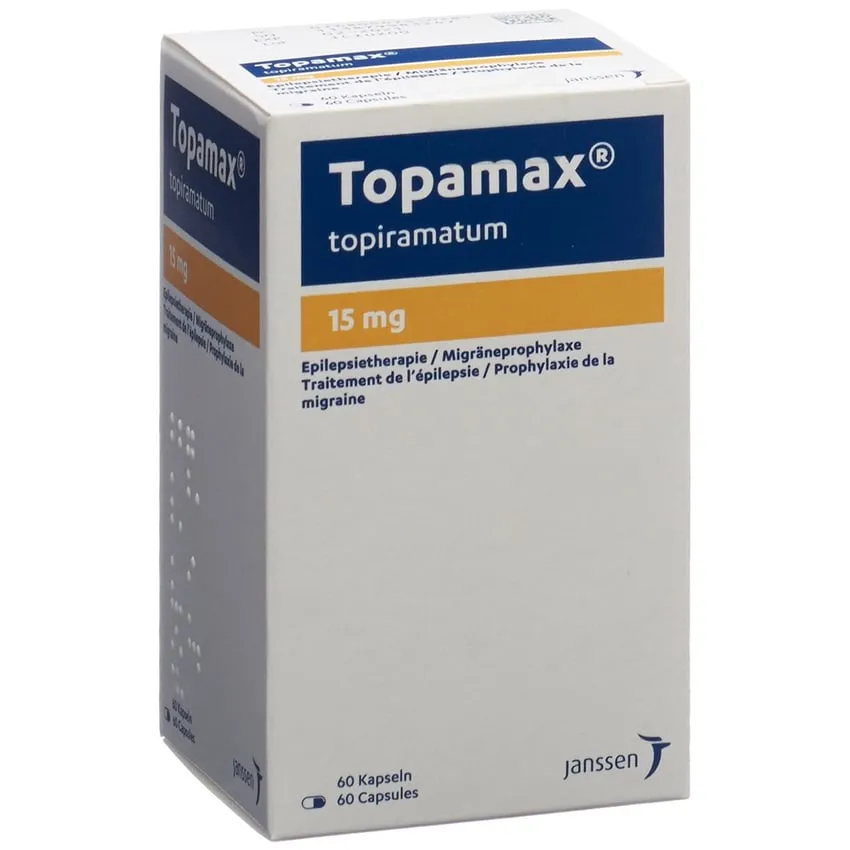
Table of Contents
Package leaflet: Information for the patient
Topamax, 15 mg, hard capsules
Topamax, 25 mg, hard capsules
Topiramatum
This medicinal product will be subject to additional monitoring. This will allow rapid
identification of new safety information. Patients can also help by reporting any adverse reactions that occur after using the medicine. For information on how to report adverse reactions – see section 4.
Please read carefully all the information in this leaflet before using the medicine, as it contains
important information for the patient.
- Keep this leaflet for future reference.
- If you have any questions, consult your doctor or pharmacist.
- This medicine has been prescribed for a specific individual. Do not give it to others. The medicine may harm another person, even if their symptoms are similar.
- If you experience any adverse effects, including any adverse effects not listed in this leaflet, inform your doctor or pharmacist. See section 4.
Table of contents
- What Topamax is and what it is used for
- Important information before taking Topamax
- How to take Topamax
- Possible side effects
- How to store Topamax
- Contents of the pack and other information
1. What Topamax is and what it is used for
Topamax belongs to a group of medicines called antiepileptic drugs. It is used:
- as monotherapy in the treatment of epileptic seizures in adults and children above 6 years of age,
- in combination with other medicines for the treatment of epileptic seizures in adults and children aged 2 years and older,
- for the prevention of migraine headaches in adults.
2. Important information before using Topamax
When not to use Topamax
- if the patient is allergic to topiramate or any of the other ingredients of this medicine (listed in section 6).
Prevention of migraine
- Topamax must not be used during pregnancy.
- If the patient is a woman of childbearing age, Topamax must not be used without the use of a highly effective method of contraception during treatment. See below under "Pregnancy and breastfeeding – important advice for women".
Treatment of epilepsy
- Topamax must not be used if the patient is pregnant, unless no other treatment provides adequate seizure control.
- If the patient is a woman of childbearing age, Topamax must not be used without the use of a highly effective method of contraception during treatment. The only exception is when Topamax is the only medicine providing adequate seizure control and the patient is planning a pregnancy. Talk to the doctor to ensure that the patient has received information about the risks of using Topamax during pregnancy and the risk of seizures occurring during pregnancy. See below under "Pregnancy and breastfeeding – important advice for women".
Please read the Patient Guide provided by your doctor or
scan the QR code (see section 6 "Contents of the pack and other information").
A patient card is included in the Topamax packaging, reminding of the risks associated
with pregnancy.
If the patient is unsure whether any of the symptoms described above apply, they should
consult a doctor or pharmacist before using Topamax.
Warnings and precautions
Before starting Topamax, discuss with the doctor if any of the following apply:
- kidney problems, especially kidney stones or dialysis,
- abnormalities in blood and body fluids (metabolic acidosis),
- liver disorders,
- vision problems, especially glaucoma,
- growth disorders,
- if the patient is on a high-fat diet (ketogenic diet),
- if the patient is a woman of childbearing age. Topamax taken during pregnancy may harm the unborn child. During treatment and for at least 4 weeks after taking the last dose of Topamax, a highly effective method of contraception must be used. Further information is provided in the section "Pregnancy and breastfeeding",
- if the patient is pregnant. Topamax taken during pregnancy may harm the unborn child. If in doubt whether any of the above warnings apply, consult a doctor before using Topamax.
If the patient has epilepsy, it is important not to stop taking the medicine without consulting
the doctor.
The patient should consult their doctor before taking any medicine containing topiramate prescribed
as a substitute for Topamax.
While taking Topamax, the patient may lose weight; therefore, body weight should be monitored
regularly during treatment. If the patient loses too much weight or if a child taking this medicine does not gain sufficient weight, consult the doctor.
In a small number of people taking antiepileptic medicines such as Topamax, thoughts of harming themselves or of suicide have occurred.
If such thoughts occur, contact the doctor immediately.
Topamax may cause severe skin reactions; if a rash and/or blisters on the skin occur, inform the doctor immediately (see also section 4. "Possible side effects").
Topamax may rarely cause increased blood ammonia levels (detected in blood tests), which may lead to changes in brain function, especially if the patient is also taking a medicine containing valproic acid or sodium valproate. Since this may be an acute condition, inform the doctor immediately if any of the following adverse effects occur (see also section 4. "Possible side effects"):
- difficulty thinking, remembering or solving problems,
- reduced alertness or awareness,
- feeling very sleepy with lack of energy.
The risk of these symptoms may increase when high doses of Topamax are used.
Topamax and other medicines
Tell the doctor or pharmacist about all medicines currently or recently taken, as well as any medicines the patient plans to take. Topamax may interact with other medicines. Therefore, sometimes the dose of other medicines taken by the patient may need to be adjusted, or the dose of Topamax may need to be changed accordingly.
In particular, inform the doctor or pharmacist if the patient is taking:
- other medicines that have harmful effects or reduce thinking, concentration, or muscle coordination (e.g., central nervous system depressants such as muscle relaxants and sedatives),
- hormonal contraceptives. Topamax may reduce the effectiveness of hormonal contraceptives. An additional barrier method of contraception, such as a condom or diaphragm/cervical cap, should be used. Discuss with the doctor the best method of contraception to use during treatment with Topamax.
Tell the doctor if menstrual bleeding changes while using hormonal contraceptives and Topamax. Irregular bleeding may occur.
In such a case, continue using hormonal contraceptives and inform the doctor.
Keep a list of all medicines being taken. Show this list to the doctor and pharmacist when starting a new therapy.
The use of other medicines such as antiepileptic drugs, digoxin, risperidone, lithium, hydrochlorothiazide, metformin, pioglitazone, glibenclamide, amitriptyline, haloperidol, propranolol, diltiazem, venlafaxine, flunarizine, St John's wort (Hypericum perforatum) (used to treat depression), warfarin (an anticoagulant), should be discussed with the doctor or pharmacist.
If the patient is unsure whether the above information applies, consult a doctor or pharmacist before using Topamax.
Topamax with food, drink and alcohol
Topamax may be taken with or without food. Drink plenty of fluids during the day to
help prevent kidney stones while taking Topamax. Avoid drinking alcohol while taking
Topamax.
Pregnancy and breastfeeding
Important advice for women of childbearing potential
Topamax may harm the unborn child. Women of childbearing age should
discuss other possible treatment options with their doctor. Visit the doctor at least once a year to
review treatment and discuss risks.
Prevention of migraine
- For migraine, Topamax must not be used during pregnancy.
- For migraine, Topamax must not be used if the patient is of childbearing age unless she uses a highly effective method of contraception.
- Before starting Topamax in a woman of childbearing age, a pregnancy test must be performed.
Treatment of epilepsy
- For epilepsy, Topamax must not be used if the patient is pregnant, unless no other treatment provides adequate seizure control.
- For epilepsy, Topamax must not be used if the patient is of childbearing age unless she uses a highly effective method of contraception. The only exception is when Topamax is the only medicine providing adequate seizure control and the patient is planning a pregnancy. Talk to the doctor to ensure that the patient has received information about the risks of using Topamax during pregnancy and the risk of seizures occurring during pregnancy, which may endanger the patient or the unborn child.
- Before starting Topamax in a woman of childbearing age, a pregnancy test must be performed.
Risk of using topiramate during pregnancy (regardless of the condition for which topiramate is used):
There is a risk of harmful effects on the unborn child if Topamax is used
during pregnancy.
- Using Topamax during pregnancy increases the risk of congenital malformations in the child. In women taking topiramate, congenital malformations occur in approximately 4 to 9 out of 100 children. For comparison, this rate is 1 to 3 out of 100 children born to women who do not have epilepsy and do not take antiepileptic medicines. In particular, cleft lip (cleft upper lip) and cleft palate (cleft palate) have been observed. In male newborns, a developmental abnormality of the penis (hypospadias) may also occur. These malformations may develop early in pregnancy, even before the patient knows she is pregnant.
- When Topamax is used during pregnancy, the risk of autism spectrum disorders, intellectual disability, or attention deficit hyperactivity disorder (ADHD) in the child may be 2 to 3 times higher than in children born to women with epilepsy who do not take antiepileptic medicines.
- When Topamax is used during pregnancy, the child may be smaller and have lower than expected birth weight. In one study, 18% of children born to mothers taking topiramate during pregnancy were smaller and weighed less than expected, compared to 5% of newborns of women without epilepsy who did not take antiepileptic medicines.
- If in doubt, ask the doctor about the risks during pregnancy.
- Other medicines used to treat this condition may be available that carry a lower risk of congenital malformations.
Necessity of using contraception in women of childbearing age:
- Women of childbearing age should discuss with their doctor the possibility of using alternative treatments instead of Topamax. If the decision is made to start treatment with Topamax, a highly effective method of contraception must be used during treatment and for at least 4 weeks after taking the last dose of Topamax.
- Use one highly effective contraceptive method (such as an intrauterine device) or two complementary methods of contraception, such as a contraceptive pill combined with a mechanical method (such as a condom or diaphragm/cervical cap). Talk to the doctor to determine which method of contraception is most suitable for the patient.
- If the patient uses hormonal contraceptives, topiramate may reduce their effectiveness. Therefore, an additional barrier method of contraception (such as a condom or diaphragm/cervical cap) should be used.
- If irregular menstrual bleeding occurs, inform the doctor.
Use of Topamax in girls:
Parents or guardians of a girl being treated with Topamax must contact the doctor immediately
when the girl has her first menstrual period. The doctor will inform them about the risk to
the unborn child from exposure to topiramate during pregnancy and the need to use a highly effective method of contraception.
If the patient wishes to become pregnant while taking Topamax:
- Make an appointment with the doctor.
- Do not stop using contraception until this issue has been discussed with the doctor.
- If the patient is taking Topamax for epilepsy, do not stop taking it without consulting the doctor, as the condition may worsen.
- The doctor will reassess the treatment and alternative treatment options. The doctor will inform the patient about the risks of using Topamax during pregnancy. The doctor may also refer the patient to another specialist.
If the patient becomes pregnant or suspects she may be pregnant while taking Topamax:
- Make an urgent appointment with the doctor.
- If taking Topamax for migraine prevention, stop taking the medicine immediately and contact the doctor, who will assess whether alternative treatment is needed.
- If the patient is taking Topamax for epilepsy, do not stop taking it without consulting the doctor, as this may worsen the condition. Worsening of epilepsy may endanger the patient or the unborn child.
- The doctor will reassess the treatment and alternative treatment options. The doctor will inform the patient about the risks of using Topamax during pregnancy. The doctor may also refer the patient to another specialist.
- If Topamax is used during pregnancy, the patient will remain under close monitoring to assess the development of the unborn child.
Please read the Patient Guide provided by your doctor. The
Patient Guide can also be obtained by scanning the QR code; see section 6. "Contents of the pack
and other information". A patient card is included in the Topamax packaging, reminding
of the risks associated with using topiramate during pregnancy.
Breastfeeding
The active substance of Topamax (topiramate) passes into human milk. Adverse effects such as diarrhoea, drowsiness, irritability and poor weight gain have been observed in infants breastfed by mothers taking this medicine. Therefore, the doctor will discuss with the patient whether to stop breastfeeding or to stop using Topamax. The doctor will consider the importance of the medicine for the mother and the risk to the child.
Mothers taking Topamax while breastfeeding must inform the doctor immediately if they notice any change in their child's behaviour.
Driving and operating machinery
Dizziness, tiredness and vision disturbances may occur while taking Topamax.
Do not drive, operate any machinery or use tools before consulting a doctor.
Topamax contains sucrose
The hard capsules contain sucrose. If the patient has been informed by a doctor that they have an intolerance to certain sugars, they should consult the doctor before using this medicine.
3. How to take Topamax
This medicine should always be taken exactly as prescribed by your doctor. If in doubt, consult your doctor or pharmacist.
- Your doctor will usually start treatment with a low dose of Topamax and gradually increase it until the optimal dose for the individual patient is established.
- Topamax hard capsules may be swallowed whole. Alternatively, the capsule may be carefully opened and the entire contents sprinkled onto a small amount of soft food (on a teaspoon), such as applesauce, sweet custard, ice cream, porridge, pudding, or yoghurt. After each dose, drink some fluid to ensure that all the medicine and food have been swallowed.
- Hold the hard capsule vertically to read the word “TOP” clearly.
- Then unscrew the empty part of the capsule. Mixing the medicine with a small amount of soft food may be a better way to administer the medicine.
- Sprinkle the capsule contents onto a teaspoonful of soft food, making sure that the entire dose is used.
- Be sure to swallow the entire contents of the spoon containing the medicine/food mixture. Avoid chewing. Immediately after taking the medicine, drink a glass of fluid to ensure that all the medicine and food have been swallowed.
- Never store the mixture of medicine and food for later use.
- Topamax may be taken before, during, or after a meal. While taking Topamax, drink plenty of fluids to help prevent kidney stone formation.
Girls and women of childbearing age:
Treatment with Topamax should be initiated and supervised by a doctor experienced in the treatment of epilepsy or migraine. A medical check-up should be carried out at least once a year to monitor treatment.
Taking more Topamax than prescribed
- Contact your doctor immediately. Take the medicine pack with you.
- The patient may experience the following symptoms: drowsiness, feeling of fatigue or reduced alertness, lack of coordination, speech or concentration disturbances, double or blurred vision, dizziness due to low blood pressure, feelings of depression or agitation, abdominal pain, or seizures.
Overdose may also occur when Topamax is taken together with other medicines.
If you forget to take Topamax
- If you miss a dose, take it as soon as possible. However, if it is almost time for the next dose, skip the missed dose and continue with your regular dosing schedule.
- Do not take a double dose (two doses at the same time) to make up for a forgotten dose.
- If you miss two or more doses, contact your doctor.
Stopping Topamax Do not stop taking this medicine unless your doctor tells you to. The symptoms of your underlying condition may return after stopping treatment. If your doctor decides to discontinue treatment, the dose of Topamax may be gradually reduced over a period of several days.
If you have any further questions about the use of this medicine, consult your doctor or pharmacist.
4. Possible adverse effects
Like any medicine, this medicine can cause adverse effects, although they do not occur in everyone.
Tell your doctor or pharmacist if any of the following adverse effects occur:
Very common (may affect more than 1 in 10 people)
- depression (new onset or worsening of existing depression). Common (may affect less than 1 in 10 people)
- seizures,
- anxiety, irritability, mood changes, confusion, disorientation,
- difficulty concentrating, slowed thinking, memory loss, memory disturbances (new onset, sudden change or increased severity),
- kidney stones, frequent or painful urination. Uncommon (may affect less than 1 in 100 people)
- metabolic acidosis (may cause breathing problems including shortness of breath, loss of appetite, nausea, vomiting, excessive tiredness, and rapid irregular heartbeat),
- reduced or absent sweating (particularly in young children exposed to high environmental temperatures),
- thoughts or attempts of severe self-harm,
- loss of part of the visual field. Rare (may affect less than 1 in 1,000 people)
- glaucoma, characterized by fluid buildup in the eye chamber, causing increased intraocular pressure, eye pain, and blurred vision,
- difficulties with thinking, remembering, or problem-solving, reduced alertness or consciousness, feeling extremely sleepy with lack of energy – these may be symptoms of high blood ammonia levels (hyperammonemia), which may lead to brain dysfunction (hyperammonemia-related encephalopathy),
- severe skin reactions such as Stevens-Johnson syndrome and toxic epidermal necrolysis – may present as blistering rash or without blisters. Skin irritation, ulcers, or swelling in the mouth, throat, nose, eyes, and genital areas. Skin rashes may progress to severe, widespread skin damage (peeling of the epidermis and superficial mucous membranes), which may be life-threatening. Frequency unknown (cannot be estimated from available data):
- inflammation of the eye (uveitis) with the following symptoms: eye redness, pain, light sensitivity, tearing, floaters, or blurred vision.
Other adverse effects that should be reported to your doctor or pharmacist:
Very common (may affect more than 1 in 10 people)
- inflammation of the mucous membranes of the nose and throat,
- tingling, pain, and (or) numbness in various parts of the body,
- drowsiness, fatigue,
- dizziness,
- nausea, diarrhoea,
- weight loss. Common (may affect less than 1 in 10 people)
- anaemia (reduced number of red blood cells),
- allergic reactions (such as: skin rash, redness, itching, facial swelling, urticaria),
- loss of appetite, reduced appetite,
- aggression, restlessness, anger, abnormal behaviour,
- difficulty falling asleep and waking up,
- difficulty speaking or speech disorders, slurred speech,
- motor incoordination or lack of coordination, feeling off-balance while walking,
- reduced ability to perform routine tasks,
- reduced, lost, or absent sense of taste,
- involuntary tremors or twitching, rapid uncontrolled eye movements,
- visual disturbances such as double vision, blurred vision, reduced visual field, focusing difficulties,
- sensation of spinning (dizziness), ringing in the ears, ear pain,
- shortness of breath,
- cough,
- nosebleeds,
- fever, malaise, loss of strength,
- vomiting, constipation, abdominal pain or discomfort, indigestion, stomach or intestinal infection,
- dry mouth,
- hair loss,
- itching,
- joint pain or swelling, muscle cramps or twitching, muscle pain or weakness, chest pain,
- weight gain. Uncommon (may affect less than 1 in 100 people)
- reduced platelet count (blood cells responsible for clotting), reduced white blood cell count (cells that fight infections), decreased blood potassium levels,
- increased liver enzyme activity, increased number of eosinophils in blood (a type of white blood cell),
- swelling of lymph nodes in the neck, armpits, and groin,
- increased appetite,
- elevated mood,
- hallucinations (seeing, hearing, or feeling things that are not there), severe mental disturbances (psychosis),
- inability to feel or express emotions, unusual suspiciousness, panic attacks,
- difficulty reading, speech disorders, difficulty with handwriting,
- restlessness, increased mental and physical activity,
- slowed thinking, reduced level of alertness,
- weakened or slow body movements, involuntary abnormal or repetitive muscle contractions,
- falls,
- abnormal sensation or impaired sense of touch,
- abnormal, distorted sense of smell or loss of smell,
- unusual sensation or feeling predicting the onset of migraine or certain types of seizures,
- dry eyes, light sensitivity, involuntary eye movements, tearing,
- hearing loss or reduced hearing, hearing loss in one ear,
- slow or irregular heartbeat, palpitations,
- low blood pressure, low blood pressure upon standing (which in some patients taking Topamax may lead to feeling faint, dizzy, or losing consciousness when standing up or sitting down suddenly),
- hot flushes, feeling of warmth,
- pancreatitis,
- excessive gas, heartburn, feeling of fullness in the stomach or bloating,
- bleeding from gums, excessive saliva production, drooling, bad breath,
- excessive fluid intake and increased thirst,
- skin discoloration,
- muscle stiffness, flank pain,
- blood in urine, urinary incontinence, sudden urge to urinate, flank or kidney pain,
- difficulty achieving or maintaining erection, sexual dysfunction,
- flu-like symptoms,
- cold sensation in fingers and toes,
- feeling of alcohol intoxication,
- learning difficulties. Rare (may affect less than 1 in 1,000 people)
- abnormally elevated mood,
- loss of consciousness,
- vision loss in one eye, transient blindness, night blindness,
- lazy eye,
- swelling of the eye and tissues around the eye,
- numbness, tingling, and skin color changes (white, blue, then red) in fingers and toes upon cold exposure,
- hepatitis, liver failure,
- unpleasant skin odor,
- discomfort in upper and lower limbs,
- kidney disorders. Unknown (frequency cannot be estimated from available data)
- macular degeneration – disease of the macula of the retina, the area responsible for sharpest vision. If you notice any changes in vision or blurred vision, contact your doctor.
Children
Adverse effects in children are generally similar to those observed in adults, but the following adverse effects may occur more frequently in children than in adults:
- concentration problems,
- metabolic acidosis,
- thoughts of severe self-harm,
- fatigue,
- reduced or increased appetite,
- aggression, abnormal behaviour,
- difficulty falling asleep and waking up,
- feeling off-balance while walking,
- malaise,
- low blood potassium levels,
- inability to feel or express emotions,
- tearing,
- slow or irregular heartbeat.
Other adverse effects that may occur in children:
Common (may affect less than 1 in 10 people)
- sensation of spinning (dizziness),
- vomiting,
- fever. Uncommon (may affect less than 1 in 100 people)
- increased number of eosinophils in blood (a type of white blood cell),
- hyperactivity,
- feeling of warmth,
- learning difficulties.
Reporting of adverse effects
If any adverse effects occur, including any not listed in this leaflet, tell your doctor. Adverse effects can be reported directly to the Department of Monitoring Adverse Drug Reactions at the Office for Registration of Medicinal Products, Medical Devices and Biocidal Products:
Aleje Jerozolimskie 181C
02-222 Warsaw
Phone: +48 22 49 21 301
Fax: +48 22 49 21 309
Website: https://smz.ezdrowie.gov.pl
Adverse effects can also be reported to the marketing authorization holder.
Reporting adverse effects helps to provide more information on the safety of the medicine.
5. How to store Topamax
Keep the medicine out of the sight and reach of children.
Do not use this medicine after the expiry date stated on the bottle/cardboard
pack. The expiry date (EXP) refers to the last day of the stated month.
Do not store above 25°C. Keep the bottle tightly closed to
protect the capsules from moisture.
Medicines must not be disposed of via wastewater or household waste. Ask your
pharmacist how to dispose of medicines no longer required. Such measures will help
protect the environment.
6. Contents of the package and other information
What Topamax contains
- The active substance is topiramate.
- Each hard capsule of Topamax contains 15 mg or 25 mg of topiramate.
- Other components are:
- sugar spheres (corn starch, sucrose), povidone, cellulose acetate
- capsule shell: gelatin, titanium dioxide (E 171)
- ink: black ink (iron oxide black (E 172), pharmaceutical glaze, propylene glycol).
What Topamax looks like and contents of the pack
15 mg capsules: small, white or almost white granules in hard gelatin capsules with a white,
opaque lower part marked “15 mg” and a transparent cap marked “TOP”.
25 mg capsules: small, white or almost white granules in hard gelatin capsules with a white,
opaque lower part marked “25 mg” and a transparent cap marked “TOP”.
One opaque plastic (HDPE) bottle with a tamper-evident closure containing 60 capsules with granules.
Marketing Authorization Holder
Janssen-Cilag International NV
Turnhoutseweg 30
B-2340 Beerse
Belgium
Manufacturer
Janssen-Cilag S.p.A.
Via C. Janssen
Borgo S. Michele
04100 Latina
Italy
For further information, please contact the local representative of the Marketing Authorization Holder:
Janssen-Cilag Polska sp. z o.o.
ul. Iłżecka 24
02-135 Warsaw
tel. +48 22 237 60 00
This medicinal product is authorized in the member countries of the European Economic Area under the following names:
| Austria, Belgium, Cyprus, Czech Republic, Germany, Italy, Luxembourg, Malta, Poland, Portugal, Slovenia: | Topamax |
| Denmark, Finland, Iceland, Norway, Sweden: | Topimax |
| France: | Epitomax |
| Greece: | Topamac |
| Ireland, Netherlands: | Topamax Sprinkle |
| Spain: | Topamax Dispersable |
| Other sources of information | ||
| The most up-to-date approved information (Patient Leaflet) for this medicinal product is available by | ||
| scanning the following QR code with a smartphone. | ||
The same information is also available on the following website (URL):
https://rejestry.ezdrowie.gov.pl/rpl/search/public
After navigating to the page, enter the name of the medicine and then open "Materials for download".