Tegretol cr 400
Poland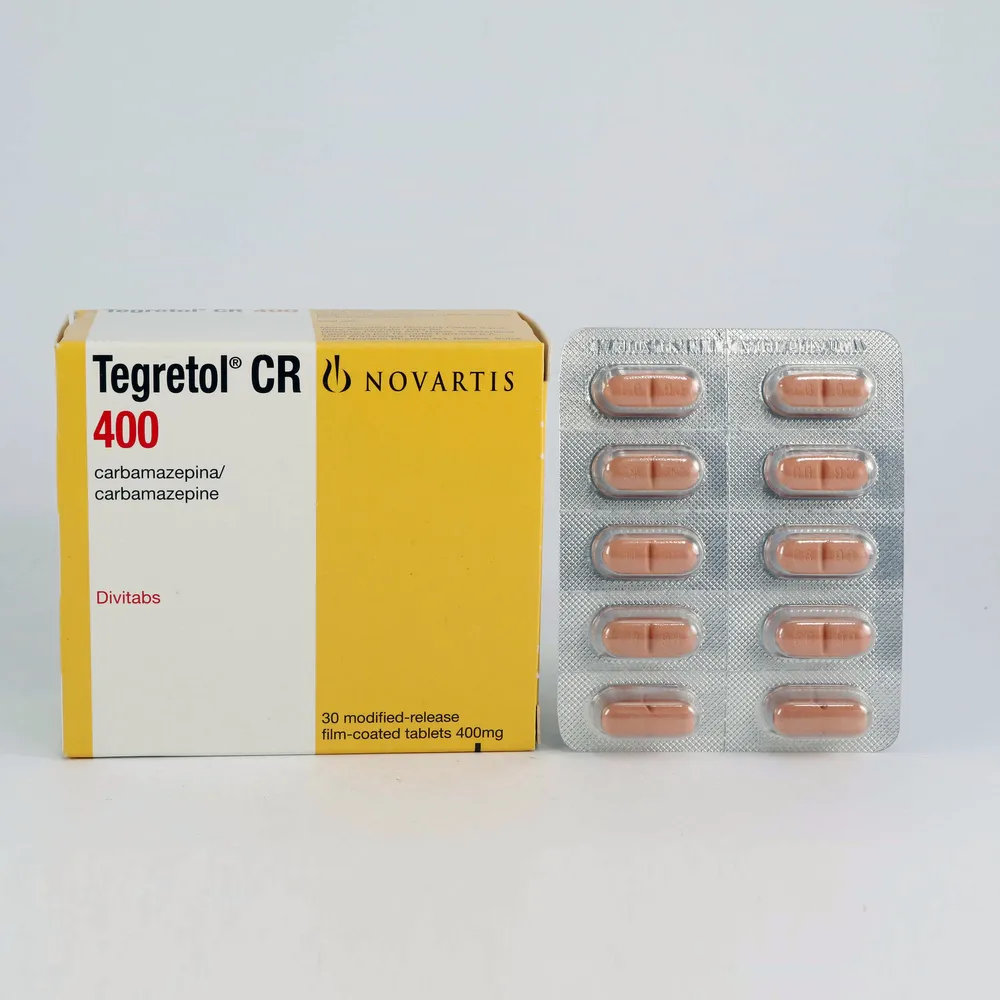
Table of Contents
Package leaflet: Information for the patient
Tegretol CR 200, 200 mg, modified-release tablets
Tegretol CR 400, 400 mg, modified-release tablets
Carbamazepinum
Please read the entire leaflet carefully before using the medicine, as it contains
important information for the patient.
- Keep this leaflet, so that you can read it again if necessary.
- If you have any further questions, please consult your doctor or pharmacist.
- This medicine has been prescribed for a specific individual. Do not pass it on to others. The medicine may harm another person, even if their symptoms are the same.
- If any side effects occur, including side effects not listed in this leaflet, inform your doctor or pharmacist. See section 4.
Table of contents of the leaflet
- What is Tegretol CR and what is it used for
- Important information before taking Tegretol CR
- How to take Tegretol CR
- Possible side effects
- How to store Tegretol CR
- Contents of the pack and other information
1. What is Tegretol CR and what is it used for
Tegretol CR belongs to a group of antiepileptic medicines (medicines used in the treatment of epileptic seizures), but its mechanism of action allows it also to be used in other conditions.
Epilepsy is characterized by seizures.
Epileptic seizures are caused by transient disturbances in the brain's bioelectrical activity, resulting in excessive and sudden discharges from a group of nerve cells. Tegretol CR regulates nerve conduction in nerve cells.
Indications:
- Epilepsy:
- Partial complex or simple partial seizures.
- Generalized tonic-clonic seizures. Mixed seizure types. Tegretol CR may be used either as monotherapy or in combination with other antiepileptic drugs. Tegretol CR is generally ineffective in absence seizures (petit mal) and myoclonic seizures.
- Manic episodes and prevention of relapses in bipolar affective disorder (manic-depressive psychosis).
- Alcohol withdrawal syndrome.
- Idiopathic trigeminal neuralgia and trigeminal neuralgia associated with multiple sclerosis. Idiopathic glossopharyngeal neuralgia.
2. Important information before using Tegretol CR
Tegretol CR should only be used after a full medical examination.
The risk of severe skin reactions in patients of Chinese or Thai origin associated with carbamazepine can be predicted by testing blood samples from these patients. Your doctor will inform you if a blood test is necessary before starting treatment with Tegretol CR.
When not to use Tegretol CR:
- if the patient is allergic to carbamazepine or to medicines with a similar chemical structure (e.g. tricyclic antidepressants), or to any of the other ingredients of this medicine (listed in section 6);
- if the patient has severe heart disease;
- if the patient has previously experienced severe blood disorders;
- if the patient has or has had hepatic porphyria, i.e. disorders in porphyrin production, a pigment important for liver function and blood formation (acute intermittent porphyria, mixed porphyria, late cutaneous porphyria);
- if the patient is currently taking antidepressants known as monoamine oxidase inhibitors (MAO inhibitors).
If any of the above points apply to the patient, you must inform your doctor.
Warnings and precautions:
Before starting treatment with Tegretol CR, discuss this with your doctor or pharmacist.
Tegretol CR must be used only under strict medical supervision:
- If the patient has blood disorders (including those caused by other medicines).
- If the patient has ever experienced hypersensitivity to oxcarbazepine or other medicines (rash or other allergic symptoms). Patients allergic to carbamazepine may (in approximately 1 in 4 (25%)) also experience hypersensitivity to oxcarbazepine.
- If the patient has or has previously had heart, thyroid, liver, or kidney diseases.
- If the patient has increased intraocular pressure (glaucoma) or if the patient has difficulty or experiences pain when urinating.
- If the patient has been diagnosed with psychiatric disorders called psychoses , during which disorientation or agitation may occur.
- If the patient is of childbearing age, she should use effective contraception during therapy and for 2 weeks after taking the last dose.
- If the patient is using hormonal contraceptives: Tegretol CR may reduce the effectiveness of these contraceptives. Therefore, the patient should use other or additional non-hormonal contraceptive methods during treatment with Tegretol CR. Inform your doctor if breakthrough bleeding or spotting occurs. In case of any doubts, contact your doctor.
- Inform your doctor if the patient is pregnant or planning pregnancy. Your doctor will discuss the risks of using Tegretol CR during pregnancy, as it may cause damage or developmental abnormalities in the unborn child (see "Pregnancy, breastfeeding and fertility").
- Treatment with Tegretol CR during pregnancy may harm the unborn child. If the patient is of childbearing age, she should use an effective method of contraception during treatment with Tegretol CR and for two weeks after taking the last dose (see "Pregnancy, breastfeeding and fertility").
Seek immediate advice from your doctor or pharmacist if the patient experiences any of the following symptoms during treatment with Tegretol:
- If there are hypersensitivity reactions such as swelling of the lips, eyelids, face, throat, mouth, or sudden breathing problems, fever with swollen lymph nodes,
rash or blisters on the skin, you must immediately inform your doctor or go to the
nearest hospital (see “4. Possible side effects”).
- If the patient develops severe skin reactions such as rash, redness of the skin, formation of blisters on the lips or eyes, and peeling of the outer layer of skin accompanied by fever, contact your doctor immediately or go to the nearest hospital ( see “4. Possible side effects” ). Such reactions may be more common in patients originating from certain Asian countries (e.g. Taiwan, Malaysia, Philippines) and in patients of Chinese origin.
- If the number of epileptic seizures increases in the patient.
- If the patient notices symptoms of liver inflammation such as yellowing of the skin and whites of the eyes, indicating jaundice.
- If the patient has ever thought about harming or killing themselves. A small number of people taking antiepileptic medicines have had such thoughts or behaviors.
- If the patient has kidney problems related to low sodium levels in the blood, or if the patient has kidney problems and is also taking other medicines that lower sodium levels in the blood (diuretics such as hydrochlorothiazide, furosemide).
- If the patient experiences dizziness, drowsiness, low blood pressure, confusion related to the use of Tegretol CR, as this may lead to falls.
Do not stop treatment with Tegretol CR without first consulting your doctor. Abruptly stopping the medicine may cause a sudden worsening of epileptic seizures.
Children and adolescents (under 18 years) and elderly patients (65 years or older)
Tegretol CR may be used in children and elderly patients, provided the doctor's instructions are followed. Your doctor should inform you of specific recommendations, such as the need to carefully follow dosing instructions and the necessity of close patient monitoring (see also “3. How to take Tegretol CR” and “4. Possible side effects”).
Tegretol CR and other medicines
Tell your doctor or pharmacist about all medicines the patient is currently taking or has recently taken, as well as any medicines the patient plans to take. This is particularly important with Tegretol CR, as many different medicines may affect its action.
Sometimes a dose adjustment or discontinuation of certain medicines may be necessary.
Hormonal contraceptives, e.g. pills, patches, injections or implants
Tegretol CR may affect the action of hormonal contraceptives and reduce their effectiveness in preventing pregnancy. Discuss with your doctor the most appropriate type of contraception during treatment with Tegretol CR. Women who use hormonal contraceptives simultaneously with Tegretol CR may experience irregular menstrual periods.
Medicines that may interact with Tegretol CR (and vice versa):
- Medicines used for depression and anxiety: desipramine, fluoxetine, fluvoxamine, nefazodone, paroxetine, trazodone, vilazodone, bupropion, citalopram, mianserin, sertraline, tricyclic antidepressants (e.g. imipramine, amitriptyline, nortriptyline, clomipramine), alprazolam, midazolam
- Corticosteroids used in inflammatory conditions, including asthma, inflammatory bowel disease, muscle and joint pain: prednisolone, dexamethasone
- Anticoagulants: e.g. warfarin, phenprocoumon, dicoumarol, acenocoumarol, rivaroxaban, dabigatran, apixaban, edoxaban
- Antibiotics used to treat skin and systemic infections: e.g. ciprofloxacin, erythromycin, troleandomycin, josamycin, clarithromycin, doxycycline, rifabutin
- Antifungal medicines: azoles, e.g. itraconazole, ketoconazole, fluconazole, voriconazole
- Painkillers and anti-inflammatory medicines: paracetamol, dextropropoxyphene, tramadol, methadone, buprenorphine, ibuprofen, phenazone
- Other antiepileptic medicines: clobazam, clonazepam, ethosuximide, felbamate, lamotrigine, eslicarbazepine, oxcarbazepine, primidone, tiagabine, topiramate, valproic acid, zonisamide, methsuximide, phenobarbital, phensuximide, phenytoin and fosphenytoin, primidone, levetiracetam, brivaracetam
- Antihistamines used to treat allergies, including hay fever, itching: terfenadine
- Medicines used for peptic ulcer disease: cimetidine, omeprazole
- Medicines used in dermatology: isotretinoin
- Antiemetics: aprepitant
- Medicines used in glaucoma: acetazolamide
- Medicines used in endometriosis: danazol
- Bronchodilators or anti-asthma medicines: theophylline
- Immunosuppressants used after transplantation: cyclosporine, everolimus, tacrolimus, sirolimus
- Antipsychotics used to treat schizophrenia: clozapine, haloperidol and bromperidol, olanzapine, quetiapine, risperidone, ziprasidone, aripiprazole, paliperidone
- Anticancer medicines: imatinib, cyclophosphamide, lapatinib, temsirolimus, cisplatin, doxorubicin
- Antiviral medicines: HIV protease inhibitors, e.g. indinavir, ritonavir, saquinavir
- Medicines used for thyroid disorders: levothyroxine
- Medicines used for erectile dysfunction: tadalafil
- Anthelmintics: praziquantel, albendazole
- Diuretics: hydrochlorothiazide, furosemide
- Antituberculosis medicines: isoniazid, rifampicin
- Muscle relaxants: oxybutynin, dantrolene, pancuronium
- Medicines containing estrogens and (or) progesterone: hormone replacement therapy (HRT)
- Cardiovascular medicines: e.g. felodipine, digoxin, simvastatin, atorvastatin, lovastatin, cerivastatin, ivabradine, diltiazem, verapamil
- Platelet aggregation inhibitors: ticlopidine
- Herbal preparations containing St. John's wort ( Hypericum perforatum )
- Other interactions: grapefruit juice, nicotinamide (only in large amounts).
Particular caution is required when Tegretol CR is used concomitantly with levetiracetam, isoniazid, lithium salts, or metoclopramide.
Taking Tegretol CR with food, drink and alcohol
Do not consume alcohol during treatment with Tegretol CR.
Do not drink grapefruit juice or eat grapefruit, as this may enhance the effect of Tegretol CR. Other juices, such as orange or apple juice, do not have this effect.
Pregnancy, breastfeeding and fertility
If the patient is pregnant or breastfeeding, suspects she may be pregnant, or is planning to have a child, she should consult her doctor or pharmacist before using this medicine.
Pregnancy
Tegretol CR may cause serious congenital malformations. If the patient takes Tegretol CR during pregnancy, the risk of a congenital malformation in the child is up to three times higher than in women who do not take antiepileptic medicines. Serious congenital malformations have been reported, including neural tube defects (spina bifida), facial malformations such as cleft lip and palate, skull malformations, small head size (microcephaly), heart defects, congenital defects of the penis associated with an opening of the urethra (hypospadias), and finger defects. If the patient takes Tegretol CR during pregnancy, her baby should be closely monitored.
In infants born to mothers who used Tegretol CR during pregnancy, neurological development problems (brain development) have been reported. Some studies have shown that carbamazepine has a negative effect on the nervous system development of children exposed to carbamazepine in utero, while other studies have not found such an effect. An effect on neurological development cannot be ruled out.
If the patient is of childbearing age and does not plan pregnancy, she should use effective contraception during treatment with Tegretol CR. Tegretol CR may affect the action of hormonal contraceptives, such as birth control pills, and reduce their effectiveness in preventing pregnancy. The patient should discuss with her doctor the most appropriate type of contraception during treatment with Tegretol CR. If treatment with Tegretol CR is discontinued, effective contraception should be continued for an additional two weeks after stopping the medicine.
If the patient is of childbearing age and plans to become pregnant, she should consult her doctor before stopping contraception and before becoming pregnant, to change the treatment method to another one appropriate for protecting the unborn child from exposure to carbamazepine.
If the patient is or suspects she may be pregnant, she should immediately inform her doctor. Do not stop taking the medicine until this has been discussed with the doctor. Stopping the medicine without consulting the doctor may cause epileptic seizures, which may be dangerous for the patient and her unborn child. The doctor may decide to change the treatment.
If the patient takes Tegretol CR during pregnancy, there is also a risk of bleeding problems immediately after delivery. The doctor may prescribe a medicine for both the patient and the baby to prevent this.
Controlling epileptic seizures during pregnancy is very important. However, if the patient takes antiepileptic medicines (medicines against seizures) during pregnancy, there is a risk to the child. The risk of neurodevelopmental disorders in children of women with epilepsy treated with carbamazepine alone or in combination with other antiepileptic medicines during pregnancy cannot be excluded.
The doctor will discuss with the patient the risks of using Tegretol CR during pregnancy.
Do not stop treatment with Tegretol CR without first consulting your doctor.
Breastfeeding
Inform your doctor if you are breastfeeding. The active substance of Tegretol CR passes into breast milk. If your doctor approves, you may continue breastfeeding. However, in this particular case, the baby should be carefully monitored to avoid adverse effects. If adverse effects occur, for example, if the baby becomes very drowsy, breastfeeding should be stopped and you should contact your doctor.
Fertility
There are very rare reports of fertility disorders in men and (or) spermatogenesis disorders.
Women of childbearing age
Effective contraceptive methods should be used during therapy and for 2 weeks after taking the last dose of Tegretol CR.
In women who use hormonal contraceptives (birth control) simultaneously with Tegretol, irregular menstrual periods may occur. The effectiveness of hormonal contraceptives may be reduced during treatment with Tegretol CR; therefore, the use of other or additional non-hormonal contraceptive methods is recommended.
Driving and operating machinery
Tegretol CR may cause drowsiness, dizziness, visual disturbances, double vision, or lack of motor coordination, especially at the beginning of treatment or after dose increases. If such symptoms occur, do not drive a car or operate machinery or perform other activities requiring increased attention.
Tegretol CR contains sodium
The medicine contains less than 1 mmol (23 mg) of sodium per tablet, meaning the medicine is considered "sodium-free".
3. How to use Tegretol CR
This medicine should always be taken exactly as directed by your doctor. If in doubt, consult your doctor or pharmacist. Do not exceed the prescribed dose recommended by your doctor. Do not stop taking Tegretol CR suddenly without first discussing it with your doctor. Your doctor will advise you whether and when it is possible to discontinue treatment (see "Warnings and precautions").
The tablets should be taken during or after a meal, or between meals. The tablets should be taken with a small amount of liquid. The tablets may be divided.
The tablets (either whole or half, depending on your doctor's instructions) should be swallowed whole, without chewing, with a small amount of liquid. An oral suspension containing carbamazepine is also available, which is particularly suitable for patients who have difficulty swallowing tablets or for those requiring careful dose adjustment during the initial treatment period.
The modified-release formulation allows for slow, controlled release of the active substance, enabling twice-daily dosing.
Switching from tablets to suspension: Your doctor will prescribe the same total daily dose (in mg per day), but in smaller individual doses, increasing the frequency of administration; for example, the suspension may be taken three times daily instead of the tablets twice daily.
Your doctor will exercise particular caution when adjusting the dosage for elderly patients.
Recommended dose
Epilepsy
Treatment is initiated with a low daily dose. Your doctor will gradually increase the dose until optimal therapeutic effect is achieved.
Your doctor may recommend measuring plasma concentrations of the drug, as this may be helpful in determining the optimal dosage.
If Tegretol CR is to be added to an existing antiepileptic treatment regimen, your doctor will introduce the drug gradually, maintaining or, if necessary, adjusting the dosage of other antiepileptic drugs.
Adults
Initial dose: 100 mg to 200 mg once or twice daily. Your doctor will gradually increase the dose until optimal therapeutic effect is achieved—usually up to 400 mg two to three times daily. In some patients, doses of up to 1600 mg, and even 2000 mg per day, may be required.
Use in children and adolescents
For children under 6 years of age, the medicinal product Tegretol is available as an oral suspension.
For children over 6 years of age, treatment with carbamazepine may be initiated at 100 mg daily, increasing the dose by 100 mg at weekly intervals.
Maintenance dose: 10 to 20 mg/kg body weight per day, given in divided doses, e.g.:
- 6 to 10 years: 400 mg to 600 mg per day
- 11 to 15 years: 600 mg to 1000 mg per day
-
15 years: 800 mg to 1200 mg per day (same as for adults)
Maximum recommended doses:
- Up to 6 years: 35 mg/kg body weight/day
- 6 to 15 years: 1000 mg/day
-
15 years: 1200 mg/day
Manic syndrome and prevention of relapse in bipolar affective disorder (manic-depressive psychosis)
Dosage range: approximately 400 mg to 1600 mg per day. The usual dose is 400 mg to 600 mg per day, administered in 2 to 3 divided doses. In the treatment of acute manic episodes, your doctor may increase the dose relatively quickly, whereas in the prophylaxis of bipolar disorders, the dose will be increased more slowly to ensure optimal drug tolerance.
Alcohol withdrawal syndrome
Average dosage: 200 mg three times daily. In severe cases, your doctor may increase the dose during the first few days (e.g., to 400 mg three times daily). During the initial phase of treatment, when withdrawal symptoms are most intense, your doctor may prescribe Tegretol CR in combination with sedative-hypnotic drugs (e.g., clomethiazole, chlordiazepoxide). After the acute phase has passed, treatment will continue with Tegretol CR alone.
Trigeminal neuralgia and glossopharyngeal neuralgia
Initial dose: 200 mg to 400 mg per day, gradually increased by your doctor until pain relief is achieved (usually 200 mg three to four times daily). The maximum dose is 1200 mg per day. Subsequently, your doctor will gradually reduce the dose to the lowest possible maintenance dose. In elderly patients, treatment should be initiated at 100 mg twice daily.
If you feel that the effect of Tegretol CR is too strong or too weak, consult your doctor.
Taking more than the recommended dose of Tegretol CR
If you take more than the recommended dose of the medicine, seek immediate medical advice from your doctor or go to the nearest hospital emergency department. The patient may require observation.
If the patient experiences breathing difficulties, rapid or irregular heartbeat, loss of consciousness, fainting, tremor, malaise, and/or vomiting, Tegretol CR should be discontinued immediately and medical advice should be sought.
Missed dose of Tegretol CR
If a dose is missed, take it as soon as possible. However, if it is almost time for the next dose, do not take the missed dose. Instead, take the next dose at the usual time. Do not take a double dose to make up for a missed dose.
4. Possible adverse reactions
Like any medicine, this medicinal product can cause adverse reactions, although not everyone experiences them.
Most of these adverse reactions are mild to moderate and usually resolve within a few days of therapy.
Some reactions may be serious and may affect fewer than 1 in 1,000 patients.
You should contact a doctor immediately or ensure that someone else does so on your behalf
if any of the following adverse reactions occur (they may be early signs of severe damage to the
haematopoietic system, liver, kidneys, or other organs, requiring immediate medical intervention):
- If the patient develops fever, sore throat, rash, oral ulcers, swollen lymph nodes, or experiences more frequent infections (symptoms of low white blood cell count).
- If the patient feels tired, has headaches, dizziness, shortness of breath during exertion, appears pale, bruises or bleeds more easily than usual, or has nosebleeds (low counts of all blood cell types).
- If the patient develops a red, blotchy rash, mainly on the face, possibly accompanied by fatigue, fever, nausea, or loss of appetite (symptoms of systemic lupus erythematosus).
- If the patient's eyes or skin become yellow (symptoms of hepatitis).
- If the patient's urine becomes dark (symptoms of porphyria or hepatitis).
- If the patient's urine output significantly decreases or blood appears in the urine.
- If the patient experiences severe upper abdominal pain, vomiting, or loss of appetite (symptoms of pancreatitis).
- If the patient develops a skin rash, redness of the skin, blisters on the lips, eyelids, or inside the mouth, or skin peeling, accompanied by: fever, chills, headache, cough, or body aches (symptoms of severe skin reactions).
- If the patient has a swollen face, eyes, or tongue, difficulty swallowing, wheezing, hives, generalized itching, rash, cramping abdominal pain, chest tightness or discomfort, difficulty breathing, or loss of consciousness (symptoms of angioedema and severe allergic reactions).
- If the patient is drowsy, disoriented, has muscle twitching, or a marked increase in seizure frequency (symptoms possibly related to low sodium levels in the blood).
- If the patient has fever, nausea, vomiting, headache, neck stiffness, and severe photophobia (symptoms of meningitis).
- If the patient develops muscle rigidity, high fever, altered mental status, high blood pressure, excessive salivation (symptoms of neuroleptic malignant syndrome).
- If the patient feels an irregular heartbeat or chest pain.
- If the patient experiences confusion or fainting.
- If the patient develops diarrhoea, abdominal pain, and fever (symptoms of colitis). The frequency of this adverse reaction is unknown.
- If the patient experiences falls due to dizziness, drowsiness, low blood pressure, or confusion.
Other adverse reactions
Very common: may affect more than 1 in 10 patients
loss of motor coordination, skin inflammation with accompanying itchy rash and redness, itchy rash, vomiting, nausea, dizziness, somnolence, fatigue, leukopenia.
Common: may affect fewer than 1 in 10 patients
ankle, foot, or lower leg swelling, fluid retention, weight gain, headache, dry mouth, double vision, blurred vision, thrombocytopenia, eosinophilia.
Uncommon: may affect fewer than 1 in 100 patients
involuntary abnormal movements such as tremor, asterixis (flapping of the hands), dystonia (twisting and contorting of various body parts), tics, nystagmus, diarrhoea, constipation, exfoliative dermatitis.
Rare: may affect fewer than 1 in 1,000 patients
itching, swollen lymph nodes, leukocytosis, multi-organ hypersensitivity, folic acid deficiency, decreased appetite, hallucinations, depression, aggression, restlessness, agitation, confusion, uncoordinated and involuntary limb and whole-body movements, uncontrolled eye movements, difficulty speaking or slurred speech, abnormal muscle movements (chorea alternating with slow writhing movements), sensory disturbances, numbness, tingling in hands and feet, sensation of electric current, paresis, cardiac conduction disorders, hypertension or hypotension, abdominal pain, jaundice, muscle weakness.
Very rare: may affect fewer than 1 in 10,000 patients
abnormal blood test results, anaemia, immunoglobulin deficiency (gamma globulins), unexpected milk secretion from mammary glands, breast enlargement in males, porphyrin production disorders (a pigment important for liver function and blood formation), anxiety, mental state changes, taste disturbances, lens opacities, conjunctivitis, hearing disorders (tinnitus, hyperacusis, hearing loss, altered perception of high tones), chest pain, extremely slow heart rate, worsening of angina symptoms, vascular collapse, thrombosis, swelling and redness along a vein which becomes very tender to touch and is often painful (thrombophlebitis), dyspnoea, fever and lung inflammation (pulmonary hypersensitivity), glossitis, stomatitis, liver failure, blisters on the mucous membranes of the mouth and genital organs (Stevens-Johnson syndrome), toxic epidermal necrolysis, photosensitivity, erythema multiforme, nodular erythema, skin pigmentation disorders, purpura, acne, excessive sweating, alopecia, hirsutism, bone metabolism disorders leading to bone demineralisation/osteoporosis, joint pain, muscle pain, muscle cramps, tubulointerstitial nephritis, kidney failure, kidney function disorders (e.g. proteinuria, haematuria, oliguria, increased blood urea nitrogen/azotemia), frequent urination, sudden decrease in urine output, sexual dysfunction/erectile dysfunction, spermatogenesis disorders (reduced sperm count or sperm motility), increased blood levels of thyroid-stimulating hormone (TSH).
Frequency not known: frequency cannot be estimated from available data
drug-induced sedation, memory loss, purple or reddish-purple blisters which may be itchy, drug rash with eosinophilia and systemic symptoms (DRESS), lichenoid keratosis, reactivation of human herpesvirus 6 infection (may be severe due to immune system dysfunction), complete nail loss, fractures, decreased bone density, bone marrow failure (i.e. insufficient production of red and white blood cells and platelets by the bone marrow), colitis, high blood ammonia levels (hyperammonemia). Symptoms of hyperammonemia may include irritability, disorientation, vomiting, loss of appetite, and drowsiness.
Reporting of adverse reactions
If any adverse reactions occur, including any not listed in this leaflet, inform a doctor or pharmacist. Adverse reactions can be reported directly to the Department of Monitoring Adverse Drug Reactions, Office for Registration of Medicinal Products, Medical Devices and Biocidal Products
Al. Jerozolimskie 181C
02-222 Warsaw
Phone: +48 22 49 21 301
Fax: +48 22 49 21 309
Website: https://smz.ezdrowie.gov.pl
Adverse reactions can also be reported to the marketing authorisation holder.
Reporting adverse reactions helps provide more information on the safety of the medicine.
5. How to store Tegretol CR
- Keep this medicine out of sight and reach of children.
- Store below 30 °C. Keep in the original packaging to protect from moisture.
- Do not use this medicine if the packaging is damaged or shows signs of tampering.
- Do not use this medicine after the expiry date stated on the carton after: EXP. The expiry date refers to the last day of the stated month.
- Medicines must not be disposed of via wastewater or household waste. Ask your pharmacist how to dispose of medicines no longer required. This will help protect the environment.
6. Contents of the pack and other information
What Tegretol CR contains
- The active substance is carbamazepine. Each modified-release tablet contains either 200 mg (Tegretol CR 200) or 400 mg (Tegretol CR 400) of the active substance.
- Other ingredients are: colloidal anhydrous silica, ethylcellulose aqueous dispersion (ethylcellulose, sodium lauryl sulfate, cetyl alcohol), microcrystalline cellulose, methacrylic acid and ethyl acrylate copolymer (1:1), magnesium stearate, sodium carboxymethylcellulose, talc. The coating contains: hypromellose, glyceryl macrogol hydroxystearate, iron oxide red (E 172), iron oxide yellow (E 172), titanium dioxide (E 171), and talc.
What Tegretol CR looks like and contents of the pack
Tegretol CR 200 is a uniformly coloured tablet (ranging from beige to orange), oval, slightly biconvex, with an imprint "H/C" on one side and "C/G" on the other, and a score line on both sides.
Tegretol CR 400 is a uniformly coloured tablet (ranging from brown to orange), oval, slightly biconvex, with an imprint "ENE/ENE" on one side and "CG/CG" on the other, and a score line on both sides.
Tegretol CR 200, modified-release tablets, 200 mg, is available in a cardboard box containing 50 tablets in blisters (PVC/PE/PVDC)/Aluminium.
Tegretol CR 400, modified-release tablets, 400 mg, is available in a cardboard box containing 30 tablets in blisters (PVC/PE/PVDC)/Aluminium.
Marketing Authorisation Holder
Novartis Poland Sp. z o.o.
ul. Marynarska 15
02-674 Warszawa
Tel. + 48 22 375 48 88
Manufacturer/Importer
Novartis Farmacéutica SA
Gran Via de les Corts Catalanes, 764
08013 Barcelona
Spain
Novartis Farma S.p.A.
Via Provinciale Schito 131
80058 Torre Annunziata (NA)
Italy