Symamis
Poland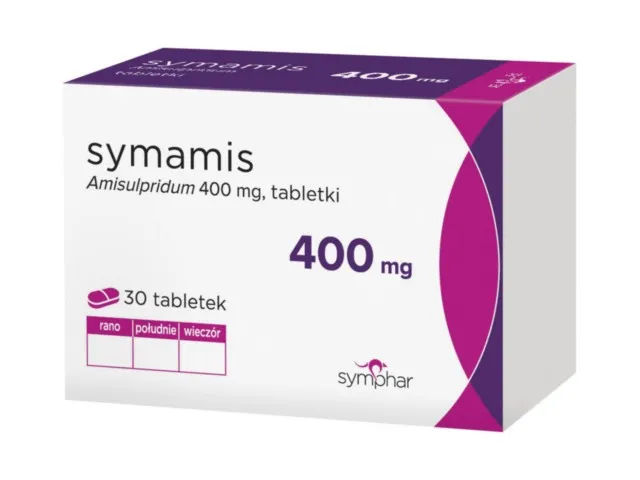
Table of Contents
Package leaflet: Information for the user
Symamis, 50 mg, tablets
Symamis, 100 mg, tablets
Symamis, 200 mg, tablets
Symamis, 400 mg, tablets
Amisulpride
Please read all of this leaflet carefully before taking this medicine, because it contains
important information for the patient.
- Keep this leaflet so that you can read it again if necessary.
- If you have any further questions, please consult your doctor or pharmacist.
- This medicine has been prescribed for a specific individual. Do not pass it on to others. It may harm other people, even if their symptoms are the same.
- If you experience any adverse reactions, including any adverse reactions not listed in this leaflet, tell your doctor or pharmacist. See section 4.
Contents of the leaflet
- What Symamis is and what it is used for
- Important information before taking Symamis
- How to take Symamis
- Possible side effects
- How to store Symamis
- Contents of the pack and other information
1. What Symamis is and what it is used for
Symamis is a medicine used to treat mental disorders (an antipsychotic medicine).
It reduces the activity of certain areas in the brain that are involved in the symptoms of
mental illness.
Symamis is used in the treatment of a condition called schizophrenia. Schizophrenia is a long-term
mental disorder that affects the way a person thinks, feels, and behaves, altering these functions
compared to normal.
Your doctor may also prescribe Symamis to treat other symptoms. Always follow your doctor's instructions.
2. Important information before using Symamis
Your doctor may prescribe Symamis for treating symptoms other than those listed in this leaflet. Always follow your doctor's instructions and dosage recommendations described in this leaflet.
When not to take Symamis:
- if the patient is allergic to amisulpride or any of the other ingredients of this medicine (listed in section 6);
- if the patient has breast cancer;
- if the patient has a pituitary gland tumour;
- if the patient has an adrenal gland tumour (pheochromocytoma);
- during breastfeeding;
- if the patient has a rare inherited heart condition causing slow heart rate and irregular heartbeat (long QT syndrome);
- if the patient is taking medicines that affect heart function (prolong QT interval), such as medicines used to treat:
- Parkinson's disease (levodopa);
- heart rhythm disorders (e.g. amiodarone, sotalol).
Symamis must not be used in children before puberty.
Warnings and precautions
Before starting treatment with Symamis, discuss with your doctor or pharmacist if:
- the patient has heart disease or a family history of heart disease;
- the patient has a family history of a rare inherited heart condition with slow heart rate and irregular heartbeat (long QT syndrome);
- the patient has kidney problems;
- the patient has epilepsy or a history of seizures;
- the patient has Parkinson's disease;
- the patient has diabetes or an increased risk of developing diabetes;
- the patient or their family members have a history of blood clots (thrombosis), as treatment with medicines such as Symamis may be associated with blood clot formation;
- the patient or their family members have a history of breast cancer.
Immediately inform your doctor if:
- the patient experiences general malaise, is prone to infections (especially of the tonsils) and fever due to low white blood cell count (agranulocytosis);
- the patient develops fever, muscle stiffness, altered consciousness, and excessive sweating. This condition may be life-threatening and requires immediate medical attention.
Note: In certain patient groups (elderly patients and patients with dementia), there is an increased risk of adverse effects, including stroke. Consult your doctor.
The patient should inform their doctor if blood or urine tests are being performed while taking Symamis, as this medicine may affect the test results.
Symamis and other medicines
Tell your doctor or pharmacist about all medicines the patient is currently taking, has recently taken, or plans to take. Amisulpride may affect the action of other medicines. Conversely, other medicines may affect the action of amisulpride.
Do not take Symamis together with medicines that may affect heart function (prolong QT interval):
- medicines used to treat heart rhythm disorders (e.g. quinidine, disopyramide, amiodarone, sotalol);
- certain antibiotics (e.g. intravenous erythromycin);
- medicines used to treat Parkinson's disease (e.g. levodopa, bromocriptine, ropinirole).
Inform your doctor if the patient is taking any of the following medicines:
- medicines used to treat high blood pressure (diltiazem, verapamil, beta-blockers, e.g. metoprolol);
- medicines used to treat heart rhythm disorders (digoxin);
- medicines used to treat migraine and facial flushing (clonidine);
- certain types of diuretics;
- medicines used to treat constipation (sodium picosulfate, bisacodyl);
- medicines used to treat arthritis or connective tissue disorders (corticosteroids, e.g. prednisone);
- medicines used to treat anxiety and nervousness (benzodiazepines);
- antidepressants (imipramine);
- other medicines used to treat mental disorders (e.g. pimozide, haloperidol, lithium, clozapine);
- medicines used to treat epilepsy (phenobarbital);
- painkillers (e.g. morphine, oxycodone, tramadol);
- antihistamines that cause drowsiness (sedating antihistamines);
- sedatives;
- anaesthetics used during surgery;
- cough suppressants.
Inform your doctor about taking Symamis if the patient is undergoing adrenaline level testing.
Symamis and alcohol
Do not drink alcohol while taking Symamis, as it may increase the sedative effect of the medicine.
Pregnancy and breastfeeding
If the patient is pregnant, breastfeeding, suspects she may be pregnant, or plans to become pregnant, she should consult her doctor before using this medicine.
The following symptoms may occur in newborns whose mothers took amisulpride during the third trimester of pregnancy (last three months of pregnancy):
- tremors, muscle stiffness and/or weakness,
- drowsiness, restlessness, breathing difficulties,
- feeding problems.
If such symptoms are observed in the baby, contact a doctor immediately.
Do not take Symamis during breastfeeding.
Driving and operating machinery
This medicine may reduce alertness and cause blurred vision. If such symptoms occur, the patient should not drive or operate tools or machinery.
Symamis contains lactose monohydrate
Symamis contains lactose, a type of sugar. If the patient has previously been diagnosed with an intolerance to certain sugars, they should consult their doctor before taking this medicine.
Symamis contains sodium
This medicinal product contains less than 1 mmol of sodium (23 mg) per tablet, i.e. the product is considered "sodium-free".
3. How to take Symamis
This medicine should always be taken exactly as prescribed by your doctor. If you have any doubts,
you should consult your doctor or pharmacist.
Recommended dose:
Adults
Your doctor will adjust the dose according to your response to treatment. The usual dose of this
medicine is 50–300 mg per day or 400–800 mg per day, depending on the symptoms of the disease.
In individual cases, the dose may be increased up to 1200 mg per day.
If you are taking a single daily dose exceeding 400 mg, the dose should be divided into two doses.
Use in children and adolescents
Symamis must not be given to children before puberty.
Use in patients with kidney disorders
If you have impaired kidney function, your doctor may prescribe a lower dose. Follow your doctor’s
instructions.
Instructions for taking the medicine
Swallow the Symamis tablet before a meal with a large amount of water.
Symamis 200 mg and Symamis 400 mg: the break line on the tablet is intended only to facilitate
crushing the tablet for easier swallowing, not for dividing into equal doses.
Taking more than the recommended dose of Symamis
If you take more than the recommended dose of Symamis, contact your doctor immediately or go to
the nearest hospital. Take the medicine packaging with you.
Symptoms of overdose may include: drowsiness, sedation, involuntary movements, dizziness,
fainting (due to low blood pressure), and coma.
Missing a dose of Symamis
Do not take a double dose to make up for a missed dose. Continue treatment with your regular dose.
Stopping treatment with Symamis
Treatment may only be interrupted or discontinued after prior consultation with your doctor.
If you have any further questions about the use of this medicine, consult your doctor or pharmacist.
4. Possible side effects
Like all medicines, this medicine can cause side effects, although not everybody gets them.
Serious side effects
Common: may affect up to 1 in 10 people
- disturbances of consciousness associated with excessive drowsiness. Contact your doctor;
- eye muscle spasms with forced upward deviation of the eyeballs. Contact your doctor;
- rapid heartbeat with fast or very irregular heartbeat, which may lead to a heart attack. Contact your doctor immediately or go to the nearest hospital emergency department.
Uncommon: may affect up to 1 in 100 people
- seizures. Contact your doctor immediately or go to the nearest hospital emergency department;
- slow heart rate. Contact your doctor or go to the nearest hospital emergency department;
- general malaise, increased susceptibility to inflammatory conditions (infections), especially sore throat and fever due to blood changes (decreased white blood cell count, agranulocytosis). Contact your doctor or go to the nearest hospital emergency department.
Rare: may affect up to 1 in 1000 people
- high fever, muscle rigidity, excessive sweating, confusion, drowsiness or agitation (neuroleptic malignant syndrome). If you notice these symptoms, seek immediate medical help;
- blood clots in veins, especially in the legs (symptoms include leg swelling, pain and redness). Clots may travel through blood vessels to the lungs, causing chest pain and breathing difficulties. If any of these symptoms occur, seek immediate medical help;
- pituitary gland tumour (manifesting as milk secretion from the breasts and cessation of menstruation) caused by increased blood levels of the hormone (prolactin). In men: breast enlargement and erectile dysfunction.
Not known: frequency cannot be estimated from available data
- withdrawal syndrome in newborns (see section "Pregnancy and breastfeeding").
Other side effects
Very common: may affect more than 1 in 10 people
- slow, involuntary twisting movements;
- side effects similar to symptoms of Parkinson’s disease: slow, involuntary tremors of hands and head, stiffness of movements, facial expression rigidity, muscle tension, and increased salivation;
- movements causing twisting and distortion, especially of the lower limbs.
Common: may affect up to 1 in 10 people
- neck twisting due to spasms of neck muscles;
- reduced ability to open the jaw due to increased tension of the masticatory muscles;
- constipation, nausea, vomiting, dry mouth, which may increase the risk of dental caries;
- dizziness, possible fainting due to low blood pressure;
- breast enlargement in men, chest tightness, milk secretion, cessation of menstruation;
- erectile dysfunction, inability to achieve orgasm;
- insomnia, anxiety, agitation;
- weight gain;
- blurred vision.
Uncommon: may affect up to 1 in 100 people
- slow, involuntary movements. These may resolve after discontinuation of the medicine;
- frequent urination, thirst, fatigue due to high blood sugar (glucose) levels; may develop into serious side effects. Contact your doctor;
- allergic reactions;
- increased risk of atherosclerosis due to high levels of cholesterol and/or fats (triglycerides) in the blood;
- confusion;
- high blood pressure;
- nasal mucosal congestion (stuffy nose);
- pneumonia;
- increased risk of fractures due to osteopenia and osteoporosis. May develop into a serious side effect. Contact your doctor if sudden back pain occurs.
Rare: may affect up to 1 in 1000 people
- rash and swelling. These may be severe. Contact your doctor. Swelling of the face, lips and tongue may be life-threatening. If such symptoms are observed, seek immediate medical help;
- nausea, discomfort, muscle weakness and confusion due to low sodium levels in the blood (hyponatremia). This may be (or develop into) a serious side effect. Contact your doctor;
- syndrome of inappropriate antidiuretic hormone secretion (SIADH).
Amisulpride may cause side effects that the patient does not notice. These are usually changes detectable in laboratory test results due to alterations in blood, liver or heart rhythm. Laboratory results will return to normal after stopping treatment.
Reporting of side effects
If any side effects occur, including any not listed in this leaflet, inform your doctor or pharmacist. Side effects can be reported directly to the Department of Monitoring of Adverse Drug Reactions of the Office for Registration of Medicinal Products, Medical Devices and Biocidal Products: Al. Jerozolimskie 181C, 02-222 Warsaw, Tel.: +48 22 49 21 301, Fax: +48 22 49 21 309, website: https://smz.ezdrowie.gov.pl .
Side effects can also be reported to the marketing authorization holder.
Reporting side effects helps provide more information on the safety of this medicine.
5. How to store Symamis
Keep this medicine out of the sight and reach of children.
Do not use this medicine after the expiry date stated on the carton or blister pack after EXP. The expiry date refers to the last day of the stated month.
No special storage instructions apply for this medicine.
Medicines must not be disposed of via the sewage system or household waste. Ask your pharmacist how to dispose of medicines no longer required. This will help protect the environment.
6. Contents of the pack and other information
What Symamis contains
The active substance is amisulpride. Each tablet contains 50 mg, 100 mg, 200 mg, or 400 mg of amisulpride.
The other ingredients are: lactose monohydrate, sodium carboxymethyl starch (type A), hypromellose 2910, microcrystalline cellulose PH-101, magnesium stearate.
What Symamis looks like and contents of the pack
Symamis 50 mg: white, round, flat tablets with a diameter of 7 mm.
Symamis 100 mg: white, round, flat tablets with a diameter of 9.5 mm, marked with "MC" on one side.
Symamis 200 mg: white, round, flat tablets with a diameter of 11.5 mm, with a break line on one side. The break line is intended only to facilitate tablet fragmentation for easier swallowing and does not guarantee equal dose division.
Symamis 400 mg: white, biconvex, capsule-shaped tablets with a break line on both sides, measuring 19 mm x 10 mm. The break line is intended only to facilitate tablet fragmentation for easier swallowing and does not guarantee equal dose division.
Packs consist of PVC/PE/PVDC-Aluminium blisters or PVC/PVDC-Aluminium blisters containing 30, 60, or 90 tablets in a cardboard carton.
Not all pack sizes may be marketed.
Marketing Authorisation Holder and Manufacturer
Marketing Authorisation Holder
Symphar Sp. z o.o.
ul. Koszykowa 65
00-667 Warsaw, Poland
Manufacturer
Medochemie Ltd
1-10 Constantinoupoleos Street, 3011, Limassol, Cyprus