Sulpiride teva
Poland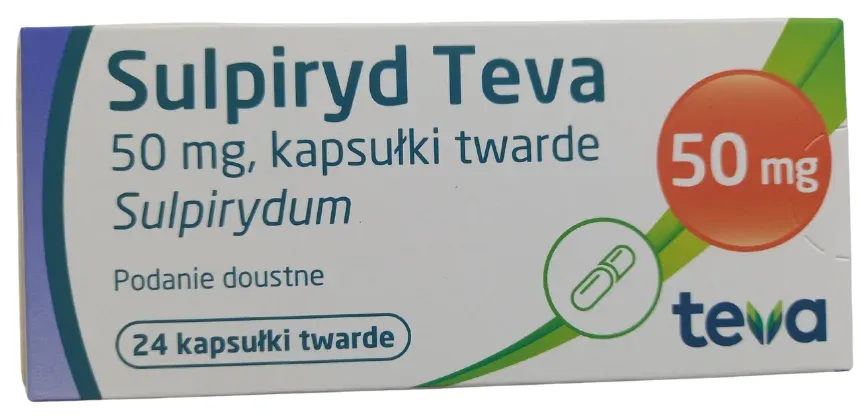
Table of Contents
Patient Information Leaflet
SULPIRID TEVA, 50 mg, hard capsules
SULPIRID TEVA, 100 mg, hard capsules
(Sulpiridum)
Please read all of this leaflet carefully before taking this medicine, as it contains important information for you.
- Keep this leaflet as you may need to read it again.
- If you have any questions, please consult your doctor or pharmacist.
- This medicine has been prescribed for a specific individual. Do not pass it on to others. It may harm them even if their symptoms are the same.
- If you experience any side effects, including any not listed in this leaflet, tell your doctor or pharmacist. See section 4.
Table of contents
- What Sulpirid Teva is and what it is used for
- Important information before taking Sulpirid Teva
- How to take Sulpirid Teva
- Possible side effects
- How to store Sulpirid Teva
- Contents of the pack and other information
1. What Sulpirid Teva is and what it is used for
Sulpirid is an antipsychotic medicine. It also has antidepressant properties.
Indications:
- Acute and chronic psychoses in schizophrenia, especially with symptoms of reduced activity.
- Chronic alcoholic psychoses, psychosomatic disorders.
- Depressive disorders when treatment with other antidepressants is ineffective or cannot be used.
- Migraine and vertigo of various etiologies (including in Meniere’s disease).
- As an adjunct in the treatment of alcohol dependence.
2. Important information before using Sulpiryd Teva
When not to use Sulpiryd Teva
- if the patient is allergic to sulpiride or any of the other ingredients of this medicine (listed in section 6);
- if the patient is suspected of or has been diagnosed with a chromaffin tumour (usually a benign tumour of the adrenal medulla, commonly causing secondary hypertension);
- in case of acute porphyria (an inherited or acquired disorder characterised by impaired enzyme function in the heme synthesis pathway, also known as the porphyrin pathway);
- if the patient has tumours associated with excessive prolactin secretion (e.g. pituitary adenoma, breast cancer);
- when levodopa is being used concomitantly;
- if the patient is breastfeeding.
Warnings and precautions
Before starting treatment with Sulpiryd Teva, discuss it with your doctor or pharmacist.
In some patients, sulpiride administered in high doses has caused motor agitation.
In phases of aggression or agitation, low doses of the drug may exacerbate symptoms. Caution should be exercised if symptoms of hypomania occur (a state of elevated mood characterised by increased energy, reduced need for sleep, and enhanced physical and mental performance).
In aggressive or agitated patients with associated impulsiveness, sulpiride may be administered together with a sedative.
Particular caution is required when using sulpiride in patients with Parkinson's disease who require neuroleptic treatment.
A small number of patients may experience extrapyramidal disorders (e.g. tremors of hands or head, sudden muscle contractions, inability to sit still or remain in one place, unusual rhythmic involuntary movements, usually affecting the face) and motor restlessness (akathisia). Dose reduction or administration of anti-Parkinson drugs may be necessary.
As with other neuroleptic drugs, the possibility of neuroleptic malignant syndrome (characterised by fever, muscle rigidity, autonomic instability, altered consciousness, and elevated CPK levels) should be considered, as it may be life-threatening. If such symptoms occur, all antipsychotic medications, including sulpiride, should be discontinued immediately.
Elderly patients may be more susceptible to orthostatic hypotension, excessive sedation, and extrapyramidal symptoms. Therefore, sulpiride, like other neuroleptic drugs, should be used with particular caution in these patients.
After abrupt discontinuation of antipsychotic drugs, acute symptoms such as nausea, vomiting, excessive sweating, and insomnia may occur. Recurrence of the illness and the emergence of involuntary movements (akathisia, dystonia, dyskinesia) may also occur. Therefore, gradual withdrawal of the drug is recommended.
Neuroleptics may lower the seizure threshold. Seizures have been reported in patients treated with sulpiride who had no previous history of seizures. Caution should be exercised when using sulpiride in patients with unstable epilepsy, and particular attention should be paid to patients with a history of seizures. The dosage of anticonvulsant drugs should not be changed in patients requiring concomitant sulpiride treatment.
As with other drugs primarily excreted by the kidneys, caution is required when using sulpiride in patients with renal impairment. The dose of sulpiride should be reduced and gradually adjusted.
Sulpiride may increase the risk of severe ventricular arrhythmias.
Caution should be exercised when using sulpiride in patients with cardiac arrhythmias and cardiovascular disorders.
Concomitant use of sulpiride with other neuroleptics should be avoided.
Particular caution is required when using the drug in patients with a personal or family history of venous thrombosis. The use of such drugs is associated with a risk of venous thrombosis.
Sulpiride should not be taken in the late evening hours (after 4:00 p.m.) due to the possible occurrence of sleep disturbances.
Sulpiride should be used with caution in patients at risk of stroke.
Sulpiryd Teva and other medicines
Inform your doctor about all medicines currently or recently taken, as well as any medicines you plan to take.
Sulpiryd Teva should not be used with levodopa.
Sulpiryd Teva is not recommended to be used with the following medicines:
- drugs causing bradycardia, such as: beta-blockers, calcium channel blockers (e.g. diltiazem, verapamil), clonidine, guanfacine, digitalis-like agents;
- drugs causing electrolyte imbalance, particularly hypokalemia: hypokalemic diuretics, stimulant laxatives, intravenous amphotericin B, glucocorticoids, tetracosactide (hypokalemia should be corrected);
- class Ia antiarrhythmic drugs, such as: quinidine, disopyramide;
- class III antiarrhythmic drugs, such as: amiodarone, sotalol;
- others: pimozide, sultopride, haloperidol, methadone, tricyclic antidepressants of the imipramine type, halofantrine, lithium, cisapride, bepridil, thioridazine, intravenous vinpocetine, entacapone, erythromycin, sparfloxacin.
Sulpiryd Teva should be used with caution with the following medicines:
The depressant effects on the central nervous system may be enhanced when used with medicines having such properties:
- opiate derivatives (analgesics, painkillers, antitussives, substitution therapy);
- neuroleptics;
- barbiturates and barbiturate-like drugs;
- benzodiazepines;
- anxiolytics and non-benzodiazepine hypnotics;
- sedating antidepressants (amitriptyline, doxepin, mianserin, mirtazapine, trimipramine);
- sedating antihistamines, H1 receptor antagonists with sedative properties;
- centrally-acting antihypertensives: baclofen, thalidomide, pizotifen;
- drugs neutralising gastric acid and sucralfate: reduced absorption of sulpiride; therefore, sulpiride should be taken 2 hours before these drugs;
- ropinirole;
- lithium: increased risk of extrapyramidal effects;
- clonidine and clonidine derivatives.
Sulpiryd Teva with food, drink and alcohol
Sulpiryd Teva should be taken at least one hour before or two hours after a meal, as food reduces drug absorption.
During treatment with Sulpiryd Teva, all alcoholic beverages and medicines containing alcohol should be avoided.
Children
Due to insufficient clinical experience, sulpiride is not recommended for use in children under 14 years of age.
Use in patients with renal and/or hepatic impairment
The doctor should adjust the dosage according to the degree of renal function.
Use in elderly patients
Doses are usually the same as in adults. In elderly patients with impaired renal function, the dose should be reduced.
Pregnancy and breastfeeding
If the patient is pregnant or breastfeeding, suspects she may be pregnant, or plans to become pregnant, she should consult her doctor or pharmacist before using this medicine.
Newborns exposed to antipsychotic drugs (including amisulpride) during the third trimester of pregnancy are at risk of developing adverse effects, including extrapyramidal and/or withdrawal symptoms, which may vary depending on the severity and duration of labour. Symptoms observed include agitation, hypertonia, hypotonia, tremor, somnolence, respiratory distress syndrome, or feeding difficulties. Therefore, newborns should be closely monitored.
The use of this medicine during pregnancy is not recommended.
Sulpiride passes into breast milk. Breastfeeding should not be used during treatment with this medicine.
Driving and operating machinery
Patients, especially those who drive vehicles or operate machinery, should be warned about the possibility of drowsiness associated with the use of this medicine.
Sulpiryd Teva contains lactose.
If the patient has previously been diagnosed with intolerance to certain sugars, this should be reported to the doctor before taking Sulpiryd Teva.
3. How to use Sulpiryd Teva
This medicine should always be used as directed by the physician. If in doubt, consult a
physician or pharmacist.
The dosage is determined by the physician.
If it appears that the effect of Sulpiryd Teva is too strong or too weak, consult a physician or pharmacist.
Schizophrenia
Adults
The initial dose is 400 to 800 mg per day, administered in two divided doses (morning and early evening), depending on symptoms.
The maximum daily dose is 1200 mg. Only in cases of treatment-resistant disorders may a psychiatrist increase the daily dose up to 1600 mg, administered in divided doses.
Depressive disorders
The initial dose is 50 to 150 mg per day. The dose is then increased to 150–300 mg per day.
Psychosomatic disorders, neuroses
Usually 150 to 300 mg per day.
Migraine and dizziness (e.g. in Meniere’s disease)
Usually 50 to 200 mg per day.
Elderly patients
Dosages are usually the same as for adults. In elderly patients with impaired renal function, the dosage should be reduced.
Patients with impaired renal function
The sulpiride dosage should be appropriately adjusted; depending on the degree of renal function, the dose should be reduced or the interval between doses extended.
Sulpiride should not be used simultaneously with antacids or sucralfate, or within 2 hours before or after their administration.
Use of a higher than recommended dose of Sulpiryd Teva
Symptoms of overdose include: excessive sedation, restlessness, confusion (disorientation), disturbances of consciousness, agitation, extrapyramidal symptoms (e.g. tremor of hands or head, sudden muscle spasms, inability to sit still or remain in one place, unusual rhythmic involuntary movements, most commonly of the face), hypotension. Coma may occur.
There is no specific antidote for sulpiride. As with poisoning due to other orally ingested drugs, activated charcoal may be administered, and the physician may perform gastric lavage. If necessary, the patient will be monitored and treated symptomatically under hospital conditions.
If required, the physician may administer anti-parkinsonian drugs.
In case of overdose, contact a physician immediately.
Missed dose of Sulpiryd Teva
The missed dose should be taken as soon as possible unless the time for the next scheduled dose is approaching—in which case the medicine should be taken at the appointed time. Do not use a double dose to make up for a missed dose.
4. Possible adverse effects
Like all medicines, this medicine can cause adverse effects, although not everyone will experience them.
The adverse effects of sulpiride are listed below, grouped by the systems and organs they affect, and by frequency of occurrence where available.
The following definitions of adverse reaction frequencies have been used in the summary below:
Very common – observed in more than 1 in 10 patients;
Common – observed in more than 1 but less than 10 in 100 patients;
Uncommon – observed in more than 1 but less than 10 in 1,000 patients;
Rare – observed in more than 1 but less than 10 in 10,000 patients;
Very rare, including isolated reports – occurring in fewer than 1 in 10,000 people.
Cardiac disorders
Isolated cases: torsade de pointes
Endocrine disorders
Frequency unknown: hyperprolactinaemia, amenorrhoea, gynaecomastia, sexual anhedonia and impotence
Hepatobiliary disorders
Very rare: increased liver enzyme activity
Nervous system disorders
Common: sedation, drowsiness
Rare: extrapyramidal symptoms and acute dyskinesia, tardive dyskinesia (rhythmic involuntary movements, mainly of the tongue and/or facial muscles), observed, as with other neuroleptics, after long-term treatment. Anticholinergic anti-Parkinson drugs are ineffective in such cases and may even worsen symptoms, neuroleptic malignant syndrome
Reproductive system and breast disorders
Frequency unknown: galactorrhoea (outside lactation period), amenorrhoea, gynaecomastia
Eye disorders
Rare: rotatory eye movements
Vascular disorders
Frequency unknown: orthostatic hypotension
Venous thrombosis, including deep vein thrombosis, has been reported during treatment with antipsychotic medicines
Gastrointestinal disorders
Frequency unknown: excessive salivation
Musculoskeletal and connective tissue disorders
Rare: spastic torticollis, trismus
Pregnancy, puerperium and perinatal period
Neonatal withdrawal syndrome (see section Pregnancy, breastfeeding and fertility)
Investigations
Isolated cases: QT interval prolongation
General disorders and administration site conditions
Frequency unknown: neuroleptic malignant syndrome, which may be life-threatening (as with all neuroleptics), weight gain
Skin and subcutaneous tissue disorders
Very rare: maculopapular rash
Blood clots in veins, especially in the lower limbs (symptoms include swelling, pain, redness of legs), may travel through blood vessels to the lungs causing chest pain and difficulty breathing. If such symptoms occur, seek immediate medical advice.
In elderly patients with dementia treated with antipsychotic medicines, a slight increase in mortality has been observed compared to patients not treated with these medicines.
If fever develops without an apparent cause, Sulpiride Teva should be discontinued and a doctor contacted immediately.
Other adverse effects not listed here may occur in individual patients during treatment with Sulpiride Teva.
Reporting of adverse reactions
If any adverse effects occur, including any not listed in this leaflet, inform your doctor or pharmacist. Adverse reactions can be reported directly to the Department for Monitoring Adverse Drug Reactions of the Office for Registration of Medicinal Products, Medical Devices and Biocidal Products
Al. Jerozolimskie 181C, 02-222 Warsaw
Tel.: + 48 22 49 21 301
Fax: + 48 22 49 21 309
Website: https://smz.ezdrowie.gov.pl
Reporting adverse reactions helps to provide more information on the safety of this medicine.
5. How to store Sulpiryd Teva
Store below 25°C, in a dry place.
Keep the medicine out of sight and reach of children.
Do not use this medicine after the expiry date stated on the blister and carton following:
Expiry date (EXP). The expiry date refers to the last day of the stated month.
Medicines should not be disposed of via wastewater or household waste. Ask your pharmacist how to dispose of medicines no longer required. This will help protect the environment.
6. Contents of the packaging and other information
What Sulpiryd Teva contains
- The active substance is sulpiride.
Capsules 50 mg
Each capsule contains 50 mg of sulpiride and the following excipients: maize starch, lactose monohydrate, colloidal anhydrous silica, magnesium stearate.
Capsule shell composition: gelatin and titanium dioxide (E 171).
Capsules 100 mg
Each capsule contains 100 mg of sulpiride and the following excipients: maize starch, lactose monohydrate, colloidal anhydrous silica, magnesium stearate.
Capsule shell composition: gelatin, quinoline yellow (E 104), iron oxide red (E 172) and titanium dioxide (E 171).
What Sulpiryd Teva looks like and contents of the pack
Hard capsules 50 mg
The capsules are white, cylindrical with rounded ends.
Hard capsules 100 mg
The capsules are yellow, cylindrical with rounded ends.
Hard capsules in PVC/Al blisters.
2 blisters containing 12 capsules each in a cardboard box.
Marketing Authorisation Holder and Manufacturer
Marketing Authorisation Holder:
Teva Pharmaceuticals Polska Sp. z o.o.
ul. Emilii Plater 53, 00-113 Warsaw
tel.: (22) 345 93 00
Manufacturer:
Teva Operations Poland Sp. z o.o.
ul. Mogilska 80, 31-546 Kraków