Sulpiride hasco
Poland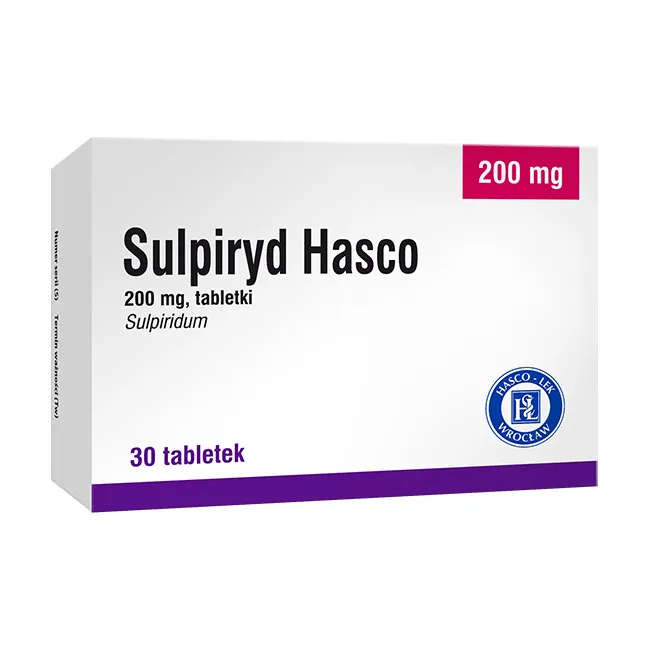
Table of Contents
Package leaflet: Information for the patient
Sulpiryd Hasco
50 mg, tablets
Sulpiryd Hasco
100 mg, tablets
Sulpiryd Hasco
200 mg, tablets
Sulpiridum
Please read this leaflet carefully before using the medicine, as it contains
important information for the patient.
- Keep this leaflet for possible future reference.
- If you have any questions, please consult your doctor or pharmacist.
- This medicine has been prescribed for a specific individual. Do not pass it on to others. The medicine may harm someone else, even if their symptoms are the same.
- If you experience any adverse reactions, including any not listed in this leaflet, inform your doctor or pharmacist. See section 4.
Leaflet contents
- What Sulpiryd Hasco is and what it is used for
- Important information before taking Sulpiryd Hasco
- How to take Sulpiryd Hasco
- Possible side effects
- How to store Sulpiryd Hasco
- Contents of the pack and other information
1. What Sulpiryd Hasco is and what it is used for
Sulpiryd Hasco tablets are intended for the treatment of severe mental disorders. The medicine prevents
the action of certain substances in the brain, thereby alleviating disease symptoms.
The active substance in the medicine – sulpiride, has antipsychotic and antidepressant effects and belongs to
the group of so-called neuroleptics, benzamide derivatives.
Sulpiryd Hasco is used in the treatment of:
- acute and chronic psychoses occurring in schizophrenia, particularly those associated with impaired activity;
- depressive disorders, when treatment with other antidepressants is ineffective or cannot be used.
2. Information before using Sulpiryd Hasco
When not to use Sulpiryd Hasco
- If the patient is allergic to the active substance – sulpiride, to other benzamide derivatives, or to any of the other ingredients of this medicine (listed in section 6).
- If the patient is suspected of or has been diagnosed with a so-called chromaffinoma (usually a benign tumour of the adrenal medulla, commonly causing secondary hypertension).
1/8
- In case of acute porphyria (an inherited or acquired disorder involving impaired function of enzymes in haem synthesis – a substance belonging to the chemical group of porphyrins).
- If the patient has tumours associated with excessive prolactin secretion (e.g. pituitary adenoma, breast cancer).
- During concomitant administration of medicines containing so-called levodopa.
- In breastfeeding women.
- In children and adolescents under 14 years of age.
Warnings and precautions
Before starting treatment with Sulpiryd Hasco, discuss this with your doctor or pharmacist.
In some patients, sulpiride administered in high doses may cause motor agitation. In cases of aggression or agitation, low doses of the medicine may worsen such symptoms.
Caution is advised if symptoms of so-called hypomania occur (a state of elevated mood characterised by increased energy, reduced need for sleep, and increased physical and mental performance).
In aggressive or agitated patients who also exhibit impulsiveness, sulpiride-containing medicines may be administered together with an appropriate sedative medicine selected by the physician.
Particular caution is required when using sulpiride in patients with Parkinson's disease who require neuroleptic treatment.
A small number of patients may experience extrapyramidal symptoms (e.g. tremors of hands or head, sudden muscle contractions, inability to sit still or remain motionless, unusual rhythmic involuntary movements, usually affecting the face) and motor restlessness (so-called akathisia). In such cases, the doctor may recommend reducing the dose or using anti-Parkinsonian medicines.
As with other so-called neuroleptic medicines, the possibility of a serious adverse effect known as neuroleptic malignant syndrome should be considered (characterised by, among others, elevated body temperature, muscle rigidity, autonomic instability, disturbances in consciousness, and increased blood activity of certain enzymes such as creatine kinase – CPK), which may be life-threatening. If such symptoms occur, all antipsychotic medicines, including sulpiride, should be discontinued immediately.
After abrupt discontinuation of antipsychotic medicines, acute withdrawal symptoms may occur, including nausea, vomiting, excessive sweating, and insomnia. Recurrence of the illness and development of involuntary movements (akathisia, dystonia, dyskinesia) may also occur. Therefore, gradual discontinuation of the medicine is recommended.
Neuroleptics may lower the seizure threshold. Cases of seizures have been reported in patients treated with sulpiride who previously did not have seizures. Caution should be exercised when using sulpiride in patients with unstable epilepsy, and particular attention should be paid to patients with a history of epileptic seizures. Do not alter the dosage of antiepileptic medicines in patients requiring concomitant sulpiride treatment.
As with other medicines primarily excreted by the kidneys, caution is required when administering sulpiride to patients with renal impairment. The dose of sulpiride should be reduced and gradually adjusted.
Sulpiride may increase the risk of severe cardiac arrhythmias – so-called ventricular arrhythmias.
Caution is required when using sulpiride in patients with cardiac rhythm disorders and cardiovascular disorders.
Concomitant use of sulpiride with other neuroleptics should be avoided.
2/8
Particular caution is required when using this medicine if the patient or their family history includes venous thrombosis. Use of such medicines is associated with an increased risk of venous thromboembolism.
Sulpiride should be used cautiously in patients at risk of stroke.
Elderly patients
Doses are usually the same as in younger adults; however, elderly patients may be more susceptible to certain adverse effects of sulpiride, such as orthostatic hypotension, excessive sedation, and extrapyramidal symptoms. Therefore, sulpiride, like other neuroleptic medicines, should be used with particular caution in these patients.
In elderly patients with impaired renal function, the doctor will recommend appropriate dose reduction depending on the patient's condition.
Patients with renal and/or hepatic impairment
In patients with impaired renal and/or hepatic function, the doctor will recommend appropriate dose reduction depending on the patient's condition.
Children and adolescents
Due to insufficient clinical data, sulpiride should not be used in children and adolescents under 14 years of age.
Sulpiryd Hasco and other medicines
Inform your doctor about all medicines currently used or recently taken, as well as any medicines planned for future use.
Sulpiryd Hasco should not be used with medicines containing levodopa.
During treatment with Sulpiryd Hasco, avoid consuming any alcoholic beverages and medicines containing alcohol.
Concomitant use of Sulpiryd Hasco with the following medicines is not recommended:
- Medicines causing bradycardia (slowing of heart rate), such as beta-blockers, calcium channel blockers (e.g. diltiazem and verapamil), clonidine, guanfacine, and drugs with similar effects to digitalis;
- Medicines causing electrolyte imbalance, particularly those leading to low blood potassium levels – hypokalaemia (e.g. diuretics, prokinetic agents, intravenous amphotericin B, glucocorticoids, tetracosactide); in such cases, the doctor may recommend appropriate potassium-replenishing products;
- Antiarrhythmic medicines (Class Ia such as quinidine, disopyramide; Class III such as amiodarone, sotalol);
- Other medicines such as pimozide, sultopride, haloperidol, methadone, tricyclic antidepressants (imipramine derivatives), halofantrine, lithium, cisapride, bepridil, thioridazine, intravenous vinpocetine, entacapone, erythromycin, sparfloxacin.
Sulpiryd Hasco should be used cautiously with the following medicines, which have a depressant effect on the central nervous system, as this may intensify their effects:
- Analgesics, opioids, antitussives, and medicines used in opioid substitution therapy;
- Neuroleptics;
- Sedatives and hypnotics belonging to barbiturates and barbiturate-like medicines;
- Sedatives and hypnotics belonging to benzodiazepines;
- Anxiolytics and non-benzodiazepine hypnotics;
3/8
- Antidepressants with sedative properties (e.g. amitriptyline, doxepin, mianserin, mirtazapine, trimipramine);
- Sedating antihistamines (H\1 receptor antagonists causing sedation);
- Antihypertensive medicines with central action (e.g. baclofen, thalidomide, pizotifen);
- Medicines neutralising gastric acid and sucralfate (which reduce sulpiride absorption); therefore, sulpiride should always be taken at least 2 hours before these medicines;
- Concomitantly with ropinirole;
- Concomitantly with lithium (increased risk of extrapyramidal effects);
- Concomitantly with clonidine and clonidine derivatives.
Food, drink and alcohol with Sulpiryd Hasco
Sulpiryd Hasco should be taken at least one hour before or two hours after a meal, as food reduces drug absorption.
During treatment with Sulpiryd Hasco, avoid consuming any alcoholic beverages and medicines containing alcohol.
Pregnancy and breastfeeding
If the patient is pregnant, breastfeeding, suspects she may be pregnant, or plans to become pregnant, she should consult a doctor before using this medicine.
Pregnancy
Sulpiride should not be used during pregnancy.
Newborns exposed to antipsychotic medicines (including amisulpride, similar to sulpiride) during the third trimester of pregnancy are at risk of developing adverse effects, including extrapyramidal symptoms and/or withdrawal symptoms. The severity of these symptoms may vary depending on the clinical course and duration of labour.
Symptoms observed include agitation, increased or decreased muscle tone, tremors, somnolence, respiratory distress syndrome, or feeding difficulties. Therefore, newborns should be closely monitored.
Breastfeeding
Sulpiride should not be used in breastfeeding women.
Sulpiride passes into human milk in amounts sufficient to produce pharmacological effects in the infant.
Driving and operating machinery
Patients, especially those who drive vehicles or operate machinery, should be warned about the possibility of drowsiness associated with the use of this medicine.
Sulpiryd Hasco contains lactose
If the patient has previously been diagnosed with intolerance to certain sugars, they should consult a doctor before taking this medicine.
Each coated tablet of Sulpiryd Hasco 50 mg contains 20 mg of lactose.
Each coated tablet of Sulpiryd Hasco 100 mg contains 40 mg of lactose.
Each coated tablet of Sulpiryd Hasco 200 mg contains 80 mg of lactose.
3. How to use Sulpiryd Hasco
This medicine should always be used as directed by the physician. In case of doubt, consult a
physician or pharmacist.
The dosage is determined by the physician according to the patient's condition and course of treatment.
4/8
If the effect of Sulpiryd Hasco appears too strong or too weak, consult a
physician or pharmacist.
Schizophrenia
The usual initial dose is 400 mg to 800 mg daily, administered in two divided doses (morning and early evening), depending on the severity of symptoms.
The maximum daily dose is 1200 mg. Only in cases of treatment-resistant disorders, a psychiatrist may increase the daily dose up to 1600 mg, administered in divided doses.
Depressive disorders
The usual initial dose is 50 mg to 150 mg daily. The dose is then increased to 150 mg – 300 mg daily.
Elderly patients
Dosages are usually the same as in younger adults. In elderly patients with impaired kidney function, the dose should be reduced.
Patients with impaired kidney function
The dose of sulpiride should be appropriately adjusted; depending on the degree of renal function, the dose should be reduced or the interval between doses extended.
Sulpiryd Hasco tablets are best taken with water.
Sulpiride should not be taken during late evening hours (after 4 p.m.) due to the risk of sleep disturbances.
Sulpiride should not be taken simultaneously with, or within 2 hours before or after, antacids or sucralfate.
Use of a higher than recommended dose of Sulpiryd Hasco
If a higher than recommended dose of Sulpiryd Hasco is taken, or if the medicine is accidentally ingested by another person, contact a physician, pharmacist, or nearest hospital immediately.
Bring any remaining tablets and the package leaflet to show the physician, who will decide on further management based on the dose taken and symptoms of overdose.
Symptoms of overdose include: excessive sedation, restlessness, confusion (disorientation), disturbances of consciousness, agitation, extrapyramidal symptoms (e.g., tremor of hands or head, sudden muscle spasms, inability to sit still or remain in one place, unusual rhythmic involuntary movements, most commonly in the face), and low blood pressure. Coma may occur.
As with poisoning by other orally administered drugs, activated charcoal may be given shortly after ingestion to reduce absorption, and the physician may perform gastric lavage. If necessary, patient observation and symptomatic treatment will be conducted in a hospital setting. If required, the physician will prescribe appropriate symptomatic treatment (e.g., anti-parkinsonian drugs).
Missed dose of Sulpiryd Hasco
Do not take a double dose to make up for a missed dose.
If a dose is missed, take it as soon as possible. If the next scheduled dose is approaching, skip the missed dose and resume the regular dosing schedule.
Discontinuation of Sulpiryd Hasco
Do not stop taking this medicine without first consulting your physician.
If there are any further doubts regarding the use of this medicine, consult a physician or pharmacist.
5/8
If treatment needs to be discontinued, the physician will determine the appropriate course of action based on the individual patient's response to sulpiride therapy.
Sulpiride administration should be discontinued immediately only in the event of the so-called neuroleptic malignant syndrome (see section “Warnings and precautions”) or in case of hypersensitivity (see section “When not to use Sulpiryd Hasco”).
4. Possible adverse reactions
Like all medicines, this medicine can cause adverse reactions, although not everyone will experience them.
Blood clots in veins, particularly in the lower limbs (symptoms include swelling, pain, redness of the legs), may travel through blood vessels to the lungs causing chest pain and breathing difficulties. If such symptoms occur, medical advice should be sought immediately.
If fever develops without an apparent cause, Sulpiryd Hasco should be discontinued and a doctor contacted.
Adverse reactions of sulpiride listed below are classified by system organ classes and frequency, if known:
Very common – affects more than 1 in 10 patients
Common – affects up to 1 in 10 patients
Uncommon – affects up to 1 in 100 patients
Rare – affects up to 1 in 1000 patients
Very rare – affects up to 1 in 10,000 patients
Frequency not known – frequency cannot be estimated from available data.
The following adverse reactions have been observed in patients treated with sulpiride:
Cardiac disorders
Isolated cases: torsade de pointes (a type of ventricular tachycardia).
Endocrine disorders
Frequency not known: hyperprolactinaemia (elevated blood prolactin levels), amenorrhoea (absence of menstruation), gynaecomastia (breast enlargement in males), sexual anhedonia and impotence (erectile dysfunction).
Hepatobiliary disorders
Very rare: increased liver enzyme activity.
Nervous system disorders
Common: calming effect, drowsiness.
Rare: extrapyramidal symptoms and acute dyskinesia, tardive dyskinesia (rhythmic involuntary movements, mainly of the tongue and/or facial muscles), observed, as with other neuroleptics, after long-term treatment. Anticholinergic anti-Parkinson drugs are ineffective in such cases and may even worsen symptoms, neuroleptic malignant syndrome (see section "Warnings and precautions").
Reproductive system and breast disorders
Frequency not known: galactorrhoea (any occurrence of milk secretion in men or women unrelated to pregnancy), amenorrhoea, gynaecomastia.
Eye disorders
Rare: rotatory eye movements.
6/8
Vascular disorders
Frequency not known: orthostatic hypotension (excessive drop in blood pressure upon standing).
Venous thromboembolic events, including deep vein thrombosis, have been reported during treatment with antipsychotic medicines.
Gastrointestinal disorders
Frequency not known: excessive salivation.
Musculoskeletal and connective tissue disorders
Rare: spastic torticollis, trismus (jaw clenching).
Pregnancy, puerperium and perinatal period
Neonatal withdrawal syndrome (see section "Pregnancy and breast-feeding").
Investigations
Isolated cases: QT interval prolongation on ECG.
General disorders and administration site conditions
Frequency not known: neuroleptic malignant syndrome, which may be life-threatening (as with all neuroleptics), weight gain.
Skin and subcutaneous tissue disorders
Very rare: maculopapular rash.
In elderly patients with dementia treated with antipsychotic medicines, a slightly increased incidence of mortality has been observed compared to untreated patients.
Reporting of adverse reactions
If any adverse reactions occur, including any not listed in this leaflet, inform a doctor or pharmacist. Adverse reactions can be reported directly to the Department of Monitoring Adverse Drug Reactions at the Office for Registration of Medicinal Products, Medical Devices and Biocidal Products:
Al. Jerozolimskie 181C, 02-222 Warsaw
Tel: 22 49 21 301, Fax: 22 49 21 309
Website: https://smz.ezdrowie.gov.pl
Adverse reactions can also be reported to the marketing authorization holder.
Reporting adverse reactions helps provide more information on the safety of the medicine.
5. How to store Sulpiryd Hasco
Keep this medicine out of sight and reach of children.
Do not use this medicine after the expiry date stated on the packaging. The expiry date refers to the last day of the stated month.
Store below 25°C.
Medicines must not be disposed of via wastewater or household waste. Ask your pharmacist how to dispose of medicines no longer required. This will help protect the environment.
6. Contents of the packaging and other information
What Sulpiryd Hasco contains
7/8
- The active substance is sulpiride. One Sulpiryd Hasco 50 mg tablet contains 50 mg of sulpiride. One Sulpiryd Hasco 100 mg tablet contains 100 mg of sulpiride. One Sulpiryd Hasco 200 mg tablet contains 200 mg of sulpiride.
- The other components (excipients) are: pregelatinized starch, corn starch, monohydrate lactose, Povidone K 30, microcrystalline cellulose, magnesium stearate.
What Sulpiryd Hasco looks like and contents of the pack
Sulpiryd Hasco 50 mg are round, biconvex tablets with bevelled edges, smooth, white.
One package of Sulpiryd Hasco 50 mg contains 24, 30, 60, or 120 tablets in a cardboard box.
Sulpiryd Hasco 100 mg are oval, biconvex, smooth, white tablets.
One package of Sulpiryd Hasco 100 mg contains 24, 30, 60, or 120 tablets in a cardboard box.
Sulpiryd Hasco 200 mg are oval, biconvex tablets, smooth, white, with one side having a uniform surface and the other side bearing an imprint “HL” (“H” on one side of the score line, “L” on the other side of the score line).
One package of Sulpiryd Hasco 200 mg contains 12, 30, 60, or 120 tablets in a cardboard box.
Marketing Authorisation Holder and Manufacturer
"PRZEDSIĘBIORSTWO PRODUKCJI FARMACEUTYCZNEJ HASCO-LEK" S.A.
51-131 Wrocław, ul. Żmigrodzka 242 E
Product Information
tel.: 22 742 00 22
e-mail: [email protected]
8/8