Stomezul
Poland
Table of Contents
Package leaflet: Information for the patient
Stomezul, 20 mg, enteric-coated tablets
Stomezul, 40 mg, enteric-coated tablets
Esomeprazolum
Please read this leaflet carefully before taking this medicine, as it contains
important information for you.
- Keep this leaflet, as you may need to read it again.
- If you have any further questions, please ask your doctor or pharmacist.
- This medicine has been prescribed for a specific individual. Do not pass it on to others. It may harm someone else, even if their symptoms are the same.
- If you experience any adverse effects, including any possible adverse effects not listed in this leaflet, tell your doctor or pharmacist. See section 4.
Leaflet contents:
- What Stomezul is and what it is used for
- Important information before taking Stomezul
- How to take Stomezul
- Possible side effects
- How to store Stomezul
- Contents of the pack and other information
1. What Stomezul is and what it is used for
Stomezul contains the active substance called esomeprazole, which belongs to a group of medicines known as proton pump inhibitors. These medicines reduce the production of hydrochloric acid in the stomach.
Stomezul is used to treat the following conditions:
Adults
Gastro-oesophageal reflux disease (GORD). This occurs when acidic stomach contents flow back into the oesophagus (the tube connecting the throat to the stomach), causing pain, inflammation, and heartburn.
Gastric or duodenal ulcer (in the upper part of the small intestine) caused by infection with the bacterium Helicobacter pylori. In such cases, your doctor may also prescribe antibiotics to treat the infection and heal the ulcer.
Gastric ulcer caused by the use of non-steroidal anti-inflammatory drugs (NSAIDs). Stomezul may also be used to prevent gastric ulcers in patients taking non-steroidal anti-inflammatory drugs.
Excessive production of hydrochloric acid in the stomach caused by pancreatic abnormalities (Zollinger-Ellison syndrome).
Long-term treatment for the prevention of recurrent gastrointestinal bleeding with intravenous esomeprazole.
Adolescents aged 12 years and older
Gastro-oesophageal reflux disease (GORD). This occurs when acidic stomach contents flow back into the oesophagus (the tube connecting the throat to the stomach), causing pain, inflammation, and heartburn.
Gastric or duodenal ulcer (in the upper part of the small intestine) caused by infection with the bacterium Helicobacter pylori. In such cases, your doctor may also prescribe antibiotics to treat the infection and heal the ulcer.
2. Important information before using Stomezul
When not to use Stomezul
if the patient is allergic to esomeprazole or any of the other ingredients of this medicine
(listed in section 6);
if the patient is allergic to similar medicines containing active substances ending in -
prazole (e.g. pantoprazole, lansoprazole, rabeprazole, omeprazole);
if the patient is taking medicines containing the active substance nelfinavir, used in the treatment
of HIV infections;
if the patient has ever experienced severe skin rash, skin peeling, blistering and/or oral ulcers after taking Stomezul or other similar medicines.
If any of the above situations apply, the patient should not take Stomezul.
If in doubt, consult a doctor or pharmacist before using the medicine.
Warnings and precautions
Before starting treatment with Stomezul, discuss with your doctor if:
the patient has severe liver function impairment;
the patient has severe kidney function impairment;
the patient is due to undergo a specific blood test (measurement of chromogranin A levels);
the patient has ever had a skin reaction after taking a medicine reducing gastric acid secretion, similar to Stomezul.
Skin rash and skin-related symptoms
If the patient develops a skin rash, especially in areas exposed to sunlight, they should inform their doctor as soon as possible, as this may require discontinuation of Stomezul. The patient should also report any other adverse effects such as joint pain.
Serious skin reactions, including Stevens-Johnson syndrome, toxic epidermal necrolysis, drug reaction with eosinophilia and systemic symptoms (DRESS), have been reported during treatment with Stomezul. The patient should stop taking Stomezul and seek immediate medical advice if any symptoms associated with these severe skin reactions (described in section 4) occur.
Stomezul may mask symptoms of other diseases. Therefore, the patient should immediately consult a doctor if any of the following symptoms occur before or during treatment with Stomezul:
significant, unintentional weight loss and difficulty swallowing;
abdominal pain or indigestion;
vomiting food or blood;
black, tarry stools (blood-colored stools).
If the patient is taking the medicine on an as-needed basis, they should consult a doctor if symptoms persist or change in character.
Long-term use of proton pump inhibitors (such as Stomezul), particularly for over a year, may slightly increase the risk of fractures of the hip, wrist, or spine. If the patient has been diagnosed with osteoporosis or is taking corticosteroids (which may increase the risk of developing osteoporosis), this should be reported to the doctor.
Children
Stomezul is not recommended for children under 12 years of age due to insufficient data.
Stomezul and other medicines
Inform your doctor or pharmacist about all medicines currently taken, recently taken, or planned for use.
Stomezul and other medicines may affect each other’s actions.
Do not take Stomezul if the patient is taking a medicine containing nelfinavir (used in the treatment of HIV infection).
The following medicines may interact with Stomezul:
atazanavir (a medicine used in HIV infections);
ketoconazole, itraconazole, or voriconazole (medicines used to treat fungal infections);
If necessary, the doctor will adjust the dose of Stomezul in patients taking it continuously or in patients with severe liver function impairment.
erlotinib (a medicine used in cancer treatment);
medicines metabolized by a specific enzyme, such as:
- diazepam (a medicine used to calm and help sleep)
- citalopram, imipramine, clomipramine (medicines used to treat depression)
- phenytoin (a medicine used to treat epilepsy and certain pain conditions).
If necessary, the doctor may need to reduce the dose of these medicines, especially if taken occasionally. In patients taking phenytoin, the doctor will monitor its blood levels, particularly at the beginning and after discontinuation of Stomezul.
warfarin, fenprocoumon, acenocoumarol (medicines used to prevent physiological blood clotting). The doctor will monitor blood clotting parameters, especially at the beginning and after stopping Stomezul.
cilostazol (a medicine used in the treatment of intermittent claudication – a condition causing leg pain during walking due to inadequate blood flow);
cisapride (a medicine used in gastrointestinal disorders);
methotrexate (a medicine used in high doses in cancer chemotherapy). If the patient is receiving high-dose methotrexate, the doctor may recommend temporarily stopping Stomezul.
rifampicin (an antibiotic used to treat tuberculosis);
St. John’s wort (a herbal medicine used to treat depression);
digoxin (a medicine used to treat various heart conditions);
clopidogrel (a medicine used to prevent clot-related events such as heart attack or stroke);
tacrolimus (a medicine used to prevent rejection of transplanted organs).
If the doctor has prescribed two antibiotics (amoxicillin and clarithromycin) along with Stomezul to treat peptic ulcer disease caused by Helicobacter pylori infection, it is very important to inform them about any other medicines being taken.
Pregnancy and breastfeeding
If the patient is pregnant or breastfeeding, suspects she may be pregnant, or is planning to have a child, she should consult her doctor or pharmacist before using this medicine.
Pregnancy
The doctor will decide whether taking Stomezul during pregnancy is advisable.
Breastfeeding
It is not known whether Stomezul passes into breast milk. Therefore, this medicine should not be taken during breastfeeding.
Driving and operating machinery
It is unlikely that Stomezul impairs the ability to drive or operate tools and machines. However, uncommon or rare adverse effects such as dizziness and blurred vision may occur (see section 4). In such cases, the patient should not drive or operate machinery.
Stomezul contains glucose and sucrose
If the patient has previously been diagnosed with intolerance to certain sugars, they should consult their doctor before taking this medicine.
3. How to use Stomezul
This medicine should always be used exactly as directed by the doctor. If in doubt, consult
your doctor or pharmacist.
Stomezul is not recommended for children under 12 years of age.
If the patient is taking this medicine for a long time (especially longer than one year), the doctor
will monitor the treatment.
If the doctor has recommended taking the medicine on an as-needed basis (when required), any
change in symptoms should be reported to the doctor.
How much medicine to take
The doctor will inform you how many tablets to take and for how long to use the medicine. This
depends on the patient's condition, age, and liver function.
The usual doses are given below.
Adults
Treatment of heartburn caused by gastroesophageal reflux disease (GERD)
If the doctor has diagnosed minor damage to the oesophageal mucosa, the usual dose of Stomezul
is 40 mg. The medicine should be taken once daily for 4 weeks. If the oesophageal lesions have
not healed during this time, the doctor may recommend continuing treatment at the same dose
for another 4 weeks.
After healing of the oesophagus, the usual dose is one 20 mg tablet once daily.
If the oesophageal mucosa is not damaged, the usual dose is one 20 mg tablet taken daily. Once
symptoms are under control, the doctor may recommend taking the medicine as needed (on-demand),
up to a maximum of one 20 mg tablet per day.
If the patient has severe liver function impairment, the doctor may recommend a lower dose.
Treatment of peptic ulcer disease associated with Helicobacter pylori infection and prevention
of recurrence
The usual dose is one 20 mg tablet twice daily for one week.
The doctor will also prescribe two antibiotics, e.g. amoxicillin and clarithromycin.
Treatment of gastric ulcer caused by use of non-steroidal anti-inflammatory drugs (NSAIDs)
The usual dose is one 20 mg tablet once daily for 4 to 8 weeks.
Prevention of gastric ulcer in patients taking non-steroidal anti-inflammatory drugs (NSAIDs)
The usual dose is one 20 mg tablet once daily.
Treatment of excessive gastric acid secretion caused by pancreatic tumours (Zollinger-Ellison syndrome)
The usual dose is one 40 mg tablet twice daily.
The doctor will adjust the dose according to the patient's needs and determine how long the
treatment should continue. The maximum dose is 80 mg twice daily.
Long-term treatment following prevention of recurrent gastrointestinal bleeding with intravenous
esomeprazole
The usual dose is 40 mg once daily for 4 weeks.
Adolescents (aged 12 years and older)
Treatment of heartburn caused by gastroesophageal reflux disease (GERD)
If the doctor has diagnosed minor damage to the oesophageal mucosa, the usual dose of Stomezul
is one 40 mg tablet once daily for 4 weeks. If the oesophageal lesions have not healed during
this time, the doctor may recommend continuing treatment at the same dose for another 4 weeks.
After healing of the oesophagus, the usual dose is one 20 mg tablet once daily.
If the oesophageal mucosa is not damaged, the usual dose is one 20 mg tablet taken daily. Once
symptoms are under control, the doctor may recommend taking the medicine as needed (on-demand),
up to a maximum of one 20 mg tablet per day.
If the patient has severe liver function impairment, the doctor may recommend a lower dose.
Treatment of peptic ulcer disease associated with Helicobacter pylori infection and prevention
of recurrence
The usual dose is one 20 mg tablet twice daily for one week.
The doctor will also prescribe two antibiotics, e.g. amoxicillin and clarithromycin.
How to take the medicine
The medicine can be taken at any time of day.
It can be taken with or without food.
Tablets should be swallowed whole with water. Do not chew or crush the tablets, as they contain
coated pellets designed to protect the medicine from the action of gastric juice. It is important
not to damage the pellets.
Stomezul 40 mg, enteric-coated tablets –
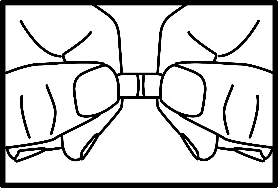
Instructions for tablet splitting
The tablet should be divided as shown in the figure:
What to do if you have difficulty swallowing
If the patient has difficulty swallowing the tablet:
- Place the tablet in a glass of still (non-carbonated) water. Do not use any other liquids.
- Stir until the tablet disintegrates (the liquid will not be clear). Drink the liquid immediately or within 15 minutes of preparation. Stir the liquid again just before drinking.
- To ensure the full dose is taken, fill the glass halfway with water, stir, and drink the liquid. Undissolved particles contain the medicine – do not chew or crush them.
- If the patient cannot swallow independently, the tablet may be mixed with a small amount of water and administered via a syringe through a nasogastric tube directly into the stomach.
Taking more Stomezul than recommended
If you take more Stomezul than prescribed, contact your doctor or pharmacist immediately.
Missed dose of Stomezul
Take the missed dose as soon as you remember. However, if it is almost time for the next dose,
skip the missed dose.
Do not take a double dose to make up for a missed dose.
Stopping Stomezul treatment
The medicine should always be taken for as long as the doctor has recommended. Stopping or
interrupting treatment without consulting the doctor may reduce the effectiveness of therapy.
If you have any further questions about the use of this medicine, consult your doctor or pharmacist.
4. Possible adverse reactions
Like all medicines, this medicine can cause adverse reactions, although not everyone will experience them.
If the patient experiences any of the following serious adverse reactions, the medicine must be discontinued immediately and medical advice must be sought without delay:
Sudden wheezing, swelling of the lips, tongue or throat, rash, fainting or difficulty swallowing (severe allergic reaction) (rare: may occur in fewer than 1 in 1,000 people).
Sudden onset of severe skin rash or redness with blistering or peeling of the skin may occur even several weeks after starting treatment. Blisters and bleeding from the lips, eyes, mouth, nose or genital organs may also appear. Rashes may progress to serious, widespread damage to the skin (peeling of the epidermis and superficial mucous membranes), with potentially life-threatening consequences. This may be "erythema multiforme", "Stevens-Johnson syndrome" or "toxic epidermal necrolysis" (very rare: may occur in fewer than 1 in 10,000 people).
Widespread rash, high fever and swollen lymph nodes (DRESS syndrome or drug hypersensitivity syndrome), occurring very rarely.
Yellowing of the skin, dark urine and feeling tired – these may be signs of liver dysfunction (very rare: may occur in fewer than 1 in 10,000 people).
This medicine may very rarely affect the number of white blood cells, causing immunodeficiency.
If the patient develops an infection with symptoms such as fever accompanied by marked deterioration in general condition, or fever with signs of local infection such as pain in the neck, throat or mouth, or difficulty urinating, medical advice must be sought immediately so that blood tests can be performed to rule out low white blood cell count (agranulocytosis). It is important to inform the doctor about the medicine being taken (very rare: may occur in fewer than 1 in 10,000 people).
Other adverse reactions:
Common (may occur in fewer than 1 in 10 people):
- headache
- effects on stomach and intestines: diarrhoea, abdominal pain, constipation, bloating with gas
- nausea or vomiting
- mild gastric polyps
Uncommon (may occur in fewer than 1 in 100 people):
- swelling of the hands, ankles or feet
- insomnia
- dizziness
- prickling or tingling sensations
- drowsiness
- dry mouth
- changes in blood test results monitoring liver function
- itching
- skin rash
- raised rash (urticaria)
- fracture of the hip, wrist or spine (if this medicine is used at high doses or for a prolonged period)
- sensation of spinning (vertigo)
Rare (may occur in fewer than 1 in 1,000 people):
- blood disorders such as reduced number of white blood cells or platelets (which may cause weakness, bruising or increased susceptibility to infections)
- low sodium levels in the blood (which may cause weakness, vomiting and muscle cramps)
- feeling of agitation, confusion or depression
- altered taste
- blurred vision
- sudden onset of wheezing or shortness of breath (airway constriction)
- inflammation of the mucous membrane of the mouth
- fungal infections of the gastrointestinal tract (candidiasis)
- hair loss
- skin rash after exposure to sunlight
- joint or muscle pain
- general malaise
- increased sweating
Very rare (may occur in fewer than 1 in 10,000 people):
- absence of white and red blood cells and platelets
- aggression
- seeing, feeling or hearing things that are not real (hallucinations)
- muscle weakness
- severe kidney disease
- breast enlargement in males
Frequency not known (cannot be estimated from available data)
If the patient takes this medicine for longer than three months, there is a possibility of decreased magnesium levels in the blood. Low magnesium levels may present as fatigue, involuntary muscle contractions, disorientation, convulsions, dizziness, or rapid heartbeat. If any of these symptoms occur, the doctor must be informed immediately.
Low magnesium levels may also lead to reduced potassium or calcium levels in the blood. The doctor may recommend regular blood tests to monitor magnesium levels.
- inflammation of the large intestine (microscopic colitis) leading to diarrhoea
- rash, which may be accompanied by joint pain.
Reporting of adverse reactions
If any adverse reactions occur, including any adverse reactions not listed in this leaflet, the patient should inform their doctor, pharmacist or nurse. Adverse reactions can be reported directly to the Department of Monitoring Adverse Drug Reactions of the Office for Registration of Medicinal Products, Medical Devices and Biocidal Products: Al. Jerozolimskie 181C, 02-222 Warsaw
tel.: + 48 22 49 21 301/fax: + 48 22 49 21 309/website: https://smz.ezdrowie.gov.pl.
Adverse reactions can also be reported to the responsible entity.
Reporting adverse reactions helps provide more information on the safety of the medicine.
5. How to store Stomezul
Keep the medicine out of the sight and reach of children.
Do not use this medicine after the expiry date stated on the outer carton,
blister pack, or bottle after "EXP". The expiry date refers to the last day of the stated month.
Blister packs: Do not store above 25 °C.
HDPE bottles:
Before first opening: do not store above 30 °C.
After first opening: do not store above 30 °C.
Shelf life after first opening of the bottle: 6 months.
Keep the bottle tightly closed to protect from moisture.
Medicines must not be disposed of via wastewater or household waste. Ask your
pharmacist how to dispose of medicines no longer required. Such measures will help
protect the environment.
6. Contents of the package and other information
What Stomezul contains
- The active substance in this medicine is esomeprazole.
Stomezul 20 mg, enteric-coated tablets
Each enteric-coated tablet contains 20 mg of esomeprazole (as esomeprazole magnesium dihydrate).
Stomezul 40 mg, enteric-coated tablets
Each enteric-coated tablet contains 40 mg of esomeprazole (as esomeprazole magnesium dihydrate).
- The other ingredients are:
Tablet core: sucrose, granules (sucrose, corn starch, liquid glucose), hydroxypropylcellulose, povidone, talc, titanium dioxide (E171), methacrylic acid-ethyl acrylate copolymer (1:1), dispersion 30%, glyceryl monostearate, propylene glycol, stearic acid, polysorbate 80, simethicone, microcrystalline cellulose, macrogol 6000, crospovidone, colloidal anhydrous silica, magnesium stearate.
Tablet coating: hypromellose, macrogol 6000, titanium dioxide (E171), talc, iron oxide red (E172).
What Stomezul looks like and contents of the pack
Stomezul 20 mg, enteric-coated tablets
Light pink, oval coated tablets.
Stomezul 40 mg, enteric-coated tablets
Pink, oval coated tablets with a score line on both sides. The tablet can be divided into equal doses.
The medicine is available in blisters containing 28, 30, and 60 enteric-coated tablets, and in HDPE bottles containing 28, 30, and 100 enteric-coated tablets.
Marketing Authorisation Holder and Manufacturer
Marketing Authorisation Holder
Sandoz GmbH
Biochemiestrasse 10
A-6250 Kundl, Austria
Manufacturers
Salutas Pharma GmbH
Otto-von-Guericke-Allee 1
39179 Barleben, Germany
LEK S.A.
ul. Domaniewska 50 C
02-672 Warsaw, Poland
Lek Pharmaceuticals d.d.
Verovškova 57
1526 Ljubljana, Slovenia
S.C. Sandoz S.R.L
4 and 7A Livezeni Street
540472, Targu Mures, Mures County, Romania
Novartis Pharmaceutical Manufacturing LLC
Verovškova ulica 57
1000 Ljubljana, Slovenia
Lek Pharmaceuticals d.d.
Trimlini 2D
9220 Lendava, Slovenia
Novartis Pharmaceutical Manufacturing LLC
Verovškova ulica 57
1000 Ljubljana, Slovenia
For further information about the medicine and its names in other European Economic Area countries, please contact:
Sandoz Polska Sp. z o.o.
ul. Domaniewska 50 C
02-672 Warsaw, Poland
Tel: 22 209 70 00
| Date of latest revision of the leaflet: 02/2026 | |
| Information intended exclusively for healthcare professionals: | |
| Administration of the medicine via gastric tube | |
| If the patient is unable to swallow, tablets can be dispersed in non-carbonated water and administered through | |
| a gastric tube. It is important to ensure that the appropriate syringe and tube have been selected. | |
Administration of the medicine through a gastric tube
- Place the tablet into an appropriate syringe and fill the syringe with approximately 25 ml of water and about 5 ml of air. In the case of certain tubes, it may be necessary to dissolve the tablet in 50 ml of water to avoid clogging the tube with pellets.
- Immediately after adding water, shake the syringe vigorously for about 2 minutes until the tablet disintegrates.
- Holding the syringe with the tip pointing upwards, check that the tip is not blocked.
- Connect the syringe to the tube in the position described above.
- Shake the syringe and turn it with the tip pointing downwards. Immediately inject 5–10 ml of the contents into the tube. After administration, turn the syringe upside down and shake it. Hold the syringe with the tip pointing upwards to prevent blockage.
- Turn the syringe with the tip pointing downwards and immediately inject the next 5–10 ml into the tube. Repeat these steps until the syringe is empty.
- Fill the syringe with 25 ml of water and 5 ml of air. If necessary, repeat the steps described in point 5 to rinse any residue remaining in the syringe. In the case of certain tubes, it may be necessary to add 50 ml of water.