Soprobec
Poland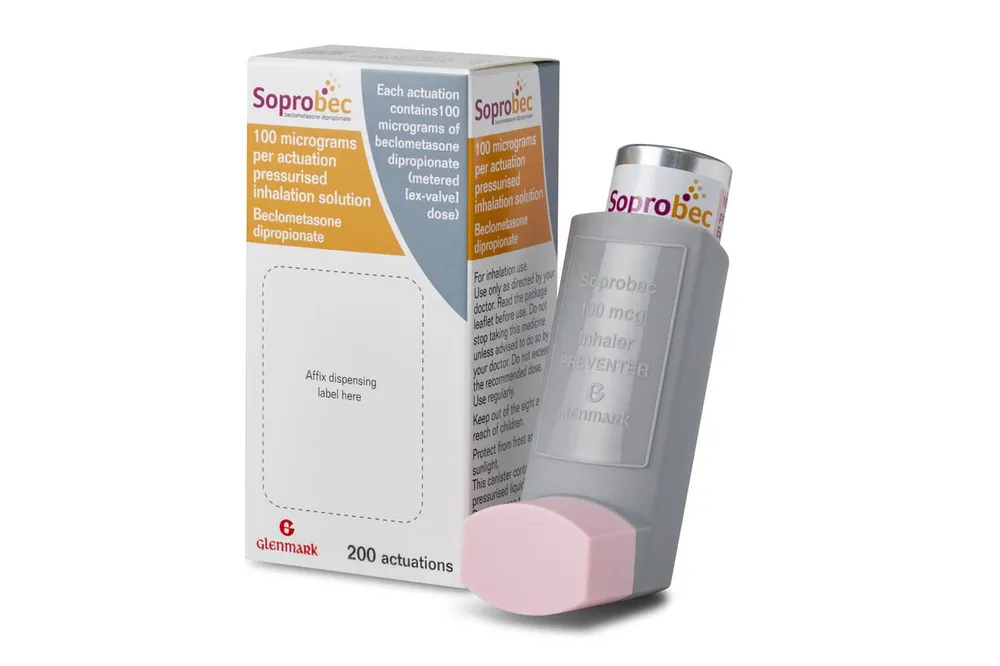
Table of Contents
Package leaflet: Information for the user
Soprobec, 50 micrograms/dose, inhalation aerosol, solution
Soprobec, 100 micrograms/dose, inhalation aerosol, solution
Soprobec, 200 micrograms/dose, inhalation aerosol, solution
Soprobec, 250 micrograms/dose, inhalation aerosol, solution
Beclometasone dipropionate
Please read all of this leaflet carefully before using this medicine, because it contains
important information for you.
- Keep this leaflet, as you may need to read it again.
- If you have any questions, please consult your doctor, pharmacist, or nurse.
- This medicine has been prescribed for a specific individual. Do not pass it on to others. It may harm someone else, even if their symptoms are the same.
- If you experience any adverse effects, including any not listed in this leaflet, inform your doctor, pharmacist, or nurse. See section 4.
Contents of the leaflet
- What Soprobec is and what it is used for
- Important information before using Soprobec
- How to use Soprobec
- Possible side effects
- How to store Soprobec
- Contents of the pack and other information
1. What Soprobec is and what it is used for
Soprobec inhalation aerosol, solution is used for the prevention of asthma symptoms. The active substance, beclometasone dipropionate, belongs to a group of medicines called corticosteroids, often referred to as steroids. Steroids have anti-inflammatory effects, reducing swelling and irritation in the walls of the small airways in the lungs, thereby making breathing easier.
2. Important information before using Soprobec
When not to use Soprobec:
- if the patient is allergic to any of the ingredients of this medicine or to any other medicine used in the treatment of asthma,
- for the treatment of acute asthma attacks. This medicine will not help. In such a situation, a fast-acting inhaled medicine (reliever medicine) should be used, which the patient must carry at all times.
Warnings and precautions
Before starting to use Soprobec, discuss this with your doctor, pharmacist, or
nurse:
- if the patient is or has ever been treated for tuberculosis,
- if the patient has had oral thrush (fungal infection in the mouth),
- if the patient must avoid alcohol for any reason.
You should also discuss this with your doctor, pharmacist, or nurse if any of the following situations apply to
the patient:
- if the patient suspects that asthma symptoms are worsening. Breathing becomes more wheezy or more shallow than usual, the inhaled reliever medicine seems less effective, and the patient needs to use more puffs of the reliever medicine than usual, or notices no improvement after using it.
- after switching from oral steroids to inhaled form, even if the patient feels better in terms of breathing, they may experience general malaise, rash, skin eruptions, nasal discharge (rhinitis), or sneezing (allergic rhinitis). Do not stop using the inhaled medicine unless advised by a doctor.
If the patient has been using high doses of inhaled steroids for a prolonged period and experiences a stressful event, it may be necessary to administer the medicine in tablet form or by injection. For example, during hospital admission following a serious accident, before surgery, during a severe asthma attack, if the patient has a respiratory tract infection, or after another serious illness. The doctor will decide whether additional steroid treatment is necessary and will advise on how long to take oral steroids and how to reduce the dose if the patient starts feeling better.
If the patient experiences blurred vision or any other visual disturbances, contact a doctor.
Soprobec with other medicines
Before starting treatment, tell your doctor about all medicines the patient is currently taking or has recently taken, including medicines the patient plans to use, even those available without a prescription.
Inform your doctor if the patient is taking disulfiram or metronidazole, due to the possible risk of interaction, especially in sensitive individuals.
Remember to bring this medicine and the inhaler with you if the patient needs to go to hospital.
Some medicines may enhance the effect of Soprobec, and the doctor may recommend careful monitoring of health status if the patient is taking such medicines (including certain HIV medicines: ritonavir, cobicistat).
Pregnancy and breastfeeding
If the patient is pregnant or breastfeeding, suspects she may be pregnant, or is planning to have a child, she should consult her doctor or pharmacist before using this medicine.
Driving and operating machinery
It is unlikely that Soprobec will affect the ability to drive or operate machinery.
Soprobec contains alcohol
This medicine contains 7.47 mg (50 microgram and 100 microgram strength), 8.05 mg (200 microgram strength), and 8.62 mg (250 microgram strength) of alcohol (ethanol) per metered dose, equivalent to 13% w/w (50 microgram and 100 microgram strength), 14% w/w (200 microgram strength), and 15% w/w (250 microgram strength). The amount of alcohol in each metered dose of this medicine is equivalent to less than 4 ml of beer or 2 ml of wine. The small amount of alcohol in this medicine will not cause noticeable effects.
3. How to use Soprobec
Soprobec is available in 4 different strengths. The prescribing doctor will determine the appropriate strength for the patient. The 200 microgram and 250 microgram strengths are not suitable for children.
The inhaler must always be used as directed by the doctor or pharmacist. If in doubt, consult the doctor or pharmacist. Instructions for using the inhaler are provided in the dosing section. It may take several days before the medicine starts to work, so it is important to use it regularly.
Do not stop treatment, even if the patient feels better, unless otherwise advised by the doctor. Do not suddenly stop using the inhaler.
While using Soprobec, the doctor may regularly monitor asthma symptoms by performing simple lung function tests and may order blood tests.
Dosage:
The initial dose will be determined by the doctor depending on the severity of asthma symptoms and may be higher than the dose indicated below. The doctor will prescribe the lowest dose of Soprobec that controls symptoms effectively.
The device known as the Volumatic spacer chamber must always be used:
- when Soprobec is used in adults, elderly individuals, and adolescents aged 16 years and older, and the total daily dose is 1000 micrograms or more,
- when Soprobec is prescribed for children and adolescents aged 15 years and younger, regardless of the dose.
Soprobec 50 micrograms
Typical starting dose:
Adults and elderly: 200 micrograms (4 actuations) twice daily
Children: 100 micrograms (2 actuations) twice daily
Typical maximum daily dose:
Adults and elderly: 800 micrograms (16 actuations)
Children: 400 micrograms (8 actuations)
The total daily dose may be divided into 2, 3, or 4 doses per day.
Soprobec 100 micrograms
Typical starting dose:
Adults and elderly: 200 micrograms (2 actuations) twice daily
Children: 100 micrograms (1 actuation) twice daily
Typical maximum daily dose:
Adults and elderly: 800 micrograms (8 actuations)
Children: 400 micrograms (4 actuations)
The total daily dose may be divided into 2, 3, or 4 doses per day.
Soprobec 200 micrograms
Typical starting dose:
Adults and elderly: 200 micrograms (1 actuation) twice daily
Typical maximum daily dose: 800 micrograms (4 actuations)
The total daily dose may be divided into 2, 3, or 4 doses per day.
This strength is not suitable for children.
Soprobec 250 micrograms
Typical starting dose:
Adults and elderly: 500 micrograms (2 actuations) twice daily
Typical maximum daily dose: 2,000 micrograms (8 actuations)
The total daily dose may be divided into 2, 3, or 4 doses per day.
This strength is not suitable for children.
Taking more Soprobec than recommended
Inform the doctor as soon as possible. The doctor may recommend measuring cortisol levels in the patient's blood and may therefore request a blood sample (cortisol is a steroid hormone naturally present in the body).
It is important that the patient uses the dose as prescribed by the doctor. Do not increase or decrease the dose without consulting the doctor.
If a dose of Soprobec is missed
Do not take a double dose to make up for a missed dose. Take the next dose at the usual time. Do not use more actuations than prescribed.
Method of administration
Soprobec is for inhalation use only.
Instructions for use
It is important that the patient knows how to use the inhaler correctly. The prescribing doctor, nurse, or pharmacist will instruct the patient on proper inhaler use and will regularly check that the patient is using it correctly. Follow the instructions carefully so that the patient knows how, when, and how many actuations to use, and for how long the inhaler must be used. If there are any doubts about using the inhaler or inhalation technique, consult the doctor, nurse, or pharmacist for assistance.
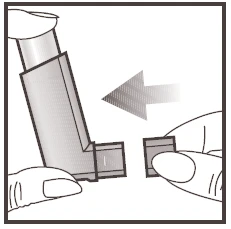
- Remove the protective mouthpiece cap by holding it between the thumb and index finger, gently squeezing and pulling it off as shown in the picture. Check that the mouthpiece is clean and free from dirt both inside and outside.
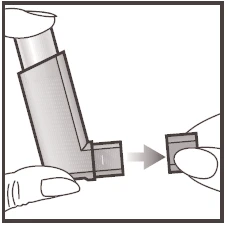
Checking the inhaler: If the inhaler is new or has not been used for at least 3 days, release one spray away from yourself (into the air) to check that it works.
- Hold the inhaler upright as shown in the picture, supporting it with the thumb at the base below the mouthpiece. Breathe out slowly and comfortably.
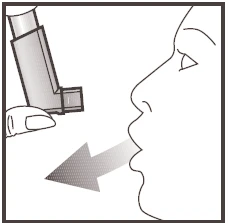
- Place the mouthpiece in the mouth between the teeth and close the lips around it without biting.
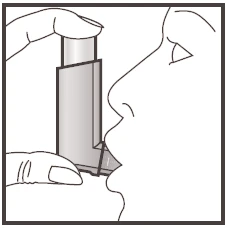
- Immediately after starting to breathe in through the mouth, press down on the top of the inhaler to release one spray, continuing to breathe in steadily and deeply.
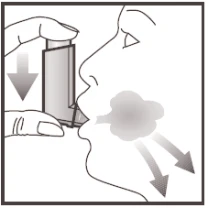
-
Hold your breath; remove the inhaler from the mouth and take your finger off the top of the inhaler. Continue to hold your breath for a few seconds or as long as possible without discomfort. Then breathe out slowly.
-
If a second spray is needed, hold the inhaler upright for about half a minute, then repeat steps 2 to 5.
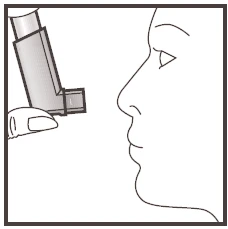
- After use, always replace the protective cap to protect the mouthpiece from dust and dirt. Press the cap firmly until it clicks into place.
Important: Do not perform the actions described in steps 2, 3, 4, and 5 too quickly.
It is important to begin breathing in as slowly as possible just before activating the inhaler. Before using the inhaler for the first time, practice these steps in front of a mirror.
If the patient sees a "mist" escaping from the top of the inhaler or from the sides of the mouth, this means the medicine is not reaching the lungs as it should. Take another spray, following the instructions from step 2.
If patients have weak hands or if the inhaler is used by children, it may be easier to hold the inhaler with both hands. Place the index fingers of both hands on the top of the inhaler and both thumbs at the base below the mouthpiece.
If the patient has difficulty using the inhaler during inhalation, a Volumatic spacer chamber may be used. Consult the doctor, pharmacist, or nurse about this device.
However, the Volumatic spacer chamber must always be used if:
- Soprobec is used in adults, elderly individuals, and adolescents aged 16 years and older, and the total daily dose is 1000 micrograms or more,
- Soprobec is prescribed for children and adolescents aged 15 years and younger, regardless of the dose.
Young children may have difficulty using the inhaler correctly and may require assistance. For children under 5 years of age, using the inhaler with a Volumatic spacer chamber and a face mask may be helpful. Consult the doctor, nurse, or pharmacist if the patient experiences any difficulties.
Cleaning the inhaler
It is important to clean the inhaler at least once a week to prevent blockage.
- Remove the metal canister from the plastic actuator and remove the protective cap from the mouthpiece.
- Wash the plastic actuator and the protective cap in warm water. If a mild detergent is used, rinse thoroughly before drying. Do not immerse the metal canister in water.
- Leave to dry in a warm place. Avoid excessive heat.
- Reinsert the canister and replace the protective cap on the mouthpiece.
It is important to read the leaflet provided with the Volumatic spacer chamber and follow the instructions for its use and cleaning carefully.
4. Possible adverse reactions
Like all medicines, Soprobec can cause adverse reactions, although not everyone will experience them.
Treatment with Soprobec must be discontinued and immediate medical advice sought if:
- the patient experiences allergic reactions, including skin rash, urticaria, itching or redness of the skin, or swelling of the face, eyes, lips or throat.
- after administration of the medicine, the patient suddenly develops worsening of wheezing, breathlessness or cough. Treatment with Soprobec must be discontinued and a fast-acting inhaled medicine (rescue medicine) should be used immediately. Immediate medical advice must be sought. The doctor will assess the patient's asthma symptoms and may decide to change the treatment regimen or prescribe another inhaled medicine for asthma treatment.
The following adverse reactions have been reported. If any adverse reactions occur in the patient, the doctor should be informed as soon as possible, but treatment should not be discontinued unless advised by the doctor. To prevent adverse reactions, the doctor will prescribe the lowest possible dose of Soprobec needed to control asthma symptoms.
Very common (may affect more than 1 in 10 people)
- Fungal infection (candidiasis) of the mouth and/or throat (oral thrush). This adverse reaction is more likely when the daily dose exceeds 400 micrograms. Oral thrush can be treated with antifungal medicines while the patient continues to use Soprobec. To prevent fungal infection of the mouth and throat, the patient should brush their teeth or thoroughly rinse the mouth with water after each dose of the medicine.
Common (may affect up to 1 in 10 people)
- Hoarseness or sore throat or sore tongue. To prevent these symptoms, use of a Volumatic spacer device or rinsing the mouth with water after each use of the inhaler is recommended.
Uncommon (may affect up to 1 in 100 people)
- Rash, urticaria, itching and/or erythema.
Very rare (may affect up to 1 in 10,000 people)
- Allergic reactions including eyelid, facial, lip and/or throat swelling (angioedema).
- Breathing difficulties such as dyspnoea (feeling of shallow breathing or difficulty breathing) and/or bronchospasm (narrowing of the airway walls with reduced airflow).
- Anaphylactic and anaphylactoid reactions (severe allergic reactions which may cause difficulty breathing or affect consciousness).
- Children and adolescents may grow more slowly; therefore, the doctor may regularly monitor growth rate. This may occur when Soprobec is used at high doses over a prolonged period.
- Rounded face (moon face) (Cushing's syndrome).
- Decreased bone mineral density (thinning and weakening of bones).
- Eye disorders, including cataract and glaucoma (increased pressure in the eyeball).
- Paradoxical bronchospasm.
Frequency not known (frequency cannot be estimated from the available data):
- Sleep disturbances, depression or feelings of anxiety, restlessness, agitation, nervousness, excitement or irritability. These symptoms are more likely to occur in children.
- Blurred vision.
- Headache.
- Nausea.
If the patient feels worse or develops symptoms such as loss of appetite, abdominal pain, weight loss, fatigue, nausea (feeling sick), vomiting, weakness, sweating or convulsions, medical advice should be sought. This is particularly important if the patient is under stress, such as during surgery, infection, acute asthma attack or another serious illness.
The doctor may occasionally recommend blood tests to monitor steroid levels in the patient's body.
Reporting of adverse reactions
If any adverse reactions occur, including any not listed in this leaflet, the patient should inform their doctor, pharmacist or nurse. Adverse reactions can be reported directly to the Department of Monitoring of Adverse Drug Reactions of the Office for Registration of Medicinal Products, Medical Devices and Biocidal Products:
Al. Jerozolimskie 181C, 02-222 Warsaw, tel.: +48 22 49 21 301, fax: +48 22 49 21 309,
Website: https://smz.ezdrowie.gov.pl
Adverse reactions can also be reported to the marketing authorization holder.
Reporting adverse reactions helps to provide more information on the safety of the medicine.
5. How to store Soprobec
- Keep the medicine out of the sight and reach of children.
- Do not use Soprobec after the expiry date stated on the cardboard box after: Expiry (EXP) or on the inhaler label after the abbreviation: "EXP". The expiry date refers to the last day of the stated month.
- Do not freeze.
- Store in the original packaging to protect from light.
- If the inhaler is very cold, remove the metal container from the plastic actuator and warm it in your hands for several minutes before use. Never heat it by any other method.
- Medicines must not be disposed of via wastewater or household waste. Ask your pharmacist how to dispose of medicines no longer required. This will help protect the environment.
Warning: The container is pressurised. Store away from heat sources and protect from direct sunlight. Do not expose to high temperatures (above 50°C). Do not pierce or burn, even when empty.
6. Contents of the pack and other information
What Soprobec contains
The active substance is beclometasone dipropionate. Each sprayed dose contains
50, 100, 200 or 250 micrograms of beclometasone dipropionate.
The other ingredients are: glycerol, anhydrous ethanol and norflurane (HFC-134a).
This medicine contains fluorinated greenhouse gases.
Soprobec 50 micrograms:
Each inhaler contains 11.808 g of HFC-134a, equivalent to 0.017 tonnes of CO2
(global warming potential GWP = 1430).
Soprobec 100 micrograms:
Each inhaler contains 11.796 g of HFC-134a, equivalent to 0.017 tonnes of CO2
(global warming potential GWP = 1430).
Soprobec 150 micrograms:
Each inhaler contains 11.634 g of HFC-134a, equivalent to 0.017 tonnes of CO2
(global warming potential GWP = 1430).
Soprobec 200 micrograms:
Each inhaler contains 11.484 g of HFC-134a, equivalent to 0.016 tonnes of CO2
(global warming potential GWP = 1430).
What Soprobec looks like and contents of the pack
Soprobec 50 micrograms/dose is a solution for inhalation aerosol contained in an aluminium pressurised canister with a cream-coloured plastic actuator and a dark brown protective cap. Each cardboard carton contains one or two inhalers. Each canister contains 200 doses (sprays).
Soprobec 100 micrograms/dose is a solution for inhalation aerosol contained in an aluminium pressurised canister with a grey plastic actuator and a light pink protective cap. Each cardboard carton contains one or two inhalers. Each canister contains 200 doses (sprays).
Soprobec 200 micrograms/dose is a solution for inhalation aerosol contained in an aluminium pressurised canister with a pink plastic actuator and a red protective cap. Each cardboard carton contains one or two inhalers. Each canister contains 200 doses (sprays).
Soprobec 250 micrograms/dose is a solution for inhalation aerosol contained in an aluminium pressurised canister with a maroon plastic actuator and a grey protective cap. Each cardboard carton contains one or two inhalers. Each canister contains 200 doses (sprays).
Not all pack sizes may be marketed.
Marketing Authorisation Holder and Manufacturer
Marketing Authorisation Holder:
Glenmark Pharmaceuticals s.r.o.
Hvězdova 1716/2b
140 78 Prague 4
Czech Republic
Manufacturers:
Glenmark Pharmaceuticals Europe Limited
Building 2, Croxley Green Business Park
Croxley Green, WD18 8YA Hertfordshire
United Kingdom
Glenmark Pharmaceuticals s.r.o.
Fibichova 143
566 17 Vysoké Mýto
Czech Republic
Synoptis Industrial Sp. z o.o.
ul. Rabowicka 15
62-020 Swarzędz
Poland
For further information, please contact the local representative of the Marketing Authorisation Holder:
Glenmark Pharmaceuticals Sp. z o.o.
ul. Osmańska 14
02-823 Warsaw
Poland
This medicinal product is authorised in the member states of the European Economic Area under the following names:
| Country | Trade name |
| United Kingdom | Soprobec 50/100/200/250 micrograms per actuation pressurised inhalation solution |
| Czech Republic | Soprobec |
| Denmark | Soprobec 50/100/200/250 micrograms per actuation pressurised inhalation solution |
| Finland | Soprobec 50/100/200/250 micrograms per actuation pressurised inhalation solution |
| Germany | Beclometason Glenmark Dosieraerosol 50/100/200/250 Mikrogramm/Sprühstoß Druckgasinhalation, Lösung |
| Italy | BECLOMETASONE DOC Generici |
| Netherlands | Soprobec 50/100/200/250 microgram/dosis aërosol, oplossing |
| Norway | Soprobec |
| Poland | Soprobec |
| Romania | Soprobec 50/100/200/250 micrograme pe doză soluţie de inhalat presurizată |
| Slovakia | Soprobec 50/100/200/250 micrograms per actuation pressurised inhalation solution |
| Spain | Soprobec 50/100/200/250 microgramos/inhalación, solución para inhalación en envase a presión |
| Sweden | Soprobec 50/100/200/250 micrograms/actuation pressurised inhalation, solution |