Solinco
Poland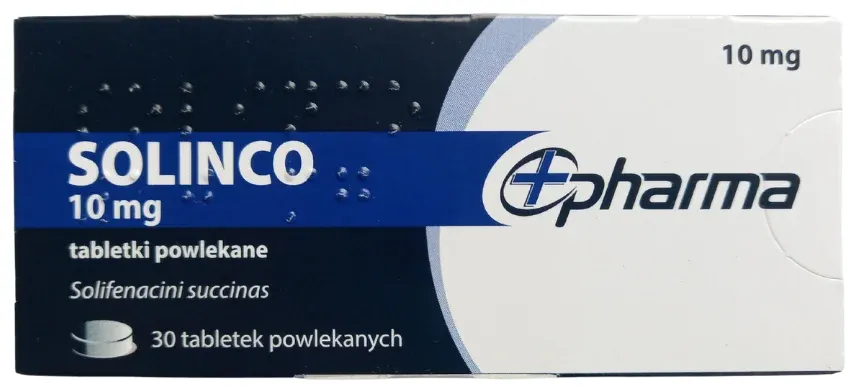
Table of Contents
Package leaflet: Information for the user
SOLINCO, 5 mg, film-coated tablets
SOLINCO, 10 mg, film-coated tablets
Solifenacin succinate
Please read this leaflet carefully before taking this medicine, as it contains
important information for you.
- Keep this leaflet, as you may need to read it again.
- If you have any questions, ask your doctor or pharmacist.
- This medicine has been prescribed for a specific individual. Do not pass it on to others. This medicine may harm others, even if their symptoms are the same.
- If you experience any adverse effects, including any not listed in this leaflet, tell your doctor or pharmacist. See section 4.
Table of contents
- What SOLINCO is and what it is used for
- Important information before taking SOLINCO
- How to take SOLINCO
- Possible side effects
- How to store SOLINCO
- Contents of the pack and other information
1. What SOLINCO is and what it is used for
The active substance in SOLINCO belongs to a group of medicines called anticholinergics. These medicines reduce the activity of an overactive bladder. This effect allows longer intervals between toilet visits and increases the amount of urine the bladder can hold.
SOLINCO is used to treat symptoms of overactive bladder. These include urgency, which are sudden, compelling urges to pass urine, urinary frequency, and urinary incontinence resulting from the inability to reach the toilet in time.
2. Important information before using SOLINCO
When not to use SOLINCO
- if the patient is unable to pass urine or empty the urinary bladder (urinary retention)
- if the patient has severe stomach or intestinal disorders (toxic megacolon, a complication associated with ulcerative colitis)
- in patients suffering from a muscle disease called myasthenia gravis, which may cause significant weakness of certain muscles
- if the patient has increased pressure of fluid in the eye leading to gradual loss of vision (narrow-angle glaucoma)
- if the patient is allergic to solifenacin or any of the other ingredients of this medicine (listed in section 6)
- if the patient is undergoing kidney dialysis
- in patients with severe liver function disorders
- if the patient has severe kidney or moderate liver disease and is simultaneously taking medicines that may delay the elimination of SOLINCO from the body (e.g. ketoconazole). Your doctor or pharmacist will provide information on this.
Before starting treatment with SOLINCO, inform your doctor if any of the above conditions are present or have occurred in the past.
Warnings and precautions
Before starting treatment with SOLINCO, discuss with your doctor or pharmacist:
- if the patient has difficulty emptying the bladder (obstruction of urinary outflow from the bladder) or difficulty passing urine (weak urinary stream). In such cases, the risk of urine accumulation in the bladder (urinary retention) is much higher.
- if the patient has gastrointestinal motility disorders (constipation)
- if there is a risk of slowed gastrointestinal motility (peristalsis). Your doctor will provide further information.
- if there are severe kidney function disorders
- if there are moderate liver function disorders
- if the patient suffers from severe stomach pain (hiatal hernia) or heartburn
- if the patient has nervous system disorders (autonomic neuropathy).
Before starting treatment with SOLINCO, inform your doctor if any of the above conditions are present or have occurred in the past.
Before initiating treatment with SOLINCO, your doctor will assess whether there are other possible causes of frequent urination, such as heart failure (inadequate strength of the heart muscle to pump blood) or kidney disease. If a urinary tract infection occurs, your doctor will prescribe an antibiotic (an antibacterial agent effective against the specific bacteria).
Children and adolescents
SOLINCO is not intended for use in children and adolescents under 18 years of age.
SOLINCO and other medicines
Tell your doctor or pharmacist about all medicines the patient is currently taking, has recently taken, or plans to take.
It is particularly important to inform your doctor if the patient is taking:
- other anticholinergic medicines, as concomitant use with SOLINCO may enhance both the therapeutic effects and adverse reactions of both medicines
- cholinergic receptor agonists, as they may reduce the effect of SOLINCO
- medicines that increase gastrointestinal motility, such as metoclopramide and cisapride, as SOLINCO may reduce their effectiveness
- medicines such as ketoconazole, itraconazole (used to treat fungal infections), ritonavir, nelfinavir (used to treat human immunodeficiency virus (HIV) infection), and verapamil, diltiazem (used to treat high blood pressure and heart conditions), as they may slow down the metabolism of SOLINCO
- medicines such as rifampicin (used to treat tuberculosis or other bacterial infections) and phenytoin, carbamazepine (used to treat epilepsy), as they may accelerate the metabolism of SOLINCO
- bisphosphonates, as they may cause or worsen inflammation of the oesophagus (oesophagitis). Ask your doctor whether the medicine belongs to this group.
SOLINCO with food and alcohol
SOLINCO may be taken with or without food.
Pregnancy and breastfeeding
Do not use SOLINCO during pregnancy unless absolutely necessary.
Do not use SOLINCO during breastfeeding, as solifenacin passes into human milk.
If the patient is pregnant, breastfeeding, suspects she may be pregnant, or is planning to become pregnant, she should consult her doctor or pharmacist before using this medicine.
Driving and operating machinery
SOLINCO may cause blurred vision, and less commonly, drowsiness and fatigue. If these adverse effects occur, do not drive or operate any machinery.
SOLINCO contains monohydrate lactose
If the patient has previously been diagnosed with intolerance to certain sugars, the patient should consult their doctor before taking this medicine.
3. How to take SOLINCO
This medicine should always be taken exactly as directed by your doctor. If in doubt, consult your doctor or pharmacist.
The tablet should be swallowed whole with a drink, for example a glass of water. SOLINCO may be taken with food or independently of meals, according to patient preference. Do not crush the tablets.
The usual dose is 5 mg once daily, unless your doctor prescribes a dose of 10 mg once daily.
Use in children and adolescents
SOLINCO is not intended for use in children and adolescents under 18 years of age.
Taking more SOLINCO than prescribed
If you take too many SOLINCO tablets or if a child accidentally swallows them, contact your doctor or pharmacist immediately.
Symptoms of overdose may include: headache, dry mouth, dizziness, drowsiness and visual disturbances, hallucinations, excessive excitation, seizures (convulsions), breathing difficulties, rapid heartbeat (tachycardia), urinary retention, and dilated pupils.
If you miss a dose of SOLINCO
If you miss a dose, take the next dose as soon as possible, unless it is almost time for the next scheduled dose. Do not take the medicine more than once a day. If in doubt, consult your doctor or pharmacist. Do not take a double dose to make up for a missed dose.
Stopping SOLINCO
If you stop taking SOLINCO, symptoms of overactive bladder may return or worsen. Stopping treatment should always be discussed with your doctor.
If you have any further questions about the use of this medicine, consult your doctor or pharmacist.
4. Possible adverse reactions
Like all medicines, this medicine can cause adverse reactions, although not everyone will experience them.
If the patient experiences an allergic attack or a severe skin reaction (e.g. blistering
and peeling of the outer layer of skin), a doctor or pharmacist should be informed immediately.
In some patients taking solifenacin succinate (SOLINCO), angioedema (a type of allergic skin reaction causing swelling of the tissue just beneath the skin surface) with swelling of the airways (difficulty breathing) has been reported. If angioedema occurs in the patient, treatment with solifenacin succinate (SOLINCO) must be stopped immediately and appropriate treatment and/or corrective measures initiated.
SOLINCO may cause other adverse reactions listed below:
Very common adverse reactions (may affect more than 1 in 10 people):
- dry mouth.
Common adverse reactions (may affect up to 1 in 10 people):
- blurred vision
- constipation, nausea, dyspepsia with symptoms such as: feeling of fullness in the stomach, abdominal pain, belching, nausea, heartburn, feeling of discomfort in the abdominal cavity.
Uncommon adverse reactions (may affect up to 1 in 100 people):
- urinary tract infection, bladder infection (cystitis)
- somnolence
- taste disturbances
- dry (irritated) eyes
- dryness of the nasal passages
- gastroesophageal reflux disease (gastroesophageal reflux)
- dry throat
- dry skin
- difficulty in urination
- fatigue
- fluid accumulation in the lower limbs (oedema).
Rare adverse reactions (may affect up to 1 in 1,000 people):
- accumulation of hard stool in the colon (faecal impaction)
- difficulty passing urine despite a full bladder (urinary retention)
- dizziness, headache
- vomiting
- itching, rash.
Very rare adverse reactions (may affect up to 1 in 10,000 people):
- hallucinations, disorientation
- allergic rash.
Frequency not known (frequency cannot be estimated from the available data):
- decreased appetite, increased blood potassium levels which may cause cardiac arrhythmia
- increased intraocular pressure
- changes in ECG, irregular heartbeat (Torsade de Pointes), palpitations, rapid heartbeat
- voice disorders
- liver function abnormalities
- muscle weakness
- kidney function disorders.
Reporting of adverse reactions
If any adverse reactions occur, including any possible adverse reactions not listed in this leaflet, inform a doctor or pharmacist. Adverse reactions can be reported directly to the Department for Monitoring Adverse Reactions to Medicinal Products of the Office for Registration of Medicinal Products, Medical Devices and Biocidal Products, Al. Jerozolimskie 181C, 02-222 Warsaw, Tel.: + 48 22 49 21 301, Fax: + 48 22 49 21 309, e-mail: [email protected].
Adverse reactions can also be reported to the responsible entity.
Reporting adverse reactions helps to provide more information on the safety of the medicine.
5. How to store SOLINCO medicine
There are no special storage requirements for this medicine.
The medicine should be stored in a place out of sight and reach of children.
Do not use this medicine after the expiry date stated on the pack following the word:
EXP. The expiry date refers to the last day of the stated month.
Do not use this medicine if you notice that the packaging is damaged or shows signs of tampering.
Medicines must not be disposed of via wastewater or household waste. Ask your pharmacist how to properly dispose of medicines no longer in use. This will help protect the environment.
6. Contents of the pack and other information
What Solinco contains
- The active substance is solifenacin succinate.
- Each coated tablet contains 5 mg or 10 mg of solifenacin succinate.
- Other components are: lactose monohydrate, corn starch, hypromellose 6cP, magnesium stearate.
Tablet coating: hypromellose, polyethylene glycol 8000, talc, titanium dioxide (E 171), yellow iron oxide (E 172) (Solinco 5 mg, coated tablets), red iron oxide (E 172) (Solinco 10 mg, coated tablets).
What Solinco looks like and contents of the pack
Solinco 5 mg, coated tablets: Round, light yellow tablets marked with "390" on one side.
Solinco 10 mg, coated tablets: Round, light pink tablets marked with "391" on one side.
Solinco is available in cardboard boxes containing 30, 60, 90, or 120 tablets.
Marketing Authorisation Holder
+pharma arzneimittel gmbh
Hafnerstrasse 211
8054 Graz
Austria
Manufacturer
S.C. Zentiva S.A.
B-dul Theodor Pallady nr 50, sector 3
032266 Bucharest
Romania
Genericon Pharma Gesellschaft m.b.H.
Hafnerstrasse 211
8054 Graz
Austria
For information on the names under which this medicinal product is marketed in the Member States of the European Economic Area, or for any further detailed information, please contact the representative of the Marketing Authorisation Holder:
+pharma Polska sp. z o.o.
ul. Podgórska 34
31-536 Kraków
Poland
Tel: +48 12 262 32 36
E-mail: [email protected]