Sobycombi
Poland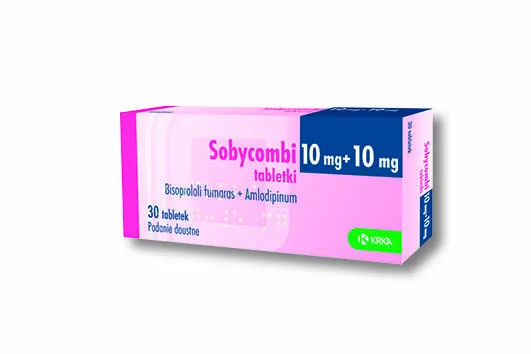
Table of Contents
Package leaflet: Information for the patient
Sobycombi, 5 mg + 5 mg, tablets
Sobycombi, 5 mg + 10 mg, tablets
Sobycombi, 10 mg + 5 mg, tablets
Sobycombi, 10 mg + 10 mg, tablets
bisoprololum fumaras + amlodipinum
Please read the entire leaflet carefully before using this medicine, as it contains
important information for the patient.
- Keep this leaflet for future reference.
- If you have any questions, please consult your doctor or pharmacist.
- This medicine has been prescribed for a specific individual. Do not share it with others. This medicine may harm other people, even if their symptoms are the same.
- If you experience any adverse reactions, including any not listed in this leaflet, inform your doctor or pharmacist. See section 4.
Table of contents
- What Sobycombi is and what it is used for
- Important information before taking Sobycombi
- How to take Sobycombi
- Possible side effects
- How to store Sobycombi
- Contents of the pack and other information
1. What Sobycombi is and what it is used for
Sobycombi contains two active substances: bisoprolol and amlodipine.
Sobycombi is indicated for the treatment of high blood pressure (hypertension) and (or) heart disease (stable angina pectoris) in patients who have been adequately controlled with concomitant administration of bisoprolol and amlodipine at the same doses as those contained in the fixed combination Sobycombi.
2. Important information before using Sobycombi
When not to use Sobycombi
- if the patient is allergic to bisoprolol, amlodipine, or any of the other ingredients of this medicine (listed in section 6), or to any calcium antagonist. Allergic reactions may include itching, redness of the skin, or difficulty breathing.
- in patients with severe asthma,
- in patients with severe peripheral circulatory disorders (e.g. Raynaud's syndrome), which may cause tingling, paleness or blueness of fingers and toes,
- in patients with untreated phaeochromocytoma, a rare tumour of the adrenal gland,
- in patients with metabolic acidosis, a condition in which there is an increased concentration of acids in the blood,
- in patients with acute heart failure,
- in patients experiencing an exacerbation of heart failure requiring intravenous administration of drugs that improve myocardial contractility,
- if the patient has bradycardia (slow heart rate),
- in patients with low blood pressure,
- in patients with certain heart diseases causing very slow or irregular heart rhythm,
- in cases of cardiogenic shock, i.e. acute, severe heart disorder resulting in low blood pressure and circulatory failure,
- if the patient has aortic valve stenosis,
- in patients with heart failure following myocardial infarction.
Warnings and precautions
Before starting treatment with Sobycombi, discuss this with your doctor or pharmacist.
Inform your doctor if the patient has or has had any of the following conditions:
- diabetes,
- strict fasting,
- certain heart conditions such as arrhythmias or severe chest pain at rest (Prinzmetal's angina),
- kidney or liver disease,
- milder forms of peripheral circulatory disorders,
- previous history of psoriasis (scaly rash),
- phaeochromocytoma of the adrenal gland,
- thyroid disorders,
- recent myocardial infarction,
- heart failure,
- marked increase in blood pressure (hypertensive crisis),
- chronic lung disease or mild form of bronchial asthma; immediately inform your doctor if breathing difficulties, cough, or exertional dyspnoea occur during treatment with Sobycombi.
Additionally, inform your doctor if the patient is planning:
- allergen immunotherapy (e.g. to prevent hay fever), as Sobycombi may increase the likelihood or severity of allergic reactions,
- anaesthesia (e.g. for surgery), as Sobycombi may affect the body's response to anaesthetic drugs.
Children and adolescents
Sobycombi is not recommended for use in children and adolescents under 18 years of age, as the benefits and risks have not been established in this patient group.
Sobycombi with other medicines
Tell your doctor or pharmacist about all medicines the patient is currently taking or has recently taken, as well as any medicines the patient plans to take.
Without specific medical advice, do not take the following medicines concomitantly with Sobycombi:
- certain medicines used to treat high blood pressure, angina, or irregular heart rhythm (calcium antagonists such as verapamil or diltiazem),
- certain antihypertensive medicines such as clonidine, methyldopa, moxonidine, rilmenidine. However, do not stop taking these medicines without first consulting your doctor.
Before taking any of the following medicines together with Sobycombi, consult your doctor – Sobycombi may affect the action of other medicines, other medicines may affect the action of Sobycombi, or more frequent medical monitoring may be required:
- certain medicines used to treat high blood pressure or angina (dihydropyridine-type calcium antagonists, e.g. felodipine),
- certain medicines used to treat irregular or abnormal heart rhythm (class I antiarrhythmics such as quinidine, disopyramide, lidocaine, phenytoin, flecainide, propafenone),
- certain medicines used to treat irregular or abnormal heart rhythm (class III antiarrhythmics such as amiodarone),
- locally administered beta-blockers (e.g. timolol eye drops used in glaucoma treatment),
- certain medicines used to treat, among others, Alzheimer's disease or glaucoma (parasympathomimetics such as tacrine or carbachol), or medicines used in acute heart conditions (sympathomimetics such as isoprenaline and dobutamine),
- antidiabetic medicines, including insulin,
- anaesthetic medicines (e.g. during surgery),
- cardiac glycosides used in the treatment of heart failure,
- non-steroidal anti-inflammatory drugs (NSAIDs) used to treat joint inflammation, pain or inflammation (e.g. ibuprofen or diclofenac),
- any medicines that may lower blood pressure as a desired or adverse effect, such as antihypertensives, certain antidepressants (tricyclic antidepressants such as imipramine or amitriptyline), certain antiepileptic or anaesthetic medicines (barbiturates such as phenobarbital), or certain medicines used to treat psychiatric disorders causing loss of contact with reality (phenothiazines such as levomepromazine),
- mefloquine, used for prevention or treatment of malaria,
- antidepressants known as monoamine oxidase inhibitors (except MAO-B inhibitors), such as moclobemide,
- ketoconazole, itraconazole (antifungal medicines),
- ritonavir, indinavir, nelfinavir (protease inhibitors used in HIV treatment),
- rifampicin, erythromycin, clarithromycin (antibiotics),
- St John's wort (Hypericum perforatum),
- verapamil, diltiazem (medicines used for heart conditions),
- tacrolimus, sirolimus, temsirolimus and everolimus (immunosuppressive medicines),
- simvastatin (a medicine that reduces blood cholesterol levels),
- cyclosporine (an immunosuppressive medicine).
Sobycombi may further lower blood pressure if the patient is taking other medicines used to treat high blood pressure.
Pregnancy and breastfeeding
There is a risk that using Sobycombi during pregnancy may be harmful to the unborn child.
If the patient is pregnant or breastfeeding, suspects she may be pregnant, or is planning to have a baby, she should consult her doctor or pharmacist before using this medicine.
Pregnancy
The safety of amlodipine use during pregnancy in humans has not been established. If the patient is pregnant, suspects she may be pregnant, or is planning to become pregnant, she should consult her doctor before using this medicine.
Breastfeeding
It has been shown that small amounts of amlodipine pass into human breast milk. It is not known whether bisoprolol passes into breast milk. Therefore, breastfeeding is not recommended during treatment with Sobycombi.
Driving and operating machinery
Sobycombi may affect the ability to drive or operate machinery, depending on the individual patient's tolerance to the medicine. If nausea, dizziness, fatigue or headache occur during treatment, the patient should not drive or operate machinery and should contact their doctor immediately.
Sobycombi contains sodium
This medicine contains less than 1 mmol (23 mg) of sodium per tablet; therefore, this medicine is considered "sodium-free".
3. How to take Sobycombi
Always take this medicine exactly as instructed by your doctor or pharmacist. If you have any doubts,
consult your doctor or pharmacist.
The recommended dose of Sobycombi is 1 tablet per day.
Tablets should be taken in the morning, with water, with or without food. Do not chew or crush the tablets.
It is important to take the medicine regularly. You should visit your doctor for a follow-up before running out of the prescribed medication.
The breakline on the tablet (if present) is not intended for dividing the tablet.
Taking more Sobycombi than recommended
If you take more Sobycombi tablets than prescribed, contact your doctor immediately. Taking too many tablets may cause blood pressure to become low or even dangerously low. Dizziness, a feeling of "emptiness" in the head, fainting, or weakness may occur. If blood pressure drops significantly, shock may develop. The patient's skin may become cold and clammy, and the patient may lose consciousness. Symptoms of overdose may also include slowed heart rate, severe breathing difficulties, or tremor (due to decreased blood glucose levels). If you take too many Sobycombi tablets, seek medical help immediately.
Breathlessness caused by excess fluid accumulating in the lungs (pulmonary edema) may occur up to 24–48 hours after taking the medicine.
If you forget to take a dose of Sobycombi
Do not worry if you miss a dose. Skip the missed dose and take the next dose at the usual time. Do not take a double dose to make up for a forgotten dose.
Stopping Sobycombi
Do not stop taking Sobycombi without consulting your doctor. Otherwise, your condition may return to what it was before starting treatment or may worsen.
If you have any further questions about using this medicine, consult your doctor or pharmacist.
4. Possible adverse reactions
Like all medicines, this medicine can cause adverse reactions, although not everybody will get them.
The most serious adverse reactions are related to heart function:
- Slowing of heart function (may occur in less than 1 in 100 patients),
- Worsening of heart failure (may occur in less than 1 in 100 patients),
- Slow or irregular heartbeat (may occur in less than 1 in 100 patients).
If any of the following very rare, serious adverse reactions occur after taking the medicine, seek immediate medical advice:
- Sudden wheezing, chest pain, breathlessness or difficulty breathing,
- Swelling of the eyelids, face or lips,
- Swelling of the tongue or throat causing significant breathing difficulties,
- Severe skin reactions including severe rash, hives, redness of the entire skin surface, intense itching, blistering, peeling and swelling of the skin, mucosal inflammation (Stevens-Johnson syndrome, toxic epidermal necrolysis) or other allergic reactions,
- Heart attack, abnormal heart function,
- Pancreatitis, which may cause severe upper abdominal pain radiating to the back, accompanied by a very poor general condition. If dizziness, weakness or difficulty breathing occur, contact a doctor as soon as possible.
BISOPROLOL
Common: may occur in up to 1 in 10 patients
- Dizziness, headache,
- Cold sensation or numbness in hands or feet,
- Gastrointestinal disturbances such as nausea, vomiting, diarrhoea or constipation,
- Feeling of fatigue.
Uncommon: may occur in up to 1 in 100 patients
- Sleep disturbances,
- Depression,
- Slowing of heart function,
- Low blood pressure,
- Breathing difficulties in patients with asthma or chronic lung disease,
- Muscle weakness, muscle cramps,
- Feeling of weakness.
Rare: may occur in up to 1 in 1,000 patients
- Hearing disturbances,
- Allergic rhinitis,
- Reduced tear production,
- Hepatitis which may cause yellowing of the skin or eyes,
- Abnormal results of certain blood tests performed to assess liver function or lipid levels,
- Allergic-type reactions such as itching, redness, rash,
- Erectile dysfunction,
- Nightmares, hallucinations,
- Fainting.
Very rare: may occur in up to 1 in 10,000 patients
- Eye irritation and redness (conjunctivitis),
- Hair loss,
- Development or worsening of scaly rash (psoriasis); psoriasis-type rash.
AMLODIPINE
The following common adverse reactions have been reported. If any of them are troublesome for the patient or persist for longer than one week , contact a doctor.
Very common: may occur in more than 1 in 10 patients
- Swelling (fluid retention).
Common: may occur in up to 1 in 10 patients
- Headache, dizziness, drowsiness (especially at the beginning of treatment),
- Palpitations (awareness of strong heartbeat), sudden flushing (especially of the face),
- Abdominal pain, nausea,
- Changes in bowel habits, diarrhoea, constipation, indigestion,
- Fatigue, weakness,
- Visual disturbances, double vision,
- Muscle cramps,
- Ankle swelling.
Other reported adverse reactions are listed below. If any of them worsen or if any adverse reactions not listed in this leaflet occur, inform your doctor or pharmacist.
Uncommon: may occur in up to 1 in 100 patients
- Mood changes, anxiety, depression, insomnia,
- Tremor, taste disturbances, fainting,
- Numbness or tingling sensations in limbs, loss of pain sensation,
- Ringing in the ears,
- Low blood pressure,
- Sneezing and/or nasal discharge due to inflammation of the nasal mucosa,
- Cough,
- Dryness of the oral mucosa, vomiting,
- Hair loss, excessive sweating, skin itching, red spots on the skin, skin discoloration,
- Urinary problems, increased need to urinate at night, increased frequency of urination,
- Erectile dysfunction, discomfort or enlargement of the breasts in men,
- Pain, malaise,
- Joint or muscle pain, back pain,
- Increase or decrease in body weight.
Rare: may occur in up to 1 in 1,000 patients
- Disorientation.
Very rare: may occur in up to 1 in 10,000 patients
- Decrease in white blood cell count, decrease in platelet count, which may lead to development of unusual bruises and easy bleeding,
- Increased blood glucose levels (hyperglycaemia),
- Nerve disorders causing weakness, tingling or numbness,
- Gum swelling,
- Abdominal bloating (gastritis),
- Liver function disorders, hepatitis, yellowing of the skin (jaundice), increased liver enzyme activity, which may affect results of certain diagnostic tests,
- Increased muscle tone,
- Vasculitis, often accompanied by skin rash,
- Photosensitivity.
Not known: frequency cannot be estimated from the available data
- Tremor, stiffness, mask-like facial expression, slowed movements and shuffling gait, unsteady gait.
Reporting of adverse reactions
If any adverse reactions occur, including any not listed in this leaflet, inform your doctor or pharmacist. Adverse reactions can be reported directly to the Department of Monitoring Adverse Drug Reactions of the Office for Registration of Medicinal Products, Medical Devices and Biocidal Products:
Al. Jerozolimskie 181C, 02-222 Warsaw
Tel.: + 48 22 49 21 301
Fax: + 48 22 49 21 309
Website: https://smz.ezdrowie.gov.pl
Adverse reactions can also be reported to the marketing authorization holder.
Reporting adverse reactions helps to provide more information on the safety of the medicine.
5. How to store Sobycombi
Keep this medicine out of sight and reach of children.
Do not use this medicine after the expiry date stated on the packaging following the abbreviation
"EXP". The expiry date refers to the last day of the stated month.
The batch number is indicated on the packaging following the abbreviation "Lot".
Do not store above 30°C.
Store in the original packaging to protect from light and moisture.
Medicines must not be disposed of via wastewater or household waste. Ask your pharmacist how to dispose of medicines no longer required. These measures will help protect the environment.
6. Contents of the pack and other information
What Sobycombi contains
- The active substances are bisoprolol fumarate and amlodipine (in the form of amlodipine besilate).
Sobycombi 5 mg + 5 mg tablets: Each tablet contains 5 mg bisoprolol fumarate and 5 mg amlodipine (as amlodipine besilate).
Sobycombi 5 mg + 10 mg tablets: Each tablet contains 5 mg bisoprolol fumarate and 10 mg amlodipine (as amlodipine besilate).
Sobycombi 10 mg + 5 mg tablets: Each tablet contains 10 mg bisoprolol fumarate and 5 mg amlodipine (as amlodipine besilate).
Sobycombi 10 mg + 10 mg tablets: Each tablet contains 10 mg bisoprolol fumarate and 10 mg amlodipine (as amlodipine besilate). - The other ingredients (excipients) are: microcrystalline cellulose, sodium carboxymethyl starch (type A), colloidal anhydrous silica, and magnesium stearate (E470b). See section 2 "Sobycombi contains sodium".
What Sobycombi looks like and contents of the pack
5 mg + 5 mg: white, round, biconvex tablets with bevelled edges (diameter: 6.9–7.1 mm, thickness: 3.0–5.0 mm)
5 mg + 10 mg: white, round, slightly biconvex tablets with bevelled edges, marked with "CS" on one side (diameter: 10.0–10.2 mm, thickness: 3.4–5.0 mm)
10 mg + 5 mg: white, oval, biconvex tablets with a breakline on one side (length: 13.0–13.3 mm, width: 8 mm, thickness: 3.4–5.0 mm); the breakline on the tablet is not intended for splitting the tablet
10 mg + 10 mg: white, round, slightly biconvex tablets with bevelled edges and a breakline on one side (diameter: 10.0–10.2 mm, thickness: 3.4–5.0 mm); the breakline on the tablet is not intended for splitting the tablet
Pack sizes: 28, 30, 56, 60, 84 and 90 tablets in blisters, packed in a cardboard box.
Not all pack sizes may be marketed.
Marketing Authorisation Holder
KRKA, d.d., Novo mesto, Šmarješka cesta 6, 8501 Novo mesto, Slovenia
Manufacturer
KRKA, d.d., Novo mesto, Šmarješka cesta 6, 8501 Novo mesto, Slovenia
TAD Pharma GmbH, Heinz-Lohmann-Straße 5, 27472 Cuxhaven, Germany
This medicinal product is authorised in the European Economic Area countries under the following names:
| Bulgaria | Sobikombi |
| Estonia, Romania, Slovakia, Hungary | Sobycombi |
For more detailed information about this medicinal product, please contact the local representative of the marketing authorization holder:
KRKA-POLSKA Sp. z o.o.
Równoległa 5 Street
02-235 Warsaw
Tel. 22 57 37 500