Selexipag polpharma
Poland
Table of Contents
- Package leaflet: Information for the patient
- 1. What Selexipag Polpharma is and what it is used for
- 2. Important information before taking Selexipag Polpharma
- 3. How to take Selexipag Polpharma
- 4. Possible adverse reactions
- 5. How to store Selexipag Polpharma
- 6. Contents of the packaging and other information
Package leaflet: Information for the patient
Selexipag Polpharma, 200 micrograms, film-coated tablets
Selexipag Polpharma, 400 micrograms, film-coated tablets
Selexipag Polpharma, 600 micrograms, film-coated tablets
Selexipag Polpharma, 800 micrograms, film-coated tablets
Selexipag Polpharma, 1000 micrograms, film-coated tablets
Selexipag Polpharma, 1200 micrograms, film-coated tablets
Selexipag Polpharma, 1400 micrograms, film-coated tablets
Selexipag Polpharma, 1600 micrograms, film-coated tablets
Selexipagum
Please read all of this leaflet carefully before taking this medicine because it contains
important information for you.
- Keep this leaflet. You may need to read it again.
- If you have any further questions, ask your doctor or nurse.
- This medicine has been prescribed for you personally. Do not pass it on to others. It may harm them even if their symptoms are the same as yours.
- If you experience any side effects, including any not listed in this leaflet, tell your doctor or nurse. See section 4.
Contents of the leaflet
- What Selexipag Polpharma is and what it is used for
- What you need to know before taking Selexipag Polpharma
- How to take Selexipag Polpharma
- Possible side effects
- How to store Selexipag Polpharma
- Contents of the pack and other information
1. What Selexipag Polpharma is and what it is used for
Selexipag Polpharma contains the active substance selexipag. Selexipag affects blood vessels in a similar way to prostacyclin – a substance naturally present in the human body – causing them to relax and dilate.
Selexipag Polpharma is used for the long-term treatment of pulmonary arterial hypertension (PAH) in adult patients who are not adequately controlled with other PAH treatments known as endothelin receptor antagonists (ERA) and phosphodiesterase type 5 inhibitors (PDE-5). Selexipag Polpharma may be used as monotherapy in patients who are not eligible for treatment with these medications.
PAH means high blood pressure in the blood vessels that carry blood from the heart to the lungs (pulmonary arteries). In people with PAH, these arteries are narrowed, so the heart has to work harder to pump blood through them. This may lead to symptoms such as fatigue, dizziness, shortness of breath, or other symptoms.
By acting in a similar way to a naturally occurring substance called prostacyclin, this medicine dilates the pulmonary arteries and reduces their stiffness. This makes it easier for the heart to pump blood through the pulmonary arteries. Selexipag Polpharma lowers blood pressure in the pulmonary arteries, alleviates PAH symptoms, and slows down disease progression.
2. Important information before taking Selexipag Polpharma
When not to take Selexipag Polpharma
- if the patient has hypersensitivity to selexipag or to any of the other ingredients of this medicine (listed in section 6).
- if the patient has heart diseases such as:
- poor blood flow to the heart muscle (severe coronary artery disease or unstable angina); symptoms may include chest pain;
- myocardial infarction within the last 6 months;
- weakened heart (decompensated heart failure), if the patient is not under close medical supervision;
- severe cardiac arrhythmias;
- heart valve disorders (congenital or acquired) with impaired heart function (unrelated to pulmonary hypertension);
- stroke within the last 3 months or other event causing reduced cerebral perfusion (e.g. transient ischaemic attack);
- if the patient is taking gemfibrozil (a medicine used to lower blood lipid levels).
Warnings and precautions
Before starting treatment with Selexipag Polpharma, discuss with your doctor or
nurse if the patient:
- is taking medicines to lower high blood pressure;
- has hypotension associated with symptoms such as dizziness;
- has recently lost a significant amount of blood or body fluids, e.g. due to severe diarrhoea or vomiting;
- has thyroid dysfunction;
- has severe renal impairment or is undergoing dialysis;
- currently has or has previously had severe hepatic impairment.
If the patient experiences any of the above signs or a change in their health status,
they should immediately inform their doctor.
Children and adolescents
This medicine should not be used in children and adolescents under 18 years of age.
Elderly patients
Clinical experience with Selexipag Polpharma in patients over 75 years of age is limited. Selexipag Polpharma should be used with caution in this age group.
Selexipag Polpharma and other medicines
Tell your doctor about all medicines the patient is currently taking or has recently taken, as well as any medicines they plan to take.
Inform the doctor managing the patient's PAH treatment or the nurse if the patient is taking any of the following medicines:
- gemfibrozil (a medicine used to lower blood lipid levels),
- clopidogrel (a medicine used to prevent blood clots in coronary artery disease),
- deferasirox (a medicine used to remove iron from the bloodstream),
- teriflunomide (a medicine used in the treatment of relapsing-remitting multiple sclerosis),
- carbamazepine (a medicine used to treat certain types of epilepsy, neuropathic pain, or to manage severe affective disorders when other medicines are ineffective),
- phenytoin (a medicine used to treat epilepsy),
- valproic acid (a medicine used to treat epilepsy),
- probenecid (a medicine used to treat gout),
- fluconazole, rifampicin or rifapentine (antibiotics used to treat infections).
Pregnancy and breastfeeding
Selexipag Polpharma is not recommended during pregnancy and breastfeeding. Women of childbearing potential should use an effective method of contraception during treatment with Selexipag Polpharma. If the patient is pregnant or breastfeeding, suspects she may be pregnant, or is planning to become pregnant, she should consult her doctor before using this medicine.
Driving and operating machinery
Selexipag Polpharma may cause adverse effects such as headache and low blood pressure (see section 4), which may affect the ability to drive; the patient's underlying disease symptoms may also impair their ability to drive.
3. How to take Selexipag Polpharma
Selexipag Polpharma should only be prescribed by a doctor experienced in the treatment of PAH. This medicine should always be taken exactly as directed by your doctor.
If you have any doubts, consult your doctor.
You should inform your doctor if you experience any adverse reactions, as your doctor may recommend adjusting the dose of Selexipag Polpharma.
Inform your doctor if you have problems with liver function or are taking other medicines, as your doctor may recommend a lower dose of Selexipag Polpharma, taken twice daily or even once daily.
Patients with visual impairments or blindness should receive assistance from another person when taking Selexipag Polpharma during the dose-escalation period (the process of gradually increasing the dose).
Dose escalation
If your doctor prescribes 200 microgram tablets
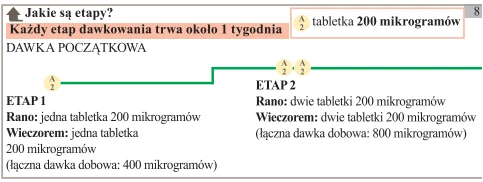
At the beginning of treatment, most patients will receive one 200 microgram tablet in the morning and another 200 microgram tablet in the evening, approximately 12 hours apart.
It is recommended to start therapy in the evening. Your doctor will instruct you on how to gradually increase the dose of the medicine. This period is called the dose-escalation phase. It allows the body to gradually adapt to the new medicine. The goal of dose escalation is to find the most appropriate dose, which will be the highest dose tolerated by the patient, up to a maximum of 1600 micrograms taken in the morning and 1600 micrograms in the evening.
The first pack of tablets you receive will contain light yellow 200 microgram tablets.
Your doctor will instruct you to gradually increase the dose, usually at weekly intervals, although the intervals between dose increases may be longer.
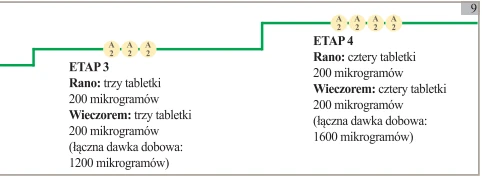
Each time the dose is increased, you will add one 200 microgram tablet to your morning dose and one 200 microgram tablet to your evening dose. The first increased dose should preferably be taken in the evening.
The diagram below shows the number of tablets to be taken each morning and each evening during the first four stages of dose escalation.
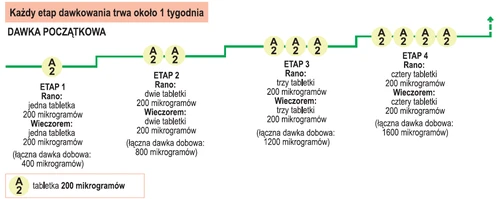
If your doctor instructs you to further increase the dose, you will continue adding one 200 microgram tablet to your morning dose and one 200 microgram tablet to your evening dose at each subsequent stage. The first increased dose should preferably be taken in the evening.
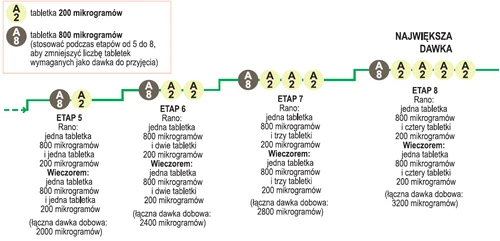
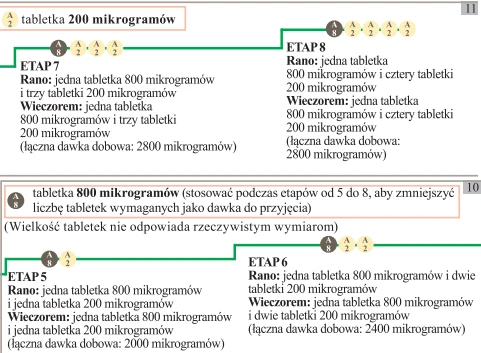
If your doctor instructs you to continue increasing the dose and you reach stage 5, this may involve taking one brown 800 microgram tablet and one light yellow 200 microgram tablet in the morning, and one 800 microgram tablet and one 200 microgram tablet in the evening.
The maximum dose of Selexipag Polpharma is 1600 micrograms in the morning and 1600 micrograms in the evening. However, not every patient will receive this dose, as individual patients require different doses.
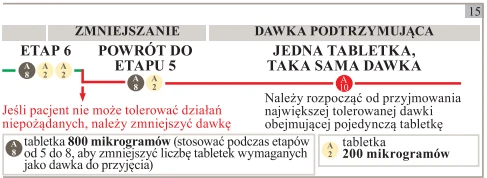
The diagram below shows the number of tablets to be taken each morning and each evening at each stage, starting from stage 5.
If your doctor prescribes 100 microgram tablets
This medicine is not available in a 100 microgram strength; therefore, if such a dose is required, alternative medicines available on the market at the appropriate strength should be used.
Using the dose-escalation guide
You will receive a dose-escalation pack containing a dose-escalation guide and a patient leaflet. The dose-escalation guide provides information about the dose-escalation process and allows you to record the number of tablets taken each day.
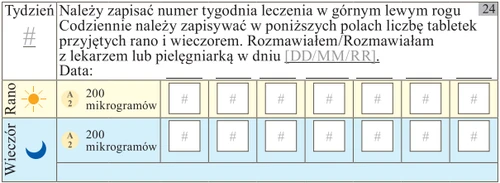
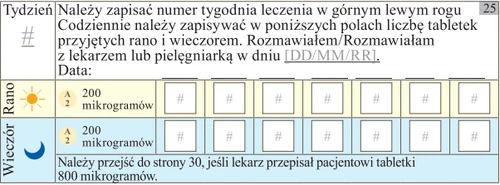
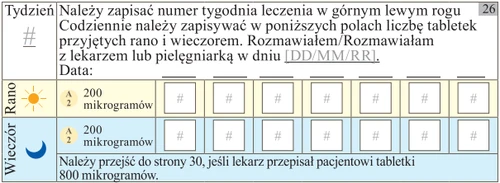
Remember to record the number of tablets taken daily in the dose-escalation diary. Each dose-escalation stage usually lasts 1 week. If your doctor instructs you to extend any stage beyond 1 week, additional pages in the dose-escalation diary allow for this recording. Remember to maintain regular contact with your PAH-treating doctor or nurse during the dose-escalation period.
Reducing the dose due to adverse effects
During dose escalation, you may experience adverse effects such as headache, diarrhoea, nausea, vomiting, jaw pain, muscle pain, leg pain, joint pain, or facial flushing (see section 4). If these adverse effects are difficult to tolerate, discuss with your doctor possible ways to reduce or manage them.
Medicines are available to help alleviate adverse effects. For example, pain relievers such as paracetamol may help relieve pain and headache.
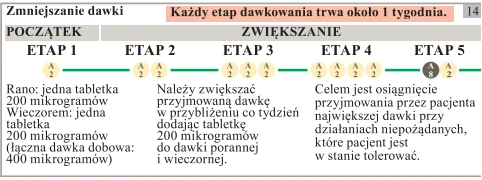
If adverse effects cannot be alleviated or do not gradually improve while taking the current dose, your doctor may instruct you to reduce the dose by decreasing the number of light yellow tablets by one in the morning and one in the evening. The scheme below illustrates the stepwise reduction of the dose. This should only be done under the direction of your doctor.
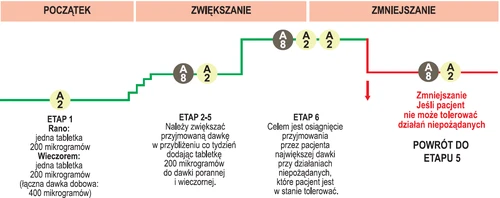
If the adverse effects experienced by the patient become tolerable after dose reduction, your doctor may decide to continue treatment at this reduced dose. Additional information is provided below under "Maintenance dose."
Maintenance dose
The highest dose tolerated by the patient during dose escalation becomes the maintenance dose. This is the dose the patient will take regularly.
Your doctor will prescribe the appropriate tablets corresponding to this dose. This may allow you to take one tablet in the morning and one tablet in the evening, instead of taking multiple tablets each time.
A full description of Selexipag Polpharma tablets, including their colours and markings, is provided in section 6 of this leaflet.
Over time, your doctor may adjust the maintenance dose as appropriate.
If, at any time during prolonged use of the same dose, you experience adverse effects that you cannot tolerate or that interfere with your daily activities, contact your doctor, as your current dose may need to be adjusted. Your doctor may prescribe a lower dose. Remember to dispose of any unused tablets (see section 5).
Selexipag Polpharma should be taken in the morning and evening, approximately 12 hours apart.
Take the tablets with food, as this may improve tolerability. The tablet coating provides protection. Swallow the tablets whole with a glass of water.
Do not split or crush the tablets.
Taking more Selexipag Polpharma than prescribed
If you take more tablets than prescribed, contact your doctor immediately.
Missing a dose of Selexipag Polpharma
If you forget to take your dose of Selexipag Polpharma, take it as soon as possible, then continue taking your tablets at the regular times. If the next dose is due within 6 hours, skip the missed dose and continue with your regular dosing schedule. Do not take a double dose to make up for a missed dose.
Stopping Selexipag Polpharma
Suddenly stopping Selexipag Polpharma may lead to worsening of symptoms. Do not stop taking Selexipag Polpharma without consulting your doctor.
Your doctor may instruct you to gradually reduce the dose before completely stopping treatment.
If, for any reason, you stop taking Selexipag Polpharma for more than 3 consecutive days (you miss 3 morning and 3 evening doses, or 6 or more consecutive doses), you should contact your doctor immediately, as it may be necessary to reduce the dose to avoid adverse effects. Your doctor may decide to restart treatment at a lower dose and gradually increase it back to the previous maintenance dose.
If you have any further questions about the use of this medicine, consult your doctor or nurse.
4. Possible adverse reactions
Like all medicines, this medicine can cause adverse reactions, although not everyone experiences them.
Adverse reactions may occur in patients not only during the dose-titration period, when the dose of the medicine is being increased, but also later, during prolonged administration of the same dose.
If the patient develops swelling of the face, lips, tongue or throat, which may lead to difficulty swallowing or breathing (angioedema), seek immediate medical advice.
If the patient experiences any of the following adverse reactions: headache, diarrhoea, nausea, vomiting, jaw pain, muscle pain, leg pain, joint pain or facial flushing, which the patient cannot tolerate or which cannot be relieved with medicines, the patient should consult a doctor, as the dose being taken may be too high and may require reduction.
Very common (occur in more than 1 in 10 patients):
- headache
- sudden facial flushing
- nausea and vomiting
- diarrhoea
- jaw pain, muscle pain, joint pain, leg pain
- nasopharyngitis (nasal congestion).
Common (occur in less than 1 in 10 patients):
- anaemia (low number of red blood cells)
- hyperthyroidism
- decreased appetite
- weight loss
- hypotension (low blood pressure)
- abdominal pain, including dyspepsia
- pain
- changes in certain blood test results, including blood cell counts or thyroid function
- skin rashes, including urticaria, which may cause burning or stinging sensations and skin redness
- angioedema and its symptoms described at the beginning of this section.
Uncommon (occur in less than 1 in 100 patients):
- increased heart rate.
Reporting of adverse reactions
If any adverse reactions occur, including any adverse reactions not listed in this leaflet, inform a doctor. Adverse reactions can be reported directly to the Department of Monitoring Adverse Drug Reactions at the Office for Registration of Medicinal Products, Medical Devices and Biocidal Products
Al. Jerozolimskie 181C
02-222 Warsaw
Phone: +48 22 49 21 301
Fax: +48 22 49 21 309
Website: https://smz.ezdrowie.gov.pl
Adverse reactions can also be reported to the marketing authorisation holder.
Reporting adverse reactions helps provide more information on the safety of the medicine.
5. How to store Selexipag Polpharma
Keep this medicine out of sight and reach of children.
Do not use this medicine after the expiry date stated on the carton and blister pack following "EXP".
The expiry date refers to the last day of the stated month.
Selexipag Polpharma 200 microgram tablets and 400 microgram tablets – do not store above 30°C.
Selexipag Polpharma 600, 800, 1000, 1200, 1400, 1600 microgram tablets – no special storage
instructions for this medicine.
Medicines must not be disposed of via wastewater or household waste. Ask your pharmacist how to dispose of medicines no longer required. These measures will help protect the environment.
6. Contents of the packaging and other information
What Selexipag Polpharma contains
- The active substance is selexipag. Each film-coated tablet contains 200 micrograms, 400 micrograms, 600 micrograms, 800 micrograms, 1000 micrograms, 1200 micrograms, 1400 micrograms, or 1600 micrograms of selexipag.
- Other ingredients are:
Tablet core: mannitol, maize starch, hydroxypropylcellulose, methacrylic acid and methyl methacrylate copolymer (1:1), magnesium stearate.
Tablet coating: hypromellose type 2910, propylene glycol (E1520), titanium dioxide (E171), yellow iron oxide (E172) (only for strengths 200 micrograms, 800 micrograms, 1400 micrograms, 1600 micrograms), red iron oxide (E172) (only for strengths 400 micrograms, 600 micrograms, 800 micrograms, 1000 micrograms, 1200 micrograms, 1600 micrograms), black iron oxide (E172) (only for strengths 400 micrograms, 800 micrograms, 1200 micrograms, 1600 micrograms), carnauba wax.
What Selexipag Polpharma looks like and what the packaging contains
Selexipag Polpharma, 200 micrograms: round, light yellow film-coated tablets (tablets) with "A2" debossed on one side and smooth on the other, approximately 7 mm in diameter.
Selexipag Polpharma, 400 micrograms: round, violet film-coated tablets (tablets) with "A4" debossed on one side and smooth on the other, approximately 7 mm in diameter.
Selexipag Polpharma, 600 micrograms: round, red film-coated tablets (tablets) with "A6" debossed on one side and smooth on the other, approximately 7 mm in diameter.
Selexipag Polpharma, 800 micrograms: round, brown film-coated tablets (tablets) with "A8" debossed on one side and smooth on the other, approximately 5.5 mm in diameter.
Selexipag Polpharma, 1000 micrograms: round, red film-coated tablets (tablets) with "A10" debossed on one side and smooth on the other, approximately 5.6 mm in diameter.
Selexipag Polpharma, 1200 micrograms: round, violet film-coated tablets (tablets) with "A12" debossed on one side and smooth on the other, approximately 6.5 mm in diameter.
Selexipag Polpharma, 1400 micrograms: round, light yellow film-coated tablets (tablets) with "A14" debossed on one side and smooth on the other, approximately 6.6 mm in diameter.
Selexipag Polpharma, 1600 micrograms: round, brown film-coated tablets (tablets) with "A16" debossed on one side and smooth on the other, approximately 7 mm in diameter.
Selexipag Polpharma 200 microgram film-coated tablets are packed in blisters containing 10 or 60 tablets, and 60 or 140 tablets (titration packs), or in unit dose blisters containing 10x1 or 60x1 tablets and 60x1 or 140x1 tablets (titration packs).
Selexipag Polpharma 400 microgram, 600 microgram, 800 microgram, 1000 microgram, 1200 microgram, 1400 microgram and 1600 microgram film-coated tablets are packed in blisters containing 60 tablets or in unit dose blisters containing 60x1 tablets.
Not all pack sizes may be marketed.
Marketing Authorisation Holder
Zakłady Farmaceutyczne POLPHARMA S.A.
Pelplińska Street 19, 83-200 Starogard Gdański
Phone: +48 22 364 61 01
Manufacturer/Importer
Synthon B.V.
Microweg 22
6545 CM Nijmegen
The Netherlands
Synthon Hispania S.L.
Calle De Castelló 1
08830 Sant Boi De Llobregat
Spain
Synthon s.r.o.
Brnenska 597/32
678 01 Blansko
Czech Republic
This medicinal product is authorised in the European Economic Area countries under the following names:
Netherlands: Selexipag Synthon 200-, 400-, 600-, 800-, 1,000-, 1,200-, 1,400-, 1,600 microgram, filmomhulde tabletten
TITRATION GUIDE – TITRATION PACK
Page 1
Selexipag Polpharma 200 microgram film-coated tablets
Selexipagum
Titration guide
Starting treatment with Selexipag Polpharma
Before starting treatment, read the patient information provided in the package leaflet. Inform the doctor if the patient experiences any adverse reactions, as the doctor may recommend adjusting the dose of Selexipag Polpharma. Inform the doctor about any other medicines the patient is taking, as the doctor may recommend taking the dose of Selexipag Polpharma only once daily.
Page 2 Page 3
| Table of contents How to take Selexipag Polpharma?...........4 How to increase the dose?..........................6 What are the steps for dose escalation?.......8 When to start dose reduction?.................12 Dose reduction........................................14 | When to start maintenance dosing?...........16 Missed dose of Selexipag Polpharma........18 Discontinuation of Selexipag Polpharma....19 Dose titration diary..................................20 |
Page 4 Page 5
| How to take Selexipag Polpharma? Selexipag Polpharma is a medicine taken twice daily, in the morning and evening, for the treatment of pulmonary arterial hypertension (PAH). The initial dose of Selexipag Polpharma is 200 micrograms taken in the morning and evening. The first dose of Selexipag Polpharma should be taken in the evening. Take the dose with a glass of water, preferably during a meal. | Treatment with Selexipag Polpharma consists of two phases: Dose Titration During the first few weeks, the doctor will work together with the patient to adjust the dose of Selexipag Polpharma to find the appropriate dose for the patient. The doctor may instruct the patient to increase the dose of Selexipag Polpharma from the initial dose. The doctor may also recommend reducing the dose. This process is called dose titration and allows the body to gradually adapt to the medicine. Maintenance Treatment Once the doctor has determined the appropriate dose for the patient, this will become the regular dose the patient takes on an ongoing basis. This is known as the maintenance dose. |
Page 6 Page 7
| How to increase the dose of the medicine? The patient starts taking the medicine at a dose of 200 micrograms in the morning and in the evening. With agreement from the doctor or nurse, the dose may be increased to the next level. The first increased dose should be taken in the evening. Each dose escalation step | Each patient with TNP requires individual dosing. For each patient, the maintenance dose may be different. Some patients may take 200 micrograms in the morning and evening as their maintenance dose, whereas other patients may take the maximum dose of 1600 micrograms in the morning and evening as their |
| lasts approximately 1 week. Finding the appropriate dose for the patient may take several weeks. The goal is to find the most suitable dose for the patient. This dose will become the maintenance dose. | maintenance dose. Other patients may take a dose between these two amounts as their maintenance dose. The most important aspect is finding the most appropriate dose for the patient. |
Page 8 Page 9
 |  |
Page 10 Page 11
Page 12 Page 13
| ↓ When to start reducing the dose? Like any medicine, Selexipag Polpharma may cause side effects as the dose of the medicine is increased. If a patient experiences side effects, they should speak with their doctor or nurse. There are treatments available to help relieve side effects. The most common side effects (may occur in more than 1 in 10 patients) during treatment with Selexipag Polpharma include: headache, diarrhoea, nausea, vomiting, jaw pain, muscle pain, leg pain, joint pain, facial flushing. A full list of side effects is provided in the patient leaflet. | If the patient does not tolerate the side effects despite attempts by the doctor or nurse to manage them, the doctor may decide to reduce the dose of the medicine. If the doctor instructs the patient to reduce the dose, the patient should take one 200 microgram tablet less in the morning and one 200 microgram tablet less in the evening. Dose reduction should only be carried out after discussing it with the doctor managing the PAH treatment. This dose-titration process will help determine the dose most appropriate for the patient. This will be the maintenance dose. |
Page 14 Page 15
 |  |
Page 16 Page 17
| When to start maintenance dose The highest dose the patient can tolerate during the titration period will be their maintenance dose. The maintenance dose is the dose the patient will take regularly from then on. The doctor may prescribe a single tablet of equivalent strength as the maintenance dose. This means that instead of taking several tablets at a given time of day, the patient may take one tablet in the morning and one tablet in the evening. | For example, if the highest tolerated dose was 1200 micrograms taken in the morning and evening: Over time, the doctor may, if necessary, adjust the maintenance dose.  |
Page 18 Page 19
| Missed dose of Selexipag Polpharma If a patient forgets to take a dose, they should take it as soon as possible, then continue taking tablets at the regular times. If more than 6 hours have passed since the scheduled dose time, the missed dose should be skipped, and the patient should continue taking the medication at the regular time. The patient should not take a double dose to make up for the missed dose. | Interrupting treatment with Selexipag Polpharma Patients must not stop taking Selexipag Polpharma without consulting their doctor. If, for any reason, a patient interrupts treatment with Selexipag Polpharma for more than three consecutive days (the patient has missed six or more consecutive doses), they should contact their doctor or nurse immediately, as it may be necessary to reduce the dose to avoid adverse effects. The doctor may decide to restart treatment with a lower dose and gradually increase it back to the previous maintenance dose. |
Page 20 Page 21
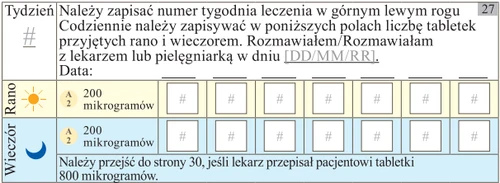
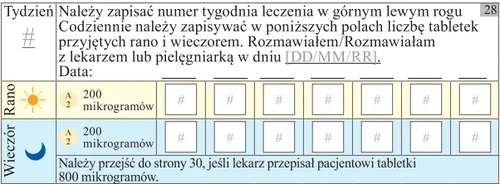
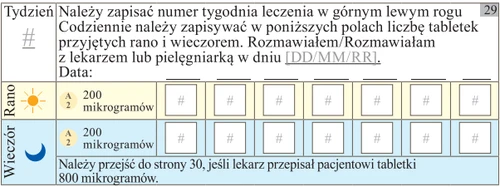
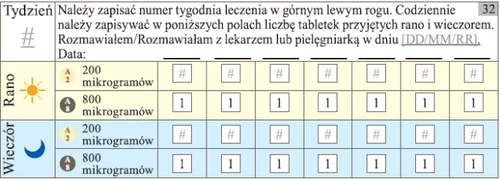
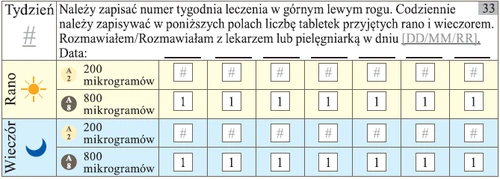
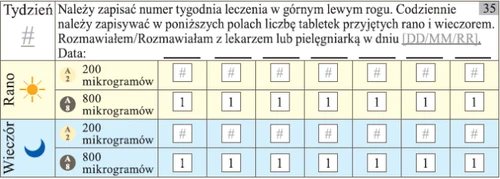
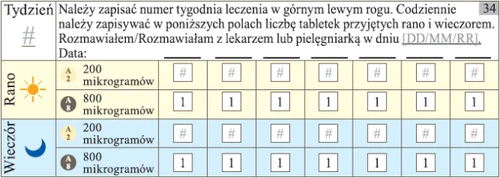
| Dose Titration Diary Please read the patient leaflet carefully. The following pages of the diary will help the patient record the number of tablets taken in the morning and evening during the dose titration period. Use these pages to record the number of tablets taken in the morning and evening. Each step usually lasts 1 week, unless the doctor advises otherwise. If the titration steps last longer than 1 week, additional pages in the dose titration diary will allow recording of this information. Use pages 22 to 29 to record medication taken during the first weeks of treatment, when the patient is taking only 200 microgram tablets (Steps 1–4).  | If the doctor has prescribed both 200 microgram and 800 microgram tablets, use pages 32 to 39 (Steps 5–8). Remember to maintain regular contact with the physician managing the PH treatment or the nurse. Record the instructions given by the doctor or nurse: Doctor's phone number and email address: Pharmacist's phone number: Notes:  |
Page 22 Page 23

Page 24 Page 25
Page 26 Page 27
Page 28 Page 29
 |  |
Page 30 Page 31
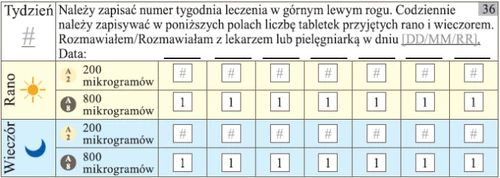
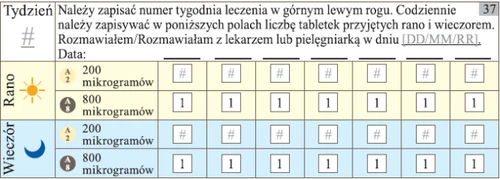
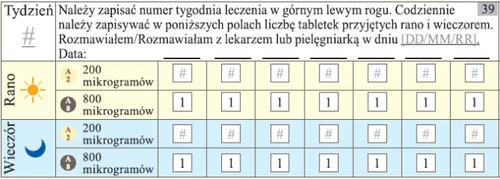
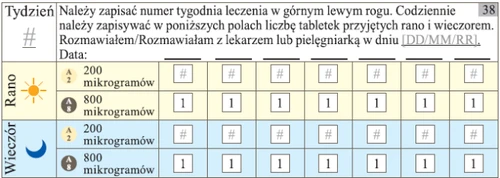
The next pages of the diary should be used if the doctor has prescribed tablets of 800 micrograms in addition to tablets of 200 micrograms.
On the diary pages, mark the intake of one tablet of 800 micrograms every morning and evening, together with the prescribed number of tablets of 200 micrograms.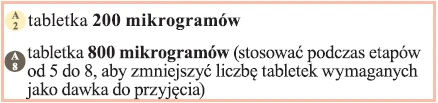 | Remember to maintain regular contact with the doctor managing PH treatment or with the nurse. Record the doctor's or nurse's instructions: Doctor's phone number and email address: Pharmacist's phone number: Notes: |
Page 32 Page 33
 |  |
Page 34 Page 35
Page 36 Page 37
 |  |
Page 38 Page 39
Page 40
| Notes |