Salmex
Poland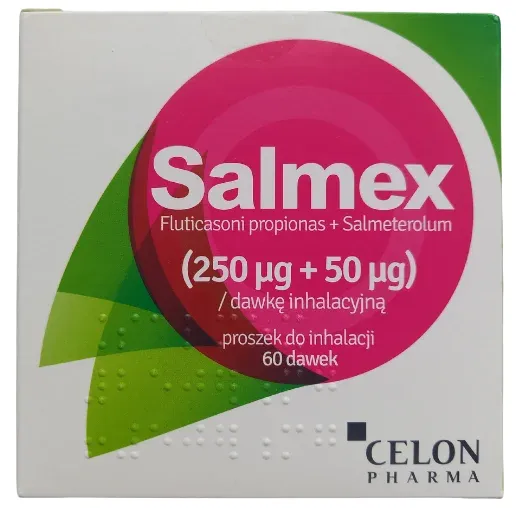
Table of Contents
Package leaflet: Information for the patient
Salmex, (100 μg + 50 μg)/inhalation dose, powder for inhalation
Salmex, (250 μg + 50 μg)/inhalation dose, powder for inhalation
Salmex, (500 μg + 50 μg)/inhalation dose, powder for inhalation
Fluticasone propionate + Salmeterol
Please read this leaflet carefully before using the medicine, as it contains
important information for the patient.
- Keep this leaflet, so that you can read it again if necessary.
- If you have any questions, please consult your doctor or pharmacist.
- This medicine has been prescribed for a specific individual. Do not give it to others. The medicine may harm another person, even if their symptoms are the same.
- If you experience any adverse reactions, including any not listed in this leaflet, inform your doctor or pharmacist. See section 4.
Leaflet contents:
- What Salmex is and what it is used for
- Important information before using Salmex
- How to use Salmex
- Possible side effects
- How to store Salmex
- Contents of the pack and other information
1. What Salmex is and what it is used for
Salmex is a combination medicine containing two active substances: salmeterol and fluticasone propionate.
Salmeterol belongs to a group of medicines called long-acting bronchodilators (its effect lasts at least 12 hours). It helps to open the airways, allowing easier airflow into and out of the lungs.
Fluticasone propionate belongs to a group of medicines called corticosteroids, which reduce swelling and irritation in the lungs.
Your doctor has prescribed this medicine to prevent breathing problems associated with:
- asthma,
- chronic obstructive pulmonary disease (COPD). Salmex at the dose of 500 μg + 50 μg reduces the frequency of exacerbations of COPD symptoms.
To ensure proper control of asthma or COPD, Salmex must be used every day as directed by your doctor.
Salmex does not work in managing sudden attacks of breathlessness or wheezing; in such cases, a fast-acting bronchodilator medicine must be used immediately.
2. Important information before using Salmex
When not to use Salmex
- if the patient is allergic to salmeterol, fluticasone propionate, or to monohydrate lactose,
a pharmaceutical excipient of the medicine.
Warnings and precautions
Before starting treatment with Salmex, consult a doctor or pharmacist.
Do not initiate treatment with Salmex during an asthma attack or significant worsening of asthma control. If asthma symptoms worsen or are not adequately controlled after starting Salmex, the patient should continue treatment and contact their doctor.
The doctor will closely monitor treatment in patients with the following conditions:
- heart disorders, including irregular or rapid heartbeat,
- hyperthyroidism,
- high blood pressure,
- diabetes (the medicine may increase blood glucose levels),
- low blood potassium levels,
- active or previously treated tuberculosis. If the patient has ever had any of these conditions, they should inform their doctor before starting Salmex.
Children and adolescents
Salmex is not recommended for use in children under 4 years of age.
With prolonged use of high doses of inhaled corticosteroids such as Salmex, systemic effects may occur. Children and adolescents under 16 years of age are particularly susceptible to these effects.
It is recommended that growth in children be regularly monitored during long-term treatment with inhaled corticosteroids.
The doctor will reduce the dose of inhaled corticosteroid to the lowest dose that provides effective control of asthma symptoms.
Salmex and other medicines
Inform your doctor or pharmacist about all medicines currently used or recently taken, as well as any medicines planned for use, including those used for asthma.
Salmex should not be used with certain medicines.
Before starting Salmex, inform your doctor if you are taking any of the following medicines:
- beta-blockers (e.g. atenolol, propranolol, sotalol). Beta-blockers are commonly used to treat high blood pressure or other heart conditions.
- antiviral medicines (e.g. ritonavir) and antifungal medicines (e.g. ketoconazole and itraconazole). Some of these medicines may increase the concentration of fluticasone propionate or salmeterol in the body. This may increase the risk of adverse effects, including irregular heartbeat, or may worsen existing adverse effects.
- corticosteroids (oral or injectable). If the patient has recently taken such medicines, this may increase the risk of adrenal dysfunction.
Pregnancy and breastfeeding
If the patient is pregnant, breastfeeding, suspects she may be pregnant, or plans to become pregnant, she should consult her doctor or pharmacist before using this medicine.
The doctor will assess whether the patient can use Salmex during this period.
Driving and operating machinery
It is unlikely that possible adverse effects associated with the use of Salmex would affect the ability to drive or operate machinery.
Salmex contains monohydrate lactose
Each dose of Salmex (100 μg + 50 μg) contains approximately 13.3 mg of monohydrate lactose.
Each dose of Salmex (250 μg + 50 μg) contains approximately 13.2 mg of monohydrate lactose.
Each dose of Salmex (500 μg + 50 μg) contains approximately 12.9 mg of monohydrate lactose.
If the patient has previously been diagnosed with intolerance to certain sugars, they should consult their doctor before taking this medicine.
3. How to use Salmex
Dosage
- Salmex should be used daily until your doctor advises otherwise.
- Salmex should always be used according to your doctor's instructions. Do not exceed the recommended dose. If in doubt, consult your doctor or pharmacist.
Asthma:
Adults and adolescents aged 12 years and older:
Salmex (100 μg + 50 μg): one inhalation twice daily.
Salmex (250 μg + 50 μg): one inhalation twice daily.
Salmex (500 μg + 50 μg): one inhalation twice daily.
Children aged 4 to 12 years:
Salmex (100 μg + 50 μg): one inhalation twice daily.
Salmex is not recommended for use in children under 4 years of age.
Chronic obstructive pulmonary disease (COPD):
Adults:
Salmex (500 μg + 50 μg): one inhalation twice daily.
If asthma symptoms are well controlled during treatment with Salmex twice daily, your doctor may recommend reducing the frequency of Salmex to once daily. The dose may be administered:
- once daily in the evening, if the patient's symptoms occur at night,
- once daily in the morning, if the patient's symptoms occur during the day.
It is very important that the doctor instructs the patient on how many inhalations to take and how often.
If you are using Salmex for asthma, your doctor will regularly monitor your symptoms.
If asthma symptoms worsen or asthma control deteriorates, you should
contact your doctor immediately. There may be an increase in wheezing and a need to use a higher dose of a fast-acting inhaled medicine to relieve breathing difficulties. In such a case, continue using the medicine, but do not increase the number of inhalations. The disease symptoms may worsen and the patient's condition may deteriorate. Contact your doctor, as additional treatment may be needed.
Salmex should not be used to relieve sudden asthma attacks. For this purpose, a fast-acting medicine (e.g. salbutamol) should be used as needed, which the patient should always carry with them. Be careful not to confuse Salmex with the fast-acting inhaled medicine.
Instructions for using the inhaler device
- Your doctor, nurse, or pharmacist should instruct you on how to properly use the inhaler device. They should periodically check whether you are using the inhaler correctly. Using Salmex incorrectly or not following your doctor's instructions may result in the medicine not providing the expected improvement in asthma or COPD.
- The inhaler device removed for the first time from the Salmex packaging is in the closed position.

- The inhaler device contains Salmex as individual doses of inhalation powder.
- The inhaler device is equipped with a dose counter indicating how many doses of medicine remain in the device. The counter displays numbers down to 0. Numbers from 5 to 0 appear with a dot as a warning that only a few doses remain in the inhaler. When the counter shows 0, the inhaler is empty. The inhaler contains 60 doses of Salmex.
Using the inhaler device
To use the inhaler device, follow the steps below:

1. Opening:
To open the inhaler, hold the cover with one hand and with the other hand slide the housing projection away from you until it stops, until you hear a click.
2. Dose preparation:
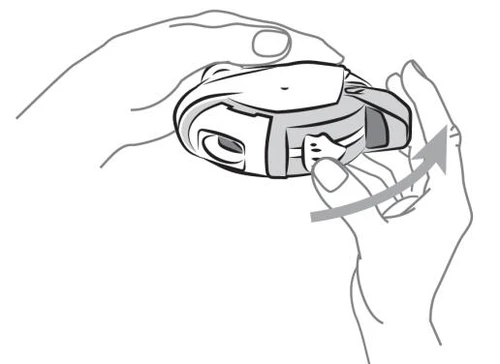
- Hold the inhaler with the mouthpiece facing towards you. You may hold it with either your right or left hand.
- Slide the slider fully away from you until you hear a characteristic sound. After sliding the slider, a small opening appears in the mouthpiece.
- The inhaler is now ready for use. Each time the slider is moved, the next dose of medicine is prepared for inhalation. Do not play with the slider, as this will release the next dose and reduce the number of available inhalations.
3. Performing inhalation: Before starting inhalation, carefully read the instructions below.
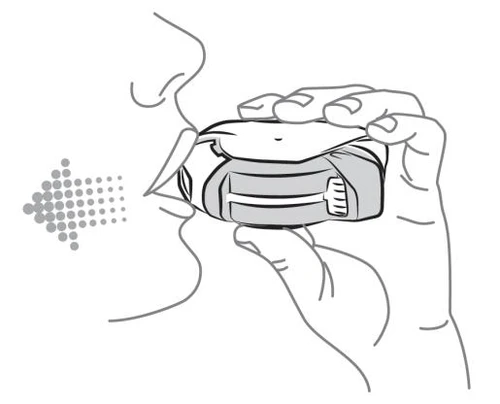
- Hold the inhaler at a certain distance from your mouth. Do not turn the inhaler with the mouthpiece facing downwards, as this may cause the prepared powder dose to spill out. Breathe out calmly and deeply. Do not exhale into the inhaler.
- Place the mouthpiece in your mouth and inhale deeply and slowly through your mouth (not through your nose) from the inhaler.
- Hold your breath, then remove the inhaler from your mouth. Hold your breath for several seconds, or as long as possible, then breathe out calmly. Rinsing your mouth with water and spitting it out after inhalation helps prevent hoarseness and oral thrush.
4. Closing:
- To close the inhaler, slide the housing projection towards you.
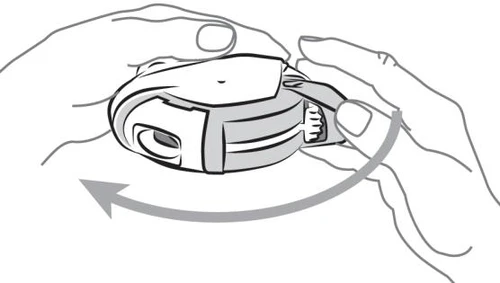
- Closing the inhaler is accompanied by a click sound. After closing, the dose-setting slider automatically returns to its original position, and the outer cover protects the device when not in use. The inhaler is ready for reuse.
Cleaning
To clean the inhaler mouthpiece, wipe it with a dry, soft cloth.
Accidental overdose of Salmex
It is important to use Salmex exactly as prescribed by your doctor. If you accidentally use more than the recommended dose, inform your doctor or pharmacist.
After using more than the recommended dose, the following adverse effects may occur:
- increased heart rate,
- tremors,
- headache,
- muscle weakness, joint pain.
If larger doses have been used for a prolonged period, contact your doctor or pharmacist for advice, as high doses of the medicine may reduce steroid hormone production by the adrenal glands.
Missed dose of Salmex
If you miss a dose of Salmex, take it as soon as possible, then continue taking the medicine as prescribed. Do not take a double dose to make up for a missed dose.
Stopping Salmex treatment
It is very important to take Salmex every day until your doctor advises you to stop. Do not suddenly stop taking Salmex or reduce the dose on your own.
Very rarely, after long-term use of high doses, sudden discontinuation of the medicine or dose reduction may cause adverse effects such as:
- stomach pain,
- fatigue,
- loss of appetite,
- nausea, diarrhea,
- weight loss,
- headache or drowsiness,
- low blood potassium levels,
- low blood pressure and seizures.
Very rarely, similar adverse effects may also occur during infections or periods of severe stress (e.g. accident or surgery). To prevent these symptoms, your doctor may prescribe additional corticosteroids to be used during this time.
If you have any further questions about the use of this medicine, consult your doctor or pharmacist.
4. Possible adverse reactions
Like all medicines, this medicine can cause adverse reactions, although not everyone will experience them.
To reduce the risk of adverse symptoms, your doctor will prescribe the lowest dose of
Salmex that controls asthma or COPD.
Allergic reactions: Patients may experience sudden breathing difficulties after using
Salmex. Wheezing, coughing, and itching or swelling (usually of the face, lips, tongue, or throat) may occur. If such symptoms occur suddenly after using Salmex, inform your doctor immediately.
Allergic reactions occur uncommonly (may occur in less than 1 in 100 patients taking the medicine).
Other adverse reactions:
Very common adverse reactions (may occur in more than 1 in 10 patients):
- Headache – this adverse effect usually decreases during continued treatment.
- Increased incidence of colds has been reported in patients with COPD.
Common adverse reactions (may occur in less than 1 in 10 patients):
- Oral and pharyngeal candidiasis (painful, creamy-white lesions), tongue pain, hoarseness, and loss of voice. Rinsing the mouth with water and spitting it out immediately after each inhalation may be helpful. Your doctor may prescribe an antifungal medicine to treat candidiasis.
- Joint pain, joint swelling, and muscle pain.
- Pneumonia (lung infection) in patients with COPD. Inform your doctor if any of the following symptoms occur during treatment with Salmex, as they may indicate a lung infection: fever or chills, increased mucus production, change in mucus color, worsening cough, or increased breathing difficulties.
The following adverse reactions have been reported in patients with chronic obstructive pulmonary disease (COPD):
- Bronchitis
- Easy bruising and traumatic fractures
- Sinusitis (feeling of pressure and fullness in the nose, cheeks, and behind the eyes, sometimes with pulsating pain)
- Decreased blood potassium levels (patients may experience irregular heartbeat, muscle weakness, or cramps)
Uncommon adverse reactions (may occur in less than 1 in 100 patients):
- Very rapid heartbeat (tachycardia)
- Tremor and rapid or irregular heartbeat (palpitations) – these symptoms are usually not serious and tend to decrease during continued treatment
- Muscle cramps
- Feeling of restlessness
- Throat irritation. Rinsing the mouth with water and spitting it out immediately after each inhalation may be helpful.
Rare adverse reactions (may occur in less than 1 in 1000 patients):
- Wheezing or breathing difficulties worsening immediately after taking the medicine. If such symptoms occur, stop using Salmex immediately, use a fast-acting inhaled medicine to relieve breathing difficulties, and contact your doctor without delay.
- Salmex may interfere with the body's normal production of steroid hormones, especially when high doses are used for prolonged periods. These effects include:
- slowed growth in children and adolescents,
- decreased bone mass,
- cataracts and glaucoma,
- increased body weight,
- facial rounding (moon-shaped face) (Cushing's syndrome). Your doctor will regularly check for these adverse effects and ensure that you are using the lowest effective dose of Salmex to control asthma.
- Increased blood glucose levels (hyperglycemia). In diabetic patients, more frequent monitoring of blood glucose levels and adjustment of current antidiabetic medication doses may be necessary.
- Sleep disturbances and behavioral changes such as excessive excitability and irritability (these effects occur mainly in children).
- Irregular heartbeat or extra beats (arrhythmias). Inform your doctor, but do not stop using Salmex unless instructed by your doctor.
- Rash.
Adverse reactions with unknown frequency (cannot be estimated from available data):
- Depression or aggression. These effects are more likely in children.
If any of the adverse reactions worsen or if any adverse reactions not listed in this leaflet occur, inform your doctor or pharmacist.
Reporting of adverse reactions
If any adverse reactions occur, including those not listed in this leaflet, inform your doctor or pharmacist. Adverse reactions can be reported directly to the Department of Monitoring of Adverse Drug Reactions, Office for Registration of Medicinal Products, Medical Devices and Biocidal Products, Al. Jerozolimskie 181C, 02-222 Warsaw, tel: +48 22 49 21 301, fax: +48 22 49 21 309, website: https://smz.ezdrowie.gov.pl
Adverse reactions may also be reported to the marketing authorization holder.
Reporting adverse reactions helps provide more information on the safety of this medicine.
5. How to store Salmex
Keep the medicine out of the sight and reach of children.
Store below 30°C, in the original packaging to protect from moisture.
Do not use Salmex after the expiry date (EXP) stated on the packaging.
The expiry date refers to the last day of the specified month.
Medicines must not be disposed of via wastewater or household waste. Ask your pharmacist how to properly dispose of medicines no longer in use. This will help protect the environment.
6. Contents of the pack and other information
What Salmex contains
- The active substances are: salmeterol (as salmeterol xinafoate) and fluticasone propionate. Each inhalation dose contains 50 micrograms of salmeterol (as salmeterol xinafoate) and either 100, 250 or 500 micrograms of fluticasone propionate.
- The other ingredient is lactose monohydrate, which contains milk proteins.
What Salmex looks like and contents of the pack
Salmex is a powder for inhalation.
Pack:
The medicine is supplied in an inhaler (inhalation device) equipped with a mouthpiece and a dose counter.
The inhalation device contains a blister with powder for inhalation divided into 60 doses.
The outer packaging is a cardboard box.
Each pack contains one inhalation device.
Marketing Authorisation Holder
Celon Pharma S.A.
ul. Ogrodowa 2A, Kiełpin
05-092 Łomianki
tel.: +48 22 751 59 33
Manufacturer
Celon Pharma S.A.
ul. Marymoncka 15
05-152 Kazuń Nowy
For further information, please contact the Marketing Authorisation Holder.