Ropivacaine kabi
Poland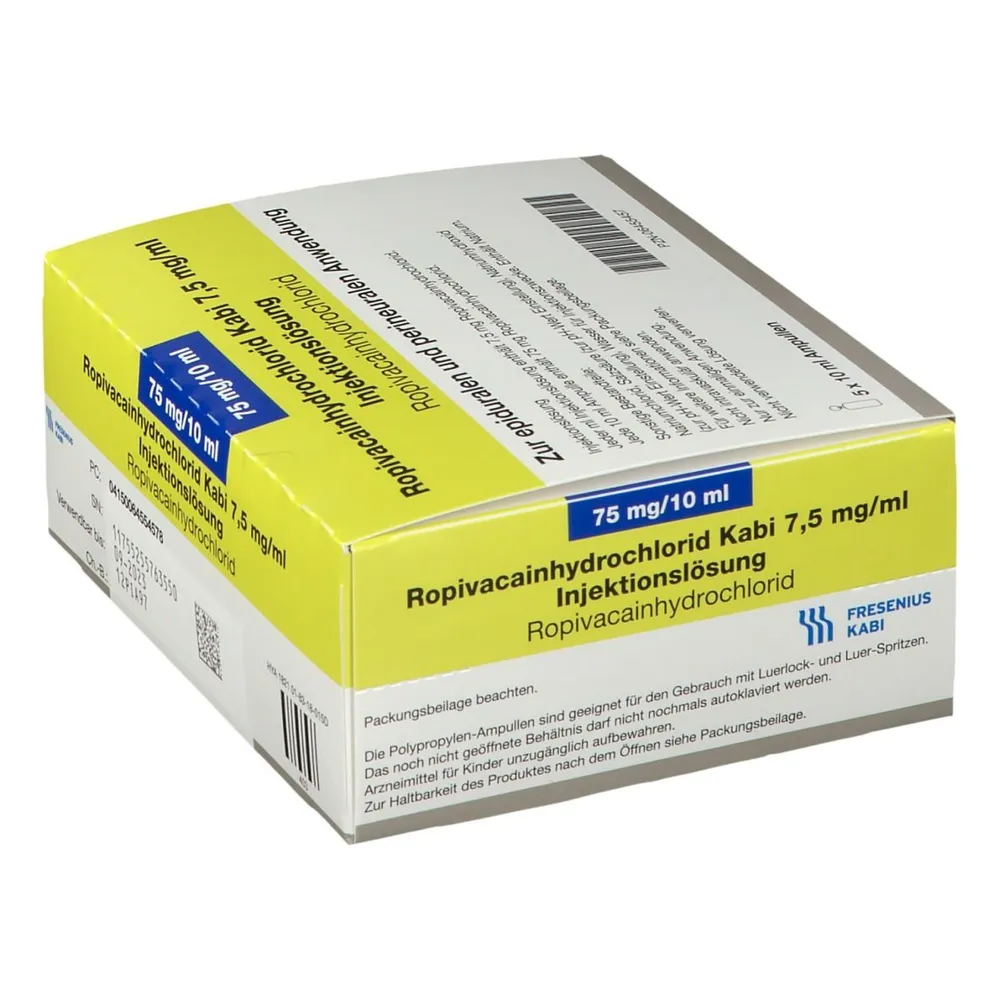
Table of Contents
- Package leaflet: Information for the user
- 1. What Ropivacaine Kabi is and what it is used for
- 2. Important information before using Ropivacaine Kabi
- 3. How to use Ropivacaine Kabi
- 4. Possible side effects
- 5. How to store Ropivacaine Kabi
- 6. Contents of the pack and other information
- Information intended exclusively for healthcare professionals:
Package leaflet: Information for the user
Ropivacaine Kabi, 2 mg/ml, solution for injection
Ropivacaine Kabi, 7.5 mg/ml, solution for injection
Ropivacaine Kabi, 10 mg/ml, solution for injection
Ropivacaini hydrochloridum
Please read all of this leaflet carefully before this medicine is administered, as it contains
important information for you.
Keep this leaflet, as you may need to read it again.
If you have any further questions, please ask your doctor, nurse or other healthcare professional.
If you experience any side effects, including any not listed in this leaflet, tell your doctor, pharmacist or other healthcare professional. See section 4.
The names of the medicines covered by this leaflet are:
Ropivacaine Kabi, 2 mg/ml, solution for injection
Ropivacaine Kabi, 7.5 mg/ml, solution for injection
Ropivacaine Kabi, 10 mg/ml, solution for injection
In this leaflet, they are collectively referred to as Ropivacaine Kabi.
Contents of the leaflet
- What Ropivacaine Kabi is and what it is used for
- What you need to know before receiving Ropivacaine Kabi
- How to use Ropivacaine Kabi
- Possible side effects
- How to store Ropivacaine Kabi
- Contents of the pack and other information
1. What Ropivacaine Kabi is and what it is used for
- Ropivacaine Kabi contains the active substance called ropivacaine hydrochloride.
- It belongs to a group of medicines called local anaesthetics.
Ropivacaine Kabi, 2 mg/ml, solution for injection is used in adults and children of all ages for the treatment of acute pain. It numbs specific parts of the body, for example after surgical procedures.
Ropivacaine Kabi, 7.5 mg/ml, solution for injection is used in adults and adolescents over 12 years of age to numb parts of the body and to prevent or relieve pain. It may be used for:
- Numbing parts of the body during surgery, including during caesarean section.
- Relieving pain during childbirth, after surgery or after trauma.
Ropivacaine Kabi, 10 mg/ml, solution for injection is used in adults and adolescents over 12 years of age to numb parts of the body during surgical procedures.
2. Important information before using Ropivacaine Kabi
When not to use Ropivacaine Kabi:
- if the patient is allergic (hypersensitive) to ropivacaine hydrochloride or any of the other ingredients of this medicine (listed in section 6);
- if the patient is allergic to other local anaesthetics from the same group of medicines (such as lidocaine or bupivacaine);
- if the patient has been diagnosed with reduced circulating blood volume (hypovolemia);
- by intravascular injection for regional anaesthesia of a specific body part;
- or by cervical injection to relieve pain during childbirth.
If the patient is unsure whether any of the above points apply, they should consult a doctor before using Ropivacaine Kabi.
Warnings and precautions
Extreme caution must be taken not to inject Ropivacaine Kabi directly into a blood vessel, which could cause immediate toxic effects. Injections should not be administered at sites affected by inflammation.
Before starting treatment with Ropivacaine Kabi, discuss with a doctor, nurse, or other qualified healthcare professional:
- if the patient is in a state of general weakness due to age or other factors;
- if the patient has heart disease (partial or complete heart conduction block);
- if the patient has advanced liver disease;
- if the patient has serious kidney problems.
Inform the doctor if the patient has any of the above conditions, as it may be necessary to adjust the dose of Ropivacaine Kabi.
Before starting treatment with Ropivacaine Kabi, discuss with a doctor, nurse, or other qualified healthcare professional:
- if the patient suffers from acute porphyria (a disorder affecting the production of haem, the red pigment in blood, sometimes leading to neurological symptoms).
Inform the doctor if the patient or a family member suffers from porphyria, as another anaesthetic medicine may need to be used.
Before starting treatment, inform the doctor about any existing medical conditions and current symptoms.
Children
Ropivacaine Kabi 2 mg/ml solution for injection
Special caution is required:
- in newborns, as they are more sensitive to Ropivacaine Kabi 2 mg/ml solution for injection.
- in children under 12 years of age, as the safety of Ropivacaine Kabi 2 mg/ml solution for injection for regional anaesthesia has not been established in younger children.
Ropivacaine Kabi 7.5 mg/ml and 10 mg/ml solutions for injection
In children up to 12 years of age, other concentrations (2 mg/ml and 5 mg/ml) may be more appropriate.
Ropivacaine Kabi and other medicines
Inform the doctor or qualified healthcare professional about all medicines currently used, recently used, or planned for use. Ropivacaine Kabi may affect the action of certain medicines, and some medicines may also affect the action of Ropivacaine Kabi.
In particular, inform the doctor if the patient is taking any of the following medicines:
- other local anaesthetics,
- strong painkillers, such as morphine or codeine,
- medicines used to treat heart rhythm disorders (arrhythmias), such as lidocaine and mexiletine.
The doctor must be informed about the use of these medicines in order to assess the appropriate dose of Ropivacaine Kabi.
Also inform the doctor if the patient is taking any of the following medicines:
- medicines used to treat depression (e.g. fluvoxamine),
- antibiotics used to treat bacterial infections (e.g. enoxacin), due to prolonged elimination of Ropivacaine Kabi from the patient's body when these medicines are used.
Prolonged use of Ropivacaine Kabi should be avoided when taking the above-mentioned medicines.
Pregnancy and breastfeeding
If the patient is pregnant or breastfeeding, suspects she may be pregnant, or is planning to have a child, she should consult a doctor before using this medicine.
There is no data available on the effects of ropivacaine on pregnancy or its passage into human milk.
Before using any medicine, consult a doctor or pharmacist if the patient is pregnant or breastfeeding.
Driving and operating machinery
Ropivacaine Kabi may cause drowsiness and slowed reaction times. After receiving Ropivacaine Kabi, the patient should not drive or operate vehicles or machinery until the following day.
Ropivacaine Kabi contains sodium
Ropivacaine Kabi 2 mg/ml solution for injection: This medicine contains 3.4 mg of sodium (the main component of table salt) in 1 ml of solution. This corresponds to 0.17% of the maximum recommended daily dietary sodium intake for adults.
Ropivacaine Kabi 7.5 mg/ml solution for injection: This medicine contains 2.99 mg of sodium (the main component of table salt) in 1 ml of solution. This corresponds to 0.15% of the maximum recommended daily dietary sodium intake for adults.
Ropivacaine Kabi 10 mg/ml solution for injection: This medicine contains 2.8 mg of sodium (the main component of table salt) in 1 ml of solution. This corresponds to 0.14% of the maximum recommended daily dietary sodium intake for adults.
3. How to use Ropivacaine Kabi
Ropivacaine Kabi will be administered to the patient by a doctor. The dose of the medicine given to the patient will depend on the type of anaesthetic effect required, body weight, age, and the patient's physical condition.
Ropivacaine Kabi will be given by injection. The site of administration of Ropivacaine Kabi will depend on which part of the body requires anaesthesia.
Ropivacaine Kabi may be administered at one of the following sites:
- the part of the body to be anaesthetized,
- near the part of the body to be anaesthetized,
- at a site distant from the part of the body to be anaesthetized. This occurs in the case of epidural administration (around the spinal cord). Administering Ropivacaine Kabi in one of the above ways prevents nerves from transmitting pain signals to the brain. The patient will no longer feel pain, heat, or cold in the treated area, but may still experience other sensations such as pressure or touch.
The doctor will know the correct way to administer this medicine to the patient.
Dosage
The amount of medicine given to the patient depends on the purpose for which the medicine is used and on the patient's health status, age, and body weight.
Duration of treatment
Administration of ropivacaine usually lasts from 2 to 10 hours in the case of anaesthesia prior to certain surgical procedures, and may last up to 72 hours for pain relief during or after surgery.
Administration of a higher than recommended dose of Ropivacaine Kabi
Severe adverse reactions resulting from administration of an excessive dose of Ropivacaine Kabi require specialized treatment, and the treating physician is trained to manage such situations. Initial symptoms of Ropivacaine Kabi overdose may include:
- hearing and vision problems (visual disturbances),
- numbness of the lips, tongue, and around the mouth,
- dizziness or a feeling of "emptiness in the head",
- tingling,
- speech disturbances characterized by poor articulation (dysarthria),
- muscle stiffness, muscle tremors, seizures (convulsions),
- low blood pressure,
- slow or irregular heartbeat.
These symptoms may precede cardiac arrest, respiratory arrest, or severe seizures. To minimize the risk of severe adverse reactions, the doctor will immediately discontinue administration of Ropivacaine Kabi if any of the above symptoms occur. This means that if the patient experiences any of the above symptoms or suspects having received a higher than recommended dose of Ropivacaine Kabi, the patient should immediately inform the doctor or another healthcare professional. Severe adverse reactions associated with administration of an excessive dose of Ropivacaine Kabi include speech disturbances, muscle tremors, tremor, chills, seizures (seizure attacks), and loss of consciousness. If any of these symptoms occur, the patient must immediately inform the doctor or another healthcare professional.
4. Possible side effects
Like all medicines, this medicine can cause side effects, although not everybody gets them.
Important side effects that need attention:
Sudden life-threatening allergic reactions (such as anaphylaxis, including anaphylactic shock) are
rare and occur in 1 to 10 out of 10,000 patients. Possible symptoms include:
- sudden appearance of rash,
- itchy or lumpy rash (urticaria),
- swelling of the face, lips, tongue or other parts of the body,
- shortness of breath, wheezing or difficulty breathing; feeling faint. If the patient thinks that Ropivacaine Kabi is causing an allergic reaction, they should immediately inform their doctor or other healthcare professionals.
Other possible side effects:
Very common (may affect more than 1 in 10 people):
- low blood pressure (hypotension), which may cause dizziness or a feeling of emptiness in the head,
- nausea.
Common (may affect up to 1 in 10 people): - tingling and prickling sensations (paraesthesia),
- dizziness,
- headache,
- slow or fast heartbeat (bradycardia, tachycardia),
- high blood pressure (hypertension),
- vomiting,
- difficulty passing urine (urinary retention),
- high temperature (fever) or shivering (chills),
- muscle stiffness,
- back pain.
Uncommon (may affect up to 1 in 100 people): - anxiety,
- loss of skin sensation or sensitivity,
- fainting,
- breathing difficulties,
- drop in body temperature (hypothermia),
- some symptoms may occur following accidental intravascular injection or if the patient receives a higher than recommended dose of Ropivacaine Kabi (see also section 3 “Use of more medicine than you should” above). These include: seizures, dizziness or feeling faint, numbness of lips and around the mouth, numbness of the tongue, hearing problems, vision problems, speech problems, muscle stiffness and tremor.
Rare (may affect up to 1 in 1,000 people): - heart attack (cardiac arrest),
- irregular heartbeat (arrhythmia).
Frequency not known (frequency cannot be estimated from the available data): - Horner’s syndrome.
Other possible side effects: - numbness caused by nerve irritation due to needle insertion or injection, usually short-lived,
- involuntary muscle movements (dyskinesia).
Possible side effects observed with other local anaesthetics that may also occur with Ropivacaine Kabi include: - nerve damage. This is rare (occurring in 1 to 10 out of 10,000 patients) and may lead to permanent problems.
- If too much Ropivacaine Kabi is administered into the cerebrospinal fluid, the whole body may become numb (anaesthetised). An epidural injection (injection into the space around the spinal nerves) may interrupt the nerve pathway from the brain to the head and neck, particularly in pregnant women, which may sometimes lead to a condition called Horner’s syndrome. This is characterised by reduced pupil size, drooping of the upper eyelid and inability of sweat glands to produce sweat. It resolves spontaneously after discontinuation of treatment.
Children
In children, side effects are the same as in adults, except for low blood pressure, which occurs less frequently in children (in 1 out of 10 to 100 children), and vomiting, which occurs more frequently in children (in more than 1 out of 10 children).
Reporting of side effects
If any side effects occur, including any not listed in this leaflet, tell your doctor or nurse. Side effects can be reported directly to the Department of Monitoring Adverse Drug Reactions of the Office for Registration of Medicinal Products, Medical Devices and Biocidal Products:
Al. Jerozolimskie 181C
02-222 Warszawa
tel.: + 48 22 49 21 301
fax: + 48 22 49 21 309
website: https://smz.ezdrowie.gov.pl
Side effects can also be reported to the responsible entity.
Reporting side effects helps provide more information on the safety of the medicine.
5. How to store Ropivacaine Kabi
This medicine does not require special storage conditions.
The medicine should be stored out of sight and reach of children.
Do not use this medicine after the expiry date (EXP) stated on the blister, ampoule,
or cardboard box. The expiry date refers to the last day of the stated month.
Do not use this medicine if any contamination of the injection solution is observed.
If the medicine is not used immediately after opening, the physician or hospital is responsible
for the storage and quality of Ropivacaine Kabi, as well as for the proper disposal of unused medicine.
Medicines must not be disposed of via the sewage system or household waste. Ask
your pharmacist how to dispose of medicines no longer in use. Such measures will help
protect the environment.
6. Contents of the pack and other information
What Ropivacaine Kabi contains
- The active substance is ropivacaine hydrochloride: 2 mg/ml, 7.5 mg/ml, 10 mg/ml. Each 10 ml polypropylene ampoule contains 20 mg, 75 mg, 100 mg of ropivacaine hydrochloride, respectively.
- Each 20 ml polypropylene ampoule contains 40 mg, 150 mg, 200 mg of ropivacaine hydrochloride, respectively.
- Other ingredients: sodium chloride, hydrochloric acid (for pH adjustment), sodium hydroxide (for pH adjustment), water for injections.
What Ropivacaine Kabi looks like and contents of the pack
Ropivacaine Kabi is a clear, colourless solution for injection. Ropivacaine Kabi 2 mg/ml, 7.5 mg/ml, 10 mg/ml, solution for injection is available in transparent polypropylene ampoules with a capacity of 10 ml and 20 ml.
Pack sizes:
1, 5, 10 ampoules in a PC/PE blister, all in a cardboard carton.
Not all pack sizes may be marketed.
Marketing Authorisation Holder and Manufacturer
Marketing Authorisation Holder
Fresenius Kabi Polska Sp. z o.o.
Al. Jerozolimskie 134
02-305 Warsaw
Poland
Manufacturer
HP Halden Pharma AS
Svinesundsveien 80
1788 Halden
Norway
For further information about this medicinal product, please contact the Marketing Authorisation Holder:
Fresenius Kabi Polska Sp. z o.o.
Al. Jerozolimskie 134
02-305 Warsaw
Poland
Tel.: +48 22 345 67 89
This medicinal product is authorised in the European Economic Area and the United Kingdom (Northern Ireland) under the following names:
Ropivacaine Kabi, 2 mg/ml, solution for injection
| Member State | Trade name |
| Netherlands | Ropivacaïne HCl Fresenius Kabi 2 mg/ml solution for injection |
| Austria | Ropivacainhydrochlorid Kabi 2 mg/ml Injektionslösung |
| Estonia | Ropivacaine Kabi |
| Hungary | Ropivacaine Fresenius Kabi 2 mg/ml oldatos injekció |
| Lithuania | Ropivacaine hydrochloride Kabi 2 mg/ml injekcinis tirpalas |
| Latvia | Ropivacaine Kabi 2 mg/ml šķīdums injekcijām |
| Malta | Ropivacaine Kabi 2 mg/ml |
| Poland | Ropivacaine Kabi |
| Slovakia | Ropivacaine Kabi 2 mg/ml injekčný roztok |
| Belgium | Ropivacaïne Fresenius Kabi 2 mg/ml oplossing voor injectie/solution injectable/Injektionslösung |
| Cyprus | Ropivacaine Kabi 2 mg/ml, ενέσιμο διάλυμα |
| Member State | Trade name |
| Germany | Ropivacainhydrochlorid Kabi 2 mg/ml Injektionslösung |
| Denmark | Ropivacain Fresenius Kabi injektionsvaeske, opløsning, 2 mg/ml |
| Greece | Ropivacaine Kabi 2 mg/ml, ενέσιμο διάλυμα |
| Spain | Ropivacaina Kabi 2 mg/ml solución inyectable |
| Finland | Ropivacain Fresenius Kabi 2 mg/ml injektioneste, liuos |
| France | Ropivacaïne Kabi 2 mg/ml, solution injectable |
| Ireland | Ropivacaine 2 mg/ml solution for injection |
| Italy | Ropivacaina Kabi |
| Luxembourg | Ropivacaïne Fresenius Kabi 2 mg/ml Injektionslösung |
| Norway | Ropivacain Fresenius Kabi 2 mg/ml injeksjonsvæske, oppløsning |
| Portugal | Ropivacaína Kabi |
| Sweden | Ropivacain Fresenius Kabi 2 mg/ml, injektionsvätska, lösning |
| United Kingdom (Northern Ireland) | Ropivacaine 2 mg/ml solution for injection |
Ropivacaine Kabi, 7.5 mg/ml, solution for injection
| Member State | Medicinal product name |
| Netherlands | Ropivacaïne Fresenius Kabi 7.5 mg/ml solution for injection |
| Austria | Ropivacainhydrochlorid Kabi 7.5 mg/ml Injektionslösung |
| Estonia | Ropivacaine Kabi |
| Hungary | Ropivacaine Fresenius Kabi 7.5 mg/ml oldatos injekció |
| Lithuania | Ropivacaine hydrochloride Kabi 7.5 mg/ml injekcinis tirpalas |
| Latvia | Ropivacaine Kabi 7.5 mg/ml šķīdums injekcijām |
| Malta | Ropivacaine Kabi 7.5 mg/ml |
| Poland | Ropivacaine Kabi |
| Slovakia | Ropivacaine Kabi 7.5 mg/ml injekčný roztok |
| Belgium | Ropivacaïne Fresenius Kabi 7.5 mg/ml oplossing voor injectie/solution injectable/Injektionslösung |
| Bulgaria | Ropivacain Kabi 7.5 mg/ml, инжекционен разтвор |
| Cyprus | Ropivacaine Kabi 7.5 mg/ml, ενέσιμο διάλυμα |
| Germany | Ropivacainhydrochlorid Kabi 7.5 mg/ml Injektionslösung |
| Denmark | Ropivacaine Fresenius Kabi, injektionsvaeske, opløsning, 7.5 mg/ml |
| Member State | Medicinal product name |
| Greece | Ropivacaine Kabi 7.5 mg/ml, ενέσιμο διάλυμα |
| Spain | Ropivacaina Kabi 7.5 mg/ml solución inyectable |
| Finland | Ropivacain Fresenius Kabi 7.5 mg/ml injektioneste, liuos |
| France | Ropivacaïne Kabi 7.5 mg/ml, solution injectable |
| Ireland | Ropivacaine 7.5 mg/ml solution for injection |
| Italy | Ropivacaina Kabi |
| Luxembourg | Ropivacaïine Fresenius Kabi 7.5 mg/ml Injektionslösung |
| Norway | Ropivacain Fresenius Kabi 7.5 mg/ml injeksjonsvæske, oppløsning |
| Portugal | Ropivacaína Kabi |
| Slovenia | Ropivakainijev klorid Kabi 7.5 mg/ml raztopina za injiciranje |
| Sweden | Ropivacain Fresenius Kabi 7.5 mg/ml, injektionsvätska, lösning |
| United Kingdom (Northern Ireland) | Ropivacaine 7.5 mg/ml solution for injection |
Ropivacaine Kabi, 10 mg/ml, solution for injection
| Member State | Trade name |
| Netherlands | Ropivacaïne Fresenius Kabi 10 mg/ml solution for injection |
| Austria | Ropivacainhydrochlorid Kabi 10 mg/ml Injektionslösung |
| Estonia | Ropivacaine Kabi |
| Hungary | Ropivacaine Fresenius Kabi 10 mg/ml oldatos injekció |
| Lithuania | Ropivacaine hydrochloride Kabi 10 mg/ml injekcinis tirpalas |
| Latvia | Ropivacaine Kabi 10 mg/ml šķīdums injekcijām |
| Malta | Ropivacaine Kabi 10 mg/ml |
| Slovakia | Ropivacaine Kabi 10 mg/ml injekčný roztok |
| Belgium | Ropivacaïne Fresenius Kabi 10 mg/ml oplossing voor injectie/solution injectable/Injektionslösung |
| Cyprus | Ropivacaine Kabi 10 mg/ml, ενέσιμο διάλυμα |
| Germany | Ropivacainhydrochlorid Kabi 10 mg/ml Injektionslösung |
| Denmark | Ropivacaine Fresenius Kabi, injektionsvæske, opløsning, 10 mg/ml |
| Greece | Ropivacaine Kabi 10 mg/ml, ενέσιμο διάλυμα |
| Spain | Ropivacaina Kabi 10 mg/ml solución inyectable |
| Finland | Ropivacain Fresenius Kabi 10 mg/ml injektioneste, liuos |
| Member State | Trade name |
| France | Ropivacaïne Kabi 10 mg/ml, solution injectable |
| Italy | Ropivacaina Kabi |
| Luxembourg | Ropivacaïne Fresenius Kabi 10 mg/ml Injektionslösung |
| Norway | Ropivacain Fresenius Kabi 10 mg/ml injeksjonsvæske, oppløsning |
| Poland | Ropivacaine Kabi |
| Portugal | Ropivacaína Kabi |
| Romania | Ropivacaina Kabi 10 mg/ml soluţie injectabilă |
| Slovenia | Ropivakainijev klorid Kabi 10 mg/ml raztopina za injiciranje |
| Sweden | Ropivacain Fresenius Kabi 10 mg/ml, injektionsvätska, lösning |
| United Kingdom (Northern Ireland) | Ropivacaine 10 mg/ml solution for injection |
Information intended exclusively for healthcare professionals:
Preparation for use
Ropivacaine Kabi should be administered only by, or under the supervision of, physicians experienced in the techniques of regional anaesthesia (see section 3).
Shelf-life after opening
Use immediately.
Ropivacaine Kabi is intended for single use only.
Any unused solution should be discarded.
The medicinal product should be visually inspected before use. The solution should be used only if it is clear, free from particulate matter, and the container is undamaged.
The packaging must not be resterilized in an autoclave.
Pharmaceutical incompatibilities
Compatibility studies are lacking; therefore, this medicinal product must not be mixed with other medicinal products.
Precipitation may occur in alkaline solutions, as ropivacaine exhibits low solubility at pH > 6.0.
Disposal of unused medicinal product or waste
Any unused residues or waste material should be disposed of in accordance with local regulations.