Rolicyn
Poland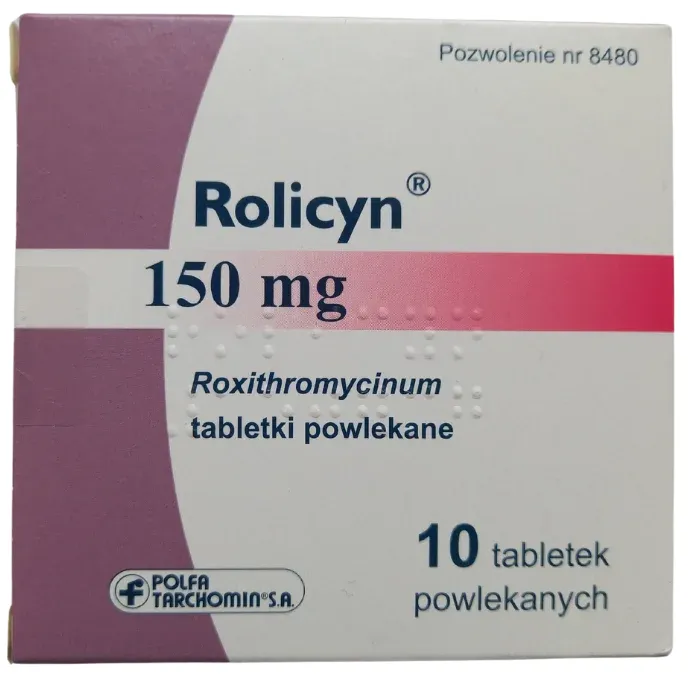
Table of Contents
Package leaflet: Information for the patient
Rolicyn, 50 mg, film-coated tablets
Rolicyn, 100 mg, film-coated tablets
Rolicyn, 150 mg, film-coated tablets
roxithromycin
Please read this leaflet carefully before using this medicine, as it contains important information for you.
- Keep this leaflet, as you may need to read it again.
- If you have any questions, please consult your doctor or pharmacist.
- This medicine has been prescribed for a specific individual. Do not pass it on to others. This medicine may harm others, even if their symptoms are the same.
- If you experience any adverse reactions, including any not listed in this leaflet, inform your doctor or pharmacist. See section 4.
Table of contents of the leaflet
- What Rolicyn is and what it is used for
- Important information before taking Rolicyn
- How to take Rolicyn
- Possible side effects
- How to store Rolicyn
- Contents of the pack and other information
1. What Rolicyn is and what it is used for
Rolicyn contains roxithromycin as the active substance, which is a semi-synthetic macrolide antibiotic, a derivative of erythromycin.
Rolicyn is used to treat infections caused by bacteria sensitive to roxithromycin.
- Upper respiratory tract infections: tonsillitis, pharyngitis, rhinopharyngitis, sinusitis.
- Otitis media.
- Lower respiratory tract infections: pneumonia, bronchitis, lung abscesses, and bronchiectasis.
- Skin and soft tissue infections.
- Non-gonococcal genital infections.
2. Important information before using Rolicyn
When not to use Rolicyn:
- if the patient is allergic to roxithromycin or any of the other ingredients of Rolicyn (listed in section 6);
- if the patient has a known allergy to other macrolide antibiotics;
- if the patient is taking vasoconstrictive medications (e.g., those used during migraine, such as ergotamine, dihydroergotamine, bromocriptine);
- if the patient is taking astemizole, cisapride, pimozide, or terfenadine (see "Taking other medicines with Rolicyn").
➢ If any of the above conditions apply, the patient should not take Rolicyn. In case of doubt, consult the treating physician or pharmacist before starting Rolicyn.
Warnings and precautions
Before starting treatment with Rolicyn, inform the physician if:
- the patient has previously experienced an allergic reaction to roxithromycin or other macrolides;
- the patient has myasthenia gravis (a disease characterized by rapid muscle fatigue and weakness);
- the patient has liver disease;
- the patient has heart disease;
- the patient is taking antiarrhythmic drugs of class IA and III (see section 2 "Rolicyn and other medicines").
Inform the doctor if, during treatment, the patient experiences:
- rash;
- symptoms of a new infection.
If in doubt whether any of the above conditions apply, consult the treating physician or pharmacist before starting Rolicyn.
In case of extensive, severe skin rash involving blistering or skin peeling, flu-like symptoms and fever (Stevens-Johnson syndrome), general malaise, fever, chills, and muscle pain (toxic epidermal necrolysis), or red, scaly rash with subcutaneous nodules and blisters (acute generalized exanthematous pustulosis), seek immediate medical attention, as these skin reactions may be life-threatening.
If the patient develops diarrhea during or after completing treatment with Rolicyn, inform the doctor. This may be a sign of pseudomembranous colitis—a complication associated with antibiotic use. In such cases, treatment must be discontinued and specific therapy may be required. Do not use antidiarrheal agents or other constipating medications.
In certain cases, the physician may perform tests to identify the type of bacteria causing the infection. Depending on the results, the patient may receive Rolicyn at a different dose or another antibiotic.
Rolicyn and other medicines
Inform the doctor about all medicines currently or recently taken, as well as any medicines the patient plans to take, especially those listed below.
Medicines that must not be taken during treatment with Rolicyn:
- ergotamine derivatives (ergot alkaloids): ergotamine, dihydroergotamine, bromocriptine (used for migraine headaches);
- terfenadine (used for allergic rhinitis);
- astemizole (used in allergic conditions);
- cisapride (used in patients with delayed gastric emptying);
- pimozide (used to control involuntary movements [tics]).
Other medicines about which the patient should inform the doctor:
- anticoagulants (e.g., warfarin, vitamin K);
- disopyramide (used for cardiac arrhythmias);
- midazolam, triazolam (used as sedatives and anxiolytics);
- theophylline (a bronchodilator used in asthma and chronic obstructive pulmonary disease);
- cyclosporine (used in transplant patients);
- statins (e.g., simvastatin, atorvastatin, used to lower total blood cholesterol levels) – may increase the risk of muscle-related adverse effects (myopathy, rhabdomyolysis) due to possible increased exposure to statins when co-administered with roxithromycin;
- other medicines: carbamazepine, ranitidine, aluminium or magnesium hydroxide, oral contraceptives. 2
Pregnancy and breastfeeding
If the patient is pregnant or breastfeeding, suspects she may be pregnant, or is planning to become pregnant, she should consult her doctor before using this medicine.
If the patient is pregnant or suspects she may be pregnant
If the patient is planning to become pregnant or suspects she is pregnant, she should inform her doctor. Rolicyn may be used during pregnancy only if the physician considers it absolutely necessary.
If the patient is breastfeeding
Roxithromycin passes into human milk in small amounts. If the patient is breastfeeding, she should discontinue breastfeeding during treatment with Rolicyn.
Driving and operating machinery
Rolicyn has not been shown to affect the ability to drive or operate machinery. However, if adverse effects impairing concentration occur (e.g., pain, dizziness; see section 4. Possible side effects), driving and operating machinery are not recommended. Visual disturbances and blurred vision may affect the ability to drive and operate machinery.
Rolicyn 50 mg, 100 mg, or 150 mg tablets contain sodium
Rolicyn 50 mg, 100 mg, or 150 mg tablets contain less than 1 mmol (23 mg) of sodium per tablet, meaning the medicine is considered "sodium-free".
3. How to use Rolicyn
This medicine should always be used exactly as prescribed by the doctor. In case of doubt, consult the doctor.
Adults and children weighing over 40 kg
The usual dose is 150 mg twice daily (every 12 hours) or 300 mg once daily.
Children weighing between 12 kg and 40 kg
The usual dose is 2.5 to 4 mg/kg body weight twice daily.
- Children weighing 12 to 23 kg: 1 tablet of 50 mg twice daily (every 12 hours).
- Children weighing 24 to 40 kg: 1 tablet of 100 mg or 2 tablets of 50 mg twice daily (every 12 hours).
Elderly patients
Dosage adjustment is not usually necessary in elderly patients with normal liver and kidney function.
Use in patients with impaired liver and/or kidney function
In patients with liver impairment, the dosage should be individually determined by the physician according to the degree of liver function.
In patients with renal impairment, dosage adjustment is usually not required.
In all cases, the dosage for patients with renal and/or liver impairment must be determined by the physician.
Duration of treatment
Treatment should continue for at least two days after symptoms have resolved. Typically, treatment lasts from 5 to 10 days, depending on the sensitivity of the causative microorganism, the site of infection, and the patient's response to the antibiotic. Infections caused by streptococci, urinary tract infections, and cervical infections usually require 10 days of treatment.
Method of administration
Rolicyn tablets should be taken 30 minutes before meals. Swallow the tablet whole with sufficient water.
➢ If during treatment the patient feels the effect of the medicine is too strong or too weak, consult the doctor.
Overdose of Rolicyn
Overdose of roxithromycin may cause gastrointestinal disturbances (nausea, vomiting, diarrhea) and other severe adverse effects such as headache and dizziness.
In case of overdose, discontinue the medicine and induce vomiting if the patient is conscious.
If the patient has taken too high a dose (overdosed on Rolicyn), seek medical advice immediately or go directly to hospital. Bring the medicine packaging with you.
Missed dose of Rolicyn
If a dose is missed at the scheduled time, take the medicine as soon as possible, provided there is sufficient time before the next dose, or continue with the regular dosing schedule.
Do not take a double dose to make up for a missed dose.
4. Possible adverse reactions
Like any medicine, this medicine may cause adverse reactions, although not everyone will experience them.
Below is a list of adverse reactions that may occur during the use of this medicine.
If any of the following severe adverse reactions occur, stop taking the medicine immediately and
contact your doctor or go to the nearest hospital emergency department without delay.
Severe adverse reactions
- Allergic reactions such as sudden shortness of breath and chest tightness, eyelid, facial or lip swelling, severe skin rashes which may involve blister formation affecting limbs, eyes, mouth, throat and genital organs, loss of consciousness (fainting).
- Severe skin reactions. In case of a severe skin reaction: red, peeling rash with subcutaneous nodules and blisters (erythema multiforme), contact your doctor immediately. The frequency of these adverse reactions is unknown (cannot be estimated from available data).
- Severe, watery diarrhoea, usually containing blood and mucus, persisting for a prolonged period, accompanied by abdominal pain and (or) fever. This may be a symptom of a serious intestinal inflammation (called pseudomembranous colitis), which may occur following antibiotic use.
Other adverse reactions
Adverse reactions occurring with unknown frequency (frequency cannot be estimated from available data)
- Superinfections: as with other antibiotics, use of roxithromycin, especially prolonged use, may lead to increasing microbial resistance. If symptoms of a new infection occur during treatment with roxithromycin, discontinue the medicine immediately and contact your doctor.
- Increased number of granulocytes in blood (eosinophilia)
- Hallucinations
- Dizziness, headache, skin tingling sensation (paresthesia), feeling of weakness.
- Taste disturbances (including loss of taste) and (or) smell (including loss of smell).
- Vision problems (blurred vision)
- Transient deafness, hearing loss, labyrinthine dizziness and tinnitus. 4
- Bronchospasm.
- Nausea, vomiting, epigastric pain (dyspepsia), diarrhoea. In isolated cases, symptoms of pancreatitis have been observed – most of these patients were also receiving other medicines which could have caused pancreatitis as an adverse reaction.
- Liver inflammation due to bile stasis (cholestasis) or, less frequently, acute hepatitis (sometimes with jaundice)
- Rash, urticaria
- Increased activity of certain liver enzymes.
Reporting of adverse reactions
If any adverse reactions occur, including any adverse reactions not listed in this leaflet, inform your doctor, pharmacist or nurse. Adverse reactions can be reported directly to the Department of Monitoring Adverse Drug Reactions at the Office for Registration of Medicinal Products, Medical Devices and Biocidal Products
Al. Jerozolimskie 181C, 02-222 Warsaw
Tel.: + 48 22 49 21 301;
Fax: + 48 22 49 21 309
Website: https://smz.ezdrowie.gov.pl
Adverse reactions can also be reported to the marketing authorization holder.
Reporting adverse reactions helps provide more information on the safety of the medicine.
5. How to store Rolicyn
Keep the medicine out of sight and reach of children.
Store below 25°C. Protect from moisture.
Do not use the medicine after the expiry date stated on the packaging. The expiry date refers to the last day of the stated month.
Medicines must not be disposed of via the sewage system or household waste. Ask your pharmacist how to dispose of medicines no longer required. Such measures help protect the environment.
6. Contents of the pack and other information
What Rolicyn contains
- The active substance in Rolicyn is roxithromycin. Rolicyn, 50 mg – one coated tablet contains 50 mg of roxithromycin. Rolicyn, 100 mg – one coated tablet contains 100 mg of roxithromycin. Rolicyn, 150 mg – one coated tablet contains 150 mg of roxithromycin.
- Other ingredients are: in the tablet core – pregelatinized maize starch, povidone, sodium croscarmellose, anhydrous colloidal silicon dioxide, poloxamer 188, talc, magnesium stearate; in the tablet coating – hypromellose, macrogol 6000, titanium dioxide.
What Rolicyn looks like and contents of the pack
Coated tablets are white to slightly cream-coloured, round, biconvex.
Pack: 10 coated tablets in a blister pack, in a cardboard box.
Marketing Authorisation Holder and Manufacturer
Tarchomin Pharmaceutical Works "Polfa" Joint Stock Company
A. Fleminga 2 Street
03-176 Warsaw
Phone number: 22 811-18-14