Propranolol wzf
Poland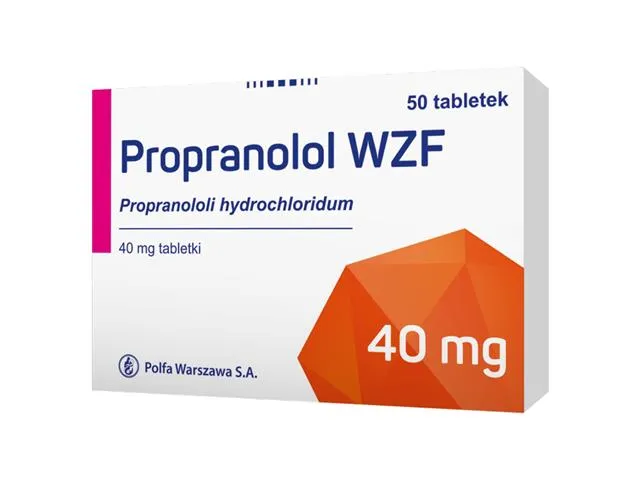
Table of Contents
Package leaflet: Information for the patient
PROPRANOLOL WZF 10 mg, tablets
PROPRANOLOL WZF 40 mg, tablets
Propranololi hydrochloridum
Please read this leaflet carefully before taking this medicine, because it contains
important information for you.
- Keep this leaflet. You may need to read it again.
- If you have any further questions, please consult your doctor, pharmacist, or nurse.
- This medicine has been prescribed for a specific individual. Do not give it to others. It may harm other people, even if their symptoms are the same.
- If you experience any adverse reactions, including any not listed in this leaflet, inform your doctor, pharmacist, or nurse. See section 4.
Table of contents
- What Propranolol WZF is and what it is used for
- Important information before taking Propranolol WZF
- How to take Propranolol WZF
- Possible side effects
- How to store Propranolol WZF
- Contents of the pack and other information
1. What Propranolol WZF is and what it is used for
Propranolol WZF belongs to a group of medicines called beta-blockers.
Propranolol WZF is used:
- in arterial hypertension;
- in the treatment of angina pectoris (also known as coronary artery disease), except for the so-called vasospastic form (Prinzmetal's angina);
- in preventing myocardial infarction in patients with coronary artery disease and in preventing recurrent myocardial infarction;
- in the treatment of cardiac arrhythmias (supraventricular and ventricular);
- in migraine prophylaxis;
- in the treatment of essential tremor;
- to reduce anxiety (situational and generalized), which may be accompanied by symptoms such as rapid heartbeat, elevated blood pressure, sweating, and facial flushing;
- in preventing upper gastrointestinal bleeding in patients with portal hypertension and esophageal varices;
- as supportive treatment in hyperthyroidism and thyroid storm (a severe, multi-organ complication of hyperthyroidism);
- in the treatment of hypertrophic cardiomyopathy (a heart muscle disease);
- in perioperative management of pheochromocytoma (a tumor of the adrenal glands located above the kidneys), together with an α-adrenolytic agent.
2. Important information before using Propranolol WZF
When not to use Propranolol WZF:
- if the patient suffers from bronchial asthma and has bronchospasm;
- if the patient is allergic to propranolol or any of the other ingredients of this medicine (listed in section 6.);
- if the patient has very slow heart function, called bradycardia;
- if the patient has cardiogenic shock (characterized by cold, clammy, pale skin; low blood pressure; rapid, weak pulse; rapid, shallow breathing; reduced urine output);
- if the patient has uncontrolled (untreated or inadequately treated) heart failure;
- if the patient has low blood pressure;
- if the patient has metabolic acidosis (increased concentration of acidic metabolic products in the blood);
- if the patient has been starved for a prolonged period;
- if the patient has severe peripheral circulatory disorders;
- if the patient has serious heart rhythm disorders, known as second- or third-degree heart block;
- if the patient has a specific type of angina pectoris called Prinzmetal's angina;
- if the patient has sick sinus syndrome (characterized by slowed and irregular heart rhythm and conduction disturbances in the heart);
- if the patient has an untreated phaeochromocytoma;
- if the patient is at risk of low blood glucose levels (hypoglycaemia), e.g. if malnourished, cachectic, or suffering from chronic liver disease.
Warnings and precautions
Before starting treatment with Propranolol WZF, discuss this with your doctor, pharmacist, or nurse.
Tell your doctor if the patient has:
- heart failure or first-degree heart block;
- phaeochromocytoma and is taking medicines called α-adrenolytics (e.g. prazosin);
- peripheral circulatory disorders;
- diabetes – Propranolol WZF may mask or modify symptoms of low blood glucose (especially rapid heartbeat); diabetic patients should use this medicine only after consulting a doctor. In non-diabetic patients, the medicine may reduce blood glucose levels;
- hyperthyroidism – the medicine may mask symptoms of hyperthyroidism;
- allergy to beta-adrenolytic medicines (including Propranolol WZF), as severe allergic reactions may occur;
- impaired kidney and/or liver function, especially liver cirrhosis or portal hypertension, as liver function may deteriorate in these patients.
Propranolol WZF may worsen bradycardia, especially in patients already suffering from this condition.
Elderly patients should strictly follow the doctor's dosing instructions – see also section 3. "How to use Propranolol WZF".
Propranolol WZF may affect the results of certain laboratory tests – this includes bilirubin measurement (performed to detect and/or monitor liver disorders) and catecholamine compounds.
Propranolol WZF and other medicines
Tell your doctor about all medicines currently used, recently used, or planned to be used.
Propranolol WZF may affect the action of certain medicines and vice versa – some medicines may affect the action of propranolol.
Do not use calcium channel blockers such as verapamil, diltiazem, nifedipine, nisoldipine, nicardipine, isradipine, or lacidipine (medicines used to treat hypertension or angina pectoris) while taking Propranolol WZF, as their concomitant use may cause dangerous lowering of blood pressure, bradycardia, and heart failure.
Medicines that interact with Propranolol WZF include:
- disopyramide, quinidine, propafenone (medicines used for heart rhythm disorders);
- digoxin (a cardiac medicine);
- lidocaine (a medicine used for anaesthesia and in heart rhythm disorders); if surgery is planned for a patient taking propranolol, the patient should inform the anaesthesiologist about taking Propranolol WZF;
- adrenaline (a medicine that stimulates heart function);
- ibuprofen and indomethacin (anti-inflammatory and analgesic medicines);
- ergotamine and dihydroergotamine (medicines used for migraine);
- chlorpromazine and thioridazine (medicines used in psychiatry);
- cimetidine (a medicine used for peptic ulcer disease);
- rifampicin (an antibiotic);
- theophylline (an anti-asthmatic medicine);
- warfarin (an anticoagulant);
- hydralazine (a medicine for hypertension).
Consult your doctor if propranolol and clonidine (a medicine used to treat hypertension or migraine) are to be used together, if one of these medicines needs to be discontinued, or if clonidine is to be replaced by propranolol. Your doctor will advise on the appropriate course of action. Do not discontinue these medicines without first consulting your doctor.
Propranolol WZF and alcohol
Alcohol may reduce the effectiveness of Propranolol WZF.
Pregnancy and breastfeeding
If the patient is pregnant, breastfeeding, suspects she may be pregnant, or plans to have a child, she should consult her doctor before using this medicine.
Propranolol WZF may be used during pregnancy only if the doctor considers it necessary. Like other beta-adrenolytic medicines, it may cause complications in the fetus, miscarriage, or premature delivery. Adverse effects may also occur, especially reduced blood glucose and bradycardia in the fetus or newborn. The risk of cardiorespiratory complications in newborns after birth is increased.
Propranolol WZF passes into breast milk. Breastfeeding is not recommended during treatment with this medicine.
Driving and operating machinery
It is unlikely that Propranolol WZF affects the ability to drive or operate machinery. However, dizziness or fatigue may occasionally occur. In such cases, these activities should be avoided until symptoms resolve.
Propranolol WZF contains lactose and sucrose
If the patient has previously been diagnosed with intolerance to certain sugars, the patient should consult a doctor before taking this medicine.
3. How to use Propranolol WZF
This medicine should always be used as directed by your doctor. If in doubt, consult your doctor.
- This medicine is for oral use.
- The dosage of this medicine is determined individually by the doctor, depending on the patient's condition and response to treatment. Elderly patients should start treatment with the lowest dose as recommended by the doctor.
ADULTS
Hypertension
Initial dose: 80 mg twice daily. This dose may be increased at weekly intervals, depending on the patient's response to the medicine.
The target dose ranges from 160 mg to 320 mg per day. If further reduction of blood pressure is required, the doctor may recommend adding a diuretic or another antihypertensive medicine.
Treatment of angina pectoris, migraine prophylaxis, treatment of essential tremor
Initial dose: 40 mg two or three times daily. The dose may be increased by the same amount at weekly intervals, depending on the patient's response to the medicine. The usual target doses are:
- in migraine and essential tremor: 80 mg to 160 mg per day;
- in angina pectoris: 120 mg to 240 mg per day.
Reduction of situational and generalized anxiety
- acute situational anxiety: 40 mg per day.
- generalized anxiety requiring chronic treatment: usually 40 mg twice daily. The dose may be increased to 40 mg three times daily. Treatment should continue according to the patient's response to the medicine. After 6–12 months of treatment, the patient should visit the doctor for a follow-up.
Cardiac arrhythmias (supraventricular and ventricular), treatment of a heart muscle disease called hypertrophic cardiomyopathy, supportive treatment in hyperthyroidism and thyroid crisis
From 10 mg to 40 mg three times daily.
Prevention of myocardial infarction in patients with coronary artery disease and prevention of recurrent myocardial infarction
Treatment should be initiated between the 5th and 21st day after the occurrence of myocardial infarction.
Initial dose: 40 mg four times daily for 2 to 3 days. To improve patient compliance, the total daily dose may be administered twice daily as 80 mg.
Prevention of upper gastrointestinal bleeding in patients with portal hypertension and oesophageal varices
Initially 40 mg twice daily, then increase the dose to 80 mg twice daily, depending on the achieved reduction in heart rate. The maximum dose is 160 mg twice daily.
Perioperative management in cases of phaeochromocytoma (together with an α-adrenolytic agent)
Propranolol WZF should only be used in combination with an α-adrenolytic agent.
- Before surgical procedure: 60 mg per day for 3 days.
- Non-surgical malignant tumours: 30 mg per day.
CHILDREN
In certain cases, Propranolol WZF may be used in children for the treatment of arrhythmias (cardiac rhythm disorders). The doctor will adjust the dosage according to the child's age and body weight.
Taking more Propranolol WZF than prescribed
If more than the prescribed dose is taken, symptoms such as slowed heart function, significant drop in blood pressure (hypotension), acute heart failure, or bronchospasm (breathing difficulties, shortness of breath) may occur. If any of these symptoms occur, seek immediate medical attention from a doctor or go to the nearest hospital.
Missed dose of Propranolol WZF
If a dose of Propranolol WZF is missed, take it as soon as possible. However, if it is almost time for the next scheduled dose, skip the missed dose and take the next dose at the regular time. Do not take a double dose to make up for the missed dose.
Stopping Propranolol WZF
Do not abruptly stop taking Propranolol WZF without consulting your doctor. The doctor will advise gradually reducing the dose and will specify the duration of tapering (usually gradual dose reduction over 7 to 14 days). For patients scheduled for surgery, treatment should be discontinued at least 24 hours before the procedure, unless otherwise directed by the doctor.
If you have any further questions about the use of this medicine, consult your doctor, pharmacist, or nurse.
4. Possible adverse reactions
Like all medicines, this medicine can cause adverse reactions, although not everyone experiences them.
Propranolol WZF is generally well tolerated. In rare cases of intolerance to the medicine,
manifesting as a slowing of heart function and a significant drop in blood pressure, the medicine should be
discontinued and medical advice should be sought immediately.
The following may occur:
- Common (in 1 to 10 people out of 100): sleep disturbances; nightmares; slowing of heart function; coldness and blueness of extremities, mainly fingers; feeling of fatigue (transient).
- Uncommon (in 1 to 10 people out of 1,000): gastrointestinal disturbances (diarrhoea, nausea, vomiting).
- Rare (in 1 to 10 people out of 10,000): decreased platelet count; hallucinations; psychoses; mood changes; dizziness; paraesthesia (tingling, pricking, burning sensations); visual disturbances; dry eyes; worsening of heart failure; worsening of heart block; sudden drop in blood pressure with fainting; in predisposed patients, exacerbation of intermittent claudication (symptoms: pain in calf muscles occurring after exertion); bronchospasm (shortness of breath, wheezing, cough) in patients with bronchial asthma or asthmatic conditions; alopecia; purpura (skin haemorrhages); psoriasiform skin reactions; worsening of psoriasis symptoms (elevated reddish-brown papules covered with silvery scales); rash.
- Very rare (less than 1 in 10,000 people): muscle weakness resembling myasthenia gravis or exacerbation of myasthenia gravis (isolated cases); increased titres of antinuclear antibodies (ANA) have been observed – however, the clinical significance of this phenomenon has not been established.
- Frequency not known (cannot be estimated from available data): decreased blood glucose concentration (especially in children, elderly patients, patients undergoing haemodialysis, those treated with antidiabetic agents, long-term fasting patients, and patients with chronic liver disease); increased blood glucose concentration (hyperglycaemia) may also occur; feeling of dizziness. Seizures related to decreased blood glucose concentration may occur.
If adverse reactions intensify, inform your doctor, who will consider
discontinuing the medicine (which should be done gradually, as directed by the doctor).
Reporting of adverse reactions
If any adverse symptoms occur, including any adverse symptoms not listed
in this leaflet, inform your doctor, pharmacist, or nurse. Adverse reactions can be reported directly to the Department of Monitoring Adverse Drug Reactions, Office for Medicinal Products, Medical Devices and Biocidal Products
Al. Jerozolimskie 181C
02-222 Warsaw
Tel.: +48 22 4921 301
Fax: +48 22 4921 309
Website: https://smz.ezdrowie.gov.pl
Adverse reactions can also be reported to the marketing authorisation holder.
Reporting adverse reactions helps provide more information on the safety of the medicine.
5. How to store Propranolol WZF
Store below 25°C.
Keep in the original packaging to protect from light and moisture.
Keep the medicine out of the sight and reach of children.
Do not use this medicine after the expiry date stated on the blister and carton. The expiry date refers to the last day of the stated month.
The marking on the packaging: EXP indicates the expiry date, and Lot/LOT indicates the batch number.
Medicines must not be disposed of via wastewater or household waste. Ask your pharmacist how to dispose of medicines no longer required. This will help protect the environment.
6. Contents of the pack and other information
What Propranolol WZF contains
- The active substance is propranolol hydrochloride. One tablet contains either 10 mg or 40 mg of propranolol hydrochloride.
- Other ingredients are: lactose monohydrate, sucrose, potato starch, talc, magnesium stearate, povidone K-25.
What Propranolol WZF looks like and contents of the pack
Propranolol WZF 10 mg: white, flat-faced tablets with bevelled edges and a scored groove on one side enabling division into equal doses.
Propranolol WZF 40 mg: white, flat-faced tablets with bevelled edges, a breakline on one side and the imprint "P".
Each cardboard box contains 50 tablets (2 blisters made of Al/PVC foil with 25 tablets each).
Marketing Authorisation Holder and Manufacturer
Marketing Authorisation Holder
Zakłady Farmaceutyczne POLPHARMA S.A.
ul. Pelplińska 19, 83-200 Starogard Gdański
tel. +48 22 364 61 01
Manufacturer
Zakłady Farmaceutyczne POLPHARMA SA
Production Site in Nowa Dęba
ul. Metalowca 2; 39-460 Nowa Dęba