Presartan h
Poland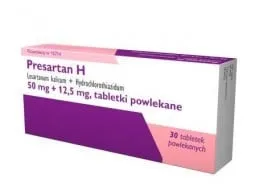
Table of Contents
Patient Information Leaflet
Presartan H, 50 mg + 12.5 mg, film-coated tablets
Presartan H, 100 mg + 25 mg, film-coated tablets
Losartanum kalicum + Hydrochlorothiazidum
Please read carefully the entire leaflet before taking the medicine, as it contains important information for the patient.
- Keep this leaflet for future reference.
- If you have any questions, consult your doctor or pharmacist.
- This medicine has been prescribed for a specific individual. Do not share it with others. This medicine may harm others, even if their symptoms are the same.
- If you experience any adverse reactions, including any not listed in this leaflet, inform your doctor or pharmacist. See section 4.
Table of Contents
- What Presartan H is and what it is used for
- Important information before taking Presartan H
- How to take Presartan H
- Possible side effects
- How to store Presartan H
- Contents of the pack and other information
1. What Presartan H is and what it is used for
Presartan H is a combination of an angiotensin II receptor antagonist (losartan) and a diuretic (hydrochlorothiazide).
Presartan H is indicated for the treatment of essential hypertension (high blood pressure).
2. Important information before using Presartan H
When not to use Presartan H
- If the patient is allergic to losartan, hydrochlorothiazide, or any of the other ingredients of this medicine (listed in section 6).
- If the patient has hypersensitivity (allergy) to sulfonamide-derived substances (e.g. other thiazide drugs, certain antibacterial agents such as co-trimoxazole); consult a doctor if in doubt.
- After the third month of pregnancy (Presartan H should also be avoided during early pregnancy – see section “Pregnancy and breastfeeding”).
- If the patient has severe liver function impairment.
- If the patient has severe kidney function impairment or anuria (kidneys not producing urine).
- If the patient has low levels of potassium or sodium, or high levels of calcium in the blood that are unresponsive to treatment.
- If the patient currently has gout.
- If the patient has diabetes or kidney impairment and is being treated with a blood pressure-lowering medicine containing aliskiren.
Warnings and precautions
Before starting treatment with Presartan H, discuss this with your doctor, pharmacist, or nurse.
- If the patient has previously experienced breathing or lung problems (including pneumonia or fluid accumulation in the lungs) after taking hydrochlorothiazide. If severe shortness of breath or difficulty breathing occurs after taking Presartan H, seek immediate medical help.
- If the patient has previously experienced swelling of the face, lips, throat, and/or tongue (see section “Undesirable effects”).
- If the patient is taking diuretics (water tablets).
- If the patient is taking any of the following medicines used to treat high blood pressure:
- angiotensin-converting enzyme (ACE) inhibitors, such as enalapril, lisinopril, ramipril, particularly if the patient has kidney problems related to diabetes,
- aliskiren.
- If the patient is on a low-salt diet.
- If the patient experiences abdominal pain, nausea, vomiting, or diarrhoea after taking Presartan H, discuss this with the doctor. The doctor will decide whether treatment should continue. Do not stop taking Presartan H on your own.
- If the patient has heart failure.
- If the patient has renal artery stenosis, only one functioning kidney, or has recently undergone kidney transplantation.
- If the patient has arterial narrowing (atherosclerosis), angina pectoris (chest pain due to heart problems).
- If the patient has aortic or mitral valve stenosis (narrowing of heart valves) or hypertrophic cardiomyopathy (a disease causing thickening of the heart muscle).
- If the patient has diabetes.
- If the patient has ever had gout.
- If the patient has or has had allergic diseases, asthma, joint pain, skin rash, or fever (systemic lupus erythematosus).
- If the patient has high calcium levels or low potassium levels, or if the patient is on a low-potassium diet.
- If the patient is to undergo anaesthesia (even at the dentist) or surgery, or if parathyroid function tests are to be performed; inform the doctor about taking Presartan H.
- If the patient has previously had skin cancer or develops unexpected skin changes during treatment. Treatment with hydrochlorothiazide, especially in high doses over a long period, may increase the risk of certain types of non-melanoma skin cancer and lip cancer. While taking Presartan H, protect the skin from sunlight and UV radiation.
- If the patient experiences blurred vision or eye pain. These may be symptoms of fluid accumulation in the uvea (excessive fluid accumulation between choroid and sclera) or increased intraocular pressure – these may occur from a few hours to a week after taking Presartan H. Untreated, they may lead to permanent vision loss. The risk of these adverse effects may be higher in patients who previously had an allergy to penicillin or sulfonamides.
- In cases of primary hyperaldosteronism (a condition caused by excessive aldosterone hormone secretion from adrenal glands due to abnormalities of these glands).
- Inform the doctor if pregnant, suspecting pregnancy, or planning pregnancy. It is not recommended to use Presartan H during early pregnancy, and it must not be used after the third month of pregnancy, as it may seriously harm the unborn child (see section “Pregnacy and breastfeeding”).
- The doctor may recommend regular monitoring of kidney function, blood pressure, and blood electrolyte levels (e.g. potassium).
See also the subsection “When not to use Presartan H”.
Presartan H and other medicines
Tell your doctor or pharmacist about all medicines currently taken or recently taken, as well as any medicines planned for future use.
Diuretics such as hydrochlorothiazide contained in Presartan H may interact with other medicines. Do not use lithium preparations with Presartan H without strict medical supervision.
Exercise caution (e.g. perform blood tests) when using potassium supplements, potassium-containing salt substitutes, potassium-sparing medicines, other diuretics, certain laxatives, licorice-containing preparations, gout medications, antiarrhythmics, or antidiabetic medicines (oral agents or insulin).
Also inform your doctor if you are taking:
- medicines that lower blood pressure,
- corticosteroids,
- anticancer medicines,
- painkillers,
- antifungal medicines,
- anti-rheumatic medicines,
- cholesterol-lowering resins such as cholestyramine,
- muscle relaxants,
- sleeping pills,
- opioids such as morphine,
- vasoactive amines that increase blood pressure, such as adrenaline or other drugs in this group.
Your doctor may recommend dose adjustments and/or additional precautions:
- if you are taking an ACE inhibitor or aliskiren (see also sections “When not to use Presartan H” and “Warnings and precautions”).
Inform your doctor that you are taking Presartan H if iodinated contrast agents are planned to be administered.
Presartan H with food and drink
Do not consume alcohol during treatment with Presartan H: alcohol and Presartan H may mutually enhance each other's effects.
Excessive salt intake in the diet may reduce the effectiveness of Presartan H.
Exercise caution when consuming products containing licorice during treatment with Presartan H.
Presartan H may be taken with or without food.
Pregnancy and breastfeeding
If the patient is pregnant or breastfeeding, suspects she may be pregnant, or is planning to have a child, she should consult a doctor before using this medicine.
Pregnancy
Inform your doctor if you suspect (or are planning) pregnancy. Your doctor will usually recommend discontinuing Presartan H before planned pregnancy or immediately after pregnancy is confirmed, and will recommend an alternative medicine instead of Presartan H. Presartan H is not recommended during early pregnancy and must not be used after the 3rd month of pregnancy, as it may seriously harm the unborn child.
Breast-feeding
Inform your doctor if you are breastfeeding or planning to breastfeed. Presartan H is not recommended during breastfeeding. Your doctor may recommend an alternative medicine.
Use of Presartan H in children and adolescents
There is no experience with the use of this medicine in children and adolescents. Therefore, Presartan H should not be given to children and adolescents.
Use of Presartan H in elderly patients
Presartan H is equally effective and well tolerated in most elderly patients as in younger patients. Most elderly patients require the same doses as younger individuals.
Driving and operating machinery
No studies have been conducted on the effect on the ability to drive vehicles or operate machinery. At the beginning of treatment, do not perform activities requiring heightened attention (such as driving vehicles or operating dangerous machinery) until it is known how the patient tolerates the medicine.
Presartan H contains lactose monohydrate
If the patient has previously been diagnosed with intolerance to certain sugars, the patient should consult a doctor before taking this medicine.
Presartan H contains sodium
The medicine contains less than 1 mmol (23 mg) of sodium per coated tablet, meaning the medicine is considered "sodium-free".
3. How to use Presartan H
This medicine should always be taken exactly as prescribed by your doctor. If in doubt, consult your
doctor or pharmacist.
Your doctor will determine the appropriate dose of Presartan H depending on your condition and other
medicines you are taking. You should continue taking Presartan H for as long as your doctor recommends
to maintain blood pressure control.
The tablets should be swallowed with a glass of water. Presartan H may be taken independently of meals.
The tablet may be divided into two equal doses.
Hypertension
The usual dose for most patients with high blood pressure is:
1 tablet of Presartan H 50 mg + 12.5 mg once daily. This dose provides 24-hour blood pressure control.
The dose may be increased to 2 tablets of Presartan H 50 mg + 12.5 mg once daily or changed to
1 tablet of Presartan H 100 mg + 25 mg (higher dose) once daily.
Maximum daily dose is:
2 tablets of Presartan H 50 mg + 12.5 mg or 1 tablet of Presartan H 100 mg + 25 mg.
Use in children and adolescents
There is no experience with the use of Presartan H in children and adolescents. Therefore, Presartan H
should not be given to children and adolescents.
Taking more Presartan H than prescribed
In case of overdose, contact your doctor immediately to obtain prompt medical assistance. Overdose may
cause low blood pressure, palpitations, slowed heart rate, changes in blood composition, and dehydration.
Missing a dose of Presartan H
Take Presartan H every day at the same time.
Do not take a double dose to make up for a missed dose. Take the next dose at the usual time.
Stopping Presartan H
If you have any further questions about the use of this medicine, consult your doctor or pharmacist.
4. Possible adverse effects
Like all medicines, this medicine can cause adverse effects, although not everyone will experience them.
If any of the following symptoms occur, stop taking Presartan H and contact your doctor immediately
or go to the emergency department of the nearest hospital:
Severe allergic reaction (rash, itching, swelling of the face, lips, tongue or throat, which may cause
difficulty swallowing or breathing).
This is a serious, but rare adverse effect, occurring more frequently than in 1 patient per 10,000, but less frequently
than in 1 per 1,000 patients. Rapid medical intervention or hospitalization may be required.
The adverse effects listed below occur with the following frequencies:
Common: occur in 1 to 10 people out of 100
- cough, upper respiratory tract infection, nasal mucosal congestion, sinusitis, sinus-related disorders,
- diarrhoea, abdominal pain, nausea, dyspepsia,
- muscle pain or cramps, leg pain, back pain,
- insomnia, headache, dizziness,
- weakness, fatigue, chest pain,
- increased potassium levels in blood (which may cause heart rhythm disturbances), decreased haemoglobin levels in blood.
Uncommon: occur in 1 to 10 people out of 1,000
- anaemia, red or brown skin spots (sometimes particularly on feet, legs, arms and buttocks, with joint pain, swelling of hands and feet, and abdominal pain), bruising, decreased white blood cell count, coagulation disorders and tendency to bruise,
- loss of appetite, increased uric acid levels or gout, increased blood glucose levels, disturbances in blood electrolyte levels,
- anxiety, nervousness, panic attacks (recurrent panic attacks), disorientation, depression, unusual dreams, sleep disturbances, somnolence, memory disturbances,
- tingling or prickling sensations or similar disorders, limb pain, tremor, migraine, fainting,
- blurred vision, burning or pricking sensation in eyes, conjunctivitis, reduced visual acuity, yellow vision,
- sensation of ringing, buzzing, or thumping in the ears, tinnitus,
- low blood pressure, which may be related to change in body position (feeling of "emptiness" in the head or weakness upon standing), angina (chest pain), heart rhythm disturbances, cerebrovascular events ("mini-strokes"), myocardial infarction, palpitations,
- vasculitis, often associated with skin rash or bruising,
- sore throat, shortness of breath, bronchitis, pneumonia, presence of fluid in the lungs (causing breathing difficulties), nosebleeds, nasal mucosal inflammation, congestion,
- constipation, bloating, gastritis, stomach cramps, vomiting, dryness of the oral mucosa, sialadenitis, toothache,
- jaundice (yellowing of eyes and skin), pancreatitis,
- urticaria, itching, dermatitis, rash, skin redness, photosensitivity, dry skin, hot flushes with redness, excessive sweating, hair loss,
- pain in arms, shoulders, hips, knees or other joints, joint swelling, stiffness, muscle weakness,
- frequent urination, including at night, kidney function disorders, including nephritis, urinary tract infections, presence of glucose in urine,
- decreased sexual drive, impotence,
- facial swelling, fever.
Rare: occur in 1 to 10 people out of 10,000
- hepatitis, abnormal liver function test results,
- intestinal angioedema: swelling in the intestine with symptoms such as abdominal pain, nausea, vomiting and diarrhoea.
Very rare: occur in fewer than 1 person out of 10,000
- acute respiratory failure (symptoms include severe shortness of breath, fever, weakness and confusion).
Frequency not known:
- muscle tissue breakdown,
- malignant skin and lip tumours (non-melanoma skin cancers),
- taste disturbances,
- visual impairment or eye pain due to elevated pressure (possible symptoms of fluid accumulation in the vascular membrane surrounding the eye – excessive fluid accumulation between choroid and sclera – or acute angle-closure glaucoma).
Reporting of adverse effects
If any adverse effects occur, including any not listed in this leaflet,
you should inform your doctor or pharmacist. Adverse effects can be reported directly to
the Department of Monitoring of Adverse Drug Reactions of the Office for Registration of Medicinal Products,
Medical Devices and Biocidal Products, Al. Jerozolimskie 181C, 02-222 Warsaw,
tel.: + 48 22 49 21 301, fax: + 48 22 49 21 309, website: https://smz.ezdrowie.gov.pl
Reporting adverse effects helps to provide more information on the safety of the medicine.
5. How to store Presartan H
Store below 30°C.
Keep in a place inaccessible and out of sight of children.
Do not use Presartan H after the expiry date stated on the packaging after: EXP. The expiry date refers to the last day of the stated month.
Medicines must not be disposed of down the toilet or in household waste. Ask your pharmacist how to dispose of medicines no longer required. Such measures help protect the environment.
6. Contents of the pack and other information
What Presartan H contains
The active substances in this medicine are losartan potassium and hydrochlorothiazide.
Presartan H, 50 mg + 12.5 mg
Each tablet contains 50 mg of losartan potassium and 12.5 mg of hydrochlorothiazide.
Presartan H, 100 mg + 25 mg
Each tablet contains 100 mg of losartan potassium and 25 mg of hydrochlorothiazide.
The other ingredients are: microcrystalline cellulose, lactose monohydrate, pregelatinized corn starch,
sodium carboxymethyl starch (type A), magnesium stearate, and Opadry White 20A18334 coating consisting of:
hydroxypropyl cellulose (E463), hypromellose 6cP (E464), titanium dioxide (E171).
What Presartan H looks like and contents of the pack
Presartan H 50 mg + 12.5 mg is a white, elongated, biconvex film-coated tablet with a break line on both sides, measuring 13.7x6.7 mm.
Presartan H 100 mg + 25 mg is a white, elongated, biconvex film-coated tablet with a break line on both sides, measuring 15.3x6.7 mm.
The pack contains 3 PVC/PE/PVDC/Al blisters with 10 film-coated tablets each, in a cardboard box.
Marketing Authorisation Holder
Bausch Health Ireland Limited
3013 Lake Drive
Citywest Business Campus
Dublin 24, D24PPT3
Ireland
Tel: +48 17 865 51 00
Manufacturer
PharmaPath S.A.
28is Oktovriou 1
Agia Varvara, 123 51, Greece
Bausch Health Poland sp. z o.o.
Przemysłowa 2
35-959 Rzeszów, Poland