Polcylin
Poland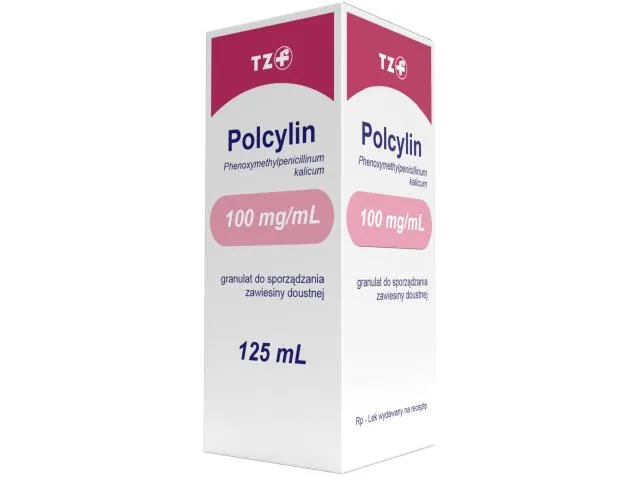
Table of Contents
Patient Information Leaflet
Polcylin
50 mg/mL, granulate for the preparation of oral solution
100 mg/mL, granulate for the preparation of oral suspension
250 mg/mL, granulate for the preparation of oral solution
Phenoxymethylpenicillinum kalicum
Please read all of this leaflet carefully before taking this medicine, because it contains
important information for the patient.
- Keep this leaflet, as you may need to read it again.
- If you have any further questions, please consult your doctor or pharmacist.
- This medicine has been prescribed for a specific individual. Do not pass it on to others. It may harm other people, even if their symptoms are the same.
- If you experience any adverse reactions, including any not listed in this leaflet, inform your doctor or pharmacist. See section 4.
Contents of the leaflet
- What Polcylin is and what it is used for
- Important information before taking Polcylin
- How to take Polcylin
- Possible side effects
- How to store Polcylin
- Contents of the pack and other information
1. What Polcylin is and what it is used for
Polcylin contains the active substance phenoxymethylpenicillin (which belongs to a group of antibiotics known as penicillins). This type of medicine prevents bacteria from forming a proper cell wall. Without a functioning cell wall, bacteria quickly die.
Polcylin is used to treat sore throat and tonsillitis, sinusitis, ear infections, pneumonia, bacterial skin and soft tissue infections, Lyme disease (borreliosis), and dental abscesses in children.
2. Important information before using Polcylin
When not to use Polcylin
- if the patient is allergic to phenoxymethylpenicillin, other penicillins, or any of the other components of this medicine (listed in section 6).
Warnings and precautions
Before starting treatment with Polcylin, consult a doctor or pharmacist:
- if the patient has previously had allergic diseases or bronchial asthma
- if the patient is allergic to cephalosporins (another group of antibacterial drugs)
If the patient develops a rash, fever and/or facial swelling, treatment must be discontinued and
medical advice should be sought immediately.
Polcylin and other medicines
Inform your doctor or pharmacist about all medicines currently or recently taken, as well as any
medicines the patient plans to take.
Polcylin may affect other medicines or other medicines may affect Polcylin:
- certain medicines used in cancer and immunological disorders (methotrexate)
- medicines used in gout (probenecid)
Taking Polcylin with food and drink
Although patient compliance with therapeutic instructions may be better when the medicine is taken
with food, Polcylin should be taken on an empty stomach, i.e. at least 1 hour before a meal or 2 hours after a meal. This ensures optimal effectiveness.
Pregnancy, breastfeeding and fertility
If the patient is pregnant or breastfeeding, suspects she may be pregnant, or is planning to have a
child, she should consult a doctor or pharmacist before using this medicine.
Pregnancy
There are no known risks associated with using Polcylin during pregnancy.
Breastfeeding
Potassium phenoxymethylpenicillin passes into breast milk, but it is unlikely to affect breastfed infants.
Driving and operating machinery
Polcylin has no effect or has a negligible effect on the ability to drive and operate machinery.
Polcylin contains aspartame, benzoate, sodium and sucrose
- Aspartame: This medicine contains aspartame: 50 mg/mL granules for oral solution: 5 mg aspartame/mL 100 mg/mL granules for oral suspension: 10 mg aspartame/mL 250 mg/mL granules for oral solution: 10 mg aspartame/mL Aspartame is a source of phenylalanine. It may be harmful in patients with phenylketonuria (PKU), a rare genetic disorder in which phenylalanine accumulates in the body because the body cannot eliminate it properly.
- Benzoate salt: This medicine contains sodium benzoate: 50 mg/mL granules for oral solution: 3.9 mg sodium benzoate/mL 100 mg/mL granules for oral suspension: 7.8 mg sodium benzoate/mL 250 mg/mL granules for oral solution: 1.5 mg sodium benzoate/mL Benzoate may worsen jaundice (yellowing of the skin and eyes) in newborns (up to 4 weeks of age).
- Sucrose: 50 and 100 mg/mL contains up to 6.6 g per dose. This should be considered in patients with diabetes. If the patient has been diagnosed with intolerance to certain sugars, consult a doctor before using this medicinal product. It may be harmful to teeth.
- Sodium: This medicine contains less than 1 mmol of sodium per mL, meaning the medicine is considered "sodium-free".
3. How to use Polcylin
This medicine should always be taken as directed by the physician. In case of doubts, consult
your doctor or pharmacist.
The dose is determined by the doctor and depends on the type of infection, body weight, and age of the patient.
Polcylin is supplied as a granulate prior to preparation.
To the bottle containing the granulate, add the appropriate amount of boiled water cooled to
room temperature.
The amount of water to be added to the granulate is indicated on the bottle label.
Shake well until a uniform solution/suspension is obtained.
Before each use, shake the bottle thoroughly to ensure proper mixing of the solution/suspension.
Measure the dose using a 10 mL dosing spoon (for 50 mg/mL and 100 mg/mL) or a 5 mL dosing syringe (for 250 mg/mL).
Use of a higher than recommended dose of Polcylin
If a patient has taken an excessive dose or, for example, a child has accidentally ingested the medicine,
contact a doctor immediately for risk assessment and advice.
Symptoms of overdose include nausea, vomiting, diarrhoea, disturbances in consciousness, electrolyte imbalances, muscle twitching, seizures, loss of consciousness (coma), severe anaemia, jaundice, and renal failure.
Missed dose of Polcylin
Do not take a double dose to make up for a missed dose.
Discontinuation of Polcylin treatment
Even if the patient feels better after a few days, it is important to complete the entire course of treatment with Polcylin as prescribed by the doctor. Otherwise, some bacteria may survive, start to multiply again, and cause a new infection.
If you have any further questions regarding the use of this medicine, consult your doctor or pharmacist.
4. Possible adverse reactions
Like all medicines, this medicine can cause adverse reactions, although not everybody will experience them.
Common (may occur in up to 1 in 10 people)
- Nausea, diarrhoea
- Skin rash
Uncommon adverse reactions (may occur in up to 1 in 100 people)
- Fever
- Vomiting
- Stomatitis (oral infection)
- Glossitis (inflammation of the tongue)
- Dyspepsia
- Joint pain
- Skin rash (urticaria), skin swelling, red skin spots (erythema multiforme or exfoliative dermatitis). Exfoliative dermatitis is a serious skin disease (characterized by redness and peeling of the skin); you should contact a doctor or hospital immediately.
- Blood count changes (high number of eosinophils)
Rare (may occur in up to 1 in 1,000 people)
- Anaphylactic reaction. You must discontinue Polcylin and contact a doctor or hospital immediately.
Very rare (may occur in up to 1 in 10,000 people)
- Blood count changes: Decreased number of red blood cells causing symptoms of anaemia such as fatigue and fever (haemolytic anaemia). Decreased number of white blood cells causing increased susceptibility to infections (leukopenia). Decreased number of platelets (thrombocytopenia). Decreased number of white blood cells causing fever and infection symptoms such as sore throat or urinary tract symptoms (agranulocytosis). These disorders may be severe. If fever occurs, contact a doctor immediately.
- Positive direct Coombs test (test for detecting haemolytic syndrome complexes)
Reporting of adverse reactions
If any adverse reactions occur, including any not listed in this leaflet, tell your doctor, pharmacist, or nurse. Adverse reactions can be reported directly to the Department of Monitoring Adverse Drug Reactions, Office for Registration of Medicinal Products, Medical Devices and Biocidal Products
Al. Jerozolimskie 181C, 02-222 Warsaw
Tel.: +48 22 49 21 301
Fax: +48 22 49 21 309
Website: https://smz.ezdrowie.gov.pl
Adverse reactions can also be reported to the marketing authorization holder.
Reporting adverse reactions helps provide more information on the safety of this medicine.
5. How to store Polcylin
Keep this medicine out of the sight and reach of children.
Polcylin 50 mg/mL oral solution
Polcylin 100 mg/mL oral suspension
Store the oral solution/suspension in a refrigerator (2°C–8°C).
Shelf life of the solution and suspension: 14 days.
Polcylin 250 mg/mL oral solution
Store the oral solution in a refrigerator (2°C–8°C).
Shelf life of the solution: 20 days.
Do not use this medicine after the expiry date stated on the label after the abbreviation "EXP".
The expiry date refers to the last day of the stated month.
Medicines must not be disposed of via wastewater or household waste. Ask your pharmacist how to dispose of medicines no longer required. This will help protect the environment.
6. Contents of the package and other information
What Polcylin contains
-
The active substance is potassium phenoxymethylpenicillin. After reconstitution, 1 mL of the medicinal product:
• 50 mg/mL oral solution contains 50 mg of potassium phenoxymethylpenicillin
• 100 mg/mL oral suspension contains 100 mg of potassium phenoxymethylpenicillin
• 250 mg/mL oral solution contains 250 mg of potassium phenoxymethylpenicillin -
Other ingredients are:
• Polcylin 50 mg/mL, granules for oral solution: aspartame E951, flavour (orange, caramel), sodium benzoate E211, sodium citrate E331, sucrose, povidone, propylene glycol E1520• Polcylin 100 mg/mL, granules for oral suspension: aspartame E951,
flavour (lemon, cocoa), sodium benzoate E211, sodium citrate E331, sucrose,
titanium dioxide E171, povidone, propylene glycol E1520• Polcylin 250 mg/mL, granules for oral solution: aspartame E951,
flavour (grapefruit, apricot), sodium benzoate E211, sodium citrate E331, sucruise,
povidone
Contents of the package and other information
Granules for oral suspension and oral solution: White or almost white granules.
Suspension/solution after reconstitution:
Polcylin 50 mg/mL, granules for oral solution: Clear solution.
Polcylin 100 mg/mL, granules for oral suspension: Homogeneous white or almost white suspension.
Polcylin 250 mg/mL, granules for oral solution: Clear solution.
Pack sizes:
Polcylin 50 and 100 mg/mL granules for oral solution/suspension: 60, 125 and 200 mL with a 10 mL dosing dispenser.
Polcylin 250 mg/mL granules for oral solution: 20 and 40 mL with a 5 mL dosing syringe.
Not all pack sizes may be marketed.
Marketing Authorisation Holder
Tarchomin Pharmaceutical Works "Polfa" Joint Stock Company
A. Fleminga 2 Street
03-176 Warsaw
Phone number: (22) 811 18 14
For further information about this medicinal product, please contact the Marketing Authorisation Holder.
Importer
EQL Pharma AB
Stortorget 1
222 23 Lund
Sweden