Midazolam hameln
Poland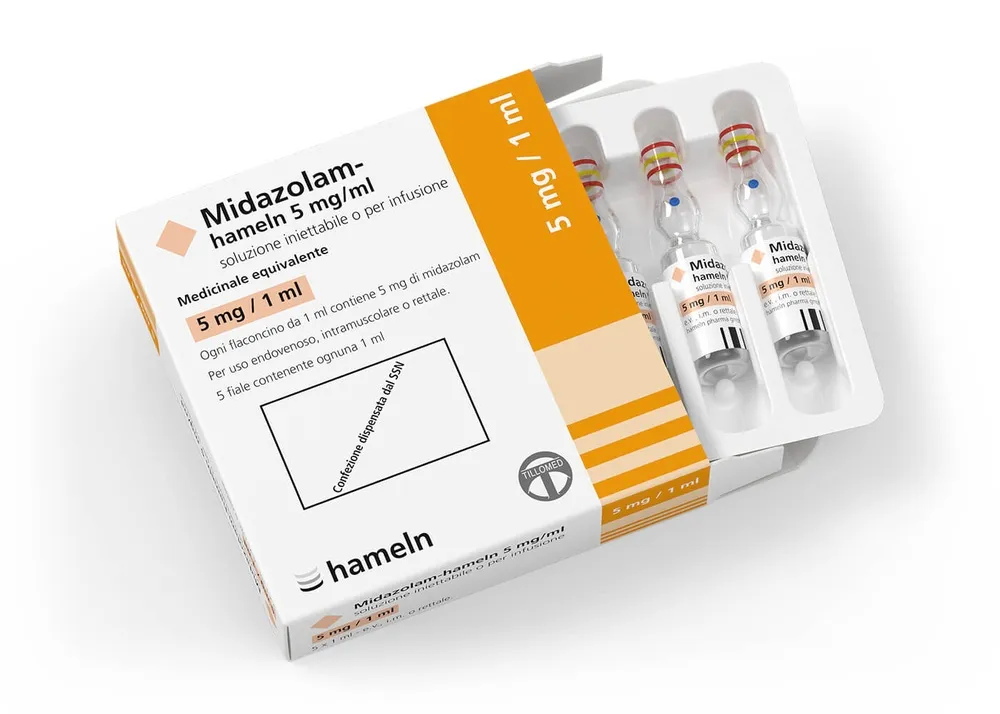
Table of Contents
- Package leaflet: Information for the user
- 1. What Midazolam hameln is and what it is used for
- 2. Important information before using Midazolam hameln
- 3. How to use Midazolam hameln
- 4. Possible adverse reactions
- 5. How to store Midazolam hameln
- 6. Contents of the package and other information
- The following information is intended solely for medical personnel or
- 1. Package sizes:
- 2. Preparation:
Package leaflet: Information for the user
Midazolam hameln, 1 mg/ml, solution for injection/infusion
Midazolam hameln, 2 mg/ml, solution for injection/infusion
Midazolam hameln, 5 mg/ml, solution for injection/infusion
Midazolamum
Please read carefully all of this leaflet before using this medicine because it contains
important information for you.
- Keep this leaflet as you may need to read it again.
- If you have any further questions, please ask your doctor or nurse.
- If you experience any side effects, including any not listed in this leaflet, please inform your doctor or nurse. See section 4.
Contents of the leaflet:
- What Midazolam hameln is and what it is used for
- Important information before using Midazolam hameln
- How to use Midazolam hameln
- Possible side effects
- How to store Midazolam hameln
- Contents of the pack and other information
1. What Midazolam hameln is and what it is used for
Midazolam belongs to a group of medicines called "benzodiazepines". It is a fast-acting medicine used to induce sleepiness or anesthesia. It also has a calming effect and reduces muscle tension.
This medicine is used in adults for:
- general anesthesia, to induce unconsciousness and maintain sleep.
This medicine is used in both adults and children for:
- calming and inducing sleepiness in intensive care units, known as "sedation".
- before and during medical examinations or procedures during which the patient cannot sleep. This helps the patient feel calm and sleepy. This is known as conscious sedation.
- calming and inducing sleepiness before administration of an anesthetic.
2. Important information before using Midazolam hameln
When not to use Midazolam hameln
- if the patient is allergic to midazolam or any of the other ingredients of this medicine (listed in section 6),
- if the patient is allergic to other benzodiazepine medicines, such as diazepam or nitrazepam,
- if the patient has severe breathing problems, and is to be given Midazolam hameln for sedation with preservation of consciousness.
If any of the above apply to the patient, do not administer Midazolam hameln. If the patient
is unsure, they should inform their doctor or nurse before receiving the medicine.
Warnings and precautions
Before administration of the medicine, inform the doctor or nurse if:
- the patient is over 60 years of age,
- the patient has chronic diseases, for example, diseases of the respiratory system, kidneys, liver, or heart,
- the patient feels very weak, exhausted, and lacking in energy,
- the patient suffers from muscle weakness (a condition characterized by muscle weakness),
- the patient has a condition called "sleep apnoea syndrome" (in which breathing stops during sleep),
- the patient has ever abused alcohol,
- the patient has ever abused drugs.
If any of the above conditions apply to the patient (or if the patient is uncertain), they should
inform their doctor or nurse before receiving Midazolam hameln.
Children
- Inform the doctor or nurse if any of the above conditions apply to the child.
- In particular, inform the doctor or nurse if the child has heart or breathing problems.
Midazolam hameln and other medicines
Tell your doctor or nurse about all medicines the patient is currently taking or has recently taken, as well as any medicines the patient plans to use. This includes also medicines available without prescription and herbal medicines. This is because Midazolam hameln may affect the way some medicines work. Likewise, some medicines may affect the way Midazolam hameln works. In particular, inform the doctor or nurse if the patient is taking any of the following medicines:- antidepressants (medicines used to treat depression),
- sleeping medicines (to help with falling asleep),
- hypnotics (causing calming and drowsiness),
- sedatives (used for anxiety and to help with falling asleep),
- carbamazepine or phenytoin (used for seizures),
- rifampicin (used for tuberculosis),
- medicines used to treat HIV infection called protease inhibitors (such as saquinavir, boceprevir, telaprevir),
- macrolide antibiotics (such as erythromycin or clarithromycin),
- medicines used to treat fungal infections (such as ketoconazole, voriconazole, fluconazole, itraconazole, posaconazole),
- opioid painkillers,
- atorvastatin (used to treat high cholesterol),
- antihistamines (used to treat allergies),
- St John's wort (a herbal medicine used to treat depression),
- medicines used to treat high blood pressure, called "calcium channel blockers" (such as diltiazem).
If any of the above medicines apply to the patient (or if the patient is uncertain), they should
inform their doctor or nurse before receiving Midazolam hameln.
Concomitant use of Midazolam hameln and opioid medicines (strong painkillers, medicines used in substitution treatment, and some cough medicines) increases the risk of drowsiness, breathing difficulties (respiratory depression), coma, and may be life-threatening. Therefore, concomitant use should only be considered when no other treatment options are available.
If, however, the doctor prescribes Midazolam hameln together with opioid medicines, they should reduce the dose and duration of concomitant treatment.
Inform the doctor about all opioid medicines being taken and strictly follow the doctor's dosing instructions. It may be helpful to inform friends or family members so they are aware of the symptoms mentioned above. If such symptoms occur, contact the doctor.
Use of Midazolam hameln with food, drink, and alcohol
The patient must not drink alcohol while taking midazolam. Alcohol may significantly enhance the sedative effect of midazolam (increase drowsiness) and cause breathing problems.
Pregnancy and breastfeeding
If the patient is pregnant or suspects she may be pregnant, she should consult her doctor before using this medicine. The doctor will decide whether this medicine is suitable for her.
Midazolam may pass into breast milk. Therefore, women should not breastfeed for 24 hours after taking the medicine.
Driving and operating machinery
After receiving Midazolam hameln, the patient should not drive or operate machinery until the doctor decides it is safe to resume these activities.
This medicine may cause drowsiness and memory disturbances. It may also affect concentration and coordination. These effects may impair the ability to drive and operate machinery. After receiving this medicine, the patient must always be accompanied home by another person.
Midazolam hameln contains sodium
The medicine contains less than 1 mmol (23 mg) of sodium per 1 ml of solution; therefore, the medicine is considered "sodium-free".
3. How to use Midazolam hameln
This medicine should be administered only by an experienced doctor or nurse. It should be given in a setting equipped with appropriate monitoring and resuscitation equipment for managing any adverse reactions. This may include a hospital, clinic, or surgical office, where monitoring of respiration, cardiac and circulatory function is possible.
The use of midazolam is not recommended in newborns and children under 6 months of age.
In infants and children under 6 months of age, midazolam should be used only when deemed necessary by a physician and in an intensive care unit setting.
Route and method of administration of Midazolam hameln
Midazolam hameln can be administered in the following ways:
- intravenous injection: as a slow injection into a vein
- intravenous infusion: by infusion into a vein
- intramuscular injection: as an injection into a muscle
- rectal administration: into the rectum
Dosage of Midazolam hameln
Dosages vary significantly and depend on the intended treatment and the desired level of sedation.
The appropriate dose for each patient is determined by the physician. The dose depends on the patient's body weight, age, and general health status. It also depends on the indication for midazolam use, the patient's response to treatment, and whether other medications are administered concomitantly.
After administration of Midazolam hameln
After the procedure, the patient must be accompanied home by a responsible adult, as the medicine may cause drowsiness and memory disturbances. It may also affect concentration and coordination. If the patient receives Midazolam hameln for a prolonged period, for example in an intensive care unit, the body may become accustomed to the medicine. This means that the effectiveness of the medicine may decrease over time.
Administration of a higher than recommended dose of Midazolam hameln
The medicine will be administered by a doctor or nurse, so it is unlikely that the patient will receive an overdose.
However, if accidental overdose occurs, it may lead to:
- Drowsiness, lack of motor coordination
- Speech disturbances and involuntary eye movements
- Low blood pressure. This may cause dizziness or fainting
- Slowed or stopped breathing or heart rate, and loss of consciousness (coma)
Prolonged use of Midazolam hameln for sedation in intensive care
If Midazolam hameln is used for a prolonged period, the following may occur in the patient:
- Reduced effectiveness of the medicine
- Development of dependence on the medicine, or withdrawal symptoms upon discontinuation of treatment (see "Stopping Midazolam hameln treatment" below)
Stopping Midazolam hameln treatment
If Midazolam hameln has been administered to the patient for a prolonged period, for example in an intensive care unit, withdrawal symptoms may occur after stopping treatment. These include:
- Mood changes
- Seizures (convulsions)
- Headache
- Diarrhea
- Muscle pain
- Sleep difficulties (insomnia)
- Feelings of worry (anxiety), tension, restlessness, confusion, or irritability (irritability)
- Seeing and possibly hearing things that are not really there (hallucinations)
The doctor will gradually reduce the dose. This will help prevent withdrawal symptoms.
4. Possible adverse reactions
Like all medicines, this medicine can cause adverse reactions, although not everyone will experience them.
The adverse reactions listed below occurred at an unknown frequency and cannot be estimated
based on available data.
If any of the following adverse reactions occur in a patient, midazolam hameln must be discontinued immediately and the doctor must be informed immediately. These may be life-threatening reactions requiring urgent treatment.
- Severe allergic reaction (anaphylactic shock). Symptoms may include sudden rash, itching or hives, swelling of the face, lips, tongue or other parts of the body. There may also be shortness of breath, wheezing or difficulty breathing, pale skin, weak and rapid pulse, or a feeling of fainting. Additionally, chest pain may occur, which could be a symptom of a serious allergic reaction called Kounis syndrome.
- Heart attack (myocardial infarction). One symptom may be chest pain.
- Breathing difficulties, sometimes leading to respiratory arrest.
- Laryngospasm resulting in airway obstruction. Life-threatening events are more common in individuals over 60 years of age and in those with breathing or heart function problems. These adverse reactions are also more likely if the medicine is injected too quickly or in a high dose.
Other adverse reactions
Nervous system disorders and psychiatric disorders
- reduced alertness,
- confusion,
- euphoria (excessive sense of happiness or excitement),
- changes in libido,
- feeling of fatigue, drowsiness or prolonged sedation,
- seeing or hearing things that are not real (hallucinations),
- disturbances of consciousness (delirium),
- headache,
- dizziness,
- difficulty coordinating muscle movements,
- seizures in premature infants and newborns,
- temporary memory loss. The duration of memory loss depends on the dose administered. In isolated cases, memory loss may persist for a long time,
- feeling of agitation, anxiety, anger or aggression, muscle spasms or involuntary muscle tremors. These reactions are more likely after administration of high doses of midazolam or too rapid injection. Such reactions have been more frequently observed in children and elderly individuals.
Cardiac and circulatory disorders
- fainting,
- slowed heart rate,
- redness of the face and neck,
- low blood pressure. This may cause dizziness or lightheadedness.
Respiratory disorders
- hiccups,
- shortness of breath, dyspnea.
Gastrointestinal disorders
- dry mouth,
- constipation,
- nausea, vomiting.
Skin and subcutaneous tissue disorders
- itching sensation,
- rash, including hives,
- redness, pain, thrombosis or swelling of the skin at the injection site.
General disorders and administration site conditions
- allergic reactions, including rash and wheezing,
- swelling of the skin/mucous membranes (angioedema),
- increased risk of falls and fractures in individuals taking sedative medicines (including alcoholic beverages),
- withdrawal symptoms (see "Discontinuation of midazolam hameln" in section 3 above),
- drug abuse.
Elderly patients
The risk of falls and bone fractures is higher in elderly patients receiving
benzodiazepines such as midazolam hameln.
In individuals over 60 years of age, there is a higher likelihood of experiencing life-threatening adverse reactions.
Reporting of adverse reactions
If any adverse reactions occur, including any not listed in this leaflet, inform your doctor or pharmacist. Adverse reactions can be reported directly to the Marketing Authorisation Holder or to the Department of Monitoring Adverse Drug Reactions of the Office for Registration of Medicinal Products, Medical Devices and Biocidal Products
Al. Jerozolimskie 181C
02-222 Warsaw
Phone: +48 22 49 21 301
Fax: +48 22 49 21 309
Website: https://smz.ezdrowie.gov.pl
Adverse reactions can also be reported to the Marketing Authorisation Holder.
Reporting adverse reactions helps to provide more information on the safety of the medicine.
5. How to store Midazolam hameln
- The physician or pharmacist is responsible for the storage of midazolam. They are also responsible for the proper disposal of unused medication.
- Keep the medicine out of the sight and reach of children.
- Do not use this medicine after the expiry date stated on the ampoule/vial and on the outer carton after: "EXP". The expiry date refers to the last day of the stated month.
- Do not use this medicine if the glass container (ampoule/vial) or the cardboard packaging is damaged.
- Store in the original packaging to protect from light.
- Store below 25 °C. Do not freeze.
6. Contents of the package and other information
What Midazolam hameln contains
The active substance is midazolam (in the form of midazolam hydrochloride).
Midazolam hameln 1 mg/ml
Each 1 ml of solution contains 1 mg of midazolam (as midazolam hydrochloride).
Midazolam hameln 2 mg/ml
Each 1 ml of solution contains 2 mg of midazolam (as midazolam hydrochloride).
Midazolam hameln 5 mg/ml
Each 1 ml of solution contains 5 mg of midazolam (as midazolam hydrochloride).
The other ingredients are: sodium chloride, hydrochloric acid, and water for injections.
What Midazolam hameln looks like and contents of the pack
This medicine is a clear, colourless solution in ampoules/vials made of colourless glass (Type I glass).
Midazolam hameln 1 mg/ml, solution for injection/infusion is available in the following pack sizes:
- 5 ml glass ampoule: packs of 10 ampoules
- 50 ml glass vial closed with a bromobutyl rubber stopper: packs of 1 vial
Midazolam hameln 2 mg/ml, solution for injection/infusion is available in the following pack sizes:
- 50 ml glass vial: packs of 1 vial
Midazolam hameln 5 mg/ml, solution for injection/infusion is available in the following pack sizes:
- 3 ml glass ampoule: packs of 10 ampoules
- 10 ml glass ampoule: packs of 10 ampoules
Not all pack sizes may be marketed.
Marketing Authorisation Holder
hameln pharma gmbh
Inselstraße 1
31787 Hameln
Germany
Manufacturer/Importer
Siegfried Hameln GmbH
Langes Feld 13
31789 Hameln
Germany
HBM Pharma s.r.o.
Sklabinská 30
03680 Martin
Slovakia
hameln rds s.r.o.
Horná 36
900 01 Modra
Slovakia
POLPHARMA S.A. Pharmaceutical Works
ul. Pelplińska 19
83-200 Starogard Gdański
Poland
This medicinal product is authorised in the Member States of the European Economic Area under the following names:
| Austria | Midazolam-hameln 1 mg/ml, 2 mg/ml, 5 mg/ml Injection/Infusion Solution |
| Bulgaria | Midazolam hameln 1 mg/ml, 2 mg/ml, 5 mg/ml injection/infusion solution |
| Czech Republic | Midazolam hameln |
| Germany | Midazolam-hameln 1 mg/ml, 2 mg/ml, 5 mg/ml Injection/Infusion Solution |
| Denmark | Midazolam ”hameln” |
| Finland | Midazolam hameln 1 mg/ml, 5 mg/ml injection/infusion solution |
| Croatia | Midazolam hameln 1 mg/ml, 2 mg/ml, 5 mg/ml solution for injection/infusion |
| Hungary | Midazolam hameln 1 mg/ml, 2 mg/ml, 5 mg/ml solution for injection/infusion |
| Netherlands | Midazolam-hameln 1 mg/ml, 2 mg/ml, 5 mg/ml solution for injection / infusion |
| Norway | Midazolam hameln |
| Poland | Midazolam hameln |
| Romania | Midazolam hameln 1 mg/ml, 2 mg/ml, 5 mg/ml solution for injection / perfusion |
| Sweden | Midazolam hameln 1 mg/ml, 5 mg/ml injection/infusion liquid, solution |
| Slovenia | Midazolam hameln 1 mg/ml, 2 mg/ml, 5 mg/ml solution for injection/infusion |
| Slovakia | Midazolam hameln 1 mg/ml, 2 mg/ml, 5 mg/ml injection/infusion solution |
| United Kingdom | Midazolam 1 mg/ml, 2 mg/ml, 5 mg/ml, solution for injection / infusion |
| (Northern Ireland) |
The following information is intended solely for medical personnel or
healthcare professionals:
Midazolam hameln, 1 mg/ml, 2 mg/ml, 5 mg/ml, solution for injection/infusion
This is a summary of the preparation of Midazolam hameln, 1 mg/ml, 2 mg/ml, 5 mg/ml,
solution for injection/infusion.
Before preparing this medicinal product, please read the entire content of this guide.
Complete information on dosing and other details can be found in the Summary of Product Characteristics.
1. Package sizes:
Midazolam hameln, 1 mg/ml is available as a clear, colourless solution in ampoules made of colourless glass (Type I glass) containing 2, 5 or 10 ml of solution, or in vials made of colourless glass containing 50 ml of solution.
Midazolam hameln, 2 mg/ml is available as a clear, colourless solution in ampoules made of colourless glass (Type I glass) containing 5 or 25 ml of solution, or in vials made of colourless glass containing 50 ml of solution.
Midazolam hameln, 5 mg/ml is available as a clear, colourless solution in ampoules made of colourless glass (Type I glass) containing 1, 2, 3, 5, 10 or 18 ml of solution.
2. Preparation:
Dilution of the solution
This medicinal product must not be diluted with any other parenteral solutions except those listed below.
For continuous intravenous infusion, midazolam solution may be diluted at a ratio of 15 mg midazolam per 100–1000 ml of one of the following infusion solutions: 0.9% NaCl, 5% and 10% dextrose, or Ringer's solution.
The solution remains chemically and physically stable for up to 3 days at room temperature after dilution.
From a microbiological standpoint, the product should be used immediately unless the opening/dilution process has excluded the risk of microbial contamination.
- If the solution is not used immediately, the user is responsible for the storage conditions and duration of storage. Pharmaceutical incompatibilities
Compatibility should be checked before administration if mixing with other medicinal products is intended.
Midazolam precipitates in solutions containing bicarbonate. Theoretically, midazolam injection solution may be unstable in solutions with neutral or alkaline pH. When midazolam is mixed with albumin, sodium amoxicillin, sodium ampicillin, bumetanide, sodium phosphate of dexamethasone, dimenhydrinate, sodium floxacillin, furosemide, sodium succinate of hydrocortisone, sodium pentobarbital, perphenazine, prochlorperazine edisylate, ranitidine, or sodium thiopental or trimethoprim-sulfamethoxazole, a white precipitate forms immediately.
With sodium nafcillin, immediate turbidity occurs, followed by formation of a white precipitate. Turbidity also occurs with ceftazidime.
With sodium methotrexate, a yellow precipitate forms. With clonidine hydrochloride, an orange discoloration occurs. With sodium omeprazole, a brown discoloration forms, followed by a brown precipitate. With sodium fosfarnet, gas is formed.
Furthermore, midazolam must not be mixed with acyclovir, albumin, alteplase, disodium acetazolamide, diazepam, enoximone, flecainide acetate, fluorouracil, imipenem, sodium mezlocillin, sodium phenobarbital, sodium phenytoin, potassium canrenate, sodium sulbactam, theophylline, trometamol, or urokinase.