Metocard zk
Poland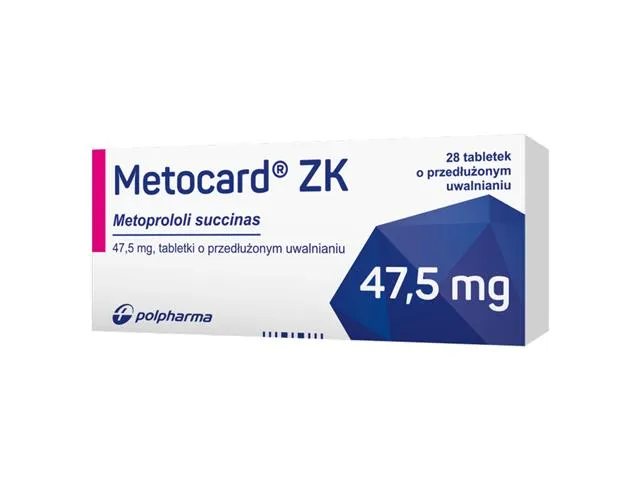
Table of Contents
Package leaflet: Information for the patient
Metocard ZK, 23.75 mg, prolonged-release tablets
Metocard ZK, 47.5 mg, prolonged-release tablets
Metocard ZK, 95 mg, prolonged-release tablets
Metoprololi succinas
Please read this leaflet carefully before taking this medicine, because it contains
important information for you.
- Keep this leaflet. You may need to read it again.
- If you have any further questions, please ask your doctor or pharmacist.
- This medicine has been prescribed for a specific individual. Do not pass it on to others. It may harm someone else, even if their symptoms are the same.
- If you experience any adverse effects, including any not listed in this leaflet, tell your doctor or pharmacist. See section 4.
Leaflet contents
- What Metocard ZK is and what it is used for
- Important information before taking Metocard ZK
- How to take Metocard ZK
- Possible side effects
- How to store Metocard ZK
- Contents of the pack and other information
1. What Metocard ZK is and what it is used for
Metocard ZK belongs to a group of medicines called beta-blockers.
It is used to treat:
- high blood pressure (hypertension)
- severe chest pain caused by insufficient oxygen supply to the heart (angina pectoris)
- irregular heartbeat (arrhythmias)
- stable symptomatic heart failure (with symptoms such as breathlessness or ankle swelling), in combination with other medicines used to treat heart failure
- palpitations (awareness of "pounding" heartbeat) caused by functional heart disorders.
It is used to prevent:
- recurrence of heart attack or heart damage after a heart attack
- migraine attacks.
Children and adolescents aged 6 to 18 years
Treatment of high blood pressure (hypertension).
2. Important information before using Metocard ZK
When not to use Metocard ZK
- if the patient is allergic to metoprolol, other beta-blocking agents, or any of the other ingredients of this medicine (listed in section 6)
- if there are conduction disorders (second- or third-degree atrioventricular block) or heart rhythm disorders (sick sinus syndrome)
- if the patient has untreated heart failure, is taking drugs that increase myocardial contractility, or is experiencing cardiogenic shock
- if there are severe circulatory disorders (severe peripheral arterial disease)
- if there is slow heart rate (below 50 beats per minute)
- if there is low blood pressure
- if there is increased blood acidity (metabolic acidosis)
- if there is severe asthma or chronic obstructive pulmonary disease (COPD)
- if there is untreated pheochromocytoma (a rare adrenal gland tumor causing high blood pressure)
- if there is heart failure and systolic blood pressure below 100 mm Hg.
Do not use Metocard ZK if the patient is taking any of the following medicines
(see also "Metocard ZK and other medicines"):
- monoamine oxidase inhibitors - MAOIs (used in the treatment of depression)
- verapamil and diltiazem (used to lower blood pressure)
- antiarrhythmic drugs such as disopyramide.
Warnings and precautions
Before starting treatment with Metocard ZK, discuss with the doctor if the patient:
- has asthma
- has Prinzmetal's angina (severe chest pain usually occurring at night)
- has diabetes (the drug may mask symptoms of low blood sugar)
- has pheochromocytoma (a rare adrenal gland tumor causing high blood pressure)
- is undergoing treatment to reduce allergic reactions – Metocard ZK may increase sensitivity to substances causing allergies or worsen the severity of allergic reactions
- has hyperthyroidism (the drug may mask symptoms such as rapid heartbeat, excessive sweating, tremor, anxiety, increased appetite, or weight loss)
- has or has had psoriasis (severe skin rash)
- has circulatory disorders causing tingling, paleness, or blueness of fingers and toes
- has heart conduction disorders (heart block)
- has heart failure and any of the following conditions:
- unstable heart failure (NYHA class IV)
- myocardial infarction or angina attack within the last 28 days
- kidney or liver dysfunction
- age under 40 or over 80 years
- heart valve disease
- hypertrophic cardiomyopathy
- heart surgery within the last 4 months.
If the patient is scheduled for surgery or a procedure under anesthesia, inform the doctor or
dentist about taking metoprolol tablets.
Metocard ZK and other medicines
Do not take Metocard ZK if using:
- monoamine oxidase inhibitors (MAOIs) used in the treatment of depression (may cause a pronounced drop in blood pressure)
- other blood pressure-lowering drugs such as verapamil and diltiazem (may cause slowed heart rate or excessive drop in blood pressure)
- antiarrhythmic drugs such as disopyramide (may increase the risk of irregular or slow heartbeat and weakened heart function).
Tell the doctor about all medicines currently or recently taken by the patient, as well as any medicines the patient plans to take.
- The following medicines may enhance the blood pressure-lowering effect:
- cimetidine (used in peptic ulcer disease)
- hydralazine or clonidine (blood pressure-lowering drugs)
- terbinafine (used to treat fungal infections)
- paroxetine, fluoxetine, and sertraline (used in the treatment of depression)
- hydroxychloroquine (used to treat malaria)
- chlorpromazine, triflupromazine, cyproheptadine (antipsychotic drugs)
- amiodarone, quinidine, and propafenone (used in heart rhythm disorders)
- diphenhydramine (antihistamine)
- celecoxib (used to treat pain).
- The following medicines may weaken the blood pressure-lowering effect:
- indomethacin (used to treat pain)
- rifampicin (an antibiotic).
- Other medicines may interfere with the action of metoprolol or their action may be altered by metoprolol:
- other beta-blocking agents, e.g. eye drops
- adrenaline (epinephrine), noradrenaline (norepinephrine), or other sympathomimetics
- drugs used in the treatment of diabetes (low blood sugar symptoms may be masked)
- lidocaine
- reserpine, alpha-methyldopa, guanfacine, cardiac glycosides.
Metocard ZK and alcohol
Alcohol may enhance the blood pressure-lowering effect of Metocard ZK tablets.
Pregnancy and breastfeeding
If the patient is pregnant, breastfeeding, suspects she may be pregnant, or is planning to have a
baby, she should consult a doctor or pharmacist before using this medicine.
Use of Metocard ZK during pregnancy and breastfeeding is not recommended. Before taking any
medicine, consult a doctor or pharmacist.
Driving and operating machinery
Metocard ZK may cause fatigue or dizziness. Before driving a car or operating machinery, ensure these effects do not occur, especially after changing medications or after taking them with alcohol.
3. How to use Metocard ZK
This medicine should always be taken exactly as directed by your doctor. If in doubt, consult your doctor or pharmacist.
The tablets should be taken in the morning, once daily, with a glass of water. The tablets should be swallowed whole or divided, but must not be chewed or crushed before swallowing.
Typical doses are:
- High blood pressure: 47.5 mg of metoprolol succinate once daily. If necessary, this dose may be increased to 95–190 mg once daily.
- Chest pain (angina pectoris): 95–190 mg of metoprolol succinate once daily.
- Irregular heartbeat (cardiac arrhythmia): 95–190 mg of metoprolol succinate once daily.
- Prevention of recurrent heart attack or heart damage after heart attack: 190 mg of metoprolol succinate once daily.
- Palpitations caused by heart disease: 95 mg of metoprolol succinate once daily. This dose may be increased, if necessary, to 190 mg once daily.
- Prevention of migraine: 95–190 mg of metoprolol succinate once daily.
- Patients with stable heart failure: Use as directed by the doctor.
Patients with impaired liver function
In patients with severe liver impairment, the doctor will adjust the dose. Use as directed by the doctor.
Children and adolescents
High blood pressure: in children aged 6 years and older, the dose depends on the child's body weight. The doctor will determine the appropriate dose for your child.
The usual starting dose is 0.48 mg/kg body weight, not exceeding 47.5 mg, administered once daily as a tablet with strength closest to the calculated dose.
The doctor may increase the dose up to 1.90 mg/kg body weight, depending on the patient's response to treatment.
Studies on the use of doses exceeding 190 mg once daily in children and adolescents have not been conducted.
Metocard ZK tablets are not recommended for use in children under 6 years of age.
Taking more Metocard ZK than recommended
If you take more tablets than recommended, seek immediate medical attention at the nearest hospital or contact your doctor or pharmacist. Symptoms of overdose include: low blood pressure (fatigue and dizziness), slow heartbeat, irregular heart function, cardiac arrest, shortness of breath, deep unconsciousness, nausea, vomiting, and bluish skin discoloration.
Missing a dose of Metocard ZK
If you miss a dose, take it as soon as possible, then continue according to your regular dosing schedule. Do not take a double dose to make up for a missed dose.
Stopping Metocard ZK treatment
Do not stop treatment with Metocard ZK suddenly, as this may worsen symptoms of heart failure and increase the risk of heart attack. Dose adjustment or discontinuation should only be done after consultation with your doctor.
If you have any further questions about the use of this medicine, consult your doctor or pharmacist.
4. Possible adverse effects
Like all medicines, this medicine can cause adverse effects, although not everyone will experience them.
You should stop taking the medicine and contact your doctor immediately if you experience an
allergic reaction, characterized by itchy skin rash, sudden redness (especially of the face),
swelling of the face, lips, tongue or throat, or difficulty breathing or swallowing. This is a very
serious, but rare adverse effect. Urgent medical attention or hospitalization may be required.
You should tell your doctor if you experience any of the following adverse effects or any other
adverse effects not listed in this leaflet:
Very common (affects more than 1 in 10 people):
- marked decrease in blood pressure (also upon standing up from a lying position), very rarely with fainting
- fatigue.
Common (affects less than 1 in 10 people but more than 1 in 100 people):
- slow heart rate
- impaired balance (very rarely with fainting)
- cold hands and feet
- palpitations
- dizziness, headache
- nausea, diarrhoea, constipation, abdominal pain
- shortness of breath related to strenuous physical exertion.
Uncommon (affects less than 1 in 100 people but more than 1 in 1,000 people):
- transient worsening of heart failure symptoms
- fluid retention (oedema)
- chest pain
- tingling sensation
- muscle cramps
- vomiting
- weight gain
- depression
- reduced concentration
- insomnia
- drowsiness
- nightmares
- shortness of breath
- rash
- increased sweating.
Rare (affects less than 1 in 1,000 people but more than 1 in 10,000 people):
- worsening of diabetes
- nervousness, anxiety
- visual disturbances
- dryness or irritation of the eyes
- conjunctivitis
- impotence (inability to achieve erection)
- Peyronie's disease (plastic induration of the penis)
- irregular heart rhythm
- conduction disorders in the heart
- dryness of the oral mucosa
- rhinitis
- hair loss
- changes in liver function test results.
Very rare (affects less than 1 in 10,000 people):
- changes in blood cell counts (thrombocytopenia, leukopenia)
- memory disturbances
- disorientation
- hallucinations
- mood disorders
- tinnitus
- hearing disturbances
- taste disturbances
- hepatitis
- photosensitivity
- exacerbation or onset of psoriasis (skin disease)
- muscle weakness
- joint pain
- tissue necrosis in patients with severe circulatory disorders.
Reporting of adverse effects
If you experience any adverse effects, including any not listed in this leaflet, you should inform your doctor or pharmacist. Adverse effects can be reported directly to the Department of Monitoring of Adverse Drug Reactions at the Office for Registration of Medicinal Products, Medical Devices and Biocidal Products
Al. Jerozolimskie 181C
02-222 Warsaw
Phone: +48 22 49 21 301
Fax: +48 22 49 21 309
Website: https://smz.ezdrowie.gov.pl
Adverse effects can also be reported to the marketing authorization holder.
Reporting adverse effects helps to provide more information on the safety of the medicine.
5. How to store Metocard ZK
No special precautions for storage are required.
Keep the medicine out of sight and reach of children.
Do not use this medicine after the expiry date stated on the carton. The expiry date is also printed on the blister pack after: EXP. The expiry date refers to the last day of the stated month.
The label on the packaging shows the expiry date after the abbreviation EXP, and the batch number after the abbreviation Lot/LOT.
Medicines must not be disposed of via wastewater or household waste. Ask your pharmacist how to dispose of medicines no longer required. Such measures help protect the environment.
6. Contents of the packaging and other information
What Metocard ZK contains
- The active substance is metoprolol succinate. Each tablet contains respectively:
- 23.75 mg of metoprolol succinate, equivalent to 25 mg of metoprolol tartrate
- 47.5 mg of metoprolol succinate, equivalent to 50 mg of metoprolol tartrate
- 95 mg of metoprolol succinate, equivalent to 100 mg of metoprolol tartrate
- The other components are:
- microcrystalline cellulose, methylcellulose, maize starch, glycerol, ethylcellulose, magnesium stearate;
- tablet coating: microcrystalline cellulose, hypromellose, stearic acid, titanium dioxide (E171).
What Metocard ZK looks like and contents of the pack
Metocard ZK 23.75 mg, 47.5 mg and 95 mg:
White, oval, biconvex coated tablets with a central breakline on both sides.
Packaging contains 28 prolonged-release tablets.
Marketing Authorisation Holder and Manufacturer
Marketing Authorisation Holder
Zakłady Farmaceutyczne POLPHARMA S.A.
ul. Pelplińska 19, 83-200 Starogard Gdański, Poland
Manufacturer
Zakłady Farmaceutyczne POLPHARMA S.A.
ul. Pelplińska 19, 83-200 Starogard Gdański, Poland
Farmaprojects, S.A.
Santa Eulalia 240-242, 08902 L’Hospitalet de Llobregat-Barcelona
Spain
Zakłady Farmaceutyczne POLPHARMA S.A.
Production Site in Nowa Dęba
ul. Metalowca 2, 39-460 Nowa Dęba, Poland
Sofarimex Industria Química e Farmacêutica, S.A.
Av. Das Indústrias- Alto de Colaride
2735-213 - Cacém, Portugal
Rontis Hellas Medical and Pharmaceutical Products S.A.
P.O. Box 3012 Larissa Industrial Area
41500 Larissa
Greece
For further information about the medicine and its names in the countries of the European Economic Area, please contact the local representative of the Marketing Authorisation Holder:
POLPHARMA Handlowe Sp. z o.o.
ul. Bobrowiecka 6
00-728 Warsaw
tel. 22 364 61 01