Losartan
Poland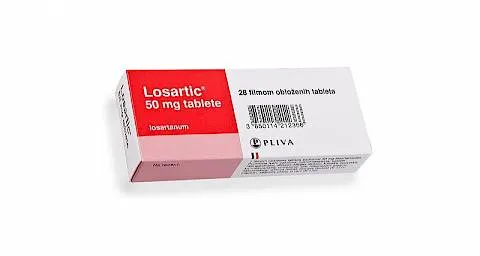
Table of Contents
Package leaflet: Information for the user
Losartic 50 mg film-coated tablets
Losartanum kalicum
Please read all of this leaflet carefully before taking this medicine because it contains important information for you.
- Keep this leaflet. You may need to read it again.
- If you have any further questions, ask your doctor or pharmacist.
- This medicine has been prescribed for you only. Do not pass it on to others. It may harm them, even if their symptoms are the same as yours.
- If you get any side effects, talk to your doctor or pharmacist. This includes any possible side effects not listed in this leaflet. See section 4.
Leaflet contents:
- What Losartic is and what it is used for
- What you need to know before taking Losartic
- How to take Losartic
- Possible side effects
- How to store Losartic
- Contents of the pack and other information
1. What Losartic is and what it is used for
Losartic contains the active substance losartan – a medicine belonging to a group of orally administered specific angiotensin II receptor antagonists, which lowers blood pressure.
Losartic is indicated:
- for the treatment of patients with high blood pressure (hypertension),
- for kidney protection in patients with hypertension and type 2 diabetes who have laboratory-confirmed kidney function impairment and proteinuria (a condition characterized by abnormal amounts of protein in the urine),
- for the treatment of patients with chronic heart failure when treatment with medicines called angiotensin-converting enzyme (ACE) inhibitors (medicines used to reduce elevated blood pressure) is not suitable. If the patient’s heart failure has been stabilized with an ACE inhibitor, switching to Losartic is not recommended,
- in patients with high blood pressure and left ventricular hypertrophy, losartan reduces the risk of stroke ("LIFE indication").
2. Important information before using Losartic
When not to use Losartic
- If the patient is allergic (hypersensitive) to losartan or any of the other ingredients of this medicine (listed in section 6).
- If the patient has severe liver function impairment.
- After the third month of pregnancy (Losartic should also be avoided during early pregnancy - see section Pregnancy).
- If the patient has diabetes and kidney function impairment, and is being treated with a blood pressure-lowering medicine containing aliskiren.
Warnings and precautions
Inform your doctor if you suspect (or are planning) pregnancy. Use of Losartic is not recommended during early pregnancy and must be avoided after the third month of pregnancy, as it may seriously harm the unborn child (see section Pregnancy).
It is important to inform your doctor before taking Losartic
- If the patient has a history of angioedema (swelling of the face, lips, throat, and/or tongue) (see also section 4 "Possible side effects").
- If the patient experiences severe vomiting or diarrhoea, leading to significant fluid and/or salt loss from the body.
- If the patient is taking diuretics (medicines that increase the amount of urine produced by the kidneys) or is on a low-salt diet, which may lead to significant fluid and salt loss (see section 3 "Dosage in special patient groups").
- If the patient has narrowing or blockage of the blood vessels supplying blood to the kidneys or has recently received a kidney transplant.
- If the patient has liver function impairment (see section 2 "When not to take Losartic" and section 3 "Dosage in special patient groups").
- If the patient has heart failure with or without kidney function impairment, or has severe, life-threatening heart rhythm disorders. Particular caution is required if beta-blockers are used concomitantly.
- If the patient has heart valve or myocardial disorders.
- If the patient has ischaemic heart disease (caused by reduced blood flow in the coronary blood vessels) or cerebrovascular disease (caused by reduced blood flow to the brain).
- If the patient has primary hyperaldosteronism (a disorder associated with increased secretion of the hormone aldosterone by the adrenal glands due to abnormalities within the gland).
- If the patient is taking any of the following medicines used to treat high blood pressure:
- an angiotensin-converting enzyme (ACE) inhibitor (e.g. enalapril, lisinopril, ramipril), particularly if the patient has kidney function impairment related to diabetes.
- aliskiren. The treating physician may monitor kidney function, blood pressure, and blood electrolyte levels (e.g. potassium) at regular intervals. See also information under the heading "When not to use Losartic".
Children and adolescents
The use of losartan in children has been studied. For further information, consult your treating physician.
Other medicines and Losartic
Tell your doctor or pharmacist about all medicines you are currently taking, have recently taken, or plan to take.
Particular caution is required when using Losartic together with the following medicines:
- Other medicines that lower arterial blood pressure, as they may additionally reduce it. Blood pressure may also be lowered by any of the following medicines/types of medicines: tricyclic antidepressants, antipsychotics, baclofen, amifostine.
- The treating physician may need to adjust the dose and/or take other precautions: If the patient is taking an ACE inhibitor or aliskiren (see also information under the headings "When not to use Losartic" and "Warnings and precautions").
- Medicines that retain potassium or may increase potassium levels (e.g. potassium supplements, potassium-containing salt substitutes, potassium-sparing diuretics such as amiloride, triamterene, spironolactone, or heparin).
- Non-steroidal anti-inflammatory drugs (NSAIDs), such as indomethacin, including COX-2 inhibitors (medicines that inhibit inflammatory reactions and are used to relieve pain), as they may weaken the blood pressure-lowering effect of Losartic. If the patient has kidney function impairment, concomitant use of these medicines may worsen such impairment. Medicines containing lithium should not be taken concomitantly with Losartic without strict medical supervision. Special precautions may be required (e.g. blood tests).
Losartic with food and drink
Losartic may be taken independently of meals.
Pregnancy and breastfeeding
Pregnancy
If the patient is pregnant or breastfeeding, suspects she may be pregnant, or is planning to have a child, she should consult her doctor before using this medicine.
The doctor will usually recommend discontinuing Losartic before planned pregnancy or immediately after pregnancy is confirmed, and will recommend an alternative medicine to Losartic. Use of Losartic is not recommended during early pregnancy and must be avoided after the third month of pregnancy, as it may seriously harm the unborn child.
Breastfeeding
Inform your doctor if you are breastfeeding or intend to breastfeed. Use of Losartic is not recommended during breastfeeding, especially when breastfeeding a newborn or preterm infant. The doctor may recommend an alternative medicine.
Driving and operating machinery
Studies on the effect of the medicine on the ability to drive vehicles and operate machinery have not been conducted.
It is unlikely that Losartic affects the ability to drive or operate machinery. However, as with other medicines used to treat hypertension, Losartic may cause dizziness or drowsiness in some patients. If the patient experiences dizziness or drowsiness, he or she should consult a doctor before engaging in the above activities.
Losartic contains monohydrate lactose and sodium.
Lactose
If the patient has been diagnosed with intolerance to certain sugars, consult your doctor before taking this medicine.
Sodium
The medicine contains less than 1 mmol (23 mg) of sodium per coated tablet, meaning the medicine is considered "sodium-free".
3. How to use Losartic
This medicine should always be taken exactly as your doctor has instructed. If you are unsure,
you should consult your doctor or pharmacist.
Since Losartic tablets with a strength lower than 25 mg are not available, this medicine cannot
be used in the initial treatment of heart failure. For therapeutic indications where the daily dose of
potassium losartan is less than 25 mg, other losartan preparations in appropriate doses should be used.
You must always take Losartic exactly as prescribed by your doctor. Your doctor will determine the
appropriate dose of Losartic depending on your condition and other medications you are taking.
It is important to continue taking Losartic for as long as your doctor has recommended in order to
maintain consistent blood pressure control.
Patients with hypertension
Treatment usually starts with a dose of 50 mg of losartan (1 Losartic 50 mg tablet) once daily.
The maximum blood pressure-lowering effect is achieved within 3–6 weeks after starting treatment.
In some patients, the dose may subsequently be increased to 100 mg of losartan (2 Losartic 50 mg
tablets) once daily.
If you feel that the effect of Losartic is too strong or too weak, you should consult your doctor or
pharmacist.
Use in children and adolescents (aged 6 to 18 years)
The recommended starting dose for patients with body weight between 20 kg and 50 kg is 25 mg of
Losartic once daily. For patients with body weight > 50 kg, the usual dose is 50 mg once daily.
Your doctor may recommend increasing the dose depending on changes in blood pressure in response
to the medicine.
Losartic is not recommended for children under 6 years of age due to limited data in this age group.
Losartic is also not recommended for children with acute renal failure or impaired liver function.
Patients with hypertension and type 2 diabetes
Treatment usually starts with a dose of 50 mg of losartan (1 Losartic 50 mg tablet) once daily.
The dose may then be increased to 100 mg of losartan (2 Losartic 50 mg tablets) once daily, depending
on blood pressure levels.
Losartic may be used concomitantly with other antihypertensive medicines (e.g. diuretics, calcium
channel blockers, alpha- and beta-blockers, centrally-acting antihypertensives) as well as with insulin
and other commonly used glucose-lowering medicines (e.g. sulfonylureas, glitazones, alpha-glucosidase
inhibitors).
Patients with heart failure
Treatment usually starts with a dose of 12.5 mg of losartan once daily. This dose should usually be
gradually increased at weekly intervals (i.e. 12.5 mg daily during the first week, 25 mg daily during
the second week, 50 mg daily during the third week) up to the usual maintenance dose of 50 mg of
losartan once daily, depending on the patient's condition.
In the treatment of heart failure, Losartic is usually used together with diuretics (medicines that
increase the amount of water excreted by the kidneys) and (or) digitalis glycosides (medicines that
improve the strength and efficiency of heart contractions) and (or) beta-blockers.
Dosing in special patient groups
Your doctor may recommend a lower dose, especially when initiating treatment in certain patients,
such as those taking high doses of diuretics, patients with impaired liver function, or patients over
75 years of age. Losartan should not be used in patients with severe hepatic impairment (see section
"When not to use Losartic").
Administration
The tablets should be swallowed with a glass of water. The daily dose should be taken every day at
approximately the same time. It is important to continue taking Losartic unless your doctor advises
otherwise.
Use of more than the recommended dose of Losartic
If you take too many tablets or if any amount of the medicine is taken by a child, you should contact
your doctor immediately. Symptoms of overdose include low blood pressure, rapid heartbeat, and
possibly slow heartbeat.
Missed dose of Losartic
If you miss a daily dose, take the next dose the following day. Do not take a double dose to make up
for the missed tablet.
4. Possible adverse reactions
Like all medicines, this medicine can cause adverse reactions, although not everyone experiences them.
If any of the following adverse reactions occur in a patient, administration of
the medicine Losartic should be discontinued immediately and the patient should contact a doctor or go to the emergency department of the nearest
hospital:
Severe allergic reaction (rash, itching, swelling of the face, lips, mouth or throat, which may
cause difficulty swallowing or breathing).
This is a serious, but rarely occurring adverse reaction, occurring in more than 1 in 10,000
patients, but in less than 1 in 1,000 patients. Urgent medical intervention or hospitalization may be required.
The frequency of adverse drug reactions has been classified as follows:
Very common: occurs in more than 1 in 10 patients
Common: occurs in 1 to 10 in 100 patients
Uncommon: occurs in 1 to 10 in 1,000 patients
Rare: occurs in 1 to 10 in 10,000 patients
Very rare: occurs in less than 1 in 10,000 patients
Frequency not known (frequency cannot be estimated from the available data)
The following adverse reactions have been reported with the use of Losartic:
Common:
- Dizziness,
- Low blood pressure,
- Weakness,
- Fatigue,
- Decreased blood glucose levels (hypoglycaemia),
- Reduced number of red blood cells (anaemia),
- Low arterial blood pressure,
- Renal function disorders including renal failure,
- Increased blood urea, plasma creatinine and plasma potassium levels in patients with heart failure,
- Increased potassium levels in blood (hyperkalaemia). Uncommon:
- Drowsiness,
- Headache,
- Sleep disorders,
- Sensation of rapid heartbeat (palpitations),
- Severe chest pain (angina pectoris),
- Low blood pressure (especially after excessive fluid loss from blood vessels, e.g. in patients with severe heart failure or treated with high doses of diuretics),
- Dose-dependent orthostatic symptoms such as reduced blood pressure occurring when rising from lying or sitting position,
- Shortness of breath (dyspnoea),
- Abdominal pain,
- Cough,
- Constipation,
- Diarrhoea,
- Nausea,
- Vomiting,
- Urticaria,
- Itching (pruritus),
- Rash,
- Localised oedema.
Rare:
- Inflammation of blood vessels (including Henoch-Schönlein purpura),
- Sensation of numbness or tingling (paraesthesiae),
- Fainting,
- Very rapid and irregular heartbeat (atrial fibrillation), stroke,
- Hepatitis,
- Increased alanine aminotransferase (AlAT) activity, usually resolving after discontinuation of treatment.
Frequency not known:
- Decreased number of red blood cells (anaemia),
- Decreased platelet count,
- Migraine,
- Taste disturbances,
- Liver function disorders,
- Increased sensitivity to sunlight,
- Muscle and joint pain,
- Unexplained muscle pain accompanied by dark (tea-coloured) urine (rhabdomyolysis),
- Renal function disorders (may resolve after discontinuation of treatment), including renal failure,
- Influenza-like symptoms,
- Impotence,
- Pancreatitis,
- Low sodium levels in blood (hyponatraemia),
- Depression,
- Malaise,
- Tinnitus,
- Back pain and urinary tract infections.
Adverse reactions in children are similar to those in adult patients.
Reporting of adverse reactions
If any adverse symptoms occur, including any adverse symptoms not listed in this leaflet, inform your doctor or pharmacist.
Adverse reactions can be reported directly to the Department of Monitoring Adverse Drug Reactions of the Office for Registration of Medicinal Products, Medical Devices and Biocidal Products
Al. Jerozolimskie 181C, 02-222 Warsaw
Tel: +48 22 49 21 301
Fax: +48 22 49 21 309
Website: https://smz.ezdrowie.gov.pl
Adverse reactions can also be reported to the marketing authorization holder.
Reporting adverse reactions helps to provide more information on the safety of the medicine.
5. How to store Losartic
Keep this medicine out of the sight and reach of children.
Store below 25°C. Protect from moisture.
Do not use this medicine after the expiry date stated on the carton after "Expiry date" or "EXP". The expiry date refers to the last day of the stated month.
Medicines must not be disposed of via wastewater or household waste. Ask your pharmacist how to dispose of medicines no longer required. This will help protect the environment.
6. Contents of the packaging and other information
What Losartic contains
- The active substance is losartan potassium. Each tablet contains 50 mg of losartan potassium. The other ingredients are: microcrystalline cellulose, calcium hydrogen phosphate dihydrate, colloidal anhydrous silica, sodium croscarmellose, talc, magnesium stearate, and the pink film-coating Opadry II 32K54870 (hypromellose, lactose monohydrate, titanium dioxide (E 171), glyceryl triacetate, iron oxide red (E 172)).
What Losartic looks like and contents of the pack
Light pink, round, biconvex film-coated tablets with a break line on one side.
Available pack sizes:
28 tablets (2 blisters containing 14 tablets each) in a cardboard box
Marketing Authorisation Holder
Teva Pharmaceuticals Polska Sp. z o.o.
ul. Emilii Plater 53
00-113 Warsaw
tel.: (22) 345 93 00
Manufacturer
Teva Operations Poland Sp. z o.o.
ul. Mogilska 80, 31-546 Kraków
Pliva Hrvatska d.o.o. (Pliva Croatia Ltd.)
Prilaz Baruna Filipovića 25, 10000 Zagreb
Croatia